
Human Geneticist. Sex & gender differences in health and disease. Professor of Biomedical Informatics at Univ of CO. Data, Analysis, and Travel. she/her
Joined June 2009
- Tweets 1,298
- Following 2,322
- Followers 2,068
- Likes 12,960
47 Photos and videos








Dr. Barbara Stranger retweeted

May 14
The staffing crunch is so severe that the NIMH has asked its intramural grad students and postdocs to volunteer in this admin capacity temporarily.
Also: the institute's acting deputy director - the second in charge - is devoting half of her time to grants management.
1
15
56
24,912

Delighted to share our new preprint on sex differences in polygenic risk prediction.
researchsquare.com/article/r…
Using 3,000 PRS in @PGSCatalog across 145 traits in UK Biobank
Key:
✳️Sex bias is widespread
✳️Driven more by biology than methods, sample size
✳️Implications for clinical use
Thread👇
4
18
45
4,793


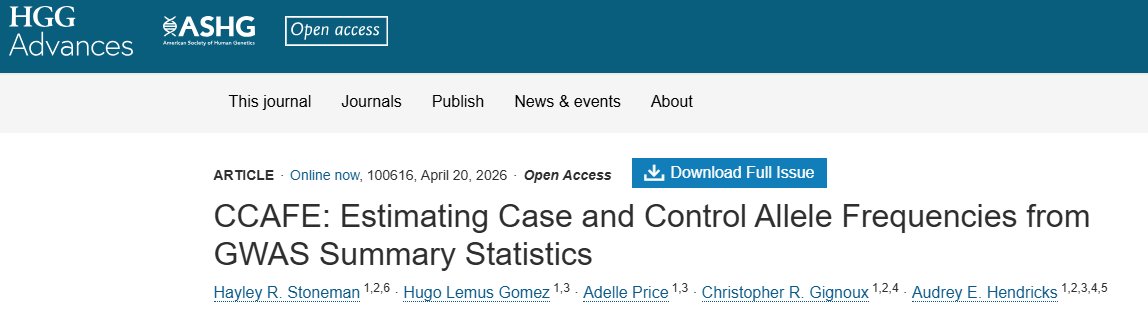
🧬New from Stoneman et al!
📄CCAFE: Estimating Case and Control Allele Frequencies from GWAS Summary Statistics
🖥️ github.com/wolffha/CCAFE/
👉 tinyurl.com/59km6f99
160
For researchers working in women's health:
CALL FOR PAPERS
Genome Medicine is calling for submissions to a new Collection on omics advancements in women's health. Submission deadline: 27 November 2026
link.springer.com/collection…
1
1
131
Dr. Barbara Stranger retweeted

Apr 21
Interested in single cell genomics but need help getting started? Come to my lab's 10th (!) Single Cell Genomics Day on 6/12
Talks include Aviv Regev @anshulkundaje @junyue_cao @xinjin (many) more @ATJCagan illustrations!
Free Youtube livestream at satijalab.org/scgd
1
92
355
25,822
Dr. Barbara Stranger retweeted

Apr 11
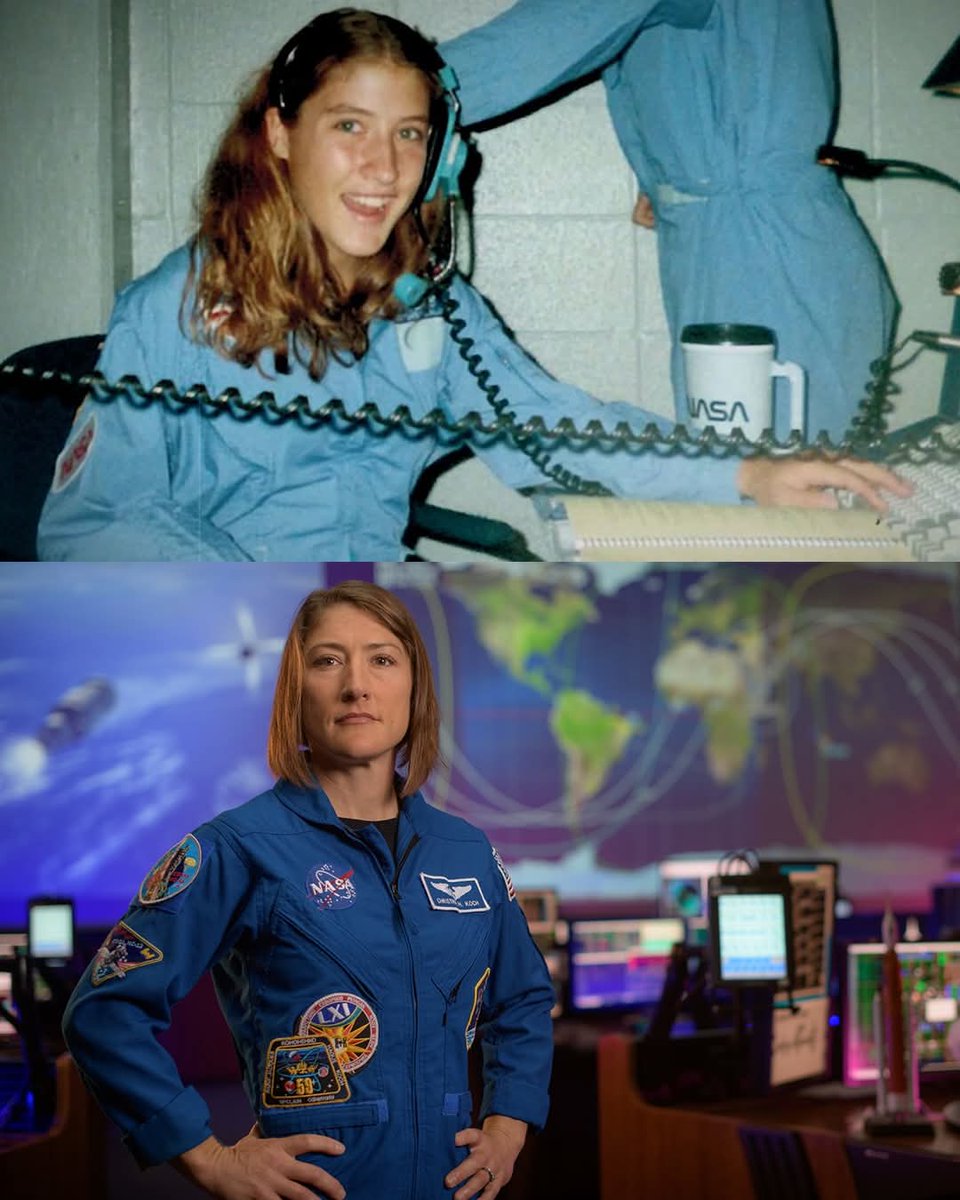
A message from NASA astronaut Christina Koch who has now arrived safely back to Earth: "To everyone who has been following my journey, I want to sincerely thank you for your continued support — it truly means everything. Being part of the Artemis II mission is not just a personal milestone, but a step forward for all of us who believe in exploration and possibility.
To the young women and aspiring explorers out there: never doubt what you’re capable of. Your dreams are valid, your voice matters, and your place in science, engineering, and space is absolutely yours to claim. I hope my journey reminds you that no goal is too far, and no dream is out of reach when you commit to it.
And to everyone inspired or interested in this path — stay curious, stay driven, and don’t be afraid to take that first step. I’m always grateful to connect with people who share the same passion, so feel free to reach out and be part of this journey with us."
Christina, pictured above at Space Camp, attended every summer from the ages of 13 to 17.
© A Mighty Girl
#drthehistories
119
4,201
30,334
993,203
Dr. Barbara Stranger retweeted

Apr 9
Inspired by our paper on the genetics of GLP-1 drug response? nature.com/articles/s41586-0… Want to make discoveries with the world's best genetic dataset? We're hiring!
StatGen: tinyurl.com/ys4mvhejRisk
Prediction: tinyurl.com/psamt294
Data Products: tinyurl.com/2ff7eavb
4
9
50
3,472
Dr. Barbara Stranger retweeted

Mar 25
NIH terminated $2.45 billion in grants in 2025.
Using NIH’s own economic multiplier (2.5–2.7x), that’s ~$6 billion in unrealized economic output.
Not to mention lost jobs, stalled discoveries, and a weakened scientific workforce.
Worst case of “saving money” ever💀
16
127
387
12,892
Dr. Barbara Stranger retweeted

Mar 23
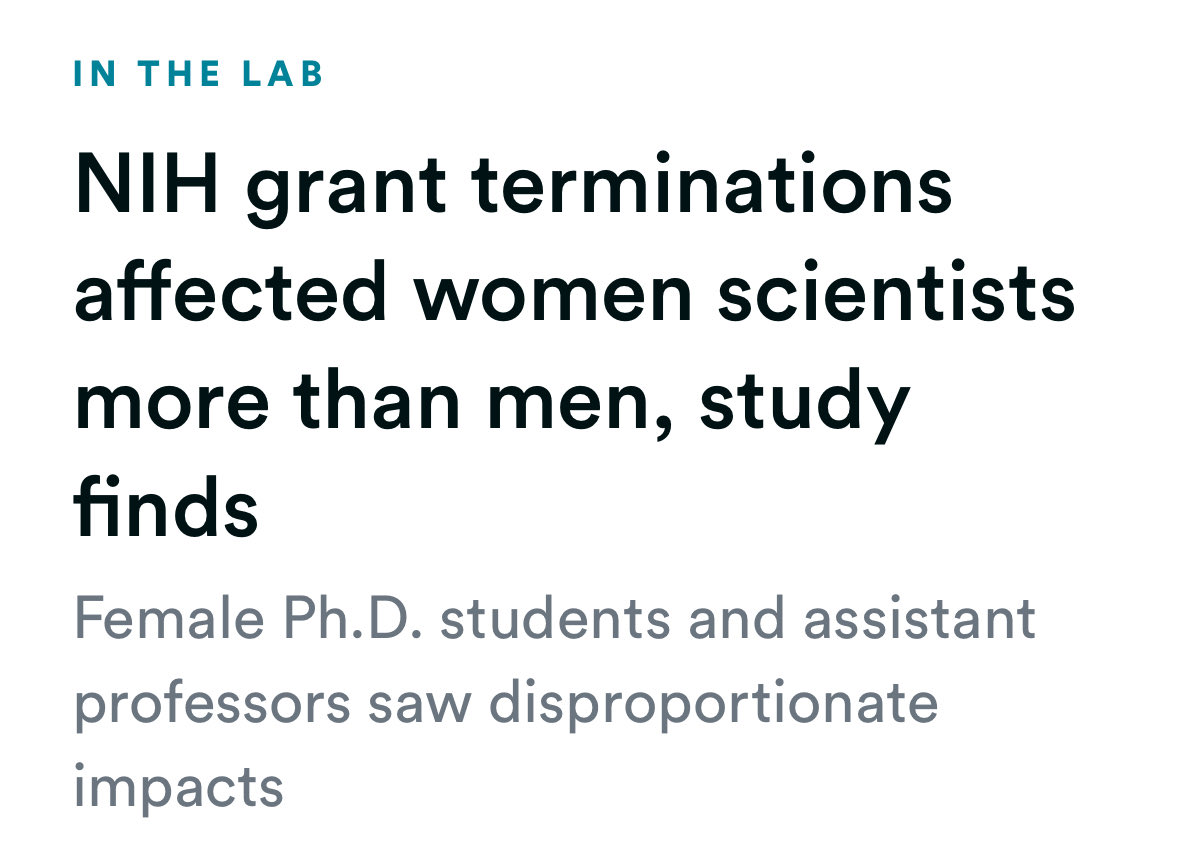
57.9% of 2,291 terminated NIH grants were led by women; 48.2% led by men. 630 terminated projects were led by early career researchers: 60% of grad student projects, 48% of postdoc projects & 60% of assistant professor projects were led by women.
fiercebiotech.com/research/n…
17
22
961
Dr. Barbara Stranger retweeted
Mar 23
This is not surprising:
NIH cuts show women losing more funding than men - 57.9% vs 48.2%.
And it gets worse: early-career scientists are being hit hardest, with women leading 60% of terminated grants among PhDs and assistant professor.
So much hard work lost.
11
122
276
20,524
Dr. Barbara Stranger retweeted

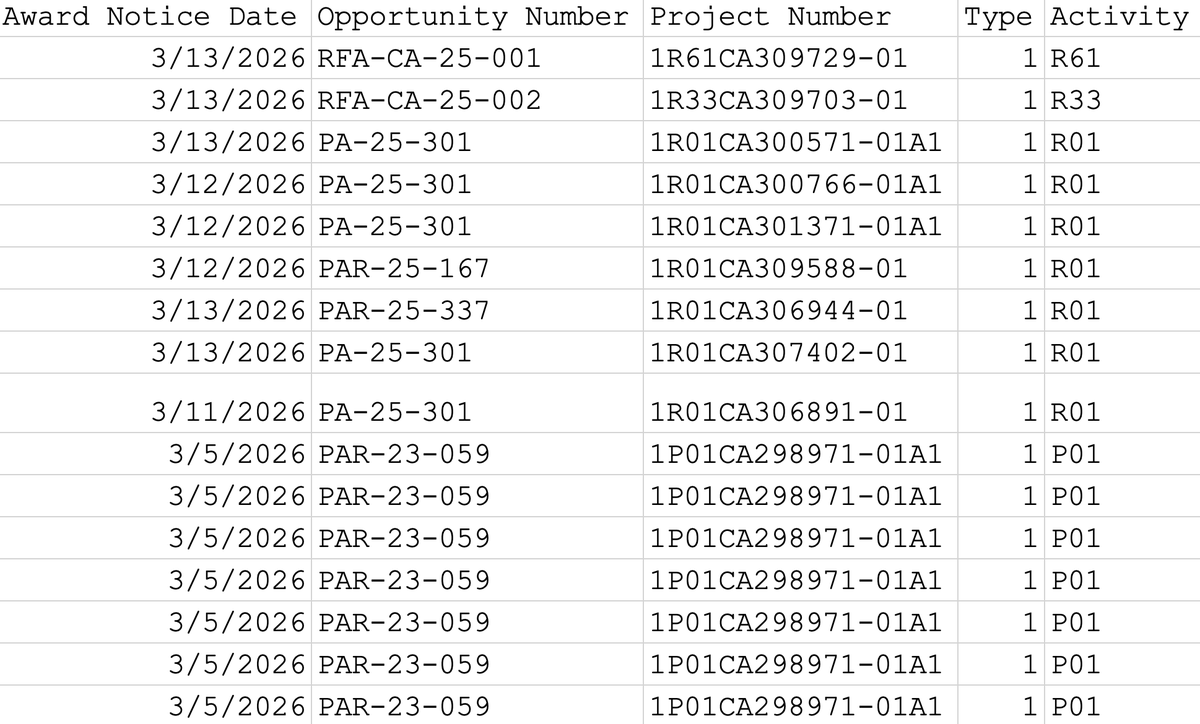
NCI has awarded only 10 new grants in FY2026, all since March 1. Last year there were 331 by this date. Could you tell the scientific community and the public what it going on?
Image is search on NIH Reporter for "New" "NCI" "nonSBIR/STTR" FY2026.
reporter.nih.gov/search/lsgg…
3
20
1,828
Dr. Barbara Stranger retweeted
Mar 16
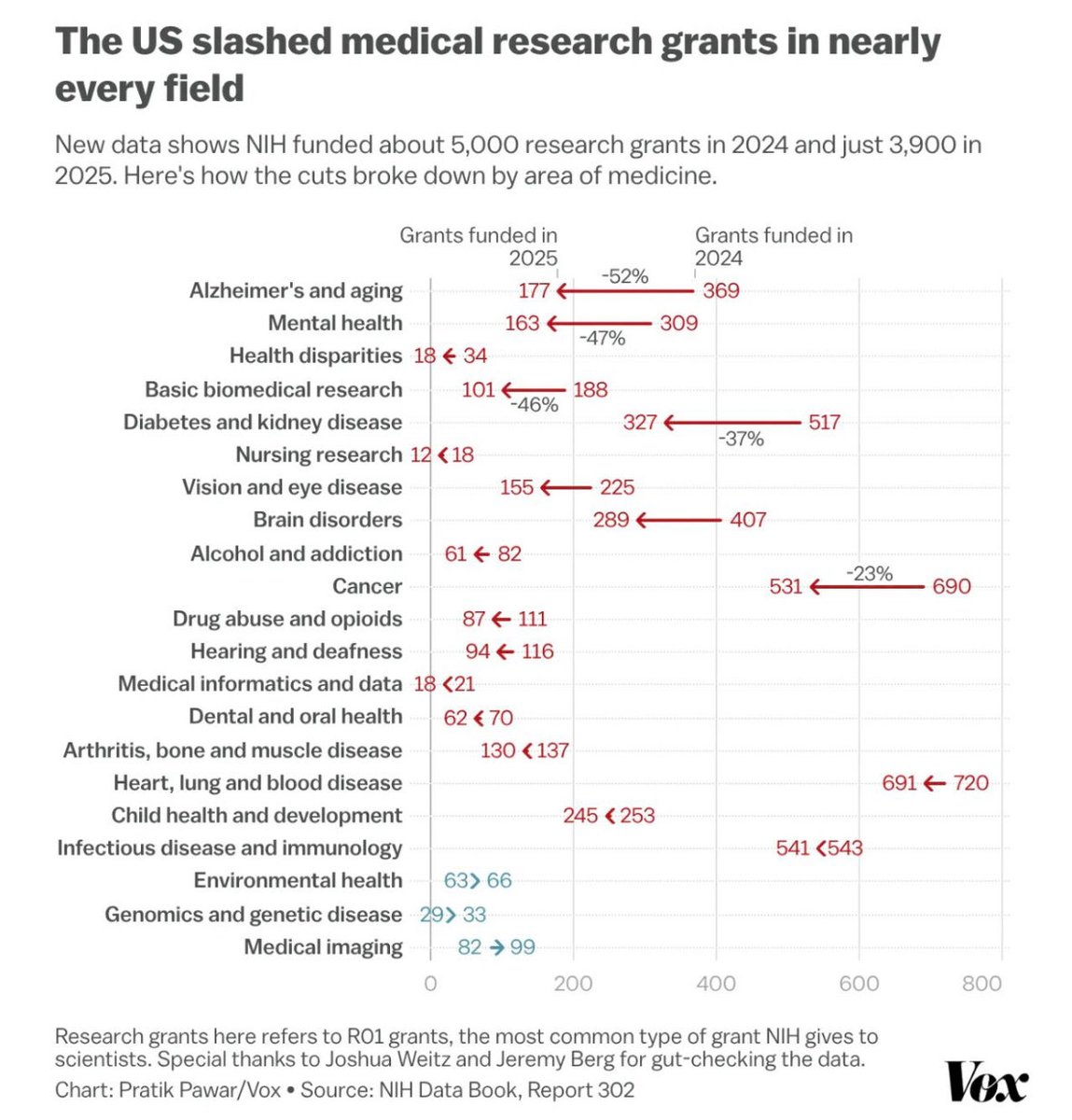
We were told NIH funding cuts were about eliminating DEI.
But the data now shows grants are down across nearly every field of medicine: cancer, diabetes, mental health, brain disorders.
With the greatest cuts hitting Alzheimer’s research, down more than 50%.
116
2,026
3,636
193,882
Dr. Barbara Stranger retweeted

Mar 11
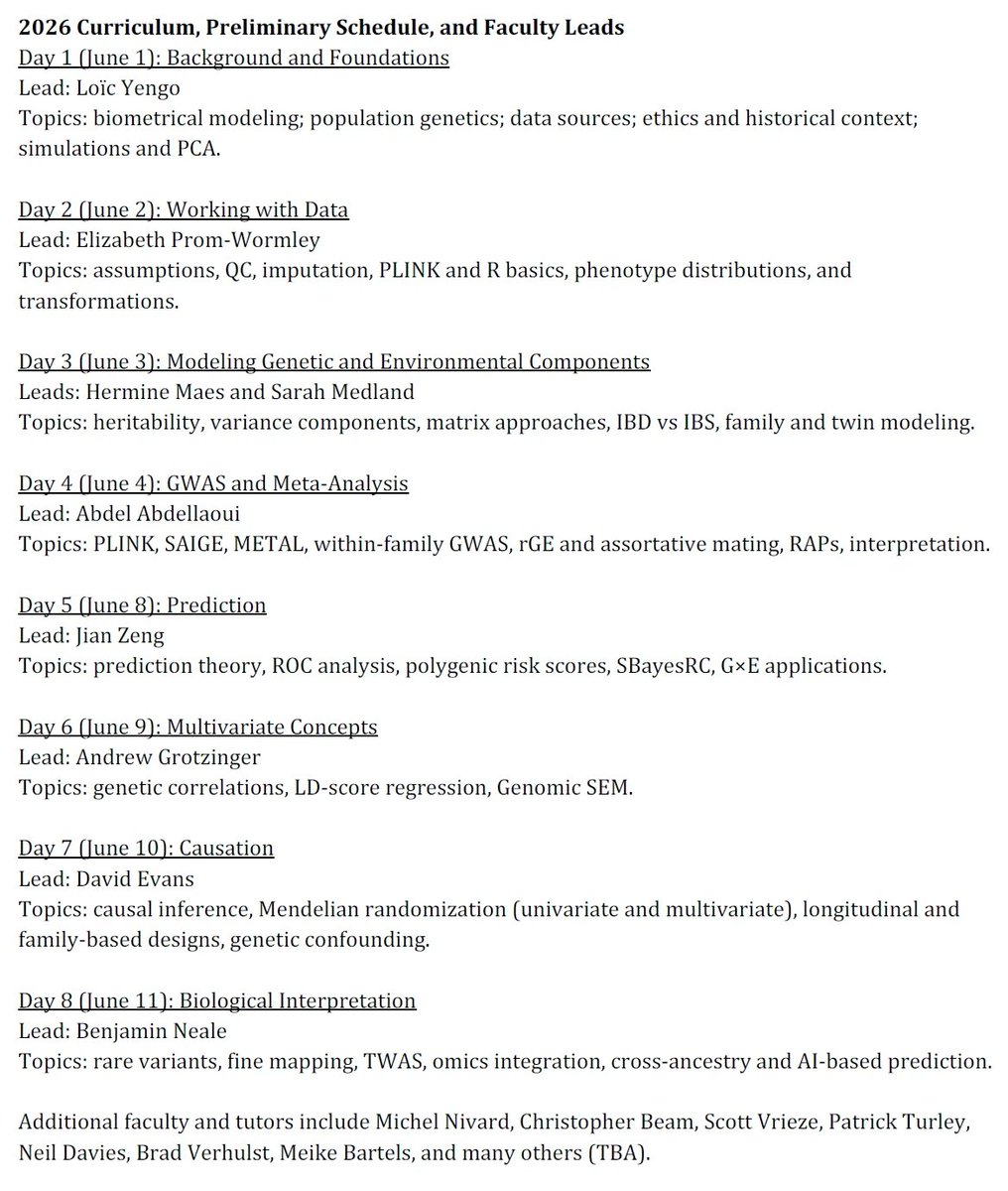
If you're looking to build or deepen your knowledge in statistical genetics, Boulder's International Statistical Genetics Workshop (June 1–11) covers the full range: biometrics, GWAS, polygenic scores, causality, etc.
Open to all levels, and it's virtual.
Register below 👇🏽
1
12
33
2,453
Dr. Barbara Stranger retweeted
Mar 12
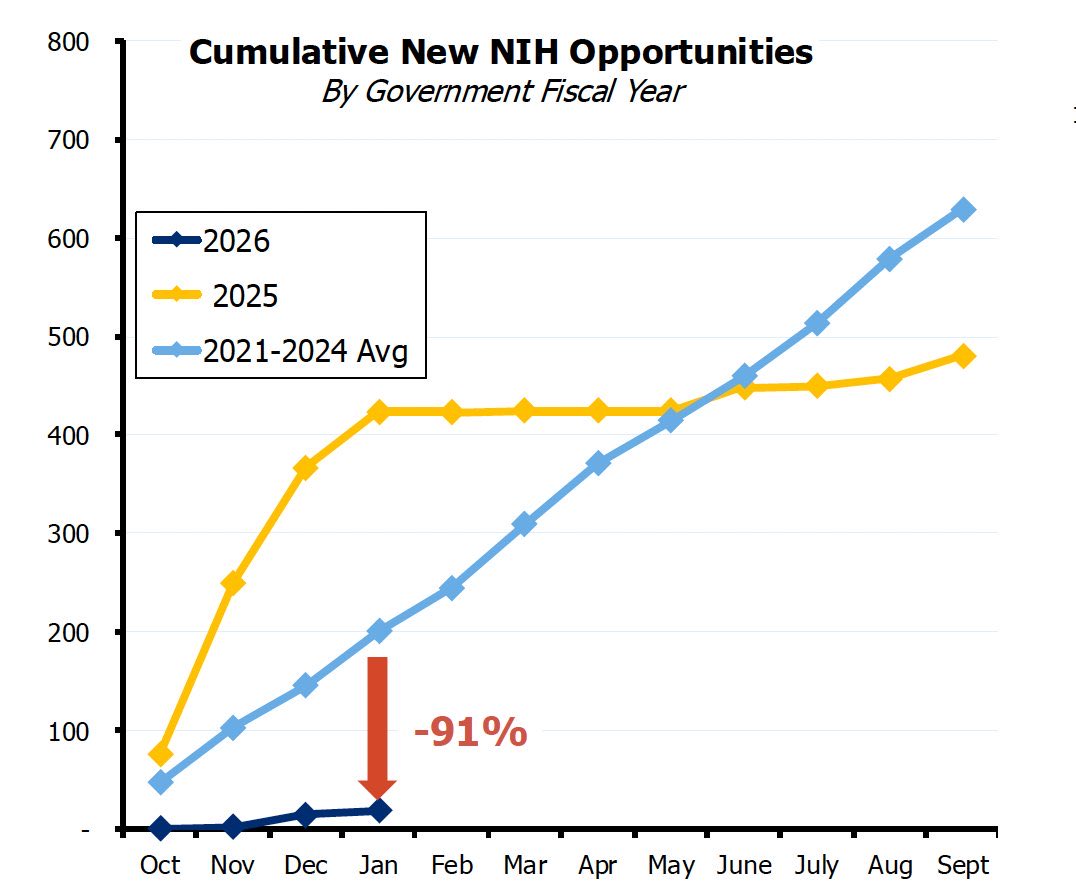
The pipeline that drives discovery - new knowledge and treatments for diseases that affect us all - is collapsing in the United States.
New NIH funding opportunities are down 91% this fiscal year.
60
765
1,458
216,989
Dr. Barbara Stranger retweeted

Here is the "effective payline" for each institute, estimated (by Claude) as the percentile where one can expect 80% probability of funding from a logistic regression fit. The effective payline has gone from a historic ~12% to 6% in 2025.


NIH FY2025 funding data finally emerges on RePORT drugmonkey.wordpress.com/202… via @drugmonkeyblog
7
48
135
41,615
Dr. Barbara Stranger retweeted

Using a familiar correlational coefficient like Spearman’s or Pearson’s on molecular data may miss some complex patterns that exist.
To overcome this, researchers at @CUAnschutz including @miltondp developed CCC—a new statistical framework ➡️ cudbmi.info/ccc-4

ALT a set of hexagonal logos (hexbin style display) displaying software tools. All logos are partially blurred and faded besides the CCC logo
2
4
325
Dr. Barbara Stranger retweeted

Happy Birthday, Chicago ❤️

6
157
775
10,399
Dr. Barbara Stranger retweeted

Mar 4
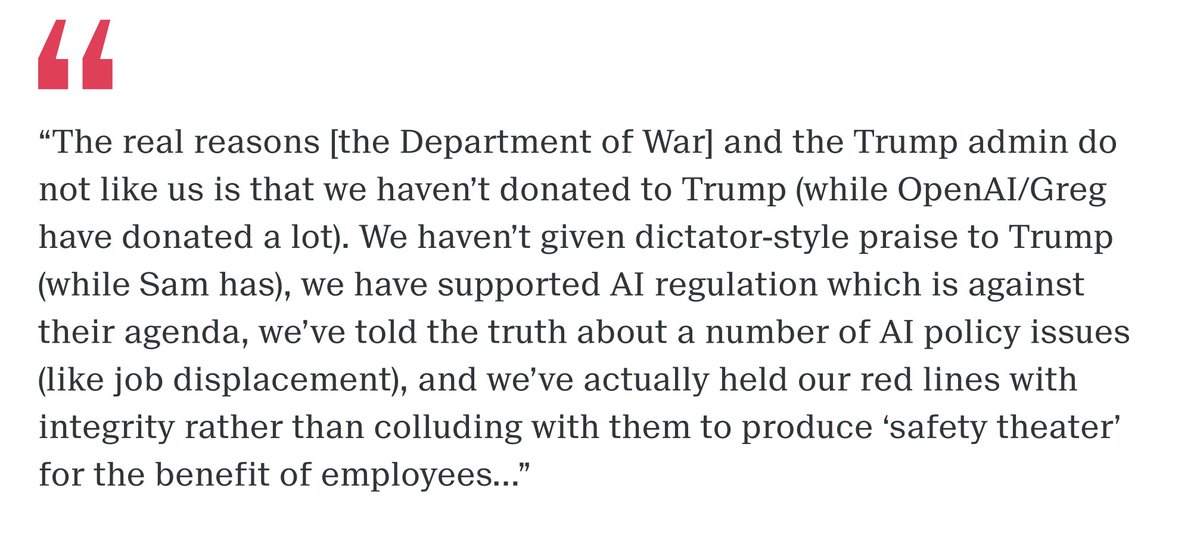
Oh wow....Dario Amodei memo, per @theinformation: “We haven’t given dictator-style praise to Trump (while Sam has), we have supported AI regulation which is against their agenda, we’ve told the truth about a number of AI policy issues (like job displacement), and we’ve actually held our red lines with integrity rather than colluding with them to produce ‘safety theater’ for the benefit of employees .... theinformation.com/articles/…
39
710
3,672
378,999
Sweet Home Chicago! ❤️ It really is the best.

Happy birthday, Chicago. 🫶 189 years of the best city on Earth.
🎥: @ durrcreative
📢: Tim Sinclair
#NeverOutdoneChi
1
74
Dr. Barbara Stranger retweeted

The U.S. National Institutes of Health has delayed posting calls for new grant applications for so long that large academic research programs may not have their funding renewed until next year—assuming those notices are approved at all. scim.ag/3OZmLpX
2
58
112
14,678