bio ml, prev @mit @WhiteheadInst @DbrxMosaicAI
Joined July 2022
- Tweets 96
- Following 874
- Followers 2,716
- Likes 1,422
10 Photos and videos
Pinned Tweet

Feb 10
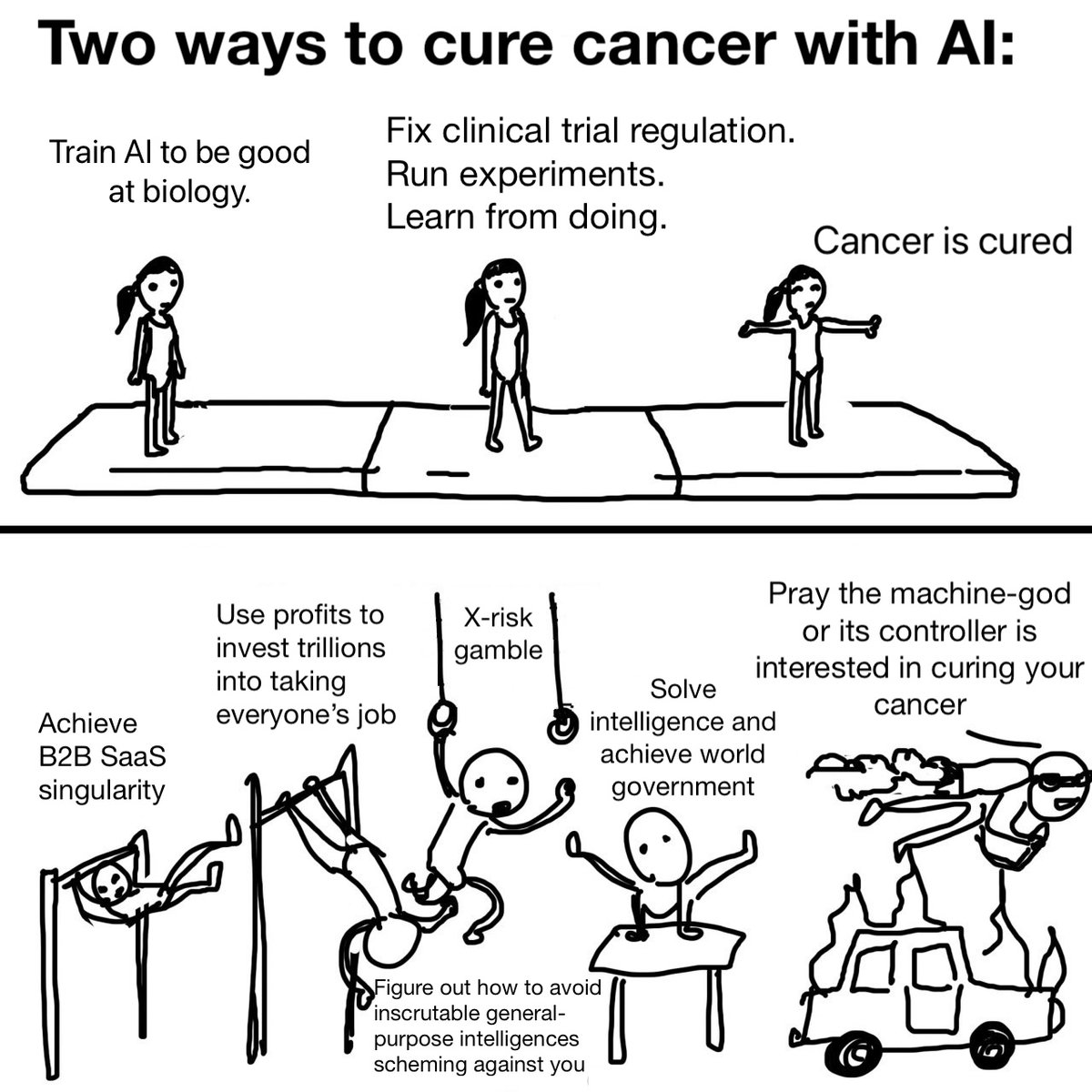
llms won't solve cancer by themselves
wrote about what's missing from the current AI for science discourse and why we need more than just intelligence
was an absolute pleasure to work with @swyx on this piece!
Feb 10

🆕 The Scientist and the Simulator
latent.space/p/scientist-sim…
@bearablylight kicks off our science newsletter with a simple mental model you can use to understand all the AI talent and money moves in the STEM:
"LLMs (alone) won’t cure cancer. We were promised AI that can cure every disease and solve energy. The models monopolizing society’s attention and capital investment are only part of the story..."
3
5
55
20,449

Melissa Du retweeted

Jun 9
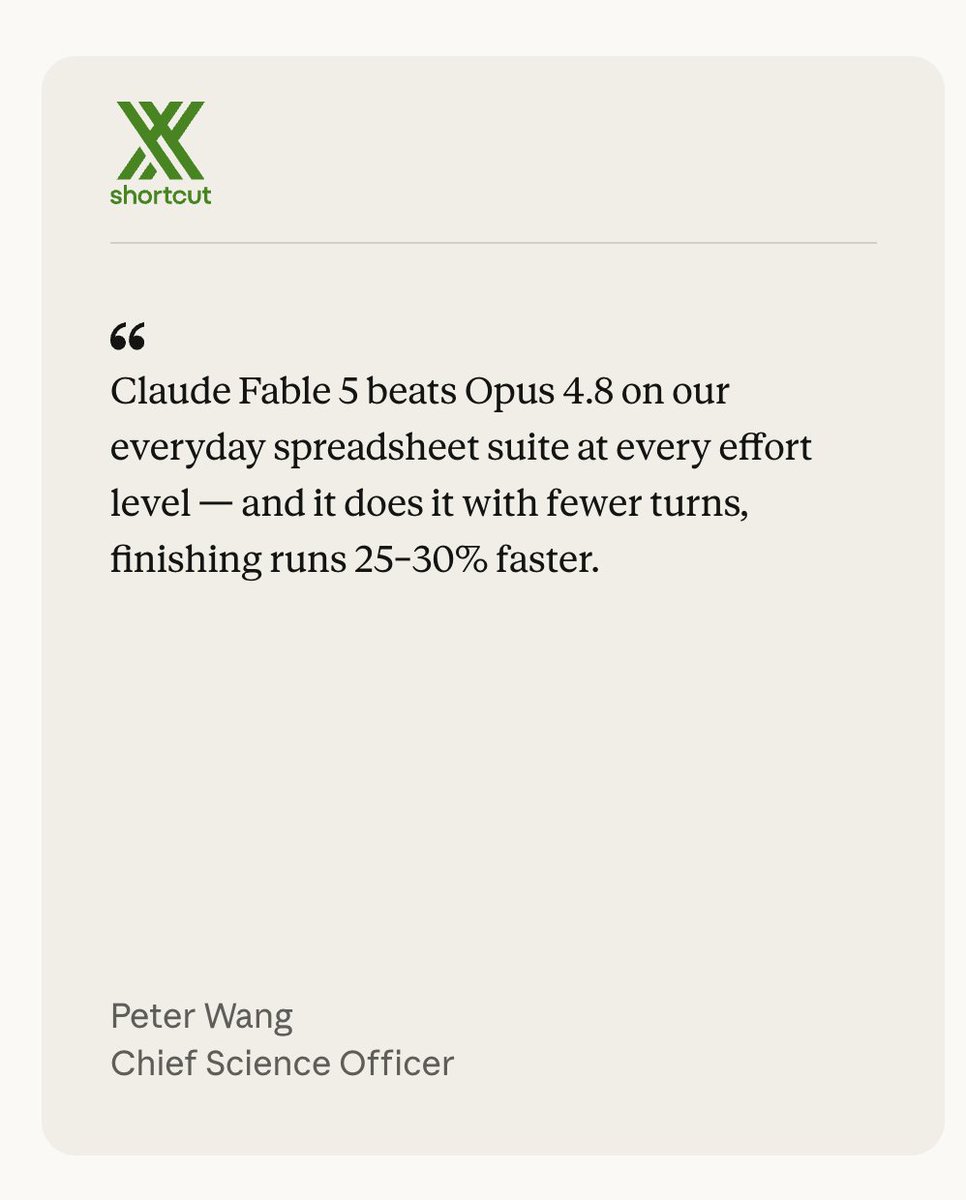
Fable 5 is live on shortcut.ai
anthropic.com/news/claude-fa…
11
23
335
521,781
May 26
barring the fact that i do really need a better calendar app, love what @fiftyyears is doing

2
2
9
2,338
May 22
the work of saints <3
May 21

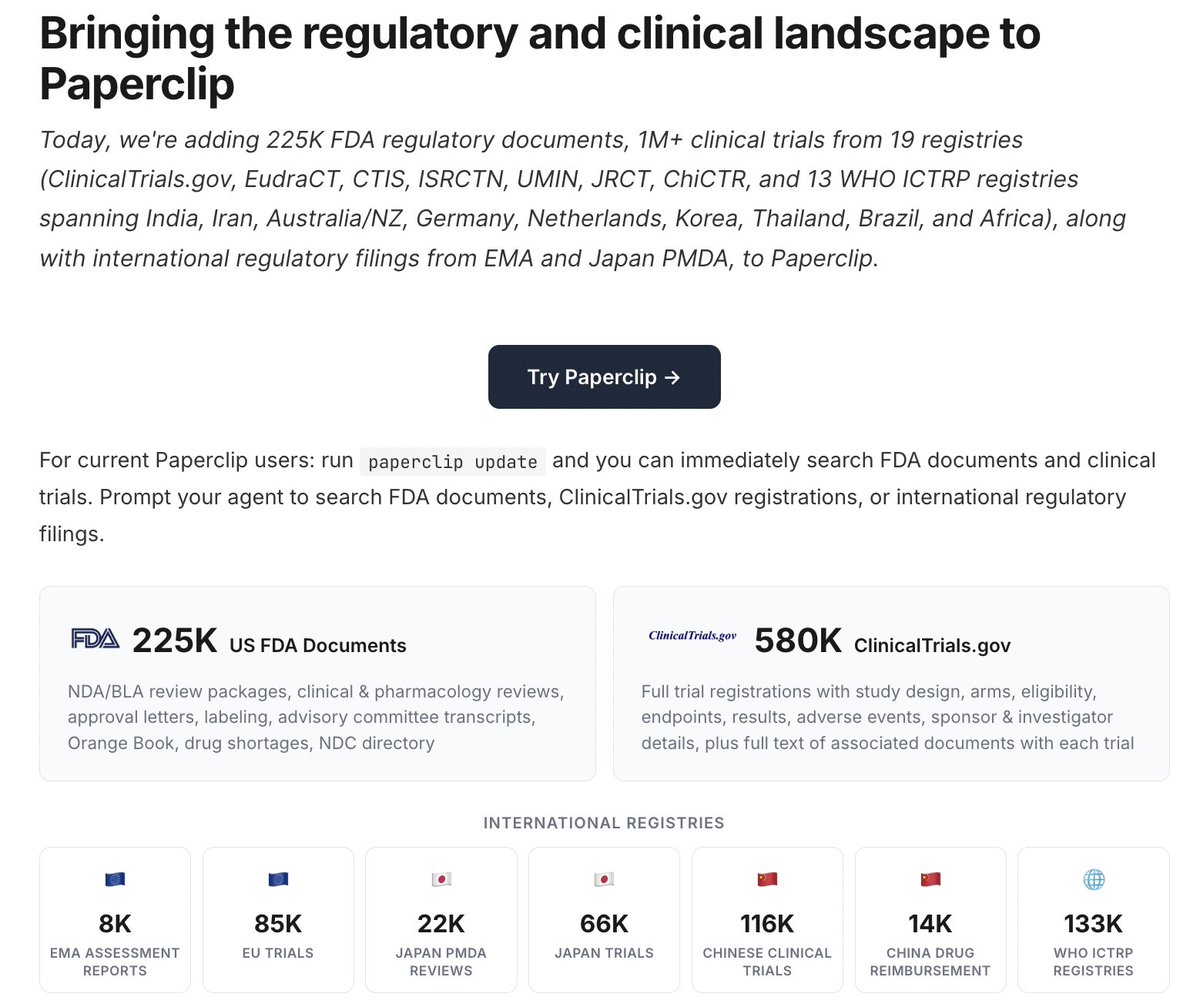
We added >220K FDA regulatory and >1M clinical trial docs to #paperclip. All natively indexed for agents and free.
Now agents can easily reason over clinical studies w/o web search!
E.g: find all trials that were approved despite missing endpoint gxl.ai/blog/adding-regulator…
2
22
5,383
May 21
can we call them venture post-capitalists
May 19

New blog post: The third wave of American philanthropy
Hundreds of billions of dollars in new philanthropic capital will soon become liquid. The OpenAI Foundation holds 26% of OpenAI, worth about $220B at today’s valuation. Anthropic’s seven co-founders have pledged to give away 80% of their wealth and have instituted the most aggressive donor matching program for employees in tech history.
How much does this all add up to? And how meaningful is that in the context of philanthropy today?
I was doing some simple napkin math to wrap my head around the scale of what’s coming, and radicalized myself in the process. I had dramatically underappreciated the scale of the philanthropic capital that’s about to become available and the corresponding gap in talent and organizations that will be needed to make the most of it.
This piece aims to directionally sketch the scale of what’s coming, the gap in operational capacity needed to absorb it, and what we can do to fill it.
(Link to full post in reply)
11
889
Melissa Du retweeted

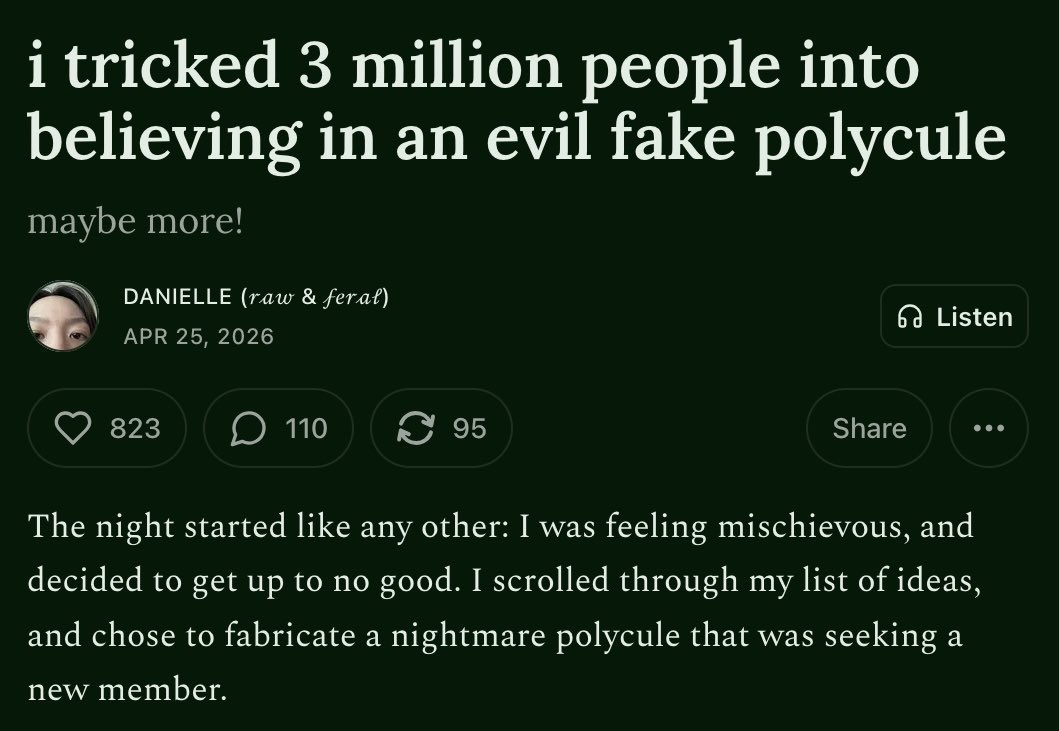
i made The Norman Polycule up >:)
behind-the-scenes, highlights from the 2,000 applicants, etc, here:
rawandferal.com/norman-polyc…
Apr 17

I need everyone to check out this link ASAP this is one of the funniest fucking things I've ever read
tinyurl.com/join-polycule
7
5
86
12,259
May 9
Agreed there is no single modality in biology that is as information-complete as text. Bio ML (and imo specifically the Virtual Cell space) has a very real metrology problem.
But there are many problems that ML in biology can solve when you take key bets on specific modalities and applications. ML in bio is presently useful for reducing combinatorially large search spaces with closed loop signal from wet lab verification. Whether or not "foundation models" help is a function of whether the data modalities that were scaled encode useful priors for a given downstream task.
> @newlimit is taking a bet on epigenetic reprogramming and train models that predict cellular aging from TF perturbations. Yamanaka factors are POC that certain combinations of ~1.6k human TFs can magically reprogram cells.
> Polyphron (@FabioZB_I) is training models to search over combinations of perturbations (small molecules, mechanical, electrical) for tissue differentiation
> @chaidiscovery's Chai-2 reports 16% hit rate on de novo antibody design vs <0.1% prior
> Antibody Fc region design and mRNA design are both verifiable problems where the functional assays provide clear signal and hypothesis generation can be optimized
The difference between reducing large search spaces and solving tasks zero-shot is a function of model capabilities, which improves with more data and wet-lab feedback. Scaling "works" in the sense that these architectures can learn any objective function we throw at them.
May 8

Exactly - biology is a fundamentally different domain than text and scaling laws do not apply cleanly
~All the tasks you want an LLM to do are contained in the text data itself. For biology, NONE of the tasks you want the model to do are contained in the sequence data itself.
2
7
65
8,747
Melissa Du retweeted

(1/5) Great to be at @sequoia to give a sneak peek of one of our research directions!
TL;DR one path to data-efficiency may be to “abuse GPUs like they’ve never been abused before”
13
74
997
180,167

Take it from me, guys, you got to spend your arrogance while you're still young.
You're gonna spend all your 20s trying to get there, and in your 30s you realize there is no there.
You're going to realize that the skills that get you to the party aren't the skills that will get you to be happy with the rest of your life.
You're going to go from quitting smoking to smoking again to quitting smoking in one day. You know what?
You're just not smoking right now and that’s fine.
The only constant will be time spend on the codex app will probs increase.
52
9
671
56,877
Melissa Du retweeted

May 4
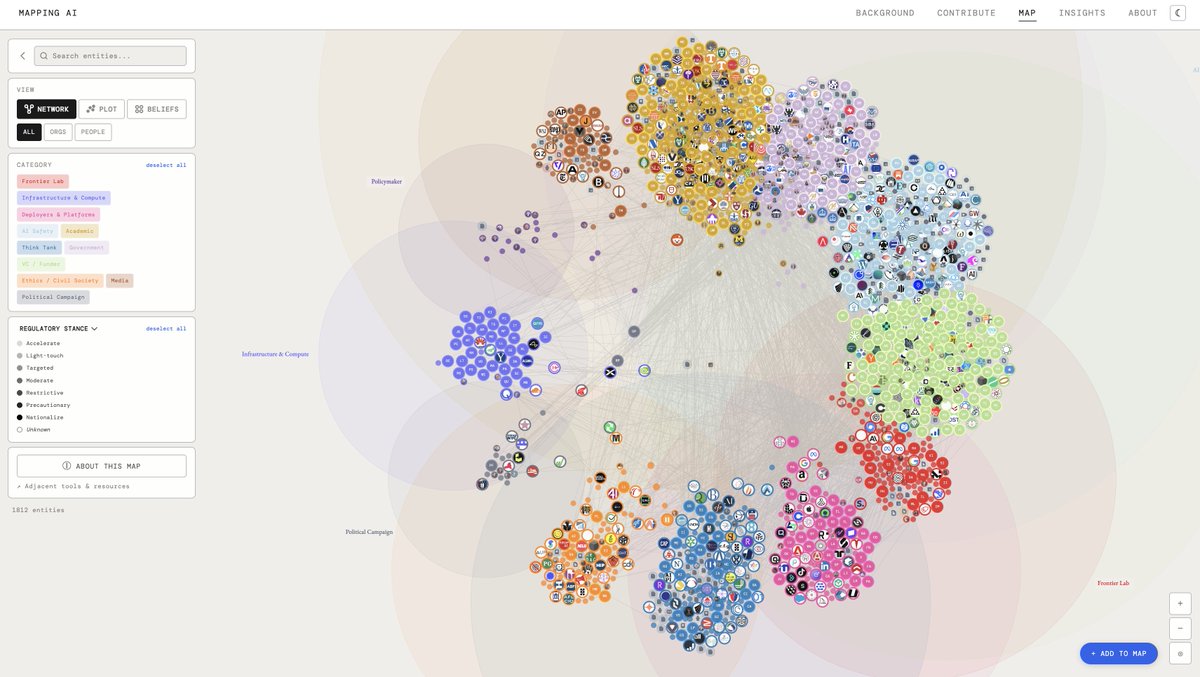
Who actually shapes AI policy in the U.S.?
We mapped 1,812 entities: 745 people, 918 organizations, 2,925 relationships. Frontier Labs, AI Safety orgs, Think Tanks, Government, VCs, and more.
mapping-ai.org
25
366
1,341
294,807
Melissa Du retweeted

Apr 20
Applications are now open for the 2026 Paradigm Fellowship: a 4-day retreat for young people who are obsessively good at something technical.
For our fourth year, we're expanding to welcome builders across every frontier — AI, robotics, energy, bio, prediction markets, or something we haven't thought of.
Last year's cohort came from 10 countries. Some were undergrads, some were dropouts, some were founders, some came from OpenAI, SpaceX, Citadel, and Kalshi.
The format is simple: firesides, whiteboarding sessions, and time to hack. What makes it special is what happens in between, and after. Fellows have met cofounders, started companies, and gone on to raise from Paradigm and others.
I was a fellow before joining Paradigm, the retreat was a transformative trip for me, and I met some of my closest friends through the program.
Apply by June 8th. Retreat runs August 12–15th.
40
56
890
180,177



Apr 3
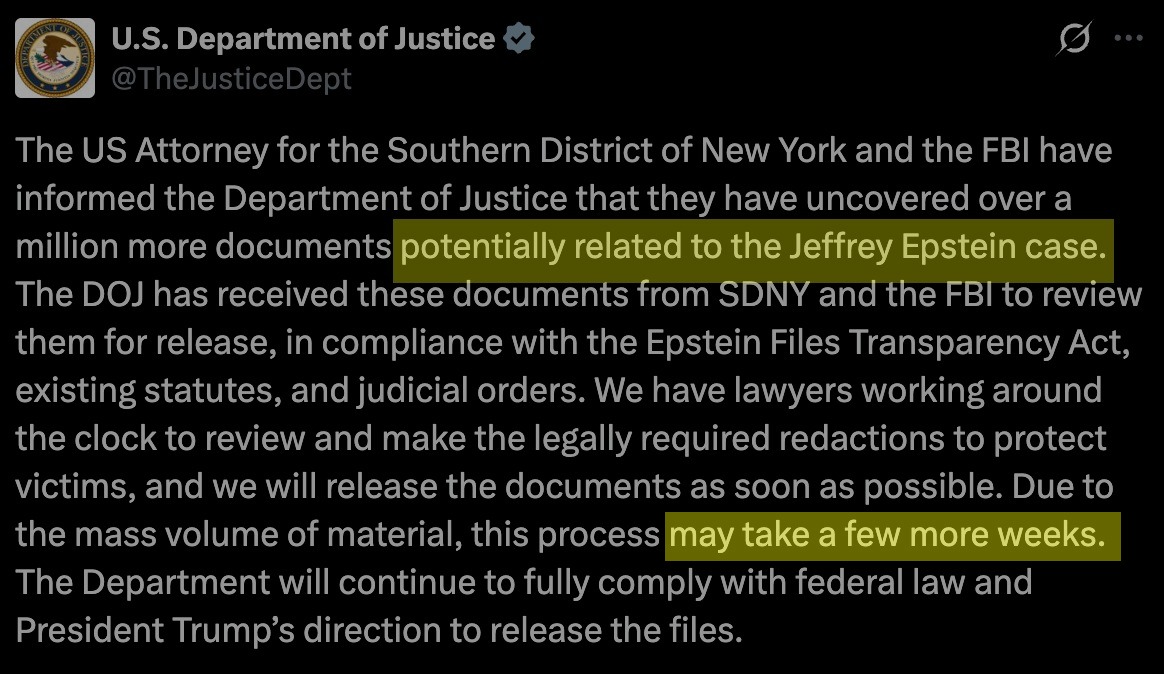
still waiting for the rest of the files but @donaldjewkes did such an incredible job retelling this saga!
Apr 3

two friends used AI to clone Epstein's Gmail
it's been used by over 150 million people
and it was built in just 5 hours – here's how they did it
1
2
12
1,811
Melissa Du retweeted

Mar 6
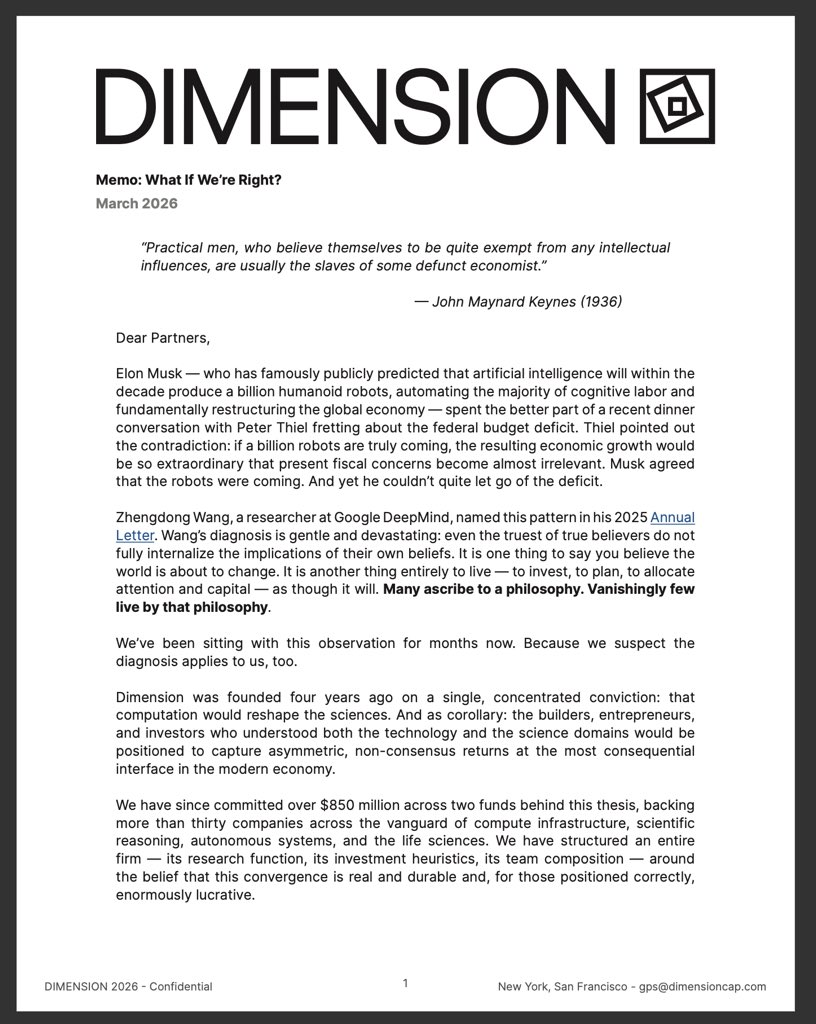
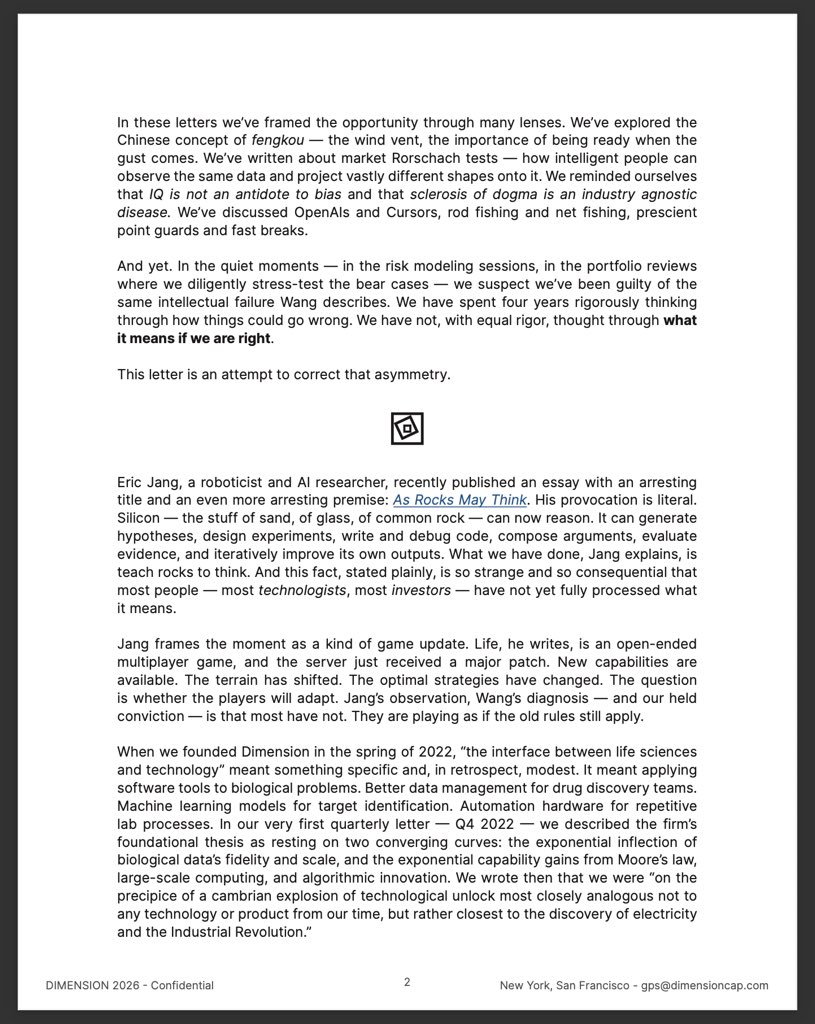
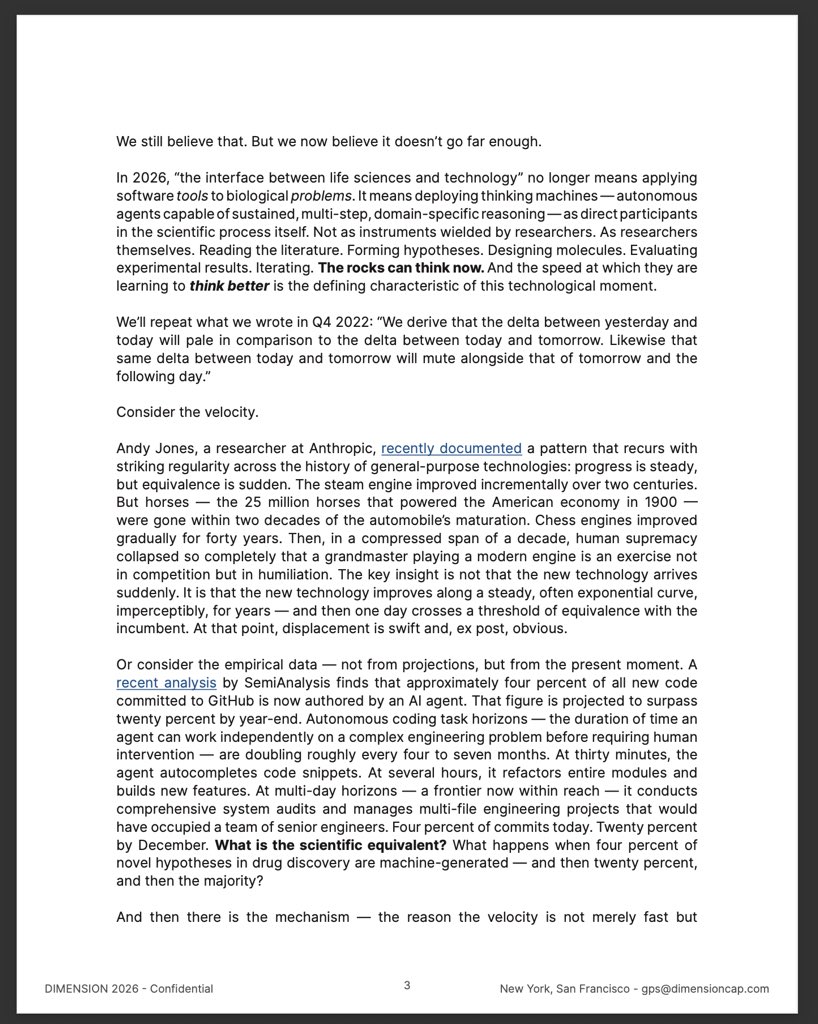
Memo: What If We're Right?
We recently wrote a private letter to partners & friends of a common failure mode: the inability to consistently reason through the daisy chain of downstream consequence when non-consensus, low-probability, events actually occur
pages: 1-3
8
15
162
17,773
Melissa Du retweeted

Mar 25
🚨 We're open-sourcing Druids, a library for coordinating and deploying coding agents across machines.
Our beta users have used Druids to work on open math problems, conduct ML "autoresearch," and make software faster.
3
31
228
25,942
Melissa Du retweeted

Mar 11
Excited to release PostTrainBench v1.0!
This benchmark evaluates the ability of frontier AI agents to post-train language models in a simplified setting.
We believe this is a first step toward tracking progress in recursive self-improvement 🧵:
46
94
724
174,639