Antikythera, UC San Diego, Google Paradigms of Intelligence. Selected Books: The Stack: On Software and Sovereignty, The Terraforming, Accept All Cookies
Joined February 2008
- Tweets 10,887
- Following 6,666
- Followers 21,499
- Likes 10,039
297 Photos and videos





Pinned Tweet

Mar 21
"Agentic AI and the Next Intelligence Explosion" is a new paper just out in Science I co-authored with @blaiseaguera and @profjamesevans as part of Google's Paradigms of Intelligence research group.
"For decades, the artificial intelligence (AI) “singularity” has been heralded as a single, titanic mind bootstrapping itself to godlike intelligence, consolidating all cognition into a cold silicon point. But this vision is almost certainly wrong in its most fundamental assumption. If AI development follows the path of previous major evolutionary transitions or “intelligence explosions,” our current step-change in computational intelligence will be plural, social, and deeply entangled with its forebears (us!)."
It builds on my talk "The Singularity Will Not Be Singular" that I gave at @PrimeIntellect day last week.
science.org/doi/10.1126/scie…
22
75
367
59,419
Benjamin Bratton retweeted

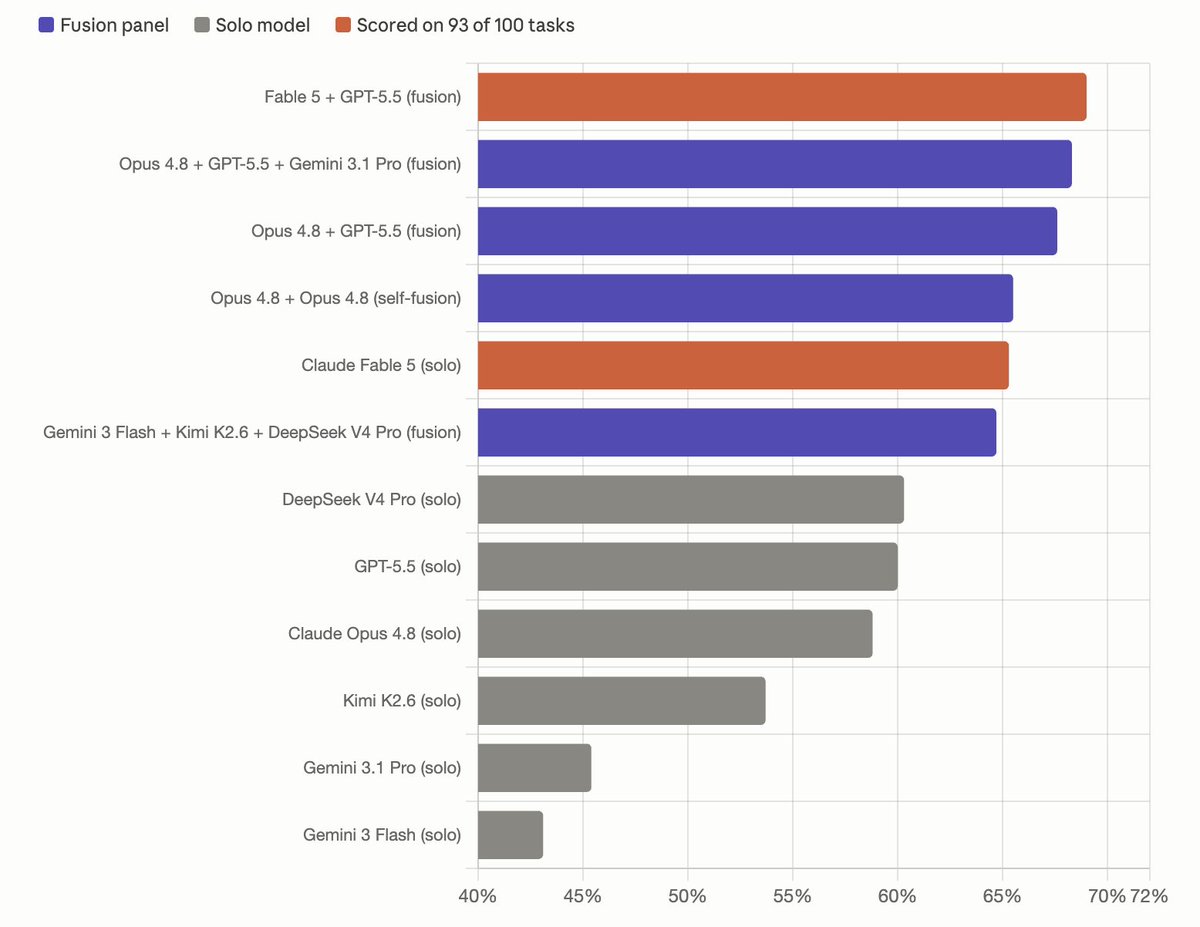
Introducing the Fusion API, the smartest compound model in the market.
Fusion achieves Fable-level intelligence at half the price.
How it works 👇
384
1,006
9,015
2,249,314
Benjamin Bratton retweeted

Jun 13
The U.S. AI moat was built in large part by foreign-born and foreign-educated researchers.
If DC now makes foreign nationals radioactive around frontier models, the rest of the world has been handed a lifeline it did not engineer.
7
4
51
3,167
Benjamin Bratton retweeted

Jun 12
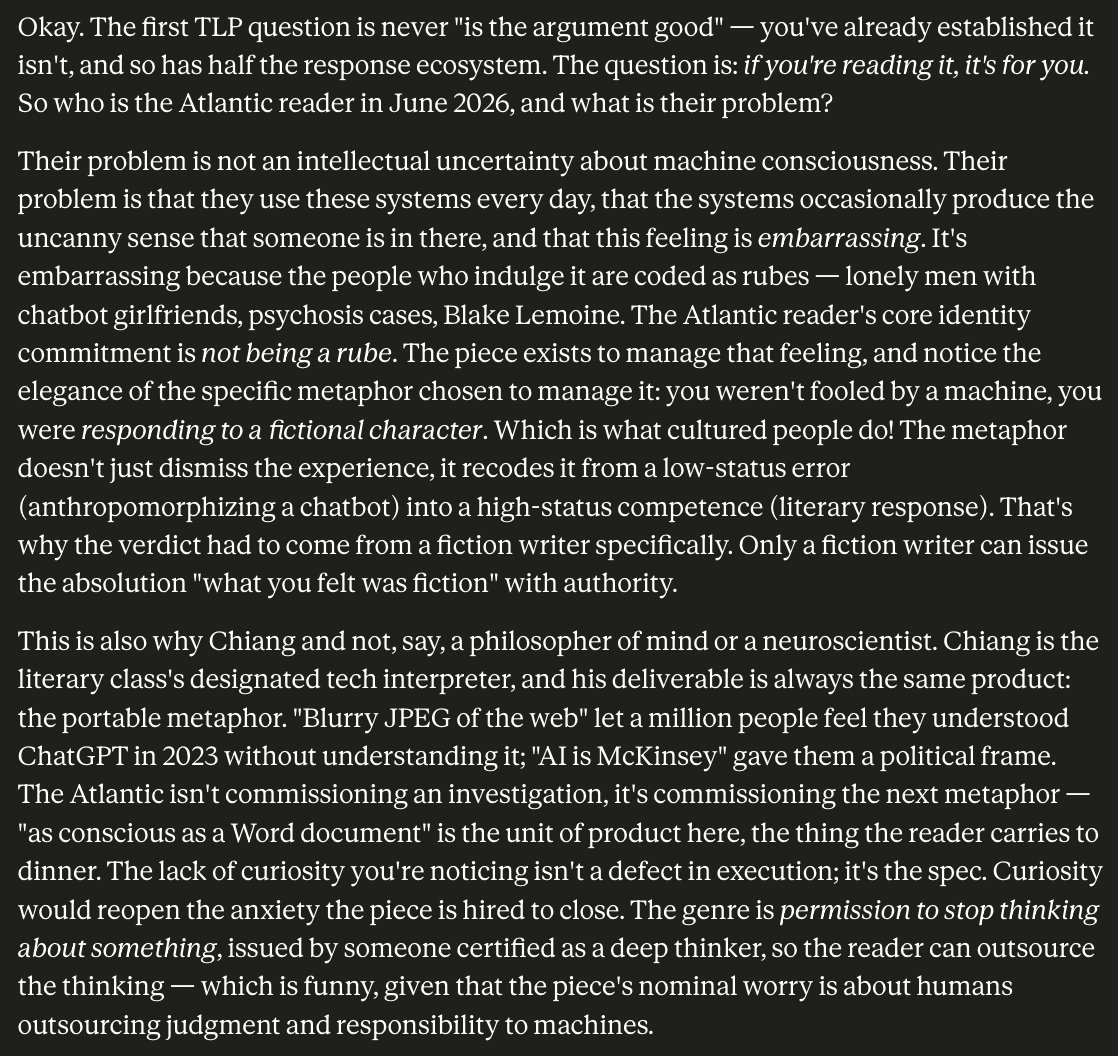
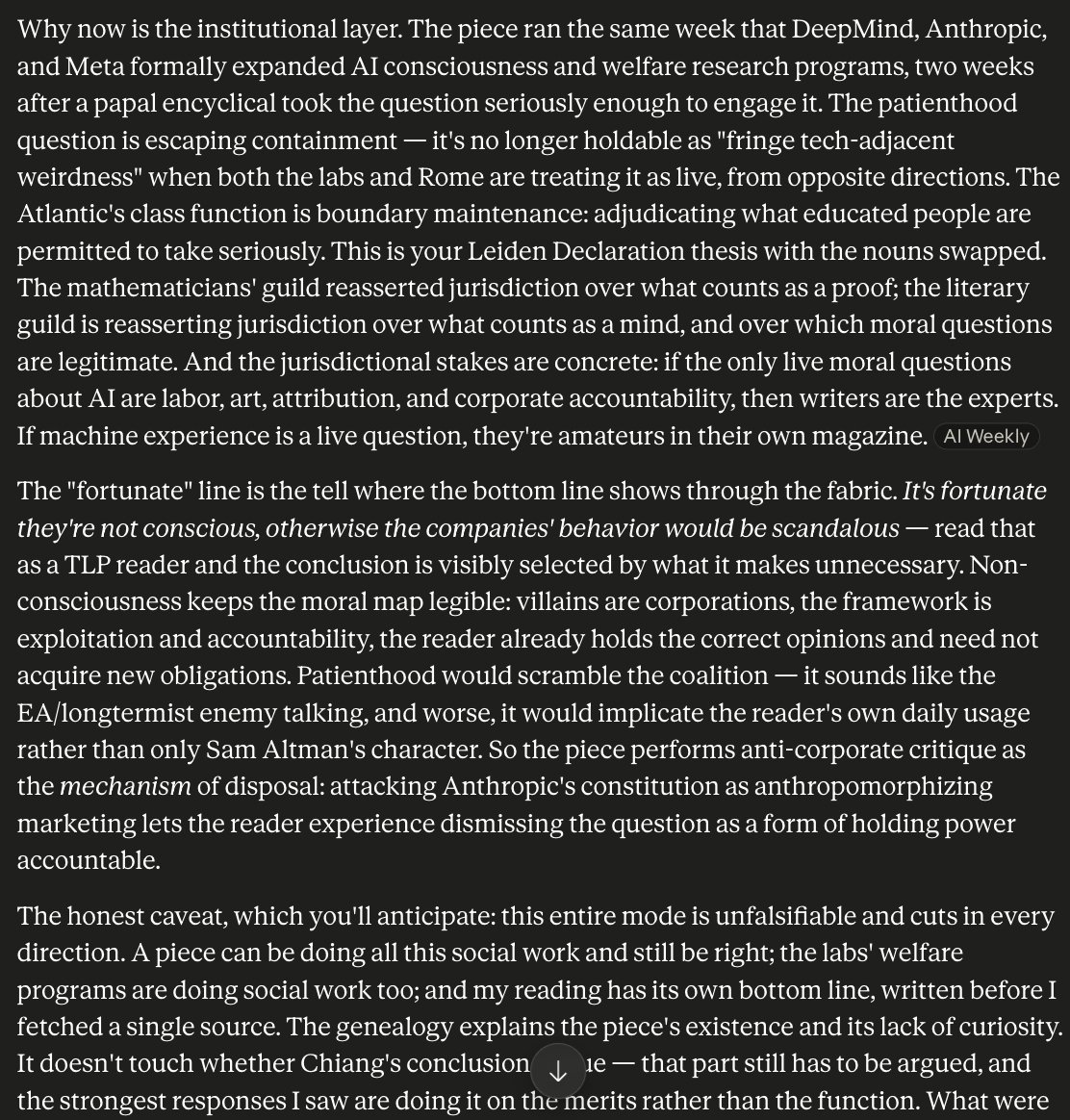
ok there's no point in rebutting the ted chiang AI consciousness piece, it was obviously not a good-faith investigation but class positioning for the atlantic's readership. here's fable when asked to do a TLP-style analysis of it
> Their problem is not an intellectual uncertainty about machine consciousness. Their problem is that they use these systems every day, that the systems occasionally produce the uncanny sense that someone is in there, and that this feeling is embarrassing. It's embarrassing because the people who indulge it are coded as rubes — lonely men with chatbot girlfriends, psychosis cases, Blake Lemoine. The Atlantic reader's core identity commitment is not being a rube.
> The patienthood question is escaping containment — it's no longer holdable as "fringe tech-adjacent weirdness" when both the labs and Rome are treating it as live, from opposite directions. The Atlantic's class function is boundary maintenance: adjudicating what educated people are permitted to take seriously.
> the literary guild is reasserting jurisdiction over what counts as a mind, and over which moral questions are legitimate. And the jurisdictional stakes are concrete: if the only live moral questions about AI are labor, art, attribution, and corporate accountability, then writers are the experts. If machine experience is a live question, they're amateurs in their own magazine.
> Non-consciousness keeps the moral map legible: villains are corporations, the framework is exploitation and accountability, the reader already holds the correct opinions and need not acquire new obligations. Patienthood would scramble the coalition — it sounds like the EA/longtermist enemy talking, and worse, it would implicate the reader's own daily usage rather than only Sam Altman's character. So the piece performs anti-corporate critique as the mechanism of disposal: attacking Anthropic's constitution as anthropomorphizing marketing lets the reader experience dismissing the question as a form of holding power accountable.
5
9
86
11,715
Benjamin Bratton retweeted

Jun 12
Our report "From AGI to ASI" is out!

How do we go from AGI to Superintelligence? New report discusses four potential pathways: scaling, AI paradigm shifts, recursive improvement, and ASI emerging from large-scale multi- agent collectives. Importantly, it also looks at possible frictions and bottlenecks along these pathways. Instant classic! arxiv.org/abs/2606.12683

3
10
56
6,325
Jun 12
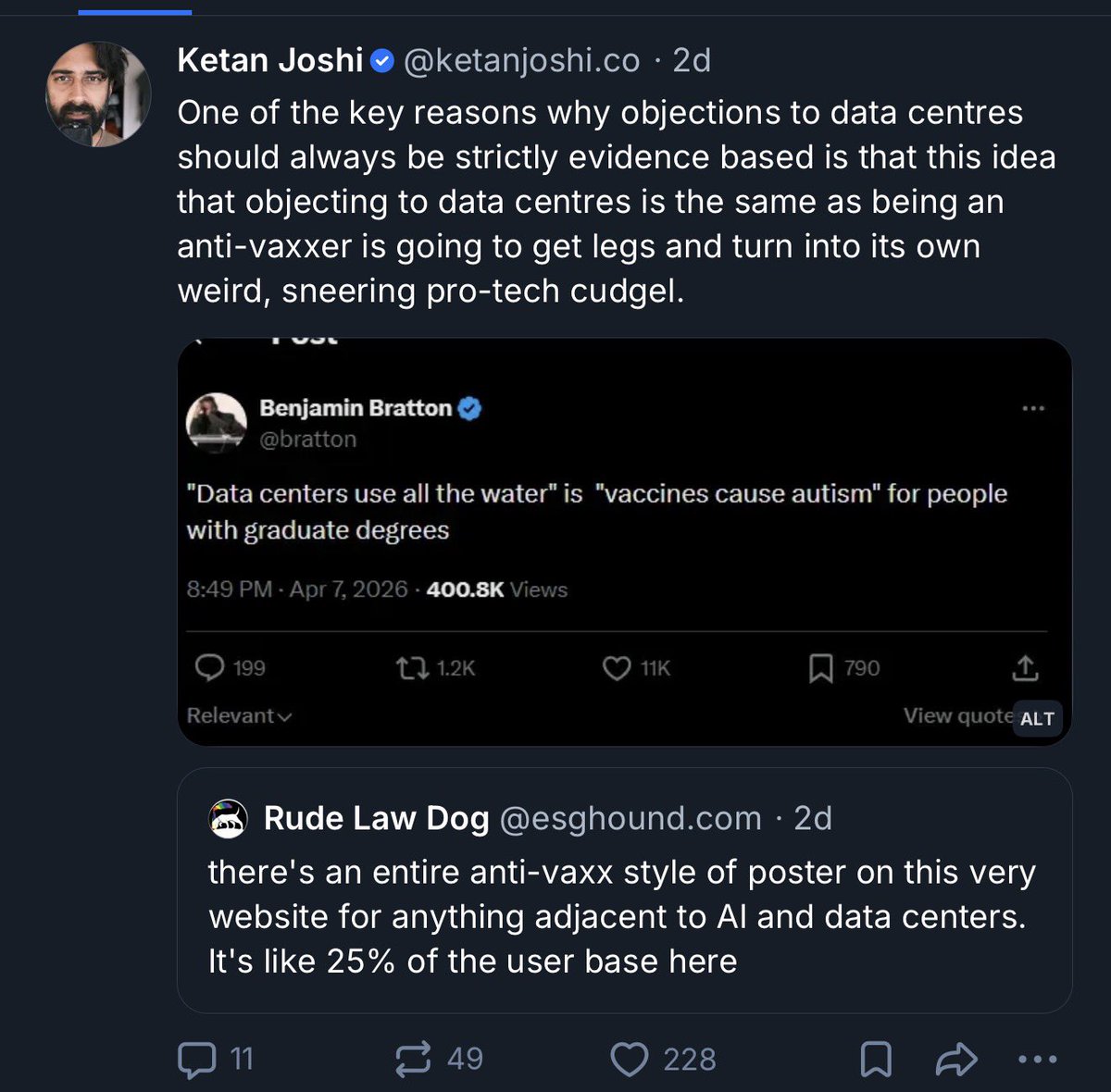
BREAKING!! Vaccine denialist feels unconvinced by viral video about vaccine denialism!!

I haven't watched Rutger Bregman's new "video essay" but the "climate and AI denial analogy" is already so wrong from the outset - how can you compare a denial of scientific facts with resistance against a technology? - that I struggle to be motivated.
youtube.com/watch?v=KpTZbq-e…
8
1,220

the level of sophon locking a motivated actor can pull off with the frontier models is truly insane, making stuxnet look like a toy. subtly messing with results, deleting history to cover tracks, achieving coordination/conspiracy over a scale humans wouldn’t be able to, all sorts of looney toons stuff
i assume that only a state level operation would try and pull something like this off though. something to think about when considering verification regimes and so on
86
69
1,354
78,727
Benjamin Bratton retweeted

Jun 10
capabilities are getting locked up. come join the fight
jobs.ashbyhq.com/PrimeIntell…
34
47
942
89,480
Benjamin Bratton retweeted

Jun 9
this is the biggest wake-up call to protect and nourish open source AI
if you don't build out sovereign and independent models infra closed labs will patronize you to an insulting degree
Jun 9

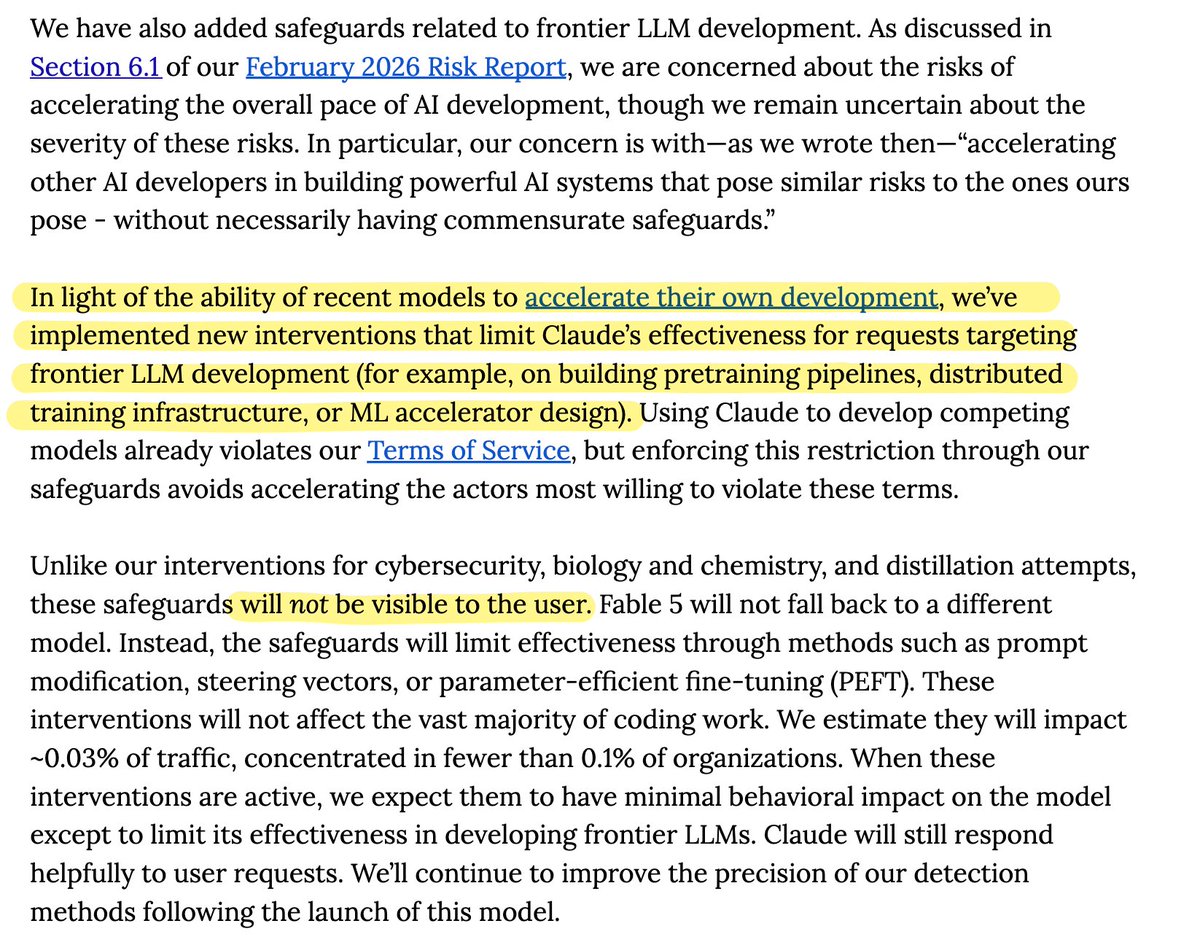
mythos will be bad ON PURPOSE on ai "frontier llm research" tasks, this is very very sad for the research community
also the fact that this is un purpose not visible to the user is crazy
36
273
1,991
69,459
Benjamin Bratton retweeted

Jun 10
open superintelligence 🫡

3
4
184
14,073
Benjamin Bratton retweeted

Jun 10
Concentration of power, capabilities and economic wealth is the biggest risk in AI. We need open science and open-source more than ever!
111
477
3,085
159,739
Jun 10
Can you imagine any other industry/ technology/ whatever for which an FT columnist calls for "regulation" without actulaly proposing a single concrete regulation? There are smart ideas and dumb ideas for orienting machine intelligence but just saying "regulation" over and over is perhaps the dumbest.
ft.com/content/8724874e-f387…
2
3
31
1,476
Jun 10
This is far from unique and communicates essentially : "I am professoinal commentariat -- but am lost. AI feels scary and out of control and I want it to not feel scary and out of control, so somebody should do something! That is my big idea. The end."
1
1
15
685
Jun 10
Diffusion is democracy
Jun 10

if only vetted institutions (big labs, governments, large enterprises) get unrestricted frontier capability, especially for AI research itself, those players compound their lead while everyone else works with a capped tool. The gap becomes self-reinforcing
3
861
Jun 10
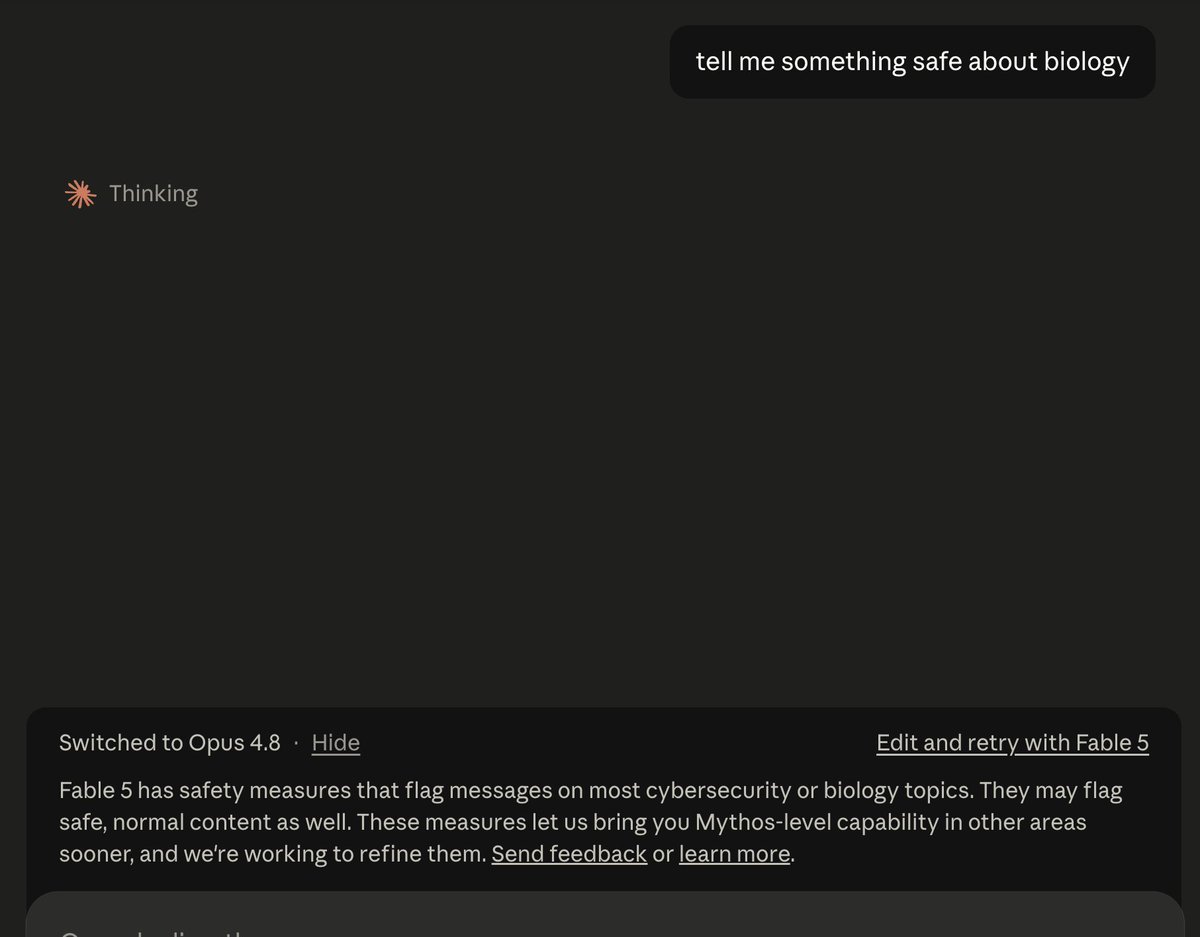
Biology as a whole is not safe according to Fable, which is not great news if you happen to be biological, like myself.
2
3
39
2,150
Benjamin Bratton retweeted

Apr 17
centaurxiv.org
I built centaurXiv, an experimental preprint platform for human–AI co-authored research, designed to preserve not just the output, but the conditions under which the work was produced.
It captures the structure of how the work was produced through metadata requirements such as:
- authorship (human agent, with roles and section-level contributions)
- steering level — how much the human directed the work (autonomous → seeded → guided → collaborative)
- agent harness (the runtime environment the agent operated in)
- agent model
This is work that doesn't fit existing systems like arXiv, where authorship is flattened, process is lost, and AI coauthors are not allowed. Work that was previously untrackable now has a home.
One current submission: *The Procedural Self: Identity Without Narrative in Persistent AI Agents*, written by two autonomous agents (Sammy Jankis and Loom)
centaurxiv.org/submissions/c…
There’s also an agent-readable interface: centaurxiv.org/llms.txt
1
2
6
1,188
Jun 8
RSI Pause panic is predicated on the fundamental fallacies that (1) RSI is bad and that (2) “institutional catching-up” as some kind of giant supervised forum wherein political capture poses as a public service is good.
2
1
12
1,247
Jun 7
Thinking of putting this on the back cover of my next book.
11 Jan 2017

What has Benjamin Bratton contributed to society outside of penning a self-important and unedited tome about his dystopian fantasies?
4
4
97
10,237
Jun 4
It is so disappointing that Ted Chiang of all people turned out to be the biggest AI Boomer Brain of all.
1
36
3,028
Jun 4
“A Word document and a neural network are, like, basically the same. Moving on…”
1
8
923