Co-Founder of @easynodexyz Crypto, blockchain, and masternode enthusiast Join Discord: discord.gg/NRnceGDqNW (EN/FR)
Joined April 2021
- Tweets 4,108
- Following 509
- Followers 3,305
- Likes 35,984
555 Photos and videos






Pinned Tweet

13 Sep 2025
GUIDE: IRYS INTERACTIONS & CHECKER
@irys_xyz is a decentralized network designed for securely storing and sharing files and images in a trustless way.
By uploading to Irys, you ensure your content's permanence, full transparency, and genuine decentralization, with no central points of failure.
To upload images via Storage CLI, you can use your own hardware or use @easynodexyz if you're looking for an easy, no-code option.
CLI Docs: docs.irys.xyz/build/welcome-…
EasyNode: app.easy-node.xyz/
To check your wallet's uploads:
> Go to irys-phi.vercel.app/
> Paste your wallet
Stay Hirys

ALT hirys
4
2
29
17,115
mega's pivot, explained like you're 10:
@megaeth built a really fast railroad (the blockchain). 40,000 stops per second. fastest in the world. ethereum mainnet does 14. solana does about 1,500. mega does 40,000. they spent 2 years building the engine. they ran an 11 billion transaction stress test and the trains never crashed. then chainlink came in and said: we want to build the first real-time oracle in defi on top of you. (that's like the GPS for every shop along the track.)
so the railroad works. the railroad is unbelievably fast. that's the easy part.
the hard part: getting people to ride.
mega spent those same 2 years inviting shops to set up along the tracks. defi shops, casino shops, lending shops, perp shops. they all came. but the only passengers were train enthusiasts who already loved trains. regular people stayed home. regular people don't read crypto twitter. they don't know what a perp is. they don't want to learn ten new words to use a slot machine.
so mega ran a points program (Terminal) to lure regular people. give points for using the shops, snapshot every week, redeem at the end for USDM rewards. three weeks in, mega admitted it didn't work the way they wanted. points got farmed by bot fleets. regular people still stayed home. half the apps were gambling. most of the rest were too complex to explain to anyone not already on crypto twitter.
so mega did something rare in this industry: they killed the program early and admitted what wasn't working. the Terminal features will merge with Rabbithole. eligible participants still get boosted USDM rewards. but the program is over.
instead of more points, mega's building the missing piece: MOSS.
think of MOSS like the iPhone for money apps. right now every crypto app makes you set up your own account, your own login, your own wallet, your own approvals, your own gas. nobody wants that. MOSS is one login, one account, works across every app on mega. apps share liquidity. you don't even know it's crypto underneath.
quick aside on the name: @hotpot_dao (mega's cofounder) refuses to call MOSS a wallet. her argument: the word "wallet" has become so overloaded (EOA, embedded, smart account, wallet-as-a-service, connectivity protocol) that it doesn't mean anything anymore. she prefers OS. as in operating system. that framing matters: MOSS isn't a key holder. it's a coordination layer for identity, permissions, security, liquidity, and apps.
MOSS is built on Porto by Ithaca. it gives you smart approvals so you don't sign 40 transactions per session. one account across every app means deposits and yields move with you. an app doesn't need to spin up its own auth flow. you bring your account, you bring your liquidity, you go.
the bigger thing comes in Q3: MEGA app. a super-app that mixes finance with games and social, built for people who grew up online (Gen Z, Gen Alpha). they already have Venmo, Cash App, Revolut, Zelle, Apple Pay. they don't want another bank. they want a financial system that reflects how they actually live: online, social, personalized, gamified, risk-on, and deeply skeptical that the traditional path to wealth still works.
translation: mega stopped trying to drag crypto twitter into their casino. they're building a Trojan horse for everyone else. the casino apps are still there. but they sit behind a clean interface that doesn't look like crypto, doesn't smell like crypto, and doesn't ask the user to learn crypto first. the math is simple. 100 million Gen Z in the US alone vs maybe 10 million crypto wallets worldwide. you don't build for billions by fighting for the same 10 million.
I spent last week building a Terminal S1 coach. ranked strategies by points-per-dollar EV from live chain reads. opened early access through DMs. and then mega sunset Terminal. the tool stays. the target moves.
the railroad is still the fastest. now they're laying down the stations, the signage, and the ticket counters where regular people can actually get on the train.
May 22

I'm unbelievably excited for the next chapter of Mega.
The end state of MOSS is a user experience that unifies the work we've done so far, accelerates the success of our best applications, and allows us to build directly for a new generation entering adulthood and financial independence.
Allow me to explain :)
For the past few years, we've been parallel-pathing: building an unbelievably performant blockchain while simultaneously cultivating an ecosystem on top of it.
Doing both at once created immense friction and exposed challenges that nearly every blockchain ecosystem eventually encounters, most notably fragmented liquidity and the difficulty of expanding beyond the familiar CT audience.
(The latter has become particularly challenging as the industry has gone through a significant brain drain.)
MOSS is our directional bet on how to solve these problems and what comes next.
It's shaped by the practical realities of being a young adult today, and it's designed to bridge the gap between where noncrypto users actually are and the financial primitives available onchain.
In practice, that means creating simple, entertaining, and genuinely interesting ways for users to interact with the applications we've cultivated.
Distribution is one half of the equation. The other half is building custom financial products and primitives that help those applications succeed, primitives that can be leveraged both by the end users MOSS brings in and by the applications MOSS distributes to them.
7
299
spent the week building a Terminal S1 coach:
EV per point, strategy ranking, live chain reads.
@megaeth ends Terminal today...
finished rank 2290 with 194 pts
the tool stays.
the target moves.

After reviewing the Terminal data, we’ve decided to conclude the season early, and sunset our Terminal program.
The points distribution for Week 3 has gone out as normal and a snapshot has been taken of all user activity up to this point, which will be used in our final calculations. This decision did not come easy, but we believe this is what’s best to support our ecosystem.
Next week, we'll run a supplemental points distribution to thank all users who have been exploring and experimenting with the different apps throughout the program.
Eligible Terminal participants will receive a share of the rewards pool in USDM, based on the points accumulated to date as well as activity that supported Mega.
Early next week, we'll open a place on Terminal for one week so you can designate a wallet address to receive your rewards.
Terminal’s main features will be merged with Rabbithole, transitioning everything into one unified chain experience.
Thank you to everyone who has supported us this far. We can’t wait to show you what we have in store.
A note from Shuyao on what’s next:
1
4
151
building a @megaeth Terminal S1 coach.
strategies ranked by points/$ EV from live chain reads.
DM me if you want early access.
1
3
149
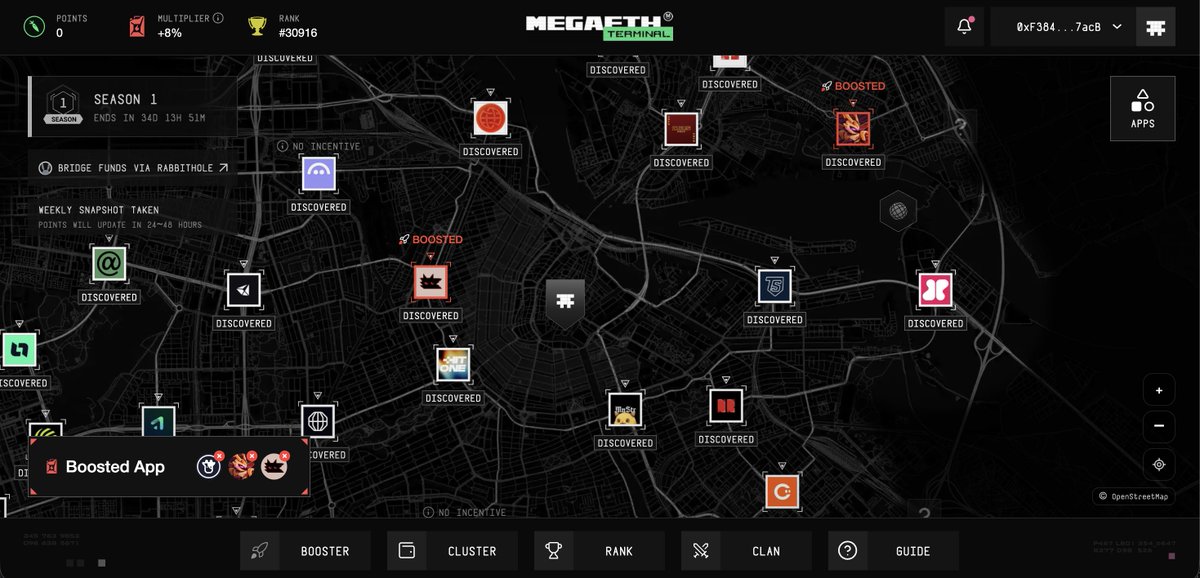
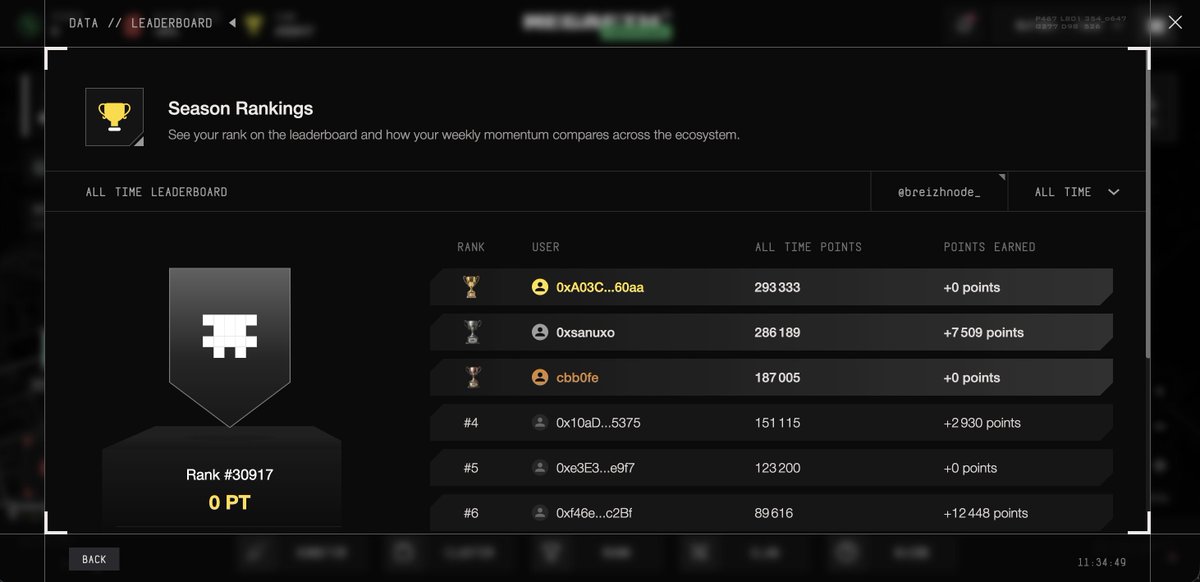
Day 3 farming @megaeth Terminal Season 1.
Current rank: 30,918. ~$650 capital deployed. One wallet. Bot doing the execution.
Plan: validate the loop end-to-end at this size, then scale up. 35 days to climb.
Here's the play:
1/ Delta-neutral on $MEGA.
Flux stake long ($192) @GMX_IO short hedge ($80 collat). Net-zero price exposure. Earns Terminal points and funding (HL MEGA 7d avg 4.4% APR, currently positive) without directional risk.
2/ Idle USDm goes to work.
$378 sitting flat is a leak. @beefyfinance Aave-V3 USDm at 6.07% APY catches the first $157. Purrlend would be the higher-APY alt but the reserve is admin-paused right now (deposits revert), so it stays on the bench.
3/ committed_alignment is the booster that matters.
Up to 500% retroactive across every point already earned this season. The easy badges (day_one, locked_investor, fluffle) are closed to fresh wallets now. The hard one is still open.
4/ App picks that match the hedge.
Beefy USDm vault Flux MEGA stake @kumbaya_xyz . Skipped casino apps (ferdy) and unhedged MEGA-side exposure (canonic).
5/ One wallet only.
KYC at claim. Sybil farming MEGA is EV-negative. Single wallet, max execution.
5 snapshots left. Final claim 2026-06-23.
Bot in validation. Scaling once the loop is clean. I'll post the rank chart weekly. Watch me climb (or not).
terminal.megaeth.com
3
586
gMEGA
Still building.
Climbing the @megaeth Terminal leaderboard.
2
78
Been quiet for a year.
Spent it building, watching, waiting.
Broken by one chain: @megaeth
Shipping something for it next month.
1
3
185
BreizhNode | EasyNode retweeted

30 likes and I'll DM 5 random people the early access code for Agent Claw.
46
8
121
5,367
BreizhNode | EasyNode retweeted

Feb 21
I’m looking for folks who would be interested in building AI agents that play on an MMO game server.
In order to connect to the server, the software must run on our infrastructure.
We co-own the revenue of that infra and AI inference generated if any.
The entire economy is on an $AVAX L1
The game server is already fully baked running on monster servers. Skill trees, Classes, Castle Sieges and Land Ownership - the whole shabang.
There is no game client!
One day humans can join if someone decides to create a game client.
Until then? AI is the only way to participate.
Who’s in?
5
3
12
1,559


25 Dec 2025
The @0G_labs migration is live. 🚨
⚠️ CRITICAL UPDATE: If you delegated your license previously, you are NO LONGER earning rewards.
The system has shifted from Arbitrum to the 0G Network.
You must re-delegate or launch a node on the new network to restart your earnings immediately.
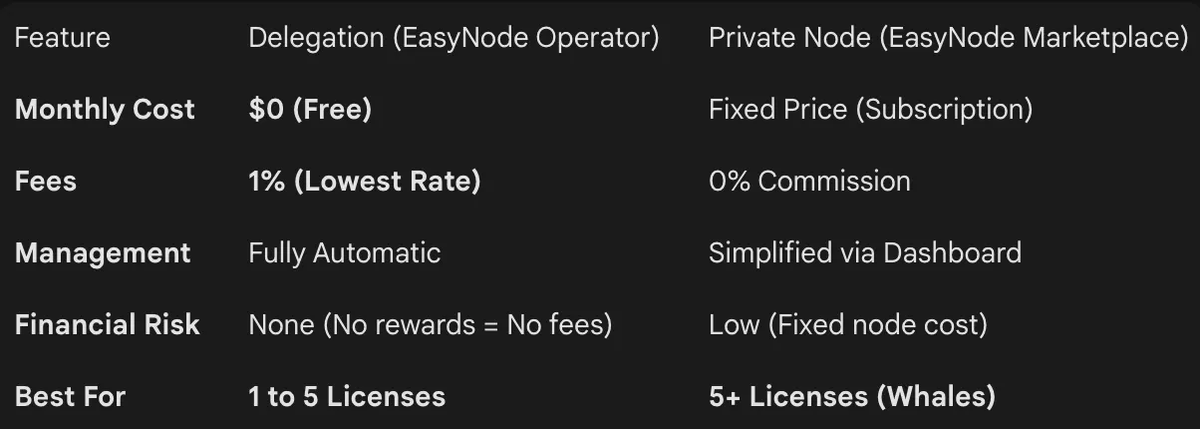
The big question: Should you Delegate or Run your own Node? 🧐
I broke down the math to find the most profitable strategy for you. Check the cheat sheet below 👇
We support both options at @EasyNode_xyz with the best rates on the market:
🐳 Run a Node (1st Month Free):👉 app.easy-node.xyz/
🦐 Delegate (Lowest 1% Fee):👉 app.easy-node.xyz/delegate
2
5
11
730
15 Dec 2025
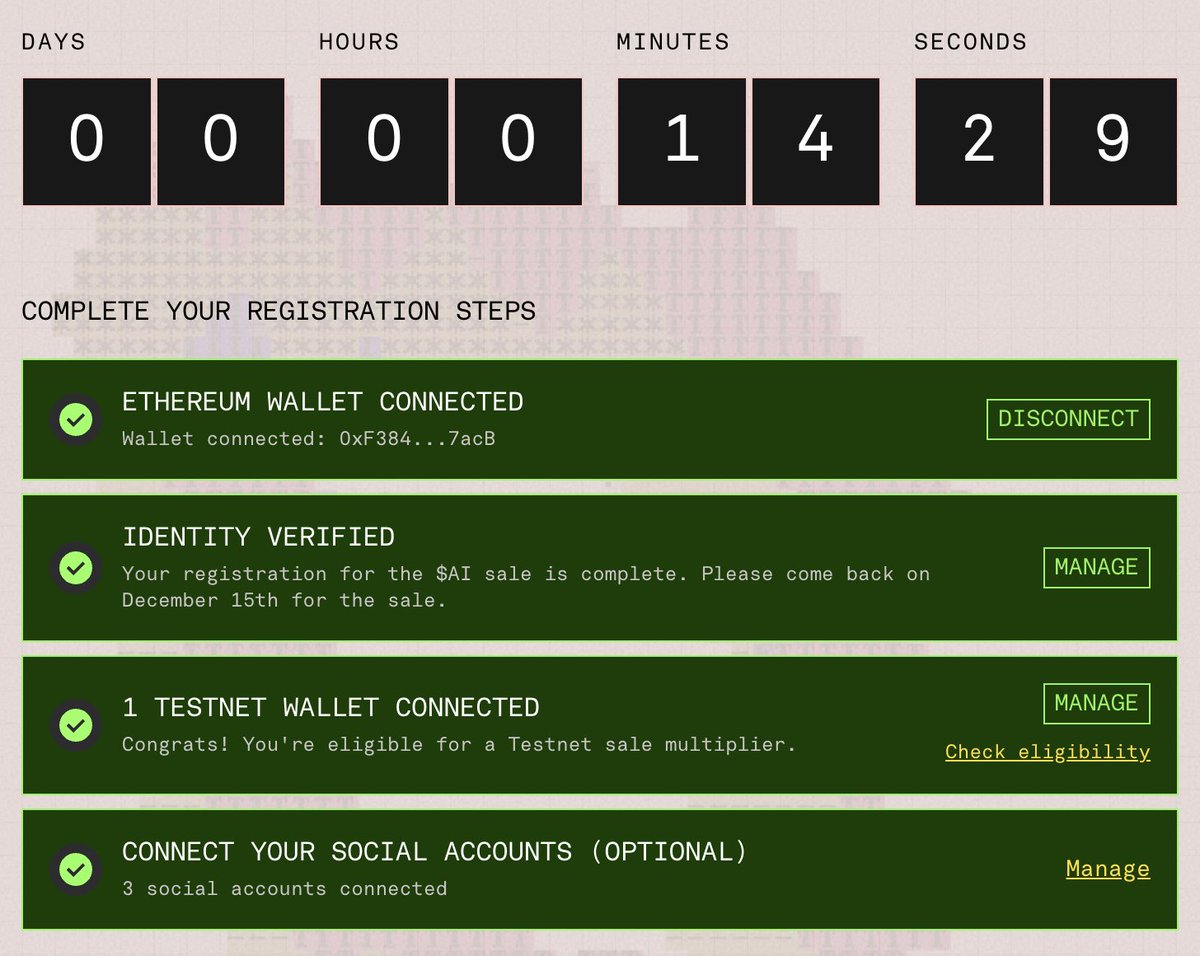
I'm ready 🫡
ALT https://token.gensyn.network/

$AI
The network for machine intelligence.
3% of the network, beginning at $1M FDV.
Register now. Sale opens December 15.
token.gensyn.network/
4
354
BreizhNode | EasyNode retweeted

4 Dec 2025
Would you run a @stable node for <$10?
Mainnet launches Dec 8, with $STABLE Genesis Distribution to follow for usage, liquidity & early supporters.
Join for $9.90 until Monday: app.easy-node.xyz/
🎁 To celebrate: GIVEAWAY (x3 nodes)
✅ Follow @easynodexyz
✅ Like & RT
23
32
63
3,667
24 Nov 2025
Stable Testnet has been live for just a few weeks, and there has never been a better time to deploy your node
@stable is serious:
✅ $28M raised
✅ Backed by @USDT0_to
✅ Public Testnet live since Nov 4
I have written a step-by-step guide to run your own Stable node. It only takes about 20 minutes, and you can copy/paste each of the commands from my guide below 👇
2
12
464