
Human Being. #ClimateEmergency #MedicareForAll #End4ProfitWars #PromotePeace #RCV #VoteByMail #BlackLivesMatter
Joined September 2009
- Tweets 145,927
- Following 1,541
- Followers 1,642
- Likes 200,443
8,965 Photos and videos
cdbrzezinski 💚🌹 retweeted

Today's featured university icon is Bentley Hall at Allegheny College in Meadville, Pennsylvania.
university-icons.pixels.com/…
#alleghenycollege @alleghenycol

1
1
51
cdbrzezinski 💚🌹 retweeted

Jun 11
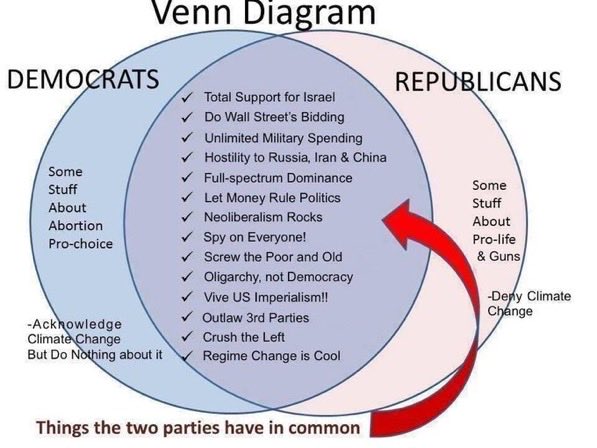
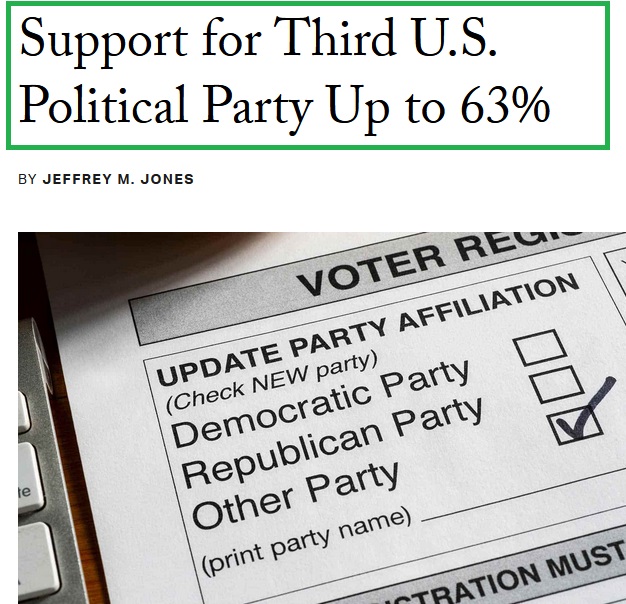
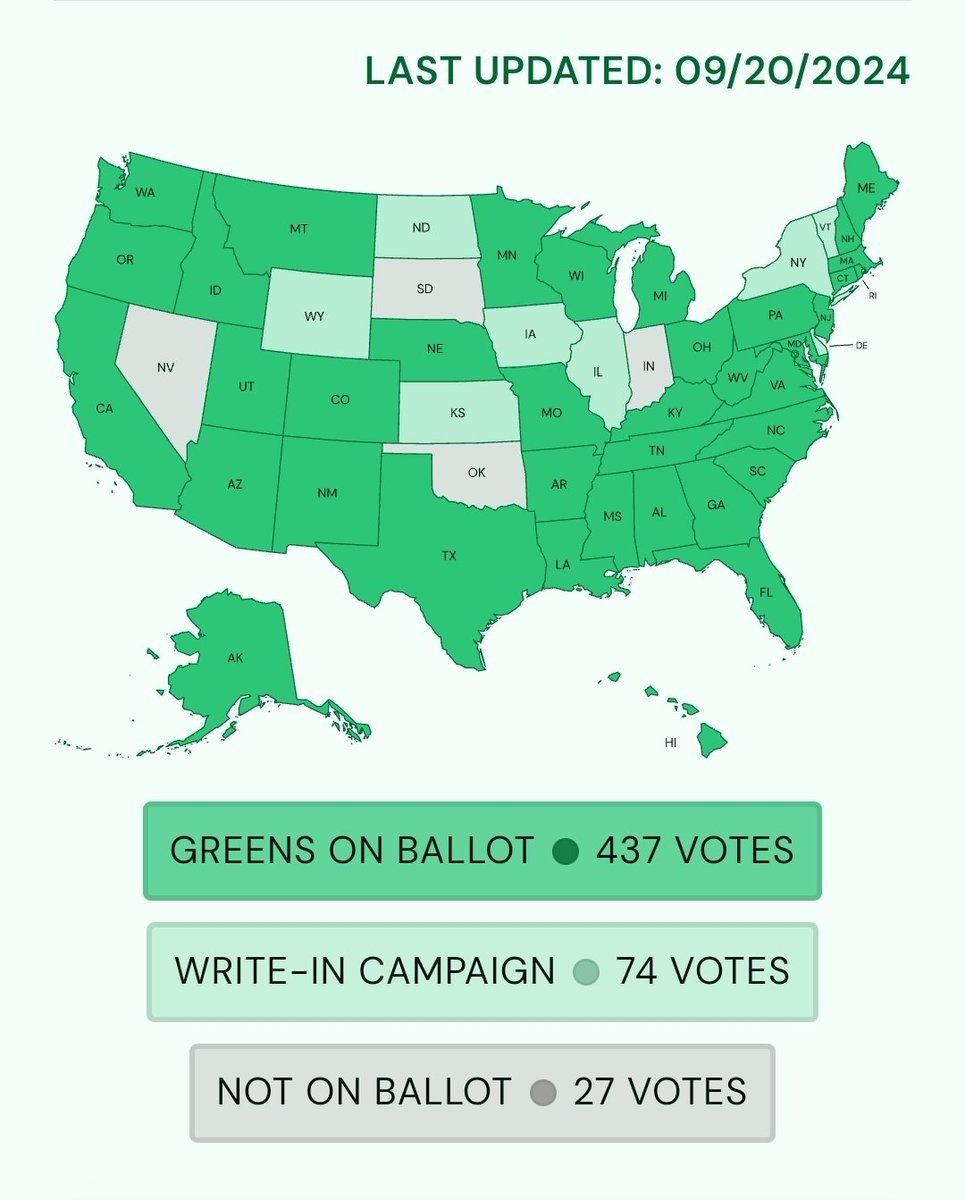
#DuopolyExit time, America.
The Green Party's @DrJillStein proved in '24 that a third party can have a path to the White House.
Abe Lincoln got elected via a third party.
Gotta lie down to be walked on, folks. Aren't you tired of getting played by our purchased politicians?

2
3
77
cdbrzezinski 💚🌹 retweeted

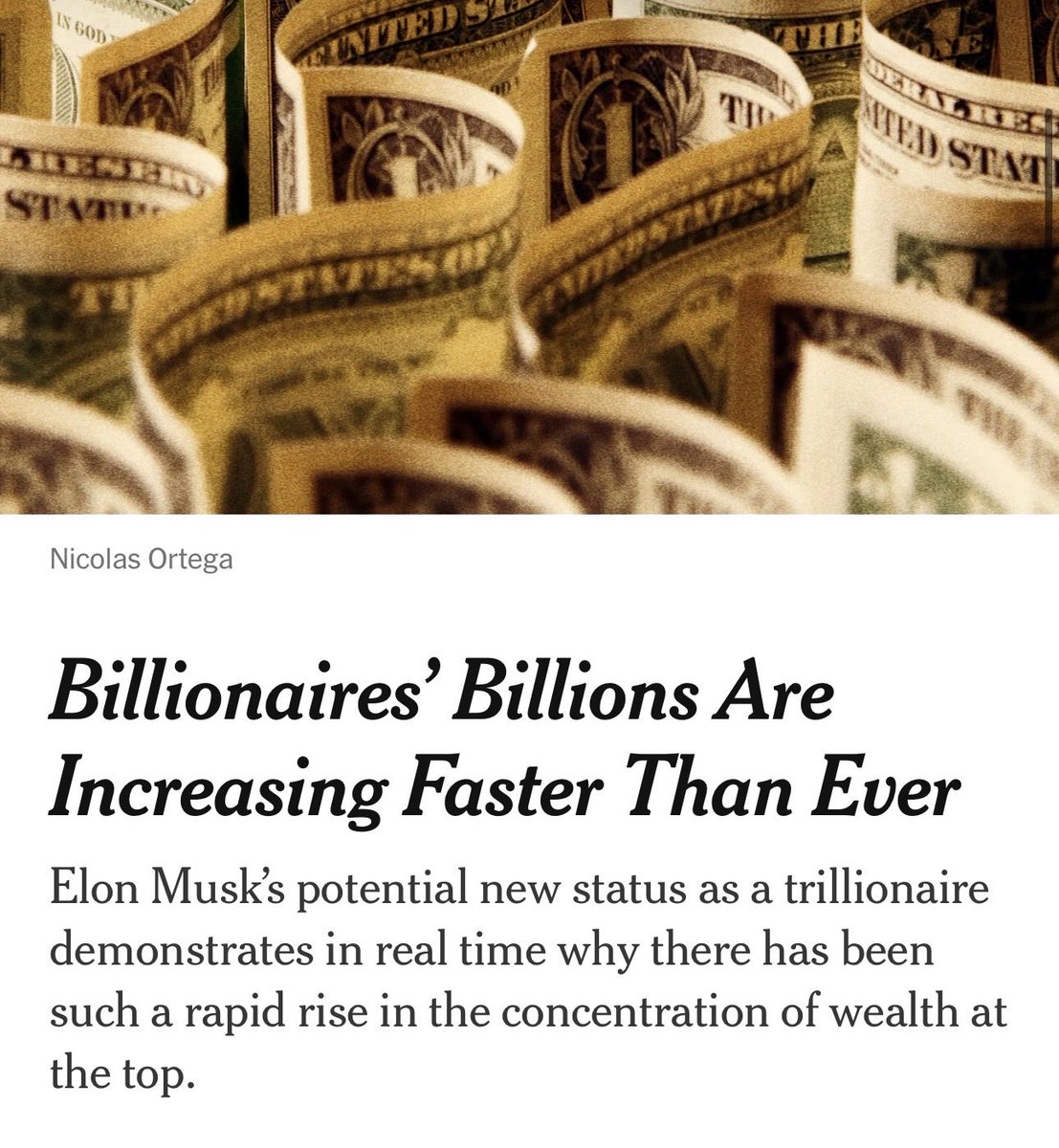
This is insanity. The combined wealth of the world's billionaires has tripled over the last 15 years, surging from $4.5 trillion to over $14 trillion. Meanwhile, they've made sure the masses are busy fighting each other to stop us from uniting against their reckless greed.
96
679
1,152
42,471
cdbrzezinski 💚🌹 retweeted

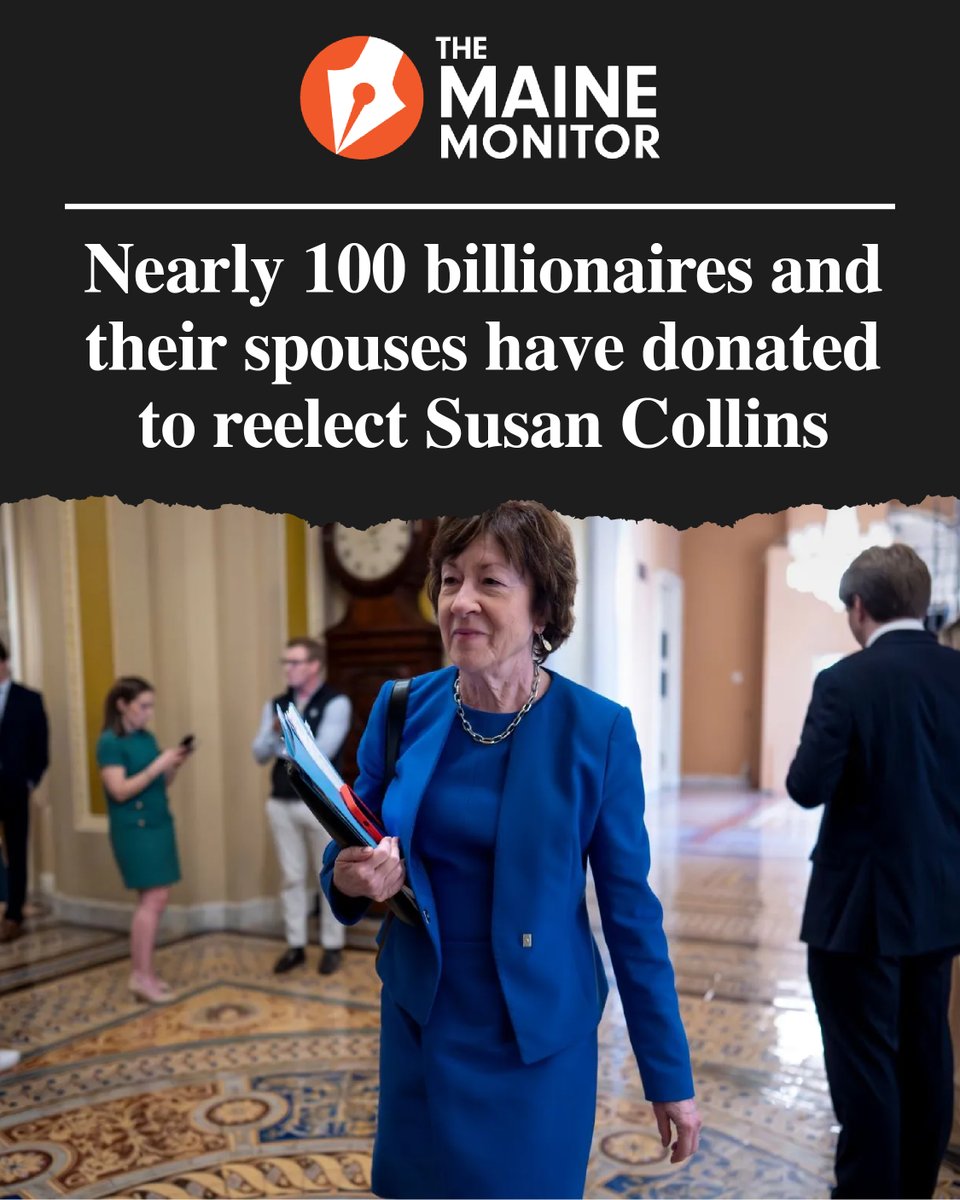
We’ve received $9.6 million from 265,000 small-dollar donations.
Susan Collins received $9.8 million from 79 billionaires.
2,484
2,686
10,955
191,274
cdbrzezinski 💚🌹 retweeted

Jun 8
Full story in Lever Daily: levernews.com/the-supreme-co…
2
34
89
4,913
cdbrzezinski 💚🌹 retweeted
Jun 8
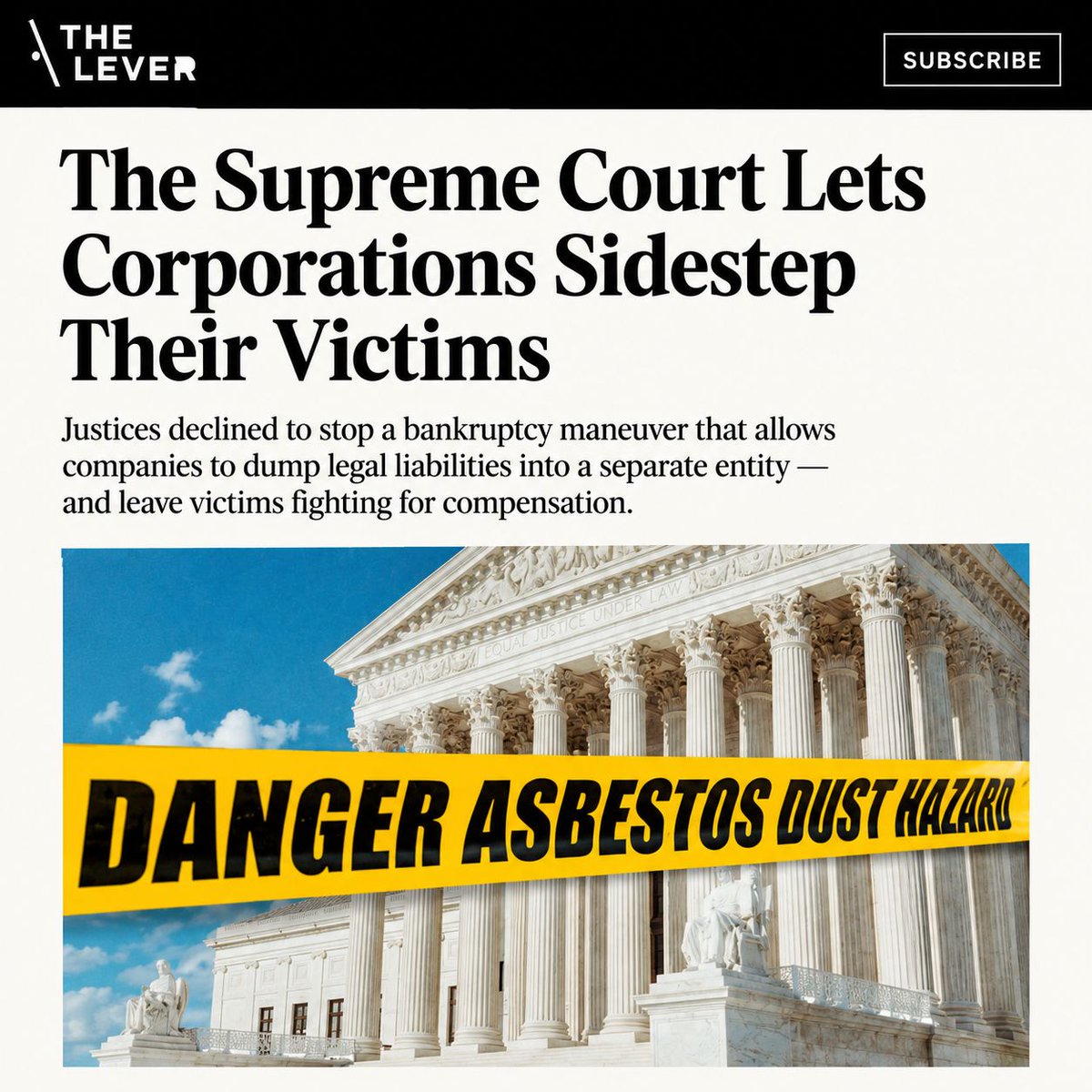
BREAKING: The Supreme Court just let stand a bankruptcy tactic known as the “Texas two-step” — a corporate escape hatch for companies facing massive lawsuits.
Instead of facing victims in court, companies can move those claims into a separate shell company, send it into bankruptcy, and leave victims fighting for years while the real money stays protected.
117
1,672
2,360
112,178
cdbrzezinski 💚🌹 retweeted

Jun 11
This is truly insane. And almost nobody noticed it.
Jun 8

BREAKING: The Supreme Court just let stand a bankruptcy tactic known as the “Texas two-step” — a corporate escape hatch for companies facing massive lawsuits.
Instead of facing victims in court, companies can move those claims into a separate shell company, send it into bankruptcy, and leave victims fighting for years while the real money stays protected.
7
364
1,106
26,286
cdbrzezinski 💚🌹 retweeted

Jun 11
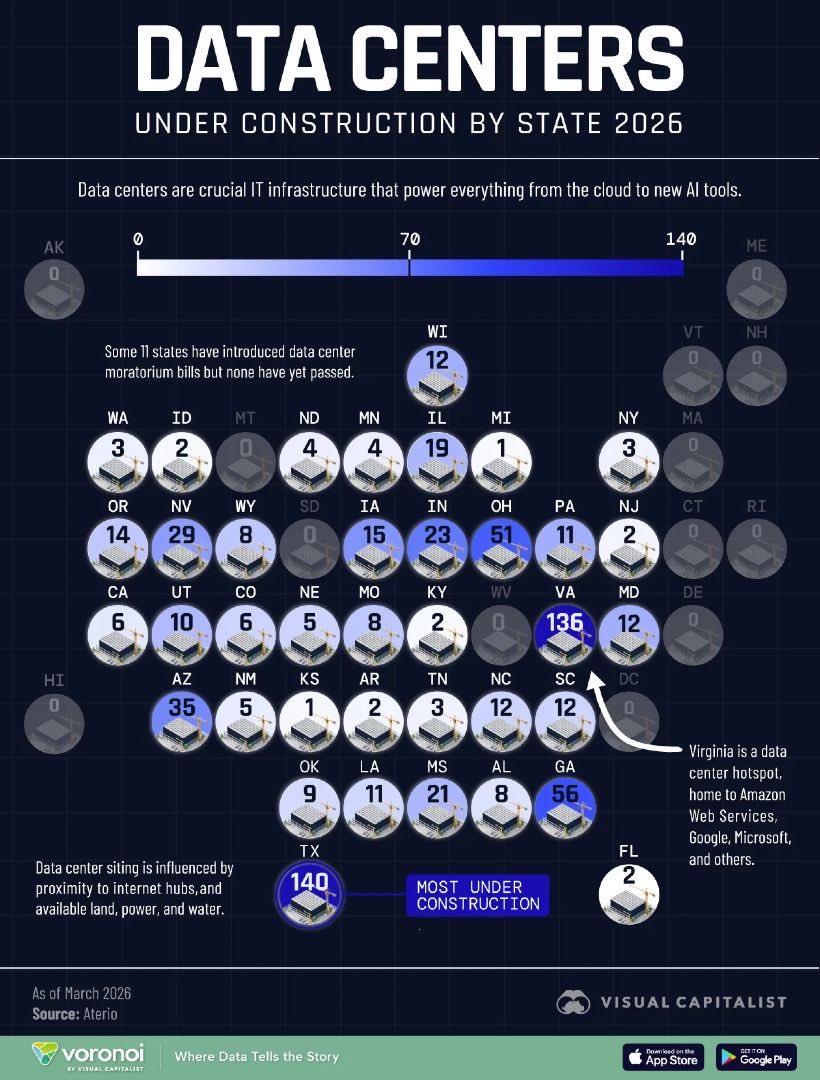
NASHVILLE— REP. @brotherjones_: “I was a professor here, teaching environmental racism. @Fisk1866 U President (Dr. Clark) asked me if it would conflict with plans to build a data center on campus. I started teaching about dangers of A.I… my class was canceled within a week.”🤔
36
2,400
7,568
168,685
cdbrzezinski 💚🌹 retweeted

Jun 11
“This [Trump] administration cooked up a sham deal to pay a foreign energy company hundreds of millions of taxpayer dollars to abandon offshore wind and invest in oil and gas instead.”
Yet another attempt to stall clean energy progress while fossil fuel interests cash in. Thankfully, several attorneys general across several states are fighting back against another attack on cheap #cleanenergy, union jobs, and Americans.
theguardian.com/us-news/2026…
2
38
41
2,441
cdbrzezinski 💚🌹 retweeted

Jun 10
A record-shattering drought has racked much of the United States.
But the artificial intelligence industry is pushing ahead regardless, with the majority of planned data centers set to be built in drought-ridden locations, @guardian analysis has found. motherjones.com/politics/202…
22
694
946
24,531
cdbrzezinski 💚🌹 retweeted

Jun 11
🚨EXHIBIT A: Republicans are in trouble.
Congressman Mike Flood stated his constituents should never get free healthcare…
THE AUDIENCE BOOED HIM MERCILESSLY.
Jun 11

🚨EVERY WORD OF THIS:
Leader Hakeem Jeffries SKEWERS Trump’s bizarre admission that he “loves inflation,” saying the ONLY conclusion is that Trump “doesn’t give a damn about making life better for everyday Americans.”
Then he TORCHED Trump for tariffs, war-driven instability, rising costs, and healthcare cuts, arguing that Americans are paying the price while Trump remains completely out of touch.
Trump has literally made EVERYTHING worse.
103
1,346
3,620
149,148
cdbrzezinski 💚🌹 retweeted

Jun 10
AI Data Centers’ Water Consumption Breaks 264 Billion Gallons in 2025 as Devastating Drought Hits Nearly 63% of U.S.
barchart.com/story/news/2339…
15
250
386
16,582
cdbrzezinski 💚🌹 retweeted

Jun 10
Let me be clear that hate has no home here in Illinois.
This symbol has one purpose: to stir up intimidation and terror.
We will not be silent — those responsible must be held accountable.

A burning cross was found in Grant Park on Tuesday, city officials confirmed.
blockclubchi.co/49RgAMt

1,367
290
1,998
160,168
cdbrzezinski 💚🌹 retweeted

Jun 10
The Trump administration is dismantling the Ocean Observatories Initiative, a key monitoring system for tracking the climate crisis.
Policy expert David Helvarg calls it "the most advanced system for understanding the deep ocean," which was set to continue operating for at least another 15 years. He says the Trump administration, however, is more focused on oil drilling and deep-sea mining, treating the ocean "as a gas station and a garbage dump."
27
850
1,319
22,681
cdbrzezinski 💚🌹 retweeted

Jun 10
They are building a digital prison in the U.S.
They are building an open-air prison in Gaza.
They are building a social‑credit prison worldwide.
The Epstein network’s plan is still on track.
Digitized. Normalized. Institutionalized.
36
513
1,447
14,733
cdbrzezinski 💚🌹 retweeted

Jun 10
A century after the Dust Bowl devastated the American High Plains, experts warn that the United States is on the brink of a second one, driven largely by the same policy failures that caused the original environmental catastrophe.
Despite the lessons of the 1930s and the passage of the Taylor Grazing Act of 1934, unsustainable livestock grazing on public lands continues to degrade soils across the West. Ranchers are currently authorized to remove up to 50–65% of available forage on many allotments, more than double the 25–30% maximum recommended by range scientists for long-term land health.
This chronic overgrazing, combined with increasingly severe droughts linked to climate change, has accelerated the spread of invasive cheatgrass, heightened wildfire risk, and triggered renewed toxic dust storms. These storms threaten air quality, human health, watersheds, and native ecosystems.
Conservationists argue that temporary executive actions are not enough, as they can be reversed by future administrations. They call for permanent Congressional action, including enforceable limits on livestock numbers, the establishment of ungrazed monitoring areas, and reforms that allow native wildlife and healthy rangelands to coexist with grazing.
Without decisive legislative reform, large areas of the American West risk crossing irreversible thresholds of desertification and permanent soil loss.
[Molvar, E. (2026). The Second Coming of the Dust Bowl. Western Watersheds Project]

38
324
559
22,136
cdbrzezinski 💚🌹 retweeted

Jun 10
Mainers have spoken: they want a working class champion who understands their struggles and will fight for them, not special interests and billionaires. @LeadersWeDeserv candidate @grahamformaine now faces Susan Collins, a 29-year incumbent who voted to send soldiers like Graham into forever wars, has repeatedly done the bidding of the Trump Admin, and answers to the Epstein class.

394
177
700
39,655
cdbrzezinski 💚🌹 retweeted

Jun 10
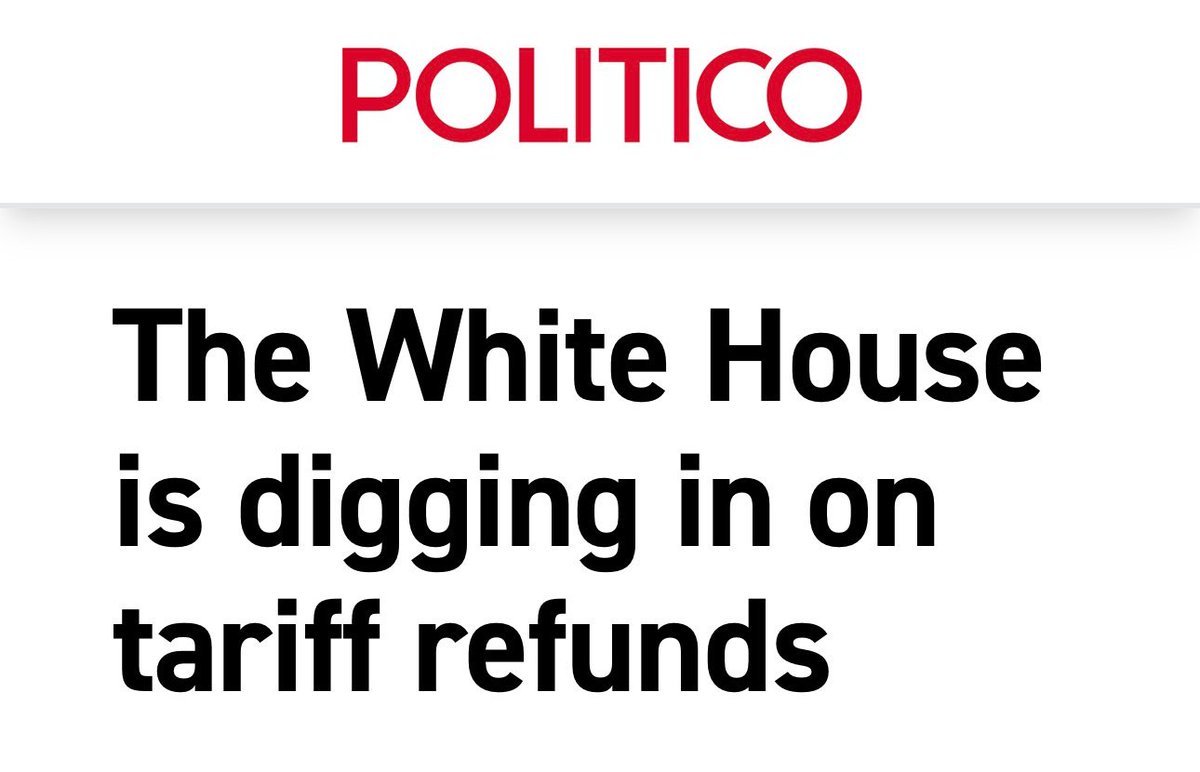
Donald Trump is doing everything he can to keep the billions he stole from American families and small businesses.
The people of Illinois want it back.
$1,700 per family. Pay up.
266
246
778
11,090
cdbrzezinski 💚🌹 retweeted

Mark Zuckerberg, an outspoken critic of "man-made climate change", shows off his new $300 million, 287-foot mega yacht, powered by four gigantic diesel engines.
Yet another stark reminder that Net Zero is only for the peasants
1,070
16,124
84,960
2,518,343
cdbrzezinski 💚🌹 retweeted
New video reacting to Mark Zuckerburg showing off his $300 million Mega yacht as his company lays off 1,400 workers.
We were sold a lie that privatizing everything would make us freer, but the only thing it has resulted in is billionaires owning $300 million floating palaces while workers whose labor generates the wealth cannot afford housing.
It is time to take back the means of production and put the economy directly in the people’s hands.

Mark Zuckerberg, an outspoken critic of "man-made climate change", shows off his new $300 million, 287-foot mega yacht, powered by four gigantic diesel engines.
Yet another stark reminder that Net Zero is only for the peasants
96
857
2,683
340,531