We are a non-profit organisation using strategic legal response to defend civil liberties. Our photos: flickr.com/photos/chapterfou…
Joined June 2014
- Tweets 12,188
- Following 1,037
- Followers 26,523
- Likes 10,242
3,191 Photos and videos


Chapter Four statement on indefinite suspension of the organization’s NGO permit.
“We consider this suspension unjustified and are pursuing all available administrative and legal measures to restore our operational status as soon as possible.”
For more: chapterfouruganda.org/statem…
5
40
89
4,646
Joint Anti-Terrorist Task Force (JAT) officers brutalize @bbstvug Journalist, Ivan Mbadi, during @HEBobiwine’s campaigns in Kween district. His camera was destroyed during the attack.
We strongly condemn rising incidents of attacks on journalists for covering acts of brutality by security forces ahead of the polls.
Journalism is not a crime. We call on the @PoliceUg to ensure safety of journalists and other media workers. Responsible authorities, including the @UHRC_UGANDA and the @ODPPUGANDA should inquire into these documented crimes to bring perpetrators to account.
#PressFreedom | #Uganda
2
34
83
3,766

30 Dec 2025
We’re deeply concerned by the arrest of human rights advocate @SarahBireete, the executive director of @ccgea1.
As we continue to make inquiries on the situation, we urge the @PoliceUg to promptly disclose the nature of the alleged offence, place of detention, and ensure that her next-of-kin, lawyers and if necessary—personal doctor—are granted immediate reasonable access to see her. We further call on the police to respect her right to privacy and ensure that no unlawful entry or search are carried out.
#FreeSarahBireete | #Uganda
30 Dec 2025

|| @KawalaRachael The uganda police force would like to confirm the arrest of Sarah Bireete director for center for constitutional governance.
She is in police custody. She will be arraigned before court in due course
10
89
181
17,699
24 Dec 2025
As we get close to the end of another year of collective efforts towards a fairer and more just society, we extend our heartfelt gratitude to everyone who has stood with us in defending human rights, justice, and dignity in Uganda.
This season, we celebrate the courage of all who continue to speak truth to power, protect the vulnerable, and work toward a freer, fairer, and more just society. Your resilience and solidarity have been our greatest strength.
May the holidays bring you rest, peace, and renewed resolve for the year ahead.
Happy Holidays! ✨
9
30
2,392
23 Dec 2025
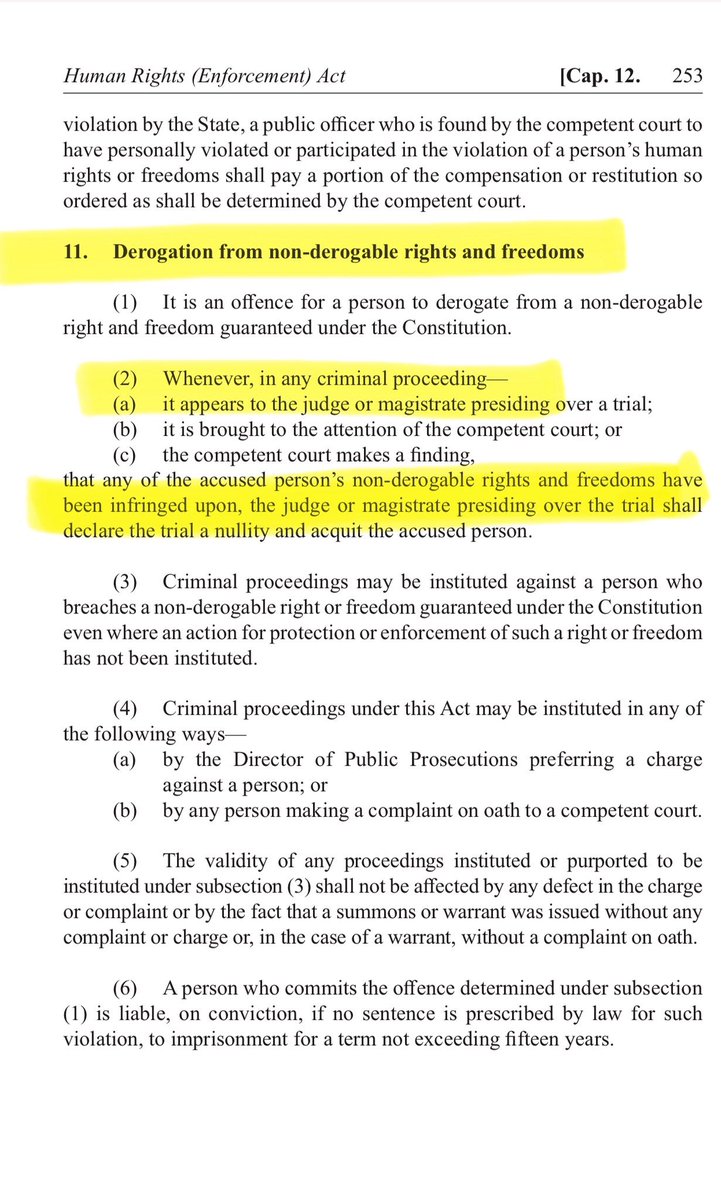
The trial of Fr Deusdedit Ssekabira is a nullity. We urge the @ODPPUGANDA and the trial magistrate in Masaka to follow the law to declare the trial a nullity and proceed to acquit him unconditionally.
After he was disappeared on 3 December 2025, the UPDF acknowledged holding him in 14 December 2025—and continued to hold him in a place not authorized by law beyond 48 hours. This was a violation of a spectrum of his constitutional and procedural rights while in detention.
Apart from being an affront to non-derogable rights guaranteed under the 1995 Constitution and the Human Rights (Enforcement) Act, entertaining such trials that are entrenched in illegalities emboldens impunity for enforced disappearances, torture, unfair trials, and disregard for the rule of law.
#Uganda | #FairTrials
23 Dec 2025

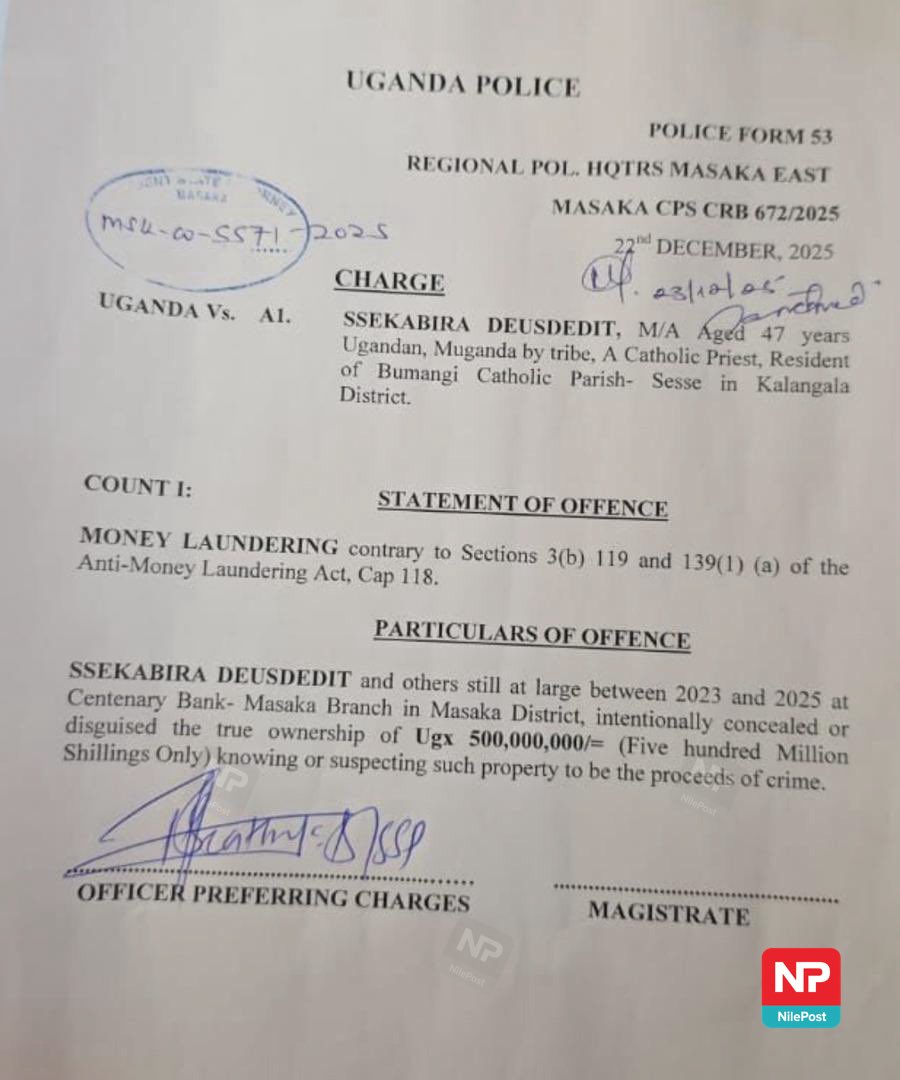
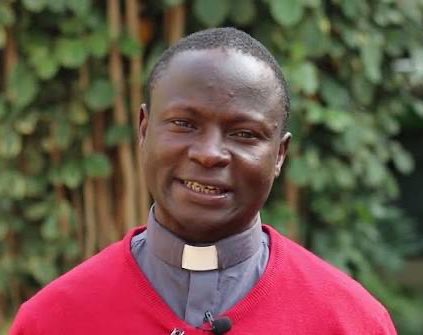
UPDATE: Rev. Fr. Deus Ssekabira is being charged with money laundering, contrary to the Anti-Money Laundering Act.
Prosecutors allege that between 2023 and 2025, he and others still at large concealed the true ownership of UGX 500 million, suspected to be proceeds of crime, at Centenary Bank Masaka Branch.
He is expected to appear in court today.
#NBSUpdates
12
121
318
27,558
19 Dec 2025
Uganda’s Computer Misuse Act, Cap. 96 criminalizes sending “unsolicited information” online, punishable by up to seven years in prison.
This provision is unconstitutional for being vague, overbroad and repressive. Most communications, including all social media posts, journalistic inquiries and publications, and advocacy messages, are often “unsolicited.”
In 2022, working in partnership with 13 other defenders of digital freedoms, we filed Constitutional Petition No. 37 in the Constitutional Court to challenge the offense and other provisions of that law for being inconsistent and in contravention with several Articles of the 1995 Constitution. The hearing was concluded. Judgment is set to be delivered on a date to be fixed by the Court.
Human rights standards under the 1995 Constitution and the ICCPR require speech restrictions to be clear, pursue a legitimate aim, and be necessary and proportionate, which this offense fails to meet. The severe penalties and unclear scope create a chilling effect on journalists, activists, and ordinary users, especially when speaking about public officials.
By making “unsolicited” communication the default offense and “public interest” a narrow and discretionary exception, the law undermines the rights to both impart and receive information and weakens democratic debate in Uganda.
We hope the Constitutional Court will deliver its judgment soon to end enforcement of such unconstitutional provisions.
18 Dec 2025

NUP's Muvawala remanded to Luzira over recording police, UPDF brutality.
He is accused of recording videos of security personnel and sharing them with people who had not solicited them #MonitorUpdates monitor.co.ug/uganda/news/na…
9
45
118
15,329
16 Dec 2025
The abduction and continued incommunicado detention of Rev. Fr. Deusdedit Ssekabira of Masaka Diocese is a clear violation of Uganda’s constitutional and legal safeguards on arrest and detention, Chapter Four Uganda said today. See our statement for more. chapterfouruganda.org/statem…
1
7
1,143
11 Dec 2025
“We continue to see individuals incarcerated for offences such as ‘common nuisance’ or detained for civil debts—situations that do not warrant deprivation of liberty,” @ByansiHenry noted. See article for details. @WakisoHuman @kasiryeElly #Uganda chapterfouruganda.org/calls-…
2
9
975
10 Dec 2025
The systematic erosion of fundamental ideals of dignity and freedom in Uganda through state-sponsored violence, brutality, arbitrary arrests, and a declining state of rule of law is deeply worrying. See our statement on #HumanRightsDay for more details. chapterfouruganda.org/human-…
2
2
1,213
Chapter Four Uganda retweeted

27 Nov 2025
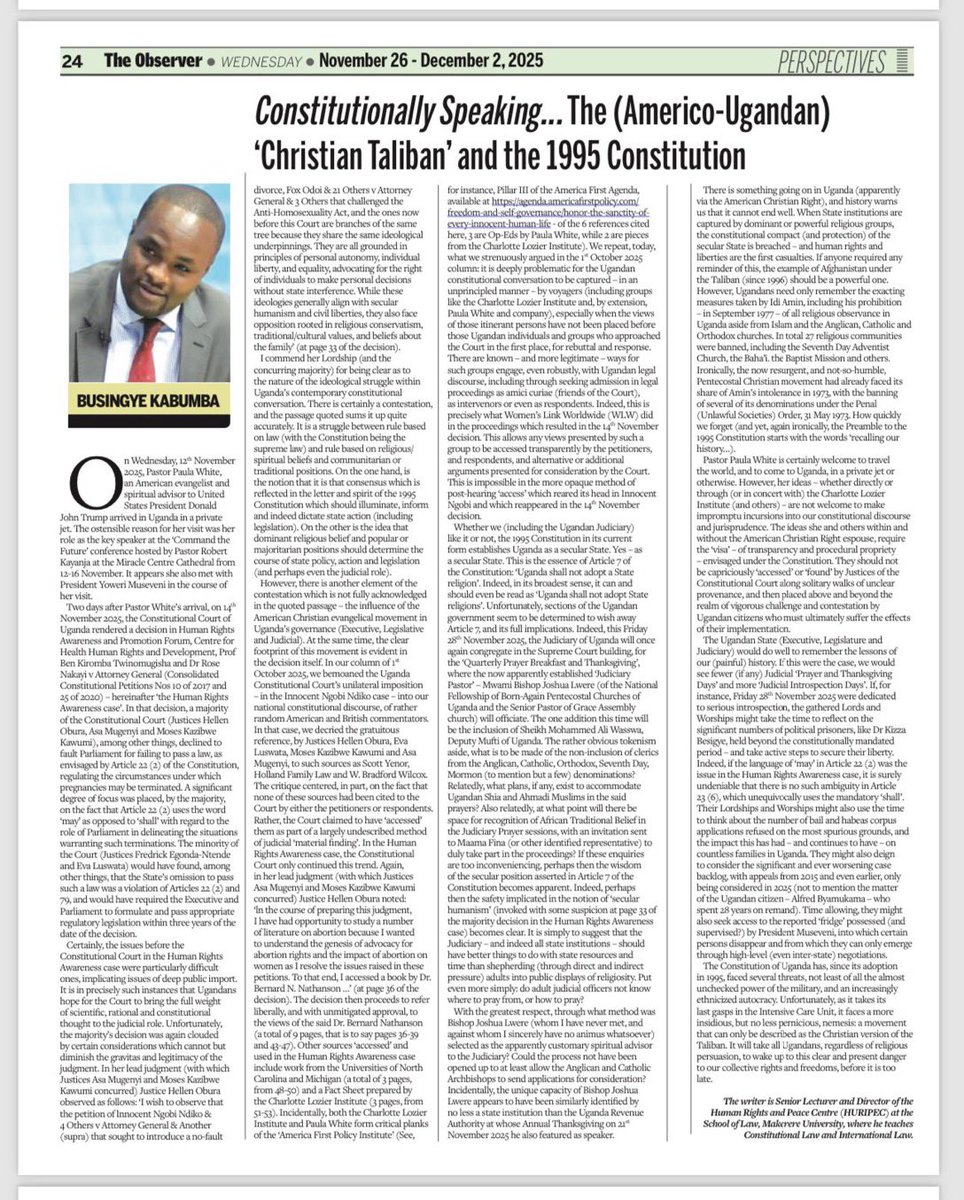
The 1995 Constitution was meant to be Uganda’s anchor, a secular safeguard for every citizen, regardless of faith, identity, or background.
Reading this piece on the rise of an “Americo-Ugandan Christian Taliban” by @bkabumba is a sobering reminder of how foreign-driven fundamentalism can distort our courts, our politics, and our social fabric.
As someone working daily with communities most affected by exclusion, I’ve seen how moral panic replaces fact, and how imported ideologies become tools to police, punish, and silence Ugandans.
Reclaiming constitutionalism is not just legal work, it’s our collective duty to ensure dignity, equality, and freedom remain at the centre of our nation’s future.
#HumanRights #JusticeForAll #Uganda
observer.ug/viewpoint/the-am…
6
14
1,148
26 Nov 2025
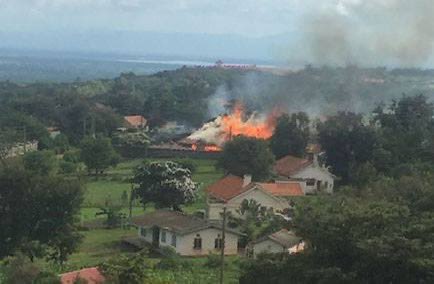
Today, we solemnly remember the tragic events of November 26, 2016 in Kasese, where government security forces attacked the Rwenzururu Royal Palace, killing at least eight people.
The killings prompted clashes between the police and community members, resulting in the killing of at least 14 police officers and 32 civilians.
The next day, on November 27, 2016, Uganda’s army raided the palace, killing over 150 civilians, including children.
The massacre remains one of the darkest chapters in Uganda’s recent history.
We remember the lives lost and continue to call for impartial investigations and actions to bring perpetrators to account.
The government should further provide reparations to the victims and their families and take action to end extrajudicial killings.
#LestWeForget | #KaseseKillings
1
389

It starts with one message...
And then becomes a flood of online abuse 🤬
During the #16Days of Activism, join us in calling for safety, accountability, and justice online.
Learn more and take action #ForAllWomenAndGirls: unwomen.org/en/get-involved/…
#ACTToEndViolence
256
241
452
108,234
Chapter Four Uganda retweeted

10 Nov 2025
Congratulations @AloikinOpoloje. Your dedication and purpose are powerful. Fee may scorn you, but they know they can't match your ambition, your resolve, and clarity of thought. History will absolve you. Keep your eyes on the crystal ball, my sister.
martinennalsaward.org/2025-e…
4
12
63
21,586
Chapter Four Uganda retweeted

7 Nov 2025
It was very inspiring to hear about @chapterfourug 's work and the extraordinary support they provide to civil society and for the protection of the right to freedom of assembly in #Uganda
6 Nov 2025

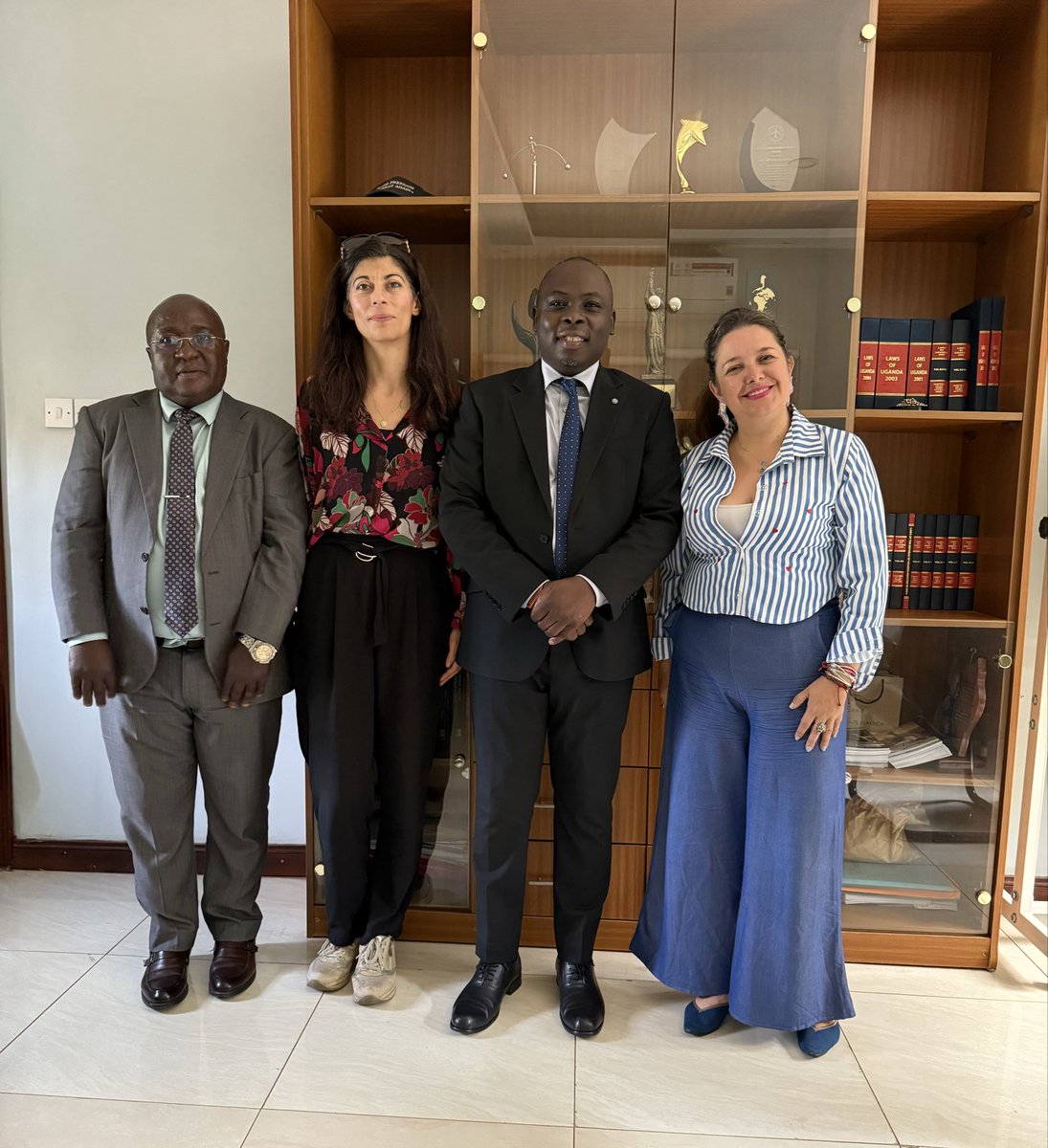
Earlier today, our Executive Director, @masakeonline, welcomed @Ginitastar—the UN Special Rapporteur on the freedom of peaceful assembly and of association—at our offices for a courtesy call.
During the meeting, we discussed our work, the challenges, and opportunities to advance the freedom of peaceful assembly and of association in Uganda.
We also explored potential areas of collaboration between Chapter Four and the UNSR to strengthen protections for civil society and peaceful assemblies. Thank you, Gina, for the visit.
2
6
1,036
6 Nov 2025
Joint Statement:
Chapter Four Uganda and the @Kacsoa_ condemn the cruel, inhuman, and degrading treatment of over 300 displaced residents from Bukwo and Kween Districts at the Kabelyo Holding Camp by @ugwildlife rangers, call for accountability.
#HumanDignity | #Uganda chapterfouruganda.org/joint-…
9
15
1,467
6 Nov 2025
Earlier today, our Executive Director, @masakeonline, welcomed @Ginitastar—the UN Special Rapporteur on the freedom of peaceful assembly and of association—at our offices for a courtesy call.
During the meeting, we discussed our work, the challenges, and opportunities to advance the freedom of peaceful assembly and of association in Uganda.
We also explored potential areas of collaboration between Chapter Four and the UNSR to strengthen protections for civil society and peaceful assemblies. Thank you, Gina, for the visit.
4
12
60
4,967
4 Nov 2025
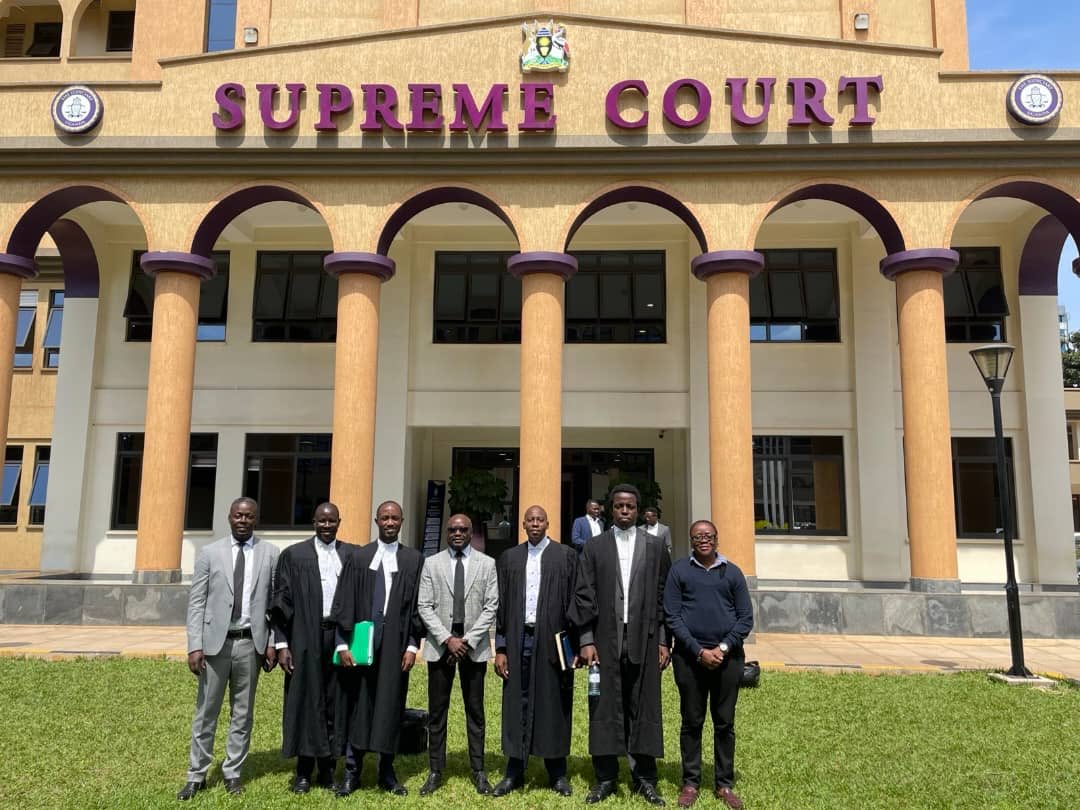
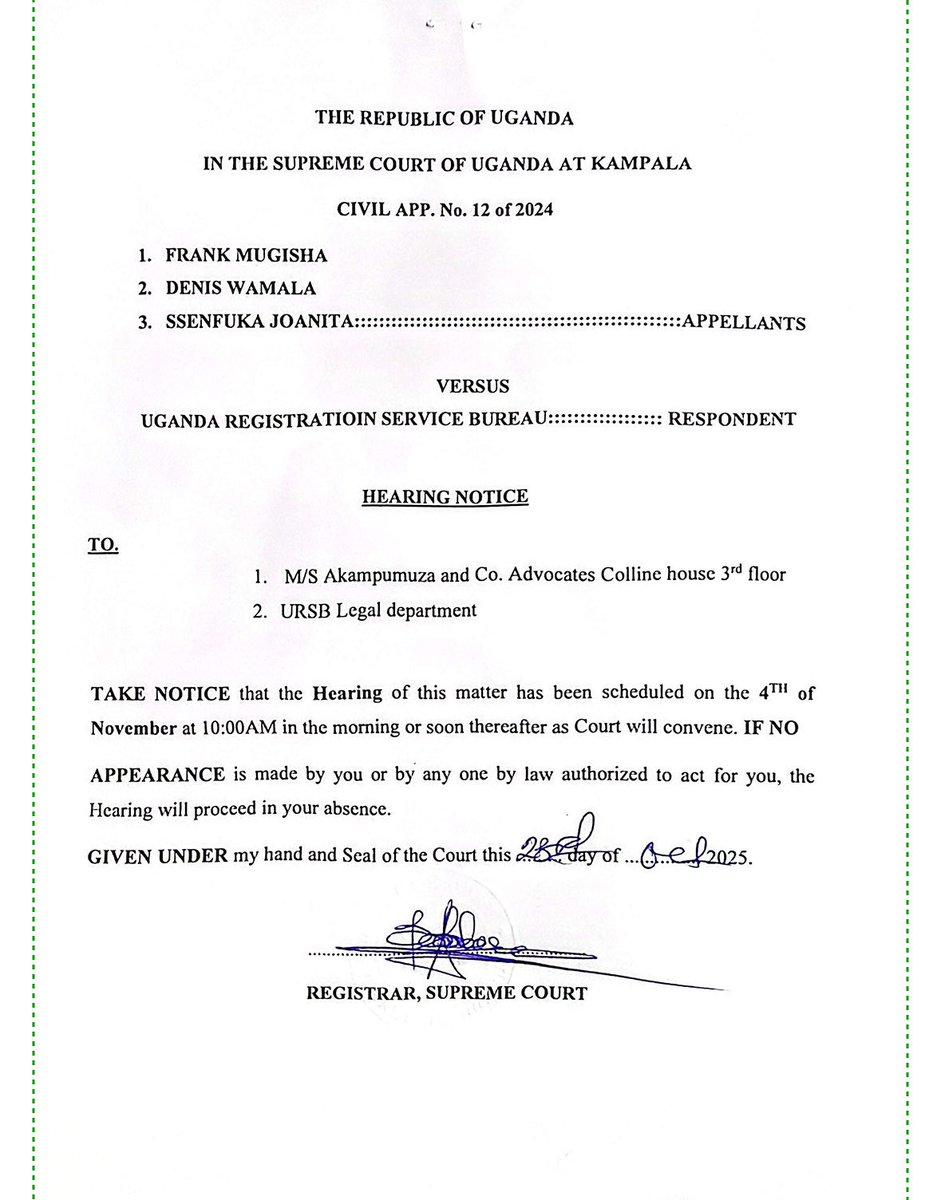
Today, the Supreme of Uganda stayed the hearing of Civil Appeal No. 12 of 2024–@frankmugisha and 2 others vs Uganda Registration Services Bureau (URSB)—pending the hearing and determination of Supreme Court Constitutional Appeal No. 7 of 2024, Fox Odoi Oywelowo and others vs Attorney General.
The civil appeal challenges the decision of @URSBHQ to deny ‘Sexual Minorities Uganda’ (SMUG) registration as a company limited by guarantee. SMUG was seeking to register to champion the rights and wellbeing of LGBTQ persons.
The stay resulted from our lawyers' argument that Supreme Court Constitutional Appeal No. 7, which challenges the Constitutionality of the Anti-Homosexuality Act, 2023, raises issues that have a bearing on the SMUG appeal, namely, the right of LGBTQ persons to form or join associations just like everyone else and registration of organisations which seek to provide services to the LGBTQ community. It also raises concerns with the use of the principle of ‘public morality’ as an aid to the interpretation of constitutional and human rights law, which directly impacts the SMUG appeal.
The Justices agreed with our position that proceeding with the SMUG appeal before resolving the constitutional questions could prejudice the appellants and risk contradictory rulings. Therefore, the Court has paused the SMUG appeal until the Constitutional Appeal against the Anti-Homosexuality Act 2023 is concluded.
4
14
44
3,585
Chapter Four Uganda retweeted

4 Nov 2025
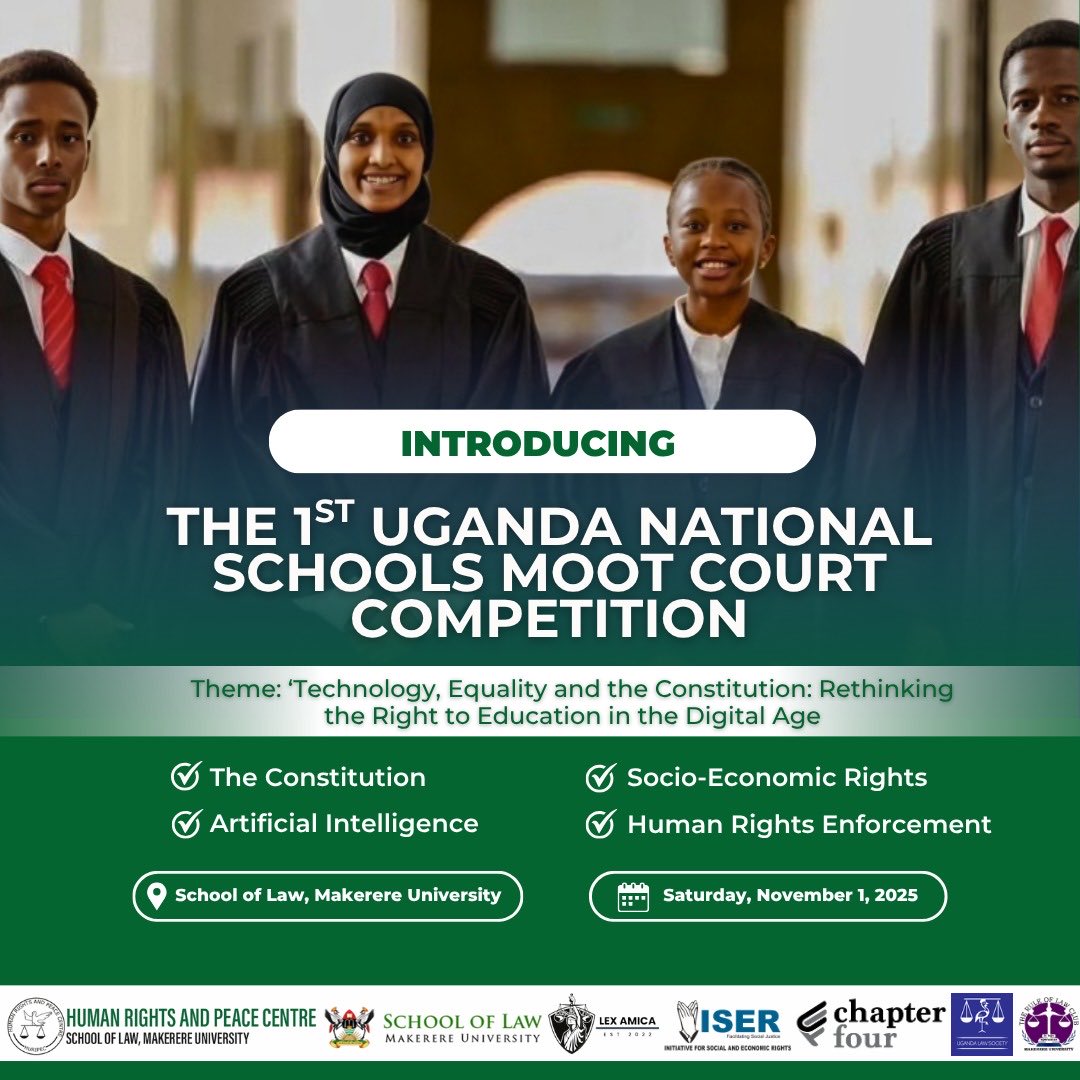
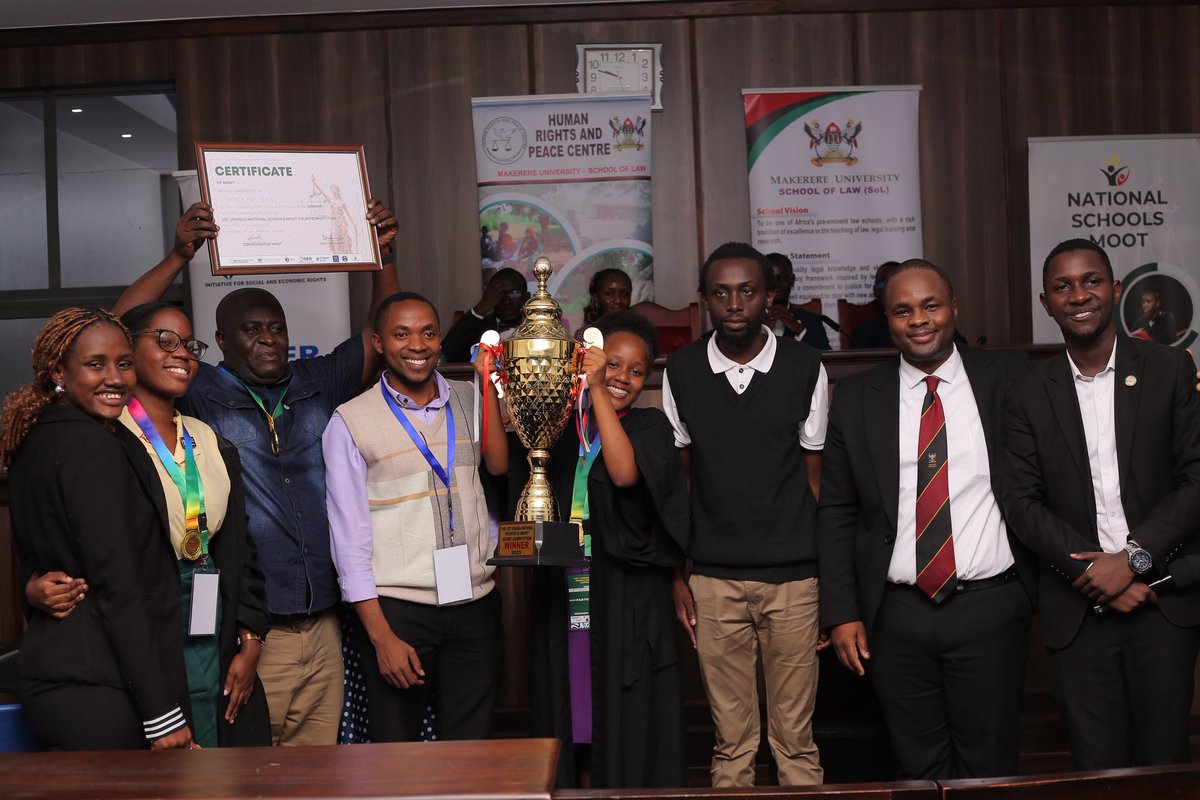
@GayazaHighSch represented by its oralists, Namirembe Juliana and Muzaki Alana Kirabo emerged as the winners of the #NationalSecondarySchoolsMoot
They submitted as applicants showing their mastery of advocacy skills as well as appreciation of the constitution and human rights.
9
15
552