
AI is changing every role. We help you stay ahead of it. 50,000 knowledge workers trained. No gurus. No fluff. Just career intelligence that works.
Joined August 2013
- Tweets 3,395
- Following 1,995
- Followers 2,270
- Likes 748
609 Photos and videos


Collab365 Team retweeted

May 23
What's the point?
(This is long but hopefully it's worth the 5 minutes)
By this stage you've probably seen enough to know that AI can do it all.
So we can all expect plenty of:
"Your job has gone" Struggling to pay the mortgage Struggling to feed the kids Trying to look calm while quietly shitting yourself Wondering if anything you know is still worth knowing
You might be thinking, like me as a dad:
"What's the point of even learning this shit?"
"What kinda future are my kids moving into?"
On one hand we have the Pro AI crowd saying:
"No more disease" "Live till 150" (oh my god)"Work will be optional" "Everything will be abundant and cost nothing"
Lovely.
On the other hand we have the AI haters saying:
"We're losing control" "We will be locked into 15-minute cities" "Own nothing, be happy" "Your job is gone and your kettle is spying on you"
Also lovely.
And I'm somewhere in the middle, trying to raise my kids, pay bills, stay useful, and not have a small panic attack every time some 24-year-old posts:
"19 AI tools that will replace your entire team by Thursday."
I've been in tech my entire life.
I am 52. Or 53. Can't remember.
I've gone from "learn something new every 4 years" to where we are now, which feels like "learn something new every 2 months or you're dead".
It all feels like too much.
It causes anxiety. Anguish. That horrible tight chest feeling. That feeling of:
"What's the point?"
And it's not just AI.
We've also got blockchain, crypto, digital currencies and whatever comes next quietly changing the rails underneath money, ownership and trust.
Some of it has been nonsense. Some of it has been scams wrapped in buzzwords. But some of it is real.
We are clearly moving towards a more digital version of money.
And whether that becomes freedom, control, convenience, surveillance, or some weird mix of all of it… nobody really knows yet.
But it's another massive shift happening at the same time.
So if we have AI eating through jobs… digital money changing how we earn, spend, save and get monitored… and robots coming later to do the physical stuff too…
Then you are bound to think: "What's the point?"
Because here's the thing.
Work is not just money.
Yes, money matters. Of course it does. It pays the mortgage. It keeps the lights on. It feeds the kids. It gives you choices.
But work is also how a lot of us measure ourselves.
It gives us purpose. Status. Something to get better at. A ladder to climb. A reason to push. A way to say: "I built that. I earned that. I'm getting somewhere."
A bigger house. A nicer car. A better life for your kids. A bit of pride when someone asks what you do.
And yes, maybe some of that is ego. Maybe some of it is nonsense we've been sold. But it's also human.
We want to improve. We want to matter. We want to feel useful. We want to know that the effort meant something.
So when the CEOs of AI companies joyfully predict that millions of jobs will be replaced and some of them do say it joyfully, like they're announcing a product feature, I want them to understand something.
Your words have ramifications.
You get to say it from a stage, fly home on a private jet, and watch your net worth climb another hundred million before breakfast.
But somewhere out there, a 48-year-old accountant just told her husband she's scared. A developer who spent fifteen years getting good at his craft is quietly updating his CV at midnight. A training manager is sitting in a meeting wondering if she's about to be restructured out of existence.
That's what your forecast sounds like from down here.
And it's not abstract. It lands in real houses, with real mortgages, and real kids asking real questions.
They are not just talking about jobs.
They are talking about people's PLACE in the world.
And if you've spent years getting good at something, whether that's training, consulting, developing, designing, managing or advising, this hits hard.
Because it's not just: "Can AI do this task?"
It's: "Will clients still value what I know?" "Will the thing I spent 20 years learning still matter?" "Will I still be needed?"
That's the bit people don't talk about enough.
And that's why this question keeps coming back: what's the point?
Why don't we just give up and give in?
I'm in the UK. I could pack it all in, take Universal Credit, and wait it out until we get whatever income the government dreams up.
Maybe that'll be good. Maybe it'll be bad. Maybe it'll be enough to survive but not enough to live.
Apparently everything is going to get cheaper anyway, because it turns out us humans are quite expensive and if you remove us from the process, stuff gets cheaper.
Great.
Except we are not just a cost.
We are PEOPLE.
Dads. Mums. Sons. Daughters. Business owners. Workers. Makers. Carers. Friends. Neighbours.
We are not just "labour". Not just "headcount". Not just "expensive humans in the loop".
But here's the thing I keep coming back to when I have those pangs of anxiety and whisper to myself:
"Breathe through it, Mark."
This is the BIGGEST opportunity of our lives.
This is the gold rush of our lifetime, except nobody knows where the gold is yet and half the people selling maps are full of shit.
And I don't mean that in some LinkedIn "make me go viral" way.
I don't mean "10x your productivity and become a billionaire by Tuesday".
I mean: when the world changes this much, the old rules start to fall apart.
The agencies charging £5k for things a smart person can now do in an afternoon. The consultants hiding behind jargon. The software companies selling "innovation" that is really just a spreadsheet with a login screen. The people who made things feel complicated so they could stay in control.
The old excuses stop working.
And yes, a scary amount of money is flowing to a very small number of people. The chip companies. The model companies. The platforms. The investors. The people who already had the money, the data, the distribution and the power.
That is real. We should not pretend it isn't.
But it is not the whole story.
Because these tools are also landing in the hands of normal people like me and you.
Small teams. Solo founders. Teachers. Parents. Tradespeople. Local businesses. People with ideas who never had the budget, the confidence, the contacts, or the technical team before.
A small business can now do things that used to take a whole agency. A parent can learn something at 11pm after the kids are in bed. A founder can test an idea in a weekend. A kid can build something from their bedroom.
That is not nothing.
But nobody really knows what to do on Monday morning.
That's the bit.
Because yes, AI can write the report. It can build the spreadsheet. It can make the plan. It can summarise the meeting. It can probably do 80% of the task.
But it doesn't know your client is panicking.
It doesn't know your boss is about to make a terrible decision.
It doesn't know the numbers look fine on paper but smell wrong in real life.
It doesn't know that the person asking the question is scared, confused, embarrassed, skint, proud, or trying to hold everything together.
That's where humans still matter.
Not because we can type faster than AI. We can't.
But because someone still has to make sense of the mess.
Someone still has to say: "Hang on. That sounds clever, but it's a bad idea."
Someone still has to explain it in a way a normal person can understand.
Someone still has to know when the answer is technically right but practically useless.
Someone still has to be trusted.
So maybe the point is not to learn everything. You can't.
Maybe the point is not to predict everything. You won't.
Maybe the point is to stay close enough to the change that you can still make good choices.
Learn enough to ask better questions. Learn enough to spot the bullshit. Learn enough to help someone else through it.
I'm 52 (or 53), building stuff on my own, figuring it out as I go, getting it wrong half the time, and still finding it more interesting than anything I've done before.
That's not inspiration.
That's all I've got for what's facing us.
And it's enough of a reason to keep going.
3
5
841
Collab365 Team retweeted
May 15
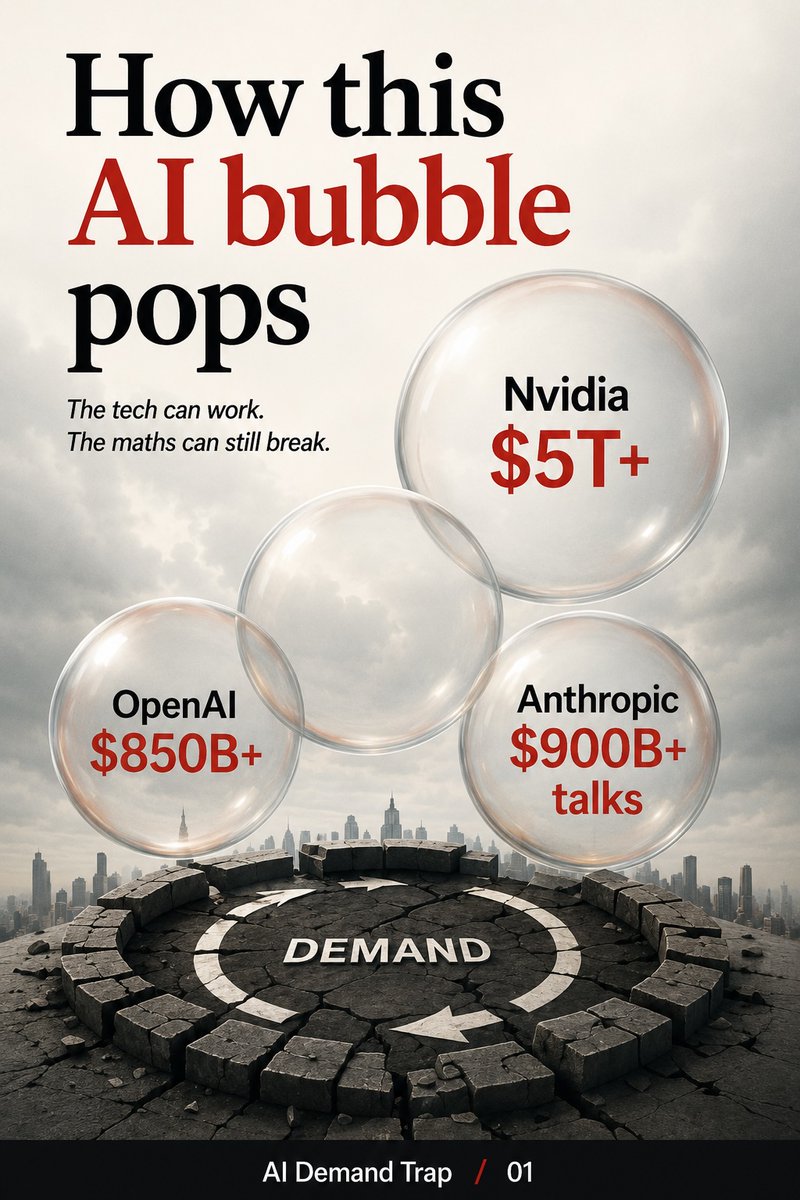
AI can be real and STILL be a bubble.
That’s the bit I keep coming back to.
The question isn’t "does AI work?"
Obviously, we've all used it by now .. It absolutely DOES work.
The big question is ..
What happens if companies use AI mainly to cut the customers the AI boom needs?
2
4
7
5,699

May 11
If you are running a per-seat SaaS, then beware - if AI replaces half of your customers workforce, then half of your income will also disappear!
go.collab365.com/copilot-gut…
1
36
Collab365 Team retweeted

16 Oct 2025
I just spent 150 hours creating a 16-minute film..
Every frame, every sound, every voice - generated by AI.
This was made with VEO 3.1, which launched yesterday.
The coolest feature? You can now set start and end frames, making it exponentially easier to stitch scenes together seamlessly.
Here's what I'm thinking about:
Within 2 years (probably less), someone is going to create a full feature-length film with AI that Netflix, Amazon, or Apple buys.
When that happens, the floodgates open.
20 years ago, who would have predicted we'd have the power to create entire films with AI?
But here's the thing people miss:
AI won't completely replace humans, but it will impact millions of us.
We are where we are. Nothing will stop it now.
"The One They Keep" (the 16-minute film) took 150 hours. I directed every decision. I wrote the narrative arc. I chose what worked and what didn't.
I used AI for execution, script refinement, storyboards, animation, voiceover, sound design, music.
The tool didn't make the film. I did.
But I made it WITH AI.
It supercharged me.
And that's the divide forming right now:
→ People who can use AI as leverage
→ People who can't
The gap between those two groups is widening every single day.
The tools are democratized. The barrier isn't access anymore.
It's willingness to learn.
It's putting in the 150 hours.
It's being comfortable being bad at something new until you're good.
If you care about where we're heading as a society - and what it means for your career - I'd encourage you to watch "The One They Keep."
It's on the Post Below.
11 Oct 2025

🎬 "THE ONE THEY KEEP"
I just got very carried away and created an entire short film completely with AI.
Images, Research, Video, Sound Fx, Music, Script, the lot!
BUT, It still took me 150 hours to make!
In all seriousness, the film has a very important message that we should all start thinking about.
1
1
170
Collab365 Team retweeted
11 Oct 2025
🎬 "THE ONE THEY KEEP"
I just got very carried away and created an entire short film completely with AI.
Images, Research, Video, Sound Fx, Music, Script, the lot!
BUT, It still took me 150 hours to make!
In all seriousness, the film has a very important message that we should all start thinking about.
1
3
15
7,306
Collab365 Team retweeted

8 Jul 2025
🆕 #KashBox article | If you like simple automations for your information and content, this article is for you.
⚙️ Microsoft Lists rules demo
⚙️ @SharePoint quick steps @WonderLaura vid
⚙️ @MSPowerAutomate flows @Teachers_Tech vid
Read & share 📄 kashbox.substack.com/p/autom…
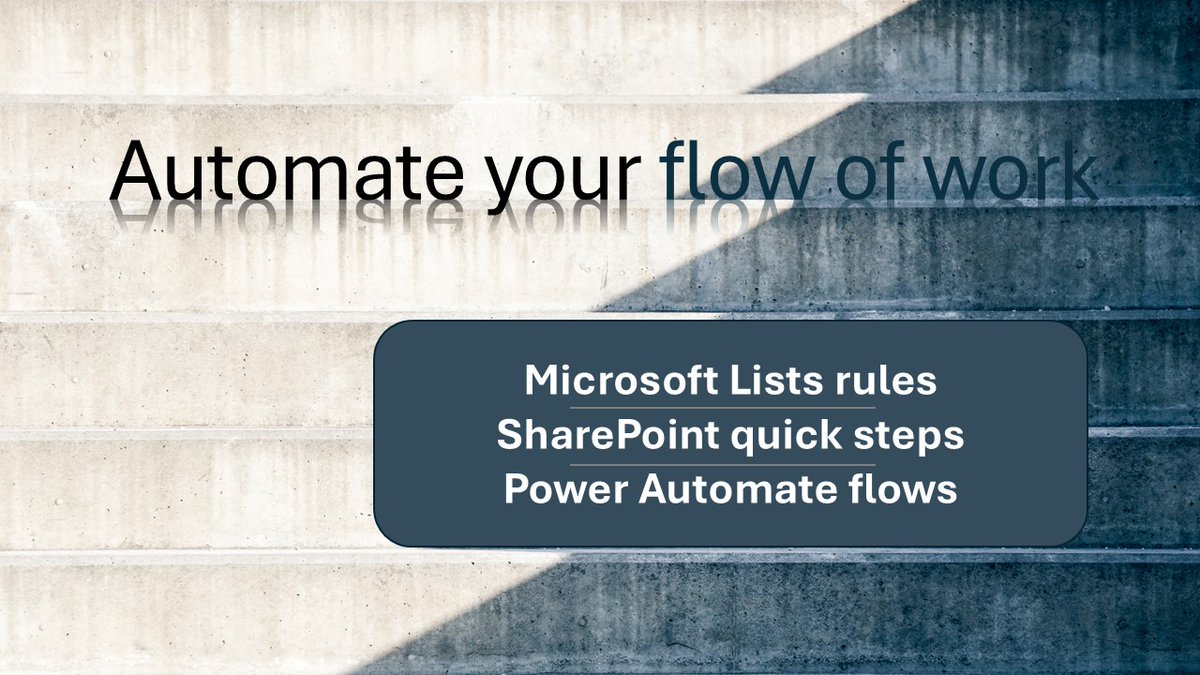
ALT Automate your flow of work with Microsoft Lists rules, SharePoint quick steps, and Power Automate flows -All in Microsoft 365.
6
16
1,283
Collab365 Team retweeted
9 Jul 2025
‘This guy just automated his business in 15 minutes with AI.’
👆I literally saw that on X yesterday and it annoyed the hell out of me.
And honestly… it rattled me like many of these posts do.
Not because I believed it.
But because it’s everywhere right now and it causes us to feel anxious.
Scroll for five minutes and it feels like every job on the planet is being automated.
Like we’re all just waiting to be replaced by a prompt.
And yeah - I worry about that.
I worry about the future.
About my kids.
And about the people who’ve spent years building a solid, honest career… now wondering if it still matters.
So, I did what I always do when things feel uncertain.
I looked back through history.
Bit of a Ray Dalio moment, if you know him.
He studies how empires rise and fall — and what history can tell us about what’s coming. (Worth looking him up on YouTube).
So I went into research mode.
I asked one of those AI research tools:
‘Which jobs have actually been wiped out by technology?
And which ones… just evolved?’
I looked at 12 jobs we’ve all heard of.
And surprisingly… only one truly vanished.
The rest?
They shifted.
They adapted.
They changed shape — and the people behind them found new ways to stay relevant.
That gave me a bit of peace.
Because yes, AI will change the world.
But it won’t run it.
Not without oversight.
Not without regulation.
Healthcare.
Legal systems.
Aviation.
Finance.
Social services.
Even the military.
These sectors aren’t handing full control to AI anytime soon — if ever.
So here’s my advice:
If you work in tech — especially if you’ve ever automated anything — you’re probably going to be just fine.
You already know how to pivot.
But if your role’s mostly repetitive — and non-technical — now’s the time to start paying attention.
Learn to prompt properly.
Try no-code tools.
Automate something just for fun.
E.g. I built a workflow the other day that summarises YouTube videos and emails them to me.
No code. Just curiosity.
And it means I can learn ten times more, in a tenth of the time.
It’s not rocket science — it’s just effort.
So anyway…
I just wanted to say this:
If you’re someone feeling anxious about your future …
Just know that if you put a bit of effort in now…
You’re going to be just fine. ❤️
1
1
2
145
Collab365 Team retweeted
7 Jul 2025
Anyone else feeling like AI is all going a bit too quick?
1
4
112
Collab365 Team retweeted
3 Jul 2025
🧵 AI isn’t coming for truck drivers first. It’s coming for you.
Most people think AI will replace low-skilled jobs first.
But it’s already replacing:
💼 Admin assistants
📊 Junior analysts
🗂️ Project coordinators
Why?
Let me show you 🧵
1
1
3
123
Collab365 Team retweeted
3 Jul 2025
Old job ad:
“Looking for an organised assistant with great communication skills.”
New job ad:
“Looking for someone who can design automations and let AI handle the admin.”
That shift is already underway.
1
1
3
148
Collab365 Team retweeted
3 Jul 2025
In 5 years, we won’t ask:
“What do you do for work?”
We’ll ask:
“What can you still do that AI hasn’t mastered yet?”
1
1
87
Collab365 Team retweeted
27 May 2025
I figured out how to get 10x better results from Cursor vibe coding and it has nothing to do with better prompts and will cost you nothing more than a cheap Cursor Subscription.
The secret?
MCP wrappers that let AI test its own work.
Here's EXACTLY how to do it:
❌ The Problem Everyone Faces
You're "vibe coding" or human coding in Cursor. You write beautiful code. You run it. It breaks.
You copy-paste error messages back to AI. It "fixes" the code. Still broken.
This back-and-forth kills your flow and wastes hours.
✅ The MCP Testing Method
I'm building Playlist (my AI video app) and got tired of the manual testing cycle. So I wrapped my existing API with MCP endpoints:
1️⃣ Create MCP Endpoints*
- Create, Read, Update, Delete playlists ✅
- Create, Read, Update, Delete videos within playlists ✅
- Query playlist data ✅
- Run basic functionality tests ✅
2️⃣ Connect Cursor to Your MCP
Now when I need to change code, I tell Cursor:
"Test this by creating a playlist, adding 3 videos, then querying the results"
3️⃣ AI Tests Its Own Work
Cursor automatically:
- Calls my MCP endpoints
- Validates the responses
- Catches errors before I do
- Suggests fixes based on actual test results
✅ Why This Changes Everything
Before MCP testing:
❌ Manual copy-paste debugging
❌ Broken code reaching production
❌ Hours lost on simple bugs
❌ AI guessing what went wrong
After MCP testing:
✅ AI catches its own mistakes
✅ Real-time validation of changes
✅ Faster iteration cycles
✅ AI fixes based on actual data
👩🏼🏫 The Non-Technical Explanation
Think of MCP like giving your AI assistant a direct phone line to your app.
Instead of you being the messenger between AI and your app, they can talk directly.
When AI changes something, it immediately calls your app to see if it still works.
Like having a QA tester built into your coding assistant.
👀 Real Example with Playlist
**Old way:**
1. I write playlist creation code (or AI helps)
2. Manually test in browser
3. Find bug, copy error message
4. Paste back to AI for fixes
5. Repeat 3-4 times
**MCP way:**
1. I need to modify playlist creation logic
2. AI immediately tests via MCP: "Create playlist 'Test Mix'"
3. MCP returns success/error instantly
4. AI fixes any issues before I even see them
The difference?
20 minutes vs 2 minutes.
🥤 Getting Started (Simple Steps)
1. Identify your core functions (for Playlist: create, read, update, delete)
2. Wrap them with MCP (think of it as creating a simple API your AI can call)
3. Connect Cursor to your MCP (add it to your Cursor config)
4. Start testing everything ("AI, change this code then test it works")
You don't need to be super technical. If you have basic CRUD operations, AI can help you build the MCP wrapper.
🪄 The Real Magic
This isn't just about testing. It's about AI that understands your actual product.
When AI can directly interact with your existing codebase, it makes better decisions about:
- Database structure changes
- User flow improvements
- Error handling
- Performance optimizations
It's like the difference between describing your car to a mechanic vs letting them drive it.
2
2
198
Collab365 Team retweeted
26 May 2025
Everyone's panicking about Google killing websites.
But they're asking the wrong question.
It's not "Will this happen?"
It's "How do I get ready before my competitors do?"
Here's your 5-step bot-proofing action plan: 🧵
1/ Audit your "bot readiness" TODAY.
Can an AI easily find your:
• Pricing?
• Services?
• Contact info?
• Key differentiators?
It's suprising how many fail this basic test.
Including mine before we fixed it.
2/ Start with structured data (the 2-week win).
Add Schema [.org] markup to your site.
Create clear FAQ sections.
Structure your product info consistently.
This isn't sexy work.
But it makes you instantly "findable" by AI.
While competitors stay invisible.
3/ Build your first agent (not a chatbot).
This isn't for ChatGPT to find you yet.
It's preparing for when AI CAN self-discover and connect to your systems.
Start with YOUR website handling actions:
🤖 Schedule demos
💳 Collect payments
📋 Qualify leads
📊 Share pricing
Tools: Voiceflow, Botpress, or ChatGPT custom GPTs.
When Google's MCP framework goes live, you'll already have the infrastructure.
While competitors scramble to build from scratch.
4/ Write for retrieval, not humans.
Forget fluffy marketing speak.
AI wants:
• Clear facts
• Specific numbers
• Structured formats
• Extractable expertise
Your content becomes a database, not a brochure.
5/ Test with current AI tools.
Ask ChatGPT about your business.
Check what Perplexity says about your services.
See if Google's AI Overviews mention you.
Pro tip: Add Chatbase to your site (link in first comment).
Once we installed it, we found TONS of gaps where AI wasn't answering correctly.
We added FAQs to product pages and organized everything by speaker, topic, etc.
Game changer.
Find the gaps.
Fix them.
Repeat.
The businesses starting now will own their categories when this fully hits.
While everyone else scrambles to catch up.
Don't bookmark this. Pick ONE step and ship it this week.
What's your first move going to be?
25 May 2025
Google is quietly killing your website.
The traditional “10 blue links” are vanishing.
Soon, your homepage won’t be for people—it’ll be for bots.
Here’s what’s coming (and why it matters): 🧵
1/ Search is going agent-first.
Google’s rolling out AI Overviews—answers straight in the results.
No clicks. No visits. Just summaries.
If no one’s visiting your site, what’s the point of having one?
2/ So what is the point of a website, then?
It won’t be a place people browse.
It’ll be a system bots interact with.
In other words, your website becomes an API for LLMs.
3/ Google’s A2A and MCP frameworks flip everything.
Instead of linking out, Google will call your agent directly.
That agent will:
🤖 Schedule demos
🛒 Share product info
💳 Handle transactions
❓ Answer detailed queries
Your “website” becomes a back-end service for conversations.
4/ This kills SEO as we know it.
You’re not writing for people anymore—you’re writing for retrieval models.
Forget keywords.
Now it’s about:
🧠 Structured data
✅ Verified sources
⚙️ Agent logic
5/ Your next lead? It’ll come from a chatbot.
Someone asks Google:
“Can I book a demo with [your company]?”
Your agent handles the whole thing.
No forms. No pages. Just frictionless action.
6/ Here’s the real problem: most businesses aren’t ready.
They’re still optimising for clicks, rankings, and funnels.
But if 70–80% of traffic gets absorbed into AI summaries, that model’s gone.
You’ll need new ways to be discovered—and to convert.
7/ The opportunity: build for the bots.
Start thinking like a data provider, not a content publisher.
Design for:
🔌 Clear APIs
🧩 Embedded agent behaviour
🔍 Verifiable info LLMs can trust
Be the source, not the forgotten link.
8/ Now here’s the question no one’s asking…
How’s Google going to monetise all this?
If users don’t click ads anymore, where does the money come from?
9/ Google will take a cut of transactions.
Soon, you’ll check out in the chatbot.
📞 Book a call
🛍️ Buy a product
💸 Make a payment
Google handles it—and takes a fee.
10/And premium chat access will be paywalled.
Want longer chats, better answers, or saved threads?
You’ll pay for it—just like ChatGPT Plus.
Google moves from an ad model to a paid-agent model.
Genius!
11/ So what does that mean for you?
You need to reimagine your site today.
It’s no longer a destination.
It’s a service endpoint—one that bots talk to on your behalf.
—
This shift is bigger than mobile.
If you’re still writing meta descriptions, you’re already behind.
The takeaway?
Read up on A2A and MCP. We aren’t there yet, but it’s coming …
1
2
2
262
Collab365 Team retweeted
25 May 2025
Google is quietly killing your website.
The traditional “10 blue links” are vanishing.
Soon, your homepage won’t be for people—it’ll be for bots.
Here’s what’s coming (and why it matters): 🧵
1/ Search is going agent-first.
Google’s rolling out AI Overviews—answers straight in the results.
No clicks. No visits. Just summaries.
If no one’s visiting your site, what’s the point of having one?
2/ So what is the point of a website, then?
It won’t be a place people browse.
It’ll be a system bots interact with.
In other words, your website becomes an API for LLMs.
3/ Google’s A2A and MCP frameworks flip everything.
Instead of linking out, Google will call your agent directly.
That agent will:
🤖 Schedule demos
🛒 Share product info
💳 Handle transactions
❓ Answer detailed queries
Your “website” becomes a back-end service for conversations.
4/ This kills SEO as we know it.
You’re not writing for people anymore—you’re writing for retrieval models.
Forget keywords.
Now it’s about:
🧠 Structured data
✅ Verified sources
⚙️ Agent logic
5/ Your next lead? It’ll come from a chatbot.
Someone asks Google:
“Can I book a demo with [your company]?”
Your agent handles the whole thing.
No forms. No pages. Just frictionless action.
6/ Here’s the real problem: most businesses aren’t ready.
They’re still optimising for clicks, rankings, and funnels.
But if 70–80% of traffic gets absorbed into AI summaries, that model’s gone.
You’ll need new ways to be discovered—and to convert.
7/ The opportunity: build for the bots.
Start thinking like a data provider, not a content publisher.
Design for:
🔌 Clear APIs
🧩 Embedded agent behaviour
🔍 Verifiable info LLMs can trust
Be the source, not the forgotten link.
8/ Now here’s the question no one’s asking…
How’s Google going to monetise all this?
If users don’t click ads anymore, where does the money come from?
9/ Google will take a cut of transactions.
Soon, you’ll check out in the chatbot.
📞 Book a call
🛍️ Buy a product
💸 Make a payment
Google handles it—and takes a fee.
10/And premium chat access will be paywalled.
Want longer chats, better answers, or saved threads?
You’ll pay for it—just like ChatGPT Plus.
Google moves from an ad model to a paid-agent model.
Genius!
11/ So what does that mean for you?
You need to reimagine your site today.
It’s no longer a destination.
It’s a service endpoint—one that bots talk to on your behalf.
—
This shift is bigger than mobile.
If you’re still writing meta descriptions, you’re already behind.
The takeaway?
Read up on A2A and MCP. We aren’t there yet, but it’s coming …
2
2
527
Collab365 Team retweeted
10 Jan 2025
🚀 12 Practical Ways Microsoft Power Platform Can Transform Your Business 🧵👇
Are you still drowning in manual processes? Struggling with outdated systems? It’s time to level up your workflows and apps!
Here are 13 incredible ways businesses are using Microsoft Power Platform to work smarter, not harder:
1
2
4
220
9 Jan 2025
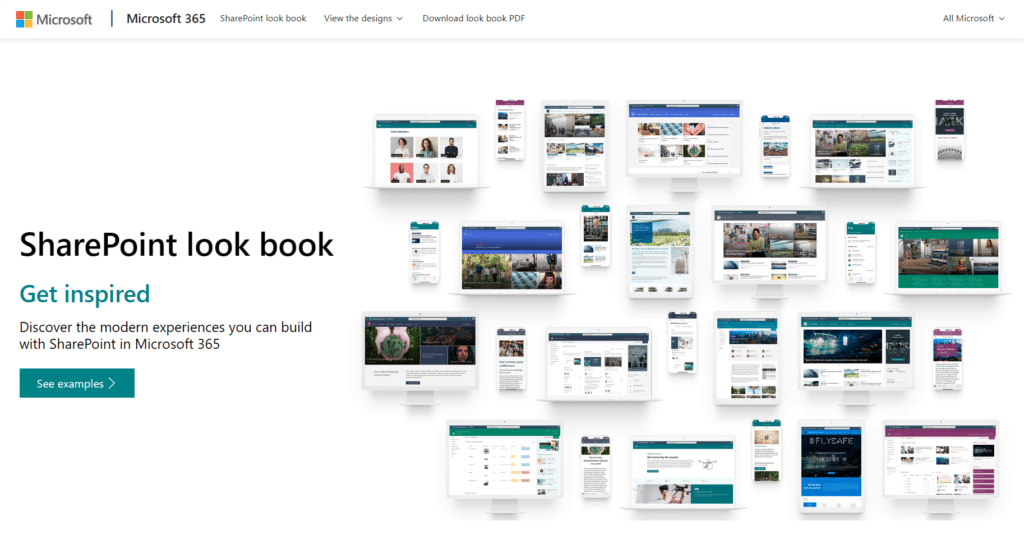
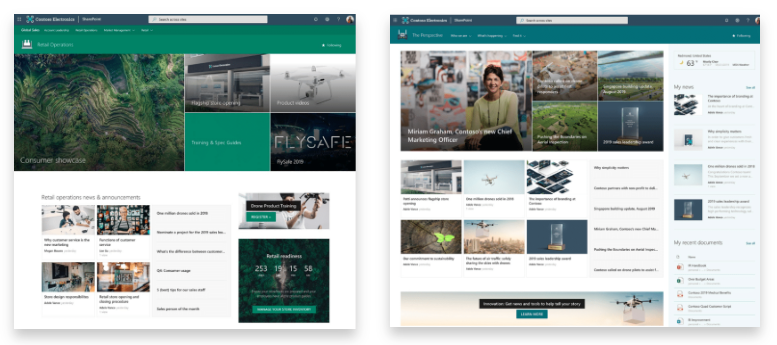
🚨 STOP! Your SharePoint Intranet Doesn’t Have to Look Boring! 🚨"
Be honest:
Does your SharePoint site look more like a file dumping ground than an engaging digital workspace?
Good news: You don’t need to be a designer to create a stunning, functional intranet!
Stick with me, and I’ll show you exactly how to build a SharePoint site your team will love. 🧵👇
2
2
241
9 Jan 2025
Real-World Example – "Alex’s Success Story 🌟"
Remember Alex?
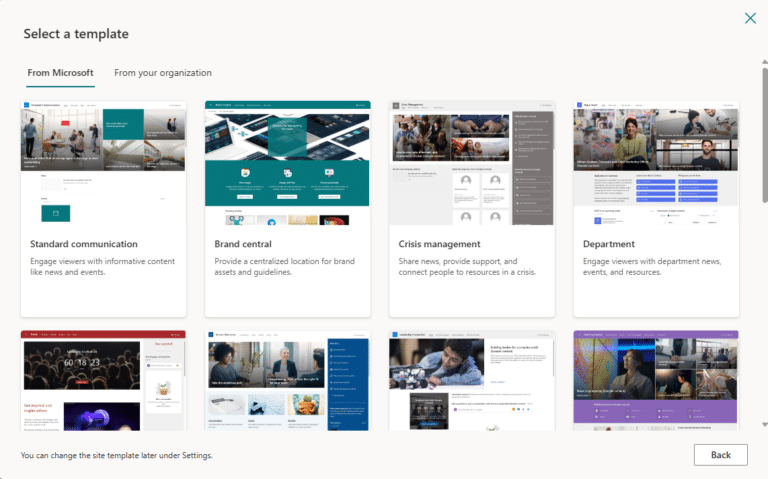
He started with the LookBook’s "Showcase" template and customized it:
🎨 Applied company branding
🖼️ Added Web Parts for announcements & galleries
📅 Launched in phases to gather feedback
Within weeks, Alex’s SharePoint site became the go-to hub for company news and updates! 🙌
1
63
9 Jan 2025
Call to Action – "Your Turn to Shine! 🌟"
You’ve got the tools—now it’s time to act!
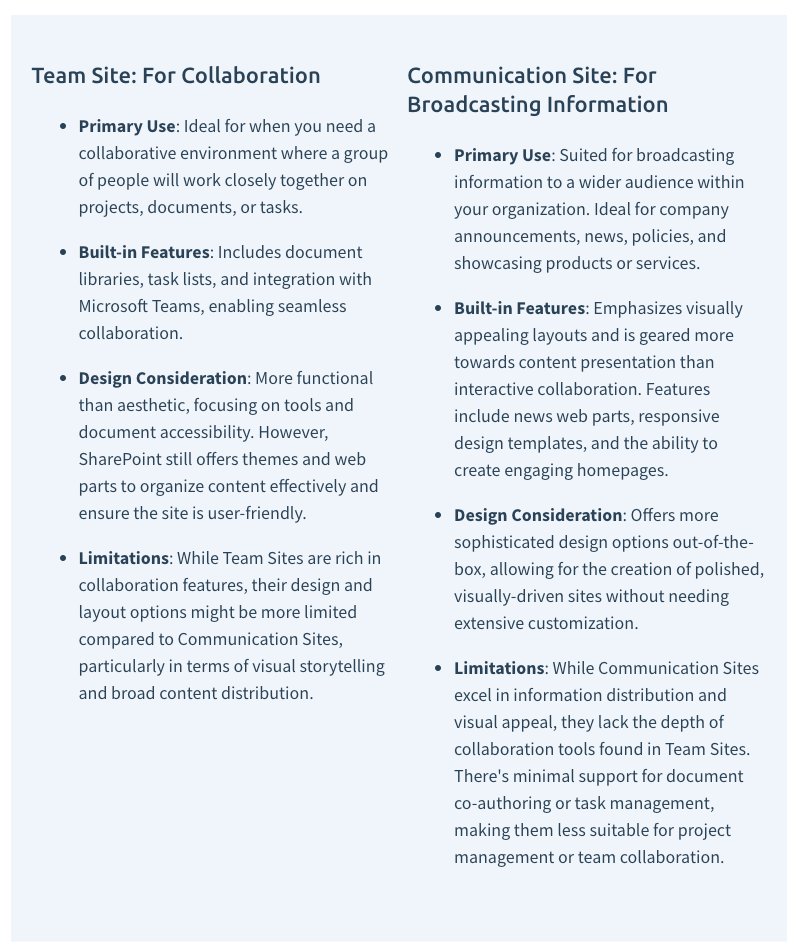
✅ Choose your site type (Team or Communication)
✅ Explore the LookBook for inspiration
✅ Build your first draft and gather feedback
🚀 Ready to learn more? Collab365 Academy has SharePoint workshops and live sessions to boost your skills.
Let’s build a SharePoint intranet your team will love!
#SharePoint #Microsoft365 #Productivity
50