
Built @collab365 to keep knowledge workers ahead of AI. 50k trained. Two-person team. No gurus, no fluff... just the stuff that actually works.
Joined February 2013
- Tweets 9,099
- Following 580
- Followers 4,268
- Likes 884
251 Photos and videos

Pinned Tweet

May 15
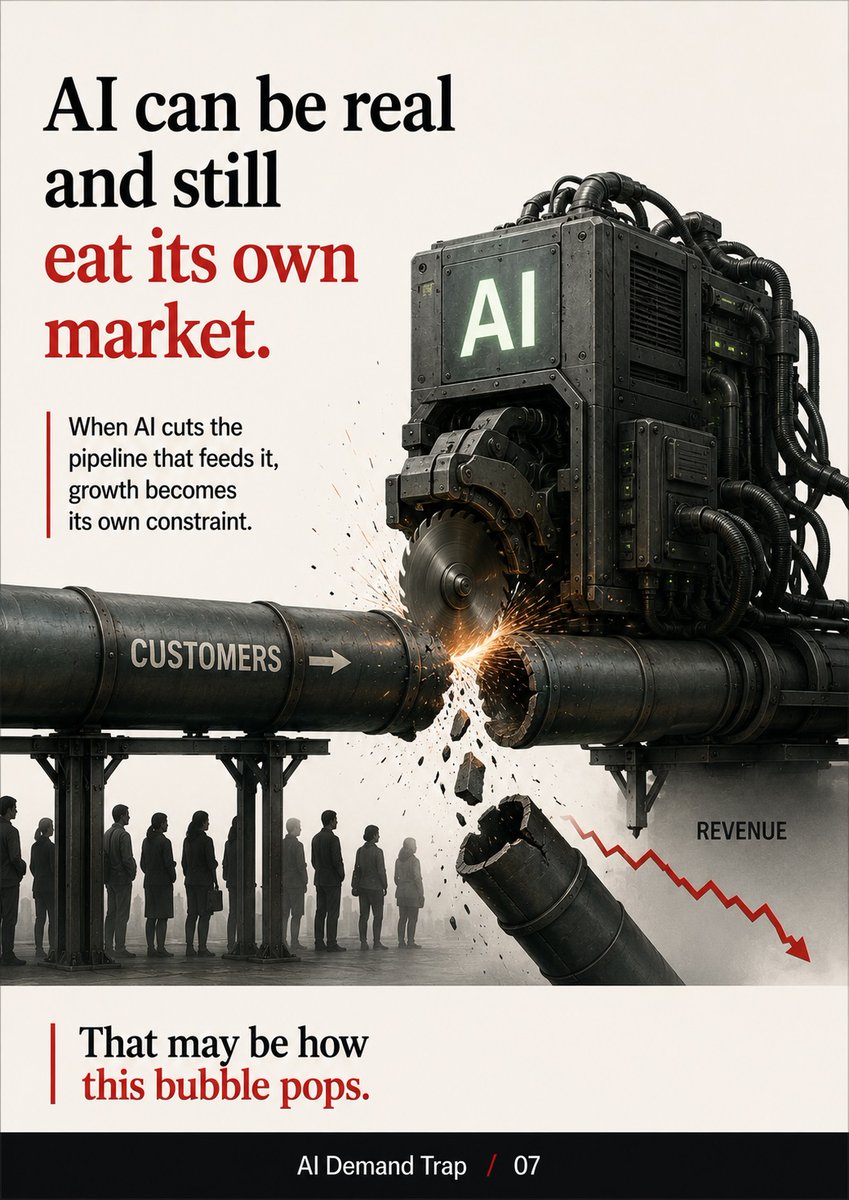
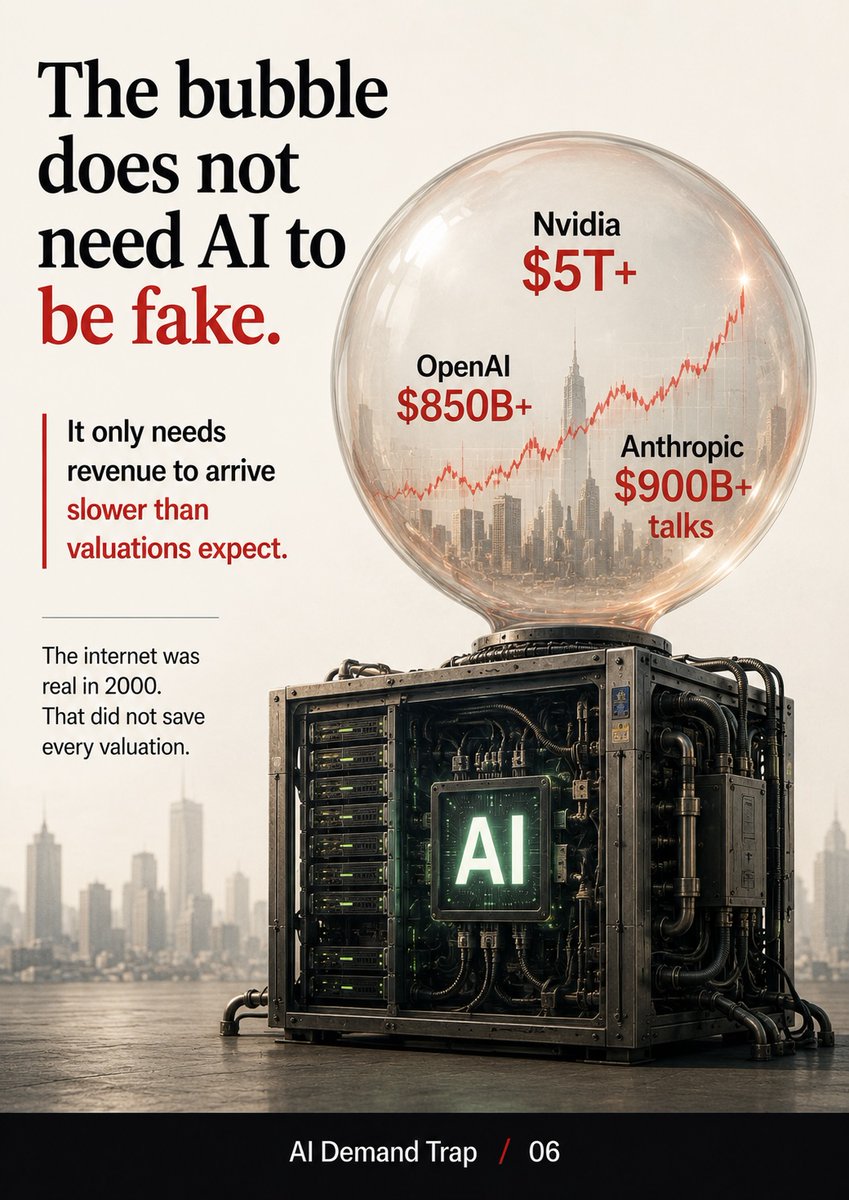
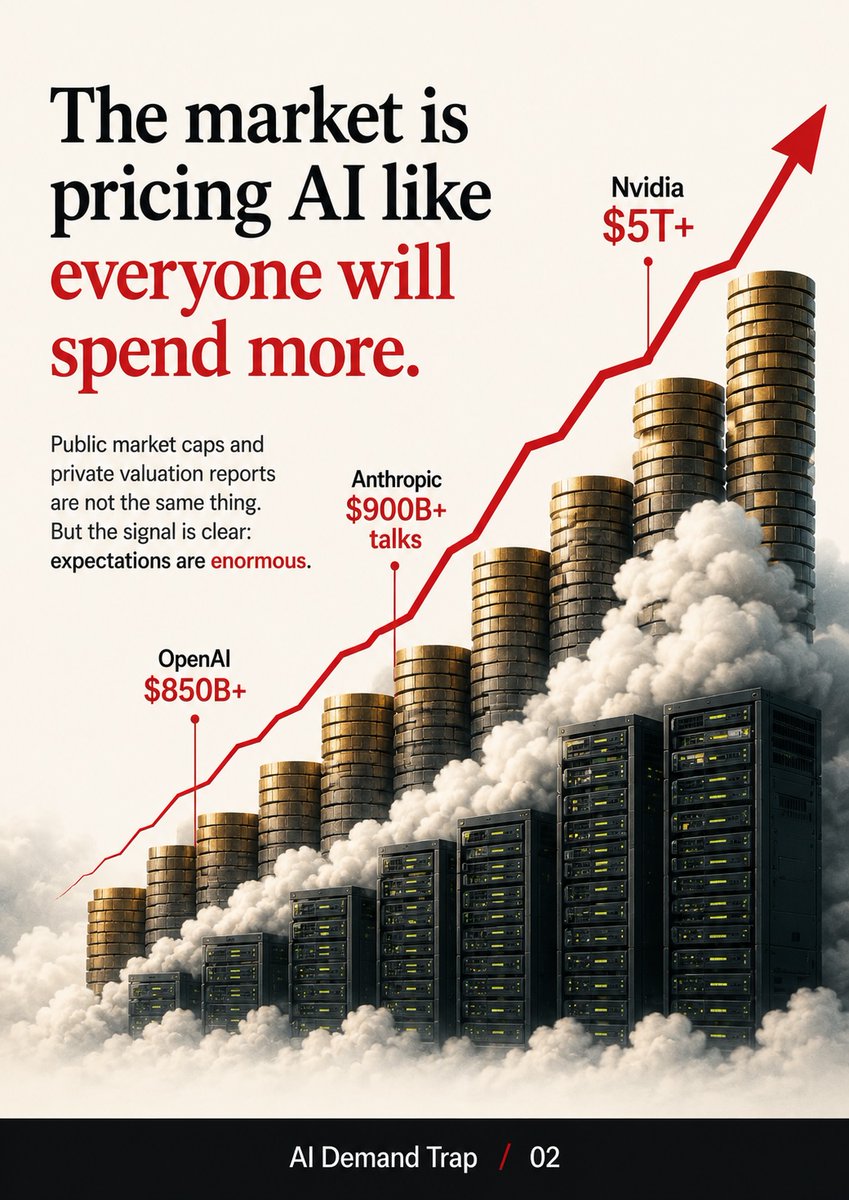
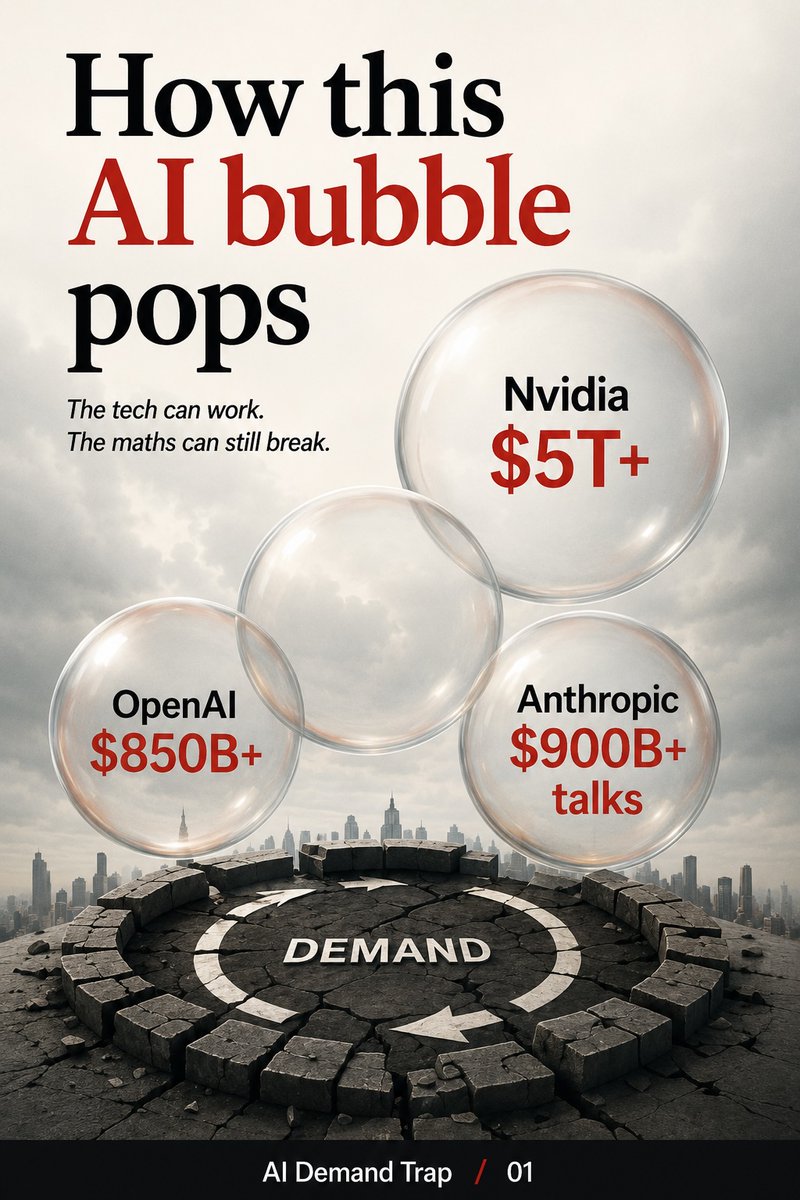
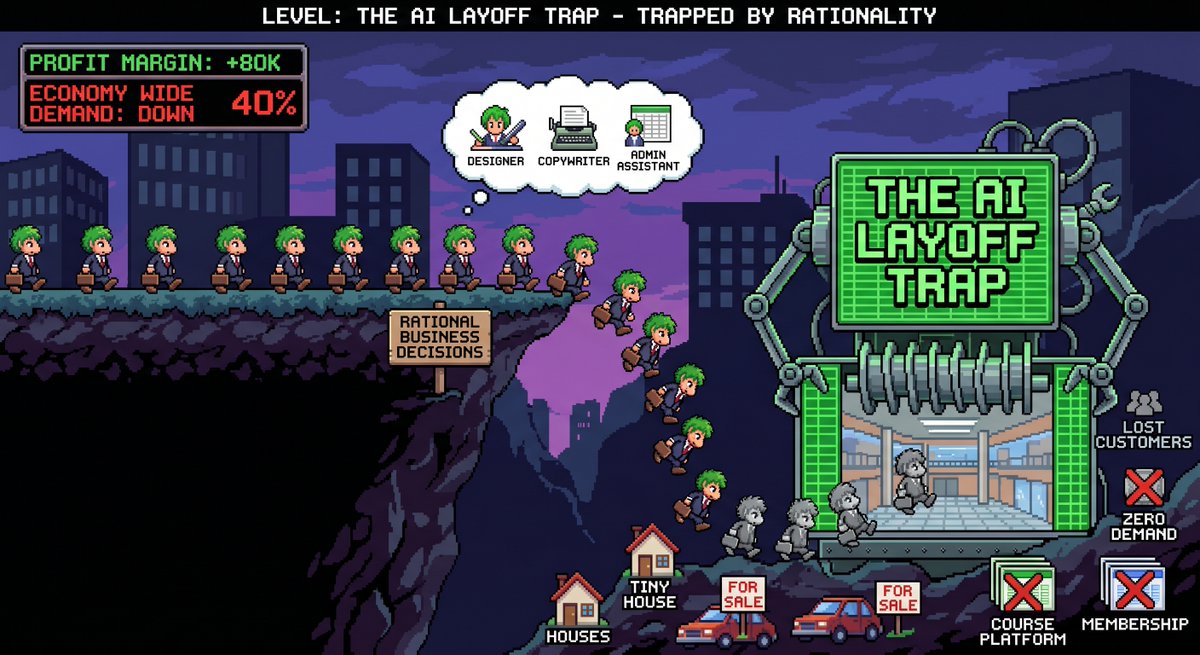
AI can be real and STILL be a bubble.
That’s the bit I keep coming back to.
The question isn’t "does AI work?"
Obviously, we've all used it by now .. It absolutely DOES work.
The big question is ..
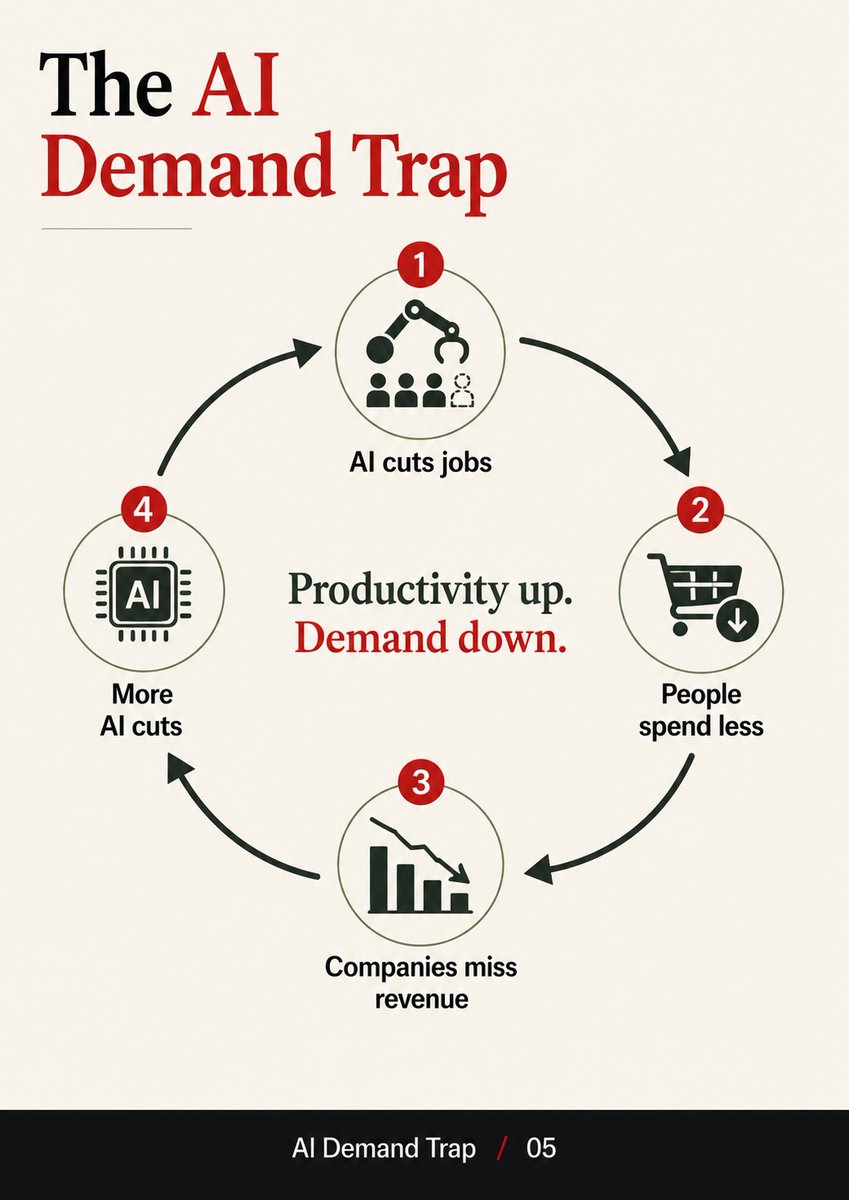
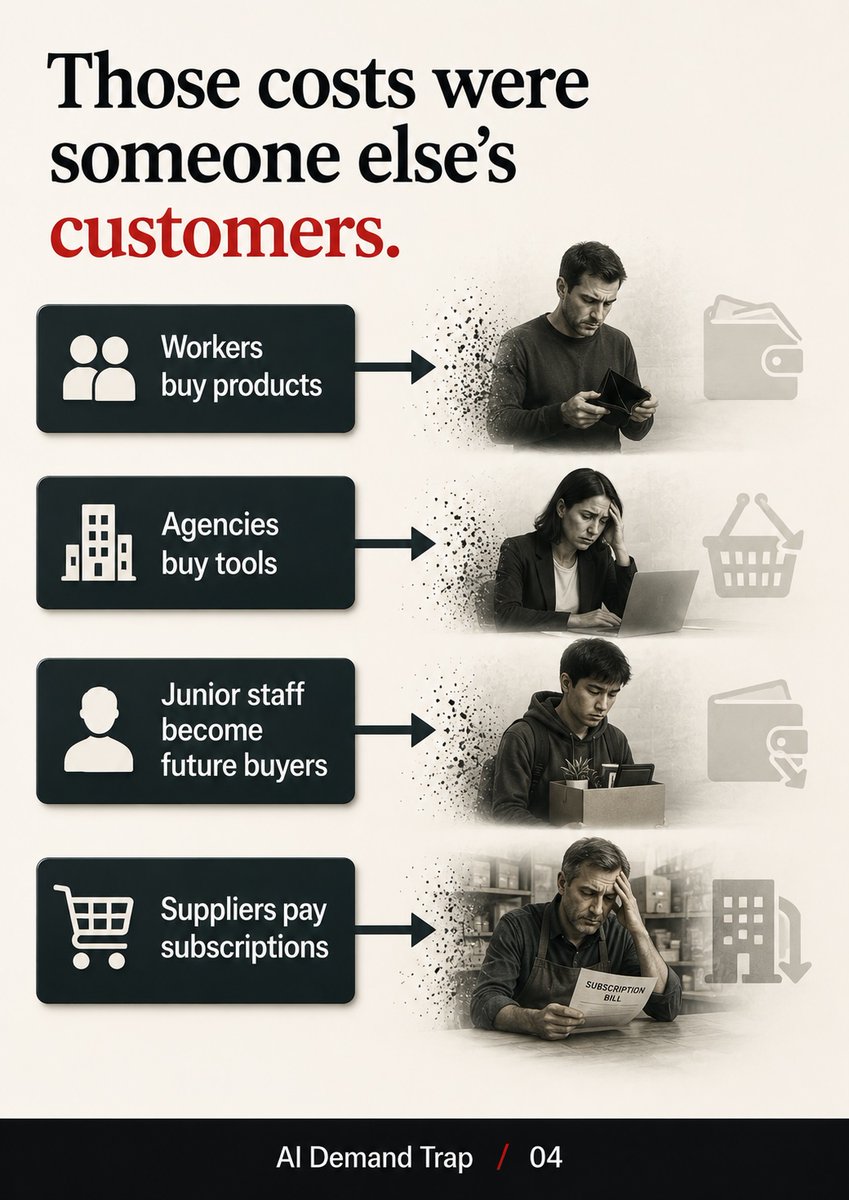
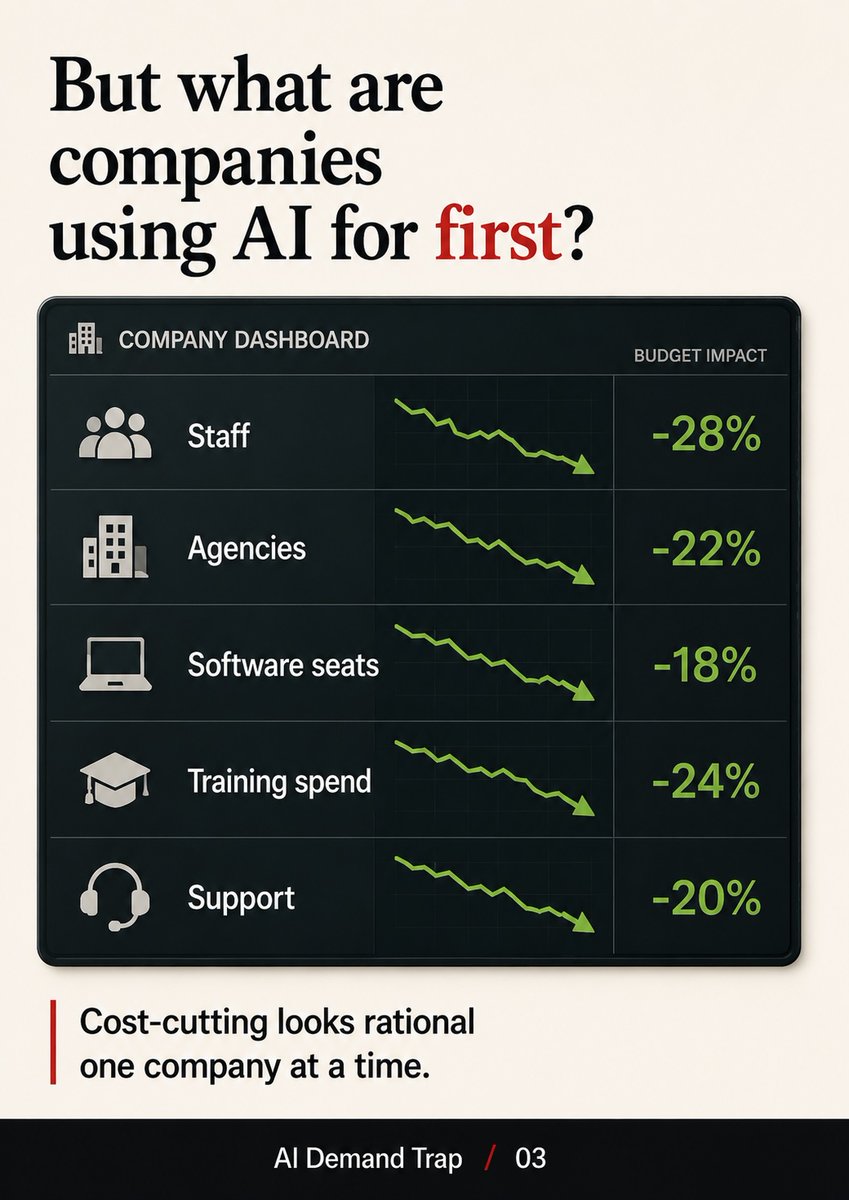
What happens if companies use AI mainly to cut the customers the AI boom needs?
2
4
7
5,699
Jun 13
Now roll this in a year or so.
Microsoft will be forced to do the same …. meaning their actual products will be dumber for users outside of the USA.
That won’t end well. As soon as a better alternative shows its face watch those m365 cancellations
Jun 13

The US government, citing national security authorities, has issued an export control directive to suspend all access to Fable 5 and Mythos 5 by any foreign national, whether inside or outside the United States, including foreign national Anthropic employees.
The net effect of this order is that we must abruptly disable Fable 5 and Mythos 5 for all our customers to ensure compliance.
Access to all other Claude models is not affected.
We apologize for this disruption to our customers. We believe this is a misunderstanding and are working to restore access as soon as possible.
Read our full statement: anthropic.com/news/fable-myt…
80
May 25
I see more announcements of layoffs and this still comes to mind ..
May 23

What's the point?
(This is long but hopefully it's worth the 5 minutes)
By this stage you've probably seen enough to know that AI can do it all.
So we can all expect plenty of:
"Your job has gone" Struggling to pay the mortgage Struggling to feed the kids Trying to look calm while quietly shitting yourself Wondering if anything you know is still worth knowing
You might be thinking, like me as a dad:
"What's the point of even learning this shit?"
"What kinda future are my kids moving into?"
On one hand we have the Pro AI crowd saying:
"No more disease" "Live till 150" (oh my god)"Work will be optional" "Everything will be abundant and cost nothing"
Lovely.
On the other hand we have the AI haters saying:
"We're losing control" "We will be locked into 15-minute cities" "Own nothing, be happy" "Your job is gone and your kettle is spying on you"
Also lovely.
And I'm somewhere in the middle, trying to raise my kids, pay bills, stay useful, and not have a small panic attack every time some 24-year-old posts:
"19 AI tools that will replace your entire team by Thursday."
I've been in tech my entire life.
I am 52. Or 53. Can't remember.
I've gone from "learn something new every 4 years" to where we are now, which feels like "learn something new every 2 months or you're dead".
It all feels like too much.
It causes anxiety. Anguish. That horrible tight chest feeling. That feeling of:
"What's the point?"
And it's not just AI.
We've also got blockchain, crypto, digital currencies and whatever comes next quietly changing the rails underneath money, ownership and trust.
Some of it has been nonsense. Some of it has been scams wrapped in buzzwords. But some of it is real.
We are clearly moving towards a more digital version of money.
And whether that becomes freedom, control, convenience, surveillance, or some weird mix of all of it… nobody really knows yet.
But it's another massive shift happening at the same time.
So if we have AI eating through jobs… digital money changing how we earn, spend, save and get monitored… and robots coming later to do the physical stuff too…
Then you are bound to think: "What's the point?"
Because here's the thing.
Work is not just money.
Yes, money matters. Of course it does. It pays the mortgage. It keeps the lights on. It feeds the kids. It gives you choices.
But work is also how a lot of us measure ourselves.
It gives us purpose. Status. Something to get better at. A ladder to climb. A reason to push. A way to say: "I built that. I earned that. I'm getting somewhere."
A bigger house. A nicer car. A better life for your kids. A bit of pride when someone asks what you do.
And yes, maybe some of that is ego. Maybe some of it is nonsense we've been sold. But it's also human.
We want to improve. We want to matter. We want to feel useful. We want to know that the effort meant something.
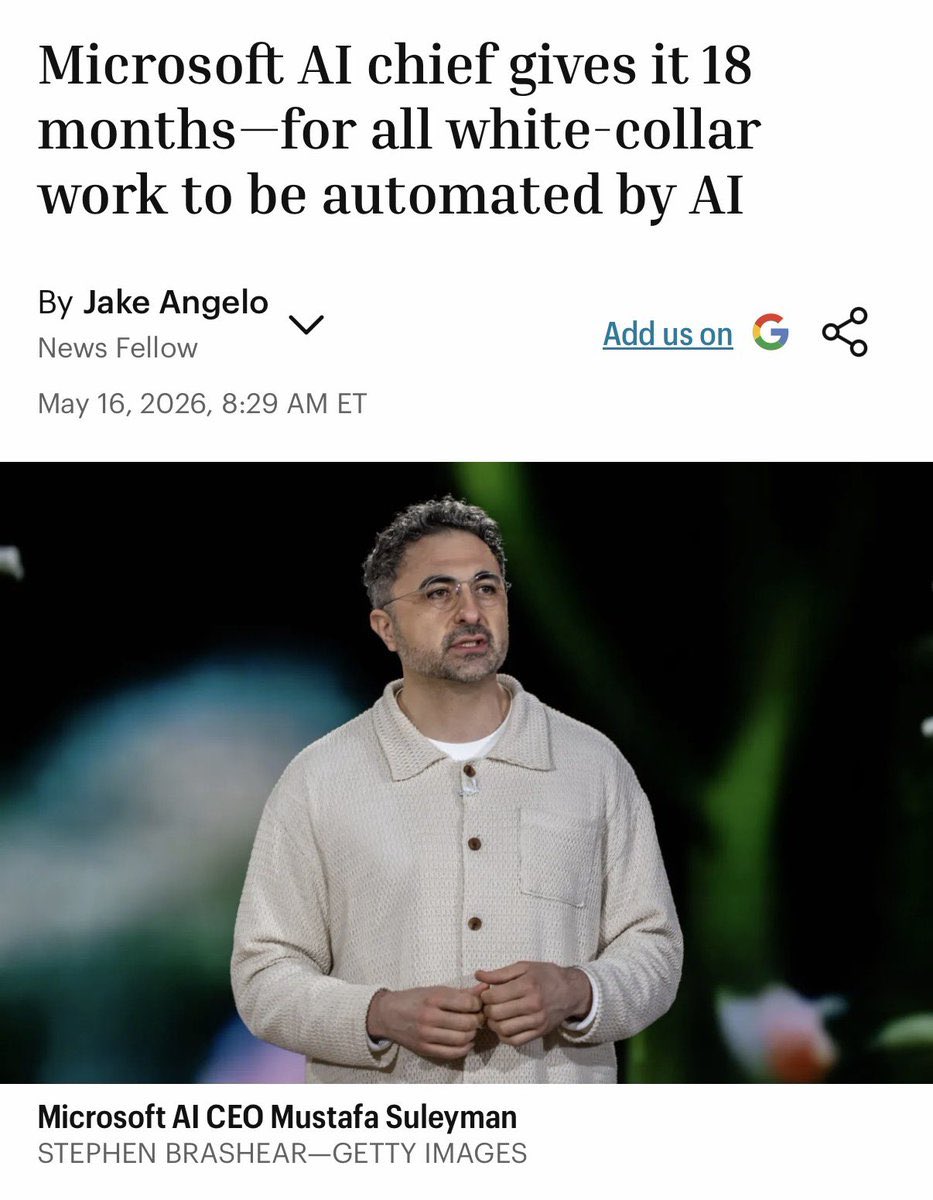
So when the CEOs of AI companies joyfully predict that millions of jobs will be replaced and some of them do say it joyfully, like they're announcing a product feature, I want them to understand something.
Your words have ramifications.
You get to say it from a stage, fly home on a private jet, and watch your net worth climb another hundred million before breakfast.
But somewhere out there, a 48-year-old accountant just told her husband she's scared. A developer who spent fifteen years getting good at his craft is quietly updating his CV at midnight. A training manager is sitting in a meeting wondering if she's about to be restructured out of existence.
That's what your forecast sounds like from down here.
And it's not abstract. It lands in real houses, with real mortgages, and real kids asking real questions.
They are not just talking about jobs.
They are talking about people's PLACE in the world.
And if you've spent years getting good at something, whether that's training, consulting, developing, designing, managing or advising, this hits hard.
Because it's not just: "Can AI do this task?"
It's: "Will clients still value what I know?" "Will the thing I spent 20 years learning still matter?" "Will I still be needed?"
That's the bit people don't talk about enough.
And that's why this question keeps coming back: what's the point?
Why don't we just give up and give in?
I'm in the UK. I could pack it all in, take Universal Credit, and wait it out until we get whatever income the government dreams up.
Maybe that'll be good. Maybe it'll be bad. Maybe it'll be enough to survive but not enough to live.
Apparently everything is going to get cheaper anyway, because it turns out us humans are quite expensive and if you remove us from the process, stuff gets cheaper.
Great.
Except we are not just a cost.
We are PEOPLE.
Dads. Mums. Sons. Daughters. Business owners. Workers. Makers. Carers. Friends. Neighbours.
We are not just "labour". Not just "headcount". Not just "expensive humans in the loop".
But here's the thing I keep coming back to when I have those pangs of anxiety and whisper to myself:
"Breathe through it, Mark."
This is the BIGGEST opportunity of our lives.
This is the gold rush of our lifetime, except nobody knows where the gold is yet and half the people selling maps are full of shit.
And I don't mean that in some LinkedIn "make me go viral" way.
I don't mean "10x your productivity and become a billionaire by Tuesday".
I mean: when the world changes this much, the old rules start to fall apart.
The agencies charging £5k for things a smart person can now do in an afternoon. The consultants hiding behind jargon. The software companies selling "innovation" that is really just a spreadsheet with a login screen. The people who made things feel complicated so they could stay in control.
The old excuses stop working.
And yes, a scary amount of money is flowing to a very small number of people. The chip companies. The model companies. The platforms. The investors. The people who already had the money, the data, the distribution and the power.
That is real. We should not pretend it isn't.
But it is not the whole story.
Because these tools are also landing in the hands of normal people like me and you.
Small teams. Solo founders. Teachers. Parents. Tradespeople. Local businesses. People with ideas who never had the budget, the confidence, the contacts, or the technical team before.
A small business can now do things that used to take a whole agency. A parent can learn something at 11pm after the kids are in bed. A founder can test an idea in a weekend. A kid can build something from their bedroom.
That is not nothing.
But nobody really knows what to do on Monday morning.
That's the bit.
Because yes, AI can write the report. It can build the spreadsheet. It can make the plan. It can summarise the meeting. It can probably do 80% of the task.
But it doesn't know your client is panicking.
It doesn't know your boss is about to make a terrible decision.
It doesn't know the numbers look fine on paper but smell wrong in real life.
It doesn't know that the person asking the question is scared, confused, embarrassed, skint, proud, or trying to hold everything together.
That's where humans still matter.
Not because we can type faster than AI. We can't.
But because someone still has to make sense of the mess.
Someone still has to say: "Hang on. That sounds clever, but it's a bad idea."
Someone still has to explain it in a way a normal person can understand.
Someone still has to know when the answer is technically right but practically useless.
Someone still has to be trusted.
So maybe the point is not to learn everything. You can't.
Maybe the point is not to predict everything. You won't.
Maybe the point is to stay close enough to the change that you can still make good choices.
Learn enough to ask better questions. Learn enough to spot the bullshit. Learn enough to help someone else through it.
I'm 52 (or 53), building stuff on my own, figuring it out as I go, getting it wrong half the time, and still finding it more interesting than anything I've done before.
That's not inspiration.
That's all I've got for what's facing us.
And it's enough of a reason to keep going.
1
87
May 23
What's the point?
(This is long but hopefully it's worth the 5 minutes)
By this stage you've probably seen enough to know that AI can do it all.
So we can all expect plenty of:
"Your job has gone" Struggling to pay the mortgage Struggling to feed the kids Trying to look calm while quietly shitting yourself Wondering if anything you know is still worth knowing
You might be thinking, like me as a dad:
"What's the point of even learning this shit?"
"What kinda future are my kids moving into?"
On one hand we have the Pro AI crowd saying:
"No more disease" "Live till 150" (oh my god)"Work will be optional" "Everything will be abundant and cost nothing"
Lovely.
On the other hand we have the AI haters saying:
"We're losing control" "We will be locked into 15-minute cities" "Own nothing, be happy" "Your job is gone and your kettle is spying on you"
Also lovely.
And I'm somewhere in the middle, trying to raise my kids, pay bills, stay useful, and not have a small panic attack every time some 24-year-old posts:
"19 AI tools that will replace your entire team by Thursday."
I've been in tech my entire life.
I am 52. Or 53. Can't remember.
I've gone from "learn something new every 4 years" to where we are now, which feels like "learn something new every 2 months or you're dead".
It all feels like too much.
It causes anxiety. Anguish. That horrible tight chest feeling. That feeling of:
"What's the point?"
And it's not just AI.
We've also got blockchain, crypto, digital currencies and whatever comes next quietly changing the rails underneath money, ownership and trust.
Some of it has been nonsense. Some of it has been scams wrapped in buzzwords. But some of it is real.
We are clearly moving towards a more digital version of money.
And whether that becomes freedom, control, convenience, surveillance, or some weird mix of all of it… nobody really knows yet.
But it's another massive shift happening at the same time.
So if we have AI eating through jobs… digital money changing how we earn, spend, save and get monitored… and robots coming later to do the physical stuff too…
Then you are bound to think: "What's the point?"
Because here's the thing.
Work is not just money.
Yes, money matters. Of course it does. It pays the mortgage. It keeps the lights on. It feeds the kids. It gives you choices.
But work is also how a lot of us measure ourselves.
It gives us purpose. Status. Something to get better at. A ladder to climb. A reason to push. A way to say: "I built that. I earned that. I'm getting somewhere."
A bigger house. A nicer car. A better life for your kids. A bit of pride when someone asks what you do.
And yes, maybe some of that is ego. Maybe some of it is nonsense we've been sold. But it's also human.
We want to improve. We want to matter. We want to feel useful. We want to know that the effort meant something.
So when the CEOs of AI companies joyfully predict that millions of jobs will be replaced and some of them do say it joyfully, like they're announcing a product feature, I want them to understand something.
Your words have ramifications.
You get to say it from a stage, fly home on a private jet, and watch your net worth climb another hundred million before breakfast.
But somewhere out there, a 48-year-old accountant just told her husband she's scared. A developer who spent fifteen years getting good at his craft is quietly updating his CV at midnight. A training manager is sitting in a meeting wondering if she's about to be restructured out of existence.
That's what your forecast sounds like from down here.
And it's not abstract. It lands in real houses, with real mortgages, and real kids asking real questions.
They are not just talking about jobs.
They are talking about people's PLACE in the world.
And if you've spent years getting good at something, whether that's training, consulting, developing, designing, managing or advising, this hits hard.
Because it's not just: "Can AI do this task?"
It's: "Will clients still value what I know?" "Will the thing I spent 20 years learning still matter?" "Will I still be needed?"
That's the bit people don't talk about enough.
And that's why this question keeps coming back: what's the point?
Why don't we just give up and give in?
I'm in the UK. I could pack it all in, take Universal Credit, and wait it out until we get whatever income the government dreams up.
Maybe that'll be good. Maybe it'll be bad. Maybe it'll be enough to survive but not enough to live.
Apparently everything is going to get cheaper anyway, because it turns out us humans are quite expensive and if you remove us from the process, stuff gets cheaper.
Great.
Except we are not just a cost.
We are PEOPLE.
Dads. Mums. Sons. Daughters. Business owners. Workers. Makers. Carers. Friends. Neighbours.
We are not just "labour". Not just "headcount". Not just "expensive humans in the loop".
But here's the thing I keep coming back to when I have those pangs of anxiety and whisper to myself:
"Breathe through it, Mark."
This is the BIGGEST opportunity of our lives.
This is the gold rush of our lifetime, except nobody knows where the gold is yet and half the people selling maps are full of shit.
And I don't mean that in some LinkedIn "make me go viral" way.
I don't mean "10x your productivity and become a billionaire by Tuesday".
I mean: when the world changes this much, the old rules start to fall apart.
The agencies charging £5k for things a smart person can now do in an afternoon. The consultants hiding behind jargon. The software companies selling "innovation" that is really just a spreadsheet with a login screen. The people who made things feel complicated so they could stay in control.
The old excuses stop working.
And yes, a scary amount of money is flowing to a very small number of people. The chip companies. The model companies. The platforms. The investors. The people who already had the money, the data, the distribution and the power.
That is real. We should not pretend it isn't.
But it is not the whole story.
Because these tools are also landing in the hands of normal people like me and you.
Small teams. Solo founders. Teachers. Parents. Tradespeople. Local businesses. People with ideas who never had the budget, the confidence, the contacts, or the technical team before.
A small business can now do things that used to take a whole agency. A parent can learn something at 11pm after the kids are in bed. A founder can test an idea in a weekend. A kid can build something from their bedroom.
That is not nothing.
But nobody really knows what to do on Monday morning.
That's the bit.
Because yes, AI can write the report. It can build the spreadsheet. It can make the plan. It can summarise the meeting. It can probably do 80% of the task.
But it doesn't know your client is panicking.
It doesn't know your boss is about to make a terrible decision.
It doesn't know the numbers look fine on paper but smell wrong in real life.
It doesn't know that the person asking the question is scared, confused, embarrassed, skint, proud, or trying to hold everything together.
That's where humans still matter.
Not because we can type faster than AI. We can't.
But because someone still has to make sense of the mess.
Someone still has to say: "Hang on. That sounds clever, but it's a bad idea."
Someone still has to explain it in a way a normal person can understand.
Someone still has to know when the answer is technically right but practically useless.
Someone still has to be trusted.
So maybe the point is not to learn everything. You can't.
Maybe the point is not to predict everything. You won't.
Maybe the point is to stay close enough to the change that you can still make good choices.
Learn enough to ask better questions. Learn enough to spot the bullshit. Learn enough to help someone else through it.
I'm 52 (or 53), building stuff on my own, figuring it out as I go, getting it wrong half the time, and still finding it more interesting than anything I've done before.
That's not inspiration.
That's all I've got for what's facing us.
And it's enough of a reason to keep going.
3
5
841
May 22
Pope Leo XIV right now:
"Hey ChatGPT, write me an encyclical about AI."
ChatGPT:
"Of course. Quick question... what’s an encyclical?" 😆
Same, mate. Same.
For anyone else who didn’t go to Vatican University, an "encyclical" is basically a big important letter from the Pope.
Serious note though:
If the Pope is now talking about AI, it’s probably not just a nerdy tech thing anymore.
It’s getting serious.
Jobs. Truth. Trust. Power. Governance.
All the big stuff.
And yes, I still had to Google "encyclical."
May 22

JUST IN: Pope Leo XIV announces he will publish an encyclical on AI within days.
1
1
121
May 20
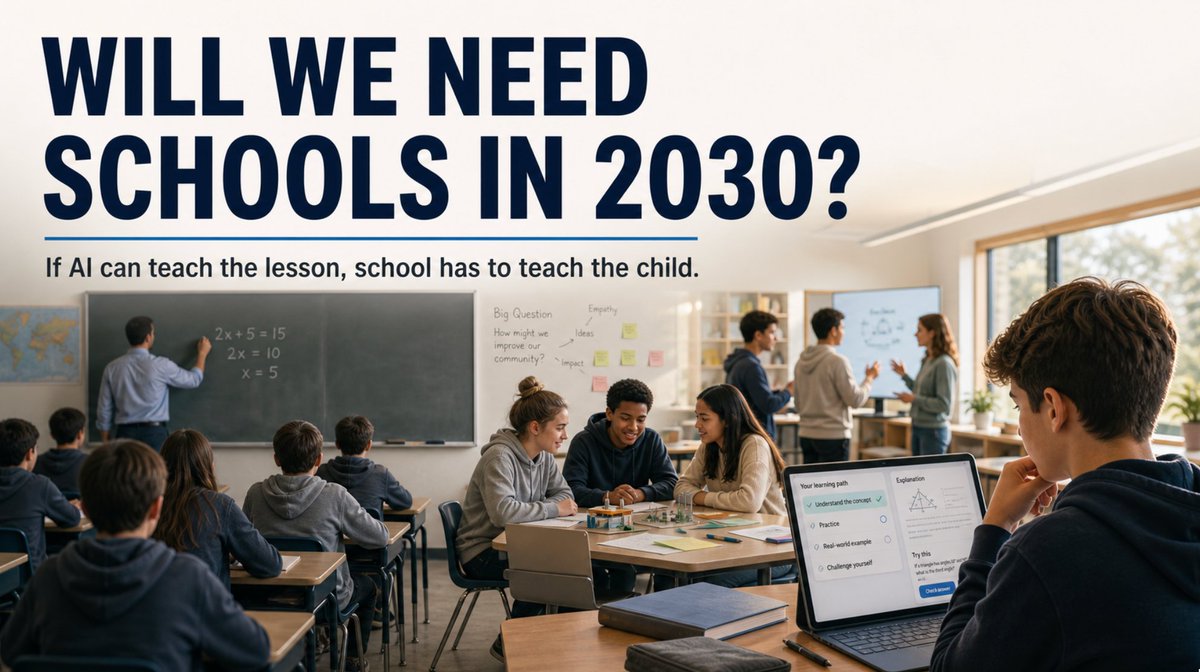
Will we still need schools in 2030? 🧑🎓
By 2030, a lot of schools may look strangely outdated.
Not because children won’t need teachers.
Because the basic model of school is built around a constraint that may disappear.
One adult.
Thirty children.
One explanation.
One pace.
One worksheet.
One test.
That made sense when personalised tutoring was expensive.
But what happens when every child has an AI tutor?
Imagine a 13-year-old in 2010 who doesn’t understand algebra.
They get the explanation in class.
They miss one step.
They don’t want to ask because everyone else seems to get it.
They go home with a worksheet.
Their parent tries to help.
Different method.
More confusion.
Eventually the child decides:
"I’m just not a maths person."
That sentence has probably damaged millions of children.
Now imagine a 13-year-old in 2030.
They have an AI tutor that knows their level.
AI remembers the mistake they made yesterday.
AI explains algebra using football, music, Minecraft or money.
AI notices the exact step where they get lost.
AI gives them easier questions.
Then harder ones.
It checks again next week.
It never gets impatient.
It never humiliates them.
It never has 29 other children needing help at the same time.
If that exists, then an uncomfortable question follows:
Why would we still organise learning around 30 children moving at the same speed?
That is the part I think schools will struggle with.
Not whether AI should be "allowed".
That debate has probably already left the building.
The real debate is whether the classroom should remain the default unit of learning?
Because once explanation becomes abundant, school has to justify what only school can do.
And it can.
Schools can do more of the things AI will be terrible at.
They can help children:
be around other people,
take turns,
lose,
fall out and make up,
apologise,
perform,
disagree,
be bored,
be brave,
join a team,
play sport,
read a room,
make friends (and enemies),
and be seen by adults who know when something is wrong.
But this means school will probably need to change its purpose.
Less:
Everyone sit still while I explain the same thing.
More:
Use AI to learn at your level.
Then come together to argue, build, socialise, test, present, play, collaborate and prove you actually understand.
And yes, children still need to learn maths.
Not because AI can’t calculate.
Because learning maths forms judgement.
AI can say 147 children need 4.2 buses.
A child needs to know that means 5 buses.
That is not just maths.
That is understanding reality.
So maybe the best schools in 2030 won’t be the ones with the strictest AI bans.
And they won’t be the ones that just hand every child a chatbot and call it innovation.
They’ll be the ones brave enough to admit that information delivery is no longer their main job.
The dream is that every child gets personal help.
The danger is that we mistake answers for education.
If AI can teach the lesson, school has to teach the child.
How to think.
How to question.
How to judge.
How to challenge the machine.
How to co-exist with other people.
That might be the real purpose of school by 2030.
It's crazy time when you think how much change AI is forcing on us!
76
May 19
Microsoft has Agent 365.
Fine.
But what if the next AI-native category leaders don’t need Microsoft 365, Azure, or the Microsoft estate at all?
That’s the bigger strategic risk.
My take:
x.com/mark_jones/status/2056…
71
May 18
While they cheer this on …
What happens to all those Microsoft 365 subs?
Will ai token spend go up enough to cover it?
Will they have enough capacity and energy to cover it?
Big risk if we get the timing wrong …
May 15
AI can be real and STILL be a bubble.
That’s the bit I keep coming back to.
The question isn’t "does AI work?"
Obviously, we've all used it by now .. It absolutely DOES work.
The big question is ..
What happens if companies use AI mainly to cut the customers the AI boom needs?
1
167
May 18
We are now testing our courses with the help of @perplexity_ai comet. It’s has some quirks but is pretty damned good as you can watch as it clicks and fills.
60
May 16
Yep and AI is eating its own tail on a much bigger scale x.com/mark_jones/status/2055…

Google is making $62 billion a quarter destroying the websites it NEEDS to survive.
This is literally a death spiral that ends with Google killing itself.
Let me explain what's going on...
Google added AI summaries to the top of every search result in 2024.
When you Google something now, the answer sits right there on Google's page. You never have to click anywhere. Google took the information from someone else's website, summarized it, and kept you inside Google's ecosystem.
The result: 60% of all Google searches now end without a single click to any website.
Small publishers lost 60% of their traffic in one year. Medium publishers lost 47%.
Even the biggest names in media, the New York Times, the Washington Post, Business Insider, all saw traffic fall between 22% and 55%.
The Axios CEO called it "a referral extinction event for the ad-supported web."
Google's response to all of this was to tell publishers they can "opt out" of having their content summarized. But opting out also REMOVES your description from normal search results.
So the choice Google gives you is let us steal your content for free, or become invisible on the internet.
That's extortion.
The Washington Post laid off another round of journalists this year because of it. Stereogum, one of the most respected music publications on the internet, had to BEG readers for donations.
Business Insider cut 21% of its staff. Dozens of smaller publishers have shut down entirely.
The people who actually CREATE the information Google summarizes are going bankrupt while Google posts record revenue.
But here's where this gets interesting and where everyone stops thinking:
Google's AI summaries are only as good as the content they summarize. If the publishers who write the original articles, run the original investigations, and create the original data go out of business, there is nothing left for Google to summarize.
The AI starts recycling old information, the answers get stale, the quality drops, and users start noticing that Google's summaries are increasingly wrong, outdated, or useless.
Google is essentially strip-mining the internet for short-term revenue. They are extracting all the value from content creators without paying for it, driving those creators out of business, and then wondering why the quality of their own product is declining.
This is exactly what Napster did to the music industry in the early 2000s:
Made content free, creators went broke, and quality collapsed. It took a decade to rebuild.
Google is doing the same thing to the entire internet at 100x the scale.
Rolling Stone, Variety, Deadline, The Hollywood Reporter, and Billboard are now suing Google for antitrust violations. Chegg, the education platform, lost 49% of its traffic and is suing too.
The UK's competition authority just ordered Google to let publishers opt out without being punished. The DOJ already ruled Google is an illegal monopoly.
And Google's defense in court is genuinely unbelievable.
They argue that publishers CHOOSE to let Google index their content and can leave anytime they want. That's like saying you choose to pay protection money to the mob because technically you could close your business and move to another city.
Google controls 90% of search. Leaving Google means leaving the internet.
Meanwhile Google is investing billions in custom AI chips to make these summaries cheaper at scale. Every quarter the problem gets worse.
The internet as we've known it for 25 years ran on a simple deal:
Publishers make content.
Google sends traffic.
Advertisers pay for the traffic. Everyone wins.
But Google just BROKE that deal and kept all the money.
200
May 15
AI can be real and STILL be a bubble.
That’s the bit I keep coming back to.
The question isn’t "does AI work?"
Obviously, we've all used it by now .. It absolutely DOES work.
The big question is ..
What happens if companies use AI mainly to cut the customers the AI boom needs?
2
4
7
5,699
May 15
The bubble doesn’t need AI to be fake or "not work".
The internet was real in 2000.
Railways were real.
Cloud was real.
The tech can work.
The maths can still break.
1
1
146
May 15
That may be how this AI bubble pops.
Not because the tech fails.
Because the tech works TOO well at cutting the market it needs.
Longer version here:
x.com/mark_jones/status/2054…
2
176