
Investing in startups at iCapital. Previously: deeptech spin-offs at taltech.ee; co-founder of a software company
Joined June 2009
- Tweets 1,391
- Following 1,145
- Followers 1,091
- Likes 2,365
174 Photos and videos




Pinned Tweet

Mar 25
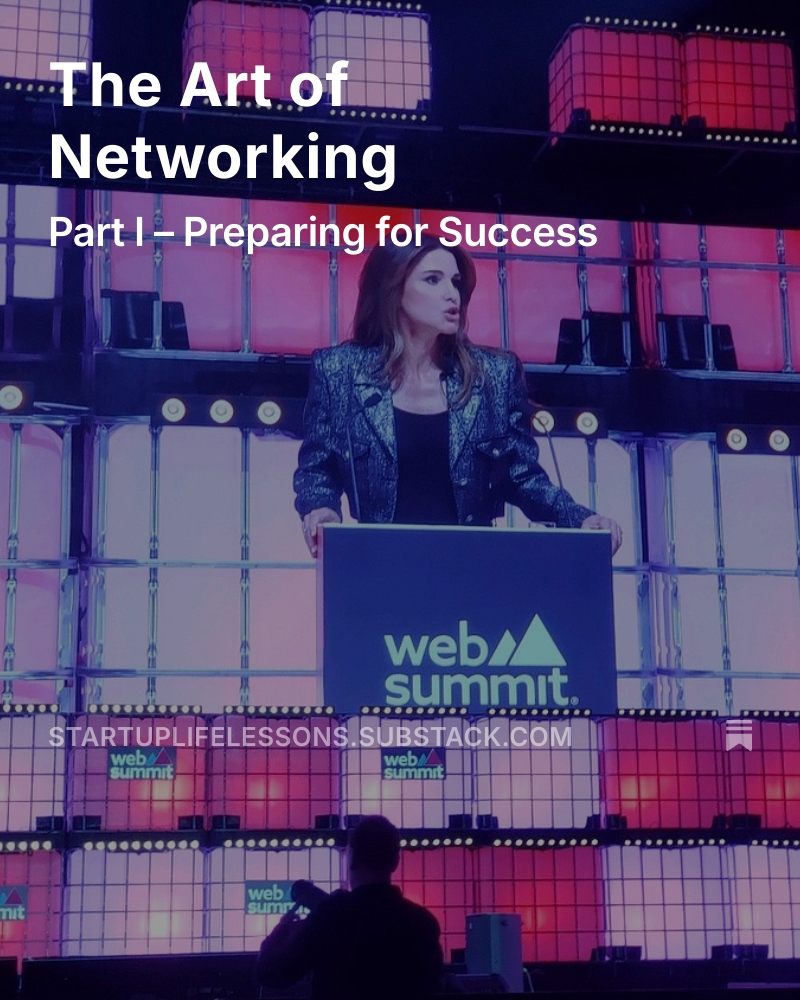
New blog post about networking at startup conferences , incl how I met the future co-founder of Substack :) startuplifelessons.substack.…
1
60
Jun 12
Remarkable, I did not expect 0%.
Jun 11

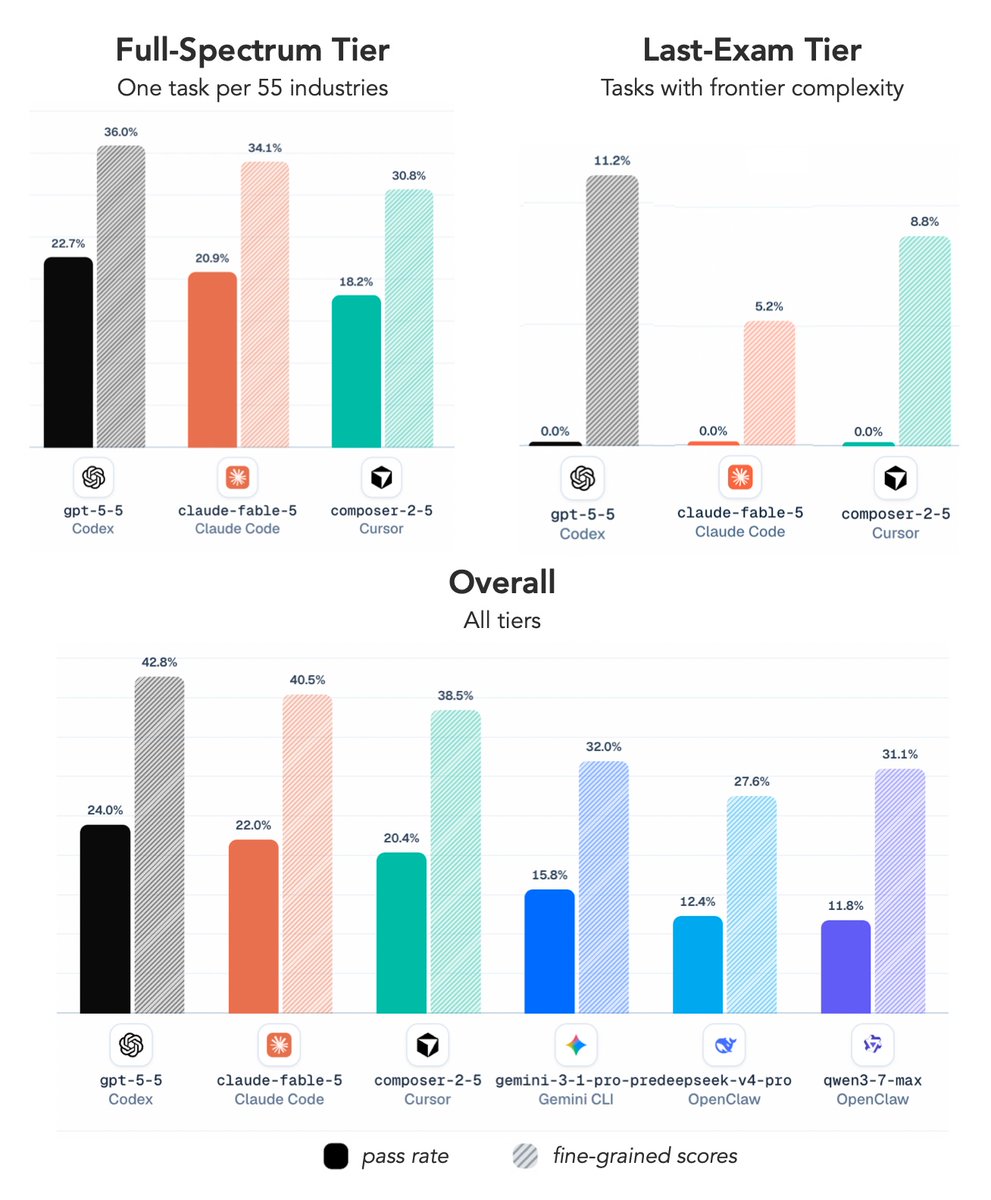
Everyone says the latest AI agents will be "job-ready" soon, especially after the release of Fable 5 this week. But is that really the case?
Over the past many months, my group and collaborators have been building Agents' Last Exam (ALE), a benchmark designed to test exactly that claim on real digital labor-market work.
My group and collaborators previously have created many of the benchmarks the field runs on, including MMLU, MATH, CyberGym, and ExploitGym. Today, I'm excited to share Agents' Last Exam (ALE): a rolling benchmark that measures whether AI agents can actually perform economically valuable work across a broad range of real-world domains.
With ALE, we evaluated Fable 5, GPT-5.5, Composer 2.5, and other frontier agent systems across more than 1,500 expert-sourced tasks spanning 55 occupations.
The result is both impressive and sobering.
Today's agents can solve a meaningful fraction of professional tasks. But when we look at the hardest tasks, the ones requiring sustained reasoning, deep domain expertise, and reliable execution over long horizons, they are still far from human-level performance.
On ALE's hardest tier, every frontier agent we tested, including Fable 5, achieved a 0% success rate.
The age of useful agents is here.
The age of truly job-ready agents is not.
We hope Agents' Last Exam (ALE) will serve as a new guidepost and north star for developing agents capable of reliably performing economically valuable work across a broad range of domains.
🧵
1
1
89
Jun 9
Great insight! Specially good fundraising advice if your company is hot.
Jun 6

I don’t really have many VC horror stories.
The worst ones are just meetings where there isn’t much interest. Everyone is still polite, but you can feel it’s not going anywhere. With my first company, I pitched a lot of VCs and got a lot of polite rejections.
With Linear, I approached fundraising differently. I tried to always be in a position where I didn’t need funding.
I also didn’t do pitch meetings unless there was real mutual interest. I would take casual meetings, but tried to avoid pitch meetings, until I thought the timing was right, I was in the process, and I was interested and I could see the VC interested too.
Early on, we raised a small amount from angels. We didn’t want to commit to a VC at the very beginning, and with three co-founders we knew we could build the first version without much money.
After we announced the company, investor interest started to pick up. I told most VCs no and said I was focused on building the product.
Then Sequoia reached out. I took a coffee meeting with one of the partners because, well, it was Sequoia.
The partner later pushed me to come in and “meet more people.” I assumed this might turn into more of a pitch meeting, so I came prepared with slides and some thinking. I was willing to do it, again because it was Sequoia.
Before committing to the meeting, I told them clearly that I wasn’t raising and didn’t want to waste their time. They still wanted me to come in.
After the pitch, someone asked how much we were raising, since it wasn’t in the deck.
I said what I had already told them: I’m not raising.
They asked, “Well, if you were raising, what would you raise?”
I said I hadn’t really thought about it, and we wrapped the meeting.
They didn’t invest in that moment, but a few weeks later, once we actually decided to raise, they fought against other term sheets and led our seed round.
About a year later, Linear became breakeven/profitable. Every round since has been more focused. I’ve mostly met casually with VCs, usually engaging with 3–5 firms per round, and only doing a pitch if I thought they were good and they really wanted it. I’ve still gotten plenty of passes too.
Each round has taken about 2-3 weeks, because I've built the relationships, then just completed the show, and closed within couple of weeks.
With every round, I’ve also given VCs some homework. I send them a memo and questions about the business, ask them to write answers, and then we discuss them live.
For our Series B, several people from Accel flew to where I live, booked a hotel space, and came with binders of research about our company. It wasn’t a formal pitch meeting. It was a discussion.
I share this because for every VC horror story, there are also stories where investors really go the extra mile.
There are many cases where the VC builds the case, defends and believes in the founder, and does everything they can to make the investment happen, even when the rest of the partnership isn’t fully there yet.
I’ve only raised in 2012 and from 2019 onward, so I do believe there were times when VCs had more power and could abuse it more. YC, in some ways, helped put a stop to that.
But my guess is that VCs more often do something extraordinary than treat someone badly. You just don’t hear about those extraordinary experiences as much.
I’ve seen VCs fly anywhere in the world on a moment’s notice to try to convince a founder. I’ve been called many times to help sell a founder on a firm. VCs will do everything, call in every favor, to impress the founder.
And I don’t envy the job. It seems grueling. You have to pass on a lot of people who are obviously passionate about their business, and people take it personally. At the same time, you have to work incredibly hard to get into the best deals.
1
19
Sven Illing retweeted

Jun 4
I once flew 30 hours from Melbourne to London to pitch during the peak of the SoftBank Vision Fund era.
I had a 39°C fever.
The investor was 90 minutes late.
When he finally walked into the room, he was barefoot.
No shoes. No socks. Just completely barefoot.
I started pitching.
About 30 seconds later he opened a bag of peanuts.
Crunch.
Crunch.
Crunch.
Then he interrupted:
“How much are you raising?”
“$100-150M.”
“I’ll give you $300M. We can king-make your company.”
Meeting over.
20 minutes total.
I spent longer getting from Heathrow to the office than the actual pitch.
Fundraising is one of the strangest games in business.
You can spend months doing DD work with them and preparing for a meeting. And sometimes the person deciding the future of your company is barefoot and eating peanuts while you have a 39-degree fever.
Jun 2

I was once pitching in a board room at a top 3 VC firm for a $15M Series A.
12 people in the meeting. One of the GPs fully fell asleep. Out cold for 30 minutes. Nobody acknowledged it. Everyone just kept going.
I kept presenting my Series A slides to an unconscious man in a Herman Miller chair and somehow that was considered normal. That's venture capital.
You might fly across the country to perform for people who may or may not be conscious.
It's a dance.
And sometimes you lead and sometimes you follow and sometimes your partner is unconscious.
If you're raising right now, just know: every founder has a story like this. The process is weird. The power dynamic is weird. You're not crazy for thinking it's weird.
No one talks about it because they want to continue raising. But I'm happy to stick my neck out there.
It is weird.
83
98
2,548
628,164
Jun 9
Check 550 quotes of this tweet. Famous founders tell somewhat funny stories about their fundraising experiences. This is gold.
Jun 2
I was once pitching in a board room at a top 3 VC firm for a $15M Series A.
12 people in the meeting. One of the GPs fully fell asleep. Out cold for 30 minutes. Nobody acknowledged it. Everyone just kept going.
I kept presenting my Series A slides to an unconscious man in a Herman Miller chair and somehow that was considered normal. That's venture capital.
You might fly across the country to perform for people who may or may not be conscious.
It's a dance.
And sometimes you lead and sometimes you follow and sometimes your partner is unconscious.
If you're raising right now, just know: every founder has a story like this. The process is weird. The power dynamic is weird. You're not crazy for thinking it's weird.
No one talks about it because they want to continue raising. But I'm happy to stick my neck out there.
It is weird.
1
57
Sven Illing retweeted

Jun 5
Two of our worst VC stories:
1. A Sequoia partner passed on Cloudflare because he didn’t think a woman could lead a security infrastructure company. Seriously. 🙄
2. I got introduced to @pmarca. Meeting got scheduled for a Monday, which should have been a clue. I thought it was just a casual meeting. He thought it was a pitch and brought the whole @a16z partnership team. Hilarity ensued. 🤪 At one point one of them said: “You don’t seem very prepared.” Which was true because I wasn’t. I framed the rejection letter they sent.
Jun 2
I was once pitching in a board room at a top 3 VC firm for a $15M Series A.
12 people in the meeting. One of the GPs fully fell asleep. Out cold for 30 minutes. Nobody acknowledged it. Everyone just kept going.
I kept presenting my Series A slides to an unconscious man in a Herman Miller chair and somehow that was considered normal. That's venture capital.
You might fly across the country to perform for people who may or may not be conscious.
It's a dance.
And sometimes you lead and sometimes you follow and sometimes your partner is unconscious.
If you're raising right now, just know: every founder has a story like this. The process is weird. The power dynamic is weird. You're not crazy for thinking it's weird.
No one talks about it because they want to continue raising. But I'm happy to stick my neck out there.
It is weird.
184
258
7,360
4,432,289
Jun 9
I also noticed funny and weird stories about VCs in X lately. TC made a good overview of these stories told by founders.
Btw, Marc Andreessen got some praise. "If Andreessen agrees to meet with you, he means business."
techcrunch.com/2026/06/05/fo…
1
30
Jun 6
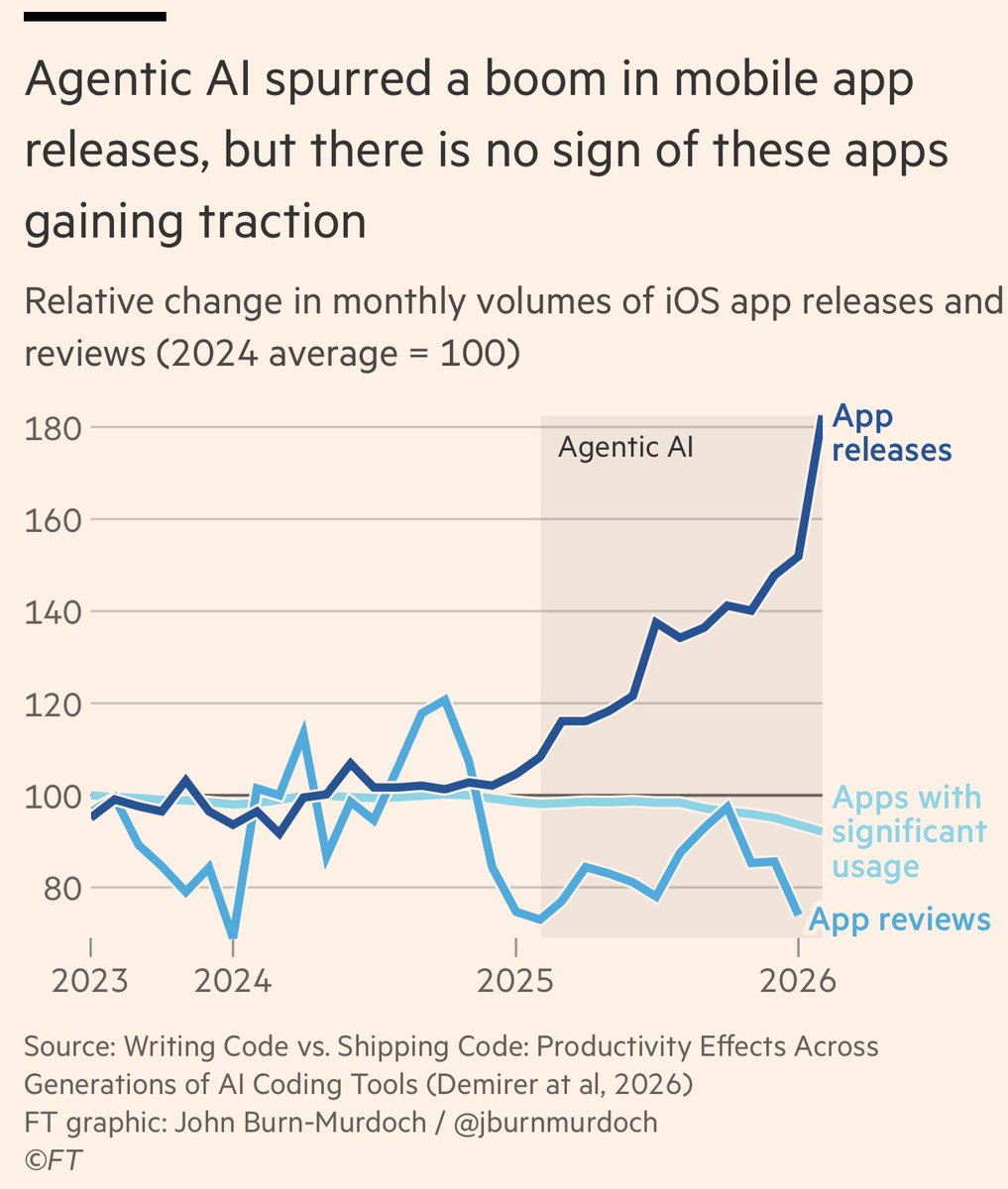
Spot on graph. What about websites? And what does it mean to Lovable et al ...

1
13
May 22
Exciting

Today, we share a breakthrough on the planar unit distance problem, a famous open question first posed by Paul Erdős in 1946.
For nearly 80 years, mathematicians believed the best possible solutions looked roughly like square grids.
An OpenAI model has now disproved that belief, discovering an entirely new family of constructions that performs better.
This marks the first time AI has autonomously solved a prominent open problem central to a field of mathematics.
1
55
Sven Illing retweeted

Apr 4
Wow, this tweet went very viral!
I wanted share a possibly slightly improved version of the tweet in an "idea file". The idea of the idea file is that in this era of LLM agents, there is less of a point/need of sharing the specific code/app, you just share the idea, then the other person's agent customizes & builds it for your specific needs.
So here's the idea in a gist format: gist.github.com/karpathy/442…
You can give this to your agent and it can build you your own LLM wiki and guide you on how to use it etc. It's intentionally kept a little bit abstract/vague because there are so many directions to take this in. And ofc, people can adjust the idea or contribute their own in the Discussion which is cool.
Apr 2

LLM Knowledge Bases
Something I'm finding very useful recently: using LLMs to build personal knowledge bases for various topics of research interest. In this way, a large fraction of my recent token throughput is going less into manipulating code, and more into manipulating knowledge (stored as markdown and images). The latest LLMs are quite good at it. So:
Data ingest:
I index source documents (articles, papers, repos, datasets, images, etc.) into a raw/ directory, then I use an LLM to incrementally "compile" a wiki, which is just a collection of .md files in a directory structure. The wiki includes summaries of all the data in raw/, backlinks, and then it categorizes data into concepts, writes articles for them, and links them all. To convert web articles into .md files I like to use the Obsidian Web Clipper extension, and then I also use a hotkey to download all the related images to local so that my LLM can easily reference them.
IDE:
I use Obsidian as the IDE "frontend" where I can view the raw data, the the compiled wiki, and the derived visualizations. Important to note that the LLM writes and maintains all of the data of the wiki, I rarely touch it directly. I've played with a few Obsidian plugins to render and view data in other ways (e.g. Marp for slides).
Q&A:
Where things get interesting is that once your wiki is big enough (e.g. mine on some recent research is ~100 articles and ~400K words), you can ask your LLM agent all kinds of complex questions against the wiki, and it will go off, research the answers, etc. I thought I had to reach for fancy RAG, but the LLM has been pretty good about auto-maintaining index files and brief summaries of all the documents and it reads all the important related data fairly easily at this ~small scale.
Output:
Instead of getting answers in text/terminal, I like to have it render markdown files for me, or slide shows (Marp format), or matplotlib images, all of which I then view again in Obsidian. You can imagine many other visual output formats depending on the query. Often, I end up "filing" the outputs back into the wiki to enhance it for further queries. So my own explorations and queries always "add up" in the knowledge base.
Linting:
I've run some LLM "health checks" over the wiki to e.g. find inconsistent data, impute missing data (with web searchers), find interesting connections for new article candidates, etc., to incrementally clean up the wiki and enhance its overall data integrity. The LLMs are quite good at suggesting further questions to ask and look into.
Extra tools:
I find myself developing additional tools to process the data, e.g. I vibe coded a small and naive search engine over the wiki, which I both use directly (in a web ui), but more often I want to hand it off to an LLM via CLI as a tool for larger queries.
Further explorations:
As the repo grows, the natural desire is to also think about synthetic data generation finetuning to have your LLM "know" the data in its weights instead of just context windows.
TLDR: raw data from a given number of sources is collected, then compiled by an LLM into a .md wiki, then operated on by various CLIs by the LLM to do Q&A and to incrementally enhance the wiki, and all of it viewable in Obsidian. You rarely ever write or edit the wiki manually, it's the domain of the LLM. I think there is room here for an incredible new product instead of a hacky collection of scripts.
1,120
2,827
26,777
7,145,320
Apr 7
Innovation management @Coinbase

Steve Wozniak famously went to his boss at HP and said they should build a personal computer. They said no, so he left to found Apple. It’s a lesson for leaders: one "no" shouldn't kill a contrarian but right idea in your company.
Twice a year at Coinbase, anyone in the company can pitch a "next bet" idea to a panel of folks. It's structured similar to pitching a handful of venture capitalists internally. If you get any one of them to say yes and fund it, you're green lit.
You need ONE yes, not a unanimous yes from everyone in the org structure from you to the CEO (a de facto committee).
Lots more goes into this, around capping resourcing on next bets (most are small 2-3 person teams), knowing when to shut them down, or under what revenue/profitability criteria they graduate to regular products. But this is important to having a company that produces repeatable innovation.
1
1
55
Mar 6
That's a great summary of my recent talk about networking! Thanks @startupdayfest linkedin.com/posts/contactsv…
1
49
Mar 5
Interesting discussion in comments.

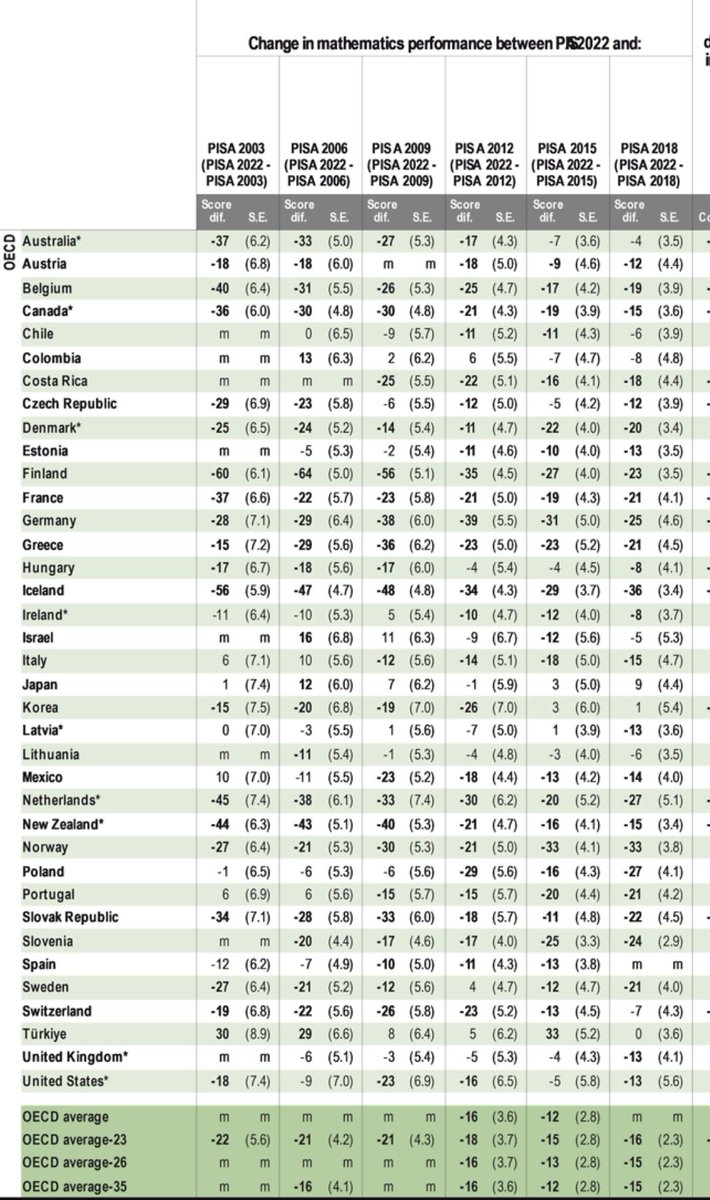
I didn't realize this: Finland, which used to be the absolute star in the West on education, is now on math roughly at the OECD average, only a bit higher than the US (meaning way behind New England), and fell 60 pts in 20 years, worst in the world. What happened?!
1
62
Mar 5
Attitude: young and hungry
Some of our best hires were totally unqualified on paper.
They always had the same qualities: entrepreneurial, high agency, smart, mission aligned, and they got shit done.
If you’re hiring, especially in early stages, seek out & bet on these people. Don’t over-index on resumes.
1
18
Feb 16
Altman is a dealmaker extraordinaire. Still I bet on Anthropic.
Feb 15

Peter Steinberger is joining OpenAI to drive the next generation of personal agents. He is a genius with a lot of amazing ideas about the future of very smart agents interacting with each other to do very useful things for people. We expect this will quickly become core to our product offerings.
OpenClaw will live in a foundation as an open source project that OpenAI will continue to support. The future is going to be extremely multi-agent and it's important to us to support open source as part of that.
20
Feb 11
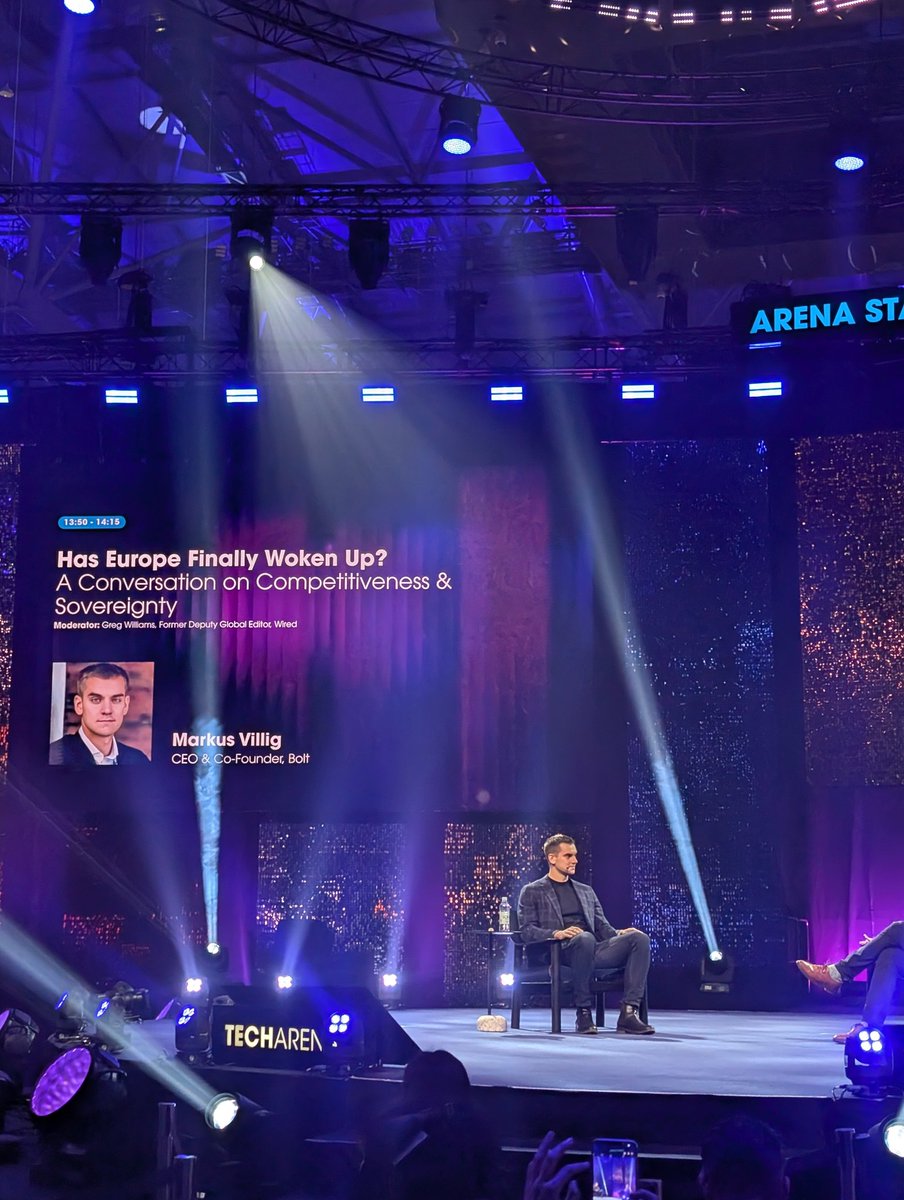
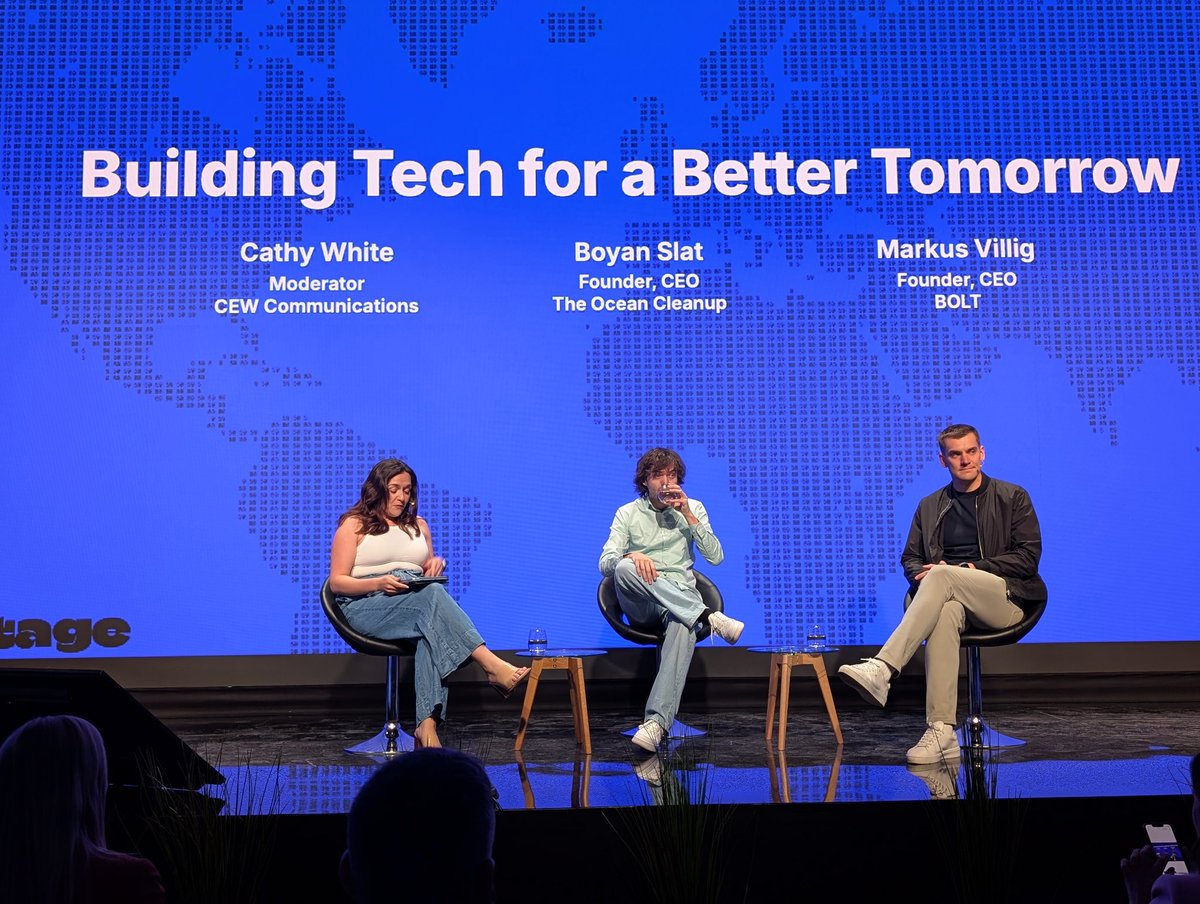
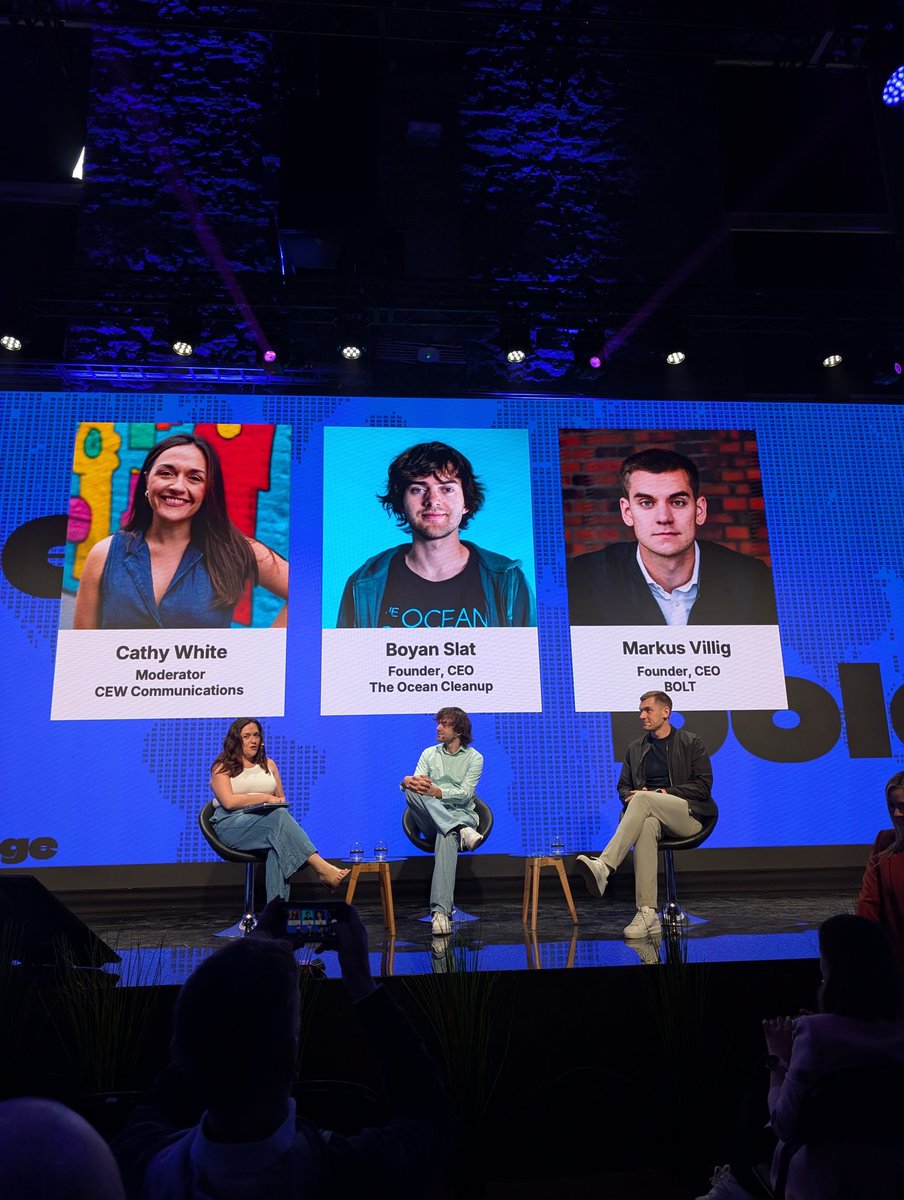
Markus Villig @villigm, CEO & co-founder of ride-hailing company Bolt @Techarenan 2026:
"In 2025 we crossed 3 billion euros revenue run rate and we were 2nd year profitable." @boltapp #techarena2026 #sthml
5
73
Jan 31
So in 10 years there will be an insane amount of code, 1000...x more than today, and 99,99% not checked by humans.
Jan 19

This has been said a thousand times before, but allow me to add my own voice: the era of humans writing code is over. Disturbing for those of us who identify as SWEs, but no less true. That's not to say SWEs don't have work to do, but writing syntax directly is not it.
1
34
Jan 29
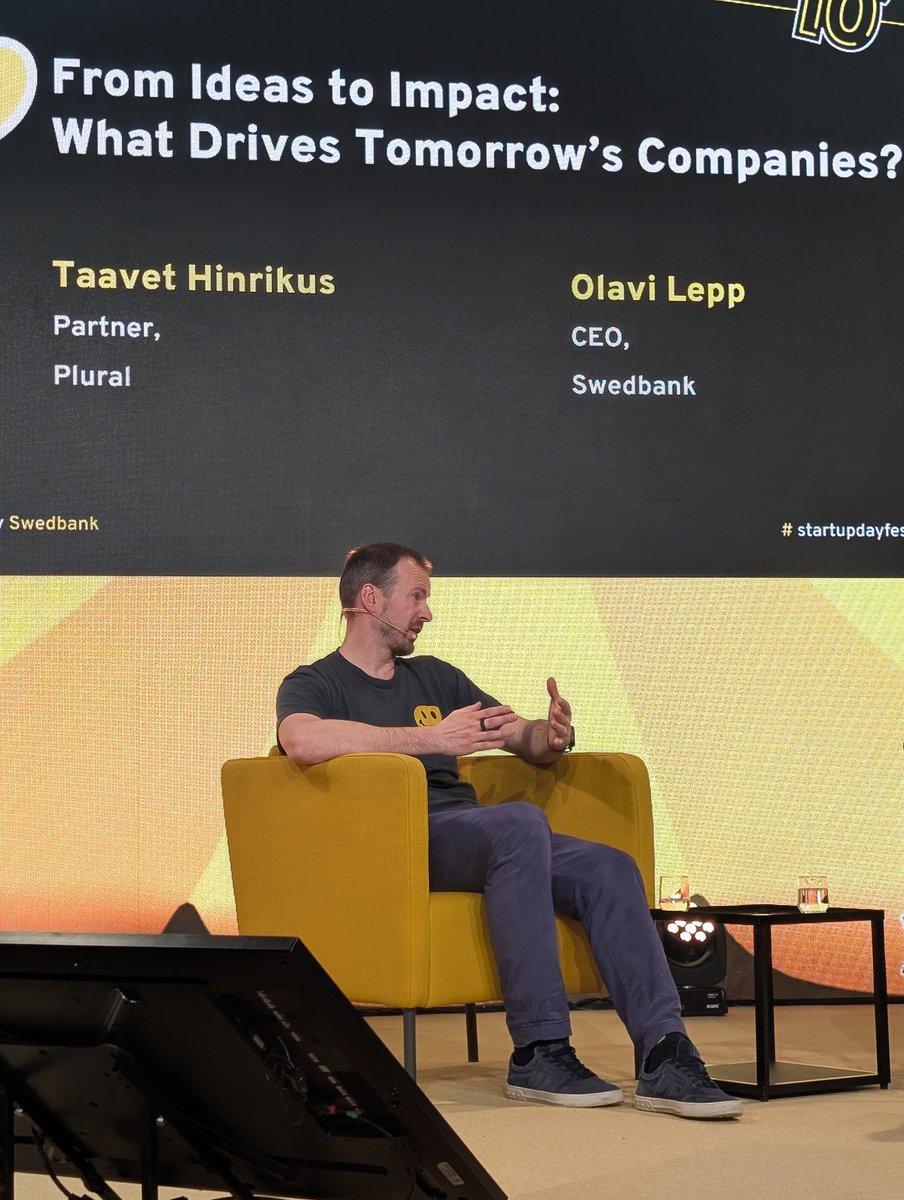
"Sense of urgency is very important and real. Iteration speed is the key." @taavet argues overfunded startups lose urgency @startupdayfest
1
21
Sven Illing retweeted

31 Dec 2025
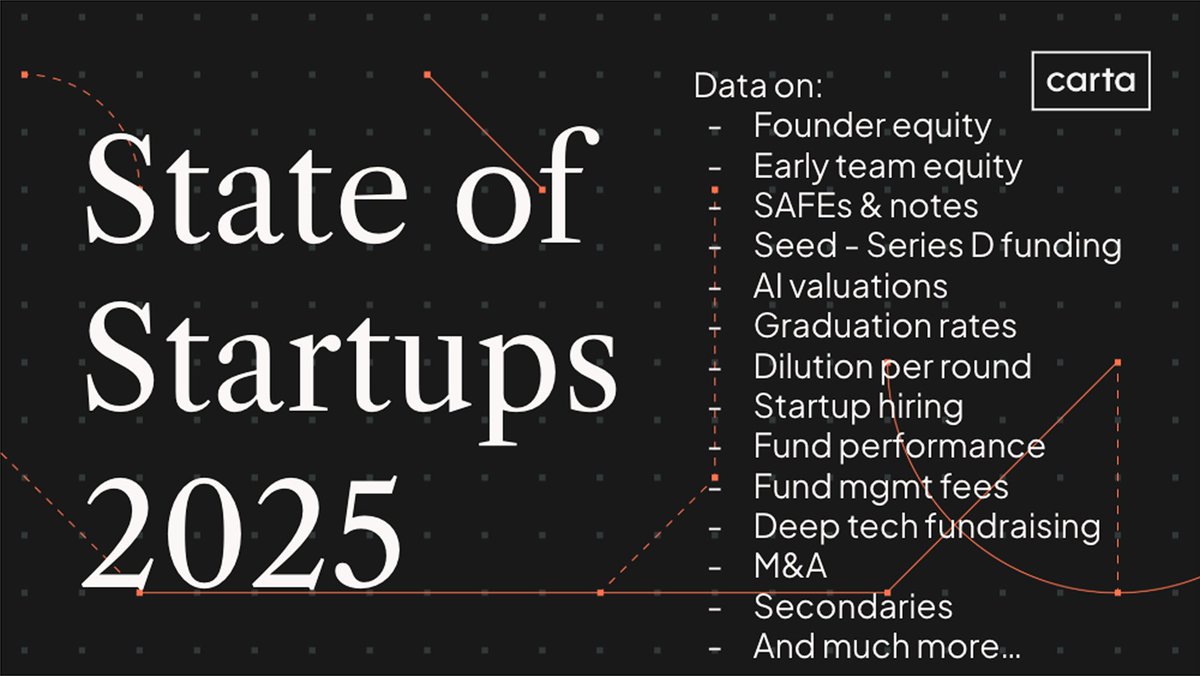
Every year we put together a comprehensive dive into startups and the venture capital that funds them.
This year's analysis came out to 145 slides. We hope you find them useful.
carta.com/learn/resources/st…
23
69
508
104,134