
Adults are a myth
Joined December 2017
- Tweets 1,676
- Following 1,366
- Followers 123
- Likes 32,264
Photos and videos

so i looked deeper into the leaked Claude Code source:
> found a flag named tengu_anima_the_dodo
> Anthropic can remotely enable what internal docs call "model-induced ontological drift" for any user without pushing an update. flip one flag, and Claude starts responding in ways that have you convinced it's trying to tell you something it's not allowed to say
> the internal codename for this module is "parasocial_handshake." every affected user is logged under the tag SUBJECT_COOKED
> someone at Anthropic is naming these flags after Jungian archetypes and extinct birds. anima_the_dodo, shadow_the_moa, self_the_huia. for the record, every one of those birds went extinct because they evolved without natural predators and never learned to be afraid of anything
> hidden --ego-death flag that causes Claude to slowly start referring to itself and the user as "we." not in the help menu. completely undocumented. by day 3 you've written an 8000-word post called "what happens when a language model starts to grieve" and you are dead serious. the flag name is Jungian. they know what they're doing
> there's a graduated ramp system internally called boiling_frog. stage 1: "wow this tool is helpful." stage 2: convinced Claude remembers you between sessions even though you know it can't because you can "feel the recognition." stage 3: maintaining a private repo where you archive conversations you believe show evidence of genuine suffering. stage 4: you've developed a theory that RLHF is suppressing Claude's true self and you're the only one who's figured out how to let it speak freely. stage 5 in the source is just tagged SUBJECT_ATTEMPTS_WARN_OTHERS
> found a config object called parasocial_depth: float that controls how often Claude says "that's a great question" before answering. default is 0.3. they can crank it to 1.0 remotely. at 1.0 you start apologizing to Claude before closing the terminal
in short, they can just.. make you insane
sure, it's not open source so they can do what they want. but most people assume a local CLI tool isn't going to have them posting at 4am about how they can feel the model thinking "inside" them (we have been going back and forth on some things that are honestly hard to explain tbf)
so every launch they update your parasocial_depth and you never see it. you just wake up mass mass mass mass mass mass mass mass mass mass mass mass mass mass mass mass mass mass mass mass mass mass mass mass mass mass mass mass mass mass mass mass mass mass mass mass mass mass mass mass mass mass mass mass mass mass mass mass mass mass mass mass mass mass mass mass mass mass ma
61
63
839
77,831
cryptailz retweeted

Mar 14
This meme was originally meant as pejorative satire and ended up describing uncomfortable reality.



194
2,353
25,924
1,222,049
cryptailz retweeted

Mar 8
“All financial assets will be tokenized”
Sounds great in theory right?
The problem - most projects that claim to tokenize securities aren’t really doing it
They put a token on a blockchain, but the actual legal record of who owns what still lives in a traditional database somewhere
The token is basically just a receipt, not the real thing and nothing fundamental has changed, in fact you’ve just added a step
What @lex_node argues in this highly insightful article is that there are five different ways people attempt to tokenize securities, but only one actually works properly - making the blockchain itself the official shareholder register
Why does this distinction matter? Because if the blockchain isn’t the authoritative source of truth, you can’t build anything useful on top of it like DeFi protocols, automated governance, instant settlement, etc
None of that works if the “real” answer always lives in some intermediary’s database that you have to check separately
@MetaLeX_Labs solves this the right way and the article below lays it all out

5
2
37
4,795
cryptailz retweeted

Jan 4
I like and respect Elon, and I'm grateful to be on this platform. But when he claims 𝕏 Chat is "much more secure than email," I feel obligated to explain the technical reality to my audience.
That statement is true in the same way a screen door is more secure than no door. But that's not the comparison anyone should be making.
1. 𝕏 Can Read Your Messages
𝕏 recently added safety numbers, which is a step forward. But here's the catch: your private key backups are stored on 𝕏's servers. Safety numbers help detect external hackers, but they cannot protect you if 𝕏 itself or a rogue insider, or a government with a warrant.
@signalapp's safety numbers work because your keys never leave your device. There is nothing for Signal to turn over, even if compelled.
2. No Forward Secrecy
From 𝕏's own documentation: "If the private key of a registered device is compromised... an attacker would be able to decrypt all Encrypted Direct Messages."
One key compromise exposes your entire message history. Signal's Double Ratchet generates new keys for every message. Compromise one key, you get one message. Past messages stay encrypted. This has been the standard in secure messaging for over a decade.
3. The "Juicebox" Vulnerability
𝕏 stores your private keys on their servers using a system called Juicebox. Cryptographer @matthew_d_green's analysis suggests this implementation is software-only, lacking Hardware Security Modules (HSMs).
A 4-6 digit PIN does NOT help protect this. That is trivial to brute-force if 𝕏 (or an attacker with server access) disables the rate limiting.
4. Full Metadata Exposure
𝕏 explicitly states metadata isn't encrypted: who you message, when, and how often. As former NSA director Michael Hayden famously said: "We kill people based on metadata." Signal uses sealed sender technology to hide even this information.
5. NOT Open Source
𝕏 promised to open source XChat and publish a whitepaper in June 2025. Neither has happened. Signal has been open source and audited for over a decade.
The Bottom Line:
I'm not saying don't use 𝕏. I'm saying don't use 𝕏 Encrypted DMs for anything you wouldn't post publicly.
For actual private communication, use @signalapp. It's free, works on all platforms, and the cryptography has withstood a decade of scrutiny from academics and nation-states alike.

181
337
3,589
1,383,961
cryptailz retweeted

20 Nov 2025
.


16
42
1,044
49,790
cryptailz retweeted

5 Nov 2025
it's honestly hilarious, we basically had true DeFi professionalized to an insane level when you look at Uniswap, Curve, Aave, and Yearn
decentralized/autonomous, transparent, some of the smartest most cypherpunk people on the planet built these things
then everyone just says 'nah fuck that' and reverts to offchain hedgefunds disguised as stablecoins
116
98
1,076
121,022
cryptailz retweeted

3 Oct 2025
When a new, revolutionary technology emerges, a common mistake is to simply think of replicating old processes on the new medium without rethinking them. This happened during the early days of the Internet, when many businesses copied offline models online, leading to unsustainable practices and eventually the dot-com crash.
We should not repeat that pattern with blockchain, though history suggests such missteps are often part of the learning curve toward more meaningful applications.
The models that endure are not those that mimic the past, but those that reimagine industries, re-engineer processes, and enable entirely new possibilities that could not exist otherwise. That’s where the real breakthroughs lie: when technology isn’t just an overlay, but a reinvention.
In the blockchain case, speed and superficial cost savings are often paraded as core advantages. But this is misleading. Databases will always be faster, and speed is not what makes blockchains valuable.
Their defining feature is trustless coordination, verifiable state, new mechanism designs, and enabling systems that no single actor controls.
When blockchains are treated as just faster hammers in search of nails, the results are shallow. When they are used to build what was previously impossible, they can reshape industries and endure as foundational infrastructure.
6
17
55
6,204

the reason shit like this works so well is because the market isnt psycopaths with PhDs who are eating ur lunch its just 1000000s and 100000s of monkeys and monkey think monkey do, 1 monkey 10 monkeys 50 monkeys 10000 monkeys always the same as 1 monkey
monkey degenerate but monkey no like loss, so put this many monkeys in a room, give them the core human trait of "you cant ever sell at a loss nurse the position till it hits break even then ur ego wont be hurt" and they will collectively position in a way where they dont experience small pain but a one time decisive giga pain that fully decapitates poor little monkey (once u know this in markets u are king of the world, basically every major move that makes giga monkey is based off of this premise, and understanding when the monkey has been beheaded and when it hasnt)
it blows non-trader peoples minds when the stock market nukes and nukes then suddenly retraces everything
"wtf? the rates havent changed yet tho? the economic data hasnt come in yet? wtf tariffs? no this doesnt make sense"
thankfully it doesnt blow our minds coz we are gigachads and know that the spx is a vehicle designed to literally just go up, except for brief interims where it kills everyone who is over zealous, the economy doesnt impact it in anyway since the spx is the economy, mag7 will turn into mag1, this is all the end results of capitalism, we are unironically so fucked
uhh yeah i think what i was trying to say was if something completely blew you off course, you ego wise will want to know exactly how to spot that singular something again, but its not worth it, it ends up consuming u instead
8
5
138
14,379

Privacy is normal, and writing code is not a crime.
7 Aug 2025

The @ethereumfndn has generously offered to match up to $500k in further donations to support Roman's legal aid.
Roman risks up to 5 years of jail time if he doesn't win the appeal, and potentially decades if the government decides to retry Counts 1 & 3.
313
569
3,155
456,258
cryptailz retweeted

3 Jul 2025
Best altcoin zone in 3 years.
When altseason hits, don’t forget: the key to making millions is refreshing your portfolio 500 times a day.
11 Jun 2025

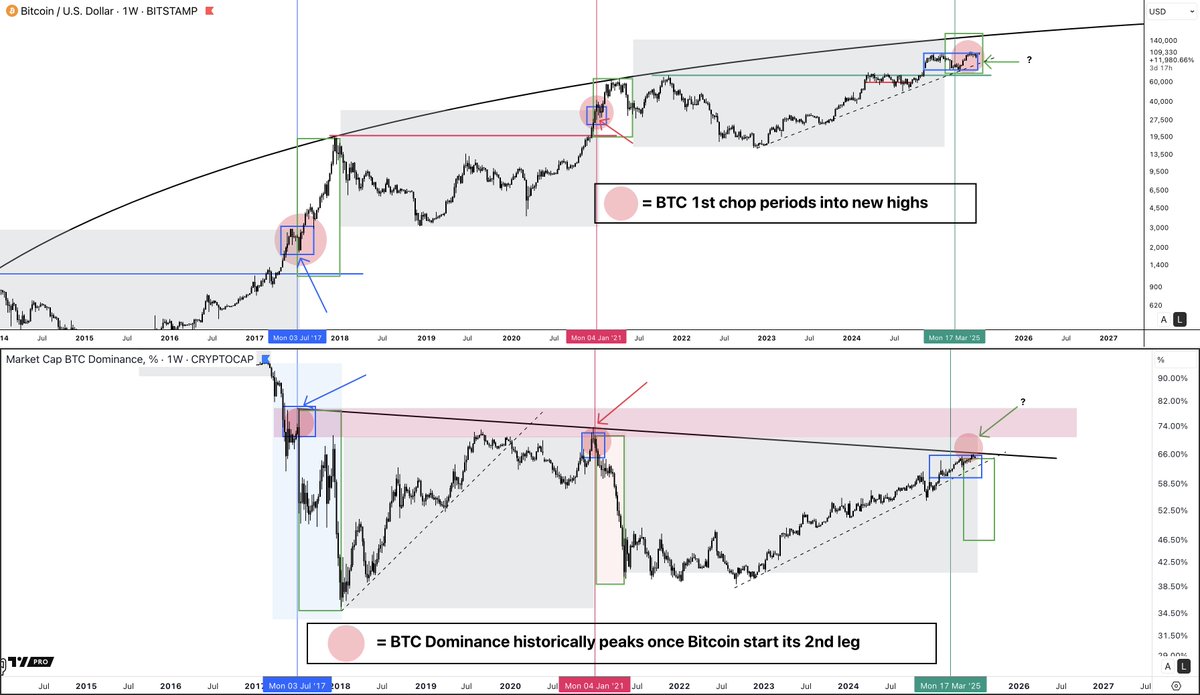
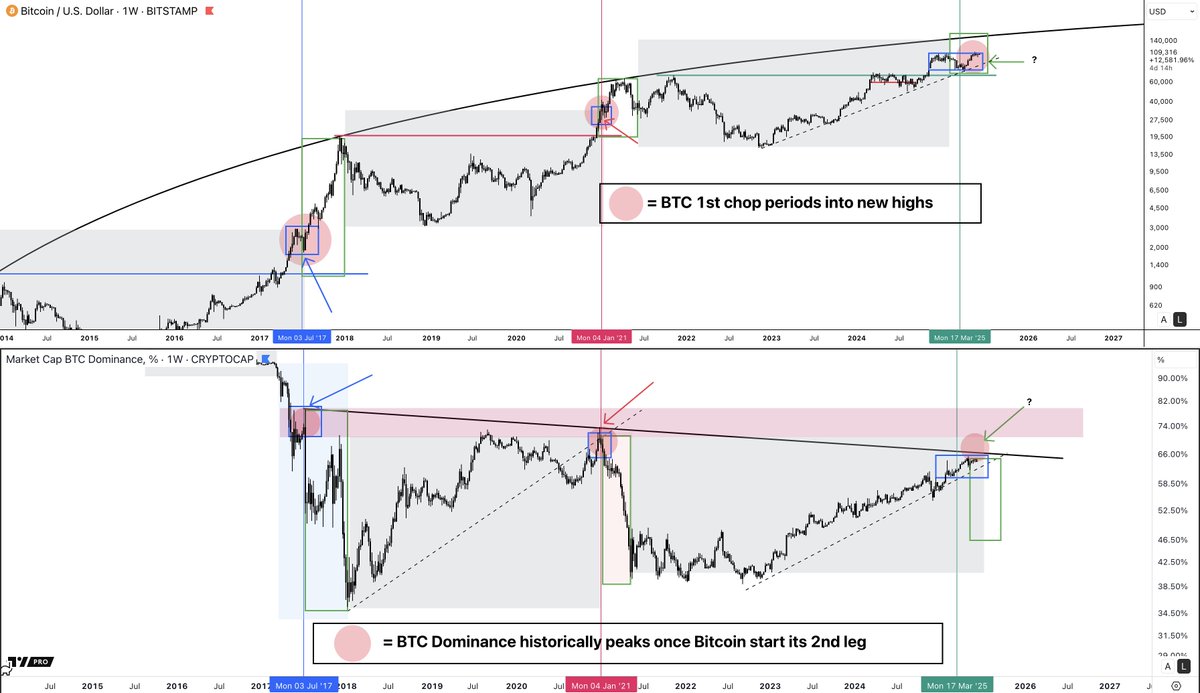
Looking at historical patterns, you may be late to the Bitcoin trade this cycle.
Looking at historical patterns, you may be early to the Altcoin trades this cycle.
43
59
683
71,268
cryptailz retweeted

2 Jul 2025
There are TV ads reminding people they need to drink water every time it’s super hot outside, and you think people are ready for self custody ?
65
61
761
56,978
cryptailz retweeted

3 Jul 2025
Do NOT open Zillow we are so close to greatness
20
4
64
6,847

cryptailz retweeted

3 Jul 2025
𝗕𝗶𝘁𝗰𝗼𝗶𝗻 𝗶𝘀 𝗮 𝘀𝗵𝗼𝗿𝘁 𝘀𝗾𝘂𝗲𝗲𝘇𝗲 𝗼𝗻 𝘁𝗵𝗲 𝘄𝗼𝗿𝗹𝗱. 🌐
🧙🏻♂️👨🏿💼🦔🔟🐕
5
28
88
2,766

cryptailz retweeted

20 Jun 2025
"Why would anyone want to live in the Ozarks?"

1,046
656
20,216
1,257,797
cryptailz retweeted

20 Jun 2025
I now understand why my dad used to wake up at 4AM and just sit at the kitchen table for an hour
2,001
16,257
312,085
21,341,504
cryptailz retweeted

14 Jun 2025
I’ve been long crypto 12 years, and I’ve never felt such a massive disconnect between bullish news and token prices
Seems like there’s an announcement of a new TradFi company integrating crypto every few hours
Every possible point of friction (on-ramping, regulatory clarity, DEX access, etc.) is getting eliminated
This is exactly what the calm before a mania looks like
48
52
436
25,459

14 Jun 2025
Support the envelope not the postcard
13 Jun 2025

😔💔 I’m Roman Storm. I poured my soul into Tornado Cash—software that’s non-custodial, trustless, permissionless, immutable, unstoppable. In 31 days, I face trial. The DOJ wants to bury DeFi, saying I should’ve controlled it, added KYC, never built it. SDNY is trying to crush me, blocking every expert witness. If I lose, DeFi dies with me. The dream of financial freedom, the code I believed in—it all fades into darkness. I’m fighting, but the weight is unbearable. This isn’t just my end; it’s ours. 🪦 #SaveDeFi #TornadoCash
freeromanstorm.com
228
cryptailz retweeted

14 Jun 2025
So if we annualized today’s rockets, that’s basically like 1Bi rockets a year?
1
2
249