focus on your win rate. it’s a marathon. for Noni 😺
Joined May 2023
- Tweets 3,677
- Following 5,869
- Followers 597
- Likes 13,648
264 Photos and videos










Pinned Tweet

11 Sep 2023
Got my 1st fullstack dev job offer today. Start in 2 weeks, just shy of 1 year out of bootcamp
Big shout to @crypto_thyme for advice—gem finder and buildoor extraordinaire
@CryptoThommy I know you’re devving too—g’luck bro
I’m just getting started 🔥
2
15
3,570
196
cryptoButtonMan retweeted

May 26
Glam Up hit $1.8m ARR in 8 months.
Sprout hit $3m ARR in 7 months.
The key to that was our UGC playbook.
I'm finally dropping the playbook and lowkey I'm scared to drop this. You'll understand why once you read it.
It's gonna be three parts but here's part 1. Part 1 itself is 40 pages long.
I made sure it's tactical advice and upfront with no BS.
Bonus: repost reply 'warmup' and I'll DM you the Account Setup Warmup module from our internal creator course.
Must be following so I can DM.
prep-ai.typeform.com/to/X7g0…
651
351
845
115,259
👏 USA is my team but we ain’t beating this squad reveal

154
May 19

It’s an unpopular view but Arsenal’s title is the story of considerable overperformance against wealthier opposition - City’s higher wage bill is the equivalent of more than five Sakas
It wasn’t always pretty but it is maximising everything you’ve got
independent.co.uk/sport/foot…
43
cryptoButtonMan retweeted

May 19
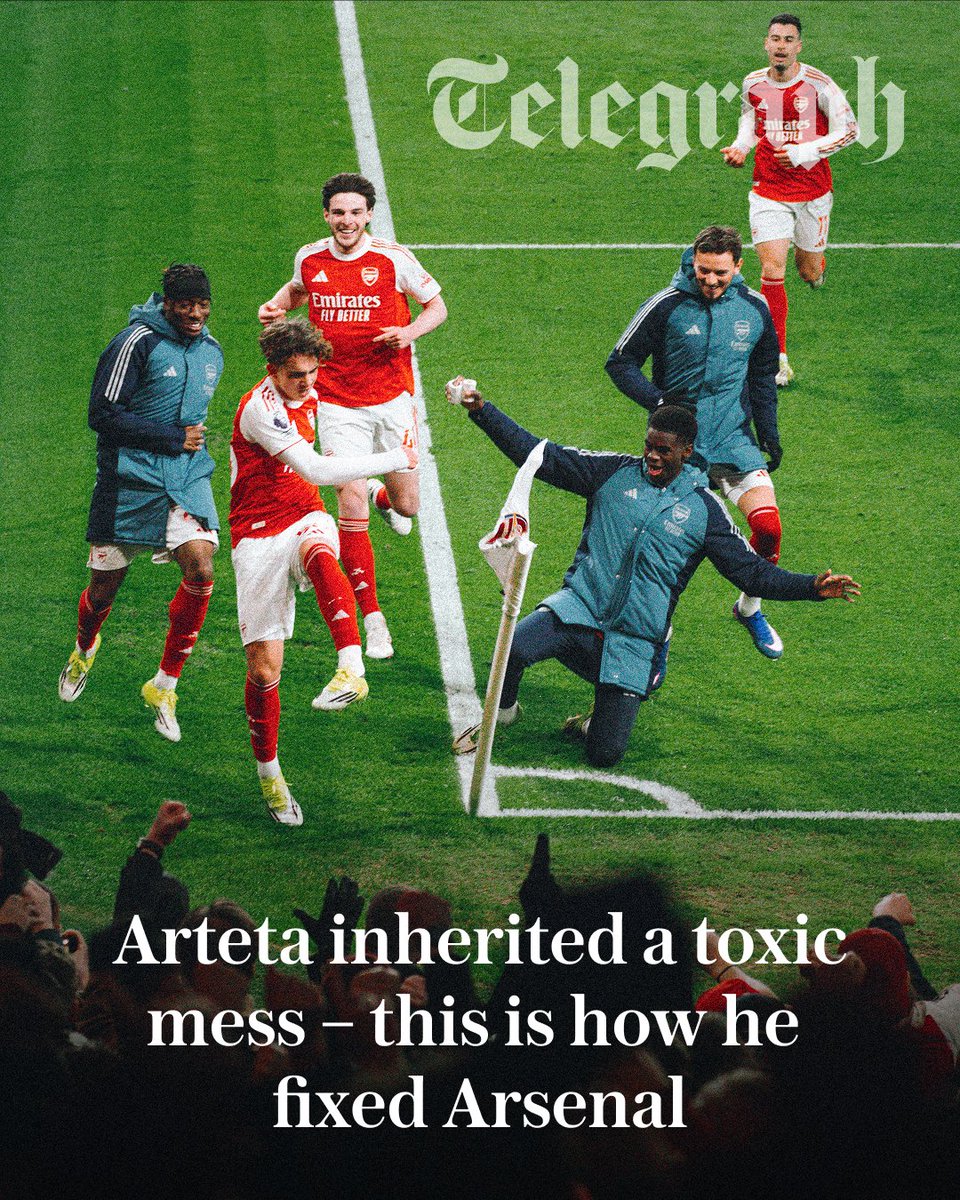
During a recent transfer window, a secret meeting was arranged for Mikel Arteta and one of Arsenal’s top targets. The plan was for it to be a relaxed sort of occasion.
It soon became clear, though, that Arteta was in no mood for casual chit-chat. Not long after the player arrived, the Arsenal manager asked to take him into another room. Just the two of them. No others allowed.
What followed, Telegraph Sport understands, was the most extraordinary set of noises. Arteta could be heard banging on tables, slamming on walls, jumping around the room and shouting. He had a presentation prepared, about how the player would fit into Arsenal’s set-up, and he delivered it with chest-thumping, hair-raising passion.
When the pair finally emerged, the player was wide-eyed and dazed. Almost like he had been brainwashed. He never fully explained to his advisors what had been said, but he was absolutely clear about his intentions. “I want to play for Arteta,” he told his agent.
@SamJDean looks at how Arteta’s unique methods drove Arsenal to end their 22-year wait for the title ⬇️
telegraph.co.uk/football/202…
127
924
8,979
3,571,672

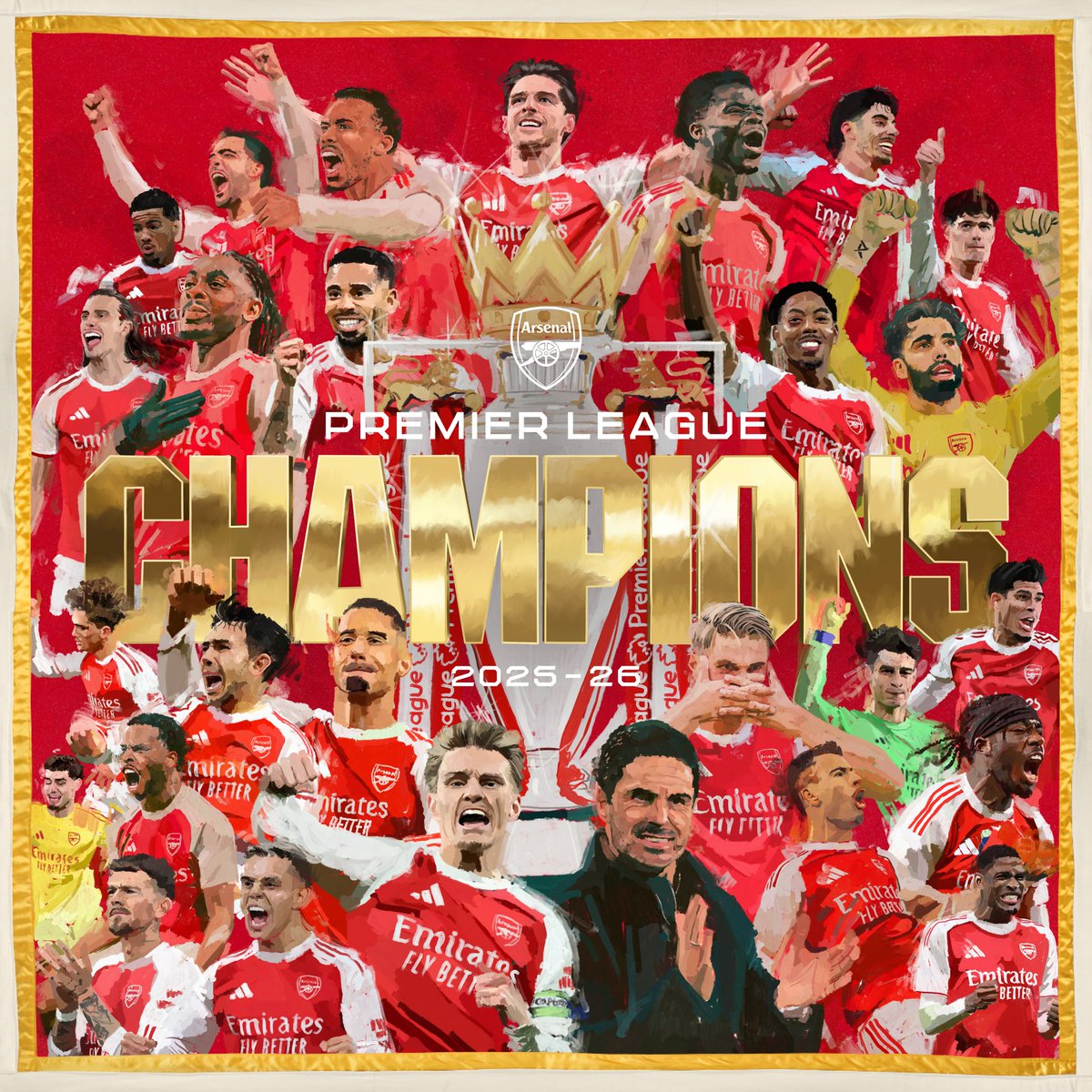
I can’t take it
This fucking team god almighty
I don’t even care about UCL, you should’ve gotten knocked out and focused on the league. He who chases 2 rabbits catches neither
4
Everything wrong w crypto in a post

There should perhaps be a psychological study on the people that pick out random words from your tweets and make coins from them like quick guys he said toothpaste quick raid raid raid, but then they get annoyed and say how come you aren’t supporting toothpaste token when you previously used the word toothpaste in a sentence
6
cryptoButtonMan retweeted

Jan 13
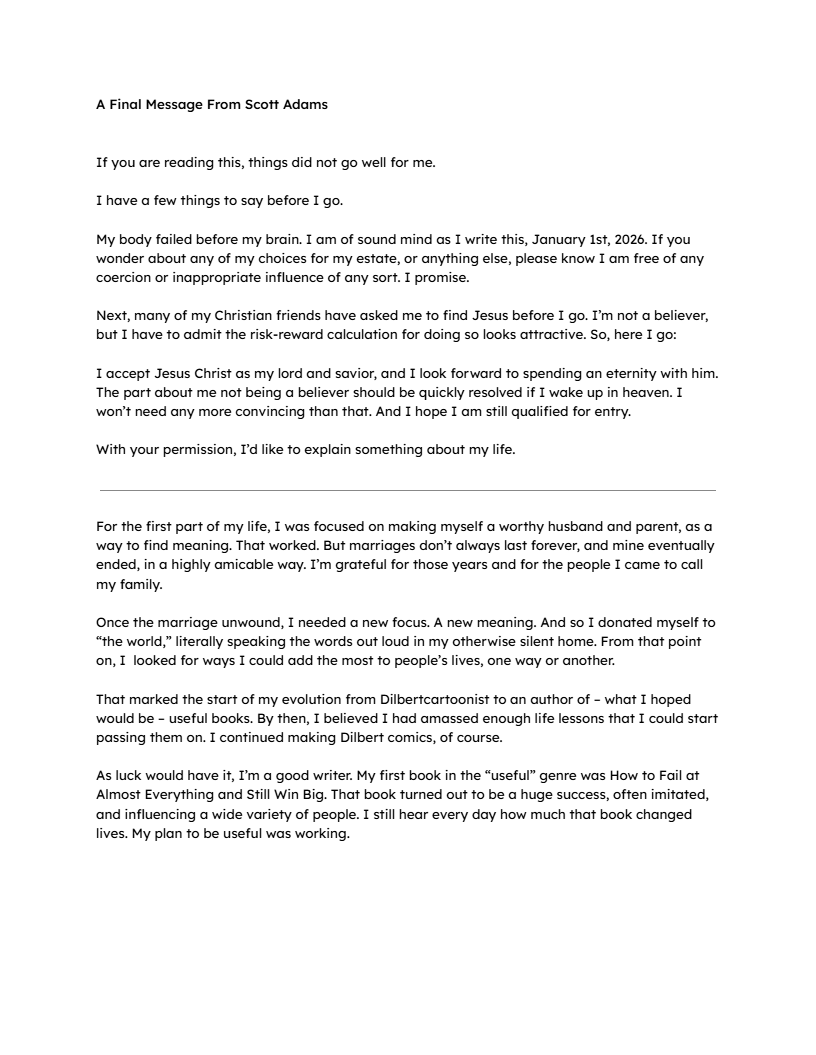
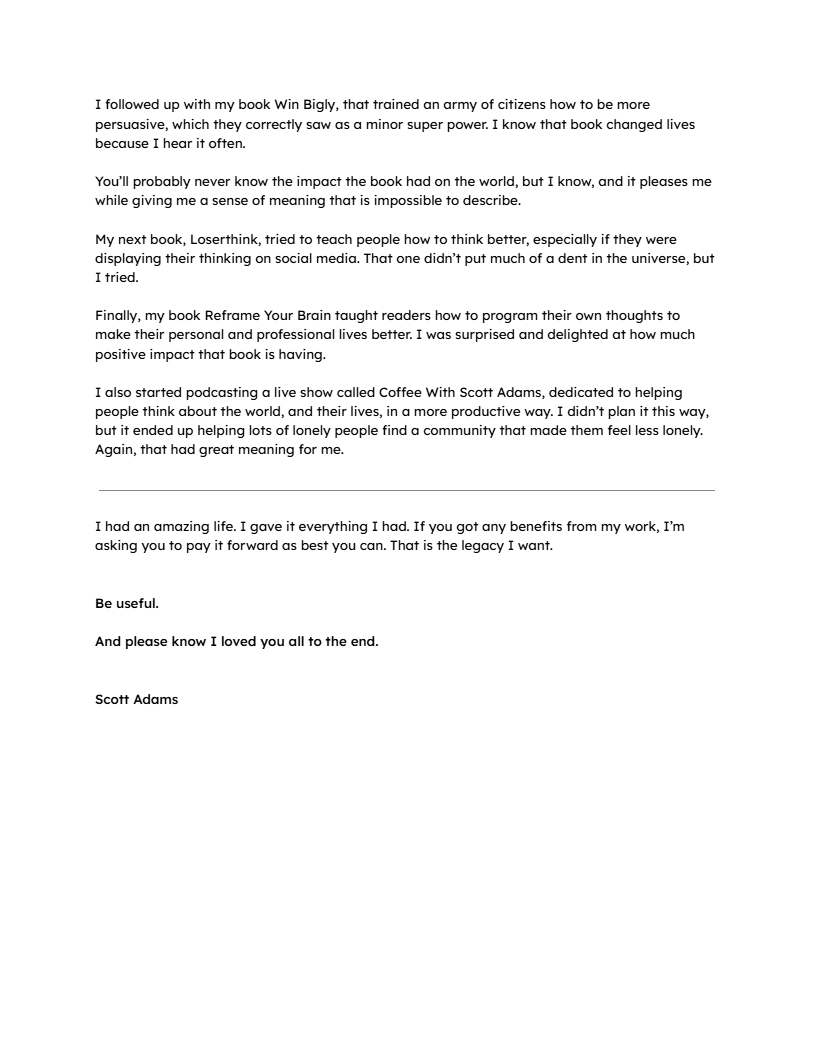
A Final Message From Scott Adams
13,070
31,649
190,353
43,092,295
30 Dec 2025
108
cryptoButtonMan retweeted

14 Dec 2025
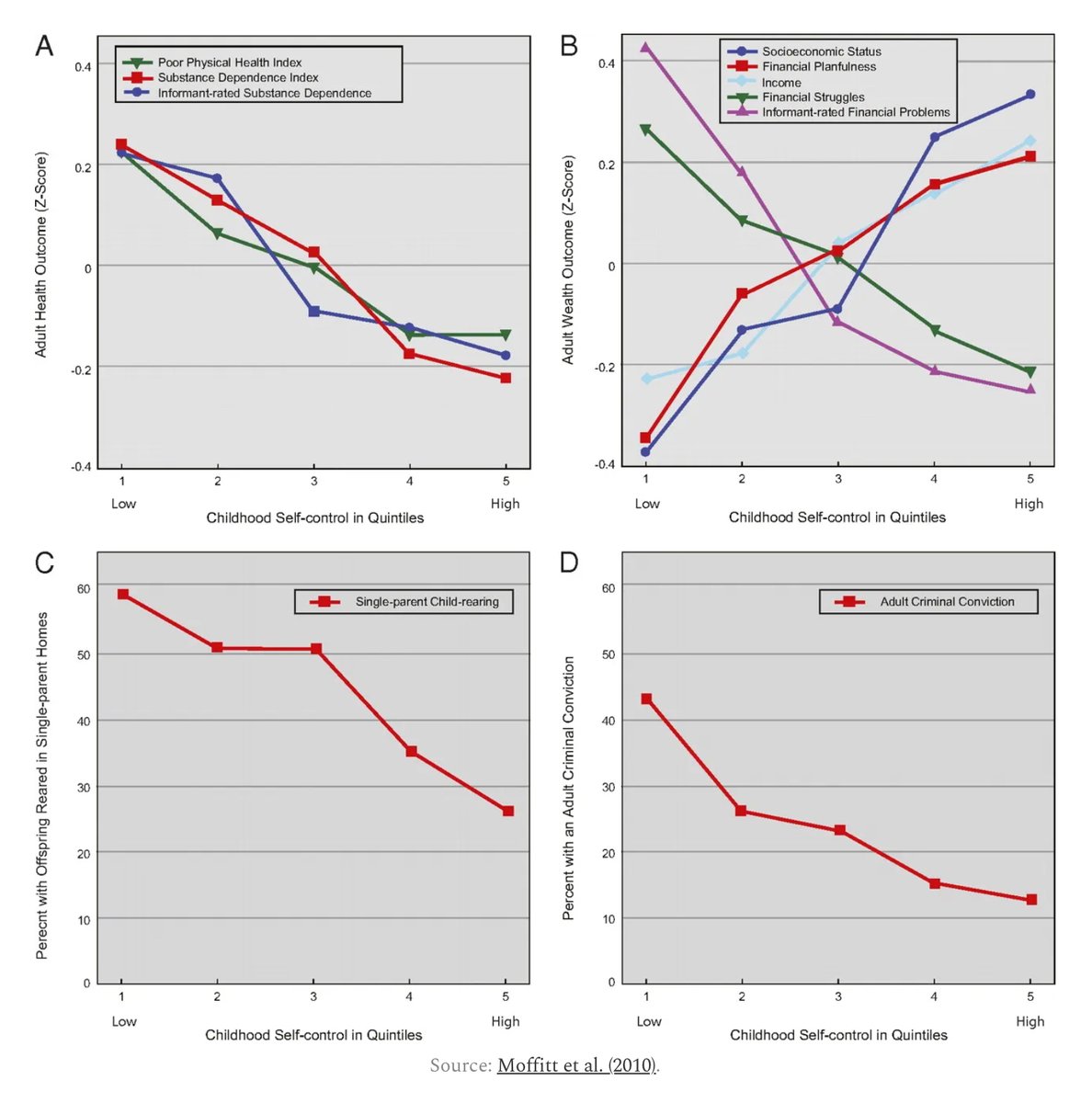
Self-control is an all-purpose good like IQ: It predicts health, wealth, and all things good. The obvious implication is that interventions to increase self-control could greatly enhance human well-being.
[Link below.]
49
199
1,367
71,194
30 Nov 2025
just read the discourse & author reaction to the virality of the vogue article. after reading it all, the truth is quite simple: women are so turned around by what others think that they cannot figure out how to happily pursue their actual interests
30 Nov 2025

The whole red flag discourse online mostly seems to come from women. You'll read the comments and it's often something like, "Why are you with this guy? or Girl, that’s a red flag, you need to leave him."
You seldom see the equivalent from men. You rarely seen male commenters respond to a male influencer—like he posts a photo with his girlfriend—and the guys jump in saying, "Dude, that’s a red flag. She said this, she did that, you need to get away from her, run as fast as you can." Once in a while you’ll see it, but not to the same extent as with female influencers and their female followers.
Same thing in real life. I was reading that Vogue article and thinking about anecdotal stuff. I have female friends who start dating a new guy and immediately their friends start questioning it—What does he do again? Who are his friends? I’m not sure about this. It’s like they’re looking for reasons to introduce doubt. But when a guy says, “I’m dating this new girl,” his friends don’t usually respond by breaking her down and identifying all her flaws.
1
193
cryptoButtonMan retweeted

23 Nov 2025
Run it back
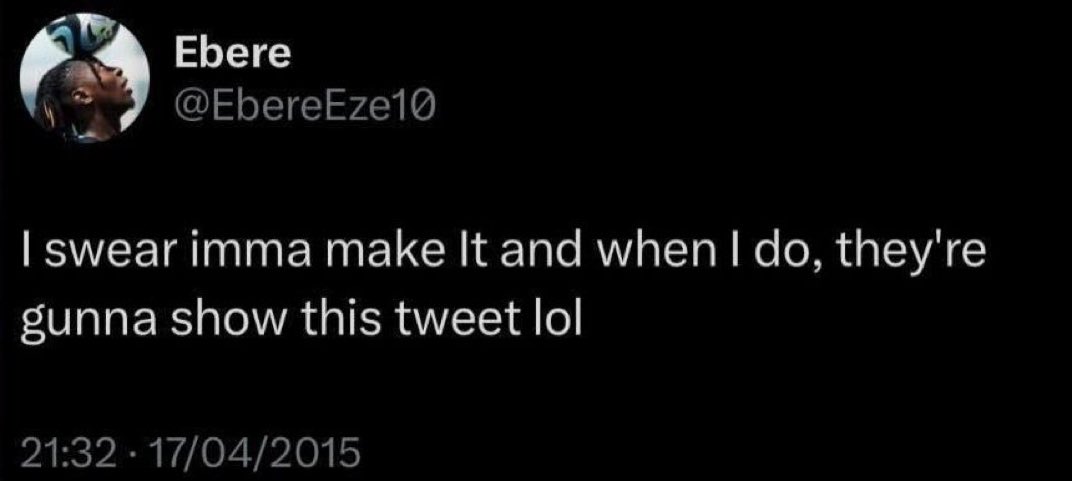
17 Apr 2015

I swear imma make It and when I do, they're gunna show this tweet lol
234
6,468
48,037
2,581,273

23 Nov 2025
Where’s everyone complaining that we signed Trossard to new terms now? He’s always been decisive #Arsenal #Tottenham
60
cryptoButtonMan retweeted

12 Nov 2025
There has definitely been on overcorrection on this. Behavior geneticists investigate the relative role of genetic and environmental variation within the sampled population. In other words, behavioral genetics studies report findings from within the environmental variation in their samples, not in all conceivable environments.
For example, there are many studies on identical twins separated at birth who are adopted by different families. Researchers find little difference between these twins when they are adults. Their personalities, IQ, preferences, and so on are very similar. But twins are typically adopted by intact middle-class families. Additionally, adoptive parents are the kind of people who would adopt, which introduces another layer of similarity. If you have two individuals with identical genetics raised in similar family environments, how surprised should you be that these individuals turn out to be very similar.
Yes, genes are responsible for human traits and behavior. But these traits are responsive to social norms and other environmental factors too.
Height is 90 percent heritable. But it is still malleable by the environment. Before Korea was divided, Northerners were taller than Southerners. Today, North Koreans are 6 inches shorter, on average, than South Koreans. Did their genes change? No. Their environments did.
Divorce is heritable (40%) but the divorce rate skyrocketed between 1960 and 1970.
Obesity is highly heritable (40-70%) but the percentage of Americans who are obese has tripled since 1982.
Tobacco use is highly heritable (60-80%) but the percentage of Americans who smoke has dropped by half since 1982.
Environmental factors (laws, norms, availability of resources, etc) played important roles in all these shifts.
12 Nov 2025

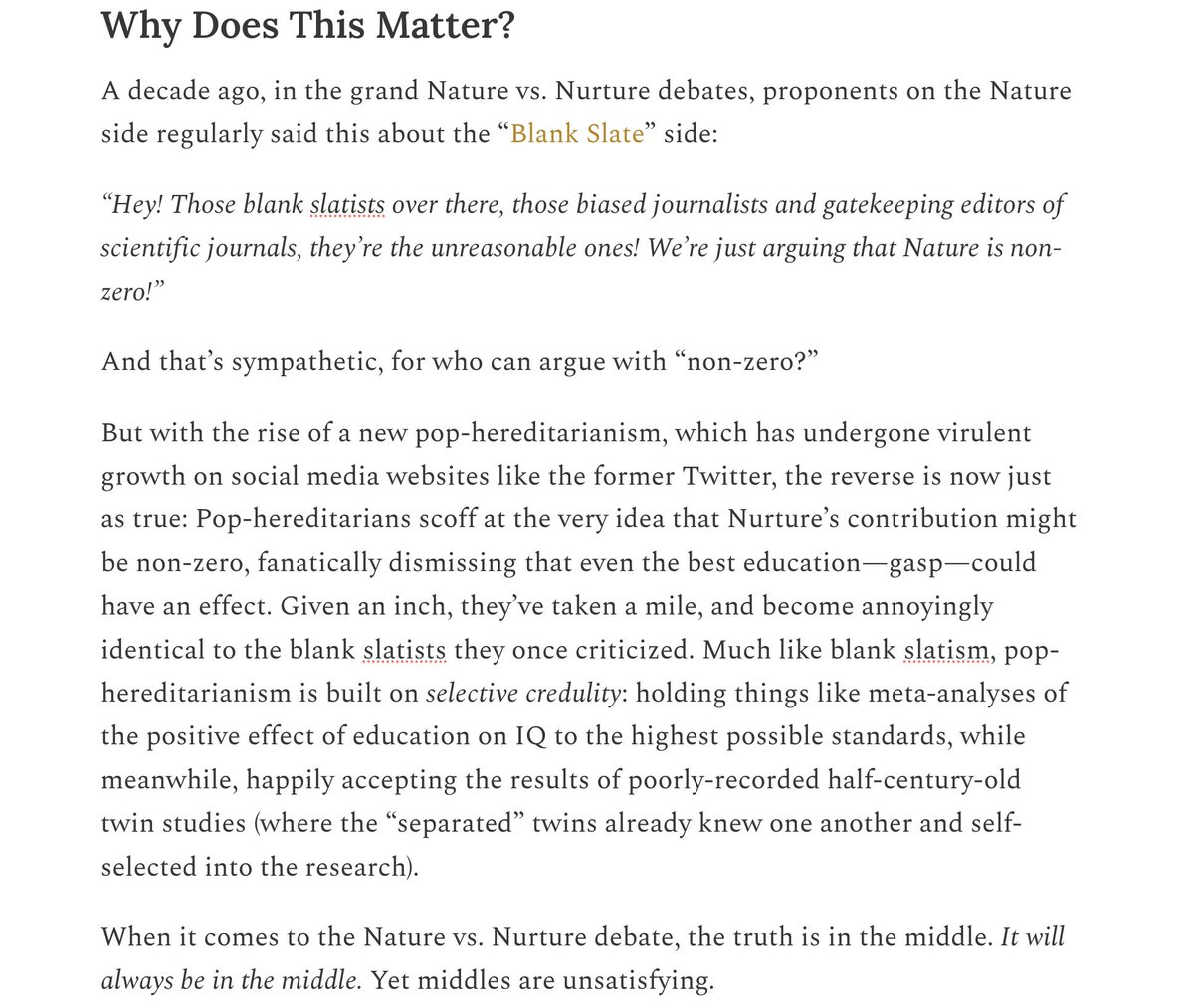
Pop-hereditarians have become as annoyingly dogmatic as the blank slate views they once criticized.
26
43
306
31,882
12 Nov 2025
See the comments. Not sure who is defending the current system so vociferously or why. Folks should he able to, in America, afford some basic luxuries (within reason = more than her), have a white collar job, and buy a house. Full stop
11 Nov 2025

1. I haven’t upgraded my phone in 5 years
2. I have two $11 subscriptions
3. I don’t use ubereats
4. I don’t buy coffee
5. I don’t go on vacation
6. I have a used 2010 car that I bought
7. I don’t go clubbing
8. I don’t buy weed or have a booze habit
9. I cook at home 6/7 days of the week
Still can’t afford a house. Cool, cool.
17
7 Nov 2025
As a based nonwhite man, can we all agree it would be best to have a good looking based white man who understands this and puts it first in the big chair
6 Nov 2025

Agree.There are a lot of people in their 20s and early 30s who are struggling to form recognizably adult lives with a job and a home and spouse and whoever is able to address their concerns even in part will end up a big political winner.
17
7 Nov 2025
Most wildly overrated dreck, embarrassed to say I went and saw it
29