Why data? Good outcomes depend on good decisions, which depend on good data. The decision value chain is giving up its secrets. Let's have fun figuring out how.
.@didiebon of @HarvardBiz states, “The key to more successful digital transformation is to not skip ahead.” Recognizing the learning curve in #DigitalTransformation and setting realistic expectations is critical. What have you learned in your experience? hbr.org/2022/09/3-stages-of-…
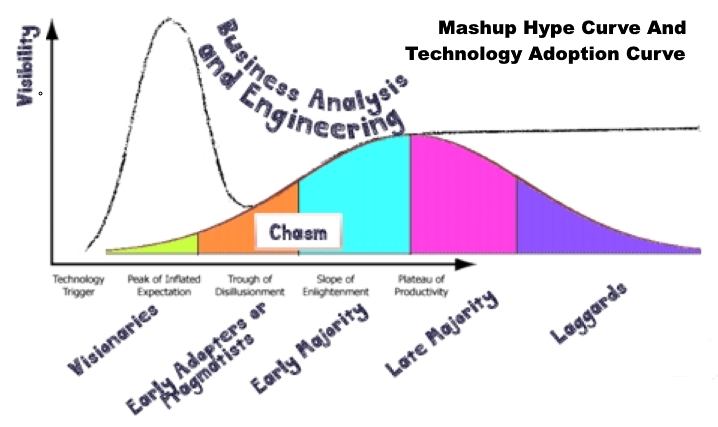
It's almost uncanny how the #HypeCycle and the #TechnologyAdoptionCurve mash up so easily. But this matching pattern is not accidental - the two curves refer to the same underlying #diffusion process, although from different angles. Think of hype positively as social #signalling.
ALT Mashup of #TechnologyAdoptionCurve and #HypeCurve or #HypeCycle - two views of the same underlying process. Geoffrey Moore's iconic writing on technology adoption built on the earlier work of Everett Rogers. So-called "hype" is a social process where communities explore together the viability of different new technologies. The later decline is signalling is not "disillusionment" but, for technologies that survive scrutiny, a sensible orientation to the "work of productization", especially involving engineering, business analysis and product marketing.
I am really excited to share our CHI paper that Nithya Sambasivan led (and first author) titled "The Deskilling of Domain Expertise in AI development" static1.squarespace.com/stat…
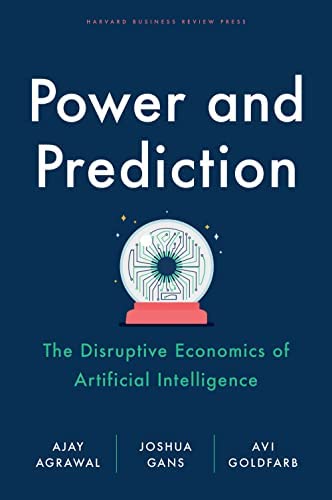
"Those companies that can figure out how to leverage their deep industry knowledge with the power of machines will bring about ‘the revenge of the 100-year firm’.” [from book under review]
Best start for 2022 around tech: a behind-the-scenes dissection of the who & why of hype. (Because, feeling hyped up doesn't lead to good investments.)
Also I'm happy about no longer having to feel guilty about not reading that light-on-evidence book on Surveillance Capitalism.
The *Top 3* Backlash to Techlash Narratives of 2021
(#2) - You’re doing it all wrong: Notes on criticism and technology hype
@STS_Newssts-news.medium.com/youre-do…
Jeffrey Funk and I had a new piece go up on Fast Company yesterday, "We’re living in an age of big tech promises and small results." We use data on market size as yet another indicator to examine hype vs reality around recent technologies.
fastcompany.com/90708339/wer…
Pursuing #digitaltransformation? Read this in @FastCompany by @STS_News (Lee Vinsel) & #JeffreyLeeFunk!
Lots of numbers about #innovation theatre. But after the show is over? 🤕
At least the article entertaining! And with a few hints on what works. (Think slow, think details.)
Jeffrey Funk and I had a new piece go up on Fast Company yesterday, "We’re living in an age of big tech promises and small results." We use data on market size as yet another indicator to examine hype vs reality around recent technologies.
fastcompany.com/90708339/wer…
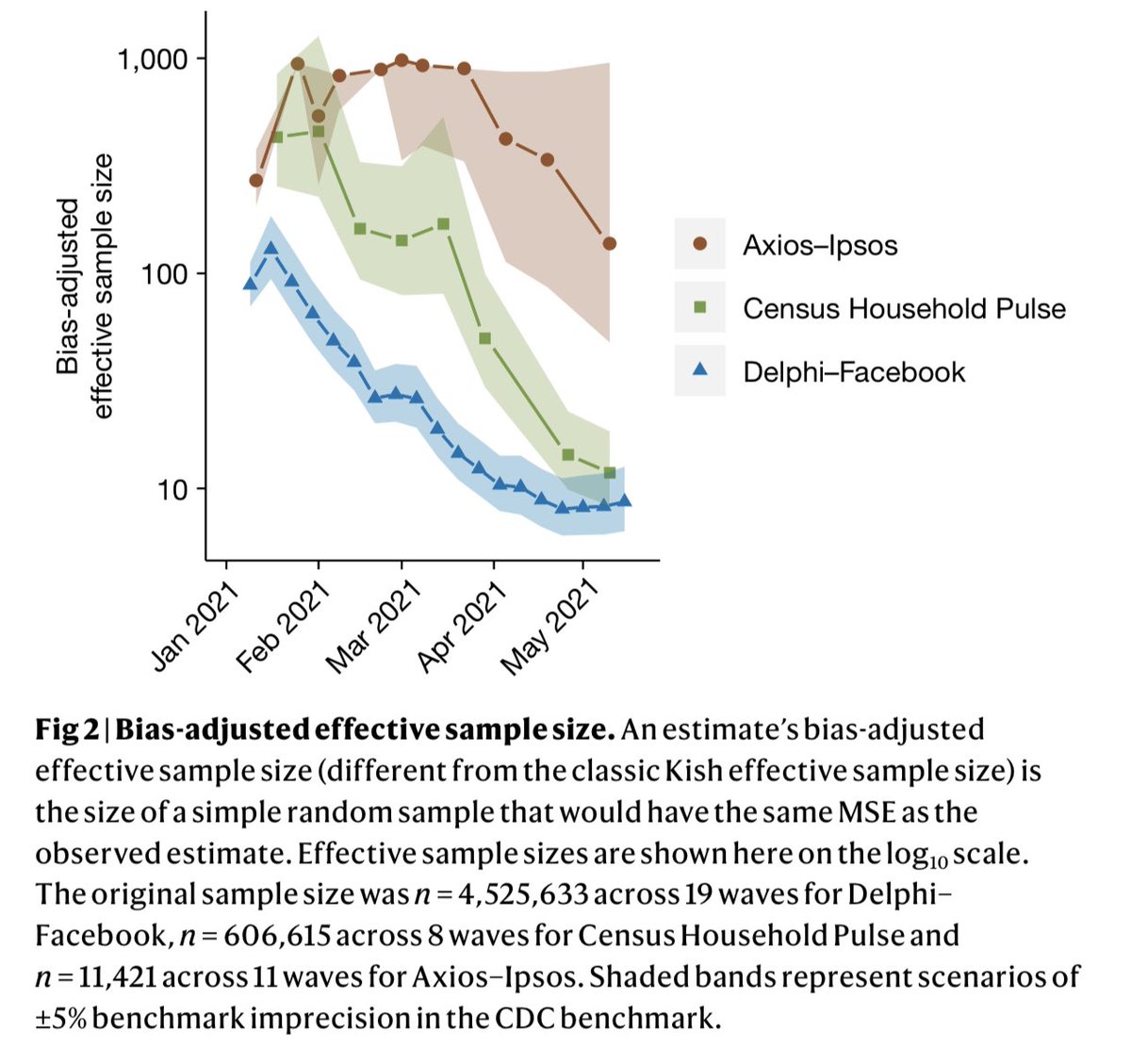
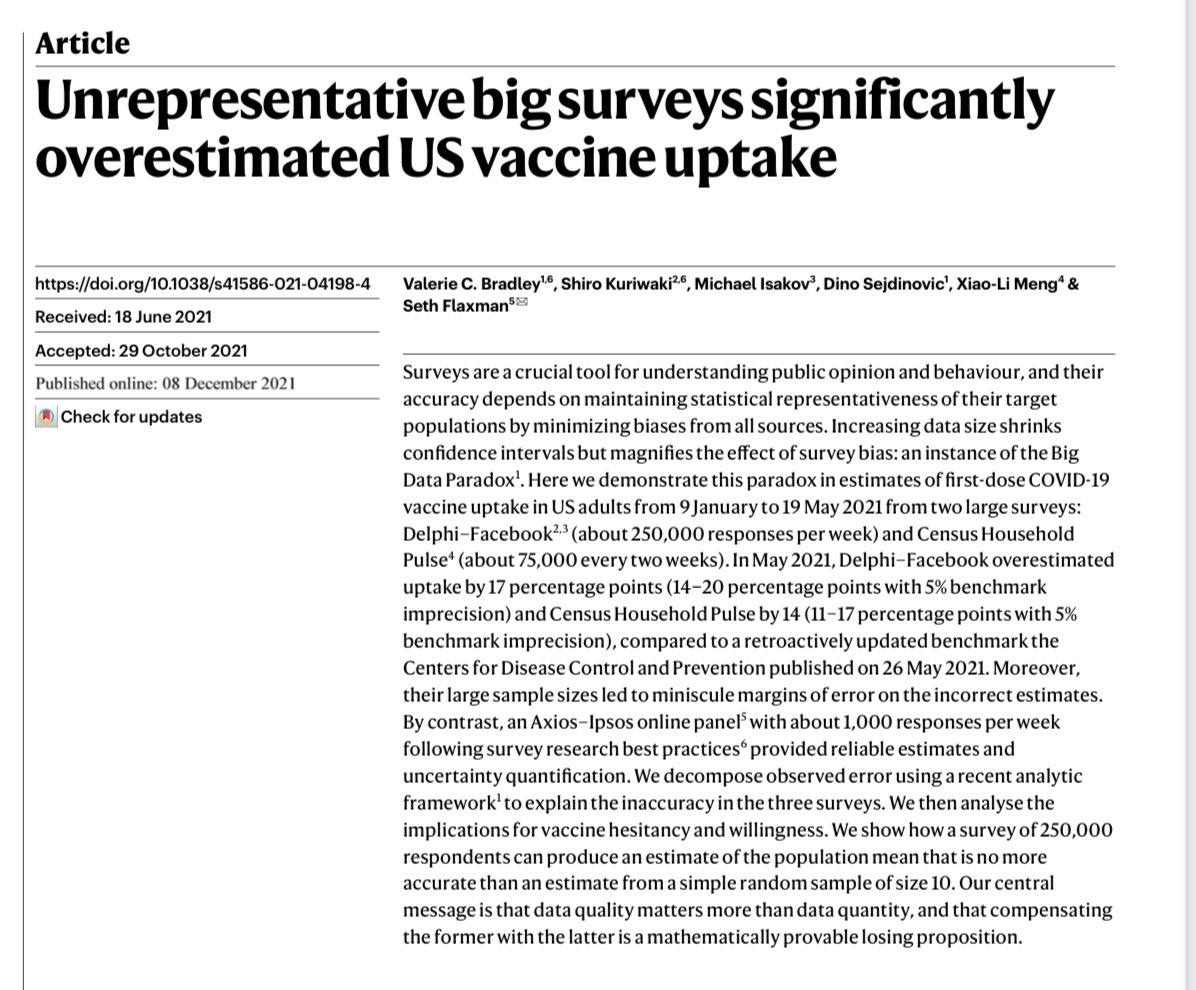
"...a sample size of 10..." Yikes! It's odd how infrequently the phrase "random sample" shows up in discourse about big population trends, e. g. Covid, or around AI based on huge volumes of data. Good sampling requires domain knowledge. Over-confidence in policy maybe?
From 2018, here's our short lay-person's intro to Prof. Xiao-Li Meng's (@XiaoLiMeng1) article on the dangers of #bigdata.
Know the power of random sampling vs the allure of census. Understand the importance of domain knowledge. Make better decisions.
datadecisioning.com/2018/10/…
rdcu.be/cCQ4E "Unrepresentative big surveys significantly overestimated US vaccine uptake" My first Nature article (hopefully not the last😀). Grateful to co-authors, editors & reviewers for an intensive experience, and for inspirations on further improving @TheHDSR 😃
Wow! Big data loses dramatically to good data: “a survey of 250,000 respondents can produce an estimate of the population mean that is no more accurate than an estimate from a simple random sample of size 10… data quality matters more than data quantity” nature.com/articles/s41586-0…