
Mancunian in exile...Cricketer...United and Lancs fan...politics...construction...arts/culture
Joined February 2010
- Tweets 9,476
- Following 2,850
- Followers 622
- Likes 8,824
113 Photos and videos




Jun 12

META MOVES TO LIMIT EMPLOYEE AI USAGE AS COSTS REACH BILLIONS
12
466
6,866
119,607
David Ward retweeted

Jun 12
Drinka-pinta-milka day!
🎵Coughs and sneezes spread diseases
Catch them in your handkerchief 🎵
#FridayNightWasHancockNight
6
25
99
3,874

David Ward retweeted

Jun 10
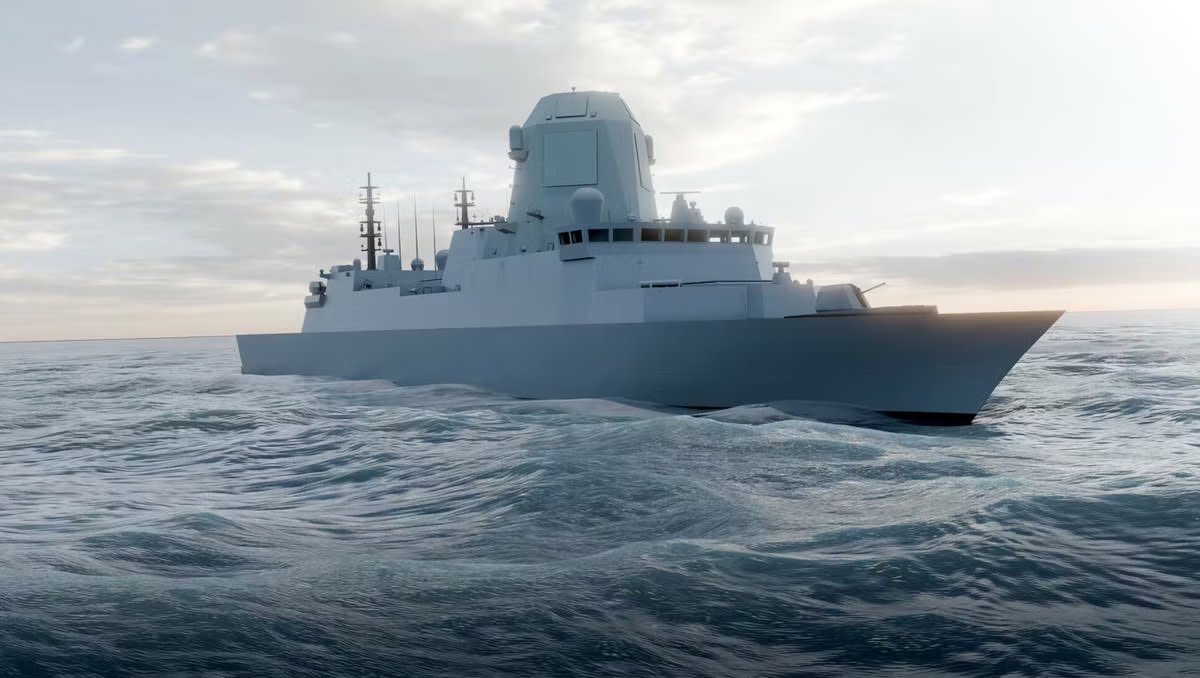
I am worried that the MOD has normalised "UK warships take a decade."
The data says otherwise, and the strongest counterexample is… the Royal Navy!
Type 45: six destroyers launched in five years.
Type 23: sixteen frigates, one a year.
That was the Clyde, a currently expanding shipyard, within living memory.
Cadence (“Drumbeat”) is a choice, not a capability.
Glasgow took 5 years to float because the build profile was financed that way. We have the answers in Hansard and written evidence responses to the Defence Committee.
Cardiff, same yard, same class, built markedly faster.
Italy slotted two extra FREMMs into its line for Egypt and delivered them in months.
Hot production lines can do that.
BAE, Babcock and Navatia are all reporting physical space, training pipelines and “capacity” across all of their shipyards.
If you place an order with a cheque today they will not turn you away.
The perceived “fast builders” - Japan, Korea, Italy - share one habit: they evolve, they don't reinvent.
Frozen design, mature combat system off the critical path, steady drumbeat.
🟠 Type 26 or Type 31 are mature and modifiable
🟠 Exercise modification discipline
🟠 Sea Viper or AEGIS are mature, evolvable, and off the critical path
🟠 Release cash flow
The cautionary tale is the opposite habit: proven hull or new hull heavy changes new combat system pitch cold yard (see FFG-62 with 85% changes, Hunter with structure-changing mast changes).
Right now the UK has more escort hulls in build simultaneously since the 1980s, three classes of large surface vessel, hot yards, training pipelines.
Type 83 is the chance to continue to build at rate:
🟠 Pick a hull in production
🟠 Exercise modification discipline
🟠 Keep Sea Viper evolving
🟠 Pay the invoices on time
Deferment and slowdowns add to costs by HMT’s own reports.
Do not accept the normalisation of slow drumbeat as an excuse to not spend on Defence.
19
95
471
40,356
David Ward retweeted

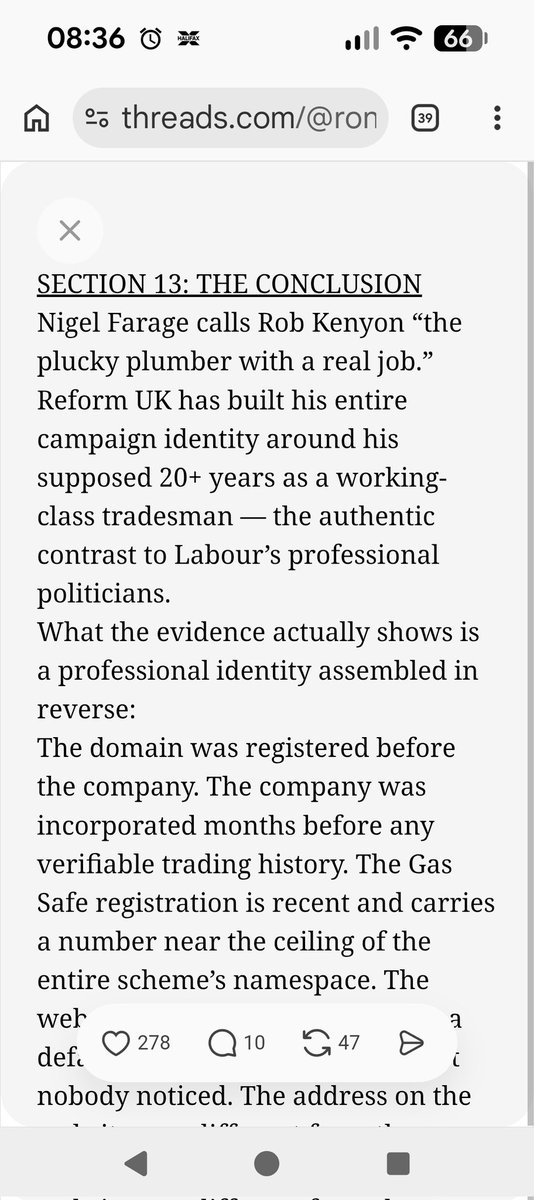
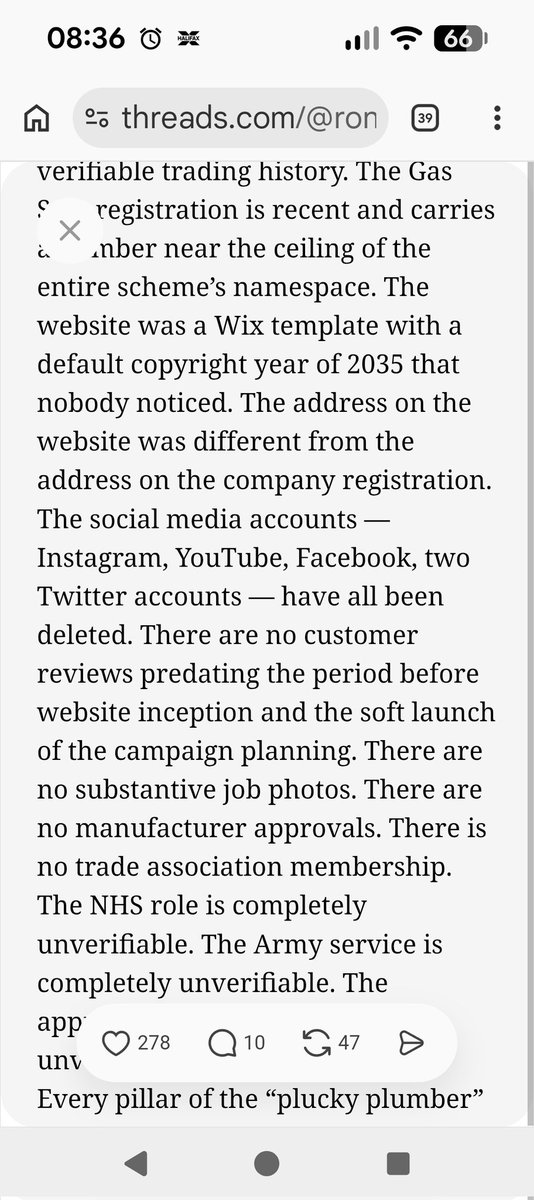
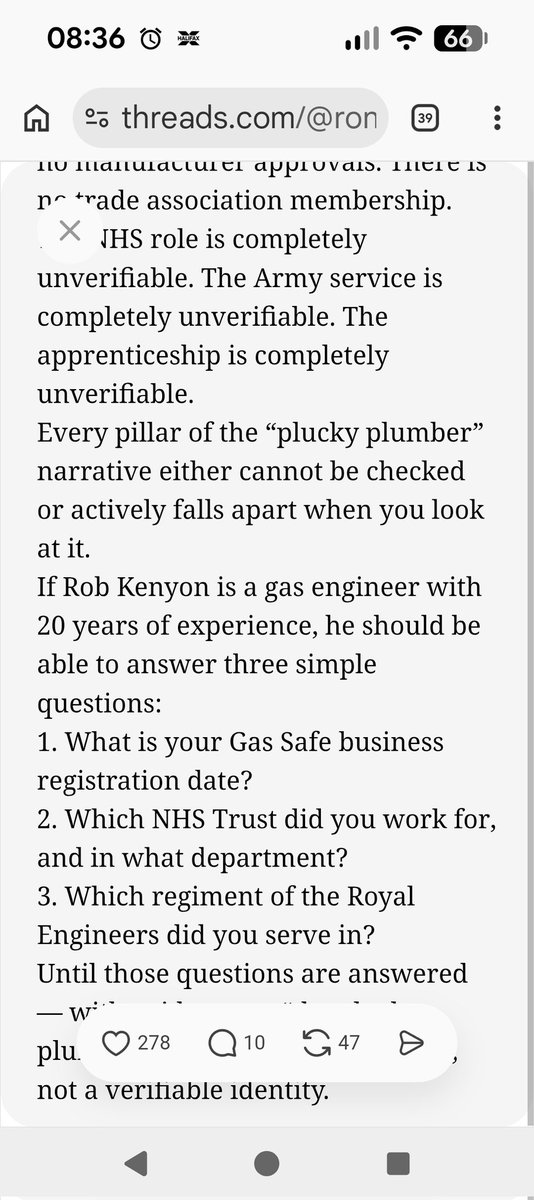
The above is an interesting read. Here's a little snapshot.

2
3
5
504
David Ward retweeted

It literally isn’t and it would’ve.
If that industry dies - as it will in the age of token-based billing - the world keeps on functioning.
Is the bail-out increasing in billions every year?
1
4
135
David Ward retweeted

May 21
Leonard Jeffrey ‘Oz’ Osborne is expected to miss out on the England squad.🏴

25
38
592
13,540
David Ward retweeted

Remember the huge media fanfare when Farage launched a crowdfunder in March 2025 for his “independent grooming gangs inquiry”?
The Crowdfunder page showed c.£788k raised.
A year later: no inquiry, no published accounts, no explanation of where the money went, and no refunds.
106
2,265
5,789
90,890
David Ward retweeted

May 10
Mate this a total hallucinatory Jackanory.
Where did you get this guff from - a ouija board?!

I am reliably informed that Clive Lewis will resign his seat to allow Andy Burnham a return to Westminster. The MP for Norwich spoke with Burnham this evening, following Angela Rayner’s statement. It remains unclear whether the Manchester Mayor would wish to stand in Norwich. Further updates on this are expected over the course of the week.
Community note
The MP concerned, Clive Lewis, has denied plans to resign his seat. x.com/labourlewis/st…
95
215
1,953
161,816
David Ward retweeted

May 10
"Ted, did you really only get 5 million pounds as a gift for security?" #bbclaurak

1
20
45
515
David Ward retweeted

May 7
Neither the left or right are prepared to face Britain's grave energy crisis. I've written for @guardian on how decades of complacency cannot be magicked away by drilling in the North Sea – or even by hoping that renewables will quickly power everything.
theguardian.com/commentisfre…
6
35
85
13,649
David Ward retweeted

Apr 21
UK 10-year gilt yields today surged no less than 0.4 percentage points - or 40 basis points - due to fears that Britain is almost uniquely vulnerable among the world's big economies to spiralling fuel food and fuel prices.
The UK is the most inflation-prone economy in the G7. That weakness hasn't been caused, but has been more starkly exposed, by this US/Iran conflict.
So the huge global investors that lend governments money are charging Britain far more than any other G7 nations - more than Spain, Greece and Morocco (!) - to borrow, as compensation for higher expected UK inflation.
A 40bps point move in a single day, on a large-nation sovereign bond market, is a huge and deeply alarming shift.
The UK government's 10-year borrowing cost is now 5.15pc - its highest level since June 2008, just ahead of the global financial crisis.
This is a situation that warrants immediate and determined attention and yet our entire political and media class remains fixated with the ultimate Westminster-centric story – a deeply indulgent row about who knew what, when with regards to the appointment of Peter Mandelson as US Ambassador.
History will not be kind to us ...
My latest @Telegraph "Economic Agenda" column
🧵1/6
telegraph.co.uk/business/202…
85
605
1,621
78,334
David Ward retweeted

Apr 20
🚨 Just IN: This paper from Stanford and Harvard explains why most “agentic AI” systems feel impressive in demos and then completely fall apart in real use.
The core argument is simple and uncomfortable: agents don’t fail because they lack intelligence. They fail because they don’t adapt.
The research shows that most agents are built to execute plans, not revise them. They assume the world stays stable. Tools work as expected. Goals remain valid. Once any of that changes, the agent keeps going anyway, confidently making the wrong move over and over.
The authors draw a clear line between execution and adaptation.
Execution is following a plan.
Adaptation is noticing the plan is wrong and changing behavior mid-flight.
Most agents today only do the first.
A few key insights stood out.
Adaptation is not fine-tuning. These agents are not retrained. They adapt by monitoring outcomes, recognizing failure patterns, and updating strategies while the task is still running.
Rigid tool use is a hidden failure mode. Agents that treat tools as fixed options get stuck. Agents that can re-rank, abandon, or switch tools based on feedback perform far better.
Memory beats raw reasoning. Agents that store short, structured lessons from past successes and failures outperform agents that rely on longer chains of reasoning. Remembering what worked matters more than thinking harder.
The takeaway is blunt.
Scaling agentic AI is not about larger models or more complex prompts. It’s about systems that can detect when reality diverges from their assumptions and respond intelligently instead of pushing forward blindly.
Most “autonomous agents” today don’t adapt.
They execute.
And execution without adaptation is just automation with better marketing.

74
176
575
64,283
David Ward retweeted

Apr 19
Which one of the last 4 prime ministers do you think has done the best job as prime minister?🤔
Repost after voting please.
90%
Keir Starmer
6%
Rishi Sunak
2%
Liz Truss
3%
Boris Johnson
1,054 votes • Final results
63
1,035
537
15,250
David Ward retweeted

Fifty years ago, Tameside Conservatives seized power at the local elections. What happened next changed UK case law forever.
The 1976 elections saw a shift in power from Labour to the Conservatives in Tameside. At the heart of their campaign was opposition to an unpopular new education policy from the then-council.
Read more: tamesidecorrespondent.co.uk/…

1
1
362

Apr 17
This was obvious to anyone from the moment the story broke. Why did it take so long for people to get here?
Apr 17

What do I think really happened with Mandelson and vetting?
In October, November and December 2024, No10 indicated it wanted to appoint Peter Mandelson as Ambassador to Washington.
It was presented with an array of people telling them not to: Cabinet ministers, spooks, officials in a vetting report. All raised major red flags.
Starmer and McSweeny made clear they weren’t interested in any objection, and this must go ahead at all costs.
So Mandelson’s appointment was announced mid December 2024.
The vetting we are focussed on today came later, in January 2025. Vetting of ambassadors is the responsibility of the FCDO and Olly Robbins.
One bit of the system said no - the UKSV agency said don’t appoint Mandelson.
We don’t know on what grounds, but probably the grounds No10 had seen and rejected as a reason to block. Olly Robbins cleared Mandelson. Very quietly, Mandelson didn’t get the very highest level of clearance when he got the job, but he got the overall OK because of Robbins. Robbins did No10 a favour.
This is because Olly Robbbins knew that going to No10 post announcement, and saying the Mandelson appointment can’t happen, was politically impossible.
And civil servants want to deliver for their political masters. So Olly fixed it for Keir: and is now paying a price.
Olly Robbins has - incidentally - done No10 a second massive political favour. The really really toxic claim doing the rounds last night was that surely someone - anyone - in No10
DID know the UKSV agency turned down the vetting
Olly Robbins is making clear he didn’t tell people the UKSV verdict because that would be inappropriate as part of the process he followed. It’s not even clear he saw it.
No10 don’t seem to realise he’s done them a favour, and are releasing documents to challenge alternative versions of events. Let’s see how it plays out.
The bottom line is No10 wanted Mandelson come what may. They rammed it through.
One quango; post appointment announcement, was never realistically going to be allowed to stop Mandelson taking the job because the top of Government had publicly committed to it. They hadn’t wanted to heed the warnings earlier; and were in too deep
That’s where I think we are
49
David Ward retweeted

Apr 17
What do I think really happened with Mandelson and vetting?
In October, November and December 2024, No10 indicated it wanted to appoint Peter Mandelson as Ambassador to Washington.
It was presented with an array of people telling them not to: Cabinet ministers, spooks, officials in a vetting report. All raised major red flags.
Starmer and McSweeny made clear they weren’t interested in any objection, and this must go ahead at all costs.
So Mandelson’s appointment was announced mid December 2024.
The vetting we are focussed on today came later, in January 2025. Vetting of ambassadors is the responsibility of the FCDO and Olly Robbins.
One bit of the system said no - the UKSV agency said don’t appoint Mandelson.
We don’t know on what grounds, but probably the grounds No10 had seen and rejected as a reason to block. Olly Robbins cleared Mandelson. Very quietly, Mandelson didn’t get the very highest level of clearance when he got the job, but he got the overall OK because of Robbins. Robbins did No10 a favour.
This is because Olly Robbbins knew that going to No10 post announcement, and saying the Mandelson appointment can’t happen, was politically impossible.
And civil servants want to deliver for their political masters. So Olly fixed it for Keir: and is now paying a price.
Olly Robbins has - incidentally - done No10 a second massive political favour. The really really toxic claim doing the rounds last night was that surely someone - anyone - in No10
DID know the UKSV agency turned down the vetting
Olly Robbins is making clear he didn’t tell people the UKSV verdict because that would be inappropriate as part of the process he followed. It’s not even clear he saw it.
No10 don’t seem to realise he’s done them a favour, and are releasing documents to challenge alternative versions of events. Let’s see how it plays out.
The bottom line is No10 wanted Mandelson come what may. They rammed it through.
One quango; post appointment announcement, was never realistically going to be allowed to stop Mandelson taking the job because the top of Government had publicly committed to it. They hadn’t wanted to heed the warnings earlier; and were in too deep
That’s where I think we are
476
372
1,653
816,939
David Ward retweeted

Apr 16
Sport gets a bulletin every hour. Culture barely gets a mention.
This week I introduced a Bill in the Commons to change that. A regular cultural news bulletins, alongside the sport.
Add your name 👇
change.org/p/creative-arts-b…
32
14
60
66,535
David Ward retweeted

Apr 14
Decisions taken a decade ago are all catching up with Britain’s strategists.
3
5
33
1,020
David Ward retweeted

Apr 13
7
63
268
12,887