
88 Photos and videos










An actual, live story.
I know an elderly lady who is destitute, and in poor health. She lives in a government paid apartment, but she's physically incapable of doing very much at all.
She's also an emotionally very high maintenance person, which means that she has no friends.
It also means that even while the government is willing to pay for a caretaker, she has a very difficult time attracting a caretaker.
After a year of searching, a caretaker was found, and life was good. The apartment was again clean. Caretaker is paid 4x5, five days a week, four hours per day. Twenty hours total.
A year later, caretaker is still being paid for 20 hours a week, but is down to about 2 hours on 2 days per week of actually showing up. Caretaker does still clean and such while there, but has no time for stuff like taking client on a walk 20 feet out from the front door. Client is physically unable to do such things on her own.
Client faces the decision: complain about the caretaker, and end up with no caretaker at all. Or be quiet, and allow the caretaker to scam the government.
I somewhat face the same question, but I'm not likely to say anything without client's approval.
What would you do?
1
1
44
Angus retweeted

Scott Pelley says Bari Weiss asked 60 Minutes staffers: “Why do you think the country thinks you’re biased?"
Pelley: "Why do you think so? Do you have a poll? Is there market research? What are you talking about?"
"Because we certainly didn't believe that."
Incredible.
2,826
2,298
19,424
3,256,444
Mahan did not run as a centrist.
He ran as an anti-Trump, anti-ICE Democrat. He left the freeway width center lane unoccupied.
Maybe he didn't understand the difference between a traditional primary and a jungle primary. He made no attempt to attract Republican votes.
1
5
111

The only thing that stops violent men from raping you and your society are other men who are equally willing to be violent in stopping the rapists. The West has decided that the highest virtue is to quietly comply with the destruction of your civilization because to do otherwise is bigoted toward the rapists. It really is that simple.
4,120
31,262
138,617
37,622,039
Angus retweeted

May 28
SpaceX millionaires 4,000 x $1mil , 400 x $100 mil
Every employee who joined before the first succesful launch made (unless they sold early) more than $100 million.
SpaceX lists June 12 at ~$1.75T.
Work backward from the cap table. At $1.75T, clearing $100M takes ~0.0057% of the company.
- 2002–2008, first ~500 in: joined at a ~$50M company. Held to $1.75T = a 17,000x. The core of the club — maybe 150–250 left holding
- September 2008, SpaceX has first successful launch
- 2010–2016: joined at $1B–$10B. Needs a senior grant — directors, principal engineers, early Starlink. ~100–200
- C-suite board: Shotwell, Johnsen past $1B. A layer of SVPs below them clears $100M on equity, not salary. ~20–40
- Post-2016: joined at $20B–$350B. To hit $100M you'd have needed ~0.4% of the company. Impossible for an employee. This is the millionaire tier — almost none reach $100M
The tally:
~400–500 at $100M
A few dozen above $500M
A handful of billionaires past Musk
Same building. Same mission. Two orders of magnitude apart — set entirely by what year you walked in.
Early isn't a strategy. It's a date stamp.

199
582
5,108
4,520,086
Angus retweeted

Question: Which of these are genocides?
3% = Percent of populace of Gaza killed in the war
2.5% = Percent of populace of US killed in the civil war
4% = Percent of populace of Europe killed in WW2
33% = Percent of Muslim men in Srebrenica killed in 12 days
50-75% = Percent of Armenians in Turkey killed by the Young Turks
67% = Percent of European Jews killed by the Nazis
Do you get it now or do you need to call a friend for help?
338
1,365
6,974
227,887
Angus retweeted

May 28
"Honest" -- like in her dishonest piece about Ron DeSantis and the Publix Supermarket chain, linking Publix being given a COVID vaccine contract in exchange for a $100,000 contribution to DeSantis?
Deceptive Editing: Alfonsi confronted Gov. about the Publix deal, but 60 Minutes edited his response by omitting the portion of his answer explaining that CVS and Walgreens were tied up administering vaccines in long-term care facilities at the time, and that Publix was simply the first pharmacy to volunteer and prove it was ready for the larger roll-out needed.
Florida's emergency management director -- a Democrat -- publicly stated that the decision to use Publix was made by his office, not the Governor, and that undermined entirely the conspiracy narrative that was the foundation of the 60 Minutes story.
Other Democrats in Florida and Publix pushed back against the story.
But that didn't slow Alfonsi or 60 Minutes down since De Santis was, at that time, considered to be the frontrunner for the GOP POTUS nomination in 2024.
"In a Sunday night tweet directed at “60 Minutes,” Florida Division of Emergency Management Director Jared Moskowitz wrote, “I said this before and I’ll say it again. [Publix] was recommended by [Florida Division of Emergency Management] and [Florida Department of Public Health]. Period! Full stop!”
“No one from the Governors office suggested Publix,” Moskowitz added. “It’s just absolute malarkey.”
Is it that kind of "honest" journalism you are referring to??
May 28

Honestly, a props to Sharyn Alfonsi for caring enough about journalism to be honest. Wish there were more reporters at CBS who had her integrity.
7
235
771
12,688
Angus retweeted

May 27
Ken Paxton's victory in Texas has, I think, interesting implications for the national political scene.
Coming on top of a string of similar events, this is very bad news for anybody who wants to think MAGA is declining in influence or Trump is a spent force.
I'm not MAGA - I'm too libertarian and insufficiently populist to fit - so I can analyze this without my wishes interfering with my vision.
There have been a lot of very determined attempts to fragment the MAGA base and attempt to drive a wedge between them and the Trumpster. I see this on X and other social media - lots of indignant blithering about Israel and the Iran war that seems very light on substance and very heavy on attempting to fracture the Republican coalition.
I don't think it's working. Tonight is evidence that Trump's endorsement matters, and the base is not kindly disposed towards any Republican pol who's perceived as not being on his team.
Perform your strategic calculations accordingly.
158
233
1,695
89,013
Angus retweeted
May 28
I miss building my own computers. But it's not an activity that makes a lot of sense for me anymore; the technology and the economics have shifted.
About three weeks from now I'll be visiting @tekwendell so we can do the next best thing - final assembly, OS installation, and acceptance testing on my next development machine. But the tuning of the hardware design and the parts selection will have been all Wendell's.
I used to really enjoy that part. Back in USENET days I maintained a public document on how to put together high-performance Unix machines out of PC hardware; that's how much I enjoyed it.
What changed? Several things. increasing integration of PC components onto the motherboard meant that finding really creative ways to custom-build for a sweet spot in performance vs. cost got more difficult. SCSI died. Sound cards died. SSDs replaced spinning rust.
Paradoxically, as this went on, the amount of fiddly detail you had to carry around in your head to build a truly bleeding-edge system actually went up. Mainly because memory control and caching got a lot more intricate as processor speeds rose. Tuning that kind of thing went from being something I felt I could stay on top of by catching up every year or so to an arcane art that seemed to require nearly full-time attention to track.
And then Wendell came along and offered to build machines for me, and was so obviously better at it than I was that it made every kind of sense for me to stop rolling my own. It's been more than 10 years now...
I suppose this is what a gearhead who misses what being able to tinker with cars that weren't all computer all the time felt like. The process was part of the reward.
Maybe every technology has a golden age of tinkering. It begins when components get cheap enough for garage builds, continues through a period of lots of options and experimentation, and ends with vastly more powerful products that have discarded most of the byways of the experimental phase.
There's still some PC tinkering going on that has the rewards of the experimental phase, but an increasing percentage of that is around things like graphics cards and water cooling and fancy cases that don't interest me very much - I'm not much of a gamer, and overclocking isn't very helpful for the kinds of workloads I routinely run.
What is helpful is the most main-memory bandwidth I can get my lunch hooks on. Both of Wendell's previous "Great Beast" builds for me were optimized for this, and the third one will be too.
It will be a wonderful machine. But I won't have built it from parts upwards. And that's just a little sad.
22
14
247
9,494
Angus retweeted
May 22
The difference between "yes" and "yup" is a speech register marker, a bit like politeness indications in Japanese. "Yes" is more formal and serious, "yup" more informal and possibly humorous.
15
14
2,957
107,666

Me: trying to return package at Japanese post office.
Employee: Do you have the form?
Me: ...possibly.
I hand her three unrelated receipts, a train ticket, and what might've been a noodle coupon.
Employee studies documents with incredible professionalism.
Employee: This is from convenience store.
Me: Right.
Employee: And this is train station.
Me: Also correct.
Employee: And this...
long pause.
Employee: ...coupon for karaoke.
Me: I was going through a lot emotionally.
woman trying SO HARD not to laugh.
finally she gives me correct form.
entire thing in Japanese.
Me staring at paper like ancient curse tablet.
Employee: It's okay. I help.
for next ten minutes this woman basically carried me academically through the Japanese postal system.
at the end I bow respectfully and say: Thank you for your patience.
Employee: No problem. You had strong confusion.
Honestly one of the most accurate descriptions of my life.
216
1,798
32,801
425,471
Angus retweeted

May 9
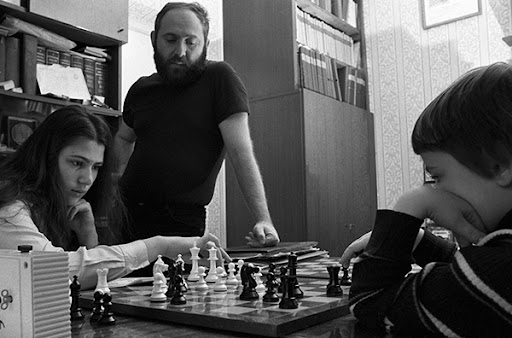
A Hungarian psychologist raised three daughters to prove that any child could become a chess grandmaster through early specialization. He succeeded. Two of them became grandmasters. One became the greatest female chess player who ever lived.
Then a sports scientist looked at the data and found something nobody wanted to hear.
His name is David Epstein. The book is called "Range."
The Polgar experiment is one of the most famous case studies in the history of deliberate practice. Laszlo Polgar wrote a book before his daughters were even born arguing that geniuses are made, not born. He homeschooled all three girls in chess from age four. By their teens, Susan, Sofia, and Judit were dominating tournaments against grown men. Judit became the youngest grandmaster in history at the time, breaking Bobby Fischer's record. The story became the gospel of early specialization. Pick a domain young, drill it hard, and you can manufacture excellence.
Epstein opens his book by telling that story honestly and then quietly demolishing the conclusion most people drew from it.
Chess works that way. Most things do not.
Here is the distinction that took him four years of research to articulate, and that almost nobody who quotes the 10,000 hour rule has ever read.
There are two kinds of environments in which humans develop expertise. Psychologists call them kind and wicked. A kind environment has clear rules, immediate feedback, and patterns that repeat reliably. Chess is the cleanest example. Every game ends with a winner and a loser. Every move is recorded. The board never changes shape. The pieces never invent new ways to move. A child who plays ten thousand games will see most of the patterns that exist in the game, and pattern recognition is exactly what chess mastery is built on.
A wicked environment is the opposite. Feedback is delayed or misleading. Rules shift. The patterns that worked yesterday may be exactly the wrong patterns to apply tomorrow. Most of the real world looks like this. Medicine is wicked. Investing is wicked. Building a company is wicked. Scientific research is wicked. Almost every job that involves a complex changing system with humans in it is wicked.
The Polgar sisters trained in the kindest environment any human can train in. Their success was real and the method was correct. The mistake was generalizing the method to fields where the underlying structure of the environment is completely different.
Epstein's research is what made the implication impossible to ignore.
He looked at the careers of elite athletes outside of chess and golf and found that the pattern was almost the inverse of what people assumed. The athletes who reached the very top of their sports were overwhelmingly people who had played multiple sports as children, specialized late, and often switched disciplines well into their teens. Roger Federer played squash, badminton, basketball, handball, tennis, table tennis, and soccer before tennis became his focus. The kids who specialized in tennis at age six and trained year-round for a decade mostly burned out, got injured, or topped out at lower levels of the sport.
The same pattern showed up everywhere he looked outside of kind environments. Inventors with the most patents had worked in multiple unrelated fields before their breakthrough work. Comic book creators with the longest careers had drawn for the most different genres before settling. Scientists who won Nobel Prizes were dramatically more likely than their peers to be serious amateur musicians, painters, sculptors, or writers.
The skill that mattered in wicked environments was not depth in one pattern. It was the ability to recognize when a pattern from one domain applied unexpectedly in another. That kind of thinking cannot be built by drilling a single subject. It can only be built by accumulating mental models from many subjects and learning to move between them.
The deeper finding is the one that should change how you think about your own career.
Specialists in wicked environments often get worse with experience, not better. Epstein cites studies of doctors, financial analysts, intelligence officers, and forecasters showing that years of experience in a narrow domain frequently produce more confident judgments without producing more accurate ones. The expert builds elaborate mental models that feel comprehensive and turn out to be increasingly disconnected from the actual structure of the problem. They stop noticing what does not fit their framework. They mistake fluency for understanding.
Generalists do better in wicked domains for a reason that sounds almost mystical until you understand the mechanism. They have less invested in any single mental model, so they abandon broken models faster. They are used to being a beginner, so they are not threatened by the discomfort of not knowing. They have seen enough different domains that they can usually find an analogy from one field that unlocks a problem in another. The technical name for this is analogical thinking, and the research on it is one of the most underrated bodies of work in cognitive science.
The single most useful sentence in the entire book is the one Epstein puts almost as a throwaway.
Match quality matters more than head start.
A person who tries six different fields in their twenties and finds the one that genuinely fits them will outperform a person who picked one field at fourteen and stuck to it on willpower alone. The lost years were not lost. They were the search process that produced the match. Every field they walked away from taught them something they later imported into the field they finally chose.
The reason this is so hard to accept is cultural, not empirical. We tell children to pick a path early. We reward the prodigy who knew at six. We treat the late bloomer as someone who failed to launch on time, when the data suggests they were running an entirely different and often more effective optimization process underneath.
The Polgar sisters were not wrong. The conclusion the world drew from them was.
If your environment is genuinely kind, specialize early and drill hard. If it is wicked, and almost every interesting human problem is, then the people who win are the ones who refused to specialize until they had seen enough to know what was actually worth specializing in.
You are not behind. You were running the right experiment all along.
384
2,849
11,207
1,061,665