
☮️💔Resister,#BLM, #TGTrendGang. I believe in humanity for all. 🌊No DM’s🟦🟧
Joined February 2009
- Tweets 400,858
- Following 5,244
- Followers 4,986
- Likes 1,481,328
Photos and videos
Deeame retweeted

There is a lot I want to say about the slander and gross disrespect being levied against the remarkable former First Lady of the United States.
However, the best response is Michelle Obama in her own words.
46
709
2,339
19,034

Every time you apply for a credit card the bank leaves a scar on your credit report that blocks the next bank from approving you
They call it a "hard inquiry." It drops your score 5 to 10 points and sits on your file for 2 years. Stack 6 of them from one funding round and the 7th bank sees "this person is desperately applying everywhere" and denies you on sight
The banks are cooperating to limit how much you can take. Each inquiry is a warning flag to the next lender. They're not competing with each other. They're protecting each other from you
The fix: dispute every inquiry after each funding round and most of them fall off within 30 to 45 days
Here's what nobody tells you. Hard inquiries are disputable under FCRA Section 604. The bureau must verify that you authorized the inquiry. If the original creditor doesn't respond to the verification request within 30 days, the bureau must delete the inquiry. Most creditors don't bother responding because there's no financial incentive to confirm an inquiry on an account they already approved or denied
The dispute process:
Pull your credit reports from all 3 bureaus. List every hard inquiry from the last 6 months
Send a dispute letter to each bureau, certified mail:
"I do not recall authorizing the following inquiry on my credit report: [creditor name], [date]. Per FCRA Section 604, please provide documentation proving I authorized this inquiry. If verification cannot be provided within 30 days, delete this inquiry immediately"
Send the same dispute to the creditor that pulled your credit:
"I am disputing an inquiry your company placed on my [Equifax/Experian/TransUnion] report on [date]. Please provide a copy of my signed authorization for this credit pull. If no authorization exists, contact the bureau to remove this inquiry"
Results:
Round 1 disputes remove 40 to 60% of inquiries within 30 days. The banks approved your card 3 months ago. They don't care about confirming the inquiry. They let it expire
Round 2 disputes (different language, filed 45 days after round 1) catch another 20 to 30% of what survived
Total removal rate across 2 rounds: 60 to 80%
What this means for stacking:
Month 1: apply for 6 cards. Get approved for $150K total. 6 hard inquiries now sitting on your report
Month 2: dispute all 6 inquiries across all bureaus
Month 3: 4 of 6 inquiries deleted. Your report looks like you only applied for 2 cards
Month 4: apply for 6 MORE cards at different banks. The new banks see a clean file with 2 inquiries instead of 8. Approval rates stay high. Limits stay fat
Without inquiry wiping: $150K in round 1, then denials and baby limits in round 2 because your file looks desperate. Total: $180K to $200K
With inquiry wiping between rounds: $150K in round 1, full approvals in round 2 because your file looks clean. Total: $300K to $350K
The difference between $200K and $350K is two dispute letters sent between rounds
Chase has a 5/24 rule. More than 5 new accounts in 24 months and they auto-deny. But 5/24 counts ACCOUNTS, not inquiries. Wipe the inquiries and the other banks that DO weigh inquiry count (US Bank, Wells Fargo, some Capital One products) stop flagging you
A guy in Atlanta ran 3 funding rounds over 9 months. After round 1 he disputed 7 inquiries. 5 fell off. After round 2 he disputed 6 more. 4 fell off. His report at the start of round 3 showed 4 total inquiries despite having applied for 19 cards over 9 months. Round 3 approved at the same limits as round 1. Total across 3 rounds: $412K at 0%
Banks leave inquiry scars to warn each other. You can erase the scars between rounds and each bank thinks they're the first one to see you
The banks built a warning system. The warning system has a delete button lmfaooo
dm me "funding" and i'll show you how you can qualify for up to 250k in 0% APR funding (if you have a 700 )
5
23
121
8,637
Deeame retweeted

FAKE ELECTOR ON THE BALLOT
Georgia voters, you have one job: Don’t elect a fake elector for governor. Alleged criminal conduct.
Burt Jones was one of the Republicans who signed paperwork in December 2020 claiming to be a presidential elector for Trump after Biden won the state.
He’s running for governor of the great state of Georgia.
8
298
487
6,755
Deeame retweeted

🚨 Yoga teacher charged with raping a dog and producing child abuse material
Stina Wangqvist was arrested during a police raid and charged with producing child abuse material, committing animal sexual abuse, and possessing animal abuse material.
She’s accused alongside Tore Milazzo who used his own dog for “sexual gratification”.
Both were granted strict bail.
Another “wellness” professional exposed for the sick crimes hiding behind the yoga mat and treatment table.
How many more of these monsters are out there abusing children and animals while pretending to be healers?

24
96
181
4,206
Deeame retweeted

A 1-year-old in Mississippi was shot and killed by police after a cop opened fire on a vehicle involved in an alleged shoplifting incident at a Walmart. An adult was also critically wounded.
A witness says they saw 2 women leaving the store with an infant, Kohen Kartier Wiley, and a box of diapers. Relatives deny that Wiley's mother and aunt were shoplifting, with some saying they had a digital receipt on a phone.
This is a national tragedy.
The officers knew about Kohen Kartier Wiley being in the car before they opened fire.
Firing into a moving vehicle in a crowded parking lot over a non-violent offense is both criminally reckless and completely unjustified.
RIP Kohen Kartier Wiley



69
677
1,477
19,369
Deeame retweeted

The government of Lebanon just filed a formal complaint with the United Nations because Israel sprayed tens of thousands of pounds of poisonous cancer causing chemicals all over Lebanese farm lands.
If you still think this has ANYTHING to do with Hezbollah you're stupid.
Jun 15

🚨 BREAKING: Lebanon files UN Security Council complaint accusing I$rael of violating the Chemical Weapons Convention in the south
Lab tests from Aita al-Shaab, Naqoura, and Dhaira confirmed catastrophic levels of Glyphosate—a cancer-linked chemical—in agricultural soil.
Normal farming levels would show 0.5 to 2 mcg/g but tests on soil in South Lebanon show 22,750 mcg/g, 11,000 times above safe levels
It has been labeled by some as a deliberate war crime designed to permanently destroy arable border lands.
Here is our report from the scene filmed in February
70
2,175
5,427
73,929
Deeame retweeted

The four college students from North Carolina State University developed a nail polish that changes color when exposed to certain drugs often used to drug women, including GHB, Rohypnol, and Xanax.
The wearer can stir her drink with a finger. If her drink was tampered with, she'll know within seconds.
Sadly, nail polish was never produced or sold, but on this work, Undercover Colors developed a test strip product called SipChip.

7
25
99
11,343
Deeame retweeted

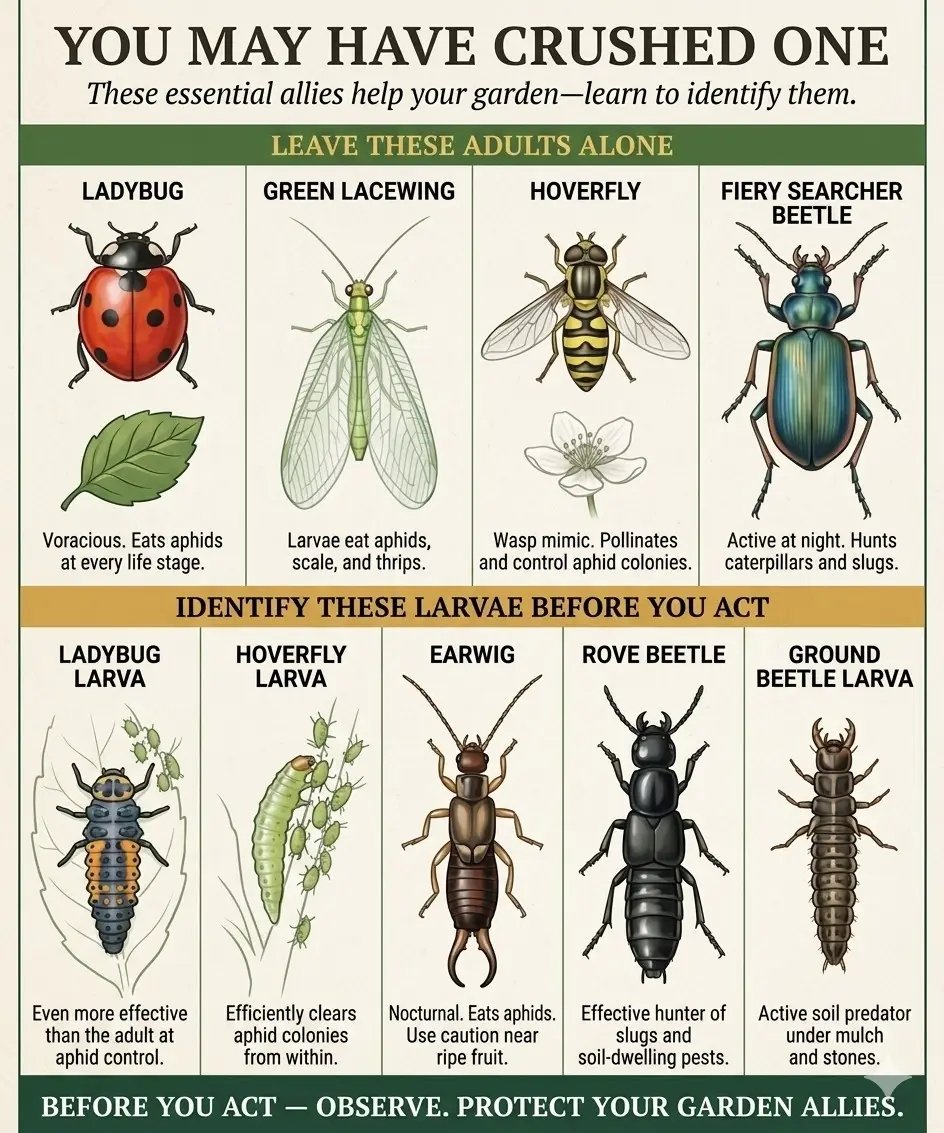
You may have stepped on one, sprayed one, or crushed one this morning without realizing it was helping your garden. 🌿🐞
One of the biggest mistakes gardeners make is assuming that every unfamiliar insect is a pest. In reality, many of the creatures crawling through your flower beds and vegetable patches are working around the clock to control the insects that actually cause damage.
Here are a few garden allies worth protecting:
🐞 **Ladybugs**
Both adults and larvae are relentless aphid hunters. In fact, the strange-looking larvae often consume more aphids than the familiar red adults. If you spot a dark, spotted larva among an aphid colony, leave it right where it is.
🦟 **Green Lacewings**
These delicate insects with transparent wings and golden eyes are among the most valuable predators in the garden. Their larvae feed on aphids, thrips, scale insects, and other common pests.
🪰 **Hoverflies**
Often mistaken for wasps because of their yellow-and-black coloring, hoverflies are harmless pollinators. Their larvae are equally impressive, feeding heavily on aphid colonies and helping keep outbreaks under control.
🪲 **Fiery Searcher Beetles**
These striking metallic blue-green beetles patrol gardens at night, hunting caterpillars, slugs, snails, and other plant-damaging pests.
Some beneficial insects can look intimidating:
🔍 Ladybug larvae resemble tiny alligators more than ladybugs.
🔍 Hoverfly larvae look like small translucent worms hiding among aphids.
🔍 Earwigs may appear threatening because of their pincers, but they often feed on pests and decaying plant material.
🔍 Rove beetles raise their abdomen when disturbed, giving them a fierce appearance despite being valuable predators.
🔍 Ground beetle larvae hide beneath mulch and stones, feeding on cutworms, slug eggs, and other soil pests.
A healthy garden isn't free of insects—it's full of the right insects.
Before reaching for a shoe, spray bottle, or pesticide, take a closer look. The creature you think is causing the problem may actually be the one solving it. 🌼🐝🌱
1
9
13
165
Deeame retweeted

In May, Trump claimed "no government dollars" would be spent on his vanity ballroom.
Now, barely a month later, American taxpayers are footing the over $300 MILLION bill for a stupid-ass ballroom.
Caught red-handed lying to the American people and wasting our taxpayer dollars.


Exclusive: A detailed project summary of the ballroom prepared for the White House by a contractor estimated the total construction cost at $600 million — with more than half coming from taxpayers, according to a copy obtained by The Post. wapo.st/4vRSidG
71
34
69
7,392
Deeame retweeted

Lucas Franco and the Laborers' Union get it: you can't solve a housing crisis without building. That means cutting red tape, working with the private sector, and lowering the cost of housing for Minnesotans. That's exactly what we're going to do.
27
16
66
5,838
Deeame retweeted

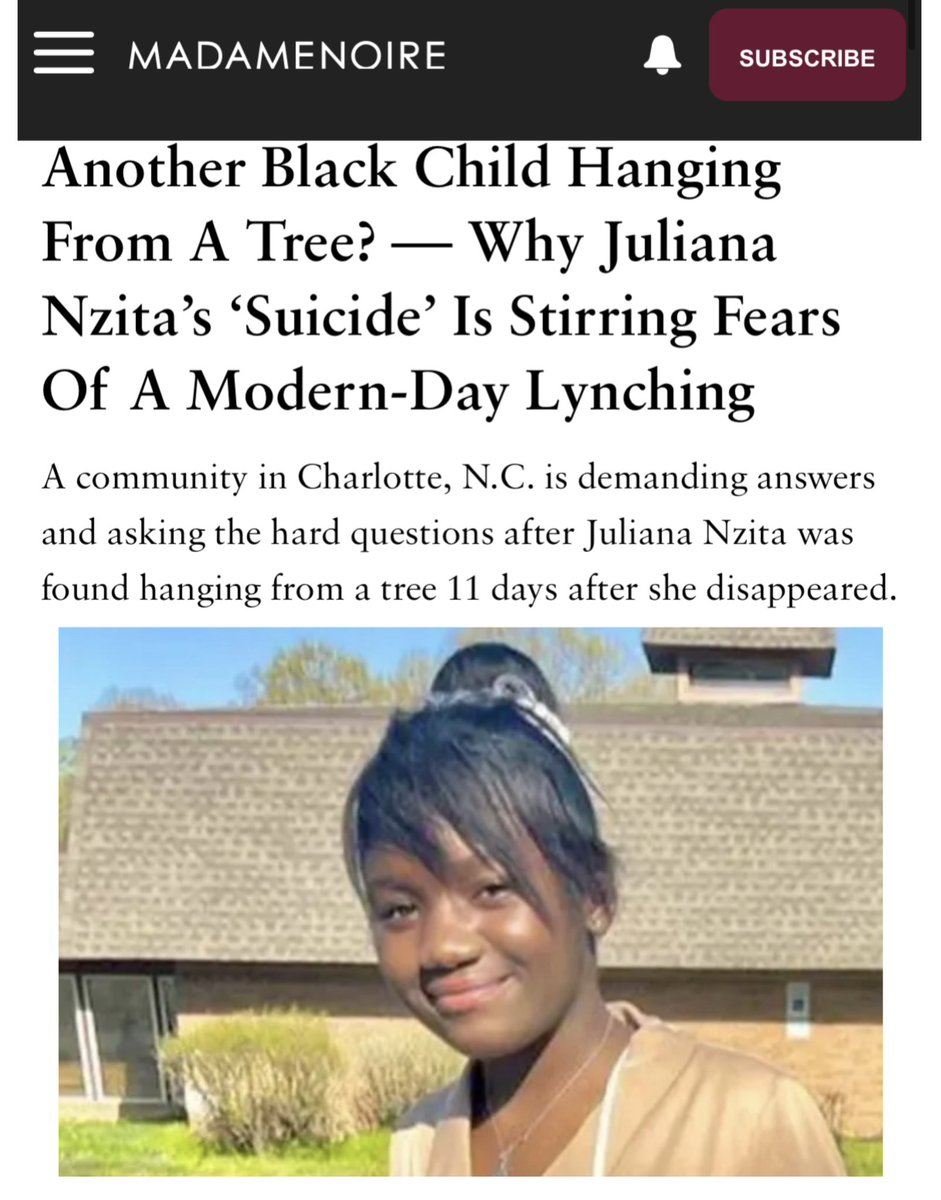
You will never convince me that a Black child found hanging from a tree was suicide…especially when it took them 11 days to find her but no one saw her there on days 1-10.
228
3,457
7,870
64,767
Deeame retweeted

Folks who chose to move to Florida are now choosing to leave our state because it's become increasingly unaffordable.
Whether it's at the pump or in the grocery aisle, Floridians are feeling the pinch, and Ashley Moody is doing nothing to stop it.
floridapolitics.com/archives…
37
113
399
9,817
Deeame retweeted

NEW: The DOJ is taking aim at common-sense federal law that prevents voters from being kicked off the registration roles within 90 days of an election.
It signals the Trump administration's desire to cancel registrations across the nation in the days leading up to the midterms. democracydocket.com/news-ale…
24
322
481
16,635


Deeame retweeted

Hero Officers! NYPD Police Officers Felix Baez and Giovanni Laguna were on the job Friday night when they saw a young woman holding a baby, running down the block asking for help! They stopped and noticed the baby was turning blue! Officer Laguna quickly placed the baby on the ground and began CPR while his partner called for an ambulance. He continued CPR until he noticed the baby's eyes open and he felt a faint pulse. The officers couldn't wait and brought the baby and mother to the hospital themselves. Officer Laguna continued with chest compressions in the car while Officer Baez kept in communication with other officers who stopped traffic along the way. The baby is in stable condition and ALIVE thanks to these officers! Great job guys! Thumbs UP to these officers for jumping into action!

49
266
1,087
5,355
Deeame retweeted

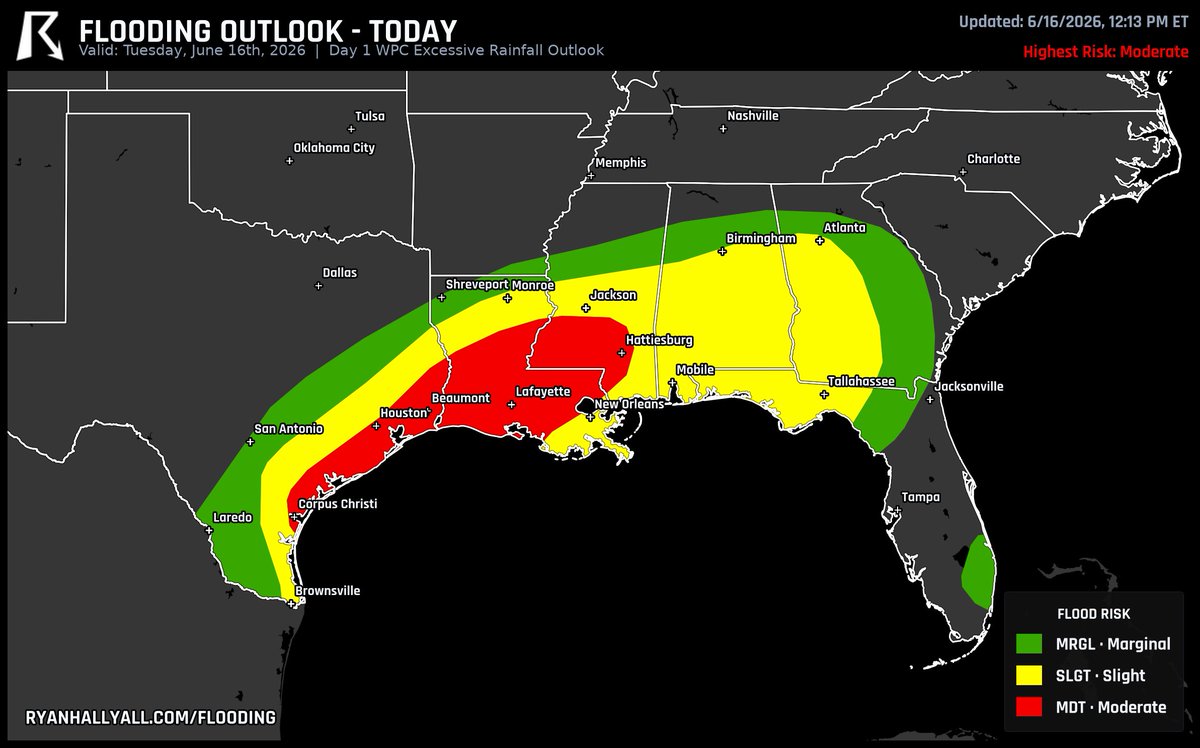
Today's the day for that flood risk we've been tracking. WPC's Moderate risk, their second-highest, now stretches from the Texas coast near Corpus Christi up through Houston and east into south Louisiana around Baton Rouge.
Storms keep firing over the same towns, and the ground's already soaked, so the water has nowhere to go but the roads.
If it's coming down hard near you, give yourself extra time and never drive into water over a road. You can't tell how deep it is.
2
28
176
18,134
Deeame retweeted

Host: Black history is getting erased from public spaces. Black voter districts are being dismantled. Black leaders are being sidelined. Where do Americans of color fit in this vision? Because it doesn't seem like we fit.
Vance: Uh... I, I, I think... my view...
49
443
3,164
196,924
Deeame retweeted

CNN Just Identified A Massive Change Inside The Democratic Party.
During Trump's first term, 63% of Democrats said they wanted Democratic leaders in Washington to stand up to Trump more.
Today?
93%.
Think about that jump.
Not 73%.
Not 83%.
93%.
That's nearly universal agreement across the Democratic base. And it helps explain why figures like Gavin Newsom are increasingly willing to pick direct fights with Trump.
18
237
735
13,197
Deeame retweeted

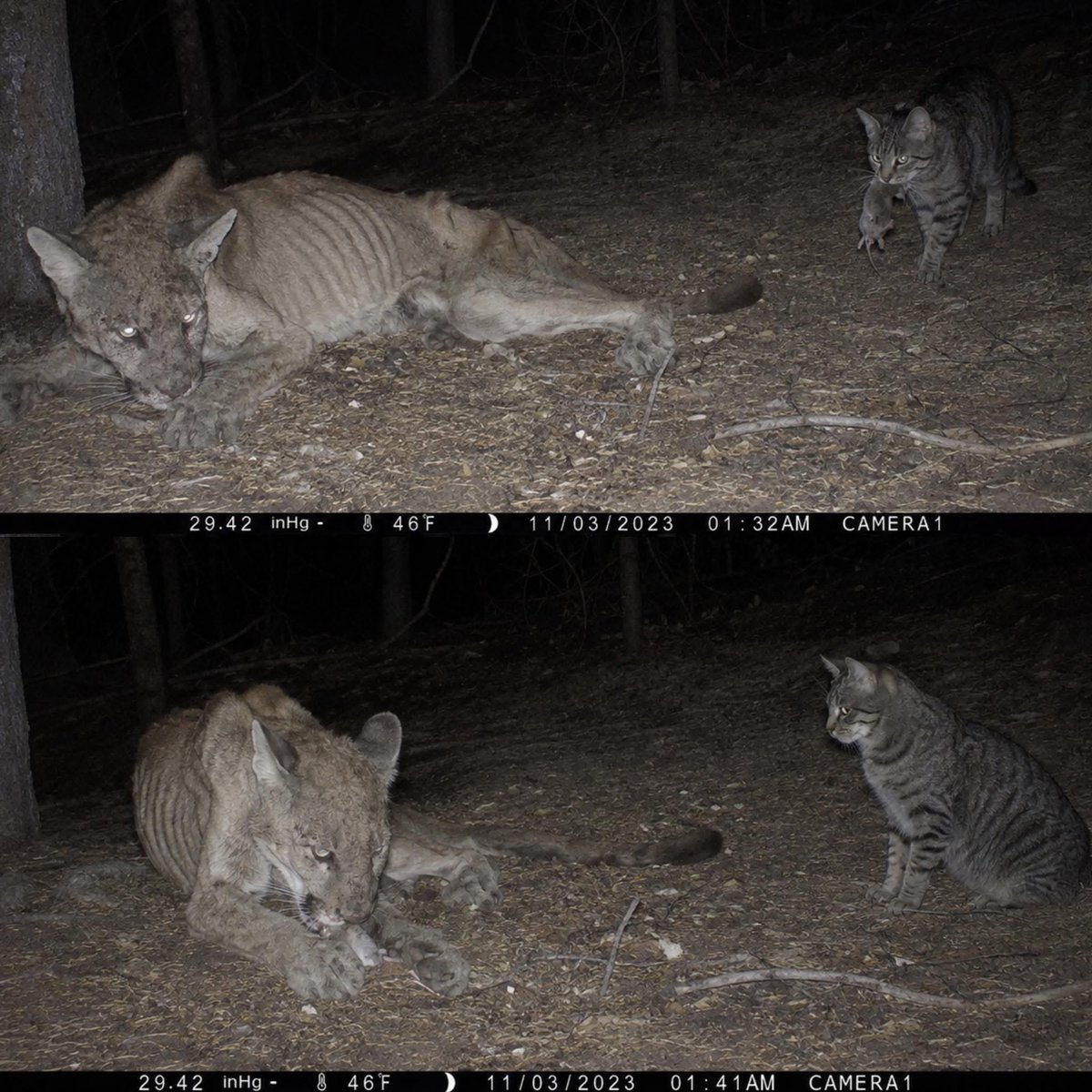
Rare “mutualistic feline behavior” has local college experts in a whirlwind.
A farmer said he first knew something was wrong when his barn cat stopped coming home for milk. The cat had followed the same routine for years, but suddenly he was hunting at strange hours and slipping into the same patch of woods over and over. When the farmer checked his trail cameras, he saw the reason. His cat was carrying mice to a thin, injured mountain lion that looked too weak to hunt on its own.
Wildlife officers were called, and the mountain lion was safely taken in for treatment. Local college animal behavior experts later weighed in, saying the footage was extremely unusual because the cat appeared to return repeatedly, keep a careful distance, and still leave food close enough for the mountain lion to eat. One professor said, “That kind of repeated behavior is hard to ignore. It makes you wonder how much animals notice when another animal is struggling.”
13
138
665
8,974
Deeame retweeted

Congress killed the enhanced ACA subsidies. Premiums jumped 57%. Average deductibles hit $4,000.
The administration's fix: borrow from your insurer. With interest. To pay the deductible your insurer set.
A trauma surgeon called it a restructuring of who you owe. That's exactly right.
Jun 12

This is why I support Medicare for All.
No one should ever be forced to take out loans from their insurance company to get the care they need. The hypocrisy and greed on display here is astounding.
Our healthcare system is in need of major reform — and we have a plan to do it.
nytimes.com/2026/06/11/busin…

2
85
137
2,366