Postdoc at @qldbraininst-Dickson Lab, @UQ_News mostly busy with 🔬🤸🏻♂️⛵️
Joined February 2014
- Tweets 3,467
- Following 1,521
- Followers 946
- Likes 10,693
362 Photos and videos



Deniz Ertekin, PhD retweeted

3 Jun 2025
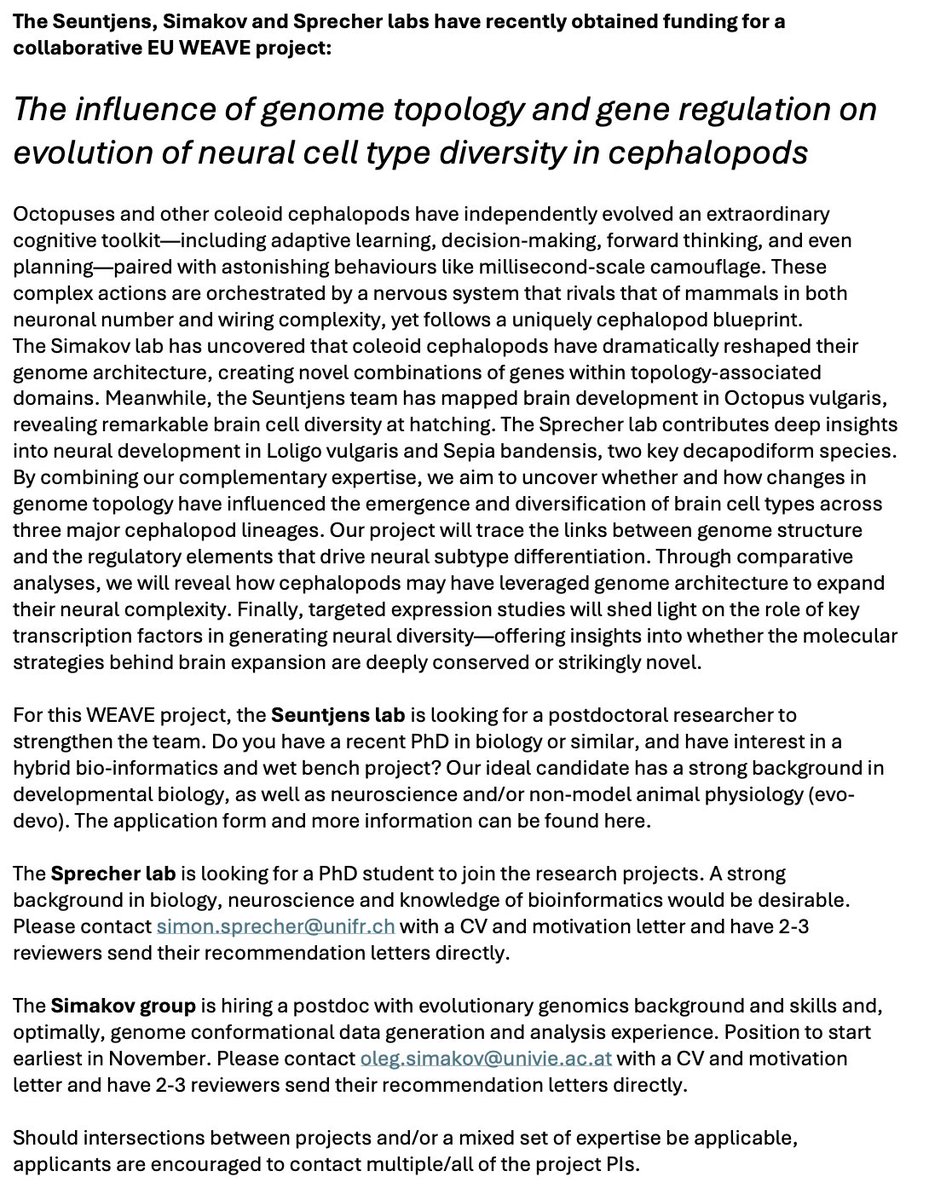
Officially starting a joint project with @SeuntjensLab and Oleg Simakov lab- studying the link between genomes, gene expression and cell type diversity in #Cephalopod brains!
Open positions to apply-
Please RT!
6
15
762
Deniz Ertekin, PhD retweeted

3 Jun 2025
The cancellation of Harvard grants has put @FlyBaseDotOrg on life support. The Flybase grant is at Harvard and everything else is a subcontract. This community resource is absolutely essential! philanthropy.cam.ac.uk/give-…
39
44
14,243
Deniz Ertekin, PhD retweeted

28 Mar 2025
Turkish democracy was ailing even before the main contender for challenging (and perhaps winning against) President Erdoğan, the Istanbul mayor Ekrem İmamoğlu was arrested last week on charges that many are arguing to be trumped up.
This by itself is noteworthy. It has become more so because it has also triggered widespread protests, which Turkey has not experienced since those surrounding the Gezi Park were put down.
What makes all of this so significant is that the current geopolitical situation has created a new opportunity for Turkey, which the country should not squander.
It goes something like this. Trump is attempting to remake the world order, not just fundamentally damaging American democracy. The US is increasingly allying itself with nondemocratic, authoritarian countries. The president is famously keen on staying in good terms with Russia’s autocratic leader Vladimir Putin. Despite all the talk of tariffs and chip wars, Trump could also form a new, and more friendly, transactional relationship with China.
The countries that Trump seems less interested in aligning the US with are the European ones and Canada. He’s also signaling the possibility of the US reneging its commitments to NATO (something that would have been unthinkable just a few years ago).
This could all change, if Democrats take back the House of Representatives in the midterms in 2026 and slow down Trump’s attack on US institutions and efforts to remake the global order, and then when the 2028 presidential election to reverse their consequences and rebuild US democracy. But so far, there is no guarantee that they will be able to do so. We should certainly not count on US institutions surviving intact for four more years.
The possibility of a new European block (perhaps joined by Canada), committed to liberal democracy and its own defense, is no longer unthinkable.
In the context of these developments, Turkey will have a choice. It can remain outside of both blocks. It can cozy up to the US-Russia-China axis. Or it can become part of the European block.
The European path is not a pie-in-the-sky. Turkey already has the second-largest ministry in NATO, and would be a crucial partner to Germany, France and other European countries in building a common defense. With rapid aging of European populations, the specter of more Turkish immigration to Europe may no longer be as daunting.
Becoming part of the European Union and the European defense pact would be game changers for Turkey. The country’s economy has been struggling because of lackluster productivity growth since 2006, and consequently slow real wage growth, despite endemic poverty. European markets, European capital, and most importantly European technology and joint venture opportunities with European companies could substantially boost Turkey’s productivity potential. (Recall, in this context that, the most rapid period of productivity growth in Turkey's recent past, between 2002-2006, was in the context of the country’s EU accession talks).
Yet, this path requires Turkey’s commitment to democracy.
Turkey needs to credibly signal to its European partners that it will try to reverse the downward slide of its democratic institutions (which has given the country the dubious achievement of being one of the worst performers, globally, in terms of worsening of democracy).
It will require its government to accept and even celebrate civil society activity and protests.
It will require the country’s youth to build on its newfound, greatest enthusiasm for politics and become even more engaged in the country’s affairs.
It will require the population to see Europeans as partners (that of the open sequence nationalist fervor directed against all Western powers).
Who will take this path? President Erdoğan has proven over the last several decades that he can change with the times and opportunities (and can bring his base together when he makes such turnarounds). But the change in perspective and institutional approach that is required here may be more radical than trying to bring the Kurds into the fold (which the president is now attempting).
There is no guarantee that Turkey will take this path. If President Erdoğan does not attempt it (as is likely), Turkish politics will become more uncertain and more confrontational. It remains unclear who will take the lead and whether this leader will be allowed to kickstart the necessary epochal transformation for the country’s future.
84
398
2,902
349,409
Deniz Ertekin, PhD retweeted

27 Mar 2025
BBC's Mark Lowen deported from Turkey after covering protests bbc.in/3RncTUR
436
2,344
8,579
1,112,611
Deniz Ertekin, PhD retweeted

27 Mar 2025
🇹🇷 #BREAKING | Pikachu was spotted fleeing from the police during anti-Erdoğan protests in Turkey.
1,253
20,525
219,659
13,798,931
Deniz Ertekin, PhD retweeted

25 Mar 2025
#Türkiye: We are very concerned by the detention of at least 92 people over the past week, including Istanbul’s democratically-elected mayor Ekrem İmamoğlu.
All those detained for the legitimate exercise of their rights must be released immediately & unconditionally.

474
2,880
11,292
553,688
Deniz Ertekin, PhD retweeted

20 Jan 2025
We've got a good program, and have had strong interest so far. Last few hours to apply!
19 Jan 2025

#EMBOconferenceAlert!
EMBO Workshop- Neuroscience of Sleep
📆 11 – 13 March 2025
📍 India Habitat Centre, Lodhi Road, New Delhi
🌐 meetings.embo.org/event/25-n…
⏳ Registration Deadline: 19 January 2025
#EMBOworkshop #Neuroscienceofsleep
1
2
363

3 Dec 2024
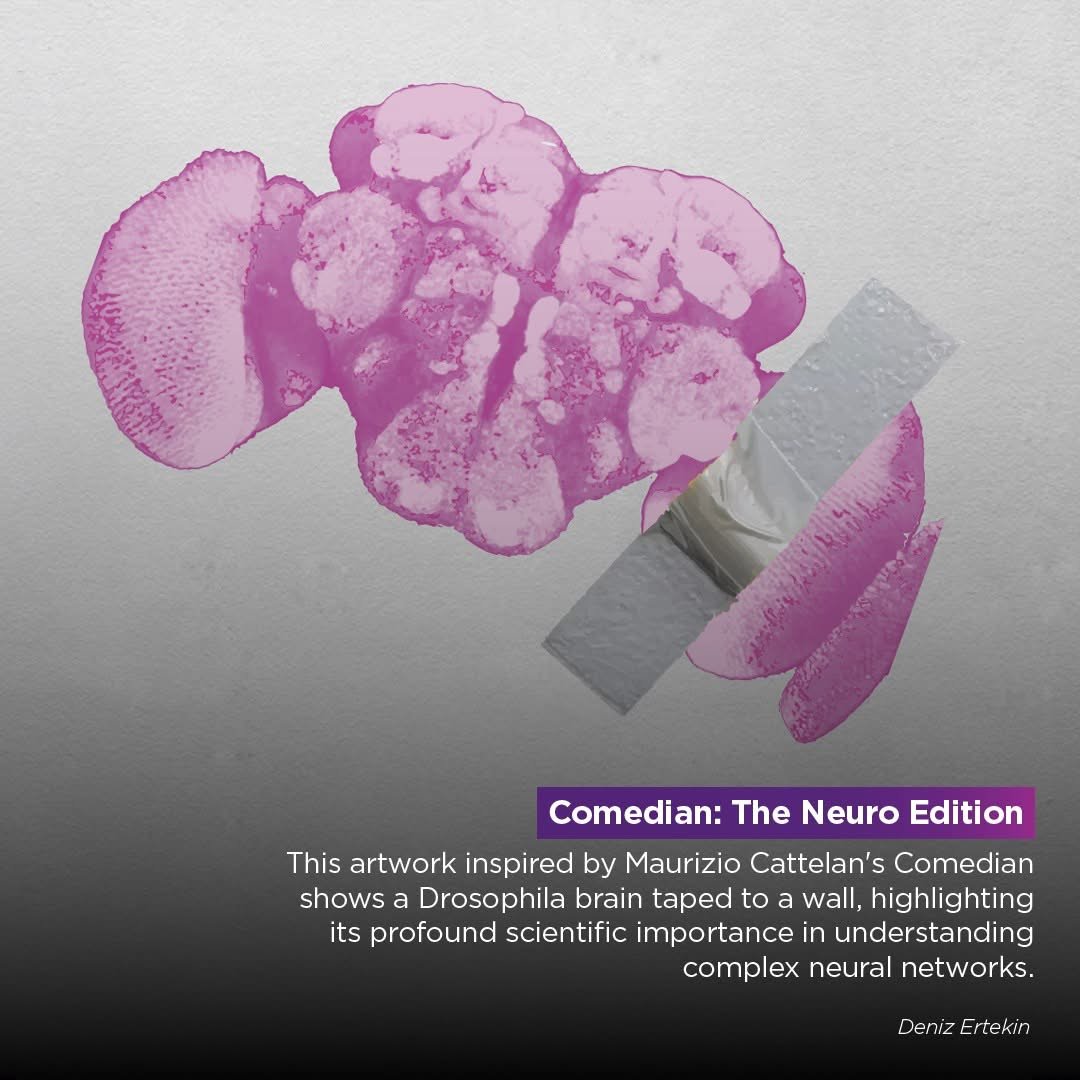
Flybrain> Banana.
My entry for the art in neuroscience competition at QBI.
1
1
11
485
Deniz Ertekin, PhD retweeted

9 Oct 2024
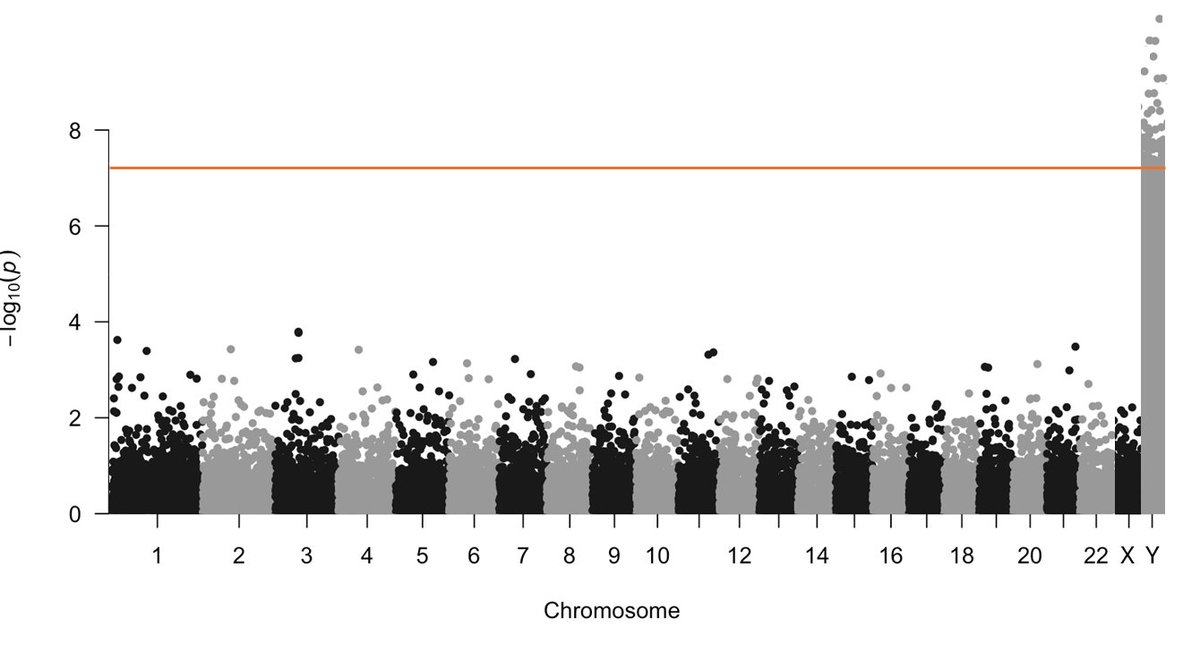
GWAS for Nobel prize laureates.
18
345
1,945
190,839
12 Sep 2024
I hope Australian funding agencies have a look at this (and maaaybe rethink their strategies?)
This tweet is unavailable
2
918
Deniz Ertekin, PhD retweeted

7 Aug 2024
A 🧵 about women applying for things.
We’ve run a postdoc seminar series for the past few years. Our selection is entirely anonymized. We read only the research statements. No CV’s, no names, no lab references. But when all was revealed this year, 8/10 finalists were male.
12
46
178
81,086
5 Aug 2024
After how many months/years does this daycare sickness madness slow down? It has been about 2 months since he started daycare and we have just been jumping from one to another. What a fun cycle🤡
1
237
Deniz Ertekin, PhD retweeted

24 Jul 2024
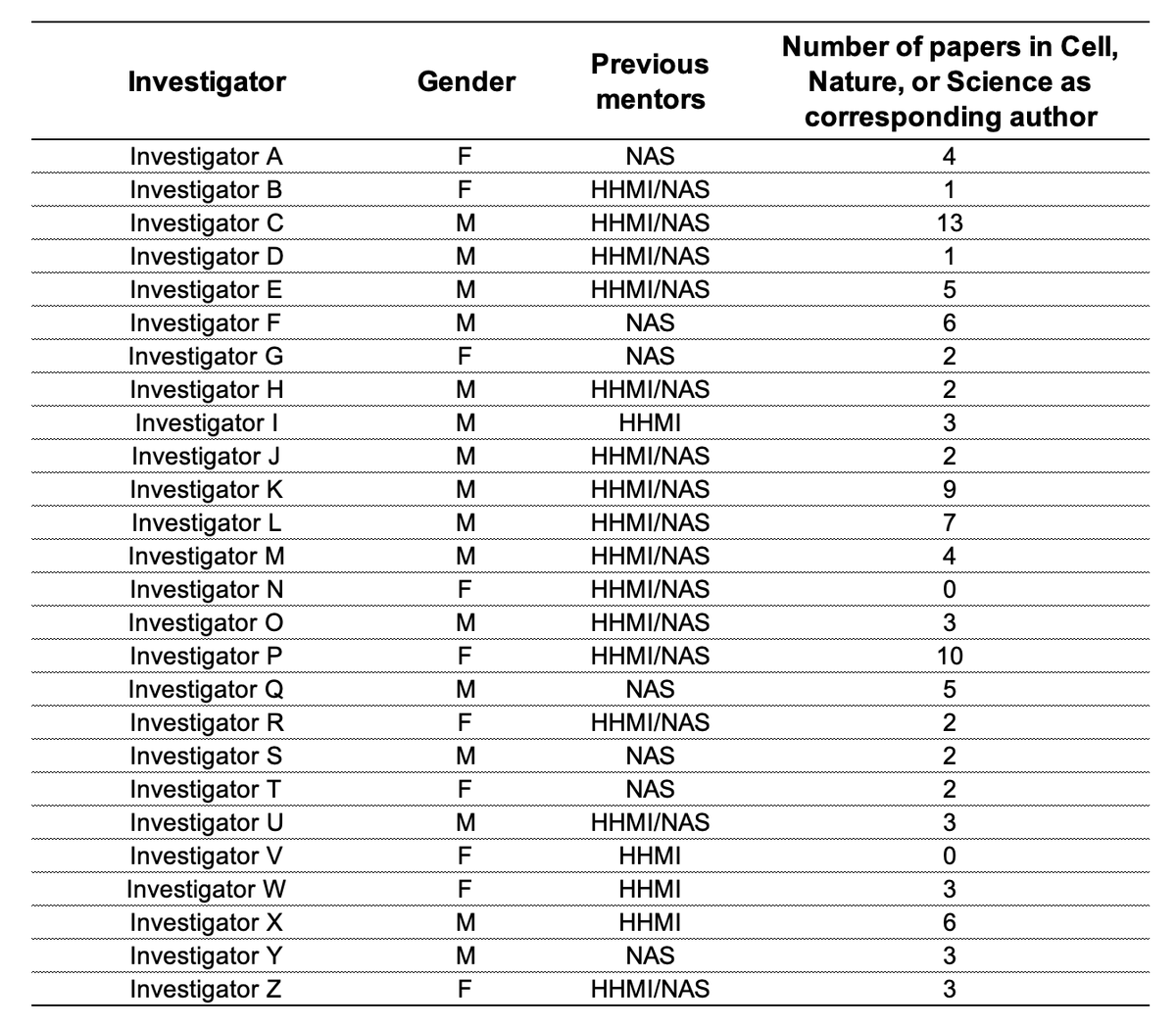
The new class of HHMI investigators average 3.9 papers as corresponding author in Cell, Nature, or Science. 26 out of 26 members of this group previously trained with a PI who is in the National Academy of Sciences or who was an HHMI investigator themselves.
23
181
995
348,529
Deniz Ertekin, PhD retweeted

17 Jul 2024
We are excited to announce the next Workshop on Neural Circuits & Behavior of Drosophila that will be held at the Orthodox Academy of Crete (OAC), Kolymbari, from June 15-21, 2025. Please RT.
1
24
50
6,964
Deniz Ertekin, PhD retweeted

8 Jul 2024
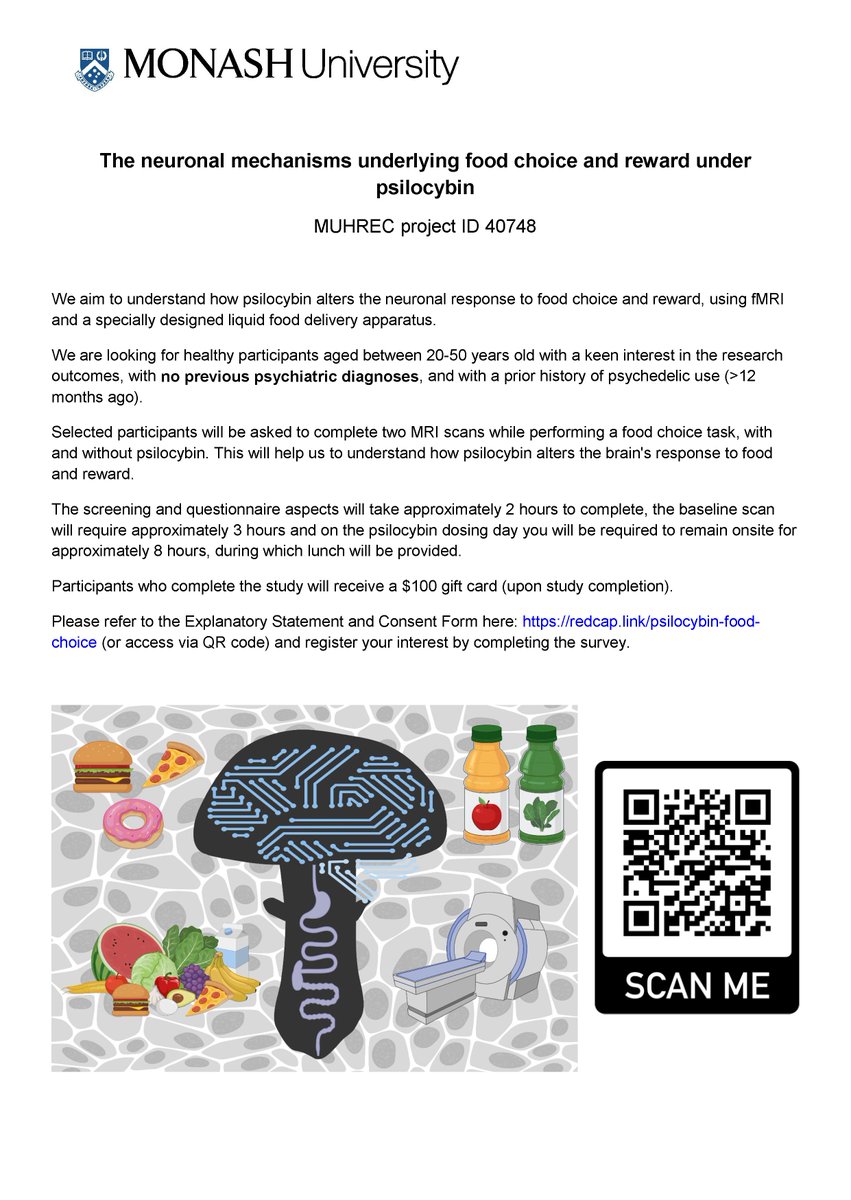
We are recruiting!! Melbourne (preferably close to Clayton) people register your interest by taking the survey #psilocybin #food #reward @MonashBDI
5
15
32
8,420
Deniz Ertekin, PhD retweeted

29 May 2024
Our group has TWO earmarked PhD scholarships in Alzheimer's disease and brain cell communication. Lots of interdisciplinary approaches (advanced imaging/math modelling/biochemical techniques). DM/email (p.padmanabhan@uq.edu.au) me for more info.
@UQMedicine @QldBrainInst @UQ_News
1
25
25
7,732
Deniz Ertekin, PhD retweeted

16 Apr 2024
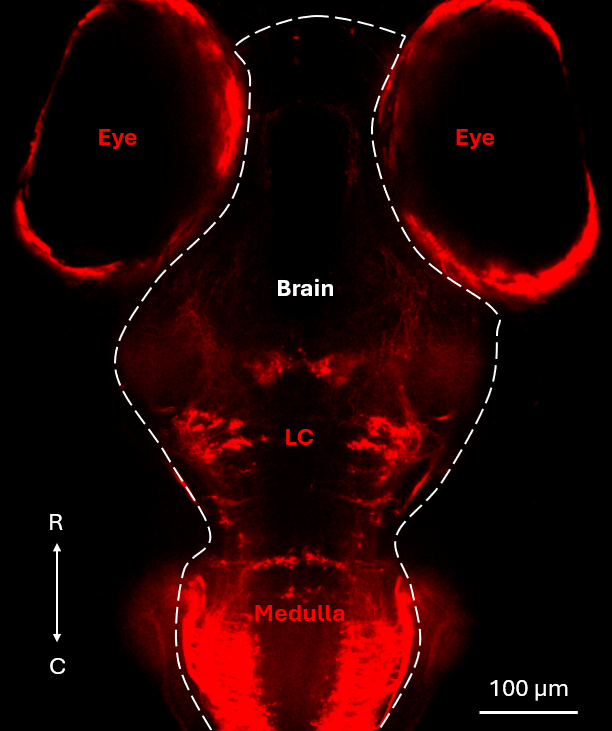
📢Anyone interested in doing an Honours project in Brisbane? And in the cool model that zebrafish is??
We have a very interesting project on the short term effects of noradrenergic system impairment in zebrafish.
Contacts: me or @DrCarlieCullen
#zebrafish #honours
8
8
3,913
Deniz Ertekin, PhD retweeted

29 Jan 2024
📢Our lab balbilab.com at @QldBrainInst is looking for a PhD student interested in brain oscillations and their intricate role in restoring function after stroke. Lots of cool techniques such as in vivo electrophysiology and imaging in🐭. Info: study.uq.edu.au/study-option…
1
14
14
2,557