
Joined April 2021
- Tweets 5,723
- Following 4,633
- Followers 1,739
- Likes 32,864
1,124 Photos and videos














deving.zone 🌕 retweeted

I honestly don't care for anything in crypto except for @THORChain, @RujiraNetwork, & @mocadotapp. Everything else is just noise to me.
I do not want to buy your NFT, meme coin, or the "next BTC."
Our focus is "selling shovels" to those involved in this crypto gold rush.
5
3
35
1,403
deving.zone 🌕 retweeted

Jun 13
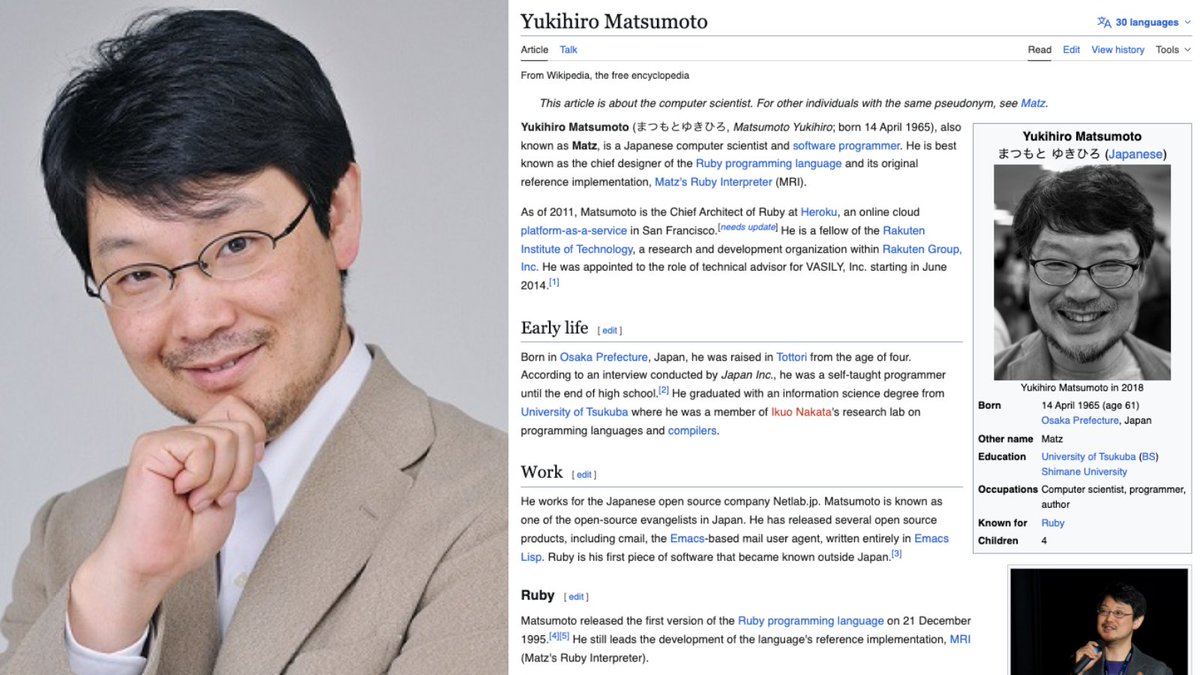
A Japanese programmer looked at every existing programming language in 1993, decided none of them made him happy, and spent two years building his own the language he built became the foundation GitHub, Shopify, Airbnb, and Coinbase were all built on.
His name is Yukihiro Matsumoto.
Everyone in the programming world calls him Matz. He was born in 1965, studied information science at the University of Tsukuba, and graduated in 1990 with a head full of ideas about what programming languages could be and a quiet frustration with what they actually were.
He knew Perl. He did not like it. He said it had the smell of a toy language. He knew Python. He did not like it either, because he felt its object-oriented features were add-ons bolted onto a language that was not designed around them from the start. He wanted something that was genuinely, completely object-oriented, easy to use, and built for the person writing the code rather than the machine running it.
He looked for that language. He could not find it.
So on February 24, 1993, he opened a chat window with his colleague Keiju Ishitsuka and typed: "Let us decide the codename now."
They wanted to name it after a gemstone, inspired by Perl. Ishitsuka suggested Coral. Matsumoto suggested Ruby. Ruby was shorter by one letter. Ruby won.
He spent the next two years building it alone, working through the architecture piece by piece. The object system. The string class. The IO streams. He later said he talked through specific features while speaking to his baby daughter, using her as a sounding board the way programmers use rubber ducks. In August 1993, he finally wrote the line of code that produced "Hello, world." on the screen.
The first public version, Ruby 0.95, was released to Japanese domestic newsgroups on December 21, 1995. No press release. No launch event. Just a quiet post to a mailing list.
The design principle underneath everything was the one nobody else had ever made primary. Matsumoto called it programmer happiness. He believed programming languages should be built for the joy and productivity of the person writing the code, not optimized purely for machine efficiency. Every decision in Ruby's design ran through that filter. If it made the programmer's life harder, it was wrong.
That philosophy attracted a small but devoted following in Japan through the late 1990s. Then in 2003, a Danish programmer named David Heinemeier Hansson discovered Ruby and used it to build an internal project management tool for his company. He called the tool Basecamp. He extracted the framework underneath it and released it publicly in 2004.
He called it Ruby on Rails.
Within a year of that release, the framework had changed how web applications were built. Rails introduced the principle of convention over configuration, meaning developers could make decisions about structure quickly because the framework had already made sensible defaults. What used to take weeks of setup took days. What used to take days took hours.
Shopify started on Rails in 2005. GitHub built on Rails a couple of years later. Airbnb, Twitch, Coinbase, SoundCloud, and Zendesk all followed. The first generation of consumer internet companies that defined how people think about software products were largely built by small teams moving fast on a framework that traced directly back to one Japanese programmer who was dissatisfied with his tools in 1993.
Shopify now processes over $200 billion in annual commerce volume. It still runs on Rails. GitHub became the largest code hosting platform on earth and was acquired by Microsoft for $7.5 billion in 2018. It started on Rails.
Matsumoto has said many times that he created Ruby for selfish reasons. He was so underwhelmed by every available option that he built something that would make himself happy. The programmer happiness he was chasing was his own.
The community that grew around Ruby adopted a motto that says everything about who he is. Matz is nice and so we are nice. They abbreviated it MINASWAN. It spread because it was true. He answered emails from strangers. He engaged with the community with patience. He treated the language as a gift, not a product.
He is still the chief designer of Ruby today. The language is 31 years old. It is still being improved.
The last stable release was Ruby 4.0.4, shipped on May 11, 2026.
One programmer, unhappy with his tools, built something better in the evenings in 1993. The companies you use to buy things, to store code, to book travel, and to watch streams were built on top of what he made.
He just wanted to be happy while he worked.
Did you know Ruby was behind the tools you use every day?
35
622
3,127
308,535

Jun 11
Litecoin Community meets THORChain
@THORChain @Rujira_Network @KentonC137 @patriotsounds
LTC 🫶 THORChain
deving.zone/communities/lite…
Jun 8

Our founder @zeymermoca will be in Amsterdam for the @litecoin summit on June 22-23
It's the Dutch Blockchain week so drop by, say hi, and learn how we're pushing $LTC payments into the real world
1
3
16
435
deving.zone 🌕 retweeted

Jun 11
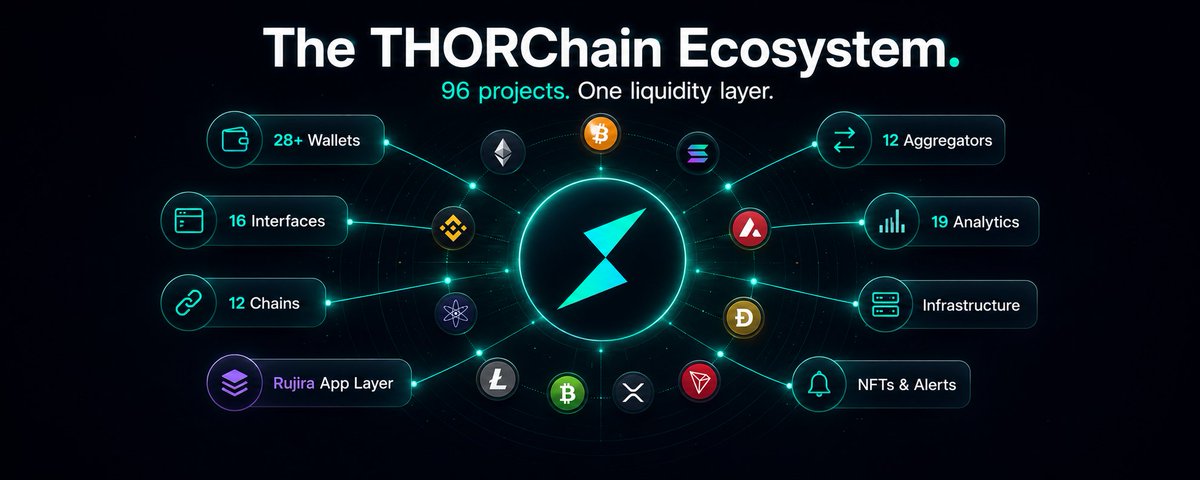
🧵Most people think of @THORChain as just a swap protocol.
It is actually one of the most built-out ecosystems in DeFi.
96 projects. 12 native blockchains. 28 wallets. One liquidity layer underneath all of it.
Here is the full picture. Read till the end! 👇
3
21
82
2,021
deving.zone 🌕 retweeted

Jun 11
You want to pay with any crypto, not just stablecoins
The merchant wants to settle in any crypto, including stablecoins
With Moca, this is possible from day one.
2
9
30
420
deving.zone 🌕 retweeted

Jun 11
We are still so early.
Most people have no idea they can already borrow USDC or USDT against their BTC.
You can take out a loan in a decentralized way, without KYC. Just keep a healthy loan-to-value (LTV) ratio.
We are building open financial access for everyone.

1
5
43
725
Jun 9
Jun 9

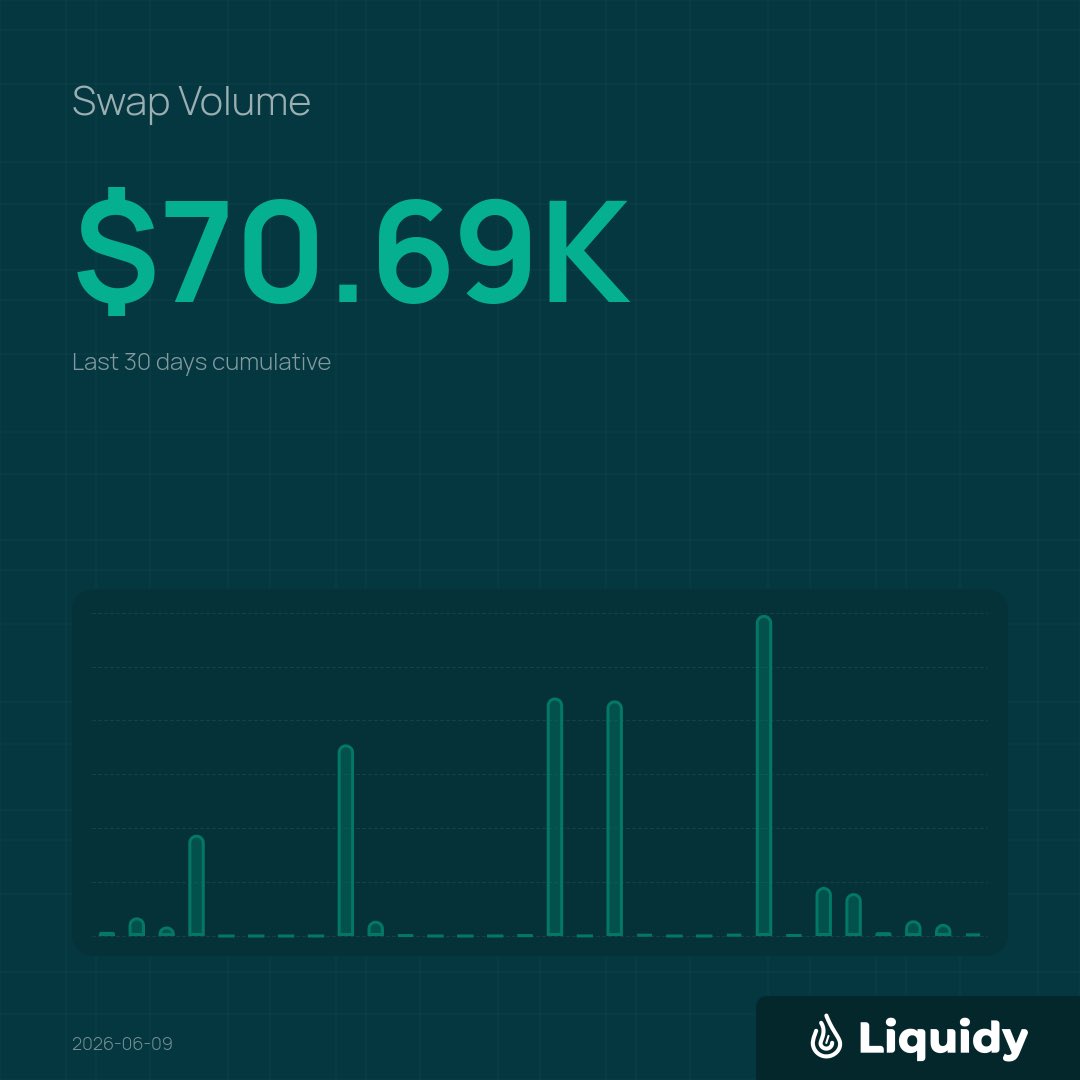
Our swap router is in beta and we are testing along with the community. Volume last 30D is $70.69k. This is mostly down to a few larger swaps. Digging into the details so far🧵
4
113

rekt.news/thorchain-rekt3
This is how @THORChain hack happened:
1- for EVM/ERC20 tokens, Thorchain keeeps assets in a router (etherscan.io/address/0xd37bb…) and gives allowance to asgard vault addresses to transfer those tokens out. (an internal allowance mapping, not a ERC20 allowance/approval)
2- For example, etherscan.io/address/0x82a5c… is an asgard vault (an EOA account), which had allowance to spend tokens from the thorchain router and transfer tokens out of that contract.
3- once attacker controlled/reconstructed the vault private key to 0x82a5cf67f3e6970c0529122178075c0a94878bda it could spend all that allowance and transfer tokens out of the router.
4- If you look at the 0x82a5cf67f3e6970c0529122178075c0a94878bda on etherscan, its simply an EOA address. but who controls this address and its private key? did attacker steal the private key of this wallet? yes, but its not as simple as that. this wallet is controlled by a GG20 threshold ECDSA key, i.e, not a single person can simply sign a transaction and execute it. the private key is split into shares between the nodes which are eligible to participate in the signing set. enough nodes need to participate in the GG20 signing protocol using their own private key shares to jointly produce the final ECDSA signature and hence execute a transaction from 0x82a5cf67f3e6970c0529122178075c0a94878bda on chain.
5- so private key of this asgard vault, was not simply stored somewhere, like on a paper, or in a notes app etc which attacker could steal. the private key could only be reconstructed if you knew the secret share of other nodes participating in the signing set. the private key should never be reconstructed during normal operation.
6- so attacker had to first join the signing set then find a way to extract information about the secret shares of the other nodes in the same signing set, as a result attacker could reconstruct the full vault private key and sign any arbitrary transaction from it (i.e transferring tokens out of router).
8- attacker reportedly joined the signing set by bonding around 635,000 RUNE
9- This is where the problem arises, THORChain was using an older GG20 TSS implementation. In GG20, participants use paillier encryption during the offchain signing protocol to do encrypted math without revealing their private key shares. the vulnerable implementation did not properly reject malicious paillier key material, so the attacker could provide malformed paillier parameters. when honest nodes interacted with that malicious participant during signing rounds, their protocol responses leaked small pieces of information about their secret key shares.
10- this leak was not from the final on-chain signature itself, but from the off-chain signing messages exchanged between TSS participants.each signing session gave the attacker more constraints about other nodes secret shares. think of it like a huge equation with many unknown variables => one result is useless, but enough different results can reveal the hidden variables.
11- attacker finally reconstructed the private key of the 0x82a5cf67f3e6970c0529122178075c0a94878bda using those secret parts (conceptually: secret_share1 secret_share2 secret_share3 ... = final_private_key). now attacker has full control of this asgard vault (which is bascially an EOA account), and a ton of allowance on thorchain router.
12- attacker simply used that private key to transfer the funds out of the thorchain router (etherscan.io/address/0x82a5c… look at the "TransferOut" transactions)
13- for other chains like BTC, LTC, DOGE, etc, the attacker used the reconstructed chain-specific vault private key to sign native L1 transactions and drain funds directly from those vault addresses.
4
23
2,051
deving.zone 🌕 retweeted

Jun 8
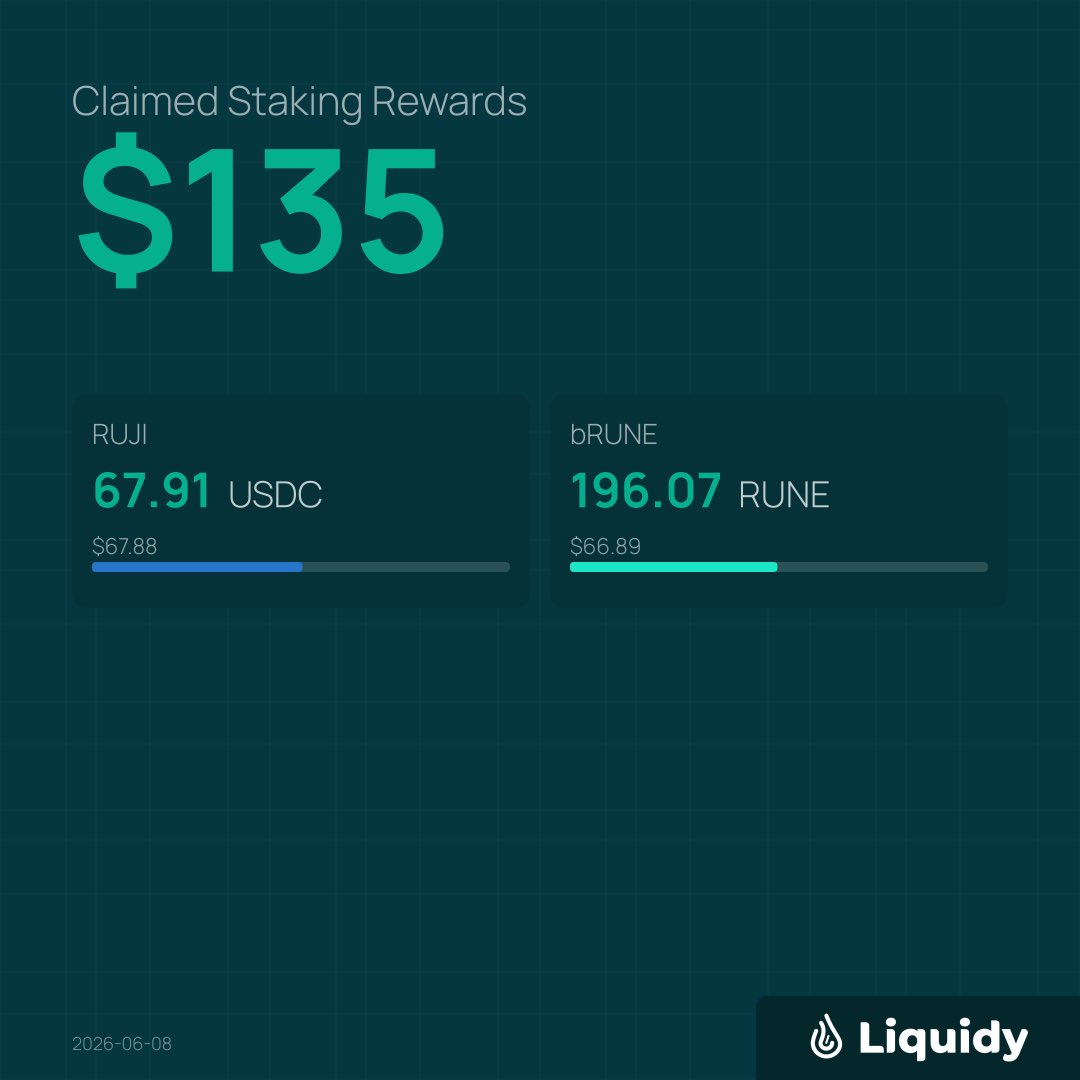
We are warming up the engine and while waiting on @THORChain opens up the swaps we casually claim some staking rewards from our $RUJI and $bRUNE positions.
liquidy.finance/revenue
1
7
41
1,148
deving.zone 🌕 retweeted

Jun 7
⚡ Saturday 13th June, on the THORChain Podcast | Ecosystem Spotlight at 10AM EDT / 2PM UTC.
@KentonC137 and @patriotsounds are sitting down with @NanoGPTcom .
NanoGPT provides anonymous, private, pay-per-prompt access to ChatGPT and other leading AI text and image models, with payments supported via Nano, cryptocurrencies, and credit cards.
Jump on stage and ask your questions live: riverside.com/studio/thorcha…

11
12
58
5,323
deving.zone 🌕 retweeted

Jun 6
Jun 5

⚡This Saturday on the THORChain Podcast | Community Member Spotlight at 10AM EDT / 2PM UTC.
Goose from @zephyr_org joins @KentonC137 and @patriotsounds.
Zephyr is a digital currency that combines the principles of privacy and stability.
See you there.
Jump on stage and ask your questions live: riverside.com/studio/thorcha…

7
44
1,620
deving.zone 🌕 retweeted
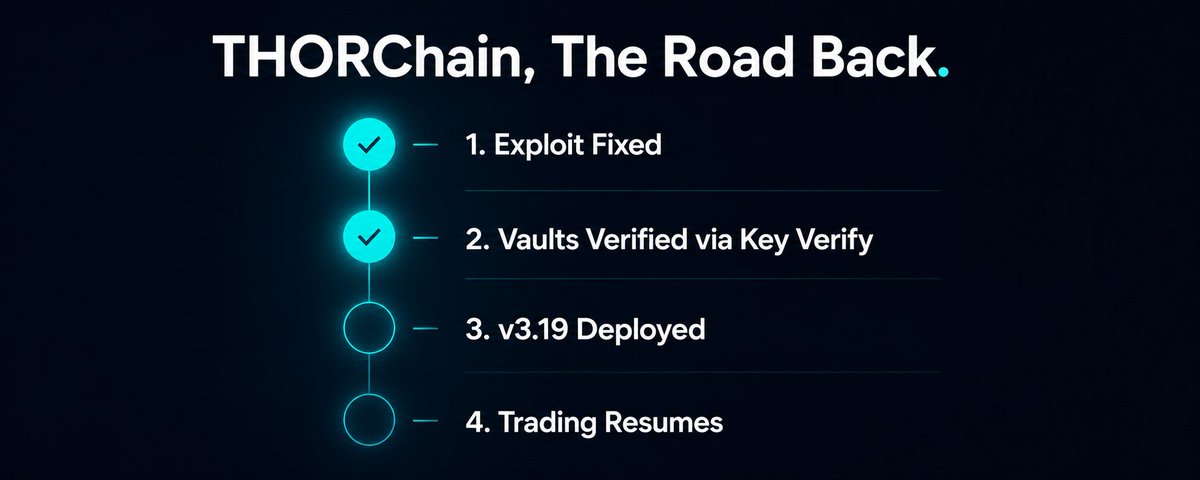
1. The exploit fix itself was done a while ago. What’s taking longer now is the careful part: making sure nothing else was missed.
The team reviewed every vault before bringing trading back online and added a new “key verify” process to confirm the vaults are clean before signing or churning starts again.
v3.19 was almost ready, but testing uncovered a few small bugs and one more issue the team wanted to double-check before release.
Once v3.19 is live, nodes will upgrade, signing will restart, funds will move into new vaults, and LP actions and trading will come back step by step.
The restart should take a few days after release.
1
1
13
270
Jun 3

🧵Lately, the word @mocadotapp has been appearing more frequently in the @THORChain community, so in this post we want to introduce this product and share with you what it actually is.
@mocadotapp is a complete crypto ecosystem. Not just a wallet. It has tools for regular users, for businesses, and for developers. And it is all built on top of @THORChain and @Maya_Protocol .
Let us walk you through everything they have built.
Read till the end!👇

1
106
deving.zone 🌕 retweeted
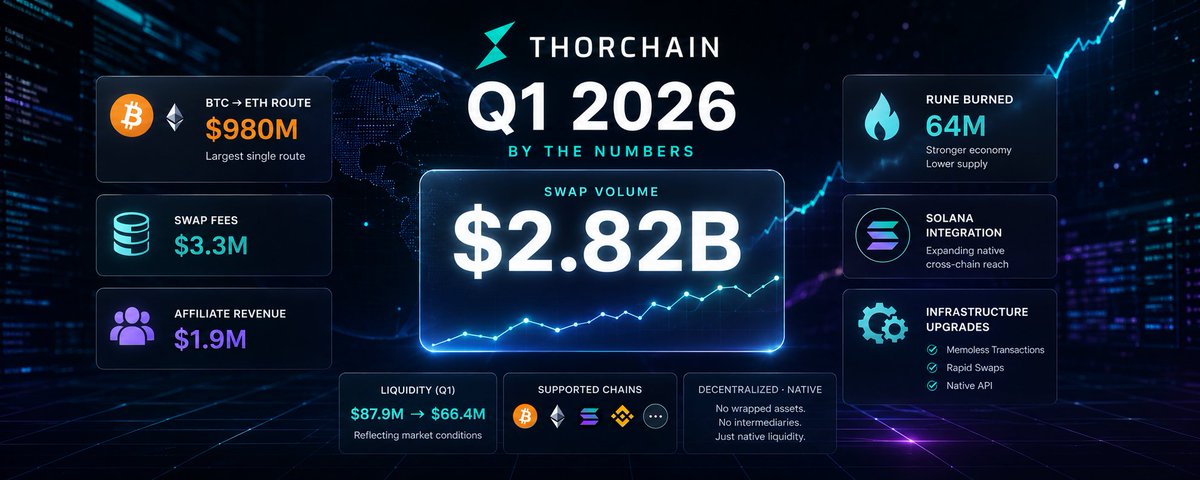
@THORChain has faced several challenges in recent months, but the latest events tell a more complete story.
🧵In this thread, we’ll cover the latest volume, revenue, infrastructure upgrades, the Solana integration, and what they suggest about the current state of the network. Read until the end!👇
5
6
13
265

deving.zone 🌕 retweeted
Jun 2
⚡This Saturday on the THORChain Podcast | Community Member Spotlight.
Goose from @zephyr_org joins @KentonC137 and @patriotsounds live at 10AM EDT / 2PM UTC.
Zephyr Protocol is a privacy-first, over-collateralized stablecoin that merges Monero's untraceable technology with the Djed Protocol to create a stable yet fully private digital currency.
Jump on stage and ask your questions live: riverside.com/studio/thorcha…

44
54
86
7,364
deving.zone 🌕 retweeted

See the beautiful thing about Thorchain is you can go create an ADR right now that directs 1% of system income to bug bounties. Be the change you want to see in the world.
2
4
202
deving.zone 🌕 retweeted

May 31
Hey all, the @THORChain & @RujiraNetwork weekly recap is up! #THORChain is close to resuming operations, #Rujira Credit Accounts are back online, 2 awesome podcasts with @sodabubblelab & @deving_zone.
STO 🤝 @Maya_Protocol
youtu.be/YCo-YlElj8U?si=DwOC…
1
8
37
3,013
deving.zone 🌕 retweeted
May 30
2
13
45
4,258
deving.zone 🌕 retweeted

THORChain will never die ⚡️
2
9
58
1,189