"People only accept change when they are faced with necessity, and they only recognize necessity when a crisis is upon them."
Joined July 2024
- Tweets 11,210
- Following 395
- Followers 5,169
- Likes 53,018
560 Photos and videos






Pinned Tweet

May 9
如果是Ted Chiang那本Story of Your Life里面,能一维感知时间的生物就不会有这个问题,但人只有backward looking能力,empiricalism是从捡野果子到现在没变过的思维模式。
什么二油危机,经常出现的大胆挨揍小心回血,都是imperfect information 纯粹依靠经验主义。跳出first order thinking和system 1 thinking才能避免一直被迫对市场做出reaction而产生不了先见。但如果你浮亏很大,战争又一分钟一个头条,很难静下心来思考。我4月8那波大的就是大轰炸前夜把仓位全卖光了,进入深度思考,然后惊天大call
1
3
25
7,054
Diamond Rapids retweeted

Oracle's 100% capex/sales ratio is why Nvidia and Micron trade at such low PEs - Vital Knowledge
1
12
1,661
Jun 11
Here we go again... @Areskapitalon
Jun 11

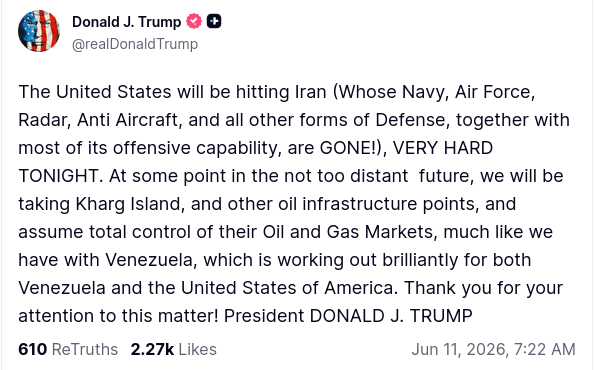
President Donald J. Trump has announced on Truth Social that the "United States will be hitting Iran…VERY HARD TONIGHT," adding, "In the not too distant future, we will be taking Kharg Island, and other oil infrastructure points, and assume total control of their Oil and Gas Markets"
1
5
2,461
Jun 11
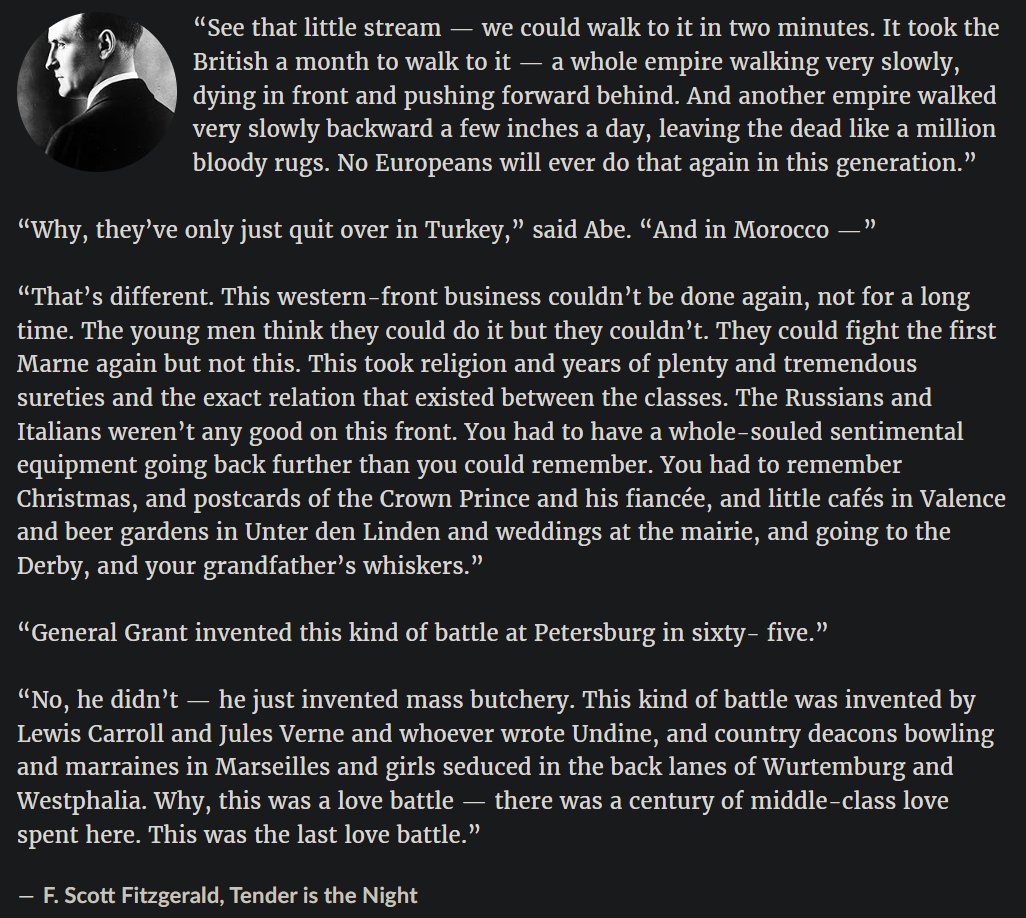
我觉得我们离Versailles还是在越来越近的,因为两国对战争的耐受度依然在下降
伊朗在黎巴嫩问题上试运行的新秩序是neocons和以色列都不可能接受的。这种status quo不可能长久,需要进一步热战决出胜负
不然就等于2nd Battle of the Marne前就签停战凡尔赛条约
x.com/LindseyGrahamSC/status…
Jun 11

If there is no deal soon Mr. President, you are right to put on the table the taking of Kharg Island.
I very much appreciate @POTUS and his team going the extra mile to obtain a diplomatic solution to the Iranian conflict.
It is apparent to me that the regime is not a reliable partner in these negotiations and that at every turn they create provocation believing it gives them more leverage.
President Trump’s announcement today that it may be time to take Kharg Island is welcome news and would be the ultimate game changer. The combination of continuing to force the Strait open and at the same time controlling Kharg Island’s operations by force or blockade would be the most consequential move President Trump could make, regaining the dominance and leverage America needs to end this conflict on favorable terms.
Time is of essence.
2
5
1,795
Jun 11
如果需要一个binding的contract,需要挖掘出双方最大的经济和战争潜力。伊朗虽然客观上经济受损严重,但多年的制裁和其伊斯兰革命和两伊战争中历炼出的一种独特的“两元制”使得其现在需要进一步施压才能创造突破。这就又回到了Linebacker II timeline
3
879
Diamond Rapids retweeted

Jun 11
If there is no deal soon Mr. President, you are right to put on the table the taking of Kharg Island.
I very much appreciate @POTUS and his team going the extra mile to obtain a diplomatic solution to the Iranian conflict.
It is apparent to me that the regime is not a reliable partner in these negotiations and that at every turn they create provocation believing it gives them more leverage.
President Trump’s announcement today that it may be time to take Kharg Island is welcome news and would be the ultimate game changer. The combination of continuing to force the Strait open and at the same time controlling Kharg Island’s operations by force or blockade would be the most consequential move President Trump could make, regaining the dominance and leverage America needs to end this conflict on favorable terms.
Time is of essence.
Jun 11

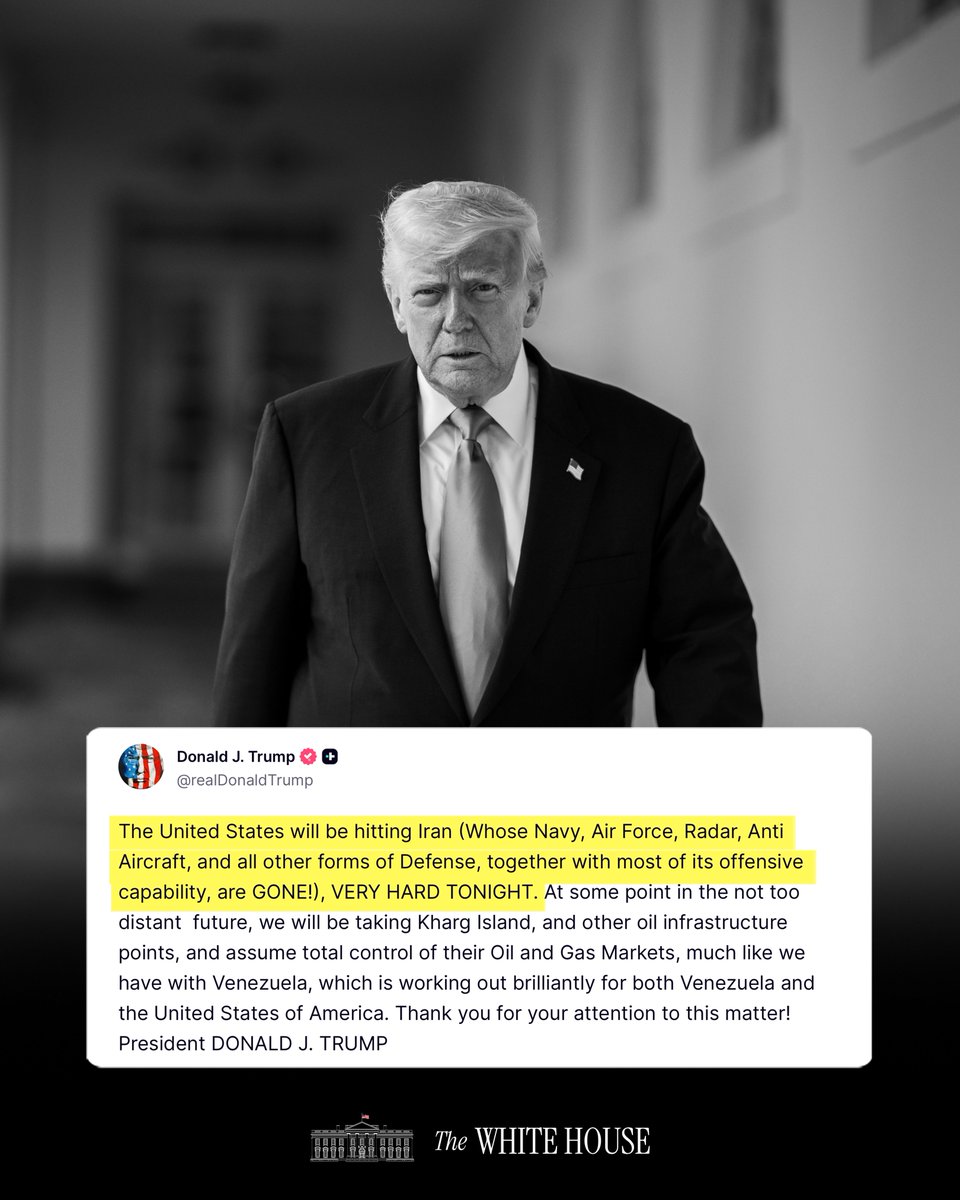
"The United States will be hitting Iran (Whose Navy, Air Force, Radar, Anti Aircraft, and all other forms of Defense, together with most of its offensive capability, are GONE!), VERY HARD TONIGHT..." - President Donald J. Trump
981
634
3,482
209,923


Diamond Rapids retweeted

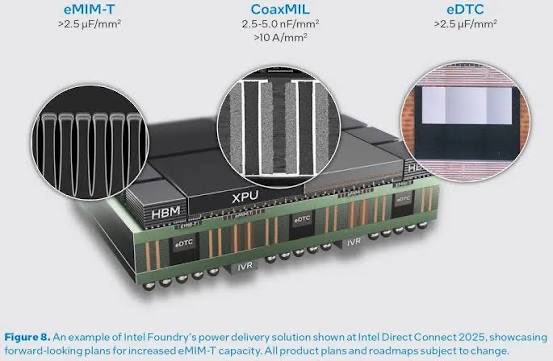
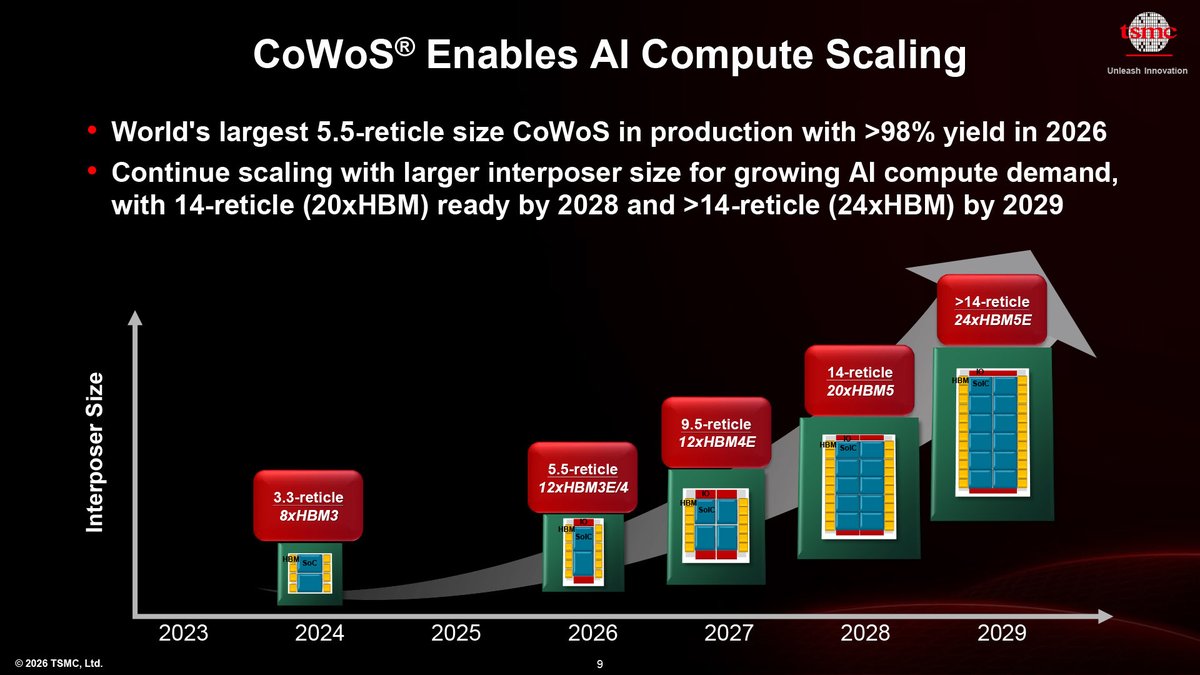
TSMC is aiming 14x reticle for CoWoS-L in 2028, Intel is 12x.
That said, I believe Intel will soon revise up its EMIB-T target as it’s easier to scale up the size, and, the target was set a year ago.
There are 2 key challenges for EMIB:
First, as the EMIB reticle size enlarges, the CTE mismatch between the top dies and the substrate will cause serious warpage.
Second, EMIB-T substrates include a lot more passive devices, such as eDTC, eMIM, and IVR, and require higher precision and more time for bridge die bonding which will make it harder to manufacture, and that’s the key reason the substrate yield is still low.

That’s CoPoS.
TSMC is aiming 14x reticle in 2028 for CoWoS-L.
1
8
77
10,072
Diamond Rapids retweeted

Jun 11
也是我一家之言。短期内AI抢钱抢不过财政部,长期AI必须跑赢。两者拉扯之间会先把海外国家拖死。还是之前那句话,盯离岸美元。看离岸美元和融资成本的正反馈到底是谁带动谁,或者说是谁先跌下来。
资金价格开始上涨是去年四季度,所以出现了那么长时间的拉扯。然后今年一季度是黄金和真实利率的古怪关系,黄金摔下来。最后是眼下财政部发债结构的改变,真实利率2.2。 正好六个月。
Jun 10

也就是说当前最大的危险绝对不是什么AI泡沫破裂,而是当一个非常正当合理并且前途星辰大海的项目,遇上一个濒临崩溃的主权信用和与其挂钩的借贷成本定价体系,用缺氧的方式使这个项目窒息,迫使天量的融资需求被逼进股权市场导致资本大逃杀的危险。
12
17
129
25,704
Diamond Rapids retweeted

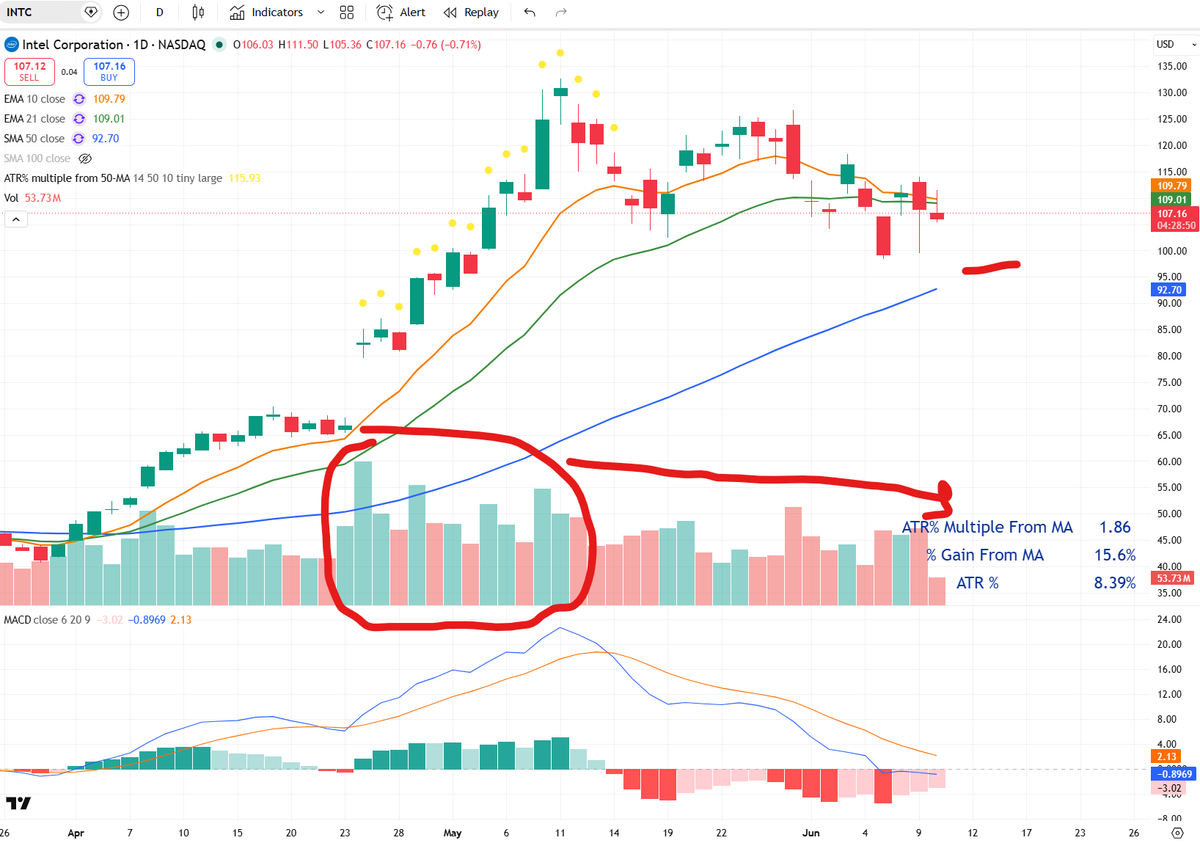
Just some $INTC observations
- Green day volume out of the last base > recent red day volume
- Current base mature vs. other semi leaders i.e. $ARM $MU $DELL , it will likely push out first
- Last Fri after hours close was ~$96 which should be 50sma by next week. No guarantees it gets there, but I expect that to be a massive line in sand
When this daily MACD sustainably flips green this will re-ignite and probably very hard
5
10
91
11,511

6월, 생각보다 훨씬 파란만장합니다.
6/10 미국 CPI
6/11 오라클 어닝
6/11 국장 세마녀
6/12 스페이스x 상장
6/12 코스피200 코스닥150 리밸런싱
6/15~16 일본은행 금리결정
6/16~17 연준 금리결정
6/17 빅스 먼슬리 만기
6/18 미장 세마녀
6/19 미장 휴장
6/25 마이크론 어닝
6/25 국장 MSCI 워치리스트 등재 발표 예상
한 달 일정표가 아니라 시장 변동성 폭탄 모음집 수준이네요ㅎㅎ
인플레이션, 금리, AI, 반도체, 수급, 지수 리밸런싱까지
과연 시장은 이 이벤트들을 모두 소화하며 상승 랠리를 이어갈지
아니면 잠시 숨 고르기에 들어갈지!
18
217
567
66,533

Jun 8
RT @sssjeffpu: Intel (INTC) Note Takeaways:
•Big Raise for Foundry Capacity
◦Intel 3: 80% (mainly Ireland) by end-2028 (vs end-2026)
◦18…
132
Diamond Rapids retweeted

Jun 6

25
10
173
67,265
Diamond Rapids retweeted

Jun 8
Monday morning’s retaliatory strikes against Iran by the Israeli Air Force seem to have been quite small compared to previous waves and appear to have been carried out entirely from over Iraq instead of Iran, both of which would make sense if they were not receiving aerial-refueling and other support from the United States.
44
184
1,799
265,641
Diamond Rapids retweeted

Jun 7
19
11
216
192,481
Diamond Rapids retweeted

Jun 7
[단독] 삼성전자 파운드리, 올 3분기 흑자전환 전망… "4년 만에 성장궤도 진입"
- 삼성전자 파운드리 사업부가 이르면 올해 3분기 흑자전환에 성공할 수 있다는 관측이 내부에서 나오고 있음
- 2022년 이후 조 단위 영업적자가 이어진 지 약 4년 만의 실적 회복 가능성임
- 당초 흑자전환 목표 시점이 올해 말~내년이었는데 수율 개선과 대형 수주 효과로 3분기로 앞당겨진 상황임
- 2나노 GAA 공정 수율이 올 1분기 기준 60% 이상으로 올라섰고 첨단 공정 라인 가동률도 최대 수준에 도달했다고 삼성 측이 직접 밝힘
- 양산 경제성 기준선인 70%에는 아직 못 미치지만 신규 고객사 유치와 초도 물량 양산을 병행하기에는 충분한 수준으로 업계는 보고 있음
- 지난해 7월 테슬라와 22조8000억원 규모의 자율주행 칩 장기 공급 계약을 맺었고 올 하반기부터 텍사스 테일러 공장에서 2나노 양산에 착수할 예정임
- 엔비디아 젠슨 황 CEO도 지난 3월 GTC 2026에서 AI 추론 칩 그록3의 삼성 위탁생산을 공개 인증함
- 올해 2나노 관련 수주 건수가 전년 대비 130% 이상 늘어날 것으로 자체 전망 중이고 애플 닌텐도 등 복수의 빅테크와도 협력을 확대하고 있음
- 6세대 HBM 베이스 다이 물량은 이미 완판 수준에 이른 것으로 전해짐
- 370억달러를 투입한 테일러 팹은 그동안 고정비 부담의 주범이었는데 하반기 양산이 본격화되면 감가상각 부담이 오히려 고정비 희석 효과로 전환될 수 있다는 계산이 나옴
- TSMC의 첨단 공정 라인이 AI 수요 급증으로 사실상 포화 상태에 접어들면서 일부 팹리스 업체들이 삼성을 대안으로 적극 검토하기 시작함
- AMD도 차세대 GPU 물량 일부를 놓고 이중 파운드리 전략을 검토 중이라는 관측이 나오고 있음
10
22
137
37,275
Diamond Rapids retweeted

Iran has included three important tests within the terms the MOU it is negotiating with the United States. These tests are intended to give Iran's leaders confidence that Trump, a counterparty they see as highly unreliable, is ready to make credible commitments, opening a pathway for further diplomacy.
First, the Iranians are testing the credibility of American security commitments by insisting that the MOU encompasses a Lebanon ceasefire. They are not doing this for the sake of Hezbollah or Lebanese Shias. Rather, they want to see if Trump can restrain Israel in its own backyard. If Trump is able to do that, then he might be able to defend his own deal with Iran from further Israeli sabotage.
Second, Iran is insisting on a nominal fee for vessels passing the Strait of Hormuz. This is not because they want more revenue, which would be negligible. They are insisting on this arrangement because they want to test whether Trump will endorse a deal that includes a clear instantiation of Iranian sovereignty and authority, especially one that did not exist before the war. Iran believes in the logic of a win-win agreement. Trump does not. Forcing him to accept a fee forces him to give Iran a "win" and to defend it as such from the Iran hawks in his circle. This is politically meaningful.
Finally, Iran is insisting on a the release of frozen assets. The sums in question are a tiny fraction of the economic cost of the war and the release of assets is not as valuable as sanctions relief that Iran will also be targeting. But by insisting on the release of funds at an early stage of the negotiations, Iran can test whether broader economic commitments, such as sanctions relief, will be credible. Iran will only consider the promise of sanctions relief to be credible if Trump's sanctions bureaucracy allows Iran to move and spend its own money. The Iranian side will insist on transactions that push the Trump administration to set new precedents for how sanctions relief can be operationalized, especially through guidance to banks.
For many in Washington, these demands seem unreasonable. But that is entirely the point. Iran's leadership won't tolerate a kind of narrow deal that allows U.S. policymakers to avoid putting political capital at stake. Iran wants a deal that reflects the unprecedented nature of the war and ensuing crisis. To meet the moment, the diplomacy has to be transformative.
Iran's leaders don't trust Trump, so they are testing him. So far, he is failing these tests.
41
267
959
228,299
Diamond Rapids retweeted
准确地来说是这样的,在旧秩序中的美元实际上没有锚定物,它正在被不负责任的量化宽松、政府支出和各种各样趴在它身上套利吸血的私募信贷之类的蚂蟥所摧毁。这是一个即将崩塌的体系,而现在Hyperscaler需要尽快地从这个体系中抢到尽可能多的资源,去建成物理世界的算力设施。先抢的人有份,后抢的人没份。
而当前的美元体系被摧毁后,它必须换锚,就像1930年代各国纷纷放弃金本位使本币贬值一样,现在过度膨胀的主权信用就必须锚定一个具有真实信用的东西。这个东西就是科技巨头的现金流,而在未来拥有越多的数据中心和可支配算力,就拥有越多的可靠现金流,那么也就具有最大的权力和货币锚定效应。这就是“以主权信用计价的股价”向“以物理算力计价的权力”的交换。
“AI信仰者”想要从前者的无限升值中获利,但是巨头们现在在卖出前者,交换来后者。所以“AI信仰者”就成了这种交换的对手方和燃料。
对中国互联网巨头来说也是如此,当债务和国家机器暴雷之时,人民币的锚定物也是互联网巨头的现金流和其能掌握和分配的实物商品制造能力,而不是现在这个压制币值的套利体系。
这就是为什么现在巨头们已经拉下脸来不惜超额增发来尽快抢到尽可能多的钱。船燃烧起来的时候必须尽快搬下去尽可能多的财产。
而这实际上颠覆了先前的AI叙事:先前的AI叙事是,AI有通缩效应,可以提高生产力,可以挽救这艘船。但是现在这个前提已经被彻底推翻了。船已经烧起来了,巨头已经在抢劫财产,而AI供应链能赚多少钱取决于财产什么时候被抢劫殆尽。故事的前提已经翻转了。
这就是为什么周五收盘后我有一种非常恐怖的感觉:很多元素之间已经形成了零和甚至负和博弈关系,天花板已经能被看到,逐顶竞争变成了逐底竞争。
Jun 7

有点没看懂。我猜你这里提到的旧秩序是指按美金来衡量财富,新秩序是指按算力来衡量财富?
19
9
52
26,931
Diamond Rapids retweeted

Jun 6
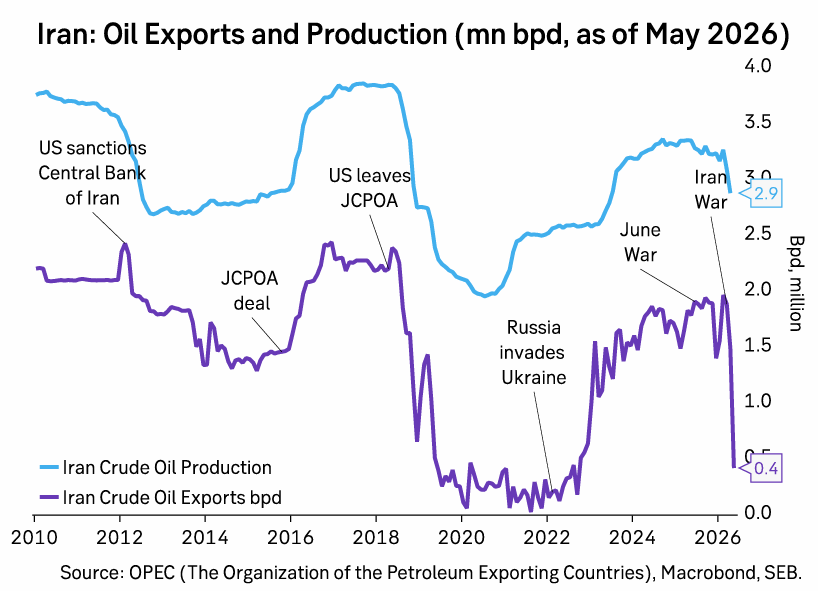
The US naval blockade is definitely biting, and Iranian crude exports are cratering, but the street is completely misreading the mechanics here.
Iran's oil export engine is nothing but a massive, structural money-and-logistics laundering matrix. On the physical side, the whole game is evading US eyes to scrub Iranian barrels and make them look completely kosher on paper.
The second these tankers clear the Strait of Hormuz or hit the Indian Ocean, they flip the switch and turn off their AIS. They’ll even manually paint over or mask the hull numbers to stay invisible to satellite tracking.
The real action happens via STS transfers in the EOPL or UAE, bleeding the cargo into un-sanctioned dark fleet.
While doing this, they doctor the Bill of Lading to wipe the origin clean, magically re-christening Iranian crude as Malaysian Blend or Omani barrels.
Those barrels eventually show up at the doorsteps of Shandong Teapots in China to discharge. That’s exactly why Beijing's official import prints show a massive spike in Malaysian volumes, while Iranian imports look like zero.
Obviously, standard trade finance rails like SWIFT and USD clearing are dead in the water. To bypass this, Tehran runs a bulletproof shadow banking network.
They’ve layered dozens of shell companies across Dubai, Hong Kong, and Turkey. Domestic Iranian networks, like the Amin Exchange, act as the central bank for these offshore front accounts.
The tape settles in RMB or AED, never greenbacks. Once a teapot wires cash to a shell account, the funds are instantly fractured and routed across multiple front profiles via Hawala style to completely blind any tracking.
When cash routing hits a brick wall, they just pivot to straight-up barter—clearing the oil bill in exchange for Chinese refined products, industrial machinery, consumer goods, or military hardware components.
This entire clunky setup creates a massive lag in the cash conversion cycle. Moving from Iranian loading docks, steaming dark at low speeds, floating in international waters waiting for an STS window, forging the papers, and finally getting the teapots to clear customs takes a solid 60 to 90 days.
Even when the teapots pay up, washing that money back through UAE and Hong Kong shells until it turns into spendable dry powder (or hard goods) for Tehran or the IRGC takes another 60 to 90 days.
Bottom line: Iran is running on a 3 to 6 month delay from the time the oil leaves the ground to when they can actually spend the cash.
This duration risk and the structural discount blow out even wider whenever the US drops a combined hammer—like the Economic Fury campaign—targeting not just the dark fleet, but the financial nodes and clearing desks in Hong Kong and the UAE at the same time.
Every sweep locks up accounts and forces them to rebuild their routing from scratch.
So the liquidity hitting Iran's balance sheet today is cash from oil traded months ago. Since they're still clearing out the oil on water floating outside the Strait, it’s going to take months before their actual financial runway gets cut off.
But the real macro question everyone is missing is this: these guys already proved they can survive on zero exports during the COVID pandemic. Why is everyone so sure this cycle plays out differently? Who breaks first under the weight of time—Tehran or Washington?
That’s the real chart worth watching.
#oott #iran
42
171
784
120,201
Jun 7
RT @BabakVahdad: Interesting claim from Al Jazeera’s correspondent in Tehran: a draft Iran-US memorandum of understanding is reportedly und…
29