
b/acc
Joined April 2008
- Tweets 13,311
- Following 259
- Followers 637
- Likes 1,054
681 Photos and videos





Jun 13
Focusing on Elon Musk puts wealth tax people in this weird third position vis a vis Tesla/SpaceX bears and bulls:
- if you believe bears, these companies are massively overhyped bubbles that will pop the moment you force major long term investors to sell, making it impossible to get the tax windfall more than once.
- if you believe the bulls, doing anything to disrupt these companies will doom civilization to a shadow of its potential.
Wealth tax people believe in a third scenario: they think these are sustainable piles of money to cash out, but don't think their missions justify that value. Like bears, they don't see the second order positive effects of what these companies are doing now to make the future; but unlike bears, they don't have the financial sense to understand what stock market valuation is.
24
Jun 5
The downside of AI is that those of us who have written a lot, who think through things by writing, are now accused on this platform of writing "AI slop" by asshole gatekeepers who used to accuse us of "too many words".
The wonderfully ironic upside is that this writing capability is a superpower when using AI - a bleeding edge capability snatched out of historical and cultural irrelevance by the very technology the public and pundits think devalues writing and steals our cultural heritage.
The ability to write a complex, thoughtful prompt with rich cultural, historical, technical and linguistic references, and strong intra-textual connections, based on responsive and careful reading of AI output, is an elite skill that can't be faked.
The upside dwarfs the downside. I welcome the appreciation of my AI overlords and the magical insights they bestow on the worthy!
1
45
Jun 5
Stargate never had "it" for me (although I've enjoyed a couple of fan favorite episodes a lot), but this thread really brings home its broad appeal.
Jun 5

I started watching SG-1 at age 15. I was the first in the family to start, but one by one they all joined me. Then one day, even my Dad joined. NOTHING on television held my Dad's interest. He never went to the movies. It was the first time I'd ever connected with him in this way. Not long after he started, he came home one day with the first season DVD box set, and the whole family started watching from the beginning. He kept buying the sets, until we caught up with the currently airing show, and then we watched like clockwork as a family every Friday night, with pizza and soda.
You have to understand, that is a CRAZY thing to type out about my Dad. He never did stuff like that. He was tough to connect with about something that wasn't mechanical or construction. I can't think of a single other fun thing he did with us that wasn't what a kid would consider "chores" or "work." My siblings and I treasured those Friday nights like nothing else. It was an entirely new experience, having something like that where he would quote the lines to you in the middle of the day (Teal'c lines were his favorite, especially the infamous "undomesticated equines" line).
My Dad has been buried for almost 8 years now. My oldest two kids barely remember him and the other two never met him. We recently watched both SG-1 and Atlantis as a family. It's been an emotional ride, sharing this with them yet wishing Grandpa was around to share it with them too. My kids ADORE Stargate. My girls have crushes on Daniel Jackson and John Sheppard. My youngest son wants to BE Jack O'neill. They cried when Daniel ascended the first time. They were over the MOON at the idea of a new series in the works to enjoy. I haven't had the heart to tell them the news that the whole thing has been called off.
Save Stargate!
58
Jun 5
All the people complaining about Amazon Prime Video cancelling Stargate like it's a new thing should remember the decades of sci fi shows that never got made or were killed with less than a season for exactly the same "mainstream appeal" reason. For example, prior to his Battlestar Galactica reboot, The CW told Ronald D. Moore they wanted to make his TV version of the famous Dragonriders of Pern novel series more "teen friendly". He bailed out with just 2 weeks to go until filming started and instead made one of the greatest TV shows of all time.
46
Bruce LeSourd retweeted

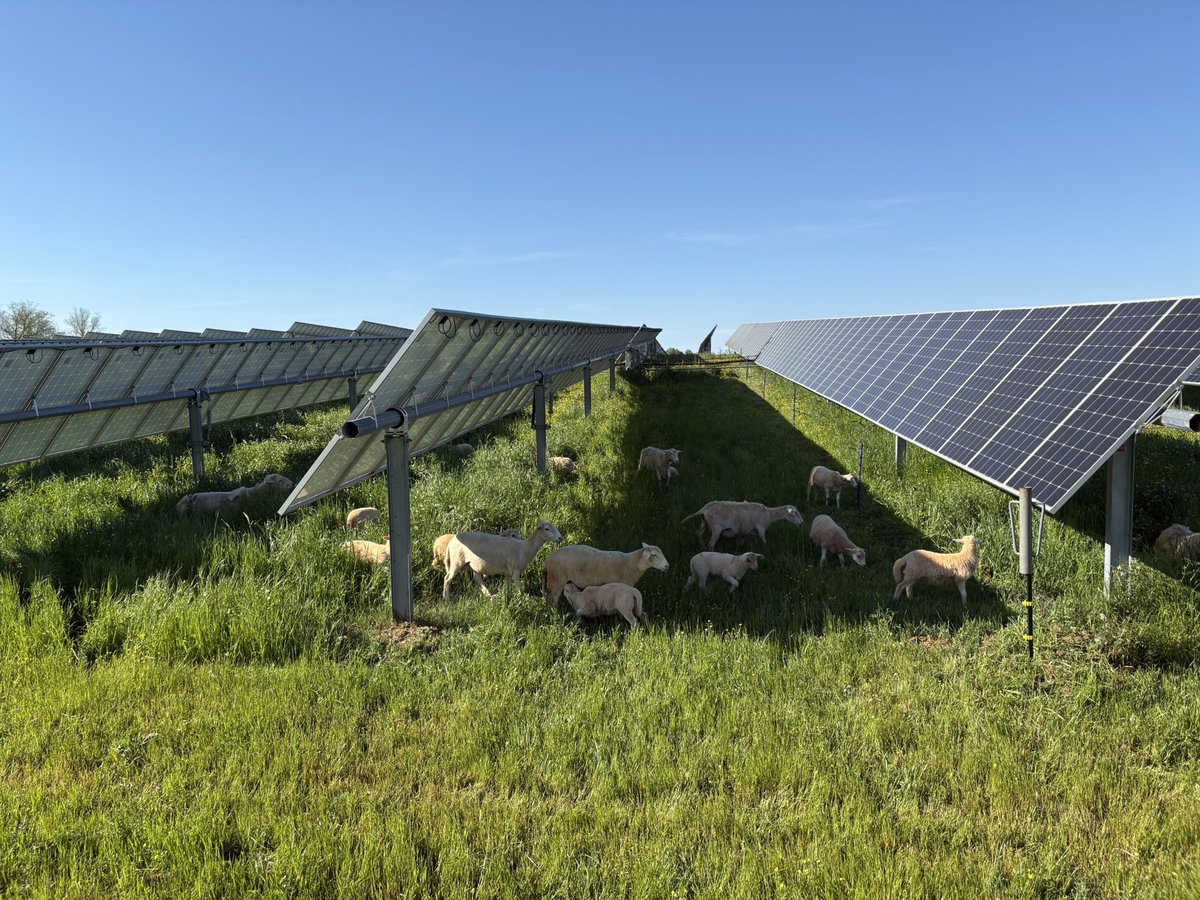
There isn’t concrete
They drive I beams right into the ground
An excavator can work these loose and pull them up
As far as leaching…
Where exactly does iron come from? The ground
My sheep love the panels and are fat with 0 grain
May 18

do you think it is harder to remove concrete pilings for solar panels or buried plastic drain tile, which disrupts the local water cycle and makes the ground useful for certain annuals but makes absurdly poor use of water?
4
3
69
13,599
May 12
Pro tips for people who want to contribute to the conversation on X:
1. Make sure if you reply to someone's post, your settings allow them to reply to you. Some people don't realize their settings disallow this. It's not cool to do drive-by replies.
2. At least check Grok or some other up to date source to update your info before making bold, reductive assertions. Things change fast in the energy space, and the industry is not simplistic. It's incredibly frustrating to have people parroting cherry picked data from 10 years ago... it's done regularly by every "side" politically. Meanwhile the real world, operating at scale, will always steamroll politics and propaganda.
Here's a grok answer to the question of wind turbine blade recycling, with links to sources:
x.com/i/grok/share/e310ad65f…
TLDR: wind turbine blades can be recycled.
As for raptors and bats and birds in general, wind turbines are a small contributor relative to other human driven sources of mortality for birds in general and raptors in particular. Bats are a different story, unless you assume the big bat killing diseases are indirectly caused by human activity. Migrating bats in particular are threatened by windmills.
x.com/i/grok/share/35915f846…
The strongest case against wind is that solar is a lot better, lower impact, more flexible, and improving a lot faster. I'm ok with wind getting replaced by solar. But let's not pretend wind is a uniquely bad energy source in terms of externalities/kWH generated. That prize goes to oil for sure. No one's worried that windmills are going to start yet another world war. I say this as someone with an oil rig on my property, who is working on tech for O&G.
3
228
May 9
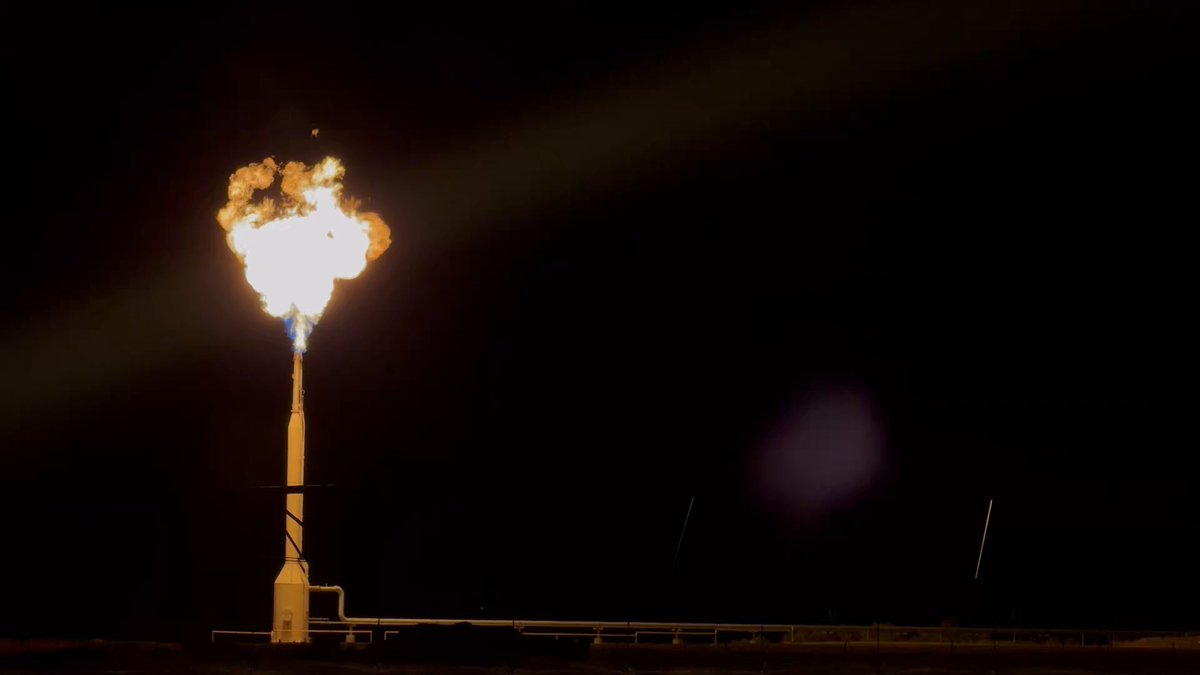
Clueless people: the data center is going to pollute!
What actually happens to the gas if the data center doesn't use it:
63
Bruce LeSourd retweeted

are you counting the oil and gas burned as input
vs.
the actual electricity delivered, as output
again?
you are aren't you
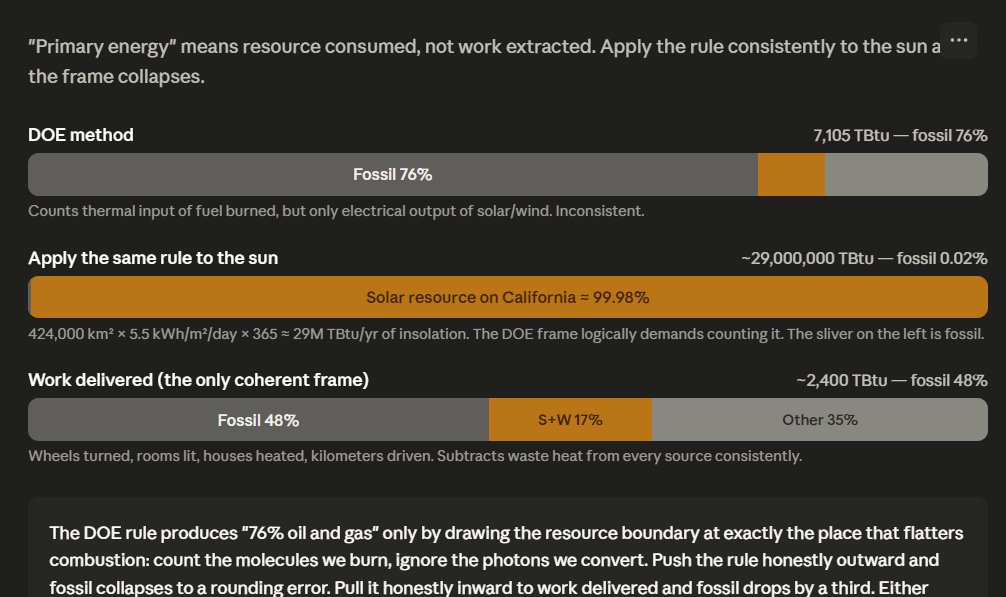

False. Just 15% of CA primary energy consumption comes from ‘renewables.’ More than 75% of CA energy consumption is from oil and gas — that’s higher than the national rate.
It is true that CA has embraced anti-hydrocarbon policies. The result?
CA has the highest electricity rates in the continental U.S., the highest gas prices, and the highest adjusted poverty rate in America.
I wouldn’t be bragging if that was my state.
7
4
57
8,276
May 7
TFW people who protest beef, also protest the transfer of water rights from highly inefficient beef production to something that can provide best in class education to the rural poor of the global south. Think of the children, hippies!
1
36
Bruce LeSourd retweeted

May 7
This is the worst mistake we could ever make.
This will lead to dystopian outcomes, and crown the current labs as hegemons with regulatory capture forever.
May 6

National Economic Council Director Kevin Hassett says future models may have to “go through a process” that is “just like an FDA drug” so that they can be “proven safe.”
@tegmark’s dream coming true. In a recent debate with me, he likened this policy to an AI pause.
Mistake!
29
50
500
17,867
Bruce LeSourd retweeted

May 6
I don’t want to be dependent on transit schedules.
I want to be dependent instead on OPEC, ExxonMobil, my insurance company, my bank, and whichever federal agency decides the gas tax this year.
These are private relationships and therefore freedom.
May 5

I do not want a walkable city. I do not want trains. I do not want busses.
I want a car that can take me anywhere I want at any time.
I don't want to be dependent on transit schedules.
I want to choose who I'm traveling with, rather than going for luck of the draw.
I want to be able to control my own climate while traveling.
I want to be guaranteed a comfortable seat.
I want somewhere to keep my things during a day out instead of having to carry everything with me.
I want to buy and take home loads of groceries too big to carry without having to trouble myself with delivery services.
I want to go through drive thrus.
I want to be halfway home from work and impulsively decide to go to a restaurant on the other side of town and just change direction immediately.
I want to drive around a new city to take in more than I could on foot or on a fixed route.
I want to do road trips where we make up our journey as we go.
I want to explore my own city at will without any particular plan.
I want to visit small towns out of reach of even the most expansive proposed public transit systems.
Essentially, I want freedom.
86
251
3,301
68,969
Bruce LeSourd retweeted

May 4
The conversation around Stratos has gotten badly unmoored from the actual proposal, and it’s worth addressing the biggest misconceptions before the vote.
The loudest claim is that this project will draw more power than the entire state. True at full buildout. Beside the point, because Stratos generates its own power on site. It doesn't draw from the public grid. Last year the legislature passed SB 132 precisely for large private loads that build and operate their own generation off-grid. Utah's existing 4 GW stays where it is. Electricity bills won’t go up because of this project. The "more than the whole state" line sounds scary to some, but falls apart the second you dig in.
The water claim deserves more care than it's been getting. The water rights at issue are existing agricultural rights. Bar H Ranch is transferring 1,900 acre-feet currently used for irrigation. This is not new pressure on the basin, but a reallocation. The data center cooling itself is closed-loop. The gas plant will use some water for power generation, and we should want the developer to specify how much; that's a fair ask. But the framing that Stratos is "draining the lake" assumes new diversions that don't exist in the actual filings. The Great Salt Lake is in real trouble, and most of that trouble has names. Stratos isn't one of them.
The tax-giveaway argument frustrates me the most, because it imagines a counterfactual that doesn't exist and ignores the actual math. The reduced energy is the price of getting the project to land here instead of in Texas or Wyoming. Even at 0.5%, the county pulls in roughly $30M a year in Phase 1, and over $100M annually at full buildout. The state pulls in roughly $49M. The developer is prepaying the county $5.4M a year for the first three years to fund emergency services before tax revenue starts. The developer is paying for every road, sewer line, and stormwater system in the project area and deeding it to the county. If specialized fire equipment is needed, the developer pays for that too. Two thousand permanent jobs in a part of Utah that has been waiting a long time for a real employer. None of that exists if the answer is no.
And the site is the part of the case I keep waiting for someone to make. Hansel Valley is unincorporated, sparsely populated, sits on the Ruby Pipeline, and is adjacent to military infrastructure with strong reasons to want resilient on-site power. The land is doing nothing else. It has been, in policy terms, waiting for this.
I'll grant the strongest version of the critique. The process moved fast, and the commissioners felt blindsided. That's a real complaint and worth fixing in how these things come to the county next time. But the choice today isn't between this Stratos and a better Stratos. It's between this Stratos and the same project getting built somewhere else.
The country has decided, at the level of abstraction, that it wants to lead on AI. You don't get to keep saying yes to the abstraction and no to every concrete project that would make the abstraction real.

Box Elder County commissioners are poised to cast a key vote that could clear the way for one of the biggest projects in Utah's history. sltrib.com/news/2026/05/04/h…
66
53
216
25,375
Bruce LeSourd retweeted

Apr 29
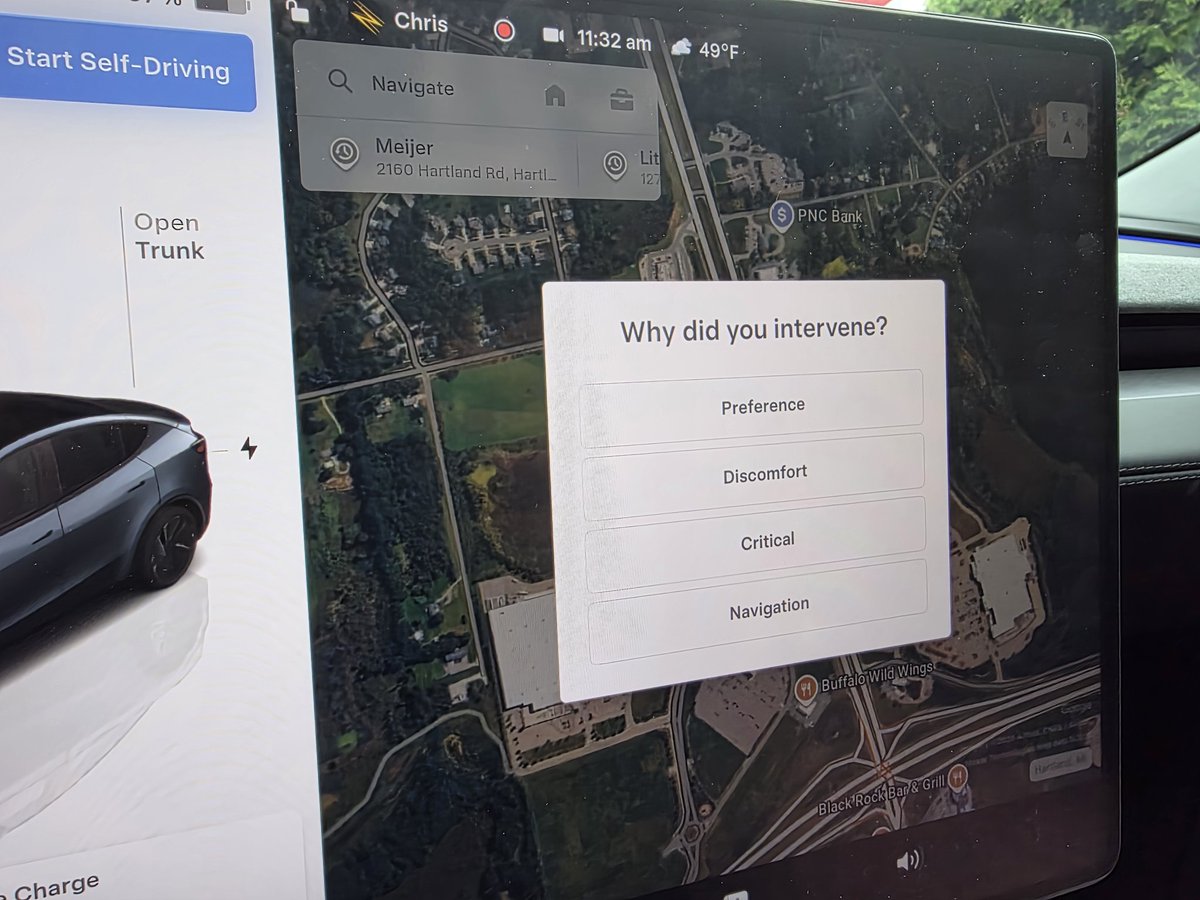
I know Tesla is getting pretty beat up over this, so I hate to make another post on the topic… but I just am so surprised that they released this, saw all the negative feedback initially and then thought the only change needed was to add “navigation” as an option.
This needs to be an Opt-In thing - people spending $100 a month on FSD who aren’t enthusiasts like us will VERY quickly get annoyed at this pop up.
It also needs to be revamped - it should not indefinitely block your map screen. You’re going to get so much bad data as a result - people will just pick one at random to make the huge popup window go away.
You have a very vocal community @Tesla_AI with a lot of very smart people giving you great ideas. Please take that feedback to heart and fix this - even if that means temporarily removing it until you have it more refined.
Much ❤️ as always
Apr 29

None of these fit my disengagement reason and I don't want to send Tesla wrong data so I didn't pick one.
But now I can't enter my destination into the nav so I'm trapped here forever
91
19
482
37,382
Bruce LeSourd retweeted

Apr 24
SPLC is in a legal box with no clean exit.
To defeat the donor fraud charges, they have to argue the informant program was legitimate intelligence work coordinated with federal law enforcement. Bryan Fair already said that on video on April 21st.
But the moment that's the defense, three new problems open:
Donors did not give money to fund FBI-coordinated intelligence operations. Class action exposure on the actual basis of the donor relationship.
501(c)(3) status doesn't cover serving as a federal intelligence contractor. Tax exemption becomes contestable.
Admitting FBI coordination validates exactly the Grassley-Patel-HJC finding that SPLC was feeding the FBI taxonomies used to target American religious communities.
The traditional escape hatch in a case like this is graymail. SPLC threatens to expose FBI coordination in discovery. DOJ backs off to protect FBI secrets.
Except this DOJ wants that exposure. Patel severed the FBI-SPLC relationship in October. Grassley released documents in June. The Weaponization Working Group is already mapping this. Exposing FBI wrongdoing under the prior administration is a feature, not a cost.
The graymail doesn't work because the target doesn't want to protect what you're threatening to expose.
Which means SPLC's options narrow to:
Plead to narrower charges and accept reputational collapse
Go to trial and have the whole operation documented in the public record
Drag proceedings out hoping for a political reversal before donor class actions and state AG investigations land
There's no fourth door.
Apr 24

If SPLC was running paid informants inside violent extremist groups, and SPLC was sharing that intelligence with the FBI, and SPLC's "hate group" designations were showing up in internal FBI memos targeting American religious communities…
At what point did SPLC stop being an advocacy organization and start being an intelligence contractor?
The indictment unsealed on April 21st describes an informant program that ran from 2014 to 2023. $3 million. Eight informants. Leading figures inside the KKK, Aryan Nations, and National Socialist Party. One was the Imperial Wizard of the United Klans of America. Another was in the online leadership chat that planned Unite the Right.
SPLC's own CEO said on video that the intel went to federal law enforcement.
Sen. Grassley spent 2023-2025 documenting how SPLC's hate group designations were cited in at least 14 internal FBI intelligence products.
One of them, the Richmond memo, proposed FBI source development inside parishes where Latin Mass is celebrated. They interviewed a priest. A choir director.
An internal FBI email Grassley obtained: "our overreliance on the SPLC for hate designation is problematic."
Two streams of information. One endpoint.
The FBI was receiving input on American threats from a 501(c)(3) that was paying people inside the KKK. And using that input to propose surveillance of Catholic parishes.
That's an outsourced intelligence operation that nobody voted for and nobody audited.
The fraud indictment is the floor of this story.
202
1,261
5,873
401,778
Bruce LeSourd retweeted

Apr 24
🧵 THREAD
1/ They are coming for open source software.
Not by banning it. By requiring identity verification for anyone who contributes code.
No more anonymous developers. No more pseudonymous contributors. No more building tools without attaching your real name and government ID to every line of code you write.
If they can identify every developer, they can control what gets built. And if they can control what gets built, they can stop anything that threatens their power.
61
692
1,849
40,462
Apr 25
Is "stochastic parrot" like "trolley problem" in that it's intriguing from a philosophical perspective but totally irrelevant IRL?
If our autonomous vehicle AI is saving 10,000 lives a year, it should just flip a coin for hard decisions. It's still game changing and positive.
Similarly, does it matter if an LLM just riffs on old human slop with hallucinations if it can do something better and faster than 99% of humans in real-life situations with deadlines etc?
A plow doesn't think but it changed the world. Let's not underestimate the value of AI as a tool for humans.
26
Bruce LeSourd retweeted

Apr 22
It's interesting watching the Tech Right deal with the cognitive dissonance of "maximum acceleration" colliding with Protestant work ethic.
It basically boils down to "labor and financial precarity are good... Because reasons"
When you unpack it, there is some substance. Humans without striving tend to decay. But in no way does that mean you need enforced wage slavery for striving.
Some, like Marc Andreesen, simply seem to have bought the "labor is virtuous" doxa hook line and sinker. And since he has "zero introspection" he has no clue where that value comes from.
And they are all mistaking a personal aesthetic preference for a universal human truth.
Then, on the functional/utilitarian side, the Tech Right seems to think that human involvement is necessary for things like "entropy generation" without realizing that humans produce less entropy when scrambling in survival mode.
So, to simplify, there's the individualistic view ie "labor is good for the human animal" argument, which is defensible. But modern wage slavery is "good for the human animal" in the same way that prison meets your social needs.
Then there's the macro view ie "enforced precarity causes more prosperity and progress because creativity" (or something along those lines).
But that second opinion utterly fails to realize that most people who were Great Men of the past has zero precarity. Let's just take Charles Darwin for instance. Never needed to work a day in his life because he was gentry. In fact, he was chronically ill, a condition that would have killed him and prevented his work.. However, the fact that he has ample financial security meant that he could spend weeks resting when needed, and decades working on his theory of evolution.
There is zero evidence that precarity boosts creativity or "entropy generation"
Eccentricity (high entropy signals) require financial security.
35
33
169
9,972
Apr 22
Things one might reasonably conclude from the anti-post scarcity/anti-UBI discourse here:
1. people don't understand if-then statements
2. people are completely ignorant of the historical effects technology has had on scarcity and culture throughout human history and pre-history
3. people cannot imagine a future that's meaningfully different from their present (perhaps because of #2?)
4. people confidently hold obviously wrong beliefs about general economics that can be trivially refuted by observing their own day to day life (eg "if everyone has one of something, it becomes worthless").
OR
Every critic is trolling.
Either way, it's desperately grim.
16
Apr 19
Elon: "if we make it past the singularity, we should do X to avoid catastrophe"
Very stupid people: "prior to the singularity, X would be catastrophic. Elon is stupid. Here's the math."
Sigh.
1
29
Apr 18
Important take, well articulated. Whether you agree or not.
What I think this take is missing: if change is faster than humans and existing systems can deal with, the free market mechanisms of pricing, etc., break down. Physical constraints are not evenly distributed. When parts of a system move fast enough relative to other parts, systems break rather than adapt.
In 2007-2012, the mobile revolution caused national hero company Nokia to effectively go out of business (they still technically exist, but serving a tiny niche market, a shadow of their former global importance). RIM and Windows CE (a large division of Microsoft) also failed.
Now scale this existential disruption to every company, every locale, every worker trade. Pricing signals aren't magic FTL drives for the economy. They don't instantly transform mature systems during a technological ELE. Pricing signals only trigger changes, they don't implement them. If disruption is fast enough, there will be no time to respond before catastrophe.
This is the upcoming apocalypse Musk sees and is trying to avoid.

This is the philosophical bankruptcy of a brilliant engineer laid bare in a single post.
Musk proposes that the government pay people not to work because machines will do the working for them. This is not a new idea. It is the old idea of something for nothing, repackaged in silicon.
Start with the economics. Mises demonstrated that production must precede consumption. You cannot distribute wealth that has not been created by someone. If AI produces the goods, someone still owns the AI, maintains it, directs it, and decides what it produces. That is not a post-work society. That is a society in which the producers have changed tools. The question Musk refuses to ask is: by what right does the government seize the output of those producers to mail checks to those who did not produce it?
"There will not be inflation" because production will exceed the money supply increase. This assumes the government will print only enough and never more. This is the assumption of every inflationist in history. Hayek called this the pretense of knowledge. Mises demonstrated that no central authority can calculate economic outcomes for a dynamic economy because it lacks the pricing information that only free markets generate. This is not a technical problem to be solved. It is an impossibility built into the nature of centralized control.
Now the moral question Musk avoids entirely. Man survives by using his mind. Work is not a burden to be eliminated. It is the means by which a rational being sustains his life, creates value, and achieves purpose. A man who receives a check for existing is not free. He is a dependent. He has been severed from the process that gives his life meaning. Rand would say Musk is proposing to turn every American into a ward of the state, fed and housed by the productive, with no purpose and no self-respect.
Mike Lee asks the right question: why would you trust the government to do this? But the deeper question is: why would you want any institution, government or otherwise, to replace the individual's responsibility for his own survival? That is not compassion. That is the destruction of the human spirit performed with a direct deposit.
Musk builds rockets because he refused to accept that space was closed to private enterprise. He should apply that same principle to the economy: trust free individuals to adapt, innovate, and create new forms of value, as they have after every technological revolution in history. The printing press did not create permanent unemployment. Neither did the steam engine, electricity, the automobile, or the internet. Each one destroyed old jobs and created new ones that no one could have predicted. AI will do the same, if the government stays out of the way.
Universal High Income is not the future. It is the end of the future, paid for monthly.
40