
RT doesnot mean personal endorsement..
Joined September 2009
- Tweets 8,558
- Following 128
- Followers 108
- Likes 9,289
626 Photos and videos










Dixie retweeted

Jun 12
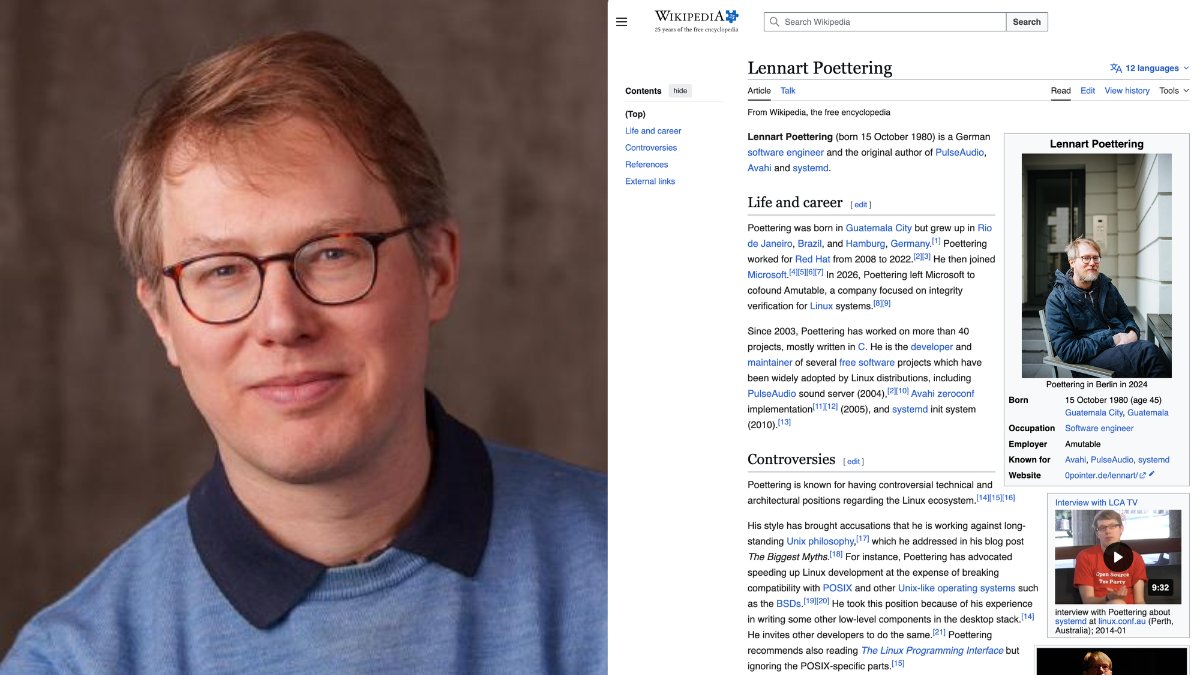
A German engineer who was born in Guatemala City, grew up in Rio de Janeiro and Hamburg, and personally became the most hated figure in the open-source community over a 15-year period built the software that boots almost every Linux server on Earth.
His code starts up every major Linux distribution. It runs every Steam Deck, almost every cloud server, and most of the embedded Linux systems inside modern cars. When Red Hat tried to keep him, he left for Microsoft. When Microsoft tried to keep him, he left for his own startup. He never stopped shipping.
His name is Lennart Poettering.
Here is the story, because the engineer whose code touches every Linux machine on the planet is also the most polarizing developer in modern open source.
Lennart was born in Guatemala City on October 15, 1980. He grew up in Rio de Janeiro, Brazil and then Hamburg, Germany. He has German nationality. He started his career writing low-level Linux components most engineers were afraid to touch.
In 2008 he joined Red Hat, where he stayed for 14 years. In that span he became the principal author of three pieces of software that fundamentally reshaped what desktop and server Linux even is.
The first was PulseAudio, released in 2004, the sound server that became the default audio system in almost every modern Linux distribution. The second was Avahi, the zeroconf service discovery implementation that lets Linux machines find each other on a network without configuration. The third was the one that made him a legend.
In 2010 Lennart and Kay Sievers released systemd. It was a complete replacement for the old SysV init system that had booted Unix machines since the 1980s. Instead of running shell scripts in sequence at startup, systemd loaded services in parallel using dependency graphs, drastically cutting boot times. It managed cgroups for processes. It handled logging through journald. It supervised long-running daemons. It did roughly forty other things that the traditional Unix philosophy said should be done by separate small programs.
The open-source community split immediately. Debian adopted systemd after a famously bitter vote. Ubuntu followed. Fedora and Red Hat were already running it. Arch Linux switched. SUSE switched. CentOS switched. Within five years systemd was the default init system on every major Linux distribution. The holdouts forked their own distributions just to escape it.
Lennart was attacked online for years. He received death threats. He posted publicly in 2014 that the open-source community was the most unfriendly engineering community he had ever seen and that the abuse he received was unlike anything he had encountered elsewhere. He kept shipping. systemd kept growing. Every objection was eventually overrun by adoption.
In July 2022 he left Red Hat. Within days he turned up at Microsoft. The Linux world lost its mind. The engineer whose software ran most of the open-source world had moved to the company that for decades had been treated as the enemy of Linux. Microsoft kept his focus on systemd, including work on the Windows Subsystem for Linux.
In January 2026 he left Microsoft. He co-founded a new company called Amutable with Chris Kühl, formerly of Microsoft, and Christian Brauner, a Linux kernel maintainer who also left Microsoft the same month. Amutable's stated mission is "to deliver verifiable integrity to Linux workloads everywhere." Lennart continues to lead systemd development. Brauner continues to maintain core parts of the Linux kernel. The bet is that the next phase of Linux is cryptographically verifiable, deterministic, and provably tamper-resistant from boot all the way to runtime.
Today systemd is the silent first thing that runs when you turn on most Linux servers in the world. It runs underneath AWS, Google Cloud, Microsoft Azure, and most of the major Linux distributions you have ever used. It runs on the Steam Deck. It runs on Tesla infotainment systems. It runs on supercomputers and refrigerators and industrial robots.
An engineer born in Guatemala, raised in Brazil and Germany, hated by his own community for a decade, just left two of the largest tech companies on Earth to start his own.
His code still boots most of Linux.
8
43
331
30,796
Dixie retweeted

Jun 12
The 'Secularism' Fraud
For the last 75 years, this country has been systematically fooled in the name of "Secularism."
The concept of secularism originated in 16th- and 17th-century Europe amid violent conflicts between Catholics and Protestants. To prevent the persecution of Catholics in Protestant states and vice versa, it was agreed that the state would remain neutral and not target religious minorities.
Thus, secularism was originally intended to protect minorities without undermining the majority faith. In India, however, the state weaponised it to annihilate its own Hindu religion, culture, and civilisation.
A second wave of secularism emerged in the 19th century, coined by George Jacob Holyoake. At that time, it meant promoting reason and rationality in societies dominated by unscientific, orthodox Christianity. Yet we Indians blindly adopted this Western framework as it is even though our own civilisation and religion were already deeply rooted in scientific temper and inquiry.
In fact, Nehru effectively sold Sharia in the name of secularism.
True secularism would mean declaring India a Hindu Rashtra while enacting strict, enforceable laws to protect the rights and safety of minorities.
Is there not a single intellectual in India who can see this simple truth?
At the very least, we must begin an honest national debate on it.

14
223
402
3,516
Dixie retweeted

In January, 7% of US layoffs blamed AI. By May, 40%, a record 38,579 cuts.
But total layoffs are down, the economy added 172k jobs, and the same firms cutting "because of AI" are spending $725B on it and hiring most.
"AI" isn't replacing workers. It's replacing the excuse.
12
17
69
10,363
Dixie retweeted
In January, 7% of U.S. layoffs were blamed on AI. By May, it was 40%.
Either AI got nearly six times more capable in four months, or "AI" became the best excuse in corporate history.
Here are the numbers. Companies blamed AI for 38,579 job cuts in May, the most ever recorded in a single month. For the year, 87,714, already more than all of 2025. AI is now the number one reason companies give for cutting jobs, ahead of market and economic conditions for the first time.
Now look at what the data refuses to confirm. Total layoffs in 2026 are running below last year, not above. The economy added 172,000 jobs in May. Jobless claims have not risen. And the same companies blaming AI for cuts, Google, Amazon, Microsoft, Meta, are spending a combined $725 billion on AI this year and have the largest hiring plans of any sector.
Even the firm that publishes the number is careful. It counts what companies say, not what anyone has verified. Glassdoor's chief economist warns some may be scapegoating AI. Because the phrase does two jobs at once. It turns a cost cut into a bold strategy, and it tells Wall Street you are an AI company. The layoff becomes a growth story, and the stock goes up.
Some of this is real. AI is taking work in coding, support, and entry-level tech. That part is true. But the distance between 40% of layoffs blamed on AI and an economy still adding jobs is the distance between a story and a fact.
When one word can both justify firing your workers and lift your share price, you will hear it far more often than the truth requires.

13
42
101
12,344
Dixie retweeted

How did the Iksvakus reach Sarayu from Sarasvati?🔥
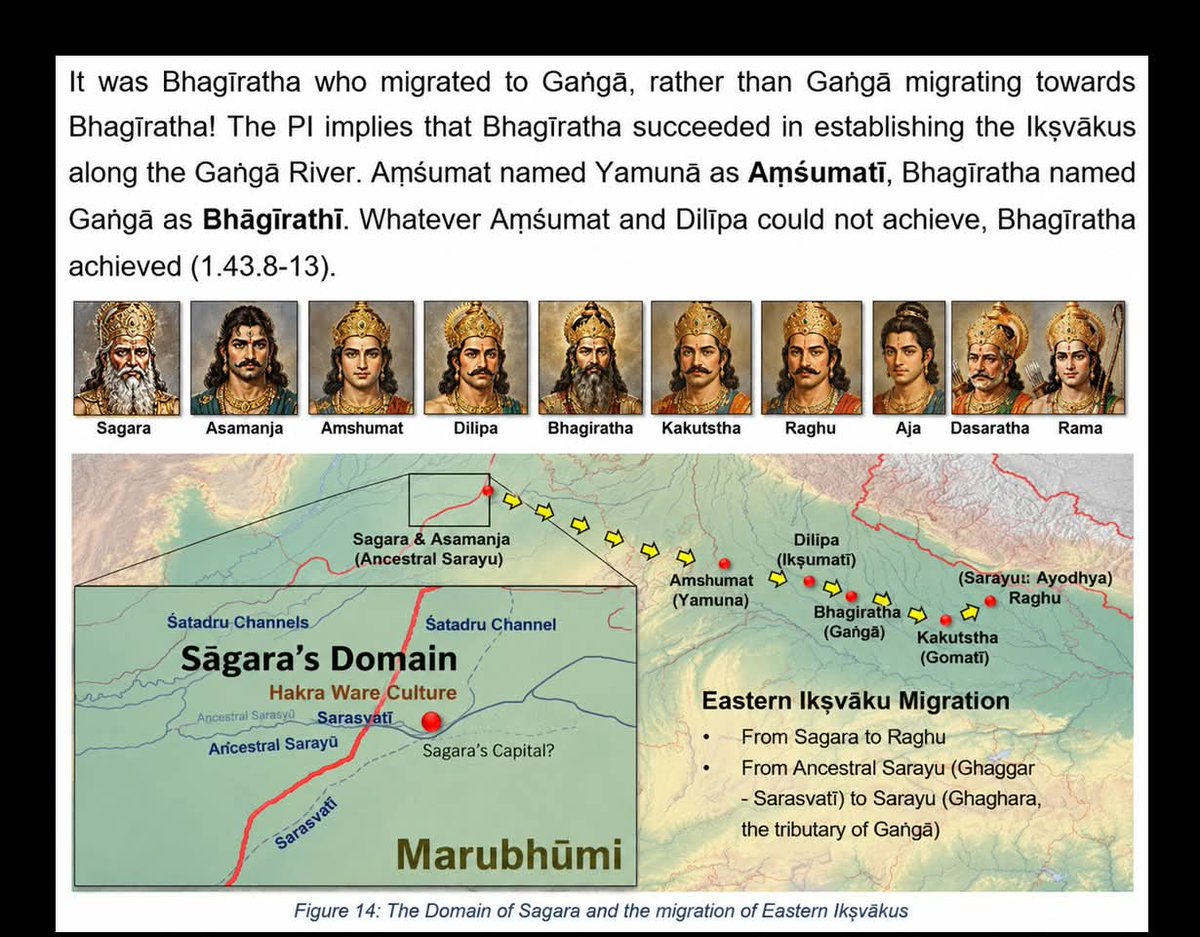
The Iksvakus originally lived along the Sarasvati (Sarsuti - Ghagghar - Hakra - Nara) River. They got divided into two branches. One eastern branch reached the Gomati and Sarayu Rivers in Uttar Pradesh. Before them, another western branch reached the Gomati and Sarayu Rivers in Pakistan!
The Eastern Ikshvaku migration began with King Sagara, whose capital lay along the Sarasvati, which was the original Ancestral Sarayu of the Iksvakus. Then both Sarayu and Gomati served as synonyms of Sarasvati. Sagara's "Ayodhya" was located along the southern course of Sarasvati (Ancestral Sarayu).
During his reign, increasing aridity in the southern course of the Sarasvati led to the death of 60,000 of his subjects.
Sagara once banished his son Asamanja for his crimes, such as throwing the children of citizens into the Ancestral Sarayu, that is Sarasvati.
Asamanja's son, Amshumat, succeeded him. Amshumat moved eastward and settled along the Yamuna. Due to this, it came to be known as Amshumati.
His son Dilipa attempted to shift the kingdom further east towards the Ganga but died before accomplishing this.
,
Dilipa's son Bhagiratha successfully settled along the Ganga. Hence, Ganga acquired the name Bhagirathi.
Bhagiratha's son Kakutstha moved towards a Ganga tributary, which he named Gomati, where his son Raghu ruled.
Raghu or Raghu's descendants, Aja, Dasaratha, and Rama, finally migrated to the Sarayu and established Ayodhya.
This sequence summarises the eastward migration of the eastern Ikshvakus from the Sarasvati to the Sarayu.
A thousand years earlier, another branch of Iksvakus had already moved from Sarasvati to two tributaries of Sindhu, which they similarly named as Gomati (Gomal) and Sarayu (Haro). This is why the Sarayu mentioned inside the 4th Mandala of the Rigveda is the Haro River, an eastern tributary of the Sindhu. This is where the Iksvaku kings of the Rigveda, like Purukutsa and Trasadasyu, lived. The Rigveda called them Trikshis. An ancestor of the Pandavas, named Samvarana, married a Trikshi (Western Iksvaku) princess named Tapati Vaivasvati. From that union emerged the Kurus.
This Samvarana is identical to the Rigvedic Puru who fought with the Panchala ancestor king Sudas of Tritsu-Bharata lineage in the Dasarajna Battle, along with the Anava king Kavi Cayamana.
The territory of Sagara is identified as lying south of Kurukshetra and corresponds archaeologically to the region associated with the Hakra Ware Culture. Following the abandonment of this region by the Ikshvakus, it came to be known as Vinasana in the Mahabharata. This area includes Fort Derawar and Fort Abbas, near the junction of the present-day borders of Pakistan, Rajasthan, and Haryana.
9
53
162
7,452
Dixie retweeted

Jun 9
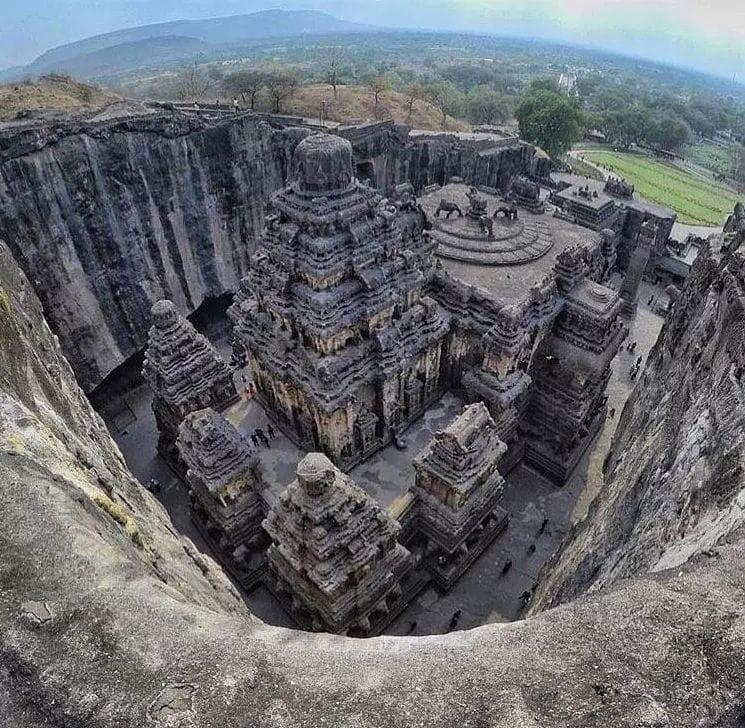
The Kailasa Temple at Ellora defies the very definition of construction. It was not built; it was uncovered.
🔱🕉️
In the 8th century, Rashtrakuta artisans didn't stack stone upon stone. Instead, they took a solid basalt cliffside and performed the most audacious act of sculpture in human history: they carved from the top down, slicing away thousands of tons of rock to reveal a finished masterpiece hiding within the mountain.
A Masterclass in Subtractive Engineering:
This is not merely a temple—it is a monolith. Every towering vimana, every intricate pillared hall, every fluid elephant sculpture, and every delicate narrative relief was once part of the living rock.
🔺The Impossible Process: By carving downward, the architects had only one chance. There was no room for error; once a piece of rock was removed, it could never be replaced.
🔺A Fully Realized World: Beneath the open sky, you walk through gateway complexes, cross carved bridges, and wander through colonnades that were never assembled, but rather liberated from the earth.
🔺Artistry and Precision: The line between architecture and sculpture vanishes here. The structure, the surface, and the ornament are inseparable, carved with a level of precision that remains a staggering engineering feat over a millennium later.
At Kailasa, the mountain didn't just host a temple—the mountain became the temple. It stands today as an eternal reminder of what humanity can achieve when vision transcends the limits of traditional building.
📽️chapterofdesign
45
640
2,067
73,944
Dixie retweeted

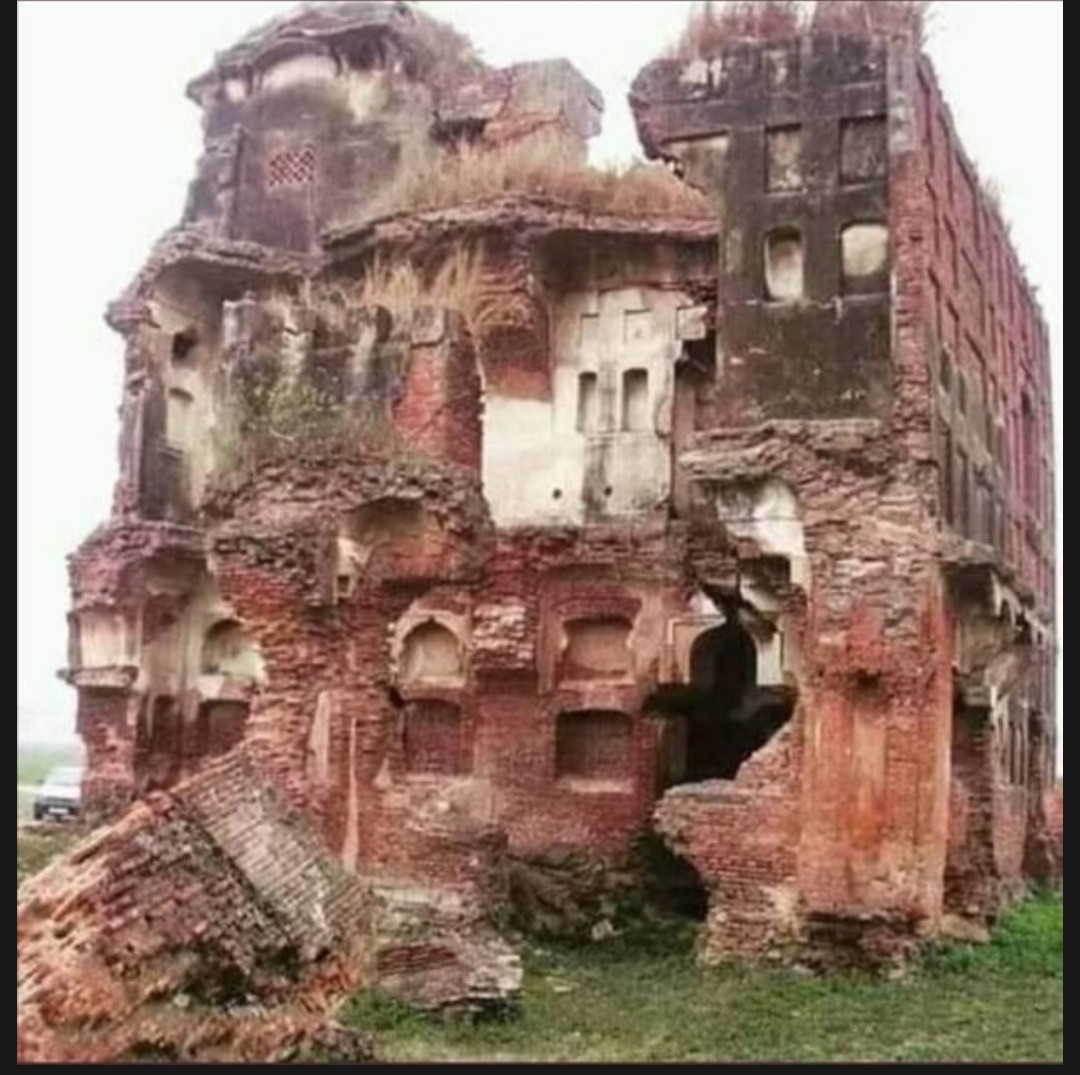
This is the condition of the Punjab mansion of Hindu businessman Todar Mal who paid 7,800 gold coins and bought 4 yards of land from the Mughal emperor Aurangzeb to bury the bodies of the 2 young sons and mother of Guru Gobind Singh on December 13, 1705.
The Mughal faujdar Wazir Khan had ordered the two young children be bricked alive as they refused to accept Islam. When they died, their grandmother died of shock
The Mughals did not want to allow the cremation to humiliate the martyrs. They stipulated that the buyer can take only as much space as he could cover with give gold coins for the land. All the Sikh chiefs just stood helplessly
That's when Todar Mal produced the coins and bought the piece of land, and cremated the three bodies.
This is biggest irony of life, India is only country where its true heritage is hidden from next generation and falsehood Is taught.
391
6,877
16,006
370,100
Dixie retweeted

Jun 9
Naiki Devi was a brave queen who outthought and outfought Muhammad Ghori and made sure he never returned to Gujarat.
India has never lacked leaders who stood between their people and foreign invaders who came to destroy them.
Our textbooks taught us the stories of the invaders. Not the tales of our ancestors who fought those invaders.
Time to correct this.
Queen Naiki Devi. One of India's finest warriors-leaders.
22
678
1,580
17,046
Dixie retweeted
100 days. Around 2,000 dead. A fifth of the world’s oil choked off for over three months. And the country that shut the strait is the one losing.
Almost none of these numbers are sustainable.
The closure is, in the IEA’s own words, the largest supply disruption in the history of the oil market, and the war has now spread to at least 16 countries.
The American bill is staggering. The Pentagon has spent $29 billion, most of it on munitions, with $5.6 billion burned in the first 48 hours alone. It has fired roughly 1,100 Tomahawks, close to a third of the Navy’s stockpile, and lost 42 aircraft, including two dozen Reaper drones. Counting fuel as well as funding, Moody’s puts the cost to US families at $100 billion. The Strategic Petroleum Reserve is down 12% and will not return to pre-war levels until 2028.
Iran is faring worse. By Trump’s own count it has spent nearly 80% of its missiles. Its crude exports have collapsed from 1.7 million barrels a day to under 300,000. Its economy is forecast to contract by more than 10%.
Two sides are paying a fortune for this war. Only one is running out of what cannot be rebuilt in a season. The numbers do not say the West is winning cleanly. They say Iran is losing faster.

17
36
123
15,408
Dixie retweeted

Jun 9
If we open almost any global culinary history book, we will find a common narrative: Ancient Europeans & Mesopotamians were the masters of baking bread, while ancient Indians only knew how to boil grains/fry them on a flat griddle. Baking, we are told, was introduced to India much later through Middle Eastern & Central Asian migrations.
This is a complete historical distortion.
Long before the 1st medieval wood-fired ovens of Europe were built, the chefs & engineers of the Indus Valley Civilization had already mastered the physics of thermal radiation, refractory clay engineering & controlled baking.
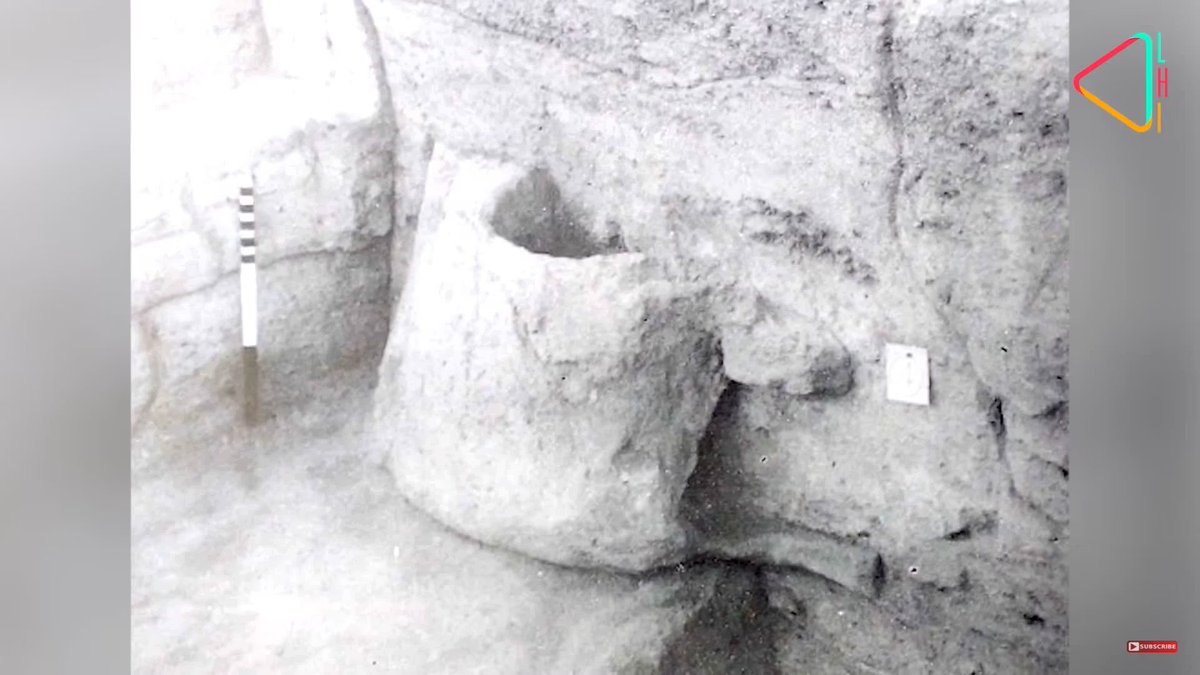
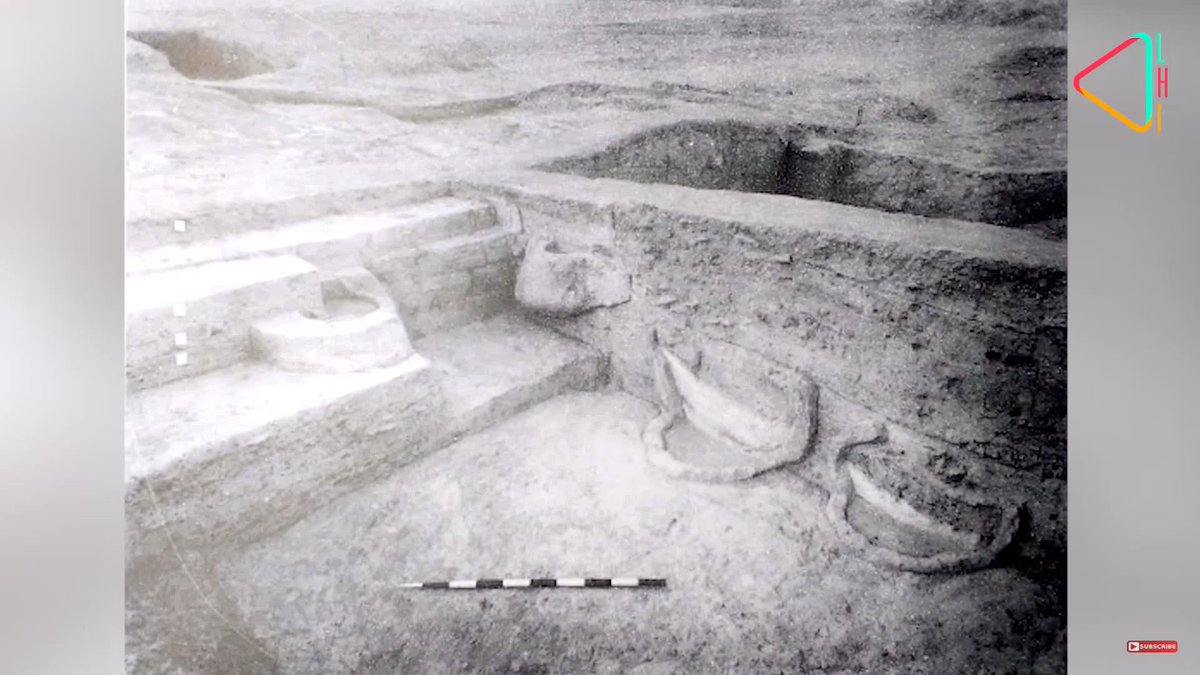
The ultimate weapon against the imported baking myth lies buried in the soil of Kalibangan (an ancient Indus Valley city in modern-day Rajasthan) & Harappa. During excavations, archaeologists unearthed several perfectly preserved, subterranean (underground) & overground cylindrical clay ovens dating back to 2500 BCE.
These ovens are structurally identical to the modern Indian tandoor. They feature thick, smooth clay walls designed to trap a massive amount of heat from a bed of charcoal/wood embers at the base.
We do not build a sophisticated, structurally reinforced vertical clay cylinder just to boil water/roast a piece of meat on a stick. The physical architecture of a vertical cylindrical oven serves exactly 1 scientific purpose: to trap hot air, creating a convection & radiant heat environment, which is the exact thermodynamic definition of baking.
Baking requires an incredibly high level of metallurgical & ceramic sophistication. If we take regular river clay, build an oven & subject it to intense, direct fire, the moisture inside the clay expands rapidly, causing the walls to crack/collapse/explode. The Harappans solved this through advanced material science:
They blended their clay with precise ratios of sand, quartz & organic binders like cattle dung/husk. This created what modern engineers call refractory ceramics, materials that can absorb immense thermal energy w/o structurally failing.
The interior walls were finished with a smooth, fine slips so that raw dough could be slapped directly onto the hot vertical surface, baking it via conduction on 1 side & intense radiant air heat on the other.
Now, to bake, we need a grain that can form a cohesive dough. While India later became synonymous with rice, the Indus Valley Civilization was heavily reliant on wheat & barley. Archaeologists have found massive public granaries packed with carbonized remains of Triticum aestivum (bread wheat) & barley.
They did not just boil these grains into porridge. The discovery of heavy stone saddle querns (grinding stones) & flat mullers at every residential unit proves that grains were systematically milled into fine flour. This flour was kneaded with water, shaped into flat/raised loaves & baked inside those ancient clay ovens.
When we look at the modern Indian kitchen today, whether it is a rustic village chulha/a tandoor in a dhaba/the traditional baked breads of North & Western India, we are not looking at borrowed traditions from the West/the Middle East. Our ancestors were masters of the oven when the Pyramids were still being built. They mapped out how clay interacts with fire, how dough behaves under radiant heat & built a baking legacy that has remained unbroken for 1000s yrs.
The next time someone claims baking is a Western/foreign concept, tell them about the ancient clay ovens of Kalibangan.
9
415
1,014
17,526

#FoodForThought
The live railway tracks and canals in “safe zones “ may be used to install solar panels between the tracks/ overhead the canals . Railway tracks are being routinely used in Switzerland for solar panels
@narendramodi
@PMOIndia
3
Dixie retweeted

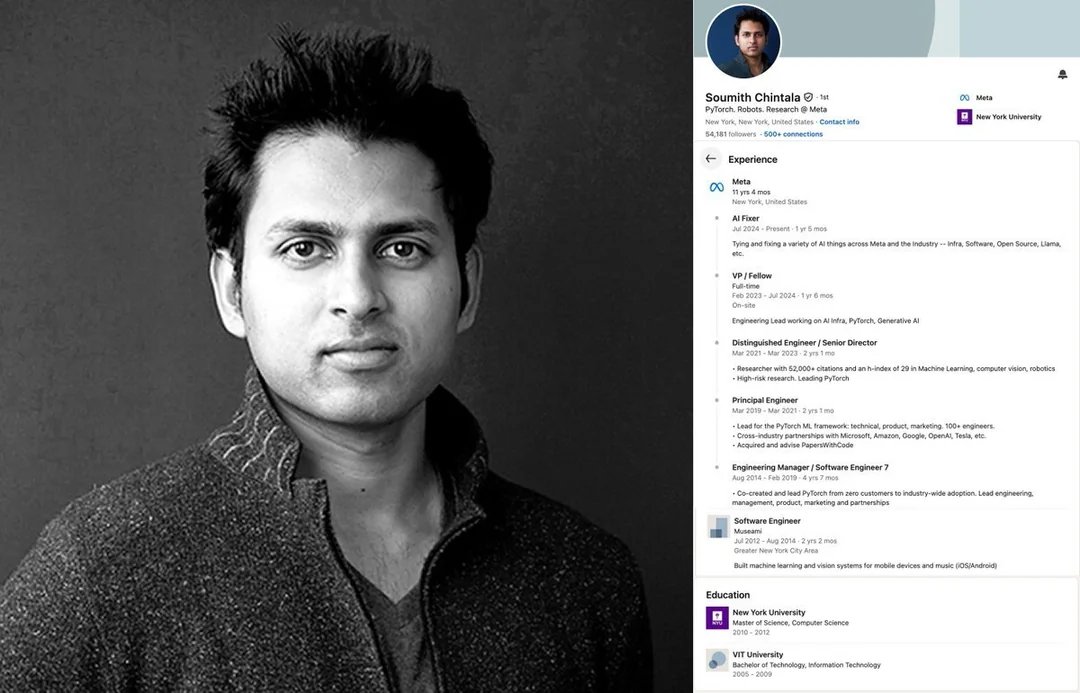
This Indian guy from Hyderabad got rejected by 27 universities. Then he built the tool that 90% of AI research runs on. 🤯
His name is Soumith Chintala. Grew up with no computer at home. Used his neighbour's. Went to VIT Vellore. Not IIT. Not IIM.
Applied to grad schools in the US. Got rejected 27 times. Eventually made it to NYU where he started working under Yann LeCun one of the godfathers of deep learning.
Joined Meta's AI research lab. Built something called PyTorch a framework that lets researchers build AI models the way they actually think. Clean. Simple. Pythonic.
There was internal pushback. Google already had TensorFlow. Nobody thought Meta needed its own framework.
He shipped it anyway.
Today PyTorch powers almost every major AI breakthrough you've heard of. Tesla Autopilot. OpenAI's early models. Stability AI. 80-90% of all AI research papers use it.
He led it for 8 years. Personally answered thousands of community questions. Rose to VP at Meta. Then donated PyTorch to the Linux Foundation so no single company could control it.
DeepMind rejected him. Multiple times. His first job offer was a test engineer at Amazon.
He just left Meta after 11 years and joined Mira Murati's new startup as CTO.
From a kid in Hyderabad with no computer to the guy who built the backbone of modern AI.
27 rejections. One framework. Changed everything.
22
101
728
81,218
👏👏
Jun 7

Top British attorney Natasha Hausdorff dismantled the Palestinian narrative with cold historical facts.
There was never a sovereign Arab state called “Palestine.” The British Mandate of Palestine was simply British administration over the historic Land of Israel after the collapse of the Ottoman Empire.
Jews lived continuously in the land for centuries — including under Ottoman rule, when they formed the majority in Jerusalem. Before 1909, Tel Aviv was empty desert legally purchased by Jews, who built it from nothing. No Arabs were displaced.
After the British handed the mandate to the UN, the Arab world rejected the partition plan and launched a war to destroy the Jewish state. Arab armies and local militias tried to “push the Jews into the sea.” At the same time, Arab countries ethnically cleansed their ancient Jewish communities, forcing nearly a million Jews to flee to Israel.
During the war, Arab leaders ordered local Arabs to evacuate combat zones so their armies could annihilate the Jews. Many of those who left later became permanent “refugees” under Egyptian and Jordanian control.
Israel has never committed genocide — and never will. By defending itself, it prevents another holocaust.
Hamas, Hezbollah, and the Islamic regime of Iran are the real obstacles to peace in the Middle East.
Retweet if you support Israel’s right to exist and defend itself.
1
Dixie retweeted
Jun 8
We need to bypass the so called "standard", reductive textbook narratives that often treat ancient indian achievements as mere "accidental primitive labor" & Kailasa Temple is 1 such example. We need to treat it like a project that required a level of mathematical precision, spatial visualization & resource optimization that rivals modern aerospace/architectural design.
Advanced tech does not necessarily mean electricity/lasers/computer chips. In civil engineering, advanced tech is defined by the systems, instruments & mathematical models used to manipulate massive amounts of energy & matter with near-zero tolerance for error.
To carve Kailasa from the top down out of a single volcanic mass, the ancient Sthapatis (master engineers) had to solve problems that modern CAD software handles today.
Before a single chisel touched the stone, the entire multi-story complex including its internal rooms, floating balconies, drainage systems & columns had to be mathematically mapped out in 3Ds. In a traditional building, if a room is misaligned, we can tear down a wall & rebuild it. In rock-cut monolithic architecture, we cannot put back rock that has been carved away.
A single 5" calculation error on the roof would cause a column on the 3rd floor below to completely miss its load-bearing alignment, collapsing the ceiling. The then engineers used a highly sophisticated system of geometric grids based on micro-measurements (Angula & Hasta). They used a technique called Volumetric Prototyping. They modeled the mountain as a massive 3D coordinate matrix (X, Y, Z axes), translating a highly advanced, non-surviving theoretical blueprint seamlessly onto the undulating, uneven surface of a natural cliffside.
Carving 400000 tons of basalt, hardened volcanic lava rich in silica & iron cannot be done by simply swinging ordinary iron tools. The tools would blunt/deform/break within mins. The construction period correlates with India's absolute peak in Wootz steel production. This was a form of nanotech where iron was smelted with specific carbon-rich organic materials in sealed crucibles, creating a matrix of ultra-hard iron carbides (cementite).
Now to move 100s of 1000s of tons of rock rapidly w/o modern explosives, they likely used controlled thermal stress. By heating targeted fracture lines along the basalt's natural crystalline planes using massive, localized fires & then instantly dousing them with cold water, they forced the rock to cleanly shear itself apart along flat planes. This is a highly calculated application of thermodynamics.
In ancient India, advanced scientific & engineering knowledge was not published in open-source public libraries. It was fiercely guarded within highly specialized, hereditary engineering guilds (Shrenis/Vishwakarmas). Knowledge was passed down from master to apprentice via encrypted architectural texts (Vastu Shastras) & oral mathematical mnemonics.
This kept the IP secure from foreign theft, but it made the entire scientific system highly vulnerable to a SPOF. If a single elite guild of master builders was wiped out in a war, the complex mathematical formulas for calculating rock stress & monolithic geometric projections died with them instantly.
When British colonial historians arrived in India, they encountered marvels like Kailasa. Accepting that ancient Indians possessed a level of structural engineering, metallurgy & geometry that surpassed 18th century Europe was a direct threat to the colonial narrative of the "civilizing mission." They claimed Kailasa was built simply by throwing a massive, infinite army of "primitive, cheap slave labor" at a mountain with simple stone chisels over 100s of yrs.
This narrative deliberately substituted brute force for brain power. It ignored the complex geometry, the structural dynamics & the materials science, reducing a masterpiece of hyper-advanced calculation to a mere story of "many people digging for a long time."
47
711
2,046
25,910
Dixie retweeted

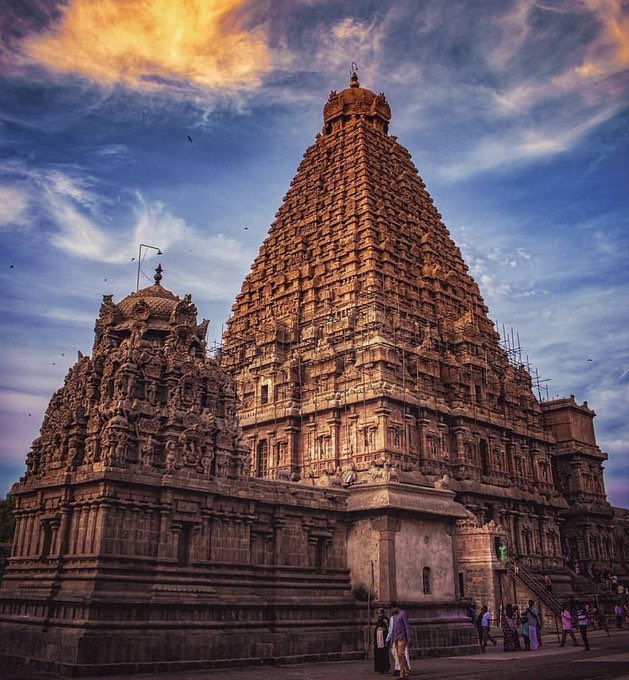
Comparisons are futile but for me one of India's greatest engineering achievements remains the 217 feet tall shadowless Brihadisvara Temple built by Raja Raja Chola I in 1010.
Crafted with giant interlocked stones and crowned by an 81 ton kumbam, it was built within six years.
291
4,224
17,455
154,362
Jun 6

21 तोपों की सलामी to this reporter! I wish @IndiaToday had atleast one reporter or anchor like him.
3
#FoodForThought ..
real truth about #datacentres ..
do we need this thing at all ?
@narendramodi
@PMOIndia
1
12
Dixie retweeted
Iran just called Trump’s bluff.
Its supreme leader was assassinated. Its nuclear sites were bombed. And it is winning the war that is left.
Washington walked into a trap with three locked doors. Trump cannot settle: a tentative 60-day ceasefire has stalled for a week while he demands changes Iran rejects. He cannot walk away: the strait stays shut and the bill keeps running. And the House just voted 215 to 208 to rein him in, with the Senate one vote behind.
But the door he can least afford to open is escalation, and this is the part no one is pricing. America is draining two reserves at once. It has pulled its Strategic Petroleum Reserve down 12% to 365 million barrels to hold the oil price down, and it has fired roughly 1,100 Tomahawks and 1,200 Patriots, weapons it needs years to rebuild. Both gauges fall on the same clock. Neither refills fast: the oil reserve is not projected back to pre-war levels until 2028. And Iran can see all of it.
That is why Iran will not move. A country this battered is winning the only contest left, the contest of who can afford to wait.
The screen still looks calm. Brent is back above $100. US stocks sat at record highs days ago. But that calm is bought with a draining reserve and a spent arsenal, and neither comes back for years.
Trump called the vote meaningless. The market shrugged. Iran read it as a green light.
This war is not being won on the battlefield. It is being won by whoever outlasts the other’s reserves. For the first time, that is not Washington.
51
125
451
78,302
Dixie retweeted

Jun 3
The Union Cabinet has approved a scheme that will work towards reducing pollution in the Delhi-NCR region and promote cleaner mobility. The scheme will improve air quality, support sustainable transport and benefit vehicle owners.
pib.gov.in/PressReleasePage.…
1,158
3,158
19,415
1,885,787