
52 Photos and videos
















Our vertically integrated AI Cloud platform has arrived in Europe.
Today, IREN announced it has completed the acquisition of Nostrum Group, adding 490MW of secured power in Spain to serve global demand for AI compute.
“Europe is one of the largest and fastest-growing markets for AI infrastructure, and Spain is among its most compelling entry points, with abundant renewables and strong fiber connectivity. Nostrum gives us secured power today along with a development pipeline and a great local team we're excited to work with.” - @danroberts0101
Learn more: iren.gcs-web.com/static-file…

140
252
2,211
992,394
Todd retweeted

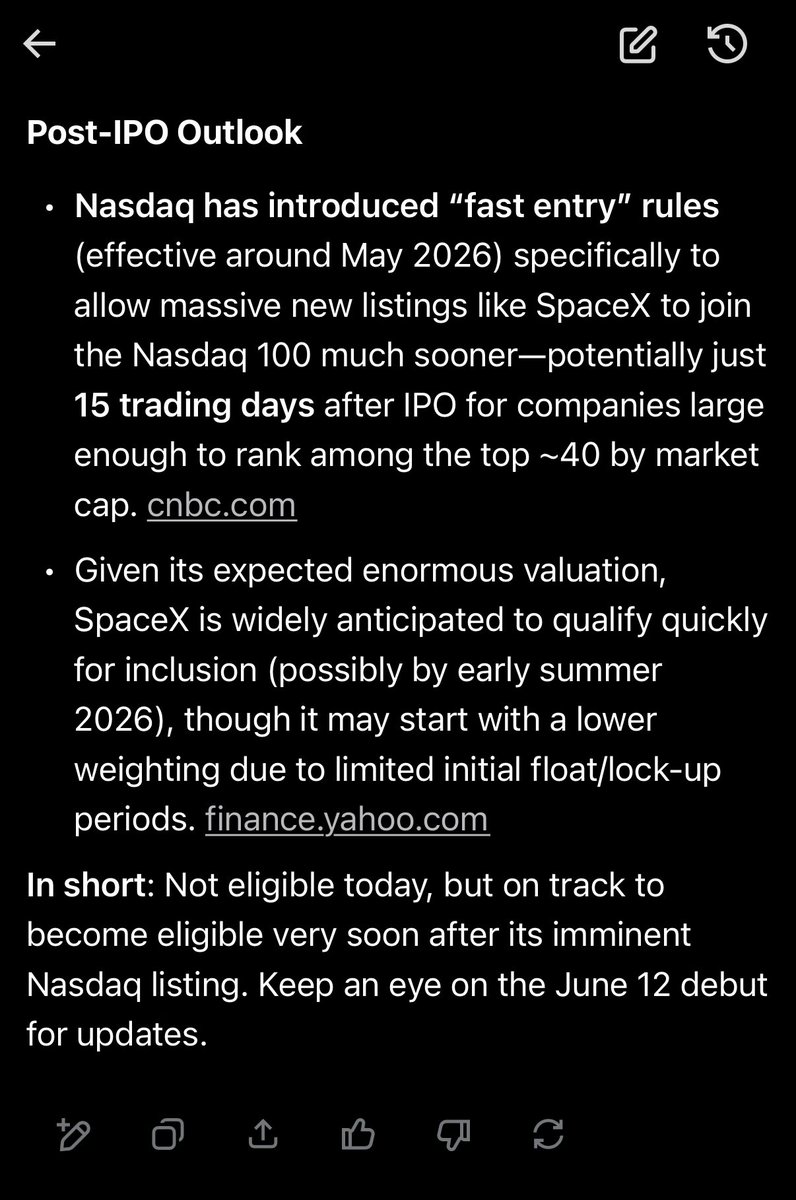
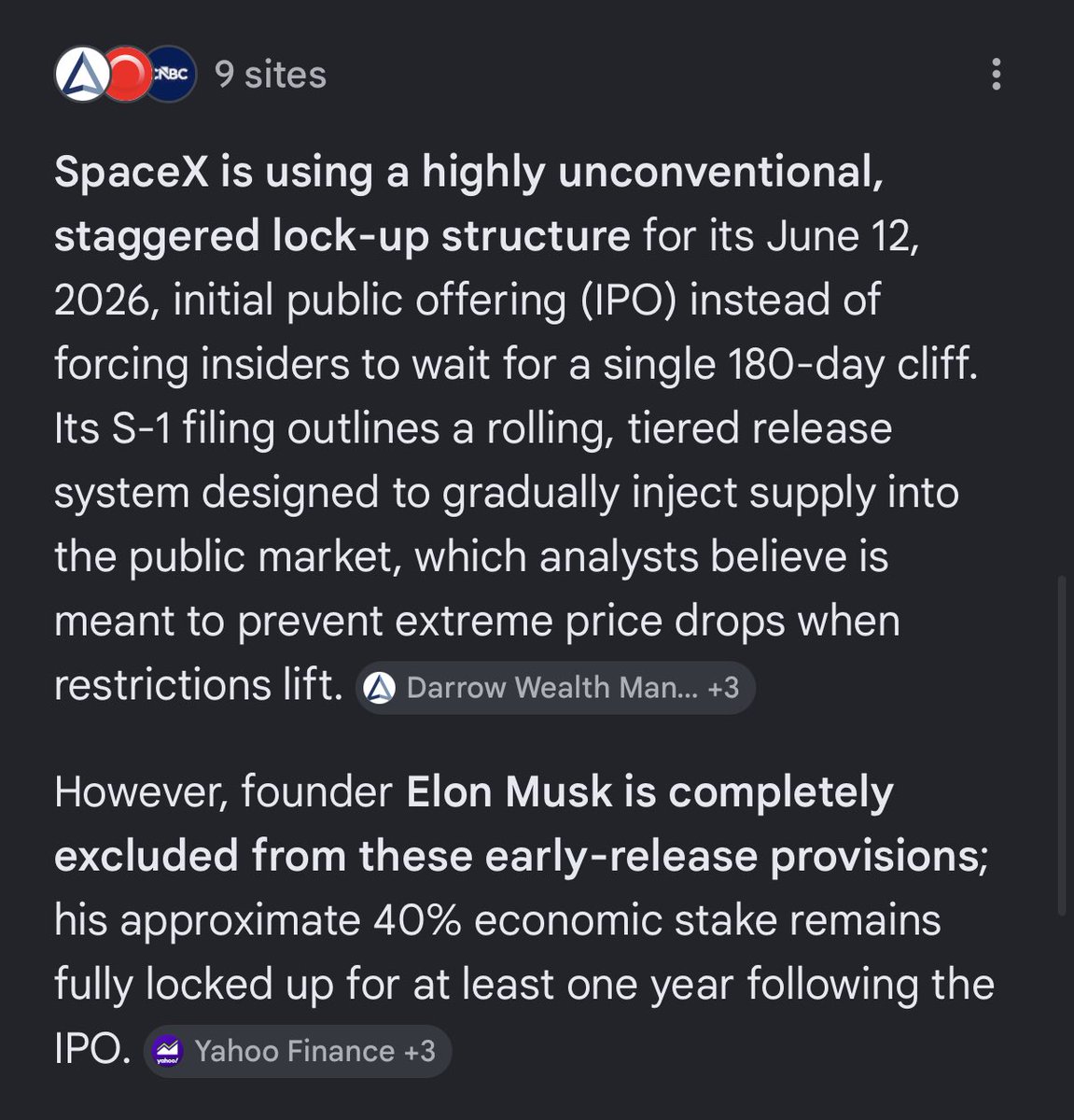
If you’re wondering why $QQQ got smashed along with your favorite tech influenced tickers / high beta, it appears that part of the story may include the forced selling of Nasdaq 100 tickers in anticipation of @SpaceX entering the index under new “fast entry” rules 👇
My initial conclusion is to expect more of these kind of days towards year end when @OpenAI @AnthropicAI issue their public offering
Finally, consider the lockup periods and how that may impact your new investment interest
H/t @grok @Gemini
13
1
50
5,504
Todd retweeted

Jun 5
Going to cover a lot of charts on Sunday! 📈
Turn those notifications on 🔔 ‼️
1
13
592
Todd retweeted

Jun 3
Yup. We agree.
That’s why we keep pushin’
$SLNH @SolunaHoldings
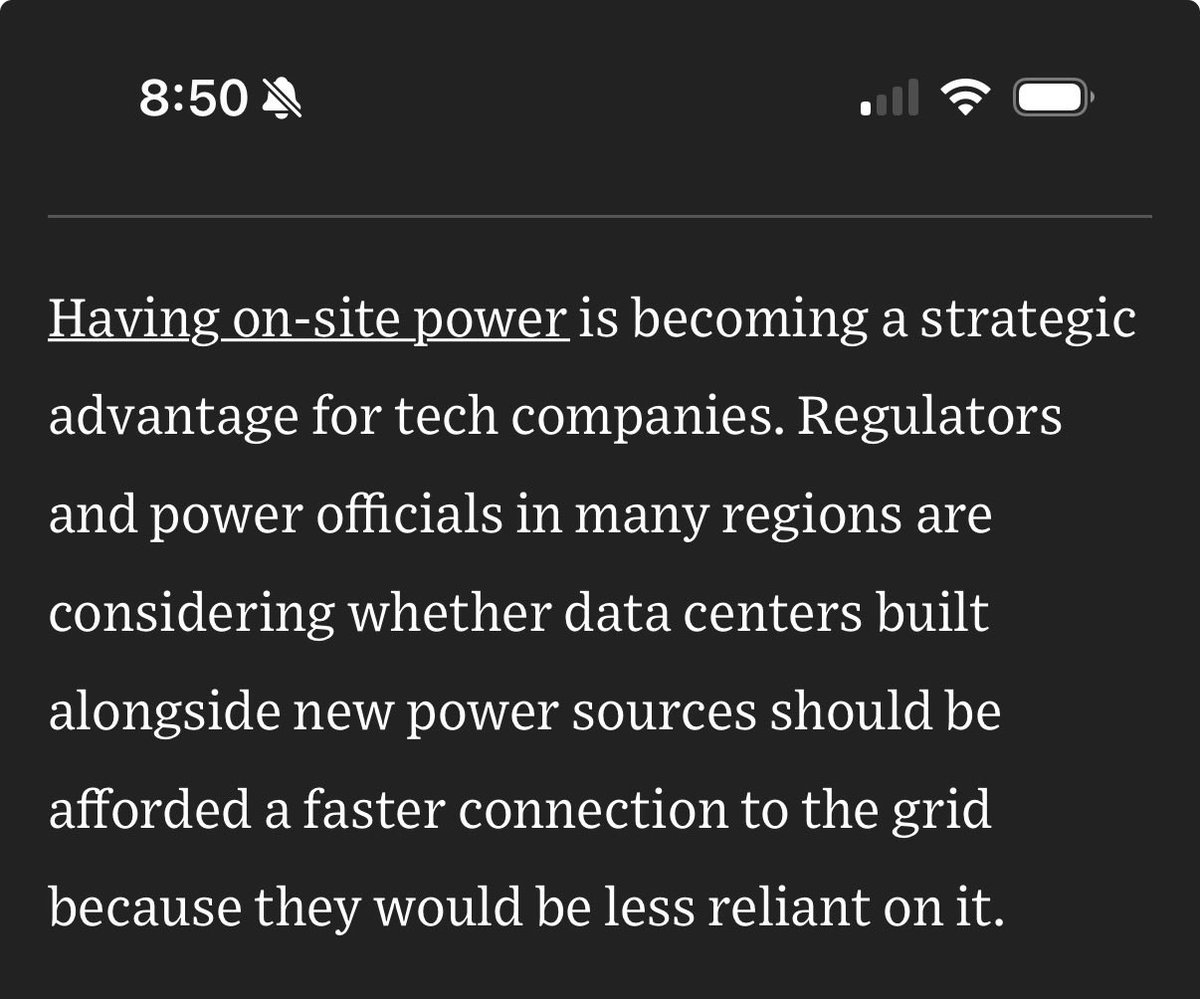
This is from a WSJ article on @GoogleAI strategy to build data centers in a crowded market. Sound familiar? :)
@disruptorinvest @McnallieM
5
17
139
29,157
Todd retweeted

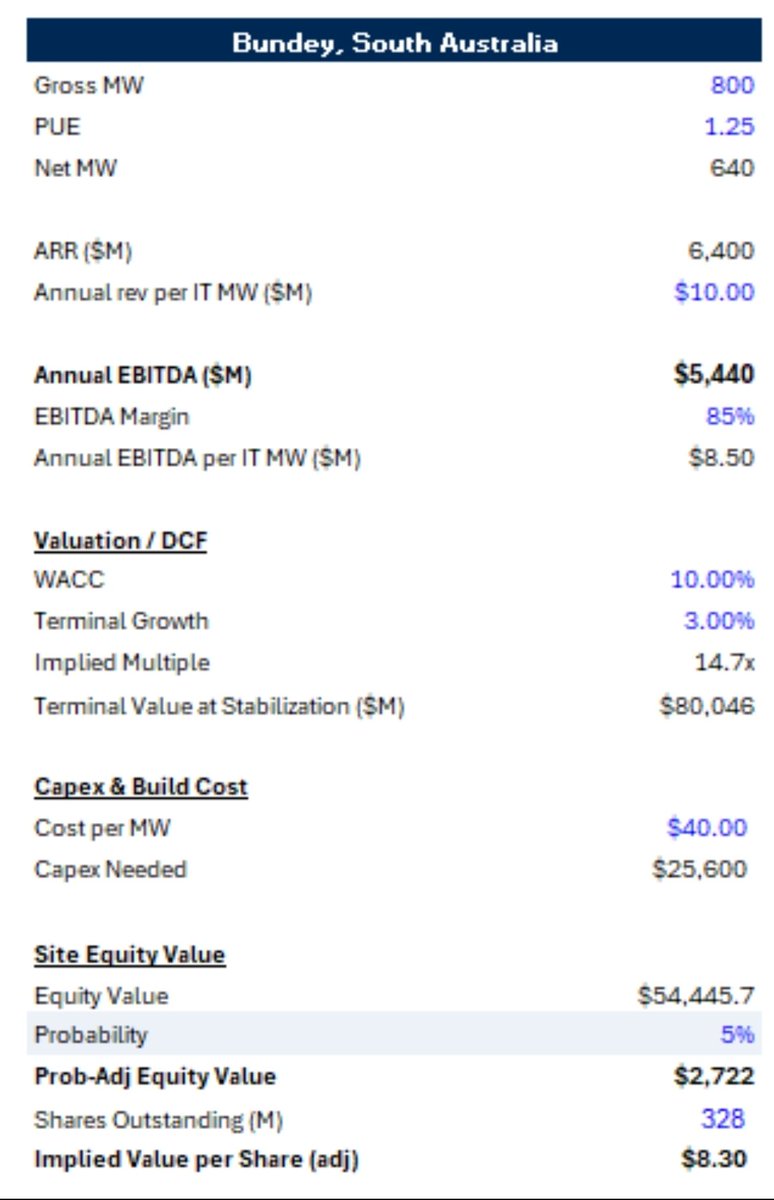
Even with just a 5% probability weighting for this project, we think it's worth $8/share to $IREN at current GPU economics.

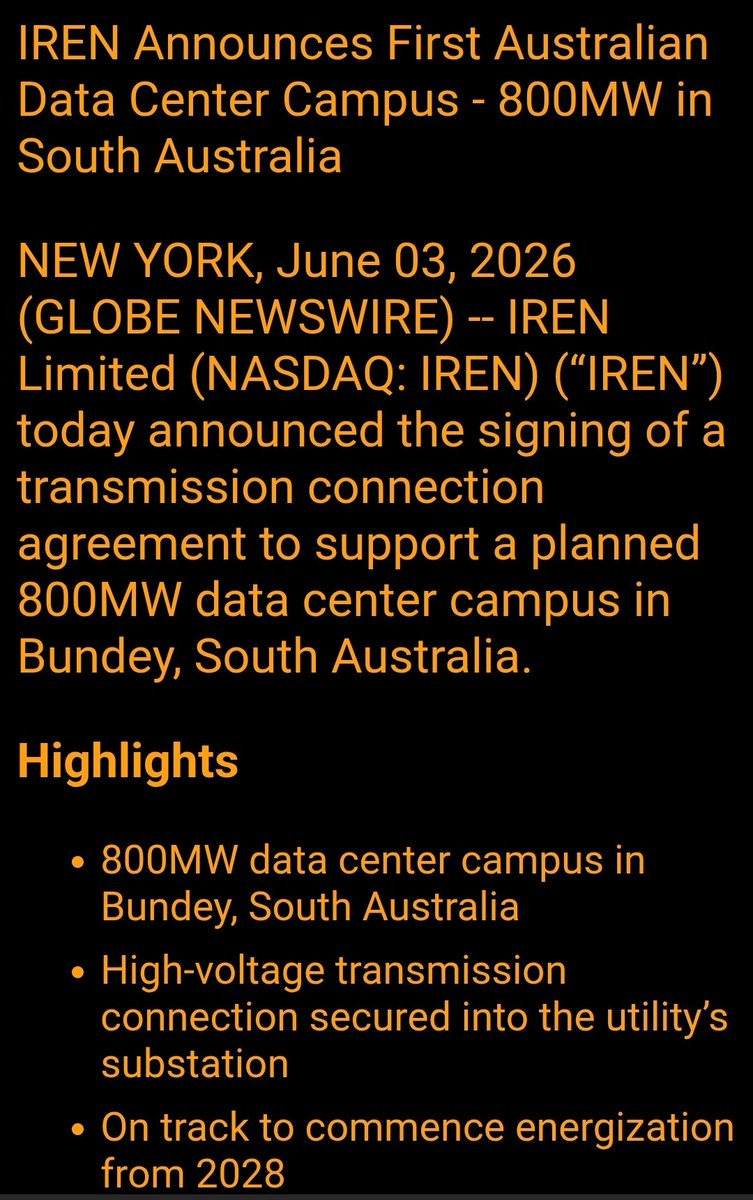
🚨IREN Announces First Australian Data Center Campus: 800MW in South Australia
15
33
300
63,485
IREN has announced a planned 800MW data center campus in Bundey, South Australia.
This marks IREN’s first announced Australian data center project and one of the largest in the Asia-Pacific region announced to date.
Learn more: iren.gcs-web.com/static-file…
203
548
3,947
562,476
Todd retweeted
Jun 3
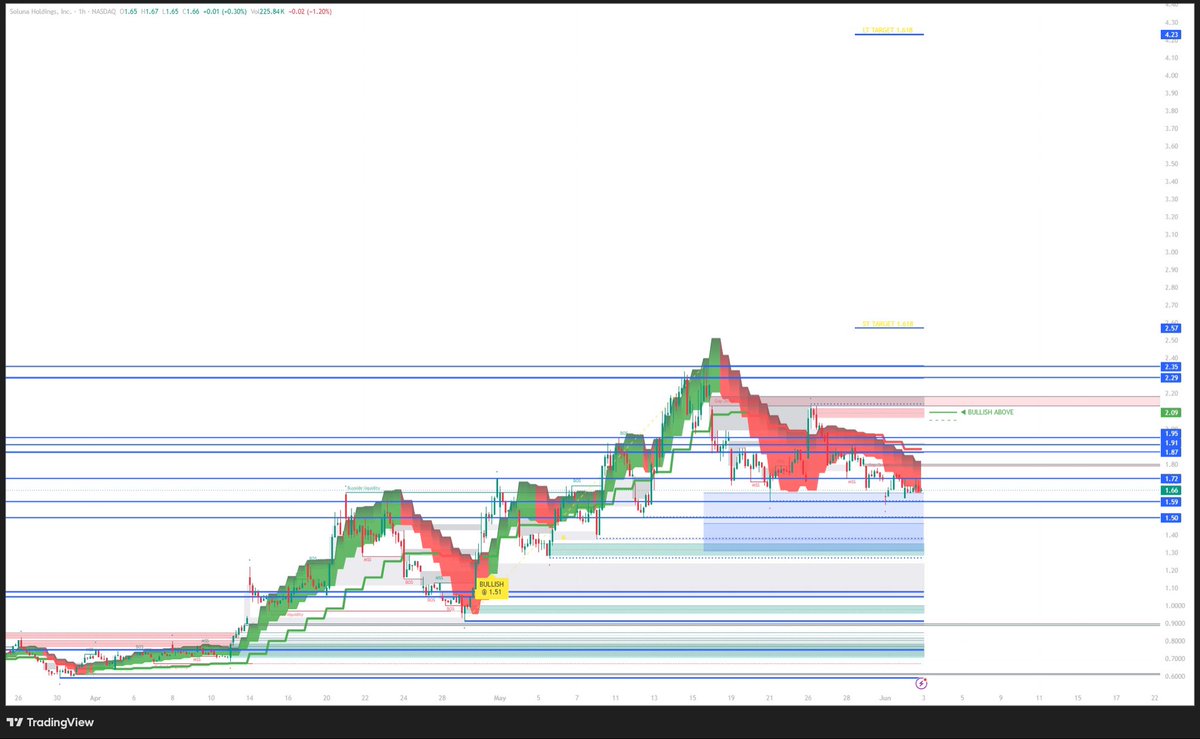
$SLNH 1hr:
$1.72 has been giving us some short term resistance while $1.59 has become support. As long as we stay above $1.50 I’ll be happy. $2.09 needs to be reclaimed to target $2.57. Holding above $2.47 would potentially start a move up towards $4.23 🎯
2
2
55
7,370
Todd retweeted

Jun 2
🇺🇸 JUST IN: President Trump signs executive order on AI innovation and security.


77
139
1,059
80,684

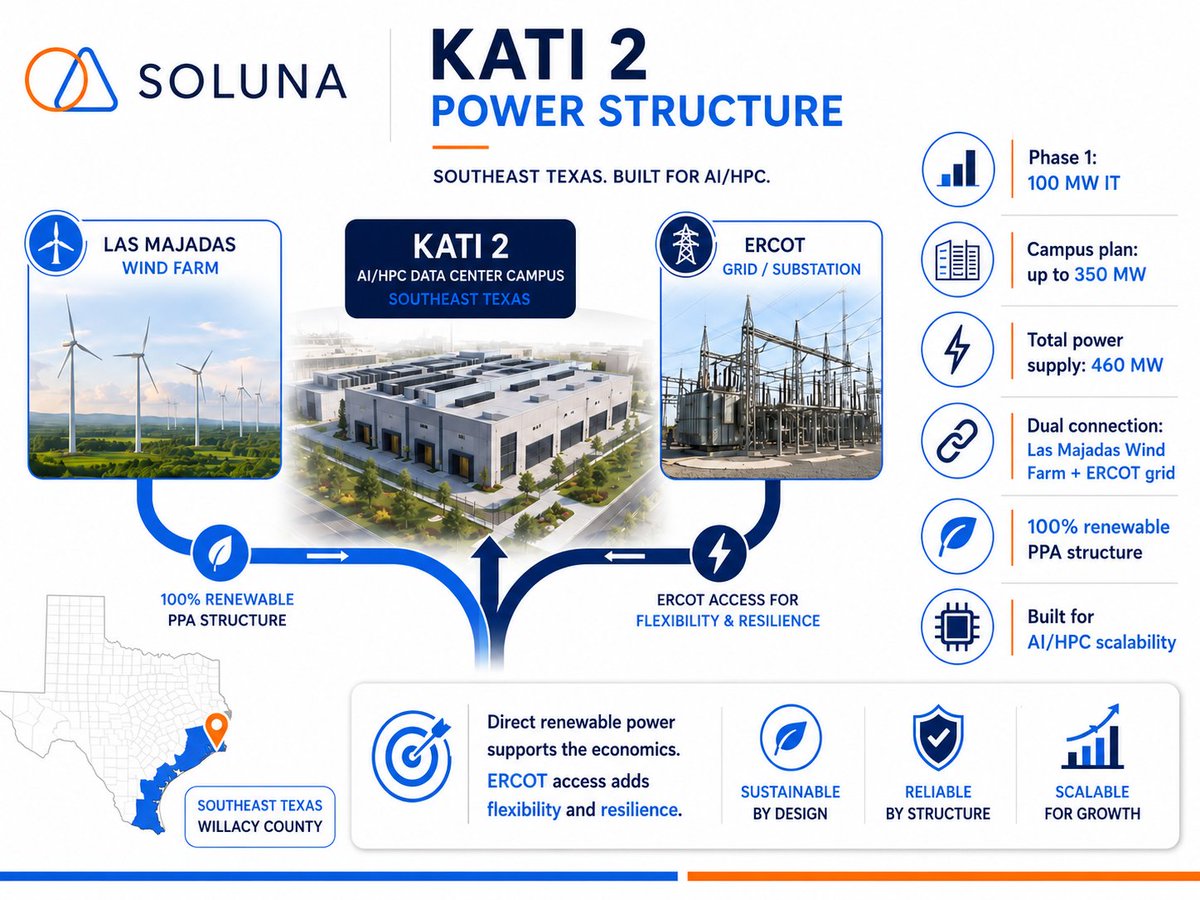
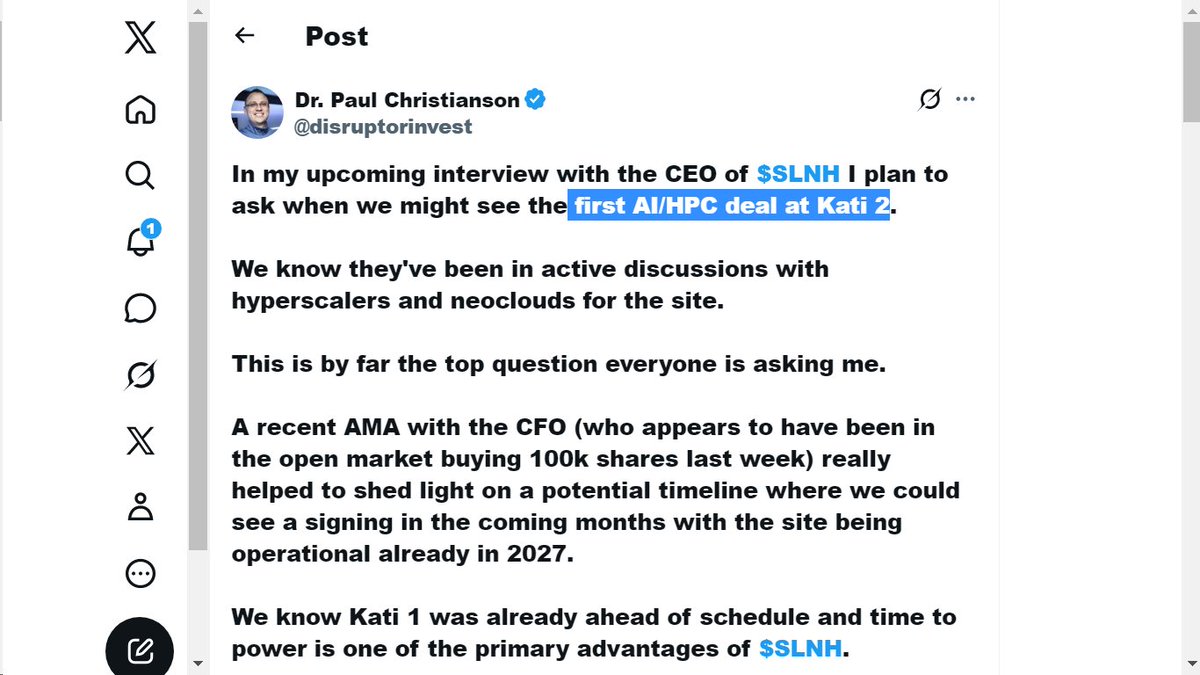
$SLNH A detail from Luke Crawford’s LinkedIn post on Project Kati 2 deserves more attention.
Crawford, who works with @SolunaHoldings on land acquisition / external site development, described Kati 2 as a 350MW data center campus in McAllen, Texas, developed with Metrobloks. Phase 1 is planned for 100MW of critical IT capacity, with a runway toward 350MW.
The power setup is the part that stands out.
According to the post, Kati 2 connects both to the ERCOT grid and the Las Majadas wind farm, securing 460MW of total supply through a 100% renewable PPA structure.
Las Majadas is a 272.6–273MW operating wind farm in Willacy County, Texas, developed by EDF Renewables and co-owned by EDF Renewables and Masdar. Soluna already has a PPA to purchase up to 166MW from Las Majadas for Project Kati, with the data center built close to the wind project’s substation.
That gives Kati 2 a more serious power profile than a simple “wind-powered data center” headline.
Direct renewable power creates the cost and sustainability angle. ERCOT access adds flexibility and resilience. The combined structure is what makes the campus more credible for AI/HPC workloads, where uptime and reliable power matter as much as the headline MW number.

$slnh @SolunaHoldings Kati 2 is not just a 100MW AI/HPC site.
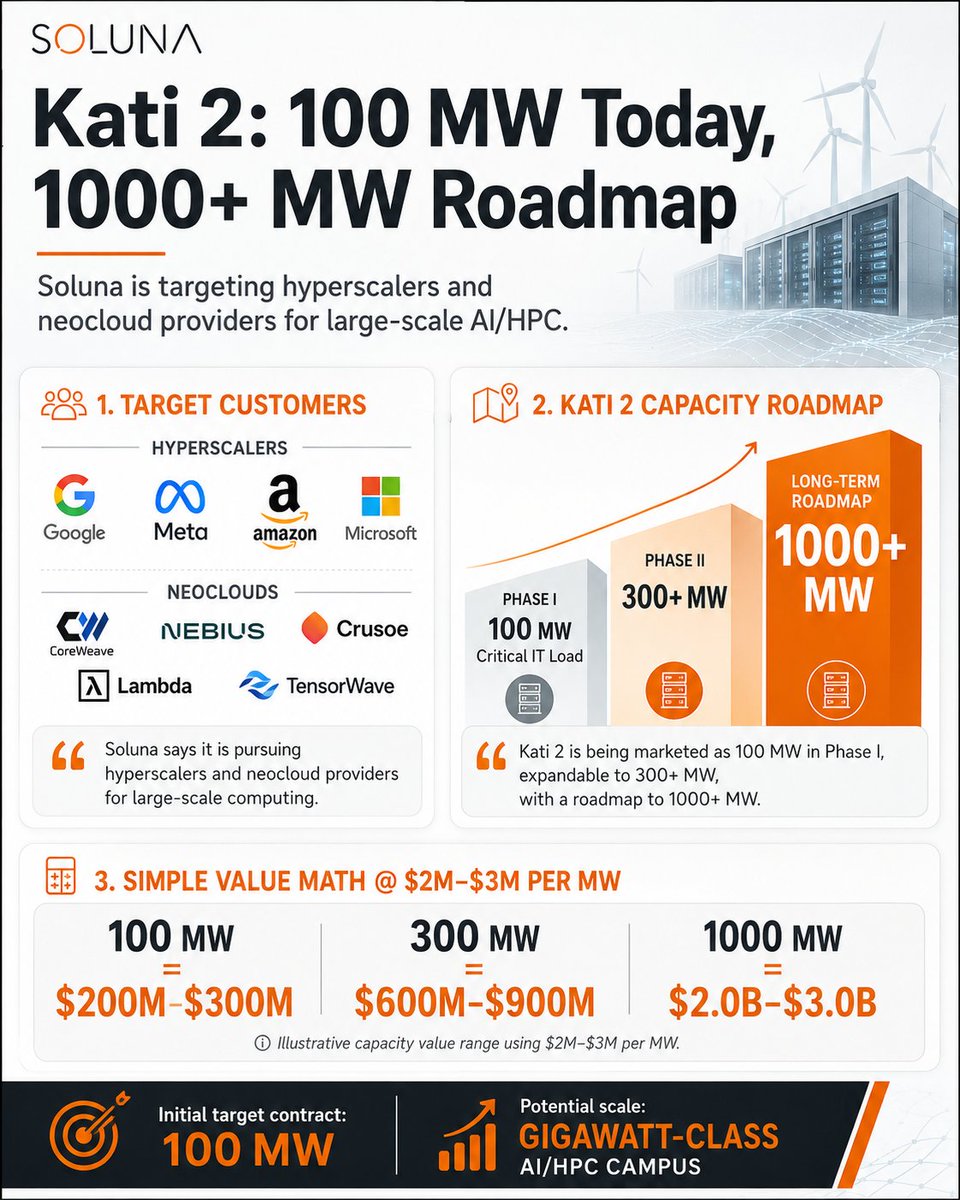
If management’s roadmap to 300MW and eventually 1000MW becomes credible to customers, the implied commercial opportunity could be measured in billions.
Using a simple illustrative AI/HPC revenue range of $2M–$3M per MW per year:
• 100MW = $200M–$300M annual revenue run-rate
• 300MW = $600M–$900M annual revenue run-rate
• 1000MW = $2.0B–$3.0B annual revenue run-rate
Solunas market cap today = $290 M
Now, the target customer profile is now very explicit:
“For large-scale computing, Soluna would like to secure a hyperscaler, such as Google, Meta, Amazon, or Microsoft, or a Neocloud provider, including CoreWeave, Nebius, Crusoe, Lambda, or Tensorwave.”
That matters because Soluna is not talking about small experimental AI workloads.
They are targeting the same customer categories driving the current AI infrastructure boom: hyperscalers and neoclouds.
The scale is also much bigger than a single 100MW site:
“We are marketing Kati 2 as an initial 100MW critical IT load site in Phase I, readily expandable to 300 MW in Phase II. For potential customers, we’ve laid out a roadmap showing Kati 2 expandable to 1000 MWs.”
That 1000MW roadmap is the key detail.
It means Soluna is showing potential customers a pathway toward gigawatt-scale AI/HPC infrastructure, not just a one-off 100MW project.
The customer interest is also real enough to be in active diligence:
“We received Indications of Interest for Kati 2 capacity. Those interested parties are conducting due diligence on the power, build-out schedule, and fit with their needs.”
The initial contract target is clear:
“The target MW for an initial contract is 100 MW of Critical IT load.”
And the timeline is very interesting:
“From the contract date, the site will be constructed and powered up within 15 months.”
Soluna also added:
“A new contract won in the next few months would make the project operational before the end of 2027.”
2
7
70
6,877

Todd retweeted

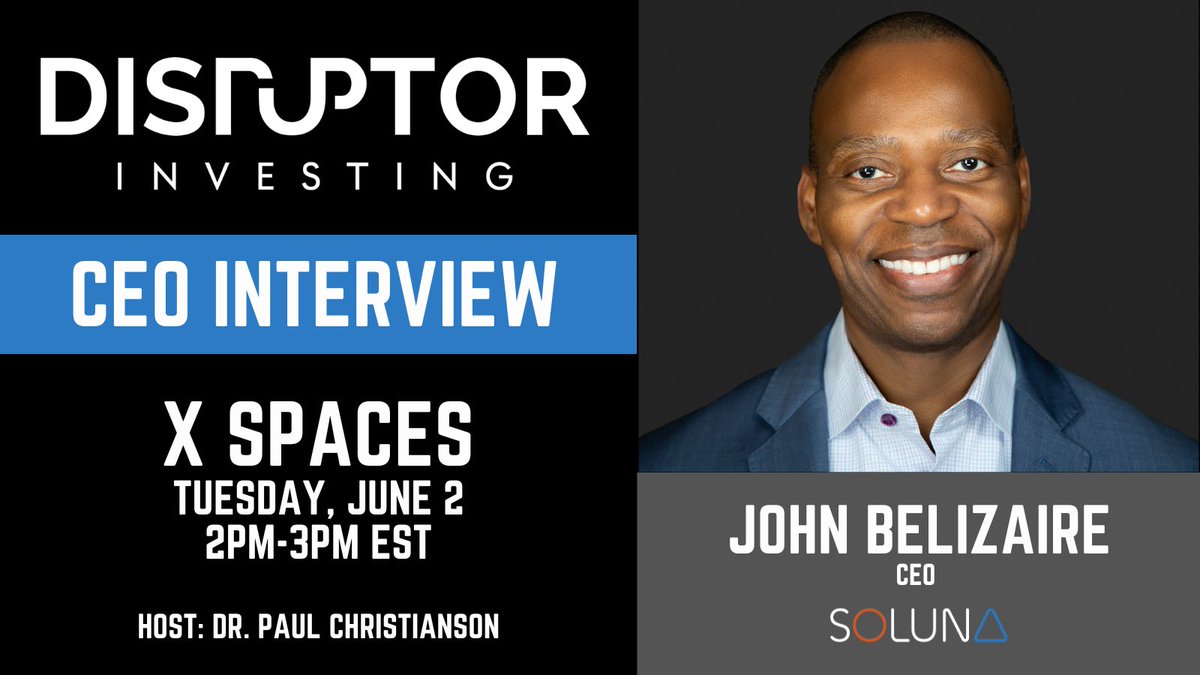
As a reminder, I'll be interviewing the CEO of $SLNH live on X Spaces tomorrow at 2:00pm EST.

The CEO of $SLNH will be joining us on Tuesday, June 2 at 2:00pm EST. Reserve your spot: x.com/i/spaces/1wxWjjlRjlNJQ…
6
7
81
6,510
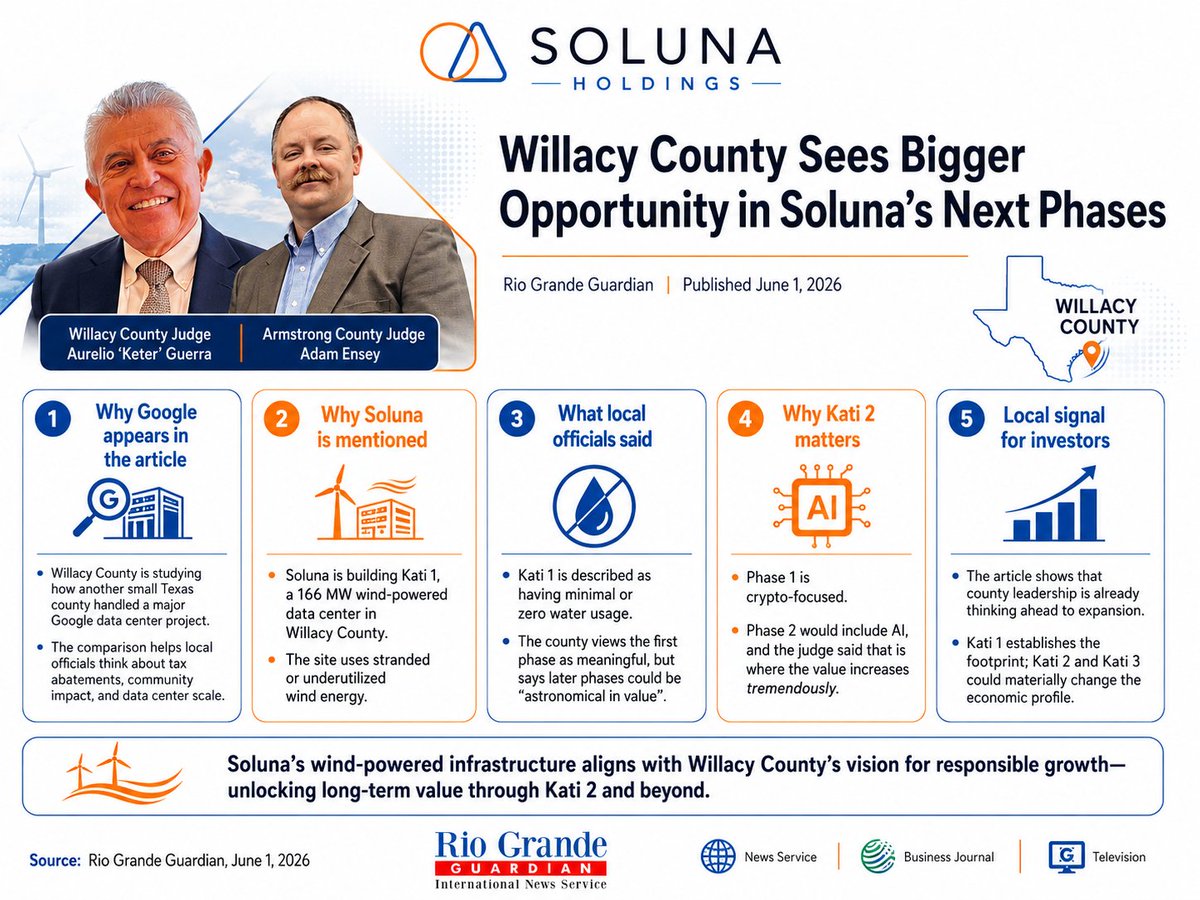
$SLNH The Rio Grande Guardian article, published on June 1, 2026, gives an interesting local perspective on @SolunaHoldings development in Willacy County.
riograndeguardian.com/storie…
What stood out to me is how the county is already thinking beyond Kati 1. Willacy County Judge Aurelio “Keter” Guerra has been speaking with other county judges in Texas, including Armstrong County Judge Adam Ensey, whose county is dealing with a major @Google data center project near Claude, Texas. That comparison is important because it shows that Willacy County is preparing for Soluna’s future phases in the same broader context as large-scale data center development across Texas.
Kati 1 is described as a 166MW wind-powered data center focused on Bitcoin, with minimal or zero water usage. Guerra says the first phase has a value of around $35–45 million and will generate tax revenue for the county and other local entities. That is already meaningful for a small county.
But the real signal comes when he talks about Kati 2 and Kati 3.
His words were very direct: the next phases would be “astronomical in value.” He also explains why. Phase one is crypto. Phase two includes AI. That is where the value increases tremendously.
That distinction says a lot. Local officials seem to understand that AI/HPC infrastructure carries a very different economic profile compared with Bitcoin hosting. For Soluna investors, that is exactly the larger thesis: Kati 1 proves the site and operating model, while Kati 2 can potentially move the company into a much higher-value category.
The article also addresses one of the biggest concerns around data centers: water usage. Guerra repeatedly emphasizes that Soluna’s project has minimal or zero water usage, which is important because many data center projects across the U.S. face local opposition around water, power and environmental impact. In Willacy County, the situation appears different. The area has wind power that was previously underutilized, and Soluna’s model is designed to convert that energy into productive compute.
Another important part is the discussion around tax abatements and reinvestment zones. The county is still working through the process for future phases, and Guerra is clearly focused on making sure the structure works for both Soluna and the local community. He sees the project as a potential win-win if negotiated properly.
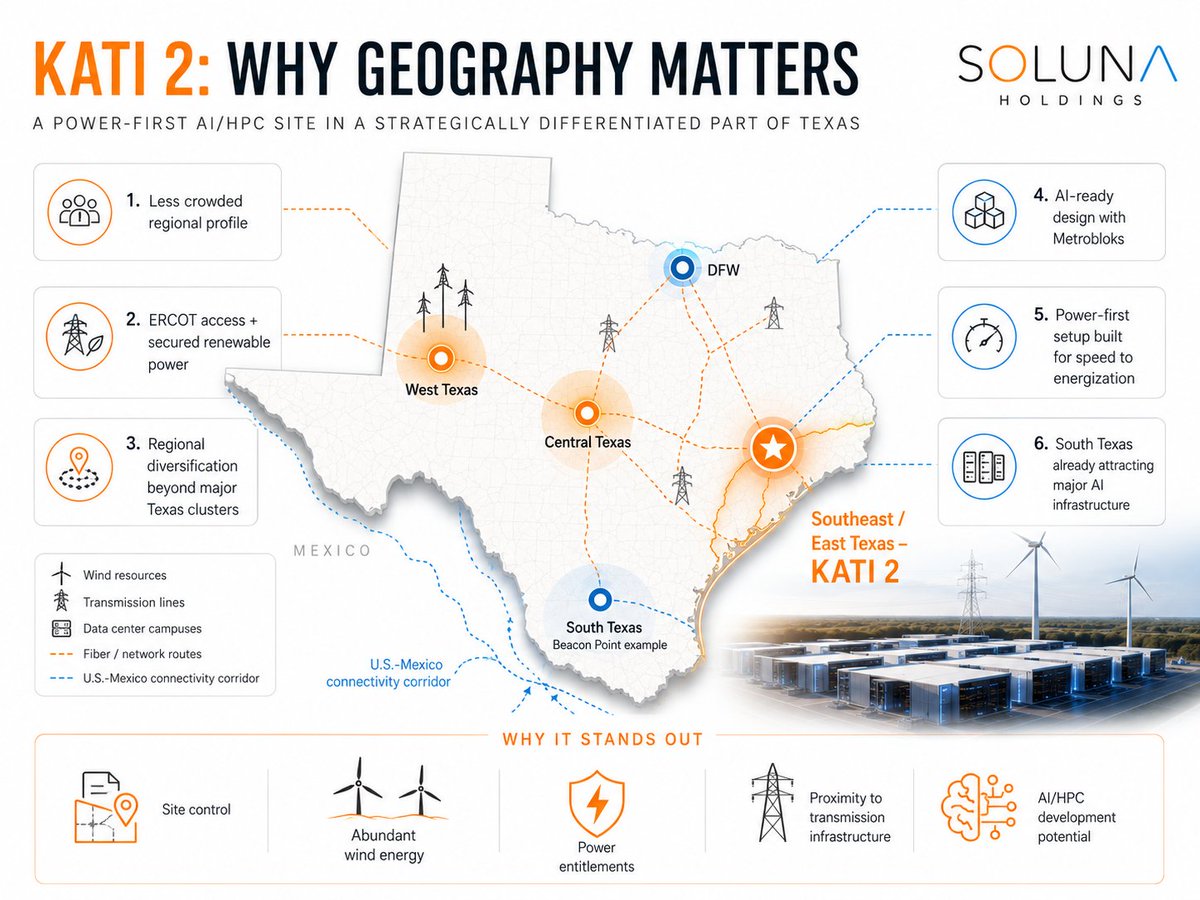
$SLNH Kati 2’s geography deserves more attention.
Texas is becoming one of the most important data center markets globally. Harvard Belfer has even noted that, at the current pace, Texas could surpass Virginia as the world’s largest data center market by 2030.
But capacity is not spreading evenly.
A lot of activity is already concentrated around DFW, West Texas and Central Texas. Those are strong markets, but concentration brings its own issues: more competition for power, more grid pressure, and more exposure to the same regional risk zones.
Kati 2 sits in Southeast / East Texas, which gives it a different profile.
For AI/HPC customers, location is no longer just about cheap land or being close to a classic cloud region. They care about power access, fiber, grid exposure, redundancy, disaster recovery, regional diversification and how quickly a site can actually be energized.
Metrobloks put it well in the Kati 2 podcast:
“Instead of looking at sites, you’re now chasing power.”
That line explains why Soluna’s setup is interesting.
Kati 2 combines secured renewable power, ERCOT access, site control, wind energy and Soluna’s energy development work with Metrobloks’ AI-ready design and hyperscale customer relationships.
The South Texas angle also has external validation.
Hut 8’s Beacon Point project in Nueces County landed a 15-year AI data center lease for 352MW of first-phase IT capacity, with a base-term contract value of $9.8B.
So large AI customers are clearly willing to look at South Texas when the power, land, scale and delivery profile make sense.
Metrobloks also mentioned Kati 2’s proximity to the Mexican border and the connectivity tissue between the U.S. and Mexico. Cross-border connectivity, regional redundancy and a different corridor for customers thinking beyond the usual clusters.
Transwestern / FrontierGen have also pointed to South Texas as a region for AI-focused data center and advanced infrastructure campuses, driven by energy, land and customized power delivery.
Kati 2 is a site in a region where AI infrastructure demand is already moving, with a power-first setup that could separate it from the crowded Texas clusters.
The geography makes Kati 2 more interesting.
3
7
56
8,749
Todd retweeted

Jun 1
The intermittency problem isn't a reason to avoid renewable energy. It's a reason to build smarter infrastructure around it.
Soluna's multi-source power mix, managed in real time by MaestroOS, is what makes always-on compute possible from a renewable generation site.
Renewable-first. That’s the future of computing.
#RenewableComputing $SLNH
10
17
127
11,680
IREN is working with @nvidia to build NVIDIA DSX-aligned AI infrastructure across its global data center portfolio.
• Advancing the Sweetwater campus as part of IREN’s AI infrastructure buildout
• Adopting NVIDIA DSX OS technologies, including NVIDIA Infrastructure Controller and NVIDIA Fleet Intelligence
• Establishing a reference deployment of k0rdent AI with NVIDIA DSX OS and @MirantisIT
• Joining the NVIDIA DSX Sim ecosystem, including simulation with NVIDIA DSX Air
Learn more about NVIDIA DSX: nvidianews.nvidia.com/news/d…
50
223
1,779
193,147
$SLNH
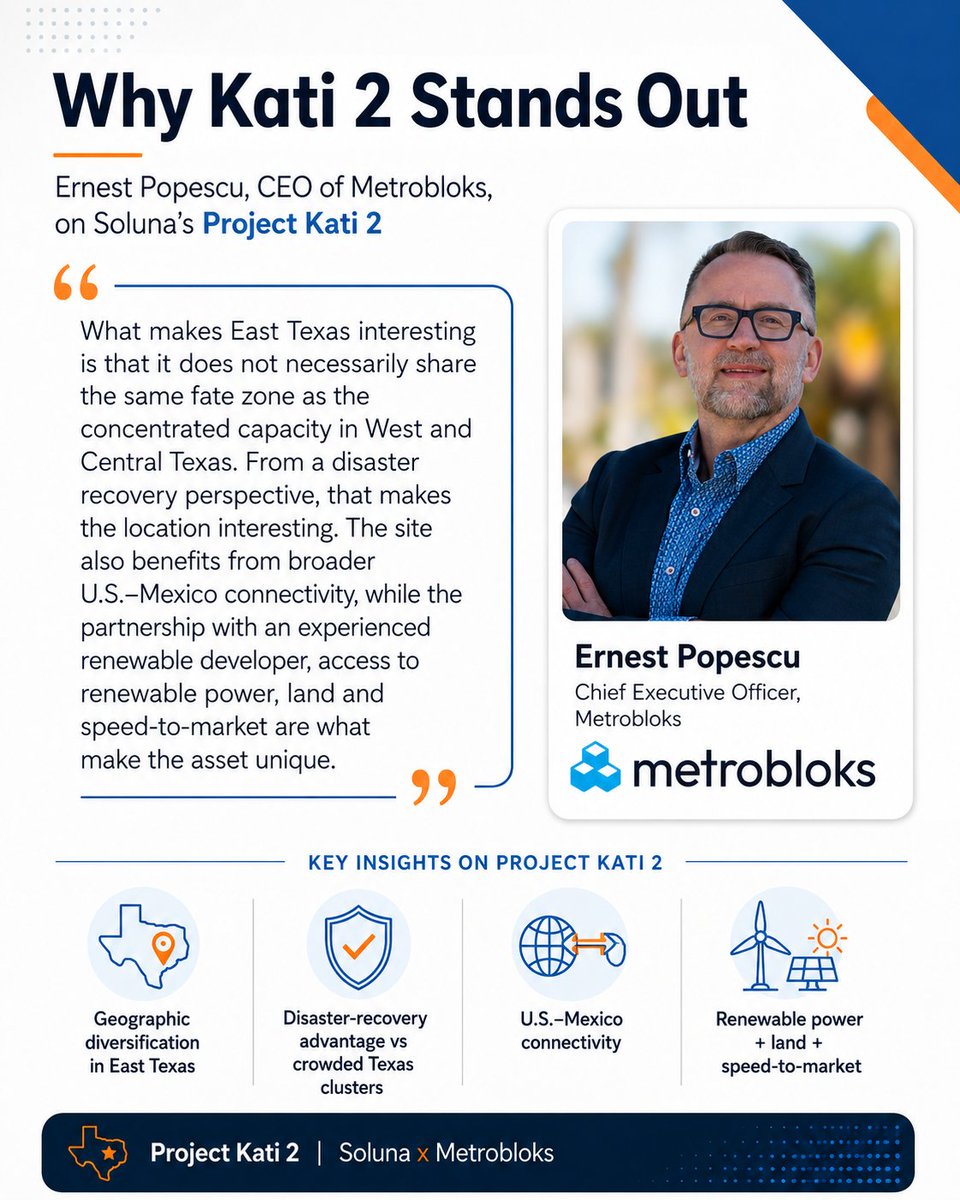
Metrobloks CEO explains why @SolunaHoldings’ Kati 2 site stands out.
“There are quite a few things that make this site (Kati 2) interesting, and maybe none more important than the relationship we have established and Soluna’s vision and confidence in its ability to deliver power. That is probably the first and biggest differentiator.
Second, there is the concept of shared-fate zones in data centers. Data centers are, for all intents and purposes, a utility – a vehicle or conduit for large language model training. There is a concentration of capacity in West Texas and Central Texas. What makes East Texas interesting is that, with Texas being such a large state, East Texas does not necessarily share the same fate zone from a disaster recovery perspective if something were to happen. That makes the location interesting.
Another thing that makes it interesting is its proximity to the Mexican border and the connectivity tissue between the U.S. and Mexico, which makes it appealing.
From a legitimacy perspective, the partnership with an experienced renewable developer, access to renewable power, land, and speed-to-market are what make this asset pretty unique.”
$SLNH Kati 2’s geography deserves more attention.
Texas is becoming one of the most important data center markets globally. Harvard Belfer has even noted that, at the current pace, Texas could surpass Virginia as the world’s largest data center market by 2030.
But capacity is not spreading evenly.
A lot of activity is already concentrated around DFW, West Texas and Central Texas. Those are strong markets, but concentration brings its own issues: more competition for power, more grid pressure, and more exposure to the same regional risk zones.
Kati 2 sits in Southeast / East Texas, which gives it a different profile.
For AI/HPC customers, location is no longer just about cheap land or being close to a classic cloud region. They care about power access, fiber, grid exposure, redundancy, disaster recovery, regional diversification and how quickly a site can actually be energized.
Metrobloks put it well in the Kati 2 podcast:
“Instead of looking at sites, you’re now chasing power.”
That line explains why Soluna’s setup is interesting.
Kati 2 combines secured renewable power, ERCOT access, site control, wind energy and Soluna’s energy development work with Metrobloks’ AI-ready design and hyperscale customer relationships.
The South Texas angle also has external validation.
Hut 8’s Beacon Point project in Nueces County landed a 15-year AI data center lease for 352MW of first-phase IT capacity, with a base-term contract value of $9.8B.
So large AI customers are clearly willing to look at South Texas when the power, land, scale and delivery profile make sense.
Metrobloks also mentioned Kati 2’s proximity to the Mexican border and the connectivity tissue between the U.S. and Mexico. Cross-border connectivity, regional redundancy and a different corridor for customers thinking beyond the usual clusters.
Transwestern / FrontierGen have also pointed to South Texas as a region for AI-focused data center and advanced infrastructure campuses, driven by energy, land and customized power delivery.
Kati 2 is a site in a region where AI infrastructure demand is already moving, with a power-first setup that could separate it from the crowded Texas clusters.
The geography makes Kati 2 more interesting.
9
59
7,033
Todd retweeted

May 31
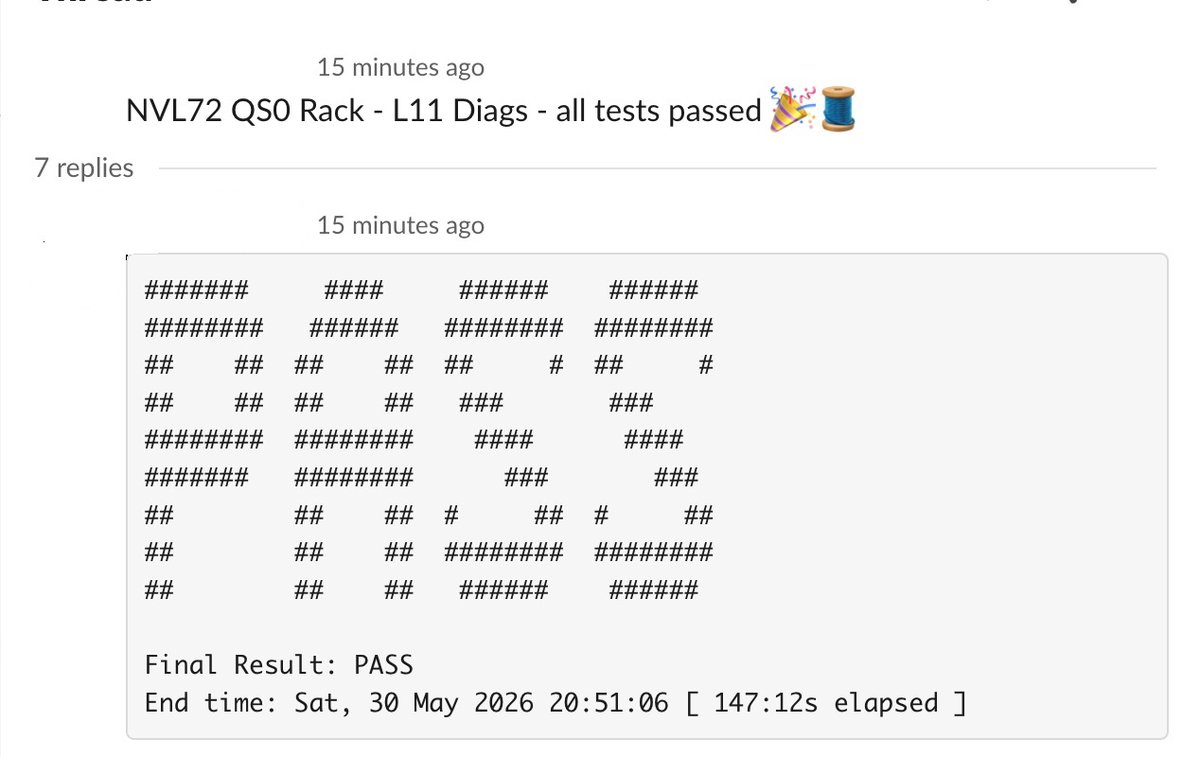
NVL72 (Vera Rubin) is expected to deploy at scale in IREN’s Sweetwater campus.
This next-gen platform could deliver a massive revenue uplift with analysts projecting $15M–$25M ARR per rack and 2.5x–5x higher performance vs previous gen.
Sweetwater’s 2 GW alone could add $250B – $450B to $IREN’s market cap at maturity. ⚡
I know there could be dilution, but you get the point 👀
May 31

8
2
53
8,142
Todd retweeted

May 30
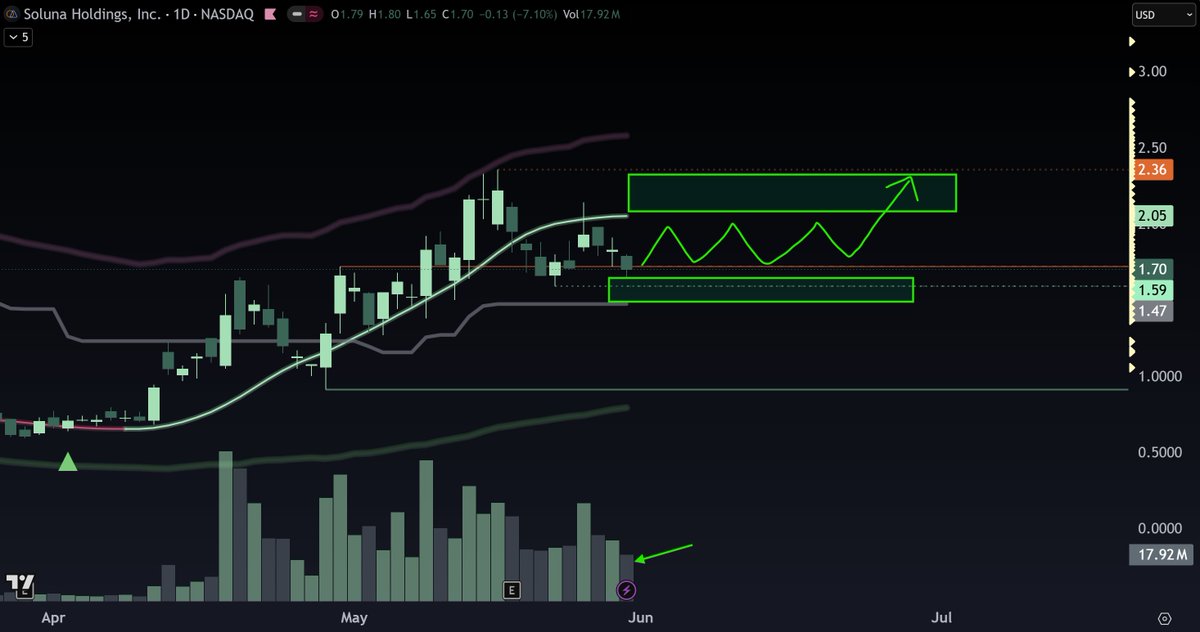
$SLNH Friday closed right at the support level ($1.70) with lower volume compared to previous sessions. I expect buyers to keep price from falling lower.
However, after the huge run it will be normal to see some consolidation before upside continuation.
Still holding and very bullish mid/long-term. If price will bounce from this and reclaim the green trendline, I will add. This is far from over.
Watching closely.
NFA.
3
1
45
7,155

Todd retweeted
May 29
In AI infrastructure, power is the product.
Microsoft just made that case with billions spent on new capacity commitments, including 40 gigawatts of new renewable energy capacity contracted across 26 countries.
Soluna has been building on this premise since day one.
$SLNH #RenewableComputing
7
23
177
28,148
Todd retweeted
Potential $IREN GPU Financing Details
$100m out of pocket to generate roughly $680*.85=$578m of EBITDA for 5 years yet some 🐻 will tell you $IREN can’t make money
At $1600/$578=2.768 years with interest costs let’s round up to 3 years with 2 more years for the house on B300s that likely have 6-7 years of useful life as a bonus to cash flow
Maybe you want to 🎯 retrofit costs but the reality is that 60 MW will cost $250-300m on the high side
One last thought; do you really think @nvidia will pay a lower rate for @MirantisIT managed services than the rest of prospective clients?
I’ll save you some time. $3.50 is the floor and $4.00 is more likely.
May 28

$IREN
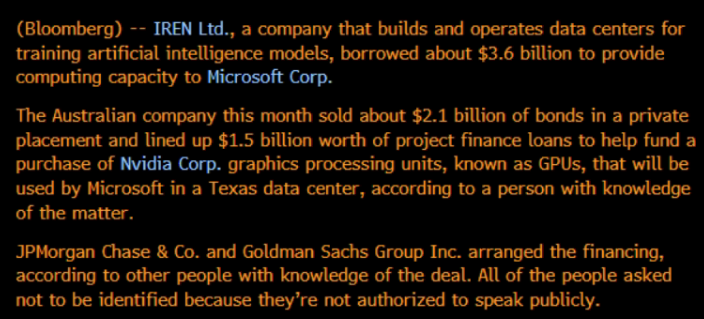
Looks like IREN will be taking on 1.5B of the 1.6B for the NVIDIA GPUs with debt financing.
As a reminder, for the MSFT GPU Capex, debt financing accounted for 3.6B of the 5.8B with the rest coming from the MSFT pre-payment and cash (267M)
CSP is a capital light business. 🙃
Bullish!
(Bloomberg is wrong that these GPUs will be used by MSFT - I think they're confused
6
14
146
29,877