AI's share of US electricity could triple by 2028.
Developers still in interconnection queues will still be waiting when that demand arrives.
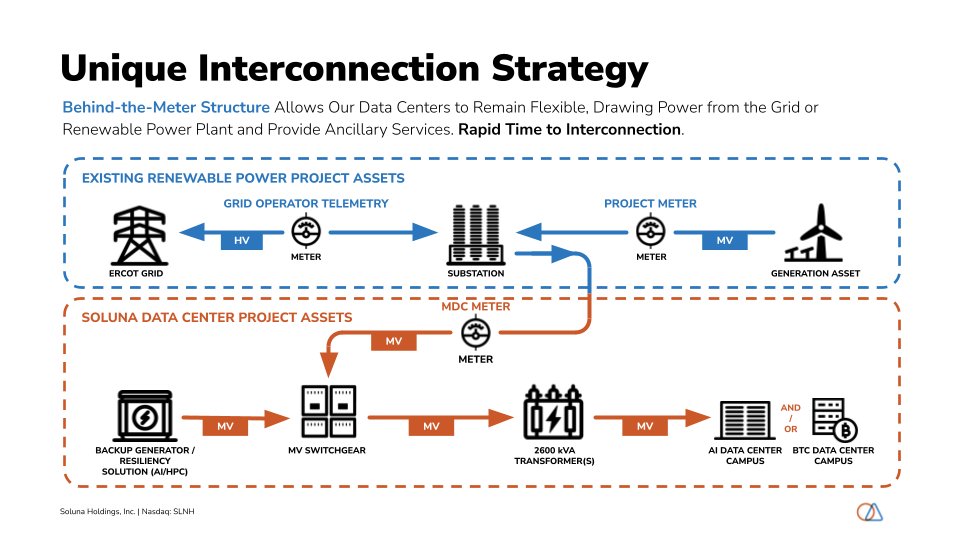
Soluna's 4.3 GW pipeline is contracted access to power that already exists.
Speed-to-power isn't a promise. It's the model.
#RenewableComputing $SLNH
2
19
139
5,629

Jun 13
$SLNH is no longer just a Bitcoin hosting story.
The investment thesis is increasingly centered on power ownership, speed-to-power, and AI infrastructure deployment.
Key facts:
⚡ 147 MW under management
⚡ 150 MW Briscoe Wind Farm acquired
⚡ 350 MW Kati 2 AI/HPC development
⚡ 300 MW Dorothy 3 AI campus
⚡ 4.3 GW total development pipeline
⚡ Active AI tenant discussions underway
As AI demand accelerates, the critical constraint is shifting from chips to electricity, land, grid access, and deployment speed.
Soluna's strategy is built around owning and controlling energy infrastructure before demand arrives.
The market is still waiting for the next major milestones:
✓ Tenant agreements
✓ Project financing
✓ Construction execution
✓ AI revenue conversion
If management executes, the value of the power platform may become increasingly visible over the coming years.
Not investment advice. Independent analysis based on publicly available company disclosures, investor presentations, earnings reports, and project updates.
@SolunaHoldings
cc @jbelizaireCEO 👏🏻🚀
$TSLA $COIN $SOFI $SQ $NVDA $SMCI $AMD $AVGO $TSM $ASML $ARM $PLTR $META $GOOGL $MSFT $AMZN $QCOM $MSTR $RIOT $MARA $WULF $IREN $HUT $CLSK $BITF $BTBT $CORZ $DGHI $DGXX $MSTR $EQIX $DLR $ORCL $CSCO $IBM $MU $BTC #BTC $CAN $ONDS #SLNH #SolunaHoldings #Bitcoin. #BitcoinOS #AIInfrastructure #HPC #DataCenters #EnergyInfrastructure #RenewableComputing #BehindTheMeter #ProjectKati #AI #DataCenters #RenewableEnergy #HPC #Bitcoin #Infrastructure #RenewableComputing #EnergyTransition #ERCOT #ArtificialIntelligence #SLNH #AI #HPC #Bitcoin #EnergyInfrastructure #CleanEnergy #Investing
#AI #HPC #Infrastructure #Investing #Technology #FutureOfAI #SLNH
$SLNH #AI #DataCenters #HPC #EnergyInfrastructure #Bitcoin
#SLNH #AIInfrastructure #DataCenters #RenewableEnergy #PowerInfrastructure #SpeedToPower #Investing
11
80
3,399

⚡ Soluna continues to advance its AI infrastructure roadmap with meaningful development milestones that strengthen the foundation for future large-scale compute deployments. 🚀🏗️🤖
#SLNH #RenewableComputing #AIInfrastructure #DataCenters #HPC #DigitalInfrastructure #AI
Read more: 🔗 poweranalysis.io/slnh
Jun 11

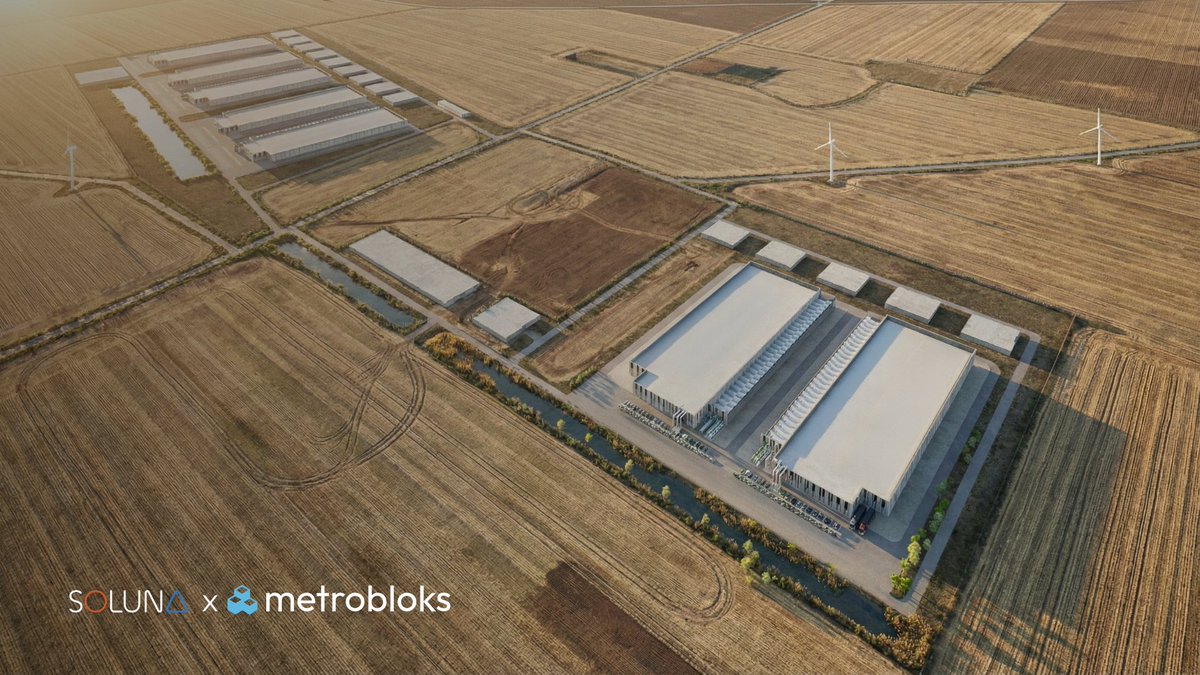
Kati 2 update.
Definitive JV signed with Metrobloks. Initial design complete. RFP launched for Phase 1 — 100 MW CIT.
Formal commercial negotiations underway with at least one potential tenant.
350 MW of AI and HPC capacity. Moving.
#RenewableComputing $SLNH
4
500
Jun 11
The AI race is no longer just about chips, models, or capital.
It is increasingly about one thing: power.
While the market focuses on AI applications, the real bottleneck is becoming access to reliable, scalable, and affordable electricity.
Soluna's model is built around that challenge.
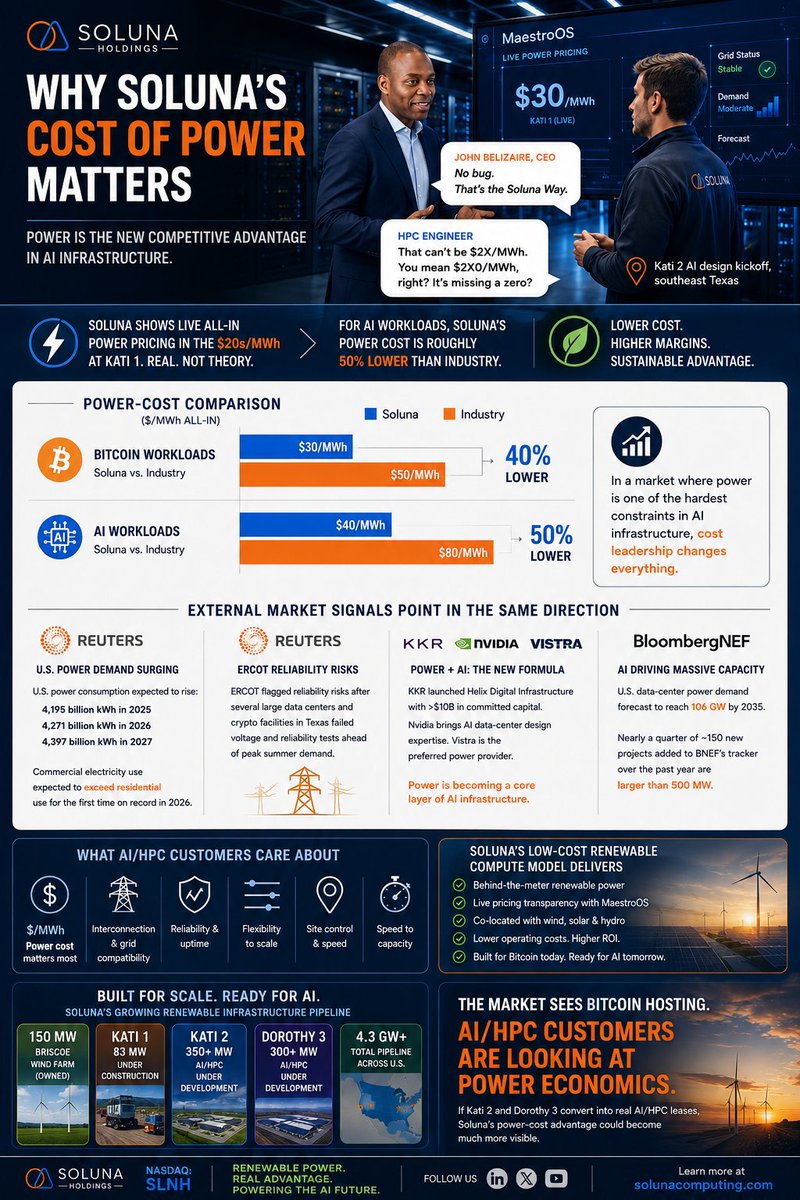
• Live power pricing in the $20s/MWh at Kati 1
• ~50% lower modeled AI power costs versus industry benchmarks
• 150 MW owned wind generation at Briscoe
• 83 MW Kati 1 under construction
• 350 MW Kati 2 AI/HPC campus advancing through commercial negotiations
• 300 MW Dorothy 3 AI expansion under development
• 4.3 GW renewable-powered pipeline
Meanwhile, industry trends continue to move in the same direction:
• U.S. electricity demand is rising
• AI data-center power demand is accelerating
• Power availability is becoming a strategic asset
• Infrastructure capital is flowing into AI Energy platforms
The market may still see $SLNH as a Bitcoin hosting company.
The bigger opportunity is what happens if its renewable-power infrastructure becomes a foundation for next-generation AI and HPC deployments.
In a world where AI needs more power every year, low-cost energy may become one of the most valuable competitive advantages.
Power first. Compute second.
@SolunaHoldings
cc @jbelizaireCEO 👏🏻🚀
$TSLA $COIN $SOFI $SQ $NVDA $SMCI $AMD $AVGO $TSM $ASML $ARM $PLTR $META $GOOGL $MSFT $AMZN $QCOM $MSTR $RIOT $MARA $WULF $IREN $HUT $CLSK $BITF $BTBT $CORZ $DGHI $DGXX $MSTR $EQIX $DLR $ORCL $CSCO $IBM $MU $BTC #BTC $CAN $ONDS #SLNH #SolunaHoldings #Bitcoin. #BitcoinOS #AIInfrastructure #HPC #DataCenters #EnergyInfrastructure #RenewableComputing #BehindTheMeter #ProjectKati #AI #DataCenters #RenewableEnergy #HPC #Bitcoin #Infrastructure #RenewableComputing #EnergyTransition #ERCOT #ArtificialIntelligence #SLNH #AI #DataCenters #RenewableComputing #HPC #Bitcoin #EnergyInfrastructure #CleanEnergy #AIInfrastructure #Investing
#AI #DataCenters #EnergyInfrastructure #RenewableEnergy #HPC #Infrastructure #Investing #Technology #PowerGrid #FutureOfAI #SLNH
$SLNH #AI #DataCenters #HPC #RenewableComputing #EnergyInfrastructure #Bitcoin #AIInfrastructure
Not financial advice. Do your own research.
Jun 11
Kati 2 update.
Definitive JV signed with Metrobloks. Initial design complete. RFP launched for Phase 1 — 100 MW CIT.
Formal commercial negotiations underway with at least one potential tenant.
350 MW of AI and HPC capacity. Moving.
#RenewableComputing $SLNH
2
1
25
2,448

Jun 11
Kati 2 update.
Definitive JV signed with Metrobloks. Initial design complete. RFP launched for Phase 1 — 100 MW CIT.
Formal commercial negotiations underway with at least one potential tenant.
350 MW of AI and HPC capacity. Moving.
#RenewableComputing $SLNH
8
31
195
24,107
🌱 Soluna continues to strengthen its vertically integrated renewable computing strategy by connecting owned power generation directly to its growing compute infrastructure. ⚡💻
#SLNH #RenewableComputing #AIInfrastructure #DataCenters #CleanEnergy #DigitalInfrastructure
Read more: 🔗 poweranalysis.io/slnh
Jun 10
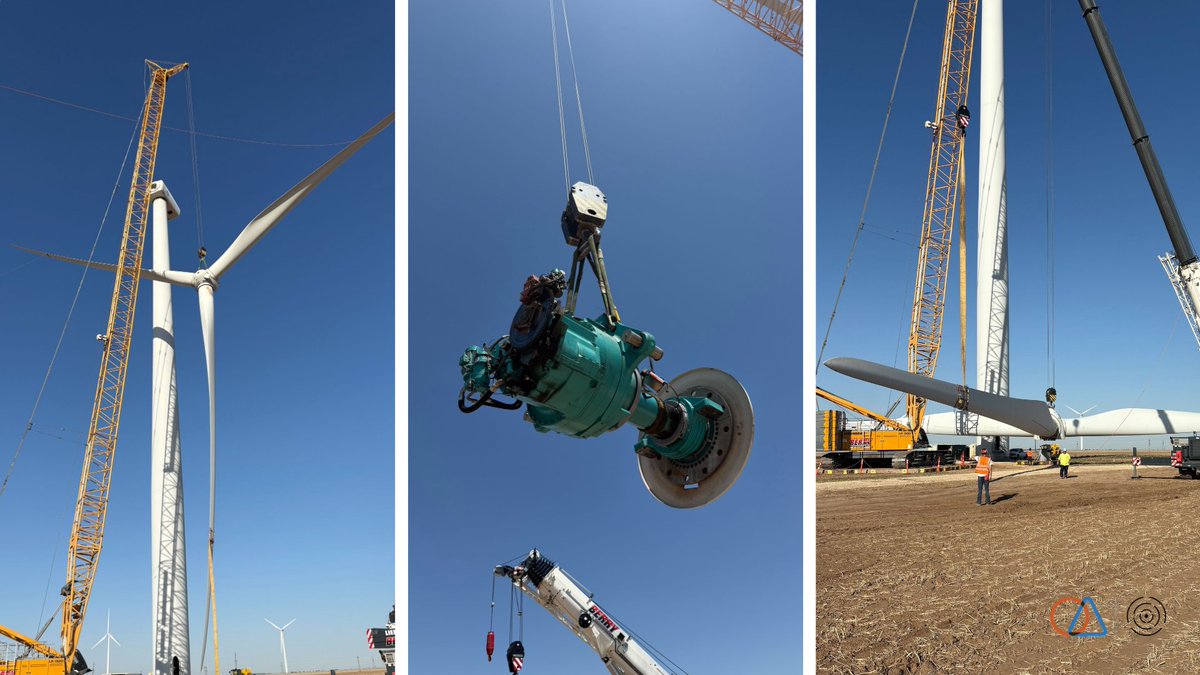
Briscoe Wind Farm is now fully integrated into Soluna's operations.
Routine, scheduled maintenance completed.
150 MW of owned renewable generation, co-located with Project Dorothy.
The ownership chain from generation to compute at Dorothy 1 is complete.
#RenewableComputing $SLNH
5
648

Briscoe Wind Farm 150MWがSoluna Holdingsに完全統合完了!🎉
定期メンテナンスも終了し、Project Dorothyと完全にco-located。
再生可能エネルギー発電からBitcoinマイニング/AIコンピュートまで自社垂直統合が実現。
$SLNH の事業基盤がまた一歩強固に! #RenewableComputing #Soluna
Jun 10
Briscoe Wind Farm is now fully integrated into Soluna's operations.
Routine, scheduled maintenance completed.
150 MW of owned renewable generation, co-located with Project Dorothy.
The ownership chain from generation to compute at Dorothy 1 is complete.
#RenewableComputing $SLNH
1
1
14
1,031
Jun 10
Briscoe Wind Farm is now fully integrated into Soluna's operations.
Routine, scheduled maintenance completed.
150 MW of owned renewable generation, co-located with Project Dorothy.
The ownership chain from generation to compute at Dorothy 1 is complete.
#RenewableComputing $SLNH
8
18
150
7,740
Jun 9
Dorothy 3 update.
300 acres secured. Environmental due diligence underway. Fiber studies launched. Utility coordination in progress.
300 MW of AI and HPC infrastructure.
Foundation in place.
#RenewableComputing $SLNH
4
21
183
9,961
Jun 9
Soluna's May business update is live.
Q1 revenue up 58% YoY. Fourth consecutive quarter of growth. 147 MW under management.
Kati 2 JV signed. Dorothy 3 land secured. Briscoe integrated. Kati 1 ahead of schedule.
Full update: solunacomputing.com/news/mon…
#RenewableComputing $SLNH
2
20
147
15,840
Jun 6
$SLNH AI Is No Longer Just a Technology Story ، It’s Becoming a National Strategy.
Recent comments from President Trump suggest that AI has moved beyond the private sector and into the realm of national economic and strategic priorities.
As AI demand accelerates, the conversation is shifting from models and chips to the infrastructure required to support them:
⚡ Power
🏗️ Land
🔌 Grid Access
🖥️ Data Centers
The biggest challenge may not be building AI.
It may be powering it.
That is why infrastructure-focused companies are attracting increasing attention. The next phase of the AI revolution will require enormous amounts of reliable energy and compute capacity.
For investors, the key question is no longer:
"Who builds the best AI?"
It is:
"Who owns the infrastructure that AI cannot operate without?"
The AI race is evolving from software to power, and from chips to infrastructure.
The market is beginning to recognize that distinction.
@SolunaHoldings
cc @jbelizaireCEO 👏🏻🚀
$TSLA $COIN $SOFI $SQ $NVDA $SMCI $AMD $AVGO $TSM $ASML $ARM $PLTR $META $GOOGL $MSFT $AMZN $QCOM $MSTR $RIOT $MARA $WULF $IREN $HUT $CLSK $BITF $BTBT $CORZ $DGHI $DGXX $MSTR $EQIX $DLR $ORCL $CSCO $IBM $MU $BTC #BTC $CAN $ONDS #SLNH #SolunaHoldings #Bitcoin. #BitcoinOS #AIInfrastructure #HPC #DataCenters #EnergyInfrastructure #RenewableComputing #BehindTheMeter #ProjectKati #AI #DataCenters #RenewableEnergy #HPC #Bitcoin #Infrastructure #RenewableComputing #EnergyTransition #ERCOT #ArtificialIntelligence #SLNH #AI #DataCenters #RenewableComputing #HPC #Bitcoin #EnergyInfrastructure #CleanEnergy #AIInfrastructure #Investing
#AI #DataCenters #EnergyInfrastructure #RenewableEnergy #HPC #Infrastructure #Investing #Technology #PowerGrid #FutureOfAI #SLNH
Not financial advice. Do your own research.
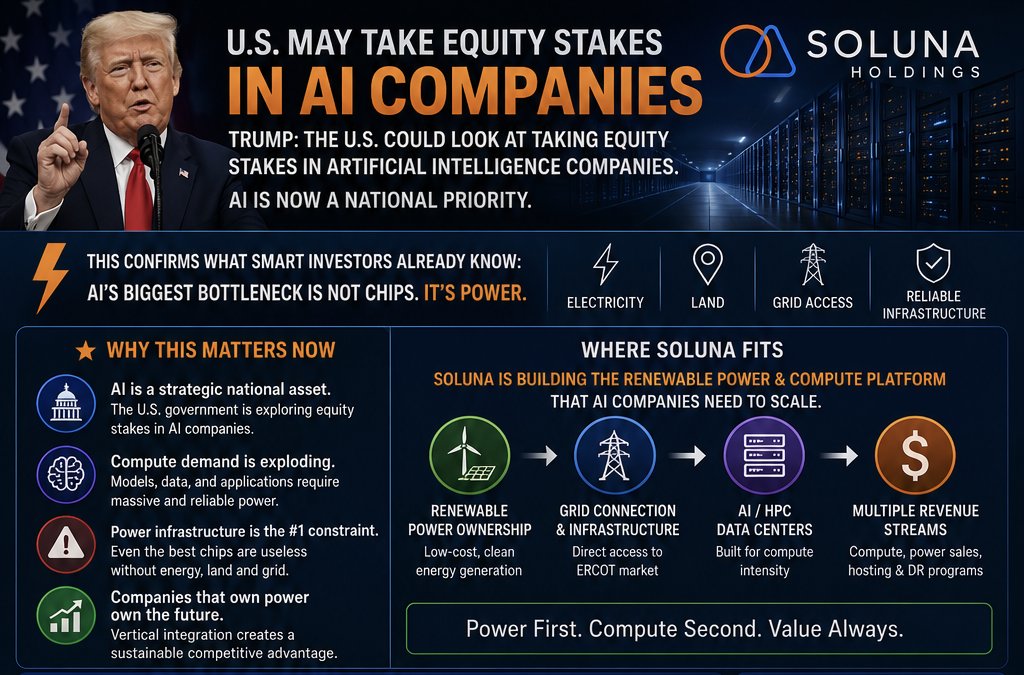

Donald Trump told reporters that his team might buy US stakes in artificial-intelligence companies and said he would host a meeting with AI executives as soon as next week reut.rs/4uV9zmg
3
1,176
Jun 6
$SLNH | The Market Is Starting to See What Soluna Is Building
Most investors still view Soluna as a Bitcoin hosting company.
The reality is far bigger.
Soluna is building a vertically integrated Renewable Computing platform designed for the next generation of AI, HPC, and energy infrastructure.
✅ 150 MW owned wind generation (Briscoe)
✅ 166 MW Project Kati under construction
✅ 350 MW Kati 2 AI campus plan
✅ 300 MW Dorothy 3 AI roadmap
✅ 1 GW renewable computing pipeline
✅ $100M Generate Capital credit facility
✅ Growing institutional ownership and strategic partnerships
While many AI data center projects are waiting years for power, Soluna's strategy is different: control the power first, then build the compute.
As AI demand accelerates globally, energy availability is becoming the most valuable asset in the industry.
The question is no longer whether AI needs more compute.
The question is who owns the power to support it.
Soluna is positioning itself at the intersection of renewable energy, AI infrastructure, Bitcoin, and grid-scale computing.
Execution remains the key risk, but if management delivers on Kati, Dorothy, and its AI roadmap, today's valuation could look very different from what the market eventually assigns to a scaled renewable computing platform.
Power first. Compute second. AI next.🔥
@SolunaHoldings
cc @jbelizaireCEO 👏🏻🚀
$TSLA $COIN $SOFI $SQ $NVDA $SMCI $AMD $AVGO $TSM $ASML $ARM $PLTR $META $GOOGL $MSFT $AMZN $QCOM $MSTR $RIOT $MARA $WULF $IREN $HUT $CLSK $BITF $BTBT $CORZ $DGHI $DGXX $MSTR $EQIX $DLR $ORCL $CSCO $IBM $MU $BTC #BTC $CAN $ONDS #SLNH #SolunaHoldings #Bitcoin. #BitcoinOS #AIInfrastructure #HPC #DataCenters #EnergyInfrastructure #RenewableComputing #BehindTheMeter #ProjectKati #AI #DataCenters #RenewableEnergy #HPC #Bitcoin #Infrastructure #RenewableComputing #EnergyTransition #ERCOT #ArtificialIntelligence #SLNH #AI #DataCenters #RenewableComputing #HPC #Bitcoin #EnergyInfrastructure #CleanEnergy #AIInfrastructure #Investing
Not financial advice. Do your own research.


$SLNH
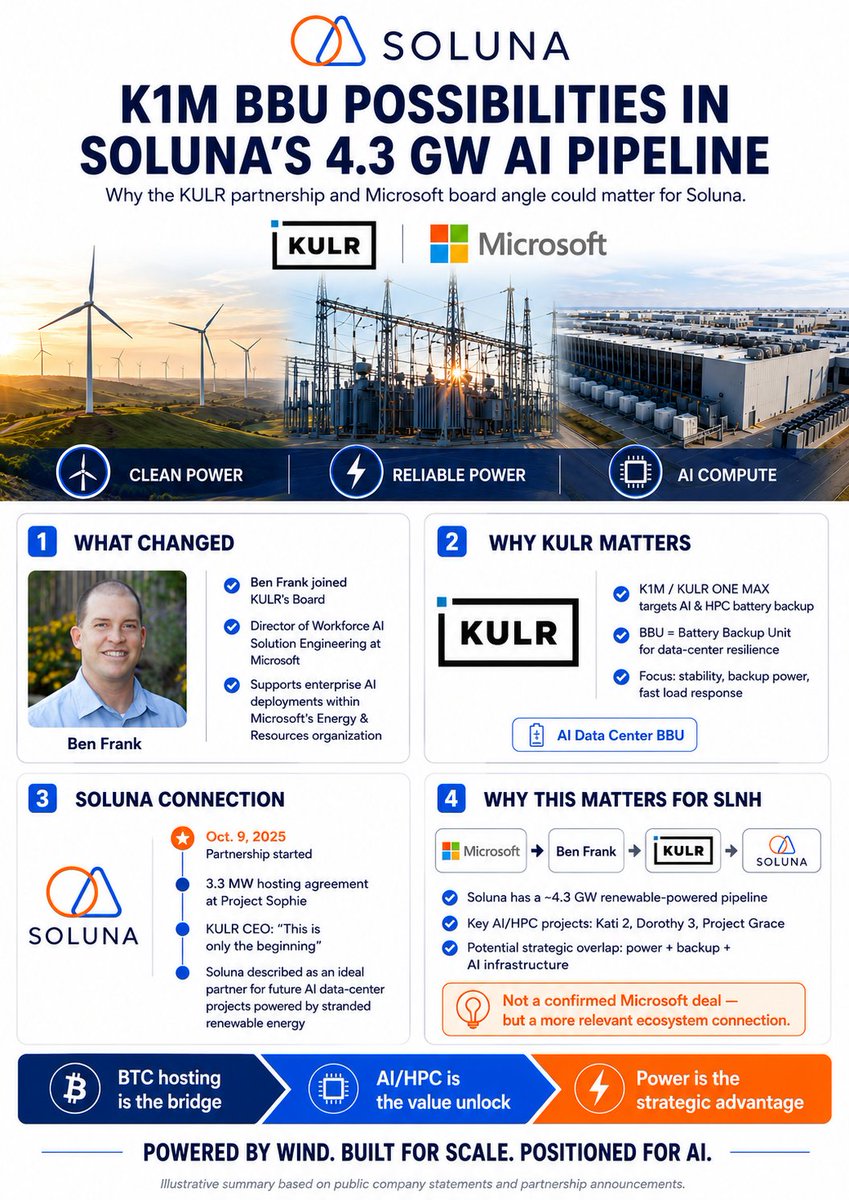
Microsoft’s AI energy footprint keeps getting bigger and this is where the @SolunaHoldings x @KULRTech connection starts to look very interesting.
KULR recently added Ben Frank to its Board of Directors. (28 april 2026)
Frank is not just “someone from Microsoft.”
He serves as Director of Workforce AI Solution Engineering at Microsoft, where he leads technical teams supporting large enterprise customers deploying AI platforms within Microsoft’s Energy & Resources organization.
That background is highly relevant.
Why?
Because AI data centers are no longer just about GPUs.
They are about power availability, renewable energy, grid flexibility, battery backup, uptime and the ability to deploy infrastructure where energy is available.
Now connect that to Soluna.
Soluna and KULR officially started their partnership on October 9, 2025, when they announced a 3.3 MW hosting agreement at Project Sophie.
But the most interesting part was not only the hosting deal.
It was what KULR’s CEO said after the announcement:
“This is only the beginning.”
He specifically pointed to KULR’s future Battery Backup Unit solutions and said Soluna stands out as an ideal partner for AI data center projects powered by stranded renewable energy.
That comment looks much more important today.
KULR is positioning its K1M / KULR ONE MAX battery backup technology for AI and HPC data centers.
KULR now has Microsoft AI/Energy expertise on its board.
And Soluna is building a 4.3 GW renewable-powered compute pipeline, with projects like Kati 2, Dorothy 3 and Project Grace positioned around AI/HPC infrastructure.
So the setup becomes interesting:
Microsoft → massive AI energy demand
Ben Frank → Microsoft AI Energy & Resources expertise
KULR → AI data center battery backup technology
KULR → existing Soluna partnership since October 2025
Soluna → renewable-powered AI/HPC infrastructure pipeline
To me, this is not about claiming a Microsoft deal.
It is about strategic positioning.
Soluna is moving closer to the exact intersection where Microsoft, hyperscalers, renewable energy, battery systems and AI data center infrastructure are all starting to converge.
1
5
48
3,603
Jun 4
$SLNH: More Than a Bitcoin Miner. Building the Energy Infrastructure for AI.
While most investors focus on GPUs and data centers, Soluna is focused on the resource that will ultimately determine who wins the AI race:
⚡ Power.
Soluna is creating a vertically integrated Renewable Computing platform that combines:
✅ Owned Power Assets
✅ Renewable Energy Infrastructure
✅ ERCOT Access
✅ AI/HPC Data Centers
✅ Bitcoin Hosting Operations
Key assets include:
🔹 150 MW Briscoe Wind Farm (Owned Generation)
🔹 166 MW Project Kati under development
🔹 350 MW Kati 2 AI Campus plan
🔹 300 MW Dorothy 3 AI Campus roadmap
🔹 1 GW Renewable Computing Pipeline
What makes Soluna different is its ability to turn stranded renewable energy into revenue through multiple channels:
• AI / HPC Leasing
• Bitcoin Hosting
• Power Sales
• Demand Response Programs
The market is beginning to realize that AI's biggest bottleneck is not chips.
It's energy.
As AI demand accelerates, companies with access to scalable, low-cost power may become some of the most valuable infrastructure providers in the next decade.
Project Kati, the $100M Generate Capital facility, growing institutional ownership, and the expanding AI/HPC strategy are all pointing toward the same thesis:
The future of AI runs on power.
@SolunaHoldings is building that power.
cc @jbelizaireCEO 👏🏻🚀
$TSLA $COIN $SOFI $SQ $NVDA $SMCI $AMD $AVGO $TSM $ASML $ARM $PLTR $META $GOOGL $MSFT $AMZN $QCOM $MSTR $RIOT $MARA $WULF $IREN $HUT $CLSK $BITF $BTBT $CORZ $DGHI $DGXX $MSTR $EQIX $DLR $ORCL $CSCO $IBM $MU $BTC #BTC $CAN $ONDS #SLNH #SolunaHoldings #Bitcoin. #BitcoinOS #AIInfrastructure #HPC #DataCenters #EnergyInfrastructure #RenewableComputing #BehindTheMeter #ProjectKati #AI #DataCenters #RenewableEnergy #HPC #Bitcoin #Infrastructure #RenewableComputing #EnergyTransition #ERCOT #ArtificialIntelligence
Not financial advice. Do your own research.
$SLNH After covering Kati 2, financing and the timeline, the next important part from the interview (@disruptorinvest x @jbelizaireCEO) is Dorothy and Briscoe.
This part matters because Briscoe changes how investors should think about @SolunaHoldings m platform.
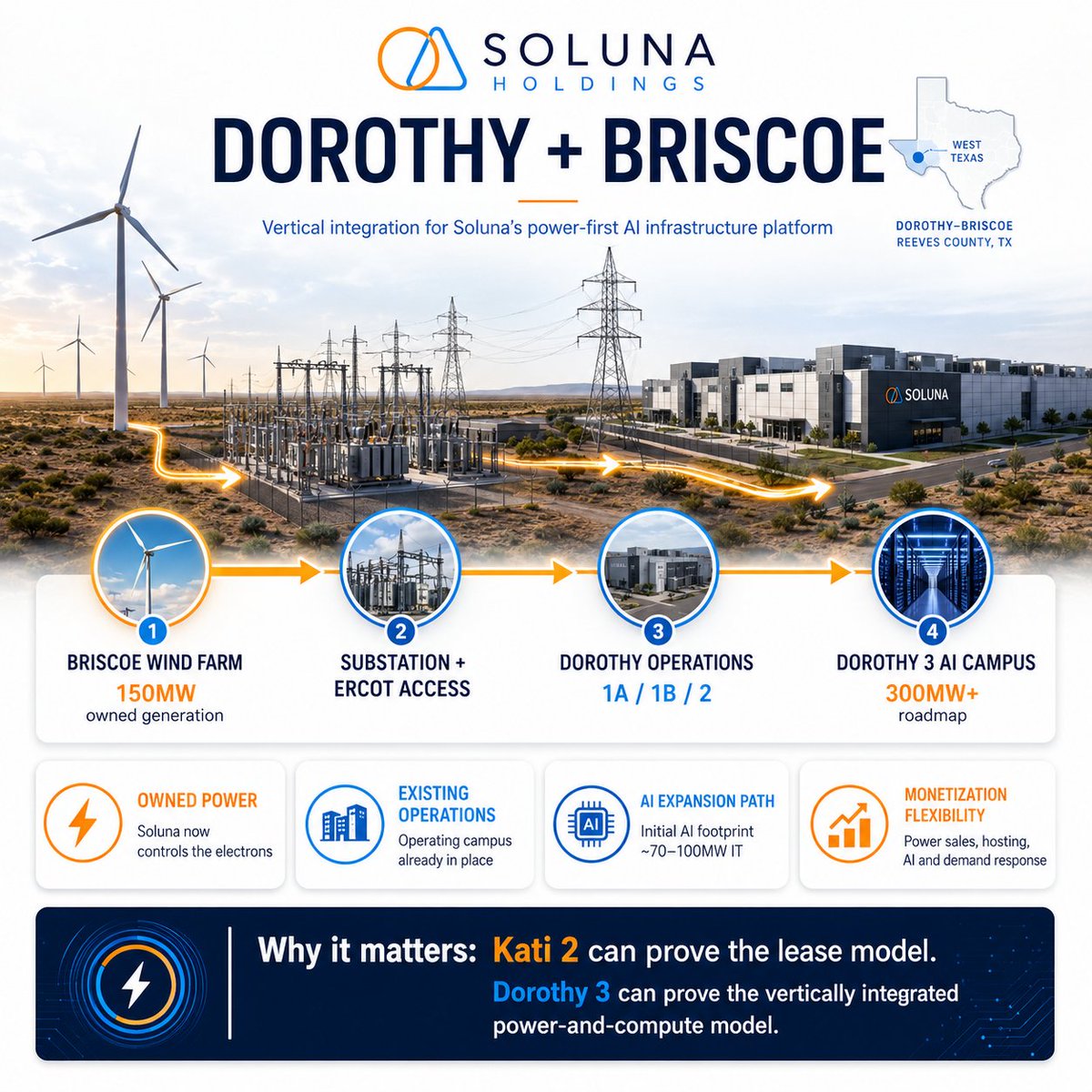
Dorothy has been Soluna’s most mature Bitcoin campus, with Dorothy 1A, Dorothy 1B and Dorothy 2 already forming an operating base. But the real strategic shift came when Soluna acquired the 150MW Briscoe Wind Farm in West Texas.
That acquisition is not just another asset purchase.
It is vertical integration.
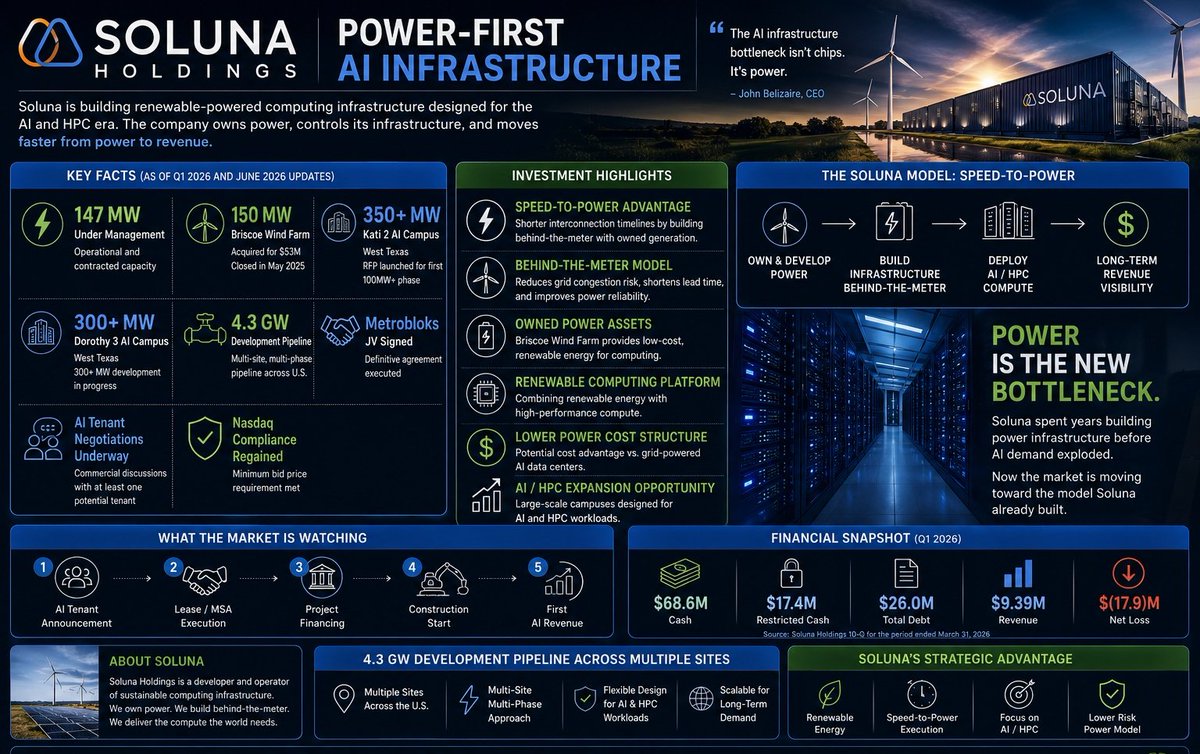
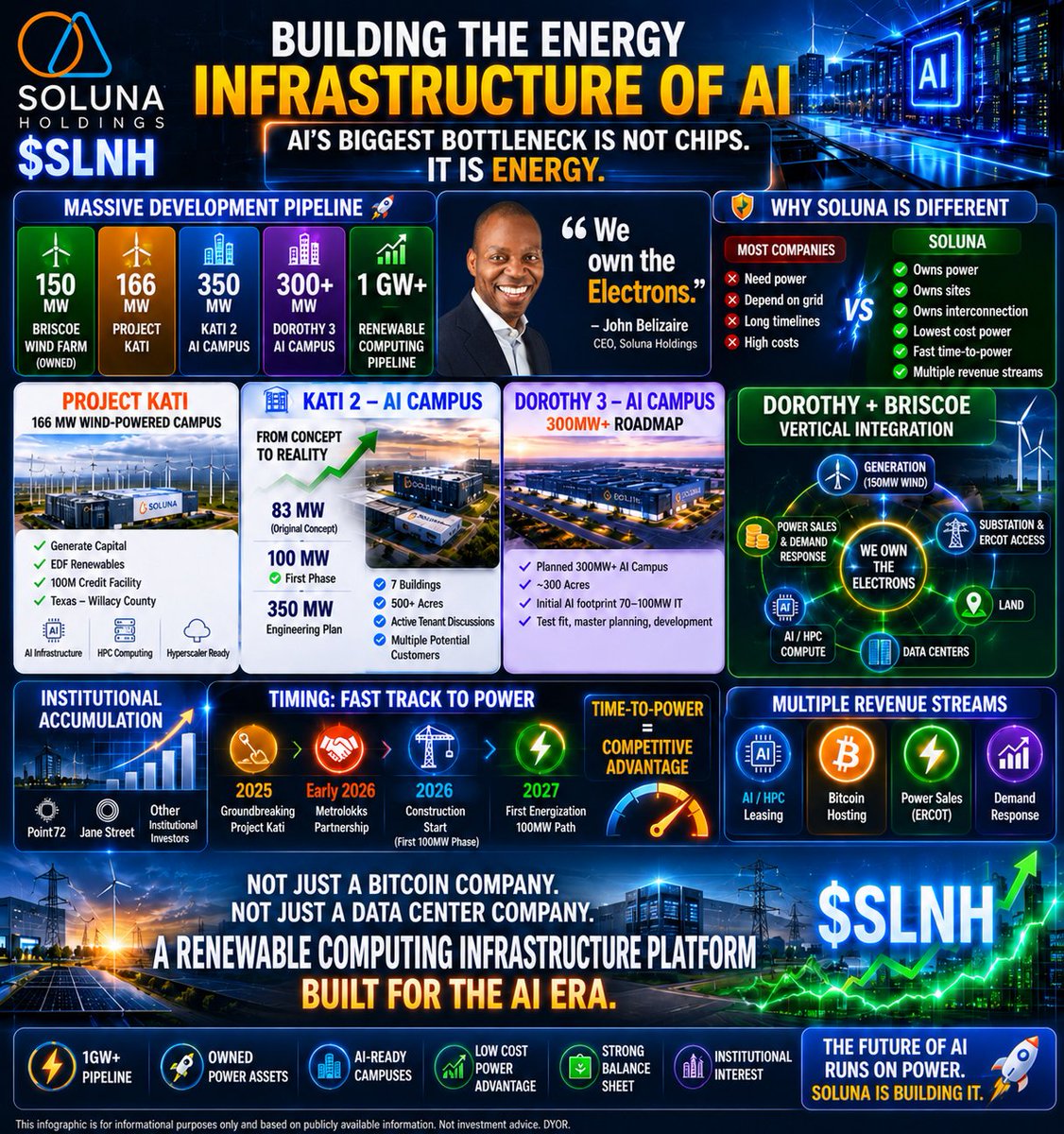
With Briscoe, Soluna now controls the power generation asset, the substation, the interconnection and the electrical infrastructure connected into ERCOT. John described it very simply: Soluna now owns the electrons.
That is a very different setup from a normal PPA structure.
Instead of only being a data center operator buying power from a third party, Soluna now controls the power layer directly at one of its key campuses. That gives the company more flexibility around how power is used, sold and monetized.
Power can support existing Bitcoin hosting.
Power can be sold into ERCOT.
Power can support future AI/HPC conversion.
And when loads are curtailed, Soluna can potentially benefit from both power sales and demand response revenue.
This is why Briscoe is strategically important for Dorothy 3.
John described Dorothy 3 as a planned 300MW AI campus on around 300 acres near the existing Dorothy infrastructure. The goal is to use the existing operating footprint, the Briscoe power generation asset and Soluna’s on-site experience to create a faster path toward large-scale AI/HPC capacity.
He explained that Briscoe gives Soluna the foundation to begin thinking about an initial AI footprint around 70–100MW IT, with the potential to grow toward the broader 300MW Dorothy 3 opportunity as Dorothy 2 is integrated or converted and as clustering or on-site generation is added over time.
John also said Soluna is beginning test fit, master planning and development work for Dorothy 3. Test fit means looking at how a 100MW data center could actually sit on the land, how many buildings can fit, how the campus could scale and how the full power model would work.
That moves Dorothy 3 from “pipeline idea” toward a more concrete 300MW AI campus development package.
Another important point from the interview was that Soluna has already submitted a request to increase the Dorothy 3 load footprint by 50MW. John joked that because Soluna owns the power plant, the question becomes: who do we need to talk to? Ourselves.
That captures the value of vertical integration.
If you own the power asset, the land strategy, the operating footprint and the interconnection path, you can potentially compress timelines compared to a traditional data center project waiting years for grid access.
There are also important details from Soluna’s updates outside the interview.
The Briscoe acquisition was announced at $53M and was financed with cash on the balance sheet and debt, not simply through a common equity raise. Soluna guided that Briscoe could contribute around $20–24.4M in annualized revenue and $6–11M in Year-One Adjusted EBITDA.
So Briscoe is not only a future AI option.
It is expected to contribute cash flow now.
The asset also brings a concrete technical base: around 150MW of wind generation, GE Vernova turbines, ERCOT interconnection and an energized substation. Soluna has also said it is working on turbine upgrades, which suggests the company is not just holding the asset passively but trying to optimize it.
The Dorothy 1B acquisition also fits into the same theme. By taking full ownership of Dorothy 1B, Soluna is consolidating more of the Dorothy campus under its own control. Step by step, the company is bringing together power, compute, land, interconnection and ownership.
That is the real story behind Dorothy and Briscoe.
3
16
2,303
Jun 2
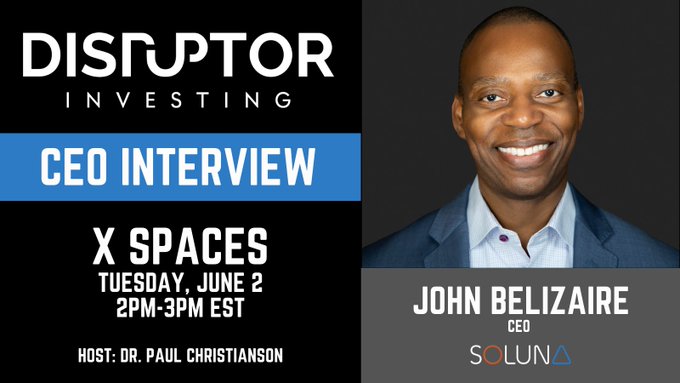
Today, June 2nd, at 2:00 pm EST.
Soluna CEO John Belizaire joins @disruptorInvest on X Spaces.
Tune in: x.com/i/spaces/1wxWjjlRjlNJQ…
$SLNH #RenewableComputing @jbelizaireCEO
1
19
92
16,091
再生可能エネルギーの間欠性は避ける理由じゃない。賢いインフラで解決するチャンスだ。
Solunaの多電源ミックス+MaestroOSで、再生エネサイトでも常時稼働のコンピュートを実現。
Renewable-firstがコンピューティングの未来。🌍
#RenewableComputing $SLNH
Jun 1
The intermittency problem isn't a reason to avoid renewable energy. It's a reason to build smarter infrastructure around it.
Soluna's multi-source power mix, managed in real time by MaestroOS, is what makes always-on compute possible from a renewable generation site.
Renewable-first. That’s the future of computing.
#RenewableComputing $SLNH
17
1,692
May 29
In AI infrastructure, power is the product.
Microsoft just made that case with billions spent on new capacity commitments, including 40 gigawatts of new renewable energy capacity contracted across 26 countries.
Soluna has been building on this premise since day one.
$SLNH #RenewableComputing
7
23
177
28,029
May 23
🚨 AI is no longer just a chip race — it is becoming a race for power, cooling and infrastructure.
The proposed Utah data center project highlights the bottleneck: AI scale requires enormous, reliable energy.
That is the $SLNH thesis:
⚡ 4.3 GW pipeline
⚡ 147 MW managed capacity
⚡ ~$30/MWh average power cost
⚡ 150 MW Briscoe Wind Farm owned
⚡ 600 MW AI/HPC development potential across Kati 2 and Dorothy 3
Soluna is building compute infrastructure around renewable power assets.
The next major catalyst: a signed commercial AI customer.
When power becomes the scarce asset of the AI era, Soluna’s energy-first strategy becomes increasingly valuable.
$SLNH ⚡⏳
$SLNH @SolunaHoldings ⏳⚡
cc @jbelizaireCEO 👏🏻🤍🚀
$TSLA $COIN $SOFI $SQ $NVDA $SMCI $AMD $AVGO $TSM $ASML $ARM $PLTR $META $GOOGL $MSFT $AMZN $QCOM $MSTR $RIOT $MARA $WULF $IREN $HUT $CLSK $BITF $BTBT $CORZ $DGHI $DGXX $MSTR $EQIX $DLR $ORCL $CSCO $IBM $MU $BTC #BTC $CAN $ONDS #SLNH #SolunaHoldings #Bitcoin. #BitcoinOS #AIInfrastructure #HPC #DataCenters #EnergyInfrastructure #RenewableComputing #BehindTheMeter #ProjectKati
1
2
25
2,197
May 15
The market is finally starting to understand that $SLNH is not just a Bitcoin hosting company anymore.
⚡ 4.3 GW pipeline
⚡ Cash growth from $10.5M → $88.8M
⚡ Operating capacity doubled
⚡ Renewable-powered AI infrastructure strategy
⚡ One of the lowest power costs in the sector at $34/MWh
The real story is not trailing revenue.
The real story is the infrastructure, power assets, and AI/HPC optionality being built underneath the surface.
$SLNH @SolunaHoldings ⏳⚡
cc @jbelizaireCEO 👏🏻🤍🚀
$TSLA $COIN $SOFI $SQ $NVDA $SMCI $AMD $AVGO $TSM $ASML $ARM $PLTR $META $GOOGL $MSFT $AMZN $QCOM $MSTR $RIOT $MARA $WULF $IREN $HUT $CLSK $BITF $BTBT $CORZ $DGHI $DGXX $MSTR $EQIX $DLR $ORCL $CSCO $IBM $MU $BTC #BTC $CAN $ONDS #SLNH #SolunaHoldings #Bitcoin. #BitcoinOS #AIInfrastructure #HPC #DataCenters #EnergyInfrastructure #RenewableComputing #BehindTheMeter #ProjectKati
May 15
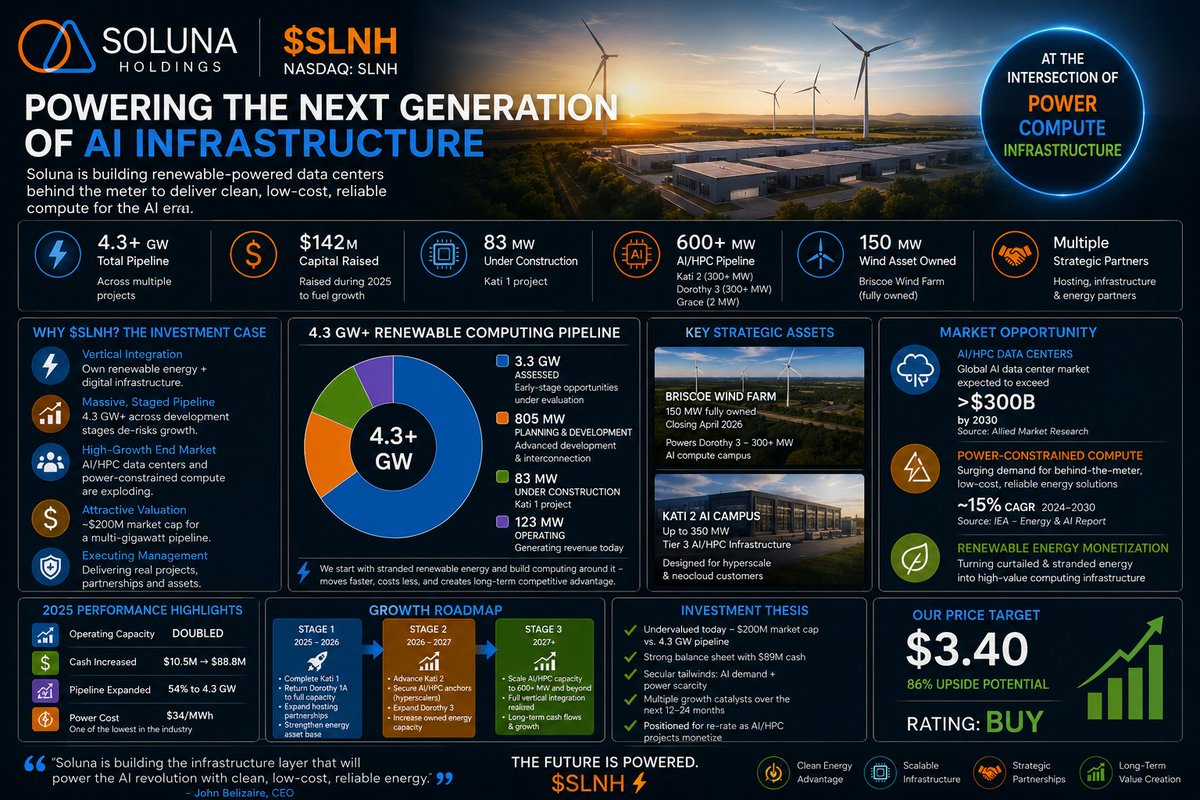
Miletus Research covered $SLNH this week via @SeekingAlpha
The numbers from 2025: operating capacity doubled, cash grew from $10.5M to $88.8M, pipeline expanded 54% to 4.3 GW, power cost at $34/MWh.
The argument: trailing revenue doesn't capture what the pipeline represents.
Full analysis: seekingalpha.com/article/490…
1
14
111
7,350
May 10
$SLNH
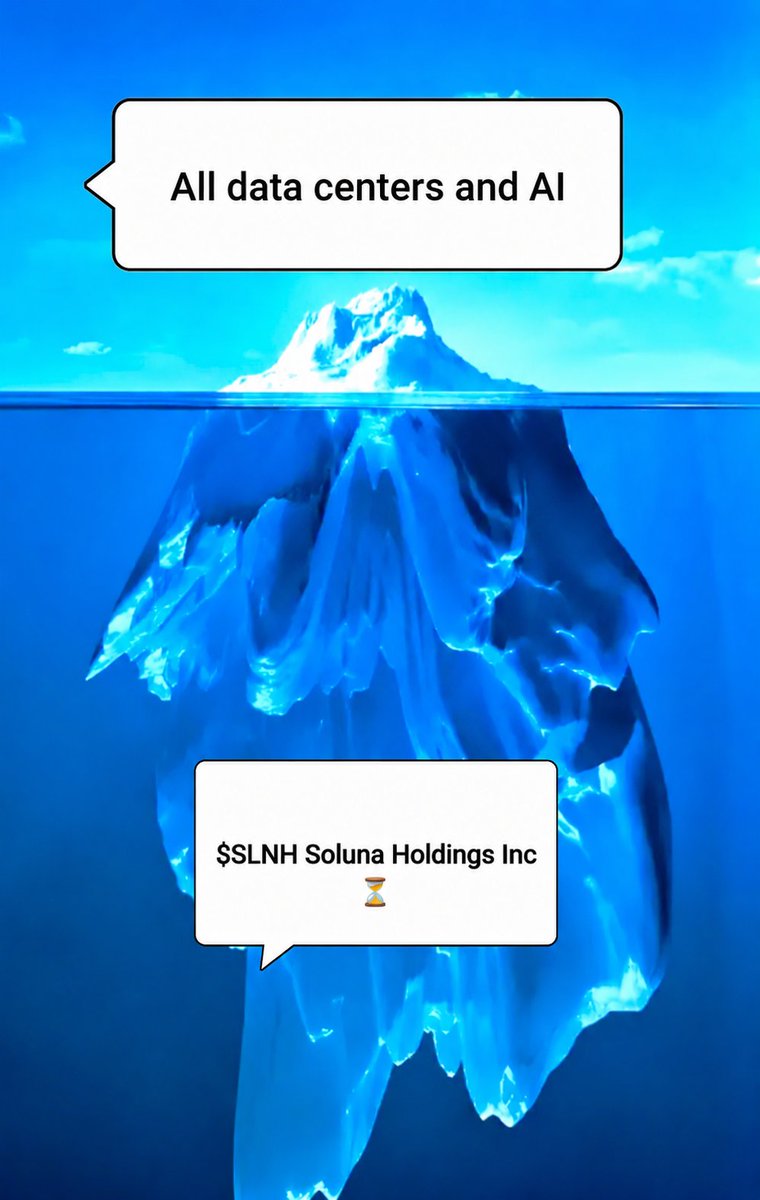
Most investors see AI.
Few truly understand the hidden layer beneath it:
⚡ Power
⚡ Energy infrastructure
⚡ Renewable compute
That is where $SLNH is positioning itself.
As AI scales globally, power becomes the real bottleneck ، and Soluna is building directly around that future.
@jbelizaireCEO cc👏🏻🤍🚀
$SLNH ⚡
$TSLA $COIN $SOFI $SQ $NVDA $SMCI $AMD $AVGO $TSM $ASML $ARM $PLTR $META $GOOGL $MSFT $AMZN $QCOM $MSTR $RIOT $MARA $WULF $IREN $HUT $CLSK $BITF $BTBT $CORZ $DGHI $DGXX $MSTR $EQIX $DLR $ORCL $CSCO $IBM $MU $BTC #BTC $CAN $ONDS #SLNH #SolunaHoldings #Bitcoin. #BitcoinOS #AIInfrastructure #HPC #DataCenters #EnergyInfrastructure #RenewableComputing #BehindTheMeter #ProjectKati
May 8

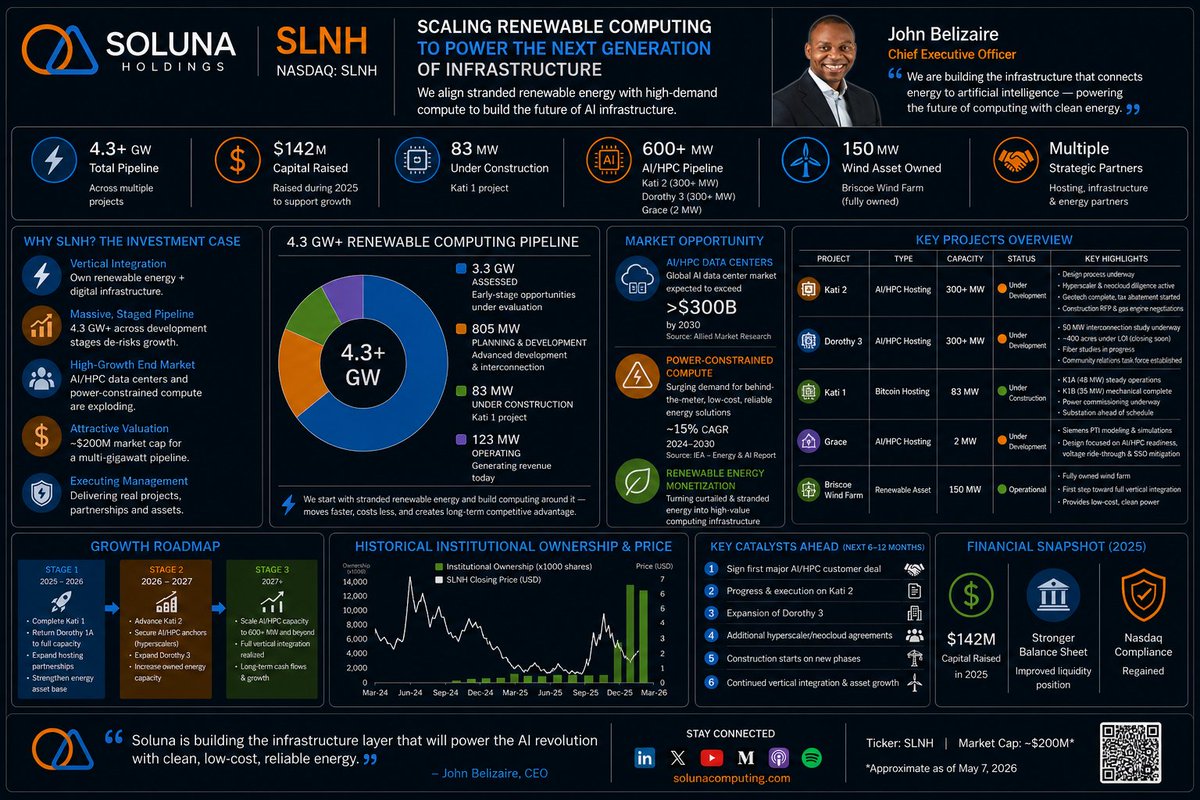
$SLNH @SolunaHoldings is no longer a small-cap mining story.
It is evolving into a renewable-powered AI infrastructure platform positioned at the intersection of:
⚡ Energy
🧠 AI / HPC Compute
🏗️ Digital Infrastructure
While the market is still pricing Soluna near ~$200M, the company is actively advancing multi-hundred-megawatt AI/HPC projects, expanding renewable assets, and engaging with hyperscalers and neocloud operators.
The real question is no longer: “Can Soluna survive?”
The question becoming more relevant is: “What happens if even ONE major AI/HPC commercial deal gets signed?”
In this sector, re-ratings happen fast.
Power is becoming the most valuable asset in AI infrastructure — and Soluna is building directly around it.
@jbelizaireCEO cc👏🏻🤍🚀
$SLNH ⚡
$TSLA $COIN $SOFI $SQ $NVDA $SMCI $AMD $AVGO $TSM $ASML $ARM $PLTR $META $GOOGL $MSFT $AMZN $QCOM $MSTR $RIOT $MARA $WULF $IREN $HUT $CLSK $BITF $BTBT $CORZ $DGHI $DGXX $MSTR $EQIX $DLR $ORCL $CSCO $IBM $MU $BTC #BTC $CAN $ONDS #SLNH #SolunaHoldings #Bitcoin. #BitcoinOS #AIInfrastructure #HPC #DataCenters #EnergyInfrastructure #RenewableComputing #BehindTheMeter #ProjectKati
1
8
57
5,277
May 9
⚡ $DGXX @DigipowerX
⚡ $SLNH @SolunaHoldings
When Larry Fink repeatedly talks about the future of AI, power infrastructure, and the coming electricity shortage, investors should pay attention to what institutional capital is signaling — not just the headline narrative.
AI is no longer only a software story.
It is rapidly becoming an energy and infrastructure story.
The real bottleneck ahead is not chips alone.
It is:
Power generation
Grid access
Scalable AI infrastructure
Behind-the-meter energy
High-density compute capacity
That is why companies positioned at the intersection of energy AI infrastructure could become some of the biggest asymmetric winners of this cycle.
Two names that continue to stand out in this emerging thesis:
⚡
Transitioning toward AI/HPC infrastructure with modular Tier III-ready AI data center strategy and power assets positioning.
⚡
One of the most interesting behind-the-meter renewable compute infrastructure models in the market, directly aligned with the future AI power narrative.
The market still largely prices these companies like small speculative plays.
But if the AI power thesis accelerates the way major institutions expect, the repricing potential could become significant.
The next trillion-dollar AI race may ultimately be constrained by one thing:
Electricity.
$TSLA $COIN $SOFI $SQ $NVDA $SMCI $AMD $AVGO $TSM $ASML $ARM $PLTR $META $GOOGL $MSFT $AMZN $QCOM $MSTR $RIOT $MARA $WULF $IREN $HUT $CLSK $BITF $BTBT $CORZ $DGHI $DGXX $MSTR $EQIX $DLR $ORCL $CSCO $IBM $MU $BTC #BTC $CAN $ONDS #SLNH #SolunaHoldings #Bitcoin. #BitcoinOS #AIInfrastructure #HPC #DataCenters #EnergyInfrastructure #RenewableComputing #BehindTheMeter #Electricity #ProjectKati
2
29
3,956