Grad student at UNC Chapel Hill
Joined May 2010
- Tweets 286
- Following 568
- Followers 108
- Likes 221
40 Photos and videos


1 Oct 2025
I'll be attending the amazing NIH Career Symposium. Let me know if you're planning to attend so that we can say Hi! 👋
Or register now and join me at the event! whova.com/portal/registratio…
1
14
Daniel Kolbin retweeted

25 Aug 2025
This guy Feeding the birds and then this happened...
482
3,275
26,239
1,519,100
Daniel Kolbin retweeted

4 Jun 2025
BREAKING: A Florida meteorologist just went on air and said he can’t accurately report the weather anymore, because Trump’s DOGE cuts gutted the satellite data he relies on.
We’re not just defunding science, we’re sabotaging public safety.
And for what? So a billionaire surveillance firm can get another contract while Americans can’t even get a hurricane warning on time?
9,159
24,358
114,988
9,355,362
Daniel Kolbin retweeted

26 Sep 2024
Professor Bob Goldstein helps build 1,000 🔬 for NC schools!. 👏👏👏
unc.edu/posts/2024/09/25/bio…
3
10
571
6 Mar 2025
Petition to Reverse the NIH Indirect Cost Cap (NOT-OD-25-068) - Sign the Petition! chng.it/LqG8zPTbkF via @Change
36
Daniel Kolbin retweeted

22 Feb 2025
Scientists are now organizing events, called Stand Up for Science, on 7 March in Washington, D.C., and state capitals.
So far, they have attracted more than 100 volunteers from some 30 states who are hoping to rally support for research as a public good. scim.ag/41jRwd1
29
287
606
65,935
Daniel Kolbin retweeted

10 Feb 2025
As a scientist, taxpayer, and entrepreneur working to develop a model of basic research in the private sector without NIH funds to accelerate/grow the path to effective human therapeutics:
I think the NIH should expand rather than contract support for basic research AND that virtually all aspects of NIH funding of the same should be reformed so that every public dollar goes further.
9 Feb 2025

As a taxpayer (irrespective of whether you’re a scientist) would you would be in favor of more of the @NIH budget going to fund efforts to solve specific diseases at the expense of basic exploratory research? Which diseases?
26
30
289
55,629
Daniel Kolbin retweeted

29 Apr 2024
This is what happens when you wring out a wet towel while floating in space.
📽: CSA/NASA
139
1,157
8,867
818,402
Daniel Kolbin retweeted

25 Mar 2024
The academic job market
x.com/tradingMaxiSL/status/1…
12
55
585
71,646
Daniel Kolbin retweeted

23 Feb 2024
Dancing bear street art
39
277
21,378
Daniel Kolbin retweeted

14 Feb 2024
Magpie following a cat pretending it’s not
526
11,798
95,582
5,214,255
Daniel Kolbin retweeted

30 Aug 2023
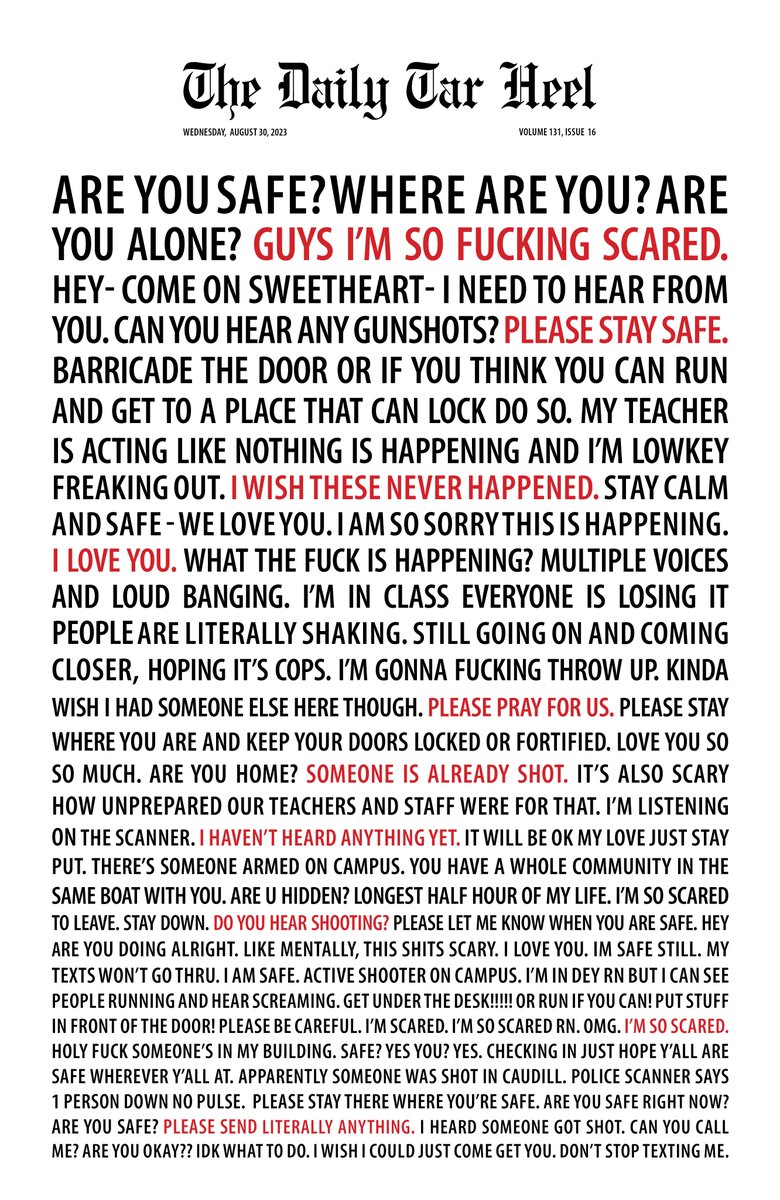
The front page of tomorrow's @dailytarheel –
I shed many tears while typing up these heart-wrenching text messages sent and received by UNC students yesterday. Our campus was on lockdown for more than three hours.
Beyond proud of this cover and the team behind it.
1,045
15,951
44,780
8,541,938
Daniel Kolbin retweeted

8 Jul 2023
Day 30 of great biology papers. 🎆The final day.🎆
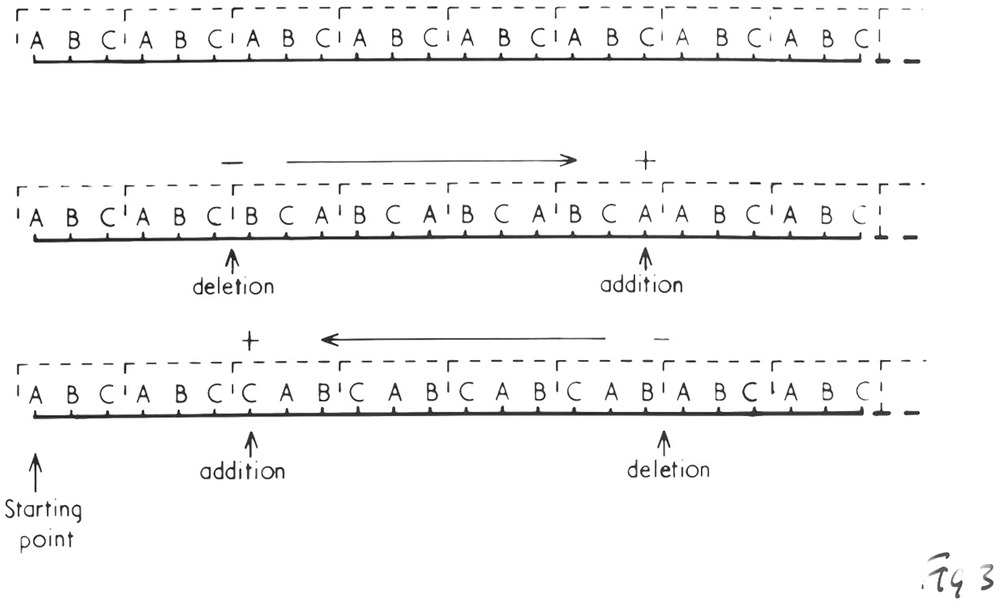
"General Nature of the Genetic Code for Proteins," by F. Crick, S. Brenner, L. Barnett & R.J. Watts-Tobin (1961).
This paper is, in my opinion, the most impressive in the history of molecular biology. Here's why...
****
When the structure of DNA was solved in 1953, molecular biology was a relatively barren landscape. By that, I mean that messenger RNA had not yet been discovered, nobody was quite sure whether there was any link between DNA and proteins, and there were zero technologies to isolate a gene, let alone sequence one.
And yet, just 8 years after that seminal paper, these four scientists used a simple experiment — and fragmentary evidence — to correctly determine that...
1. Each amino acid in a protein is encoded by a triplet code...
2. The letters in this code do not overlap (e.g. AUGACC is read by the ribosome as 'AUG' and 'ACC,' rather than 'AUG,' 'UGA,' 'GAC' etc.)...
3. There is a start codon.
Again, they discovered all of these things in the absence of tools to sequence DNA, or to compare a DNA sequence with a protein's amino acids. But before I tell you how they did it, I want to set the scene.
The year 1961 was, essentially, the annus mirabilis for molecular biology:
- In May, two separate groups reported that they had isolated and proved the existence of messenger RNA, and they postulated that it probably carried information from DNA to proteins.
- Jacob and Monod argued that there are two types of genes: Those that encode proteins, and others that regulate gene expression.
- Marshall Nirenberg showed that a chain of RNA containing the letters "UUUUUUUUUUUU" encoded a protein filled with phenylalanine amino acids, thus demonstrating a profound, initial insight into the genetic code.
(See the excellent review by Matthew Cobb: onlinelibrary.wiley.com/doi/…)
With these prior experiments in mind, Brenner, Barnett, Crick, and Watts-Tobin set out to understand how, exactly, the genetic code works.
Their experiments began with a bacteriophage that infects bacteria, called T4. When these bacteriophage are doused with mutagens, and their genetic material is altered, they sometimes lose their ability to infect bacteria.
Now, there is also a dye, called acridine, that causes single nucleotides to be added or deleted from a piece of DNA. This is quite important, because most other mutagens just randomly change sections of DNA. But acridine always adds or removes just one nucleotide.
So Crick put these two things together and had a brilliant idea. He took a T4 bacteriophage, exposed it to acridine, and found that it had lost its ability to infect E. coli. This strain was called FC0 — Francis Crick Zero. But then, he (and the others) used acridine to add or remove more letters in the bacteriophage DNA until it regained its ability to infect bacteria.
If they added one base and then removed one base, the phage infected the bacteria.
If they added two bases, the phage did not infect bacteria.
If they added three bases, the phage infected bacteria.
From these observations, they argued that the genetic code must use triplets to encode each amino acid. It was a brilliant takeaway, based on partial experimental evidence. From the paper:
"The simplest postulate to make is that the shift of the reading frame produces some triplets the reading of which is ‘unacceptable’; for example, they may be ‘nonsense’, or stand for ‘end the chain’, or be unacceptable in some other way to the complications of protein structure."
Even though the "combination of mutations strongly suggested that the code was based on units of three bases, the experiments could not prove that to be the case – a code using groups of six bases was consistent with the results," writes Cobb in his review.
"This, however, would raise all sorts of problems by massively increasing the number of either meaningless or degenerate sequences (there would be 4096 possible combinations of bases, rather than a mere 64). As Crick later put it, this was 'hardly likely to be taken seriously.'"
In his classic book on the history of molecular biology, The Eighth Day of Creation, Horace Judson called this experiment, "a classic of intellectual clarity, precision and rigour." And I agree.
Thanks for reading this series!
Paper: nature.com/articles/1921227a…
Full text: labs.bio.unc.edu/Goldstein/1…
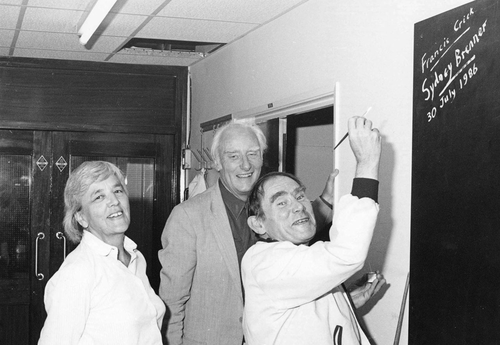
ALT Leslie Barnett, Francis Crick and Sydney at the MRC. (© MRC LMB.)
18
300
1,337
221,285
8 Jul 2023
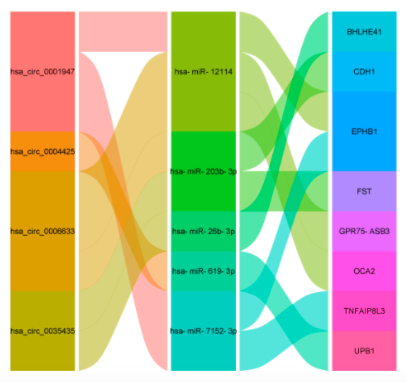
Best way to understand a plot is to build one! Handy web-based resource to quickly generate most common data graphics in biology. #alluvialplot #bioinformaticsfordummies
bioinformatics.com.cn/en
1
55
Daniel Kolbin retweeted

18 May 2023
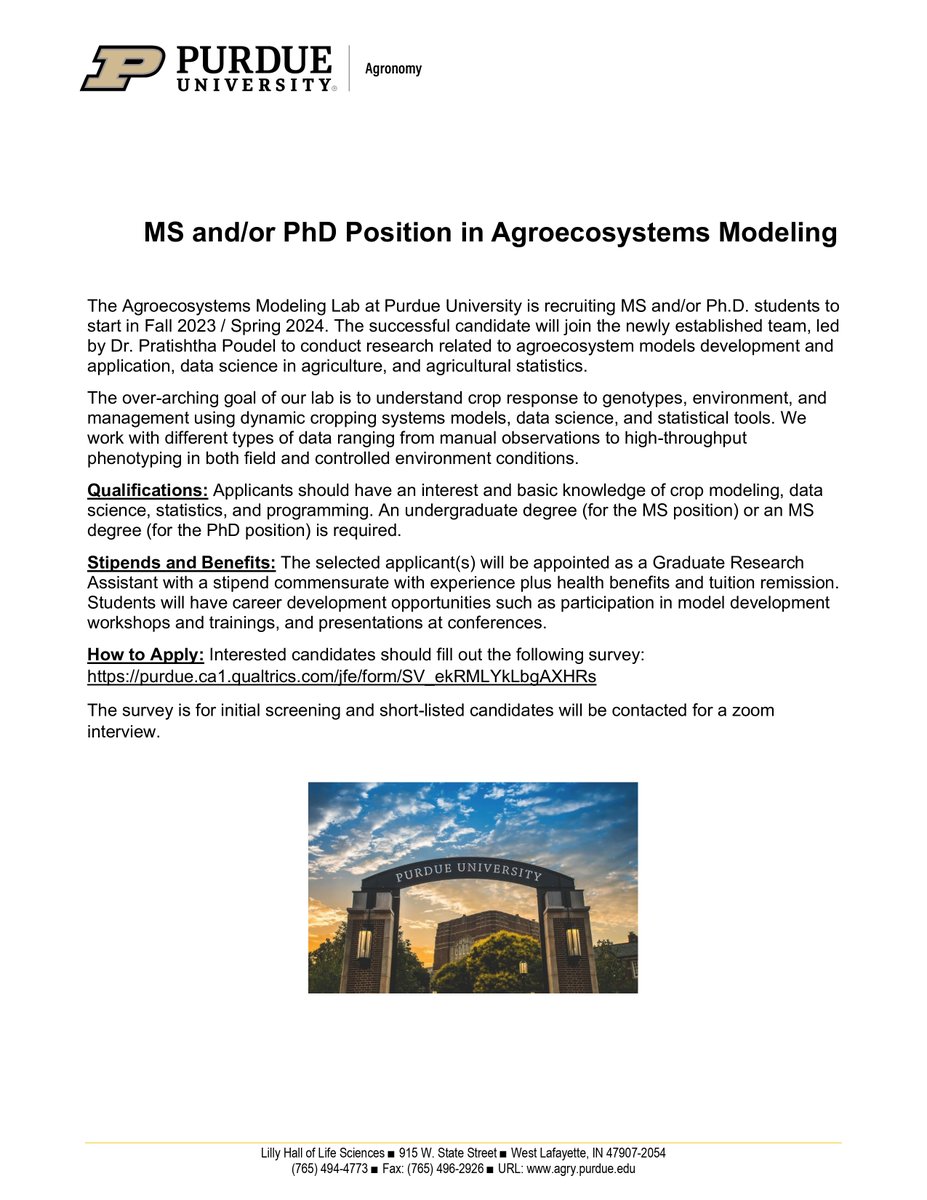
Come build a career in agroecosystem modeling at @PurdueAgronomy ! MSc and PhD opportunities currently available.
@ASA_CSSA_SSSA, @AgronomyCanada, @CropLifeIntl
4
7
491
Daniel Kolbin retweeted

18 May 2023
90% of molecular biology is pipetting very tiny amounts of clear liquids from one container to another. The other 10% is doing math on paper towels.
Some days I think I should have listened to my mother and become a wizard.
35
397
2,487
209,083
Daniel Kolbin retweeted

17 Mar 2023
I'm catching up with all my pending reading/watching, so here, for your viewing pleasure, this hugely entertaining (and educational) conversation from 2016 between Noam Chomsky and Yanis Varoufakis that is really making my day.
youtu.be/szIGZVrSAyc
1
1
7
1,287
19 Mar 2023
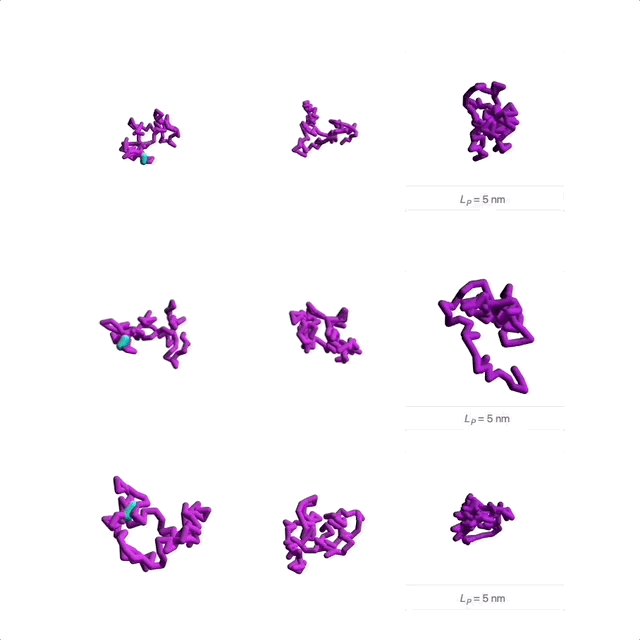
I have to look at a ridiculous number of visualizations to find good examples of folded chromosomes for my modeling paper (in preparation) #3Dchromatin #chromosomes
2
87
Daniel Kolbin retweeted

17 Aug 2022
9 tips for managing time in grad school
Fresh off the press, I wrote an article for ASBMB highlighting 9 tips I’ve found helpful when managing time in grad school. Here they are!⬇️
14
215
980