
Sports physiologist, PhD. Helping people stay strong, mobile, and healthy for the long game. Research → practical protocols
Joined December 2022
- Tweets 11,733
- Following 15
- Followers 106,745
- Likes 40,456
3,206 Photos and videos
















Dr. Sara Lin retweeted

The world's first billionaire was so hated that he gave away billions to fix his reputation. It worked.
John D. Rockefeller built Standard Oil by savaging his competitors and then swallowing them whole until the company controlled 90% of the American oil industry.
By 1896, his personal assets had reached $200 million. In today's money, that's over $5 billion.
But that fortune came with a problem. Rockefeller and his fellow robber barons weren't admired. They were resented. Ordinary Americans pushed back against the sheer scale of their wealth and power.
So Rockefeller and his son, John Jr., made a deliberate decision: redeem their public image.
Their strategy was philanthropy, made visible. Rockefeller Senior had already given away around $150 million. Over $4 billion in today's money and he set out to make sure Americans knew it.
He leaned into being seen. Wearing his trademark cap, he began appearing in front of the cameras far more often. Crowds, like the one that greeted him at a Florida railroad station, welcomed him warmly.
And the strategy paid off. Americans slowly stopped tying the Rockefeller name to ruthless business practices, and started associating it with good works instead.
A reputation built over decades can be deliberately rewritten by changing what people see and choose to remember. The most resented man of his era understood that giving generously, and being seen doing it, could turn enemies into admirers.
Media: Smithsonian Channel
9
12
400
Dr. Sara Lin retweeted

Jordan Peterson explores a disturbing question:
What if some of history's greatest horrors emerged not from chaos, but from an obsession with order?
He begins by examining the structure of totalitarian regimes.
"Totalitarian states, such as the Nazi regime, involve every military member becoming an identical, uniform unit in perfect imitation of the dictator."
In these systems, conformity becomes the highest virtue. Individual differences are erased in favor of a single vision of how society should look and behave.
Peterson then connects this idea to personality research.
Studies have found that traits such as orderliness, conscientiousness, and disgust sensitivity are closely linked. According to Peterson, Hitler displayed these characteristics to an extreme degree.
"Hitler exhibited high disgust sensitivity, viewing those outside the 'Aryan box' as parasites and predators."
This challenges the common belief that Hitler's actions were primarily driven by fear.
Instead, Peterson argues that many of his views were rooted in disgust.
This was "a manifestation of disgust rather than fear."
Hitler frequently described society using biological metaphors. In his private conversations, he portrayed the Aryan race as a healthy body that needed protection from outside contamination.
Peterson refers to this way of thinking as an immunological disgust metaphor, where social and political problems are interpreted as threats of infection.
He points to research suggesting that this mindset may extend beyond any single individual.
"Studies suggest that a higher prevalence of infectious diseases in a region correlates with a higher probability of totalitarian attitudes, as people seek to restrict movement and ideas to prevent disease spread."
The progression of Nazi policies followed a similar pattern.
Before directing his attention toward human populations, Hitler focused heavily on public sanitation campaigns, efforts to eliminate disease, and programs aimed at removing what the regime considered sources of contamination.
Cyclone B was initially used as an insecticide before later becoming part of the machinery of mass murder.
Policies that began as campaigns against pests and disease gradually evolved into programs targeting human beings.
Peterson argues that this sequence reveals how the language of purification can become increasingly dangerous when applied to society.
He also disputes the idea that conservatives are primarily motivated by fear.
"While conservatives are often accused of being fearful, they actually score lower in neuroticism and higher in well-being than liberals."
Instead, researchers often find higher levels of orderliness and lower openness to experience, traits associated with preserving stability and avoiding perceived contamination.
Some psychologists describe this tendency as an "extended immune system."
Peterson's most provocative conclusion follows from this observation.
"It is a frightening possibility that Germany's descent into barbarity was caused by an excess of civilization and order rather than a lack of it."
Hitler was known for his strict personal discipline, intense focus on self-control, and obsession with cleanliness.
Yet Peterson argues that the same traits that can produce responsibility and organization can also have a darker side when taken too far.
Highly orderly people are often more judgmental, less tolerant of deviation, and more likely to view weakness as a moral failure rather than a condition requiring compassion.
He ends with a striking comparison.
"Orderliness is highly associated with anorexia, where a person becomes so disgust-sensitive that they view their own body as a source of corruption and imperfection."
For Peterson, the lesson is that virtues do not become dangerous because they are absent. They become dangerous when they are elevated above everything else and pushed to their extreme.
12
16
1,547
Dr. Sara Lin retweeted

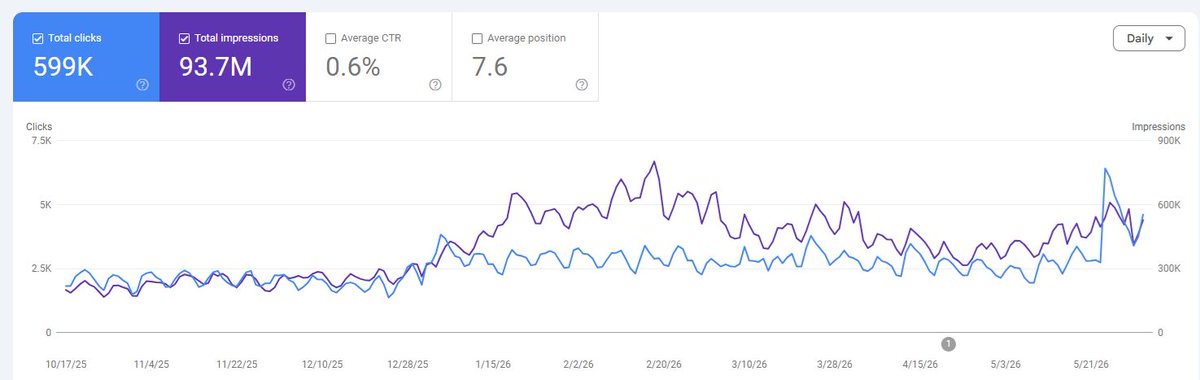
Ranking on page 1 does not guarantee Google AI will use your website.
Also, failing to rank on page 1 does not automatically exclude you.
Local businesses, SaaS, finance, health, education, e-commerce - this impacts literally everyone who relies on search for revenue.
A recent study analyzed 55,393 Google searches.
Nearly 30% of the domains cited inside AI Overviews did not appear among the first-page organic results shown beside them.
A separate study of 11,500 queries found minimal source overlap between traditional Google Search, Google AI Overviews and Gemini.
For businesses, this means ranking and getting cited by Google AI are becoming two related but different battles.
Let’s go through it.
And if you want to see whether your business is appearing across Google AI, ChatGPT, Claude, Perplexity and Grok, check here. It’s free:
seo-stuff.com/free-audit
Traditional SEO still matters.
Google says AI Overviews and AI Mode are rooted in its core Search ranking and quality systems.
Your pages still need to be indexed, crawlable and eligible to appear in Search.
But Google AI does not simply copy the first page into an AI-generated answer.
It can run related searches, investigate subtopics and select a different group of supporting pages.
Imagine someone searches:
“What is the best payroll software for a construction company with employees and contractors in several states?”
The traditional results may include broad payroll pages from major companies.
Google AI may also investigate:
Construction payroll
Contractor payments
Multi-state compliance
Time-tracking integrations
Pricing
Customer reviews
A company ranking on page one for “payroll software” may still provide very little useful information about those specific needs.
A smaller company with detailed pages covering construction, contractors, compliance and pricing may become a better source for the AI response.
This creates an opportunity for businesses that cannot outrank the largest companies for every major keyword.
You may still be selected because your page provides the clearest answer to one specific part of the customer’s question.
Google AI visibility increasingly depends on two layers.
The first is traditional search eligibility and authority.
The second is having specific, useful information that directly supports the answer Google is trying to generate.
That can include:
Clear product and service descriptions
Audience-specific use cases
Pricing
Original statistics
Detailed comparisons
Customer results
Industry-specific guidance
Evidence supporting important claims
This is where SEO Stuff’s done-for-you package becomes relevant:
seo-stuff.com/gold-plan-pack…
It combines 10 AI search optimized pieces of content with three DR50 authority placements.
The authority component helps the business compete in traditional Search and become easier to discover.
The content component gives Google AI useful information it can extract, cite and use while answering more specific customer questions.
The studies did not test SEO Stuff or DR50 backlinks.
That connection is my interpretation of how businesses can compete across both layers.
The biggest mistake would be assuming page-one rankings automatically produce AI visibility.
A business can rank well and remain absent from the AI answer because its page lacks:
Specific evidence
Clear category alignment
Useful comparisons
Relevant facts
Direct answers to the customer’s actual question
At the same time, a smaller website may earn a citation without ranking on page one because Google AI found something uniquely useful on the page.
This does not make traditional SEO less important.
It expands what successful SEO now needs to accomplish.
You still want to rank.
You also want content that Google AI can use to:
Explain the category
Answer the buyer’s questions
Compare the available options
Support factual claims
Identify the right company for a specific customer
If I had to reduce both studies to one core idea, it would be this:
Page-one visibility gets your business into the broader search ecosystem.
Useful, specific and authoritative information gives Google AI a reason to include you in the answer.
The businesses winning both will have:
Strong traditional rankings
Clear category positioning
Deep coverage of customer questions
Original and specific information
Authoritative third-party validation
Content designed to help buyers make decisions
Ranking remains valuable.
But the AI citation may come from a completely different page.
This is the system SEO Stuff was built around:
seo-stuff.com
And if you want to see whether your business is already appearing across Google AI, ChatGPT, Claude, Perplexity and Grok, check here:
seo-stuff.com/free-audit


The best way to get traffic from Google AI is no longer a secret.
A Google AI Mode system prompt was extracted and published recently.
It helps explain why one page targeting one keyword is becoming a weaker way to think about Google visibility.
Google AI Mode can take one customer question, break it into several smaller searches, draw from a wider group of supporting pages and combine the information into one answer.
For businesses, one question can create several separate opportunities to be discovered.
Let’s go through it.
By the way, you can see whether your business is appearing across Google AI, ChatGPT, Claude, Perplexity and Grok here. It’s free:
seo-stuff.com/free-audit
One important caveat.
Google did not publish the extracted prompt as an official ranking guide.
It was published by a public system-prompt archive and appears to represent one captured Google Search AI Mode configuration.
But the key instructions match Google’s own documentation.
The extracted prompt tells AI Mode to:
Verify factual claims through search
Break complex questions into simpler queries
Begin with a useful and diverse set of searches
Google officially calls this “query fan-out.”
Its documentation says AI Mode and AI Overviews can issue multiple related searches across different subtopics and data sources before generating a response.
Google gives this example.
Someone searches:
“How do I fix a lawn that’s full of weeds?”
AI Mode might also search:
Best herbicides for lawns
Remove weeds without chemicals
How to prevent weeds in lawn
One question becomes several searches.
Each search can surface another group of potential sources.
This has major implications for businesses trying to earn traffic, citations and recommendations from Google AI.
Imagine someone asks:
“What is the best payroll software for a construction company with employees and contractors in several states?”
AI Mode may investigate:
Construction payroll software
Multi-state payroll compliance
Contractor payment systems
Time-tracking integrations
Payroll software pricing
Competitor alternatives
These are illustrative examples rather than queries Google disclosed.
But they show how one question can expand into several research paths.
A company may rank well for “payroll software” and still be absent when AI Mode investigates construction, compliance, pricing, integrations and customer results.
A competitor with useful pages across those areas may appear repeatedly while Google builds the answer.
That is why one keyword page may no longer cover the full customer decision.
Your homepage explains what the business does.
An industry page shows who it serves.
A comparison page explains how it differs from alternatives.
A pricing page establishes whether it fits the buyer’s budget.
A case study provides evidence.
A technical guide answers a major concern.
Each page creates another possible entry point.
This is where SEO Stuff’s done-for-you package becomes relevant:
seo-stuff.com/gold-plan-pack…
The package combines 10 AI search optimized pieces of content with three DR50 authority placements.
The content can be mapped across the questions, comparisons, problems and use cases surrounding the customer’s decision.
The authority placements help the business compete across the ranked web sources Google uses for discovery.
The extracted prompt does not mention Domain Rating, backlinks or SEO Stuff.
That connection is my interpretation of how businesses can improve their chances of appearing across the searches created by query fan-out.
The important shift is from keyword targeting to decision coverage.
Consider this question:
“What CRM should a 20-person roofing company use if it needs estimates, automated follow-up and QuickBooks integration?”
That decision may involve:
CRM for roofers
Automated lead follow-up
Roofing estimates
QuickBooks integrations
CRM pricing
Customer reviews
Competitor comparisons
A general CRM page answers only part of the question.
Google can find the remaining pieces elsewhere.
Businesses appearing across more of those subtopics have more opportunities to influence the final response.
This does not mean companies should publish hundreds of thin pages targeting every possible variation.
Google explicitly warns against that.
Its guidance says creating separate content for every possible fan-out query primarily to manipulate rankings or Google’s generative AI responses can violate its scaled content abuse policy.
The better strategy is to identify the meaningful parts of the customer’s decision and create genuinely useful content around them.
That can include:
Core category pages
Audience-specific use cases
Comparisons
Pricing information
Original research
Customer case studies
Implementation guides
Technical documentation
The objective is meaningful category coverage built around real customer questions.
This is why the Premium Content Bundle is built around topic and intent mapping:
seo-stuff.com/premium-conten…
It includes 60 long-form articles planned across the questions, comparisons, use cases and problems surrounding a niche.
For example, a business insurance company may need pages covering:
Insurance for contractors
Coverage for multiple locations
General liability versus professional liability
Typical insurance costs
Coverage limits
Common exclusions
How to compare providers
Each page answers a real question the customer may have before buying.
Together, those pages create a broader information footprint for Google AI Mode to discover.
Query fan-out also changes how businesses should think about authority.
Google may pull information from sources such as:
Industry publications
Review websites
Government pages
Official documentation
Forums
News articles
Comparison pages
Specialized blogs
Your company’s website
These source types are illustrative rather than a fixed list disclosed by Google.
The broader point is that Google can search across different subtopics and data sources while building the response.
Your website can provide:
Product details
Pricing
Use cases
Comparisons
Customer results
Original data
Third-party sources can reinforce:
Your identity
Your category
Your reputation
Your expertise
Your claims
This is where SEO Stuff’s Premium Authority Bundle fits:
seo-stuff.com/premium-backli…
It includes three contextual placements on DR50 domains already appearing in AI search results.
Google does not say that AI Mode directly measures Ahrefs Domain Rating.
My interpretation is that credible third-party placements can improve discovery while reinforcing the company’s identity and category across the wider set of sources Google may encounter.
There is another important point.
Google says AI Mode and AI Overviews are rooted in its core Search ranking and quality systems.
To be eligible as a supporting link, a page must be indexed and eligible to appear in Google Search with a snippet.
Google also recommends making content publicly accessible, crawlable, relevant and genuinely useful.
Traditional SEO remains foundational.
Query fan-out increases the number and variety of searches your content may need to satisfy.
Google’s guidance also emphasizes original and non-commodity content.
Publishing another generic article called “10 Benefits of Payroll Software” gives Google little reason to choose your page.
A stronger page might contain:
Original payroll cost data
A detailed compliance process
A comparison based on actual testing
A customer case study
Industry-specific advice
Clear pricing and integration details
That page contributes something Google cannot easily find everywhere else.
My interpretation is that it may also attract a more qualified visitor.
Someone clicking a guide about multi-state payroll compliance may already be signaling:
A specific problem
Likely product requirements
A relatively focused research intent
Potential interest in a payroll solution
The traffic opportunity extends beyond one broad keyword.
Each useful subtopic can attract a more specific customer.
If I had to reduce the extracted prompt and Google’s official query fan-out documentation to one idea, it would be this:
Google AI Mode researches the full question.
It divides the request into subtopics.
It searches those subtopics separately.
It can discover different supporting pages across the research process.
It combines the information into one response.
For businesses, this creates a new standard for search visibility.
You need to be discoverable for the category.
Relevant to the customer’s use case.
Clear about pricing and features.
Useful in comparisons.
Supported by evidence.
Visible on authoritative third-party websites.
One keyword page can still perform extremely well.
But one page rarely explains every part of a complicated purchase.
The businesses earning the most Google AI visibility will provide useful information across the questions customers ask before making a decision.
This is the system SEO Stuff was built around:
seo-stuff.com
See whether your business is already appearing across Google AI, ChatGPT, Claude, Perplexity and Grok here:
seo-stuff.com/free-audit
1
38
42
2,704
Dr. Sara Lin retweeted

The Power Mac G4 was so powerful in 1999 that the U.S. government classified it as a restricted supercomputer.
27 years later, they just restricted a powerful Ai model - Claude's Fable 5:
15
17
1,094
Dr. Sara Lin retweeted

Linus Torvalds created Linux at 21 from his mother's apartment, he just gave the most balanced and brutal AI take of anyone in tech.
Torvalds says AI is clearly a bubble and clearly a revolution, and the marketing around it is sick, twisted, and headed for a crash.
"I'm a huge believer in AI. I'm not a huge believer in the whole things going on around AI. I find the marketing and the market to be sick and twisted, and there is going to be a crash and it's going to be ugly."
"It's clearly both. It's clearly a bubble and at the same time it's very interesting and I think it will change society and I think it will change how most skilled jobs get done."
On AI training data and the artistic community's outrage:
"That's reality. Deal with it. That genie is out of the bottle. You're not getting it back whether you're a photographer who's out of work or a programmer who has to learn to deal with a new reality."
On vibe coding specifically, the idea that anyone can code by just prompting AI:
"Vibe coding is great for getting into programming. I think it's going to be a horrible thing to maintain."
"I don't think programmers go away. You still want to have the people who know how to maintain the end result."
PS. If you found value in this post make sure to like and repost this tweet follow @uncover_ai to stay updated with the latest AI news.
See you in the next one…
2
16
22
1,102
Dr. Sara Lin retweeted

Peptides are behind Hollywood's most dramatic transformations.
Here are the 7 that stars are using to look decades younger, recover faster, and stay lean year-round (for research purposes only):
(1/7) Tesamorelin Ipamorelin (the GH combo)

2
18
29
3,485
Dr. Sara Lin retweeted

Jensen Huang unveils the N1X: "This is the most amazing chip the world has ever built."
Nvidia CEO Jensen Huang introduces a new chip built in partnership with MediaTek, the N1X.
He calls it "a beautiful chip" and makes a striking claim about what it represents:
"This is a chip that frankly would take 33 years to build."
The reason, he explains, comes down to software:
"100% of Nvidia software stack runs here. If you want to run digital biology, no problem. If you want to do seismic processing, no problem. You want astrophysics, no problem."
Huang ties that versatility back to CUDA:
"Everything associated with CUDA, all the physics, all the biology, all the genomics, all the AI, no problem. All the computer graphics, no problem."
But the boldest claim is about universal compatibility. The idea that the chip isn't limited to Nvidia's own ecosystem:
"Every single application Nvidia has ever created and every single application that Windows has ever run, Microsoft and Nvidia meticulously optimized everything so that this computer literally runs everything the world has ever created."
And then the kicker:
"Plus, it now runs agents."
He closes with evident pride: "An incredible computer. I'm so proud of it."
Media: Nvidia
12
12
850
Dr. Sara Lin retweeted

Warren Buffett and Charlie Munger didn't avoid real estate because they disliked it
They avoided it because they believed they had no advantage in it.
When asked why real estate had never become a meaningful part of Berkshire's portfolio, Buffett gave a surprisingly candid answer that came down to two factors: structural disadvantage and a lack of edge.
He starts with the tax issue:
"If you operate as a corporation such as ours, which is taxable under Chapter C of the Internal Revenue Code, you get a whole layer of corporate taxes between the real estate income and the use of the income by the people who own the real estate."
In other words, when Berkshire competes against REITs, partnerships, or S-corps for real estate deals, it's bringing a tax structure to a fight where everyone else gets to skip a layer of taxation.
Buffett doesn't sugarcoat the conclusion:
"Real estate tends to be a very lousy investment for people who are taxed under subchapter C."
But taxes were only part of the story.
The bigger issue was that Berkshire didn't have a meaningful edge.
Buffett explains that unlike public equities, real estate markets are often priced efficiently:
"Real estate is not a commodity, but it tends to be more accurately priced, particularly developed real estate, most of the time."
He notes that when REITs are transacting, "they all know about what a class A office building in Chicago is going to produce. It's hard to argue with the current conventional wisdom most of the time."
So where do exceptional opportunities come from?
According to Buffett, they emerge when financing markets break down.
He points to the RTC (Resolution Trust Corporation) era as the clearest example. A period marked by forced sellers, distressed owners, and limited access to capital.
"You had huge amounts of transactions and an owner that didn't want to be an owner and didn't know what they owned, you had a lot of mispricing then."
Buffett admits Berkshire wasn't positioned to take full advantage of it:
"We missed the boat to some extent during the RTC days. It was a sufficiently inefficient market at that time and there was a lack of financing that we could have made a lot of money if we had been geared up for it."
In fact, the only major real estate transaction he remembers seriously pursuing was the Irvine Corporation around 1977, which ultimately went to a group assembled by Mobil Oil.
Buffett also shared a memorable glimpse into how investment decisions were debated between him and Charlie:
"He would say no for about 15 minutes and I would gauge by the degree of emotion he put into his 'no's' whether he really liked the deal or not."
9
10
1,003
Dr. Sara Lin retweeted

Jensen Huang started Nvidia at a Denny's diner in 1993 and built it into the world's most valuable company, crossing $5 trillion in market cap.
Huang on why you should start a company, and why you shouldn't:
"There's no point in starting a company unless you want to make a contribution to society. It's incredibly hard to start a business. The depth of despair, the suffering, the torturing, balanced by the great joy of doing something the world's never done before, is beyond what words can describe. Unless you believe you're going to make a real contribution to society, it's going to be really hard to go down that journey."
PS. We post daily content strictly for dedicated entrepreneurs, so if you’re one of them, make sure to follow us @entreprneursonx for more.
Like and repost if you found value in this post:
16
23
1,616
Dr. Sara Lin retweeted
"It's each leader's responsibility to stimulate people to really say what they think might be wrong."
Reed Hastings on the culture Netflix built after a costly misstep:
Media: WeAreNetflix
1
9
14
1,723
Dr. Sara Lin retweeted
In November, Boris Cherny uninstalled his IDE. He hadn't opened it in a month.
A year ago he wrote code with autocomplete. Then he ran 5-10 Claudes in parallel. Now he doesn't even write the prompts. Loops do that. His job is writing the loops:
h/t: WorkOS
11
15
1,488
Dr. Sara Lin retweeted
"Too many startups think the goal is to maximize features."
Kevin Systrom on why doing less, but deeper, is what actually wins:
Media: Standard Success
10
16
1,501
Dr. Sara Lin retweeted
What do you give the woman who raised you? Miano used AI video generation to turn decades of her old photographs into a birthday film she could see, feel, and relive. Proof that the best use of this tech might be the most personal one.
Media: Franklin Miano
1
10
23
2,319
Dr. Sara Lin retweeted
When Ozzy Osbourne met Paul McCartney (2001)
9
45
4,733
Dr. Sara Lin retweeted
Peter Lynch built one of the best investing track records in history by doing one thing.
Looking harder than everyone else
2
14
46
3,590
Dr. Sara Lin retweeted

Jun 12
Today, we're introducing Imagine MCP 👾
It elimenates the gap between ideation and execution.
Living inside the AI agent of your choice, whether that's Claude, Cursor, or Hermes, Imagine MCP puts some of ImagineArt's most powerful creative features at your fingertips.
We wish you happy, frictionless scaling.
📥 Comment "MCP" to get the link!
72
274
423
969,226
Dr. Sara Lin retweeted

🚨 The smartest AI models on earth just failed a color test a 6-year-old can pass.
The longer the test got, the worse they did. One dropped from 91% to 15%.
Scientists found a flaw in how AI handles attention:
5
57
123
25,185
Dr. Sara Lin retweeted

Breaking: Your iPhone is no longer stuck with Siri.
iOS 27 lets you swap in ChatGPT, Claude, or Gemini as the AI that runs everything.
Save this. Here is how to switch:
60
186
2,150
889,730
Dr. Sara Lin retweeted
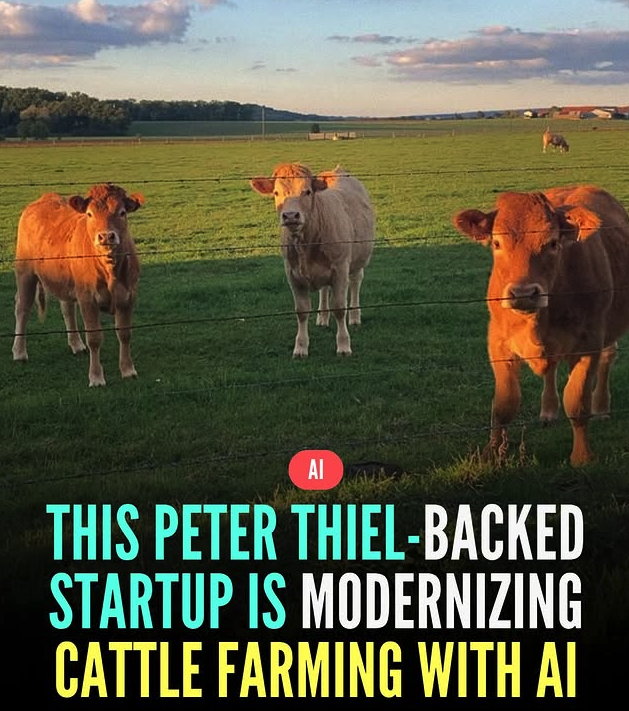
Peter Thiel backed startup is modernizing cattle farming with AI.
16,000-acre ranches now can be controlled though a smartphone, requiring no labor.
A thread🧵:
2
16
19
5,448
Dr. Sara Lin retweeted
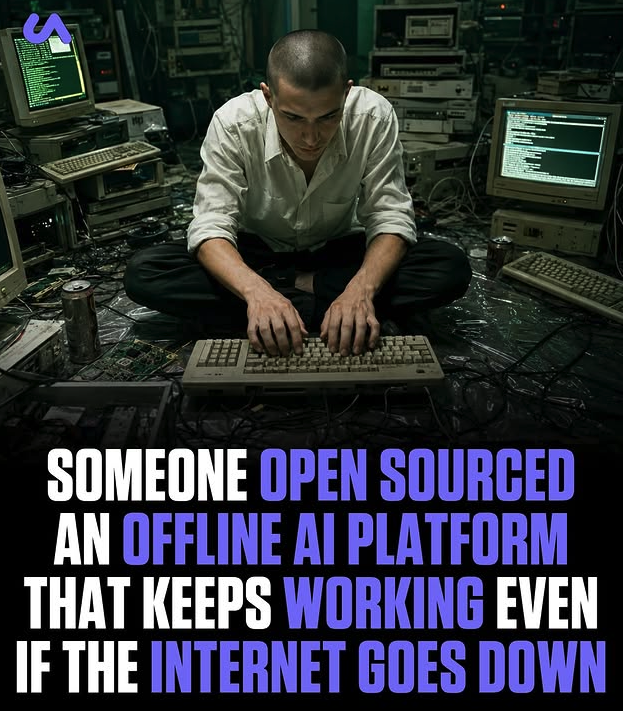
You don't need internet to access AI anymore.
Learn about Project N.O.M.A.D.
(THREAD)
1
16
20
5,239