
#Futurist, strategist, writer, geek, entrepreneur, speaker, editor futureworld.org
Joined July 2008
- Tweets 10,348
- Following 346
- Followers 654
- Likes 2,137
309 Photos and videos








Doug Vining retweeted

Jun 13
It's actually the opposite. SpaceX has drastically cut the costs of rockets opening all sorts of opportunities that wouldn't otherwise exist
People are talking about space solar projects being feasible as a result
The "politics of envy" really annoy me. My life is not worse because Elon Musk is very rich. He and other super rich people have not achieved their wealth at my expense
I prefer to work hard and pay my own way. What annoys me is the amount of tax I have to pay, not how rich some other people are
37
121
1,188
15,867
Doug Vining retweeted

Jun 12
All trillionaires are born in Pretoria, South Africa.
Let that sink in.
75
164
1,221
41,058
Doug Vining retweeted

Jun 13
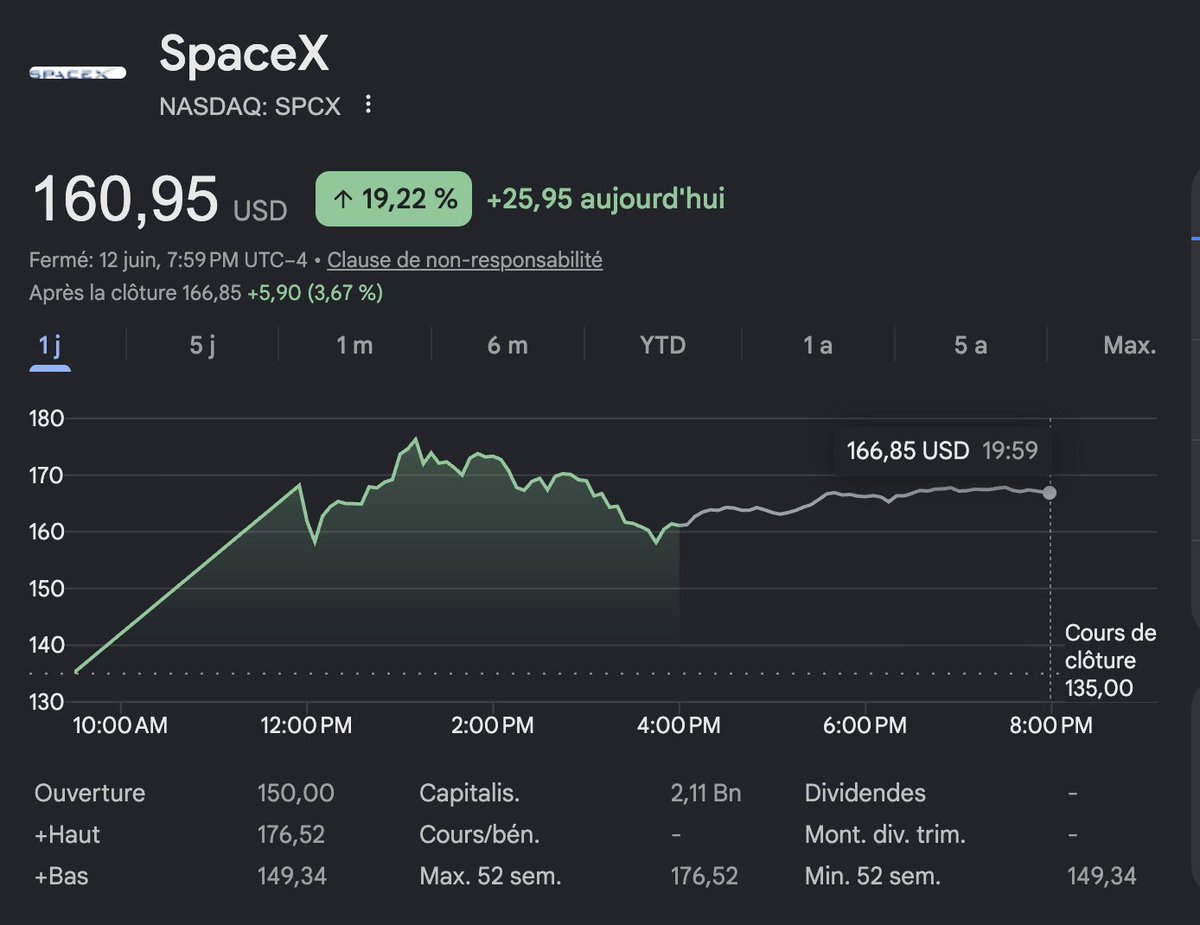
SpaceX a clôturé son premier jour de cotation à 2 100 milliards de dollars, 19%. Tout le monde regarde le chiffre. Personne ne regarde ce qu'il price réellement.
Laissez-moi vous dire ce que le marché vient d'acheter, et pourquoi je pense que cette boîte vaudra 30 à 50 trillions d'ici 5 ans.
D'abord, le symbole. Cette IPO est un référendum. D'un côté, 20 ans de discours sur la décroissance, la sobriété, la redistribution, la fin de l'histoire gérée par des comités. De l'autre, un homme qui a dit "je vais rendre l'humanité multiplanétaire", que tout le monde a traité de clown, et qui vient de créer la plus grosse entreprise cotée de l'histoire en partant d'un entrepôt à El Segundo. Le marché a voté. Le wokisme avait des départements RH, SpaceX avait des fusées. Les fusées ont gagné.
Ensuite, la mécanique économique, parce que c'est là que tout le monde se trompe. Les analystes valorisent SpaceX comme une entreprise de lancement plus Starlink. C'est comme valoriser Internet en 1995 sur le marché du fax. Starship ne réduit pas le coût du kilo en orbite de 20%, il le divise par 100. Et chaque fois dans l'histoire qu'un coût d'infrastructure est divisé par 100, ce n'est pas le marché existant qui grossit, ce sont des industries entières qui naissent. Le coût du calcul divisé par 100 a donné Internet, le smartphone, l'IA. Le coût de l'orbite divisé par 100 va donner une économie spatiale complète.
Faisons la liste de ce qui devient rentable quand le kilo en orbite coûte le prix d'un billet d'avion. Les data centers orbitaux, avec énergie solaire continue et refroidissement gratuit, au moment exact où l'IA fait exploser la demande énergétique terrestre. La fabrication en microgravité de semi-conducteurs, de fibres optiques, d'organes imprimés impossibles à produire sous gravité. Le tourisme orbital de masse, puis les hôtels lunaires, qui passeront du fantasme au business plan exactement comme la croisière de luxe au 20ème siècle. Le transport point à point terrestre, Paris-Tokyo en 40 minutes. L'industrie minière des astéroïdes, dont un seul corps de classe M contient plus de métaux que tout ce que l'humanité a extrait depuis le néolithique. Et Mars en ligne de mire, pas comme destination touristique, mais comme le plus grand projet d'infrastructure jamais entrepris, avec tout ce que ça implique de demande en énergie, matériaux, robotique, IA.
SpaceX ne participera pas à ces marchés. SpaceX possède le péage d'entrée de tous ces marchés. C'est AWS, mais pour la civilisation. Apple vaut 3 500 milliards en vendant des rectangles de verre sur une seule planète. Le premier monopole d'accès à une frontière infinie à 30 ou 50 trillions dans 5 ans, ce n'est pas de l'exubérance, c'est une simple règle de trois sur l'expansion du marché adressable.
Et maintenant, la partie que je préfère. Ce futur n'a pas besoin de bureaucrates. Il n'y a pas de comité consultatif en orbite. Pas de commission Théodule sur Mars. Chaque dollar de cette nouvelle économie sera créé par des ingénieurs, des techniciens, des soudeurs, des pilotes, des entrepreneurs. Les diplômés en gestion de la norme vont devoir apprendre un métier utile, et franchement, c'est une excellente nouvelle pour eux aussi : construire est infiniment plus fun que contrôler.
Parce que c'est ça, le vrai signal d'aujourd'hui. Pendant 50 ans on nous a vendu un futur rétréci : moins d'énergie, moins d'enfants, moins d'ambition, gérer le déclin proprement. Et là, d'un coup, le plus gros actif financier du monde est un pari sur l'abondance, l'expansion et l'aventure. Le pessimisme vient de passer en position vendeuse sur lui-même.
Le futur sera méga fun. Il y aura des hôtels avec vue sur la Terre, des honeymoons en orbite, des gamins qui diront "papa, c'était comment avant les fusées réutilisables" comme on dit "c'était comment avant Internet". Et quelque part dans les années 2030, un humain marchera sur Mars en livestream devant 5 milliards de personnes, et ce jour-là plus personne ne se souviendra du nom d'un seul de ses détracteurs.
Achetez de l'optimisme. C'est encore sous-valorisé.
1,503
3,652
20,976
26,608,221
Doug Vining retweeted

Jun 12
Happy @SpaceX IPO day!
For the first time, everyday retail investors will be able to directly own a piece of a company whose mission is the most ambitious in human history. Congrats to the whole SpaceX team. Ad Astra! 🚀
245
1,028
9,724
255,519

Jun 12
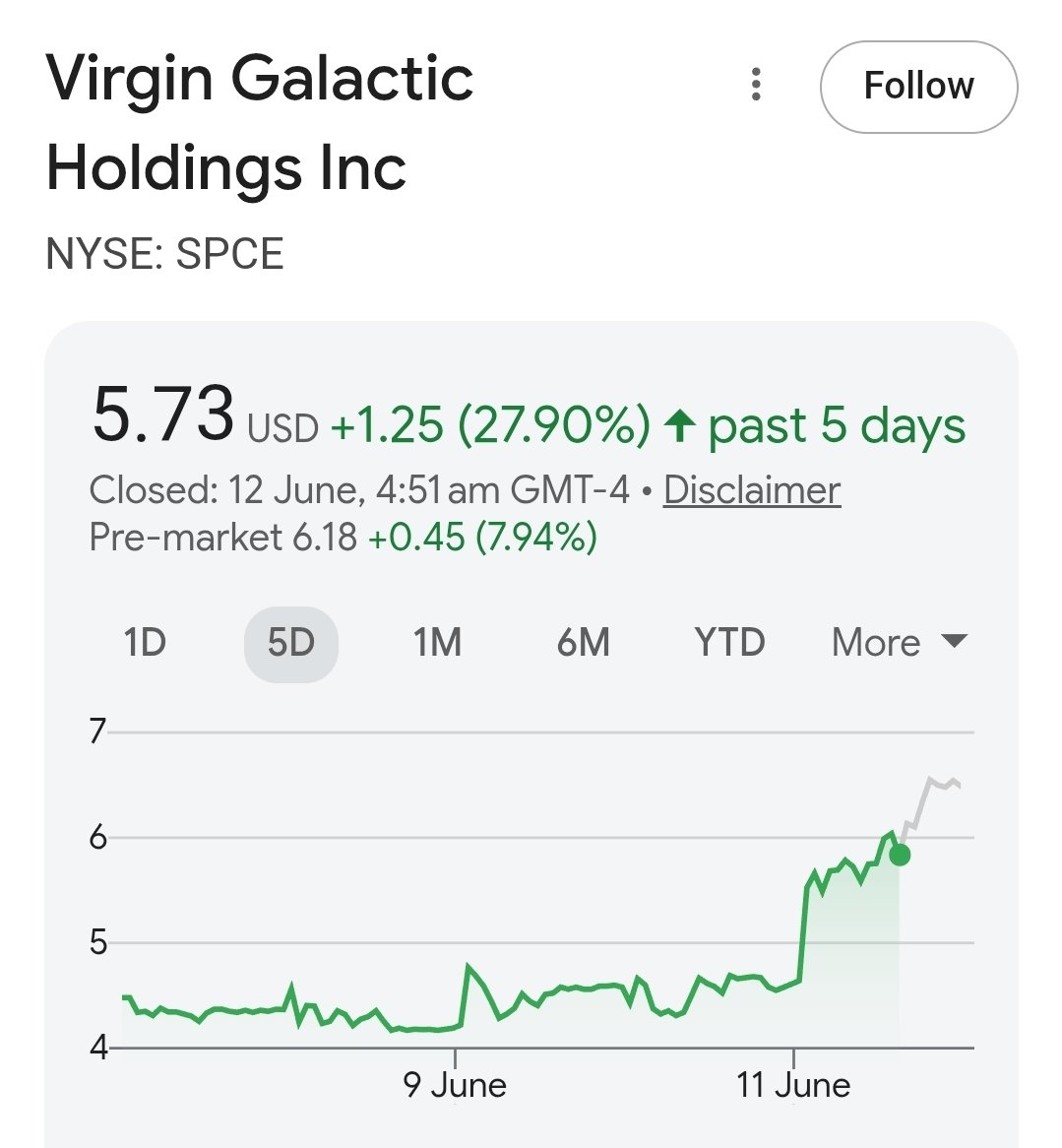
When you can’t afford SpaceX but you have $6
Jun 12

I think this really shows how stupid investors are, like how the hell do you mix up "SpaceX" and "VIRGIN GALACTIC"???
THEY SHARE TWO LETTERS??😭
1
3
284
Doug Vining retweeted

Jun 12
America is feeling nostalgic as well as pessimistic on its semiquincentennial. Meanwhile, on many objective measures, the country is doing better than ever.
In our new podcast series, we explore the distance between the data and the vibes economist.com/leaders/2026/0…
8
5
13
15,069
Doug Vining retweeted

Jun 11
This article was written by a 26 yr old college student by the name of Alyssa Ahlgren, who's in grad school for her MBA. What a GREAT perspecitve..👍🏽
My Generation Is Blind to the Prosperity Around Us!
I'm sitting in a small coffee shop near Nokomis (Florida) trying to think of what to write about. I scroll through my newsfeed on my phone looking at the latest headlines of presidential candidates calling for policies to "fix" the so-called injustices of capitalism. I put my phone down and continue to look around.
I see people talking freely, working on their MacBook's, ordering food they get in an instant, seeing cars go by outside, and it dawned on me. We live in the most privileged time in the most prosperous nation and we've become completely blind to it.
Vehicles, food, technology, freedom to associate with whom we choose.These things are so ingrained in our American way of life we don't give them a second thought.
We are so well off here in the United States that our poverty line begins 31 times above the global average. Thirty One Times!!!
Virtually no one in the United States is considered poor by global standards. Yet, in a time where we can order a product off Amazon with one click and have it at our doorstep the next day, we are unappreciative, unsatisfied, and ungrateful. ??
Our unappreciation is evident as the popularity of socialist policies among my generation continues to grow. Congresswoman Alexandria Ocasio-Cortez recently said to Newsweek talking about the millennial generation, "An entire generation, which is now becoming one of the largest electorates in America, came of age and never saw American prosperity."
Never saw American prosperity! Let that sink in.
When I first read that statement, I thought to myself, that was quite literally the most entitled and factually illiterate thing I've ever heard in my 26 years on this earth. Many young people agree with her, which is entirely misguided.
My generation is being indoctrinated by a mainstream narrative to actually believe we have never seen prosperity. I know this first hand, I went to college, let's just say I didn't have the popular opinion, but I digress.
Why then, with all of the overwhelming evidence around us, evidence that I can even see sitting at a coffee shop, do we not view this as prosperity? We have people who are dying to get into our country.
People around the world destitute and truly impoverished. Yet, we have a young generation convinced they've never seen prosperity, and as a result, we elect some politicians who are dead set on taking steps towards abolishing capitalism.
Why? The answer is this,?? my generation has only seen prosperity. We have no contrast. We didn't live in the great depression, or live through two world wars, the Korean War, The Vietnam War or we didn't see the rise and fall of socialism and communism.
We don't know what it's like to live without the internet, without cars, without smartphones. We don't have a lack of prosperity problem. We have an entitlement problem, an ungratefulness problem, and it's spreading like a plague."

2,081
15,792
38,236
979,296
Jun 11
The World’s First Trillionaire futureworld.org/insights/min…
(Published 5 years ago. We got the timeline wrong, but not the story.)
17
Doug Vining retweeted

10 Jul 2025
A year before 7/7 I was stabbed, beaten and left for dead on a street in Manchester. It was a gang of Somali youths. My colleagues - I was working at a university - couldn’t bring themselves to blame the perpetrators. It was poverty, it was me, it was anything. But it wasn’t the masked thugs with stanley knives.
7/7 was the same. London Mayor Ken Livingstone urged us not to apportion blame. Even now the MSM refuses to acknowledge the Islamist nature of the crime. It’s an extraordinary state of affairs.
Years later, in 2017, when twenty-two people, some of them children, were killed in the Manchester Arena attack, history repeated itself. Don’t look back in anger. One Love. Shit poetry.
The stabbing I got over. But it took me years to come to terms with the pathetic reaction from the hand-wringing identitarians. That was really, really damaging. So I understand full well the harm we do to ourselves when we pretend 7/7 was some bizarre and contextless tragedy.
It was Islamist terror - and there’s more to come.
And you know what? We have absolutely no hope of effectively dealing with it.
937
8,554
35,088
781,638
Doug Vining retweeted

Jun 10
20 years ago, An Inconvenient Truth put climate change at the center of global debate, shaping politics, influencing leaders, and inspiring a generation of activists.
Two decades later, we can assess not just its impact, but its accuracy. Many of the film’s most alarming predictions did not materialize, while many of the policies it inspired have proven costly and ineffective.
The lesson? Panic is a poor guide for public policy. Focusing on innovation, adaptation, and economic development can do far more to help both people and the climate—at a fraction of the cost.
financialpost.com/opinion/bj…
488
3,165
10,869
331,975
Doug Vining retweeted

Jun 10
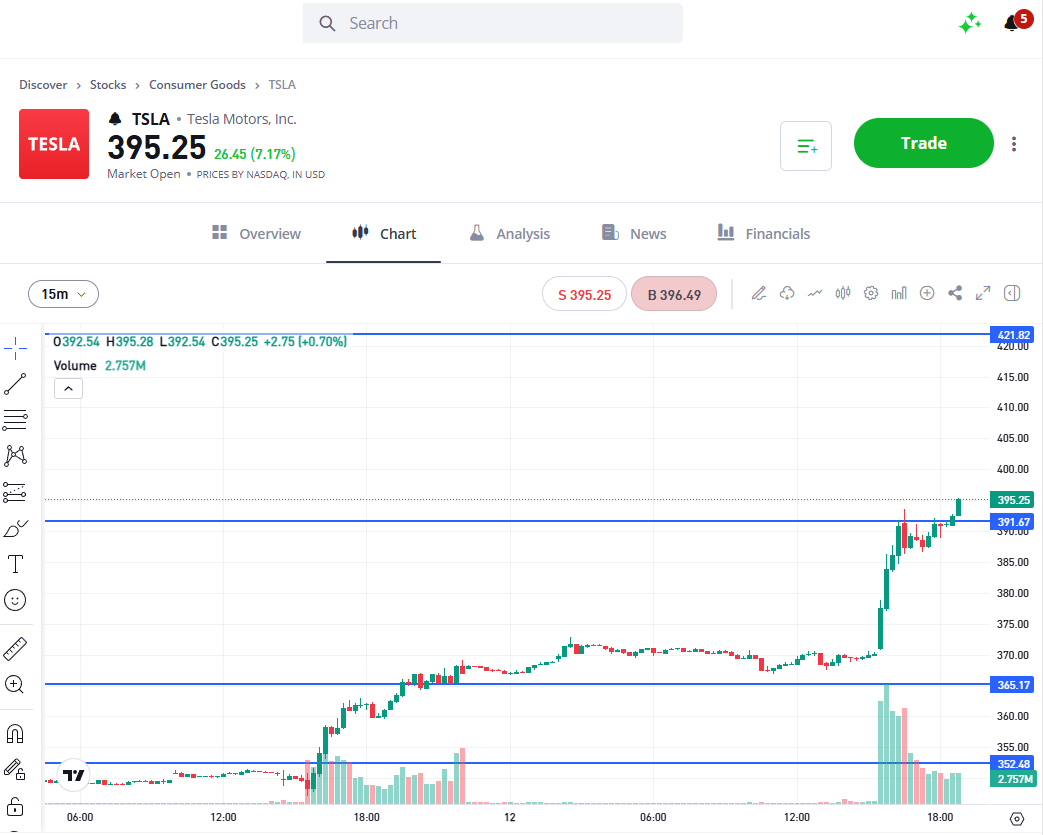
It’s been fun watching the bull and bear debates on SpaceX. Kinda reminds me of early Tesla days. Those bear cases didn't age too well.
There has never been a company like SpaceX. I would not bet against that.
145
114
2,483
81,181
Jun 10
This is chilling but may prove to be inevitable

Belfast Tonight. Britain Tomorrow. The Trajectory Is Set.
On Monday night a man was pinned to a residential street in north Belfast and stabbed repeatedly in the face and neck. Members of the public intervened. One used a hurling stick. By Tuesday night three houses and a Middle Eastern supermarket were burning. Infants were carried from neighbouring properties. A police vehicle was set alight. Politicians called for calm.
Remember this night. Not because it is exceptional. Because it is not.
This is where the road leads. Not in twenty years. Now. Belfast has experienced serious immigration-related disorder for three consecutive years. The same cycle every time. Attack. Outrage. Disorder. Calls for calm. Nothing. The next incident. What is playing out in Belfast is not a malfunction. It is the destination. A state that cannot name the cause manages the consequence instead, and calls it governance.
Now project forward. Not with imagination. With arithmetic. Over 200,000 people have arrived by small boat since 2018. The majority are unvetted young men from countries with no cultural alignment with the host society. They are housed in communities without consent. Dispersed without warning. The removal rate is four percent. The government knows the other ninety-six percent are staying. It has decided to manage that fact rather than reverse it. Every year the number grows. Every year the concentration deepens. Every year the friction increases.
In ten years those concentrations will not be streets. They will be districts. In twenty years they will be cities within cities, governed by parallel authority, answering to parallel loyalties. We have watched this happen in France. The banlieues were built accommodation by accommodation, retreat by retreat, until the French state no longer entered them except in force. Britain is on the same road, travelling faster.
The trigger events will multiply. One policing incident. One foreign conflict landing on a British street. One court case, one arrest, one viral video. Any spark will do because the kindling has been laid by policy and left to dry by neglect. The riots will not be contained to one city for one night. They will spread, as they spread in France, as they spread across England last summer, because the grievance is not local. It is national. And the anger on both sides will harden with every cycle.
Public order will not hold at current trajectory. The police already negotiate where they once enforced. Investigations are quietly dropped. Reports go unfiled. The state keeps the peace by lowering the bar for what constitutes peace. That bar will keep falling because the alternative requires confronting what the political class has spent thirty years refusing to confront.
The political system will bend to the new demography. It already has. Candidates selected on foreign conflicts. Councils controlled by sectarian bloc voting. Representatives answering to communal leaderships rather than constituents. That process will accelerate as the demographic weight shifts.
And somewhere in this trajectory a trigger event will occur that cannot be managed. A mass casualty attack. A riot that becomes an insurrection. A video so barbaric it breaks the remaining political consensus around managed silence. After that the response will be less controlled, less proportionate and less reversible than anything a government could have delivered by acting fifteen years earlier when the choice still existed.
Britain is not sleepwalking into this. The eyes are wide open. The trajectory is known. The choices being made are deliberate. Every week that passes without a closed border, a functioning removal system and an honest political reckoning is a week in which the future described above becomes more certain and less avoidable.
Belfast on Monday night is not a warning. The warnings came years ago and were ignored. Belfast on Monday night is the bill beginning to arrive.

ALT Belfast on Fire
11

Ça fait un moment que je me pose des questions sur le bilan (provisoire) de Milei en Argentine. On lit tout et son contraire. Alors j'ai arrêté de lire les commentaires et j'ai regardé les chiffres bruts.
L'Argentine, c'est l'expérience grandeur nature que les économistes attendaient depuis 50 ans. Même pays. Même peuple. Même culture. On change UNE variable : la méthode économique.
Avant : des décennies de gestion étatiste et péroniste, "redistributive". Le résultat concret ? 211% d'inflation, 42% de pauvreté, un État en déficit permanent qui finance son train de vie en faisant tourner la planche à billets.
Puis arrive Milei. Méthode inverse, brutale, assumée : on coupe, on déréglemente, on arrête d'imprimer.
Deux ans plus tard (photo à son arrivée (fin 2023) vs aujourd'hui) :
Inflation annuelle : 211% → 31%
Inflation mensuelle : 25% → ~2%
Déficit public : −5% du PIB → 1,8% (excédent)
Croissance : −1,6% → 4,4%
Pauvreté : 42% → 28%
Sans débat. Jugez par vous-mêmes.
Et le point essentiel : ces gains ne vont pas "aux riches" ou "aux marchés". Ils vont d'abord aux plus pauvres.
L'inflation est l'impôt le plus injuste qui existe — elle frappe ceux qui n'ont aucun actif pour se protéger. La diviser par 7, c'est rendre du pouvoir d'achat à ceux d'en bas. Et 14 points de pauvreté en moins, ce sont des millions de gens, pas une ligne Excel.
Pendant un siècle, on a expliqué aux Argentins que l'État les protégerait en dépensant toujours plus. Résultat : un des pays les plus riches du monde en 1910, ruiné. On vient d'inverser la méthode. Regardez le résultat.
À un moment, il faut accepter ce que les faits racontent : sur le terrain économique, la méthode libérale a livré en deux ans ce que des décennies de socialisme avaient promis sans jamais tenir. Et ça profite d'abord aux plus modestes.
On peut détester le style de Milei — la tronçonneuse, l'outrance, les sorties improbables, il n'a rien d'un homme d'État classique. Mais on ne juge pas une politique économique au style de celui qui la mène. On la juge à ce qu'elle fait à la vie des gens.
Et les chiffres ont parlé.
429
6,185
18,671
448,119
Doug Vining retweeted
May 31
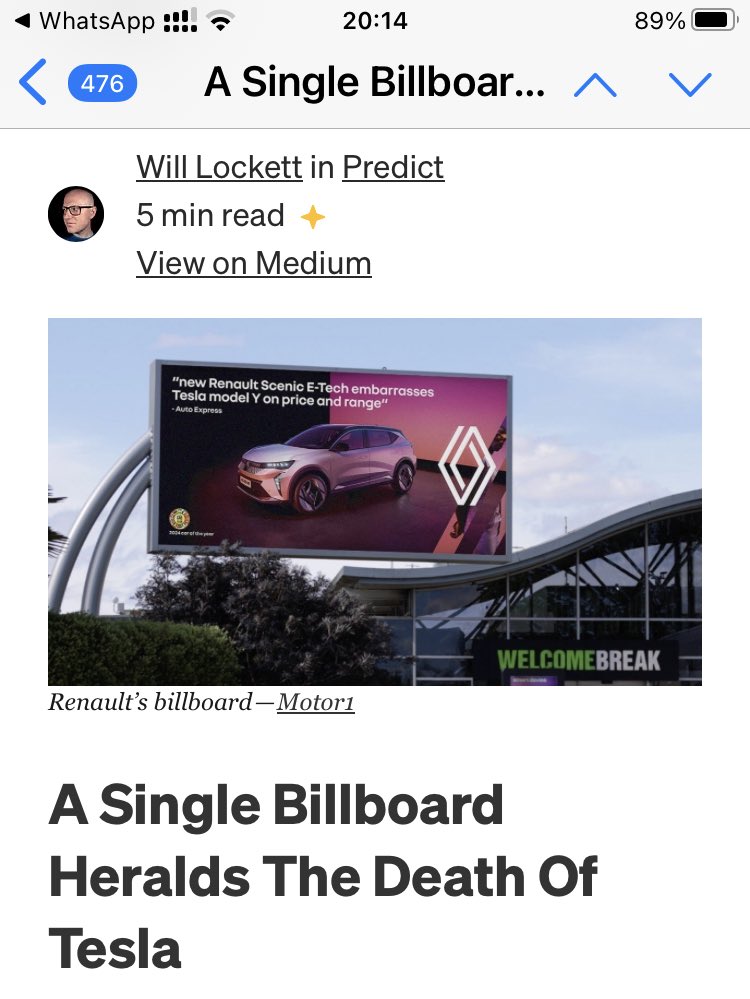
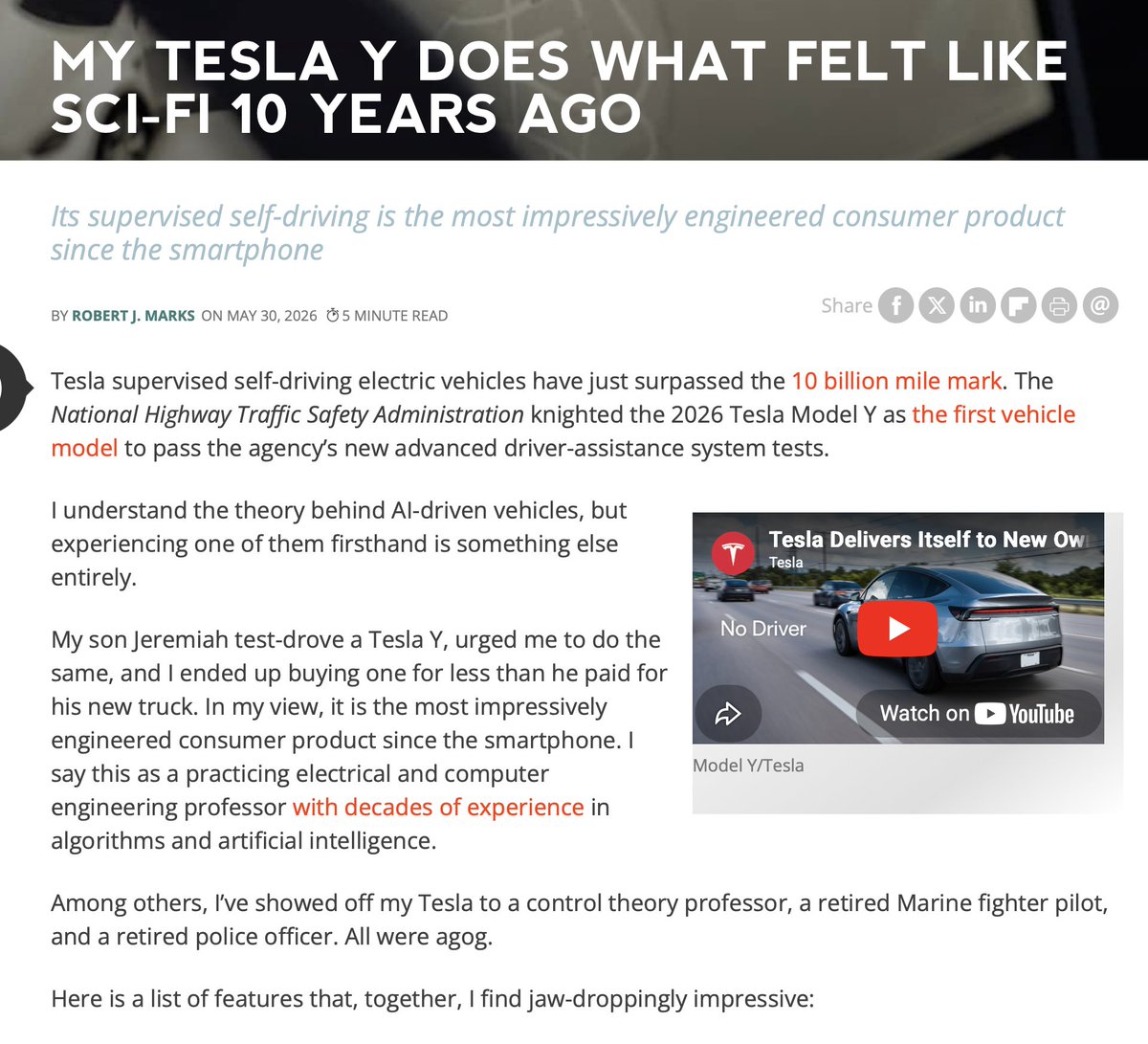
Robert Marks on @Tesla FSD (Supervised) after buying a Model Y:
"Its self-driving is the most impressively engineered consumer product since the smartphone. I say this as a practicing electrical and computer engineering professor with decades of experience in algorithms and artificial intelligence.
Among others, I’ve showed off my Tesla to a control theory professor, a retired Marine fighter pilot, and a retired police officer. All were agog.
Whether Tesla ultimately dominates the future of transportation or merely helps ignite it, one thing is clear: the automobile is being reinvented before our eyes. For those like me who grew up thinking of cars as engines, gears, and gas tanks, stepping into a Tesla feels less like buying a new car and more like getting a glimpse of tomorrow."
Full article: mindmatters.ai/2026/05/my-te…
70
403
2,662
130,123
Doug Vining retweeted

May 25
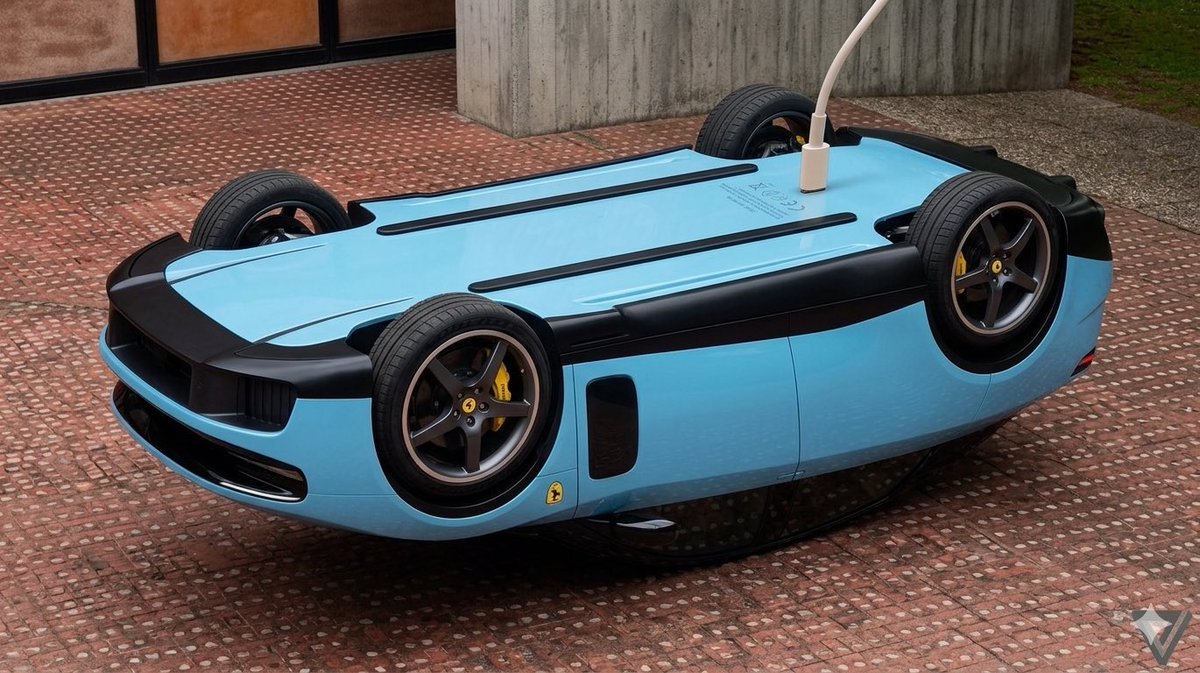
POV: You’re charging your new Ferrari Luce
273
2,372
29,135
763,037
Doug Vining retweeted

May 24
This success is only for a ground-based wind tunnel experiment. The airplane didn't actually fly in the sky at this speed. There are still many challenges to clear before it can be used for commercial flights, and researchers are aiming to make it a reality around the 2040s.
2
8
395

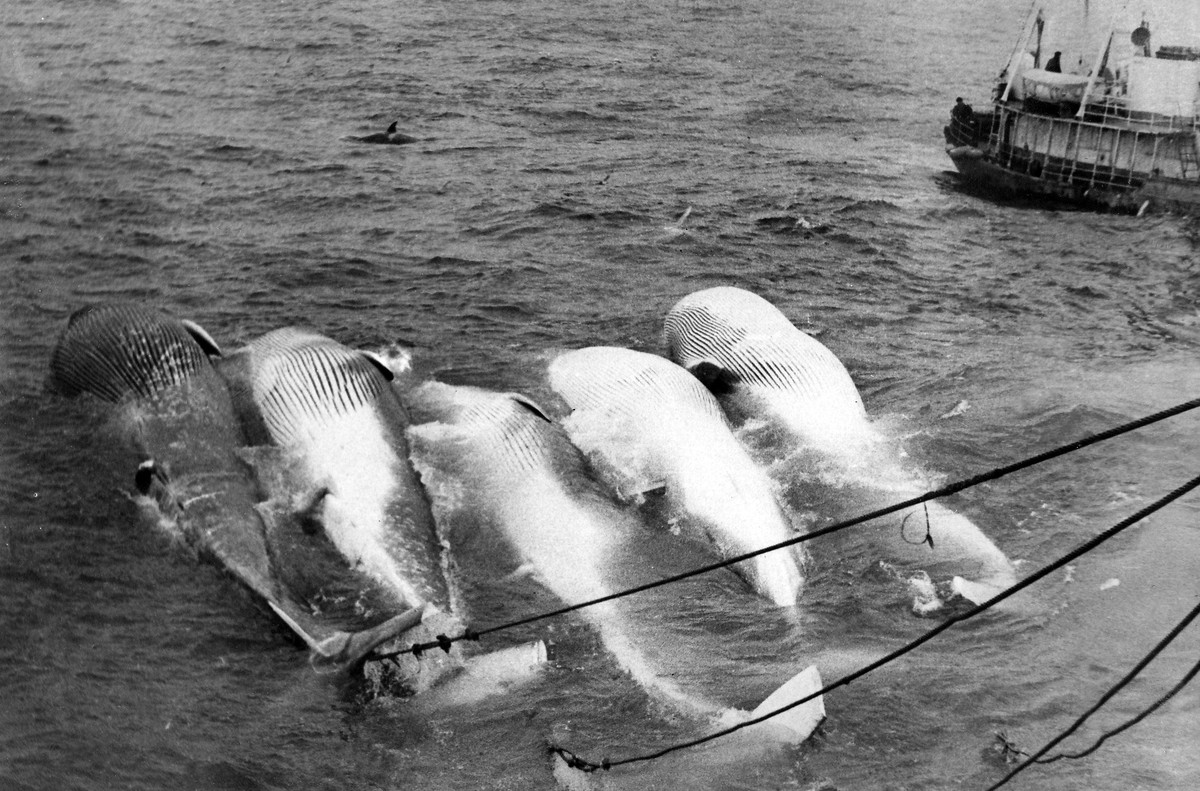
The Soviet whaling fleet killed 180,000 whales between 1948 and 1973, delivering rotten carcasses that nobody wanted to eat. Soviet citizens had zero demand for whale meat. The ships hunted anyway, fulfilling quotas handed down from central planners who counted tons of dead whale as economic output.
This was bureaucratic box-checking that nearly drove multiple whale species to extinction. Soviet whalers targeted endangered right whales and humpbacks specifically because they were larger, helping them hit tonnage targets faster. The meat rotted on deck during long voyages back to port, where officials dutifully recorded the numbers and sent reports to Moscow declaring another successful harvest.
Central planners measured success in tons harvested, not consumer satisfaction or long-term sustainability. Factory managers got promoted for exceeding whale quotas, regardless of whether anyone actually wanted whale meat (they didn't). The feedback mechanism that normally connects production to human needs had been severed entirely. When bureaucrats replace market prices with administrative targets, you get mass slaughter with zero purpose.
You still see this today every time politicians promise to "create jobs" in industries that lose money year after year. When government agencies measure their success by dollars spent rather than problems solved. When university administrators chase enrollment numbers instead of student outcomes.
Remove the profit motive and price signals, and you get 180,000 dead whales rotting in the sun while commissars celebrate meeting their targets. You don't get rational planning.
Socialism is fundamentally destructive to the environment and inevitably leads to ecological disasters.
381
4,508
18,416
1,146,158