Stay ahead of the game with the latest news and analysis on blockchain and crypto. From innovation to regulation, we bring you the insights that matter.
Joined January 2021
- Tweets 1,834
- Following 307
- Followers 629
- Likes 990
4 Photos and videos

Blockmedia retweeted

20 Mar 2025
@Official_Upbit @upbitglobal Rebuts Allegations of Listing Fees, Demands Evidence from Wu Blockchain
South Korea-based cryptocurrency exchange Upbit has denied allegations that it charges intermediary fees for listing digital assets, pushing back against a recent report from blockchain news outlet Wu Blockchain. The exchange called for the media platform to provide evidence supporting its claims and warned users about the risks of fraudulent brokers.
In an official statement, Upbit asserted that it does not demand financial compensation in exchange for trading support. The company described its listing process as stringent and transparent, emphasizing that all projects go through a structured evaluation without external interference.
Upbit’s Trading Support Process
The exchange detailed its multi-step approach for listing digital assets, which includes:
>Trading support application submission
>Preliminary or simplified review
>Formal evaluation
>Resolution by the Trading Support Deliberation >Committee
>Commencement of trading support
Upbit underscored that no intermediaries are allowed to participate in this process, stating that any claims of paid listing services are fraudulent.
Warning Against Illegal Brokers
The company also cautioned users against individuals or entities claiming to facilitate listings on Upbit for a fee. It urged vigilance, stating that such actors are unauthorized and not affiliated with the exchange. Upbit encouraged users to report any suspicious offers made in its name.
To reinforce its stance, Upbit demanded that Wu Blockchain disclose the names of projects that allegedly paid listing fees, along with supporting evidence. The exchange also requested additional information about any intermediaries involved in illicit brokerage activities.
Legal Action on the Table
Upbit warned that it would pursue legal measures against any parties engaging in fraudulent brokerage activities. The company operates a reporting channel for users to flag scams related to fake listing services.
The rebuttal from Upbit comes as regulatory scrutiny over crypto exchanges intensifies globally, with authorities focusing on transparency in digital asset listings. While some platforms have faced criticism over opaque listing practices, Upbit maintains that it adheres to strict compliance standards.
upbit.com/service_center/not…
1
1
2
770
Blockmedia retweeted
30 Dec 2024
16
36
160
52,060
Blockmedia retweeted

Let SOONuary commence.
SOON Alpha Mainnet is now live.
Read on for $SOON tokenomics👇
medium.com/@soon_SVM/soon-al…
204
186
940
758,048
Blockmedia retweeted
10 Dec 2024
South Korea Abolishes Financial Investment Income Tax, Delays Cryptocurrency Taxation
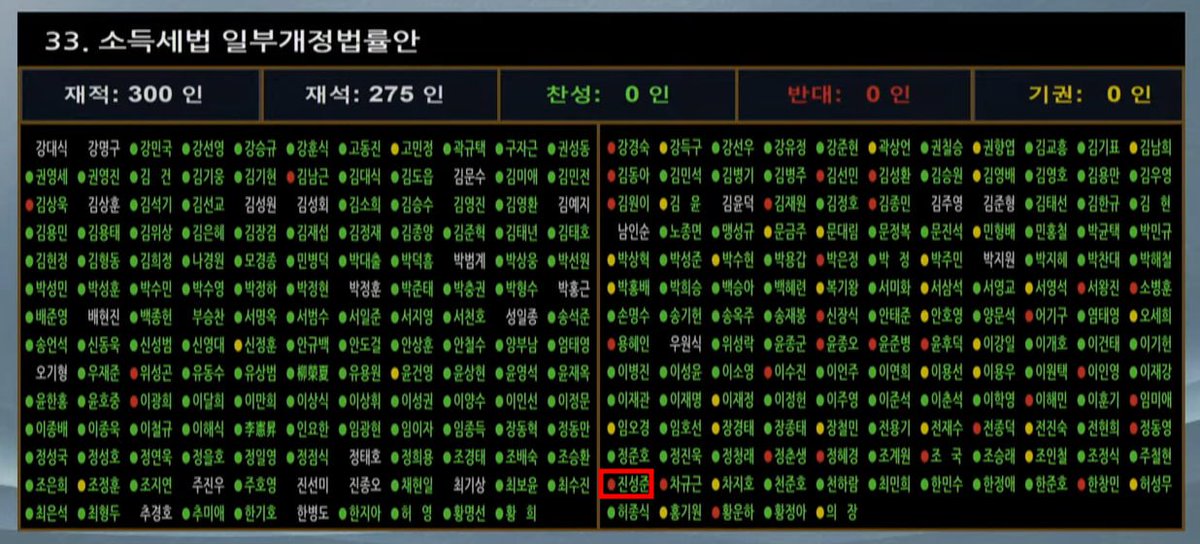
South Korea’s National Assembly approved a comprehensive amendment to the Income Tax Act on Dec. 10, abolishing the Financial Investment Income Tax (FIIT) and delaying the introduction of cryptocurrency taxation by two years.
The move aims to bolster capital markets and provide temporary relief to investors navigating an uncertain economic environment.
The revised legislation eliminates the FIIT and retains the current capital gains tax structure for stock transactions, marking a shift in South Korea’s approach to taxing investments. The tax on cryptocurrency gains, originally slated to take effect on Jan. 1, 2025, has been postponed to Jan. 1, 2027.
The bill was submitted by the government and expedited to a plenary session after failing to pass the Finance Committee. Under Article 85-3 of the National Assembly Act, bills tied to the national budget are automatically referred to the plenary session if a committee agreement is not reached within the prescribed timeline.
The amendments reflect a broader government initiative to balance investor-friendly policies with long-term economic priorities. Critics,
Market Implications
The decision to scrap the FIIT is expected to boost investor confidence in South Korea’s capital markets. Analysts predict that maintaining the current tax framework for stock gains will reduce market friction and encourage broader participation. Meanwhile, the postponement of cryptocurrency taxation provides breathing room for the nascent digital asset industry as it seeks to align with global regulatory standards.
South Korea’s bold move highlights its attempt to juggle immediate economic priorities with structural reforms, underscoring its strategy to stimulate growth amid complex domestic and international challenges.
2
6
1,039
Blockmedia retweeted
10 Dec 2024
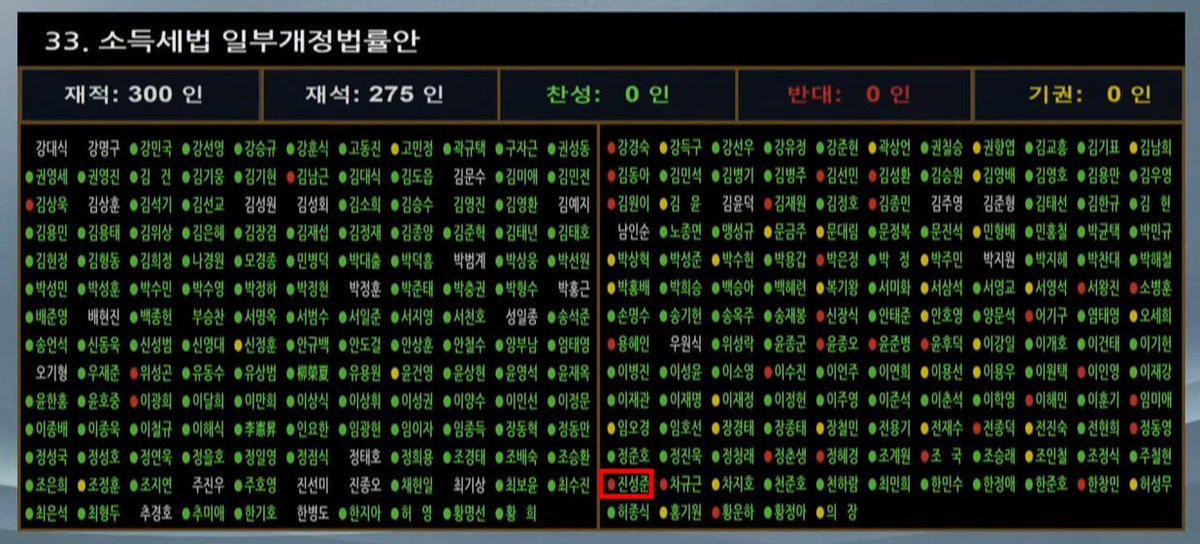
🚨 Breaking: South Korea's National Assembly passes the income tax reform bill (Crypto taxation postponed)
✅ Capital Gains Tax abolished
✅ Crypto taxation postponed
🗳️ Votes: 204 in favor, 33 against
1
5
15
3,824
Blockmedia retweeted
9 Dec 2024
Market Wrap:
- $KOSPI plunged 2.78% to close at 2,360.58, reflecting dampened retail investor sentiment.
- $KOSDAQ tumbled 5.19% to 627.01 amid strong selling in small- and mid-cap shares.
- #USD/#KRW soared to 1,437.0, driven by global dollar strength and risk-off positioning.
1
4
775
Blockmedia retweeted
6 Dec 2024
Magic Eden to Launch Official ‘ME’ Token on December 10
Magic Eden, a leading multichain NFT marketplace, will distribute its official token, ME, through a token generation event (TGE) on December 10 at 11 p.m. Korea Standard Time, according to an announcement by the ME Foundation.
The ME Foundation confirmed that the token will be listed on global cryptocurrency exchanges OKX and Bybit, with deposits and withdrawals supported via the Solana (SOL) network. Additional exchange listings are expected to be announced through the foundation’s official accounts.
Pre-Market Trading Shows Positive Momentum
Currently, ME tokens are available for pre-market trading on major platforms, including Coinbase International, OKX, and Bybit. In pre-market trading, the token gained 26% from the previous day, reaching $4.60, signaling strong market interest ahead of its official launch.
Expansion Beyond NFTs
Magic Eden has been diversifying its platform to offer more than just NFT marketplace services. Recent initiatives include support for Bitcoin-based meme coins like Runes and the integration of Ethereum Virtual Machine (EVM) chains, positioning the platform as a comprehensive multichain digital asset hub.
The launch of the ME token is expected to play a pivotal role in Magic Eden’s ecosystem expansion and its efforts to attract a broader user base. Analysts view the listing as a significant step in the platform’s evolution, enhancing its position in the competitive cryptocurrency landscape.
#MagicEden $ME @MagicEden @MEFndn
blockmedia.co.kr/archives/80…
2
9
82
7,000
Blockmedia retweeted

3 Dec 2024
We are delighted to announce our partnership with
@eBlockmedia as media partner. We proudly host the #TEAMZ Web3/AI Summit 2025 in Tokyo, Japan!
📢Web3/AI Summit 2025 will take place on April 16-17, 2025, at Toranomon Hills, Tokyo, gathering over 10,000 Web3 and AI experts from around the world to foster connections and drive technological innovation.
📖Event Details:
📅Date:
10:00 AM - 6:00 PM, April 16-17, 2025
📍Venue:
Toranomon Hills International Forum, Tokyo
👏Scale:
130 speakers, 100 side event, 100 investment funds, 200 communities, 120 media outlets, and 500 KOLs
✨Event Highlights:
🔴Keynotes:
Top leaders sharing insights on the future of Web3 and AI
🟡Panel Discussions:
Addressing challenges and exploring new technological trends
🟢Exhibition:
100 companies showcasing advanced products, solutions, and technologies
🔵Networking:
Opportunities to connect and collaborate with leading innovators and enterprises
🟣Side Events:
Community activities and exclusive networking sessions
@yujikumagai_ @afrohideZ @relance_kenta @Nishi8maru @VadimirVL @Phemex_official @herbertrsim @RealBlockPI @JenksGuo @yos2yos2yos2
4
10
99
11,400
Blockmedia retweeted
3 Dec 2024
[🚨LIVE] "Assembly resolves to lift martial law. President must lift the state of emergency. Soldiers and police, leave the National Assembly and return to your posts. Assembly stand with people of the Korea and protect democracy." Woo Won-shik, Speaker of the National Assembly
5
13
1,619
Blockmedia retweeted
3 Dec 2024
[🚨LIVE] The National Assembly of the Republic of Korea has proposed and passed a resolution to lift martial law. During the plenary session, 190 members were present, and all 190 voted in favor. The resolution to lift martial law has been approved.
7
29
3,545
Blockmedia retweeted
3 Dec 2024
[🚨LIVE] Emergency Statement from the Republic of Korea Military Human Rights Center
Declaring martial law is illegal.
The appointment of the Army Chief of Staff as Martial Law Commander,
the prohibition of freedom of the press, assembly, and association, and the ban on political activities are all illegal.
This is a declaration of war against the citizens of the Republic of Korea and a coup orchestrated by Yoon Suk-yeol’s loyalists.
Airborne units are entering the National Assembly.
To all military personnel, we plead with you:
Do not aim your guns at your parents, siblings, children, or friends. We cannot let Yoon Suk-yeol ruin our destiny.
Let us protect this country together.
1
8
570
Blockmedia retweeted
3 Dec 2024
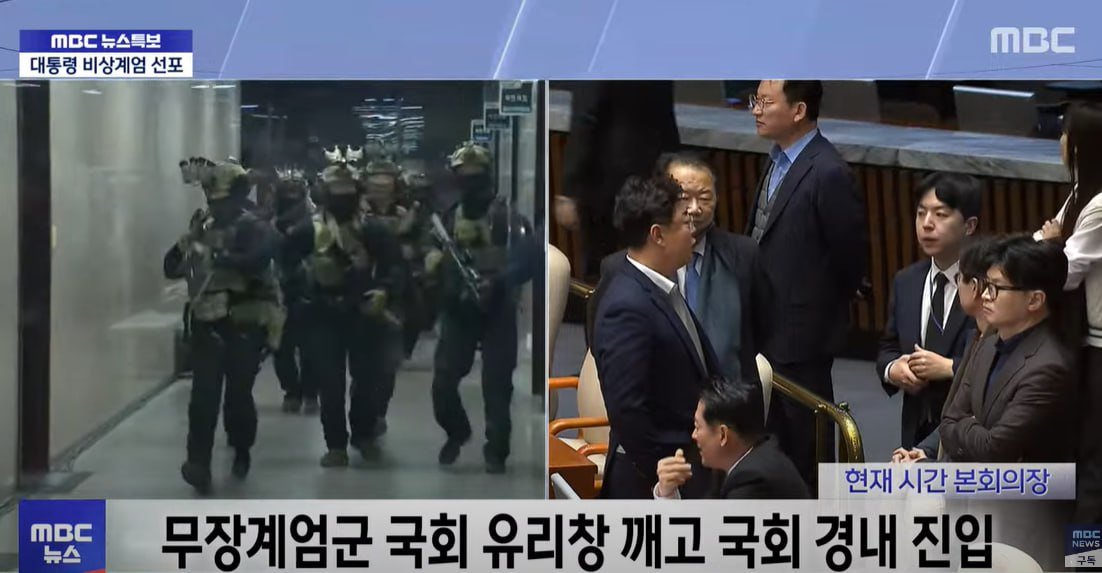
[🚨LIVE] Armed martial law forces have reportedly broken through glass windows and entered the National Assembly grounds. The current situation in the main chamber remains tense.
1
7
581
Blockmedia retweeted
3 Dec 2024
South Korea's Deputy Prime Minister for Economic Affairs, announced plans to provide unlimited liquidity to stabilize markets following the declaration of martial law.
1
7
789
Blockmedia retweeted
3 Dec 2024
Breaking: National Assembly Speaker Woo Won-shik convenes a plenary session, stating, "We will dedicate ourselves with extraordinary determination to stop this."
2
5
705
Blockmedia retweeted
3 Dec 2024
[🚨LIVE] Armed martial law troops attempting to enter the National Assembly are facing off against citizens trying to block their entry. source: SBS NEWS
1
9
48
6,935
Blockmedia retweeted
3 Dec 2024
Upbit is currently experiencing issues with KRW deposit and withdrawal services, alongside other system errors. Users attempting KRW withdrawals are being informed: "The transfer stabilization system is processing withdrawal requests sequentially. Please try again later." No official announcement has been made yet.
1
5
532
Blockmedia retweeted
3 Dec 2024
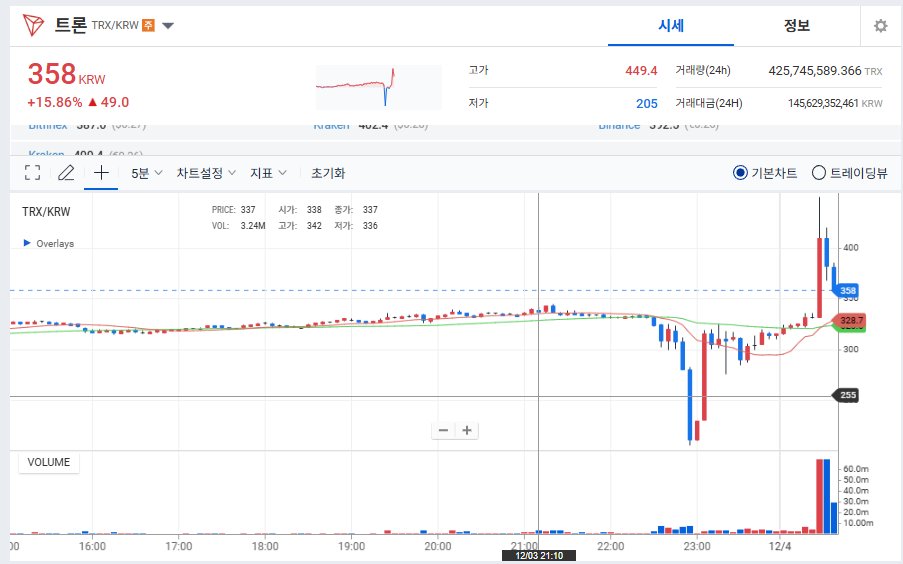
The $TRX Kimchi Premium on Upbit-Binance stands at around 15%. Speculation arises that only TRON withdrawals are functioning at the moment of martial law issues.
Shout out to @justinsuntron and @trondao
1
4
13
1,978
Blockmedia retweeted
3 Dec 2024
Breaking: Multiple helicopters have landed at the National Assembly, while armored vehicles are moving through the city streets.

1
4
464
Blockmedia retweeted
3 Dec 2024
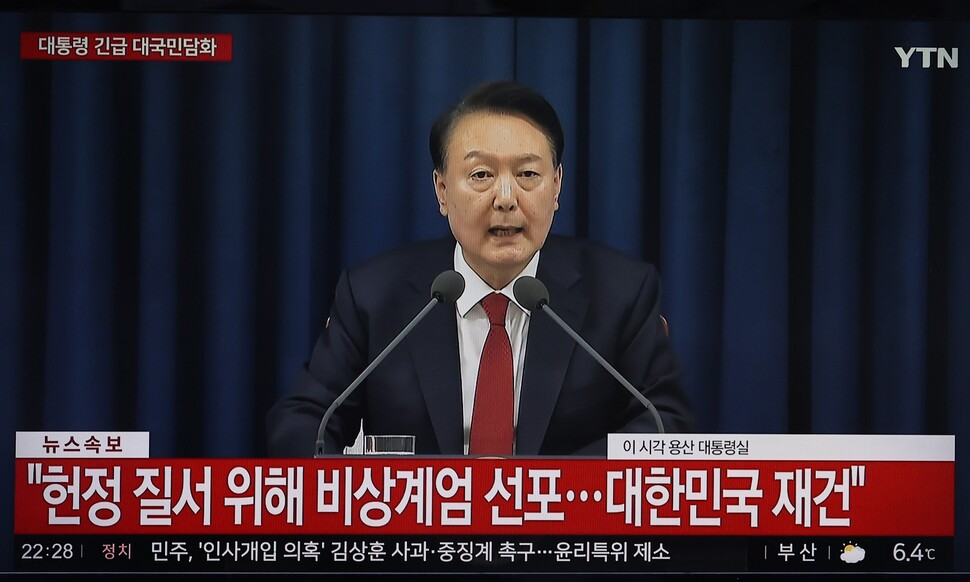
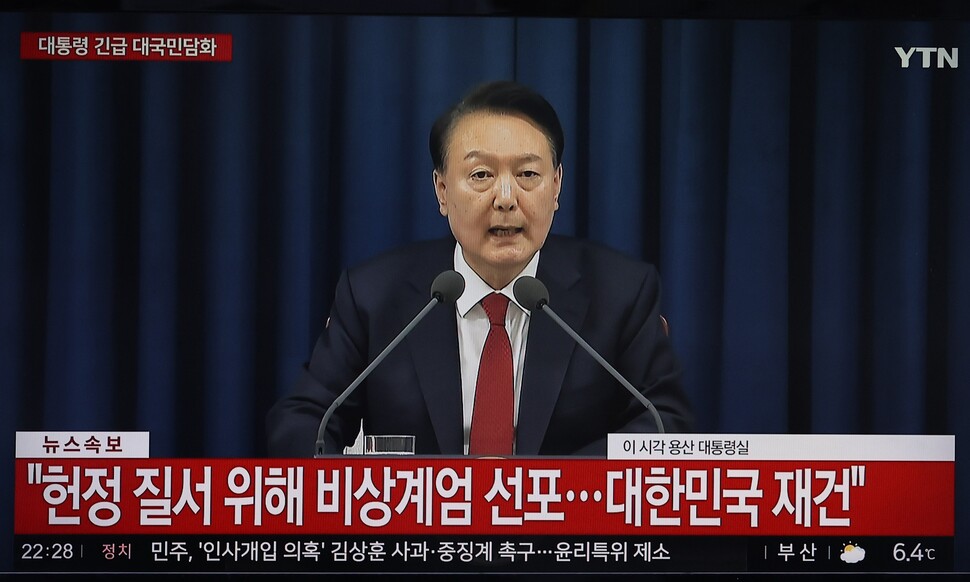
South Korean President Yoon Suk-yeol declared martial law on December 3.
🔥The martial law includes measures such as control over media and restrictions on press and publications. 🔥
The commander of Korea’s martial law authority announced plans to take action against violators of the martial law in accordance with the relevant laws.
In an emergency address at the Presidential Office in Yongsan, President Yoon stated, "I am declaring martial law to eradicate pro-North Korean forces and protect the constitutional order of freedom." He described recent actions by opposition parties, such as the impeachment of the Chairman of the Board of Audit and Inspection and unilateral handling of the budget bill, as "acts of rebellion" and "clear anti-state activities."
President Yoon declared, "Through this martial law, I will rebuild and safeguard the Republic of Korea, which is plunging into ruin," adding, "I will ensure the elimination of anti-state forces that have caused havoc and are the main culprits behind the downfall of the nation." He described the move as an "unavoidable measure" aimed at guaranteeing the freedom and safety of the people and the sustainability of the nation in the face of anti-state forces attempting to subvert the system. He also emphasized that it is necessary to ensure a proper country is passed down to future generations.
President Yoon assured, "I will swiftly eliminate anti-state forces and restore normalcy to the country," acknowledging that "some inconvenience may arise for law-abiding citizens who uphold the values of the Constitution of the Republic of Korea due to the declaration of martial law, but I will focus on minimizing these inconveniences."
He concluded, "This measure is inevitable for the preservation of the Republic of Korea's continuity," reiterating that "there will be no change in the country's foreign policy principle of fulfilling its responsibilities and contributions within the international community." He appealed to the people, saying, "As President, I earnestly ask for your trust. I will dedicate my life to protecting the freedom of the Republic of Korea. Please trust me."
@elonmusk
2
6
543