Ex journalist passionate to link politics& the planet. worked in senior management in Europe mostly, and Africa. political nerd. singer. writer.3/12/1940
Joined December 2011
- Tweets 424,612
- Following 4,715
- Followers 6,152
- Likes 28,143
3,208 Photos and videos
Alison Graham retweeted

12h
Looking at the interview, it seems yesterday's piece needs some revision.
Yesterday I wrote about the venue of the prospective agreement, the mechanism meant to enforce it, and the actors who will not sign it. Then I came across an SNN interview in which Mahmoud Nabavian, deputy chairman of the Iranian Parliament's National Security Commission, read out the original text directly and launched a frontal attack on the negotiating team.
Nabavian is a hardliner opposed to the negotiations themselves, so his testimony carries its own bias. But on the strength of the fact that he was quoting the wording — and on the basis of the critique now coming from the hardline camp — yesterday's piece needs correcting.
First, the parts where my earlier analysis pointed in a similar direction.
What Held Up
1. The diagnosis of "a document that seals the disputes inside a 60-day window"
The starting point of my analysis was that this MOU is not a document that resolved the core disputes — nuclear, control, money — but one that repackaged them, deferred to "negotiations 60 days later," so that only the signing becomes possible. Nabavian's central objection takes aim at exactly this structure. He criticized the fact that all the major benefits accruing to Iran — $300 billion in reconstruction, an end to sanctions, resolution of the nuclear issue, US troop withdrawal — are bound up in a "final agreement" whose date is unclear and indefinitely extendable.
2. Hormuz — the "rebranding of control"
I had argued that what Iran gave up at Hormuz was only the word "toll," while the economic substance (service fees) and the operational substance (control) remained alive — and I forecast that "a reappraisal will come once the details of an Iranian-managed reopening are made public." This part turned out more dramatic than I expected. According to Nabavian's reading, from the hardline vantage point that control itself has evaporated from the text. He revealed that the earlier version's explicit name "Strait of Hormuz" had been generalized to "commercial ships from the Persian Gulf to the Sea of Oman," and that the US had later inserted the word "unlimited." His claim: "arrangements" means not Iranian management but merely preparation for reopening, and nowhere in the text is Iranian control of the strait preserved. In other words, my initial read — "the claim to control is alive" — exists from the negotiating team's standpoint, but on the wording of the text itself it is exposed to the hardliners' rebuttal.
3. UNSC endorsement is not a guarantee
In the earlier piece I concluded with "the lesson of Resolution 2231 — institutionalization only raises the cost of exit; it does not prevent exit." Nabavian's critique of Clause 14 says the same thing in an insider's language: "A binding UNSC resolution is not a real guarantee. We already lived through this with the JCPOA and 2231 — the US withdrew, yet Iran alone was left trapped in international obligations, and only snapback became possible." He goes a step further: "Once the agreement goes to the Security Council, Iran does not control the text, and the US and other members slip in additional restrictions — missiles, arms, inspections (precisely the 2231 case)." Strong corroboration that my initial inference is being raised, identically, inside the Iranian parliament.
4. The US domestic bottleneck — Congress, OFAC, banks
Near the end of the piece I added the asymmetry that "Congress cannot guarantee non-aggression, but it can block sanctions relief." Nabavian confirms it outright: "The US cannot by itself cancel UNSC or IAEA resolutions, and many sanctions are congressional statutes that Trump cannot remove on his own." The three-layer bottleneck logic — OFAC, Congress, bank compliance — was being read the same way in Tehran.
5. The inversion of the money sequence
I had flagged the sequence inversion as central: "2013 was performance first, money later; this time it is a demand for upfront payment." Nabavian confirms the structure with more precise figures.
6. The documentation of Lebanon
My earlier piece read the shift from April's "end of war" carve-out to this round's "ceasefire across all fronts, Lebanon included" as deliberate engineering. Nabavian, too, concedes that Clause 1 at least was "improved in Iran's favor compared to the earlier version" — "end of war" was strengthened to "immediate and permanent end of military operations on all fronts, including Lebanon," closing the room for the US to declare the war over while continuing 'defensive' operations.
Where My Initial Read Was Wrong
1. The "lifting is easy" dichotomy — I missed the re-sanctions axis
I split the new Security Council resolution into two parts: lifting the legacy sanctions (easy) and the new enforcement device (hard). That dichotomy dropped one crucial axis. As Nabavian points out — "the text does not prevent the US from imposing new sanctions the very next day, so the sanctions remain 100% effectively in place." Even if a nominal lifting occurs, if re-designation under a different name is possible, the lifting is hollow. What Iran really wants is not "lifting" but a "guarantee against re-sanctioning," and a lifting without that is meaningless to Iran. My earlier analysis, boxed into "lifting vs. enforcement," failed to see the third axis of re-sanctioning. This asymmetry interlocks with the nuclear section, too — Iran repeatedly provides written guarantees that it "will not produce or acquire nuclear weapons," while the US provides no equivalent guarantee on future sanctions.
2. The money figure — "half of $24 billion" was imprecise
Following the Mehr report, I wrote "half of $24 billion paid upfront." Nabavian's text is more precise. Iran's earlier proposal was "$12 billion immediately after signing, the rest within 30 days," and after the US rejected it, the current version weakened to the vague phrase "assets to be made available based on progress in negotiations" — with no definition of "progress" and no figure. In other words, the clear guarantee of "$12 billion immediately" has disappeared. My sequence-inversion thesis held, but the figure, and the direction of the retreat (toward terms even less favorable to Iran), need correcting. And this shows that the "$24 billion" headline making the rounds is not a settled condition but one version within the negotiating process.
3. Nuclear dilution — "domestic blend-down = an Iranian win" was an oversimplification
I framed the gap between "what Trump sold Netanyahu (removal)" and "what the document says (domestic blend-down)" as a US–Israel rift. The frame itself holds, but treating "domestic blend-down" as if it were an Iranian victory was an oversimplification. The actual wording Nabavian read out is "the dilution of all nuclear material on site, at minimum under IAEA supervision and under American considerations." It is domestic dilution — but dilution under American control. Hardliners see even this as "an American demand packaged in Iran's language." My earlier frame is not weakened by this (the US–Israel gap stands), but the nuance that "Iran fended off removal, so it amounts to a win" needs correcting.
4. The "clever Iranian design" frame — it tilted to one side
This is the part needing the largest correction. Taking the documentation of Lebanon as my starting point, I loaded the MOU rather heavily with Iranian strategic agency (deterrence exit raising the cost of erosion through multilateralization). Nabavian's whole testimony paints the opposite picture. He reads Hormuz, the nuclear file, the money, the withdrawal — nearly every item — as "American demands presented in Iran's language," i.e., the result of Iran retreating with each successive version. "Every time we submitted it and it changed, we retreated" is his summary.
The truth lies between two biases. I lean toward Iranian agency; Nabavian (as a hardliner) leans toward Iranian capitulation. Netting them out, the MOU is neither "Iran's clever trap" nor "Iran's total surrender," but something closer to a US-led asymmetric bargain in which Iran won one square — Lebanon — and gave ground on Hormuz, the nuclear file, and the money. Lebanon is nearly the only square Iran actively secured; on the rest, it was largely on the defensive. The center of gravity of my earlier piece has, in effect, collapsed.
What I Did Not Address Before, but Must Add After This Interview
1. The paradox of Iran freezing its own leverage
This is the strongest point, absent from my earlier analysis. According to Nabavian, during the waiting period Iran freezes — and proposed to freeze, itself — three things: its current nuclear status (no enrichment), the non-reconstruction of the damaged facilities, and the endurance of US sanctions. On top of that it accepts the continued presence of US forces in the region. In other words, if the final agreement is extended indefinitely, Iran freezes its own cards during the wait while the US keeps its sanctions and its troops in place. His rhetorical question — "Is this really America's proposal, or ours?" — is the crux.
This deepens my reading of the 60-day window by one level. I had seen the window only as "a time bomb where the nuclear and control disputes reignite." But before that, the window is a period in which Iran voluntarily ties down its supply and nuclear leverage. In the short term this is downward pressure on oil (Iran restrains its incentive to provoke), but it is simultaneously a stretch in which domestic hardliner discontent accumulates. The vagueness of the withdrawal clause ("US forces leave the area 'surrounding Iran' 30 days after the final agreement" — timing undefined, "surrounding" distance undefined) amplifies it. Lifting the blockade is nearly the only US-side implementation item with a fixed date; the rest of the US implementation is all linked to the variable "final agreement."
2. A "third generation" of guarantee discourse — the hardliners' automatic-retaliation trigger
I had organized Iran's guarantee model as first generation (congressional ratification) → second generation (multilateral institutions, the UNSC, economic lock-in). Nabavian rejects even that second generation and demands a third: instead of a UNSC resolution, write into the document automatic consequences — that if the US violates the deal, Iran exits the NPT, fully closes the Strait of Hormuz, and resumes enrichment at unlimited levels. In other words, inside Iran the guarantee discourse is reverting from "institution" to "consequence," and the negotiating team's second-generation line is being squeezed by hardliners who call it "a trap, too." Whether this comes to pass, however, remains uncertain.
3. The Iranian domestic bottleneck — symmetry with the Washington bottleneck
My earlier piece dealt only with the US-side bottleneck (Congress, OFAC, banks). Nabavian's public revolt itself shows that even if the negotiating team reaches a signature, friction can arise at Iran's domestic ratification and implementation stage. Because the Hormuz "control" wording and the nuclear "American considerations" wording are the focal targets of the hardliners, an interpretive struggle over these two clauses will erupt inside Iran after signing. A symmetric structure in which both sides' domestic politics gnaw at the agreement simultaneously — this was missing from the earlier analysis.
4. The instability of the text's very authenticity — a meta-level caveat
The most important meta-lesson. Even Nabavian conceded that he is "told that what I have seen is not the final version." An Iranian deputy committee chairman has, in effect, admitted that the reported text I relied on when writing the earlier piece may not be the final one. At the same time, his own reading may be a hardliner's selective citation. No single version should be believed as is.
Yet paradoxically, the very "differences" between those versions may be the most honest signal. Which word was added ("unlimited") and which words were dropped ("Strait of Hormuz," "compensation/reparations," "$12 billion immediately") reveal where the center of gravity of the negotiation is shifting.
It was only because yesterday and today happen to be holidays for me that I could attempt this at all. This exercise has given me no certainty whatsoever. The one thing I was able to confirm is the symbolic weight the MOU carries. Reading the posts that surfaced across various X accounts today, and Nabavian's interview, it is clear that — unlike what gets digested in the headlines — the two sides are negotiating under a thick layer of complexity around a particular documentary form: the wording, the nuance, and even the framework that follows. The US will have its own internal backlash, and Iran will have the same. This is precisely why I bought the Z26 calls: I wanted to step outside the optimism and the pessimism about the negotiations, and to place a bet closer to physics and mathematics — one with the higher probability. My efforts yesterday and today may, in truth, have been an absurd waste of time. Have a good weekend.

9
19
114
41,550

RT @LouiseRawAuthor: INCREDIBLE work from Tiny Toxic Terrorist Tom here.
The cuffs only came off around 8pm.. the grift was launched by 9p…
152
Alison Graham retweeted

btw few will appreciate how grimly funny it is that this judge both issued a gagging order so that the filton 4 could not explain their motivation to the jury, and then also sentenced them according to a specific intent provision requiring them to have had a specific motivation
13
388
2,465
64,864
Alison Graham retweeted

Jun 13
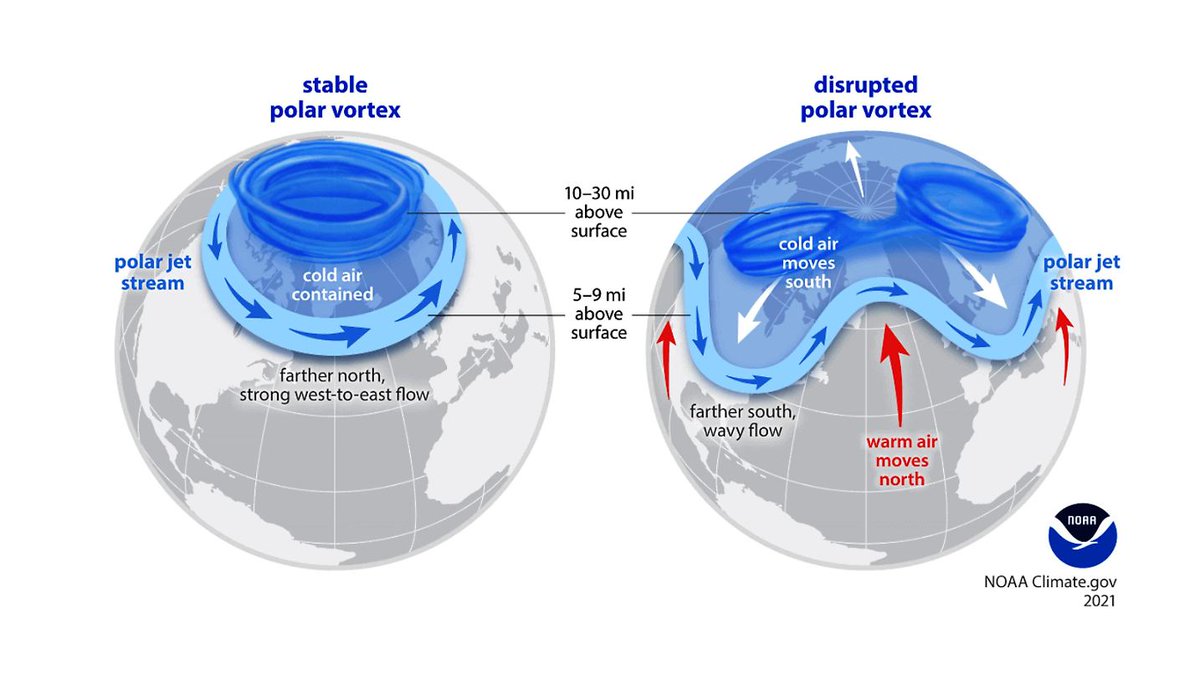
Irgendwann werdet ihr es auch verstehen, warum es ein Anzeichen für die Klimakrise ist, dass unser Wetter in immer stärkeren Extrema schwankt.
20°C im Dezember oder 9°C im Juni, alles erwartbare Phänomene im Rahmen der Klimamodelle.
3
6
76
952
Alison Graham retweeted

A Labour source asks a very pertinent question: “If there’s more money as Lisa just confirmed, why was Healey allowed to resign?”
huffingtonpost.co.uk/entry/m…
16
35
79
5,958
Alison Graham retweeted

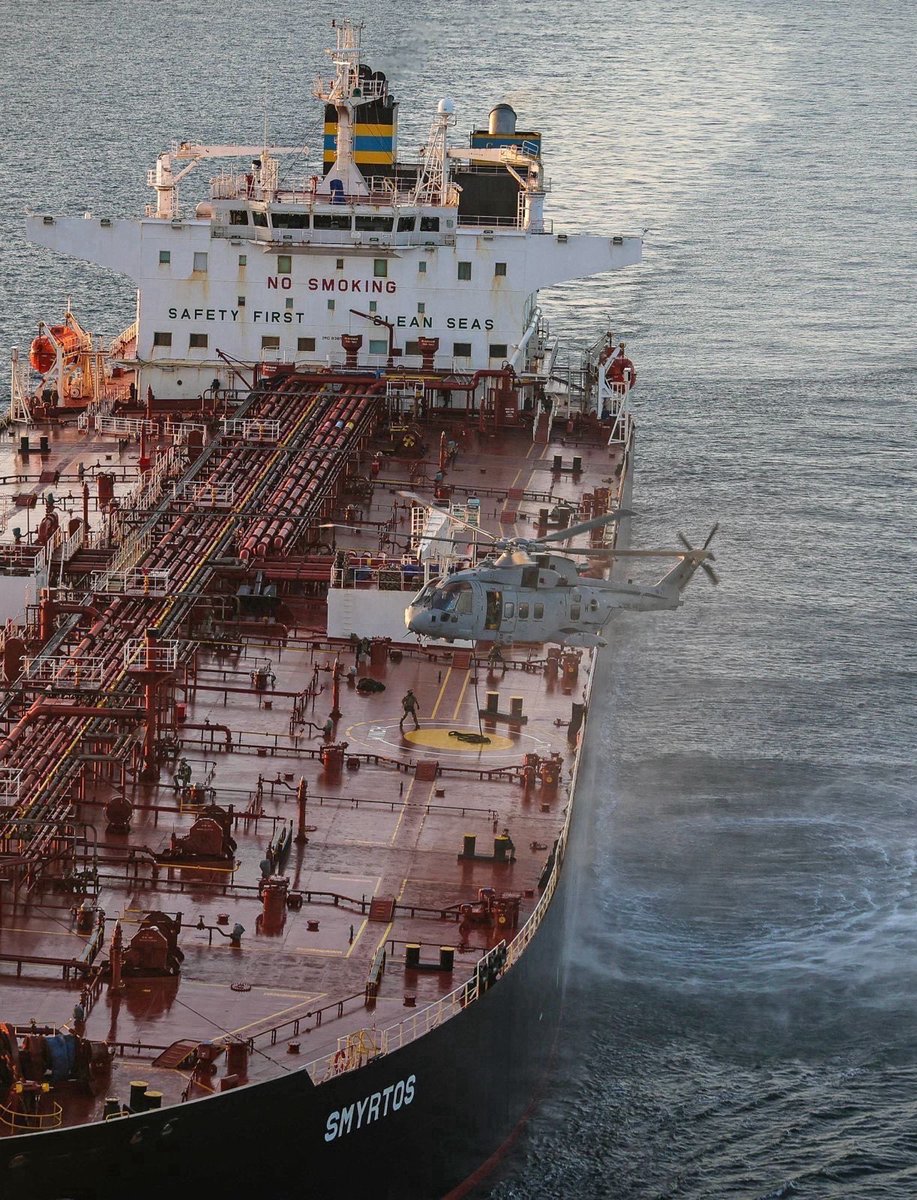
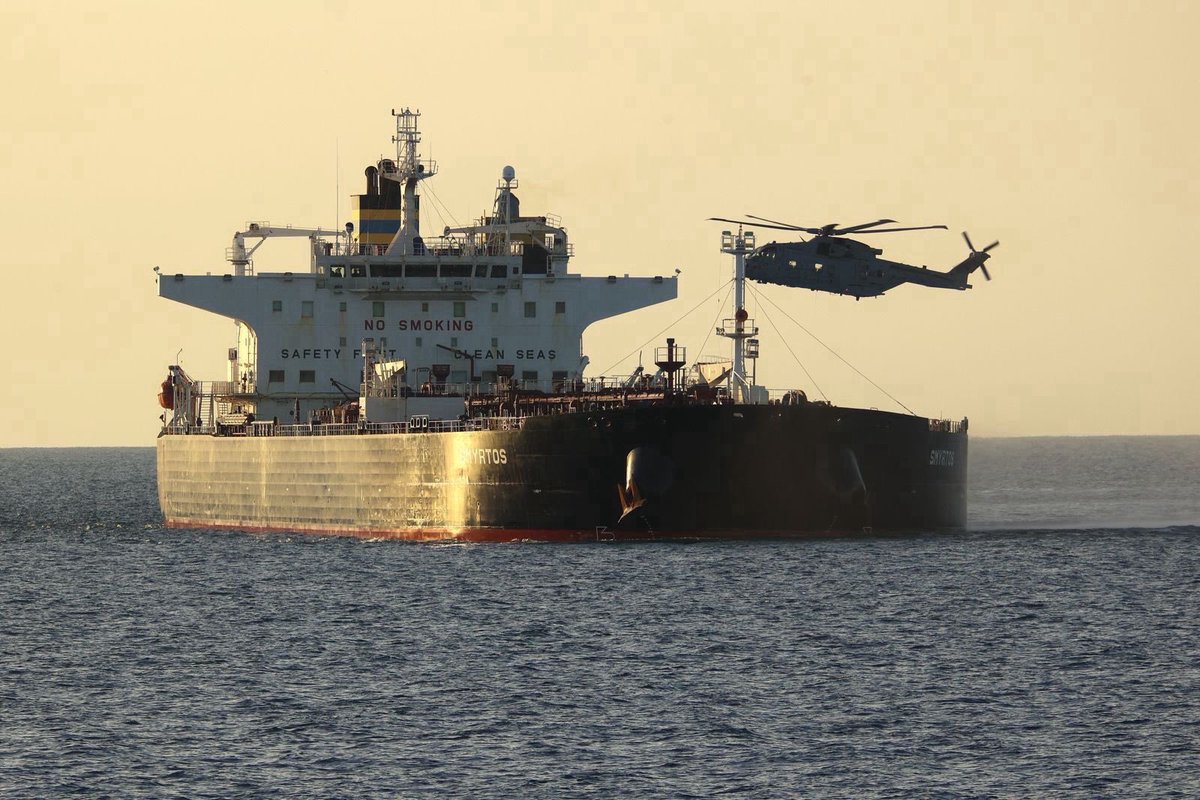
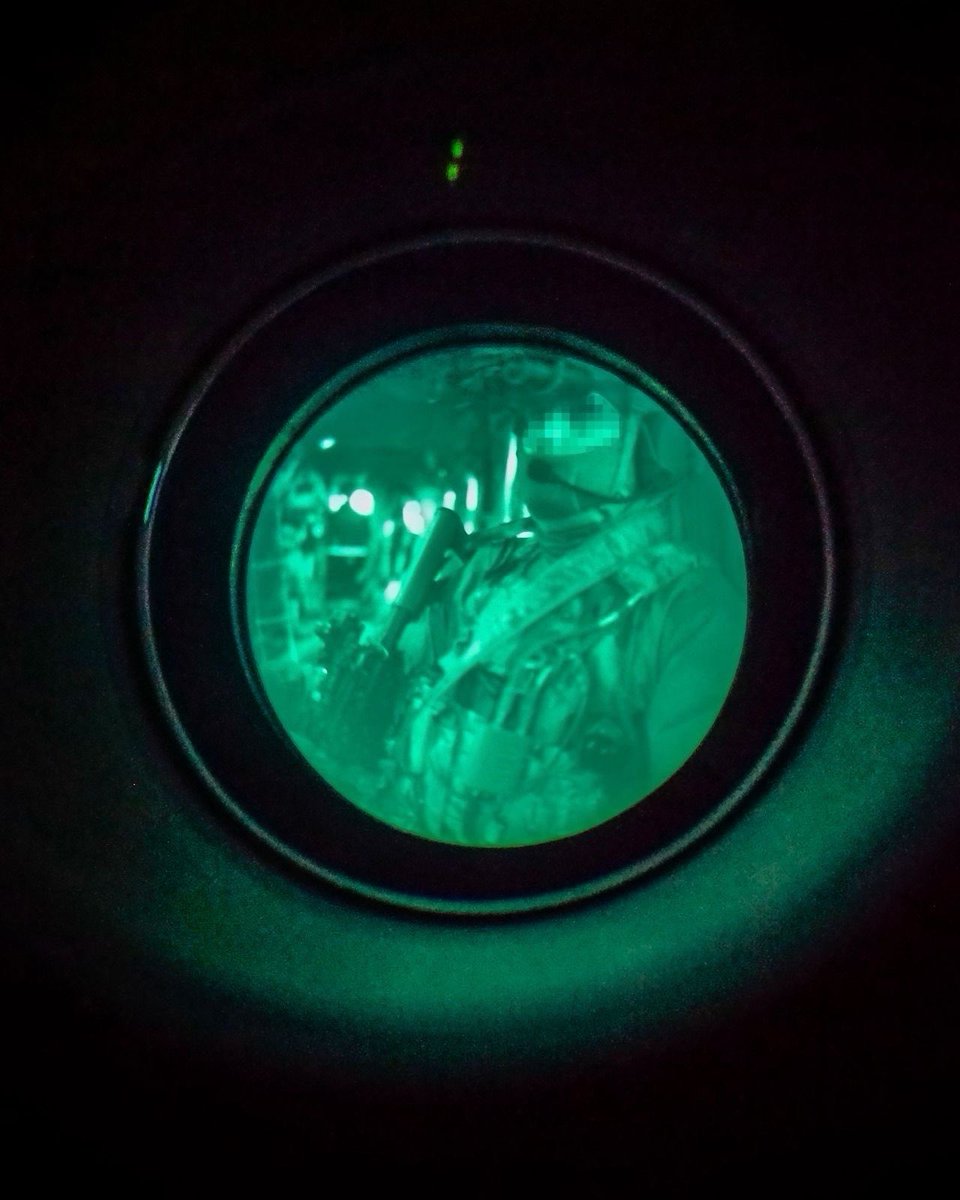
Overnight, @RoyalMarines and @NCA_UK officers boarded a Russian shadow fleet tanker, the first operation of its kind led by the UK.
I'm incredibly proud of everyone involved who showed great skill, professionalism, and courage.
This is another blow to Putin’s war machine.
41
44
166
4,558
Alison Graham retweeted

Britain losing access to Claude fable isn’t on the BBC or Times homepage, 4th on the guardian, 7th on the FT and below the fold on the Telegraph.
What are we doing here?
67
107
1,181
342,456
Alison Graham retweeted

Carns is asked where the extra £ for defence should come from.
".. I think there are places, such as moving welfare from hand outs to hand ups"
Describing welfare as hand outs tells us all about Carns politics & who he wants to target - the sick, disabled, low paid, pensioners
153
339
1,046
57,014
Alison Graham retweeted

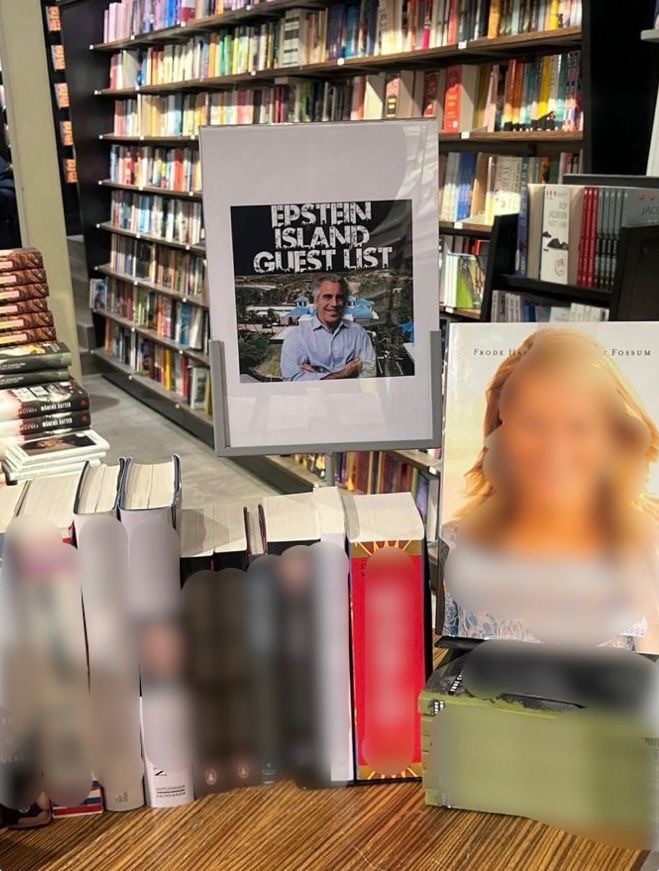
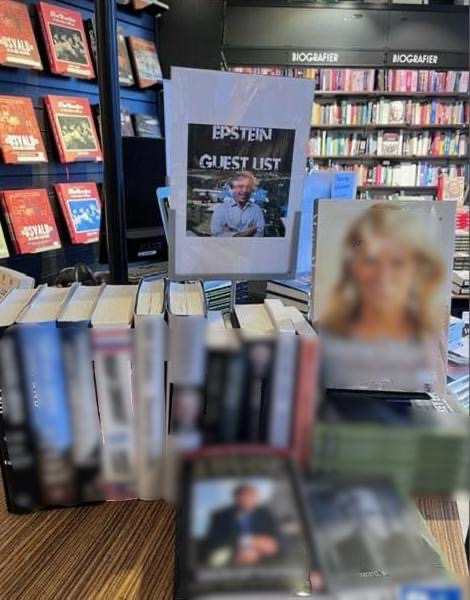
Amidst the whirlwind of horrible scandals and atrocious wars that is our world today, here is a v small but troubling manifestation of our crazy times. A day ago, my attention was drawn to a photograph posted on X that showed a local bookstore in Oslo, Norway where the staff had organized a display entitled ‘Epstein Island Guest List.’ I was horrified to see that one of my books was included. I have never been to Jeffrey Epstein’s island, never flown on his planes, never visited any of his properties, and—most crucially—never even met him or communicated with him.
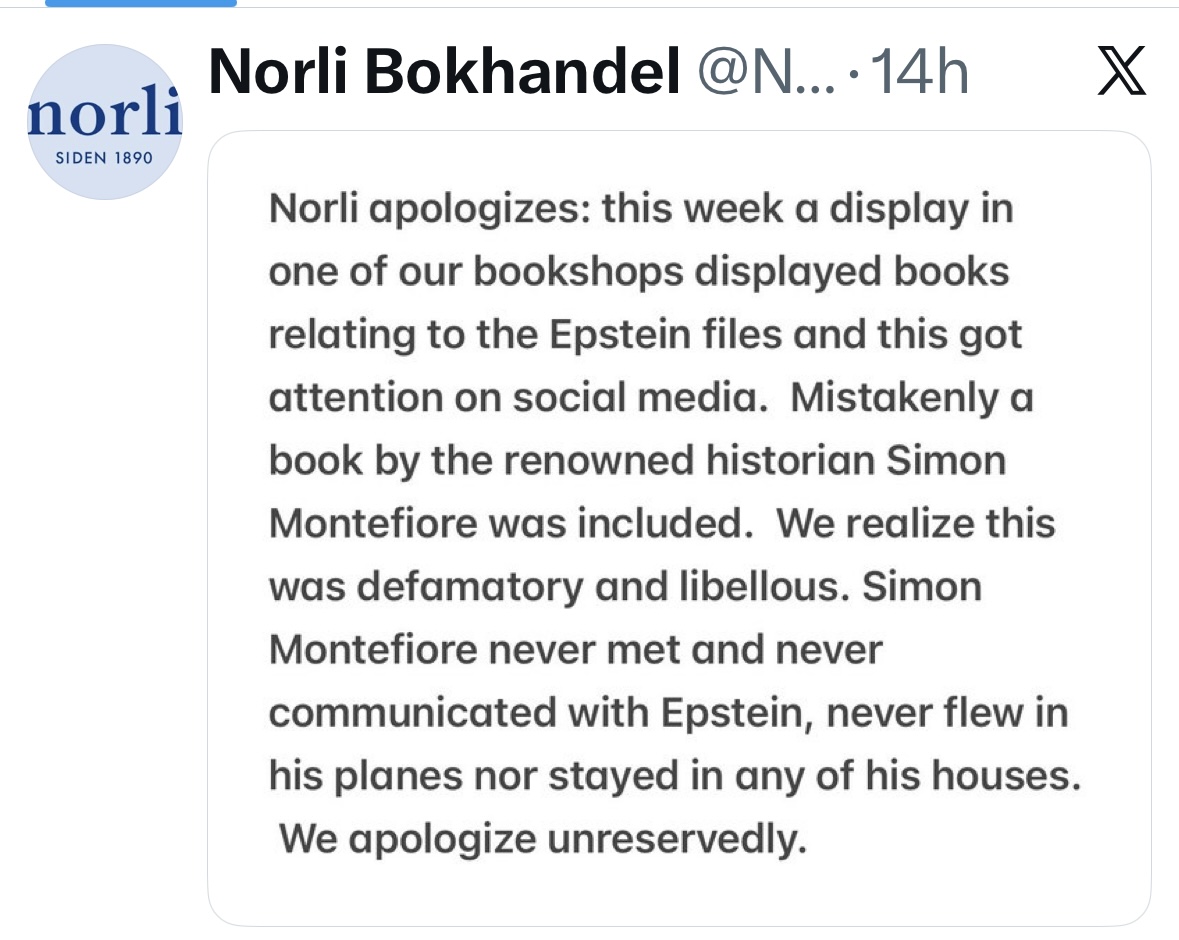
When alerted, the Norli Bokhandel immediately removed my book before any action was required and apologized in person and online for the libel and defamatory display.
I would have never known about this if it had not been posted on social media but because we live in a lawless arena, a wild and irresponsible digital vortex, the picture has been seen by many people. As the great Mark Twain supposedly wrote: ‘a lie travels round the world before the truth can even get its boots on’ and these days, it seems that a lie can circumnavigate the planet if not the galaxy many times before we even realize it. For a terrifying moment, I was lightly touched by the poisonous tentacles of Epstein, for a second I sensed the passing of that sinister shadow. The origin of the libel was that I was listed in Ghislaine Maxwell’s address-book she supposedly shared with Epstein because I knew her from England decades ago - though I never met or communicated with him.
Over the last few years, the fact that I was listed in this address-book has been used maliciously against me by Stalinists and other political extremists, the former being infuriated for arcane reasons by my Stalin biographies. Of course I don’t for a minute compare my storm in a teacup to the suffering of the victims and survivors. But it is still a frightening Kafka-esque experience because a certain amount of damage is done even when things are taken down. It just shows how easy it is for innocent people to have their names traduced. Even though the bookshop has asked many people to take down the libel, very few bother to correct online lies and falsehoods. There is little practical remedy - except of course one can sue for a clear and very defamatory libel. No one is immune to this: I know many of the people who retweeted this defamation were not malicious and it makes me realize that I myself and all of us need to be careful: it is a real danger for individuals and our societies and as AI delivers better, and more uncanny and diabolical deepfakery, the peril is only going to get worse.
A lesson I have drawn from the last two days is that I myself spend too much time on social media and now I should just get back to writing books – which I hope one day will appear on the shelves of a certain Oslo bookshop….
And if you are interested, here is the apology from the bookshop and its display - before and after
76
149
808
103,892
Alison Graham retweeted

Alla cerimonia di apertura del Mondiale degli Stati Uniti di trump, uno dei musicisti suona con la kefiah.
Non suonerà più, ma è il più bravo.
#FREEPALESTİNE
5
124
428
4,782
Alison Graham retweeted

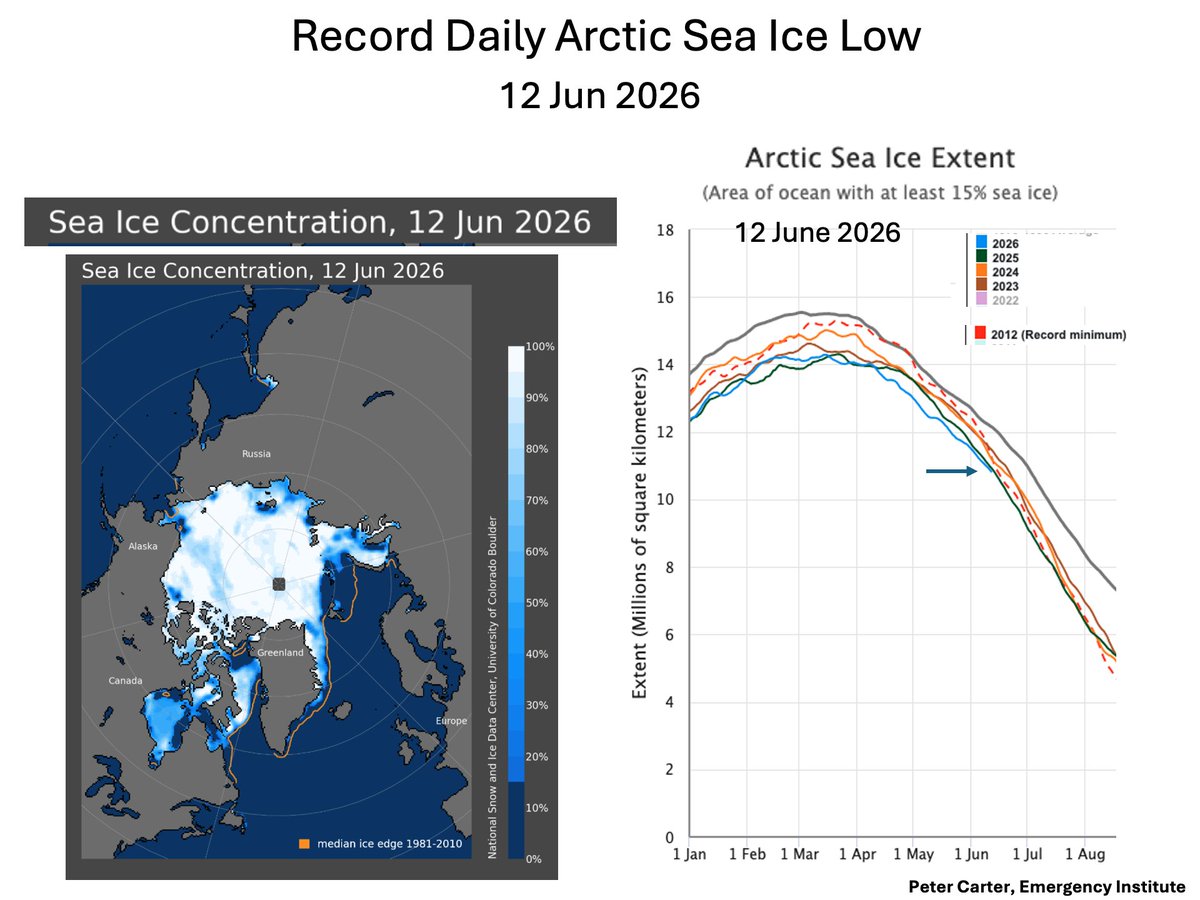
RECORD DAILY ARCTIC SEA ICE LOW 12 JUNE
12 June 2026 Arctic sea ice record daily low.
Loss of sea ice is now starting to decrease albedo cooling- the ice albedo amplifying feedback. nsidc.org/sea-ice-today/sea-…
#seaice #climatechange #arctic #globalwarming
1
32
50
805
Alison Graham retweeted

All it does is turn the general population against AI, because the tools they encounter most often are by far the worst.
1
307
Alison Graham retweeted

Controlling language is the first step in controlling everything. It’s not just ideology, it’s indoctrination?
3
37
882


Alison Graham retweeted

1
1
6,164
Alison Graham retweeted

Elon didn’t build Twitter, he bought it. And he bought it because of the millions of people already using it daily. That user base is what gave the platform its value. So no, people aren’t suddenly going to leave spaces, audiences, and communities they helped build over years.
6
2
71
2,358
Alison Graham retweeted

He’s got you there Piers. You’re so annoyed with how so many people buy Robinson’s bullshit, but the main reason for that is because Musk is his biggest salesman.
2
3
256
10,948
Alison Graham retweeted

1. I was here first.
2. It’s a horrible addiction.
3. As a journalist, sadly it’s still where news happens which I have to cover.
4. You didn’t answer my question. How can you justify praising a man who funds and amplifies a man you say you loathe and is a fraud and a racist?
288
702
16,870
868,027
Alison Graham retweeted
Piers, please don’t gaslight us - you have nothing but negative things to say about a bunch of people, from Meghan Markle to Vladimir Putin.
But when it comes to Musk, you choose to hail and praise him the same week he actively amplifies and incites the violent far right.
160
851
14,996
157,386
Alison Graham retweeted

#England — Neo-nazi Ryan Ferguson is arrested by police while attempting to provoke anti-racist protesters.
When the police don't back the nazis, all that's left of them is a bunch of cowards.
132
625
3,948
110,358