Econ grad student and human being.
- Tweets 100
- Following 719
- Followers 547
- Likes 911











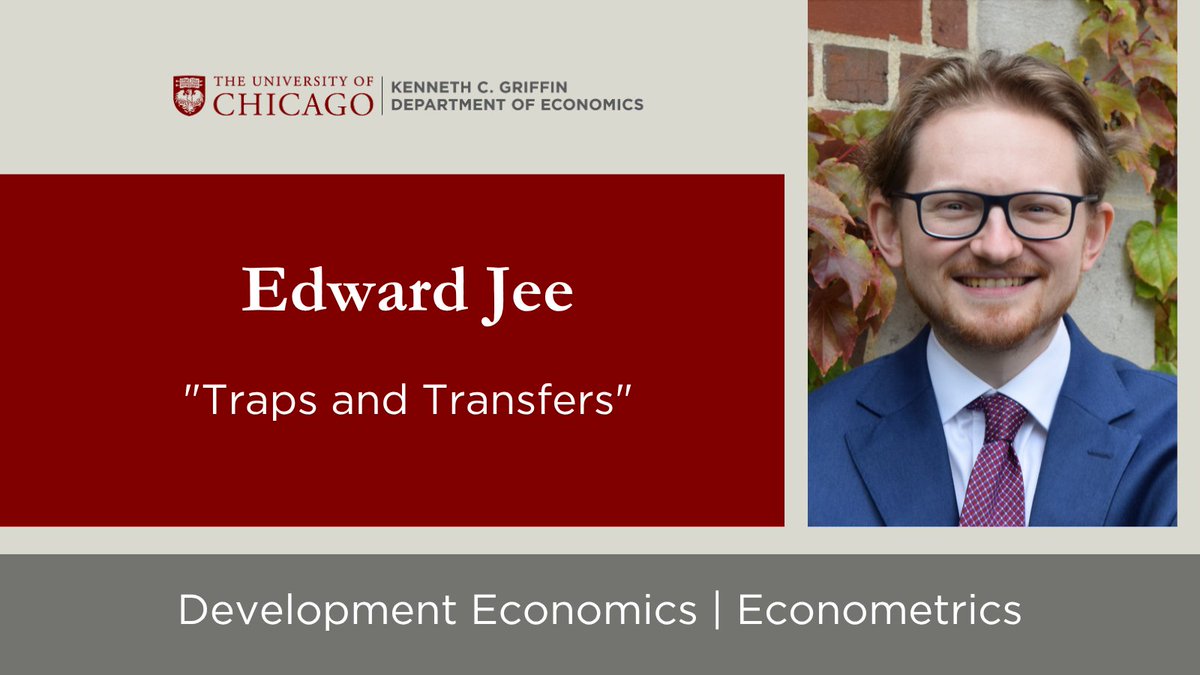
ALT Graphic announcing Edward Jee as a Kenneth C. Griffin Department of Economics job market candidate for 2025-26. Paper titled, "traps and transfers." Research focuses include development economics and econometrics.

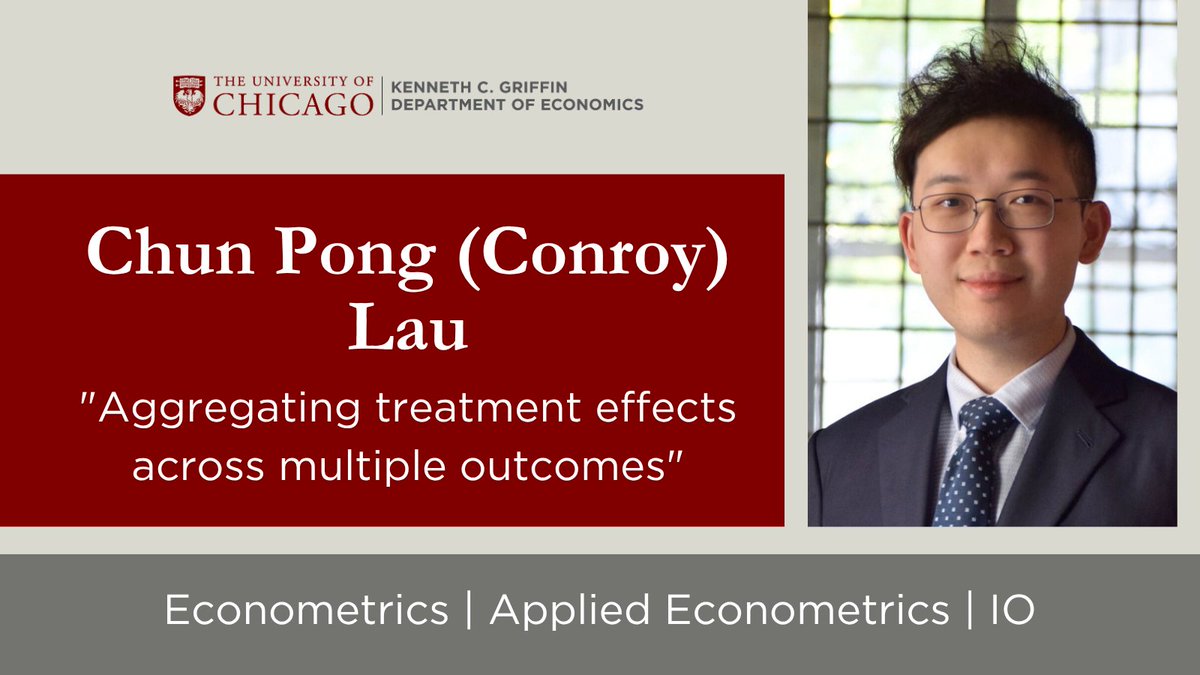
ALT Graphic announcing Chun Pong (Conroy) Lau as a Kenneth C. Griffin Department of Economics job market candidate for 2025-26. Paper titled, "Aggregating treatment effects across multiple outcomes." Research focuses include econometrics, applied econometrics, and industrial organization.

ALT Graphic announcing Edward Jee as a Kenneth C. Griffin Department of Economics job market candidate for 2025-26. Paper titled, "traps and transfers." Research focuses include development economics and econometrics.
ALT Graphic announcing Edward Jee as a Kenneth C. Griffin Department of Economics job market candidate for 2025-26. Paper titled, "traps and transfers." Research focuses include development economics and econometrics.
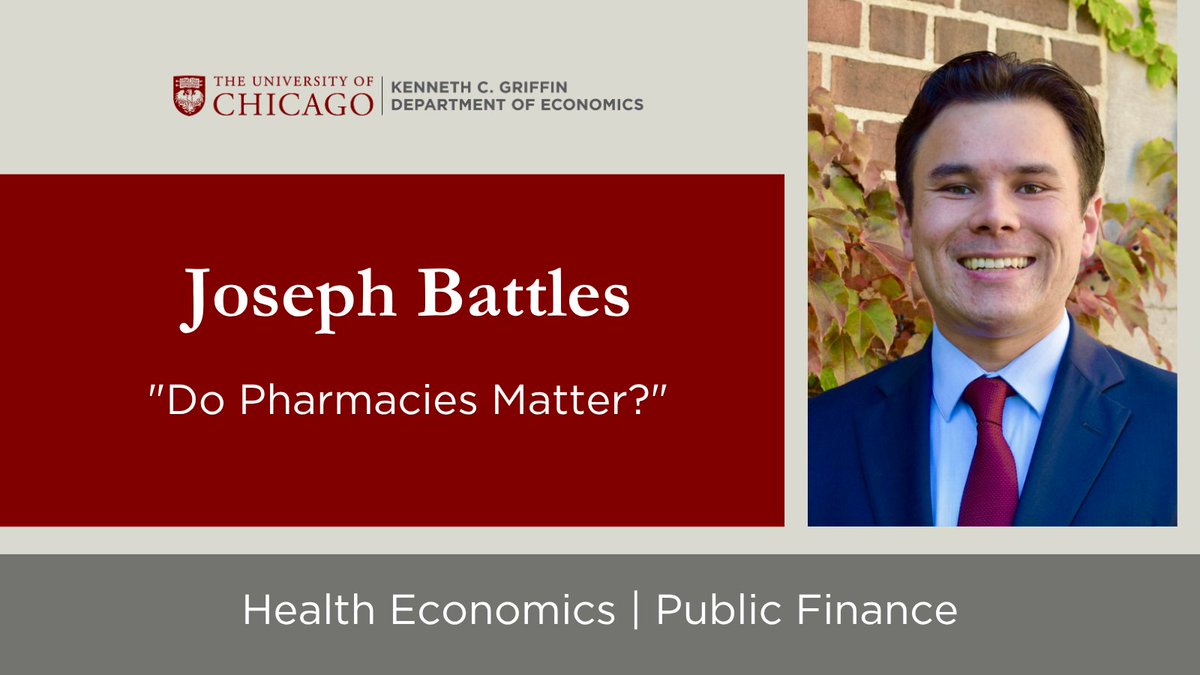
ALT Graphic announcing Joseph Battles as a Kenneth C. Griffin Department of Economics 2025-26 job market candidate. Paper titled, "Do Pharmacies Matter?". Research focuses on health economics and public finance.
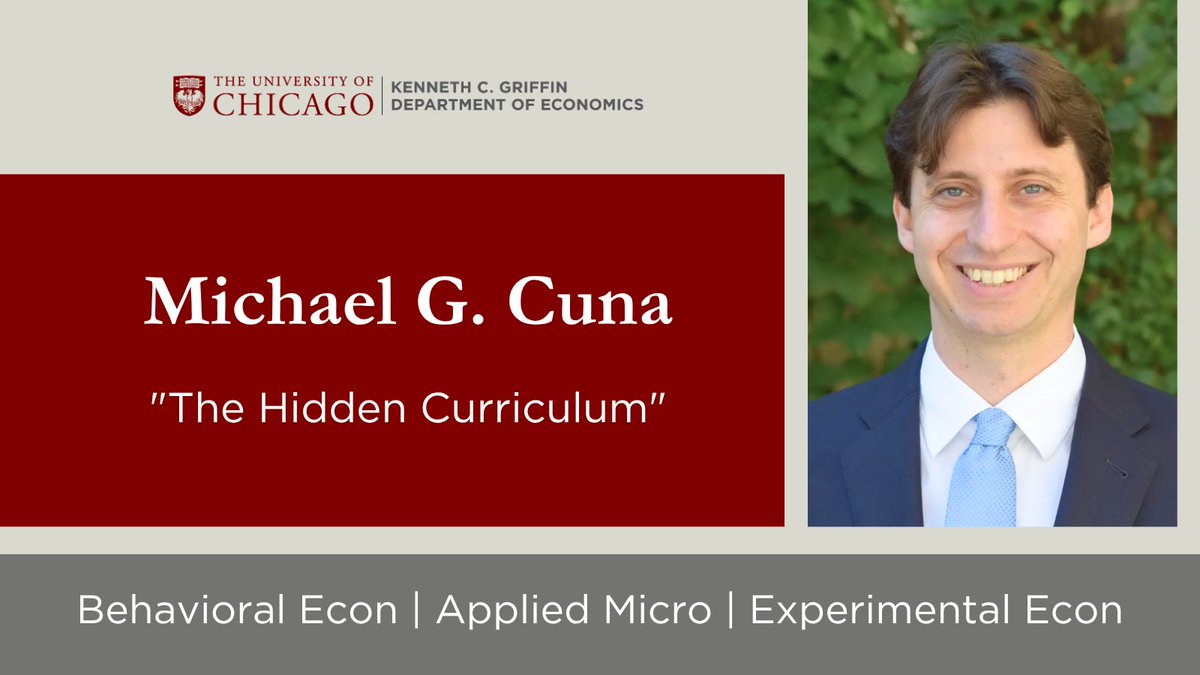
ALT Graphic announcing Michael G. Cuna as a Kenneth C. Griffin Department of Economics job market candidate for 2025-26. Paper titled, "The Hidden Curriculum." Research focuses include behavioral economics, applied microeconomics, and experimental economics.

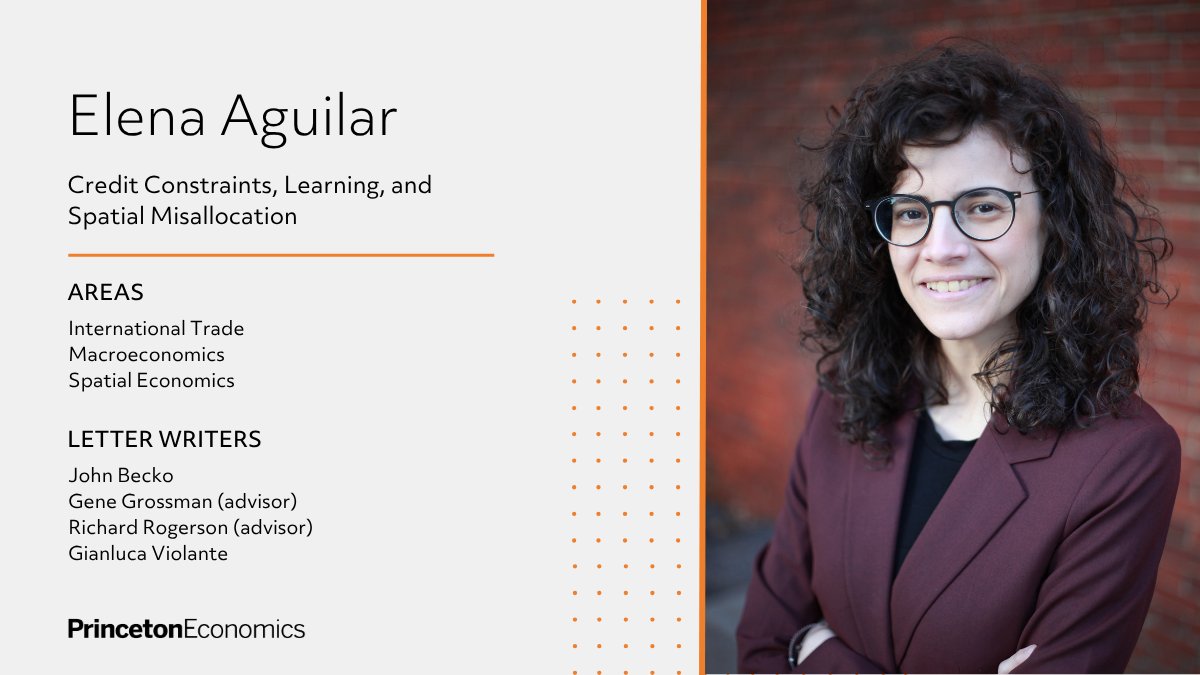
ALT Elena Aguilar: Credit Constraints, Learning, and Spatial Misallocation. Areas: International Trade, Macroeconomics, and Spatial Economics. Letter Writers: Gene Grossman (advisor), Richard Rogerson (advisor), John Becko, and Gianluca Violante. Princeton Economics.
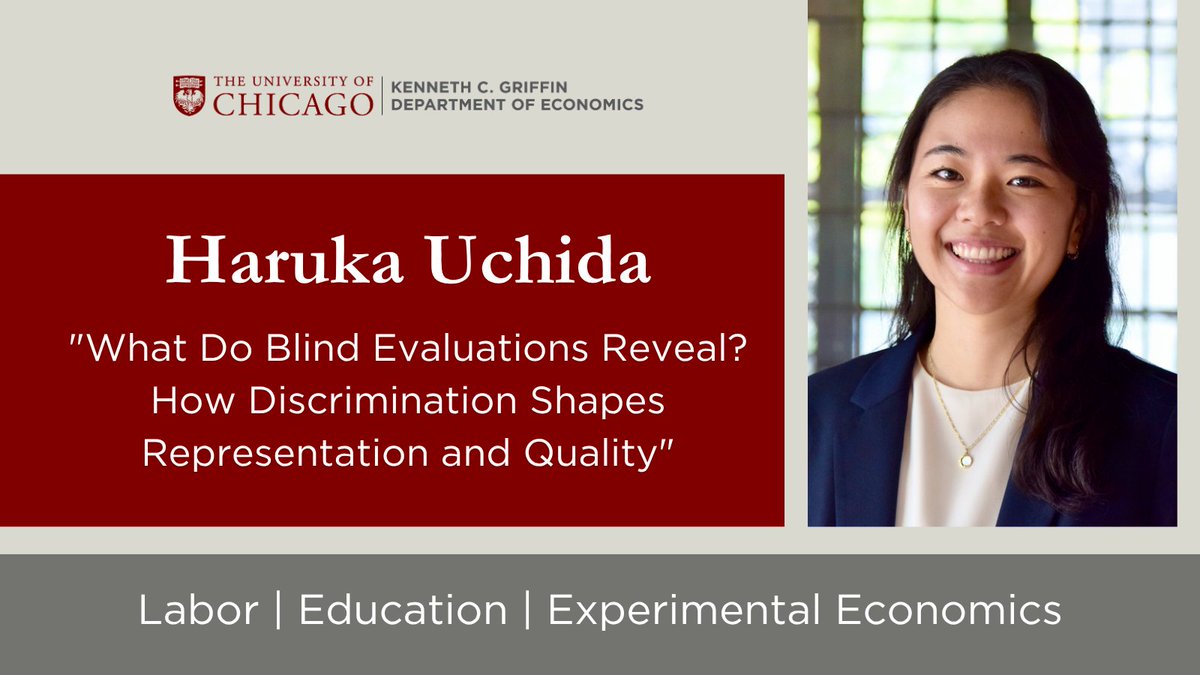
ALT Graphic announcing Haruka Uchida as a Kenneth C. Griffin Department of Economics job market candidate. Paper titled, "What do blind evaluations reveal? How discrimination shapes representation and quality." Research focuses are labor, education, and experimental economics.
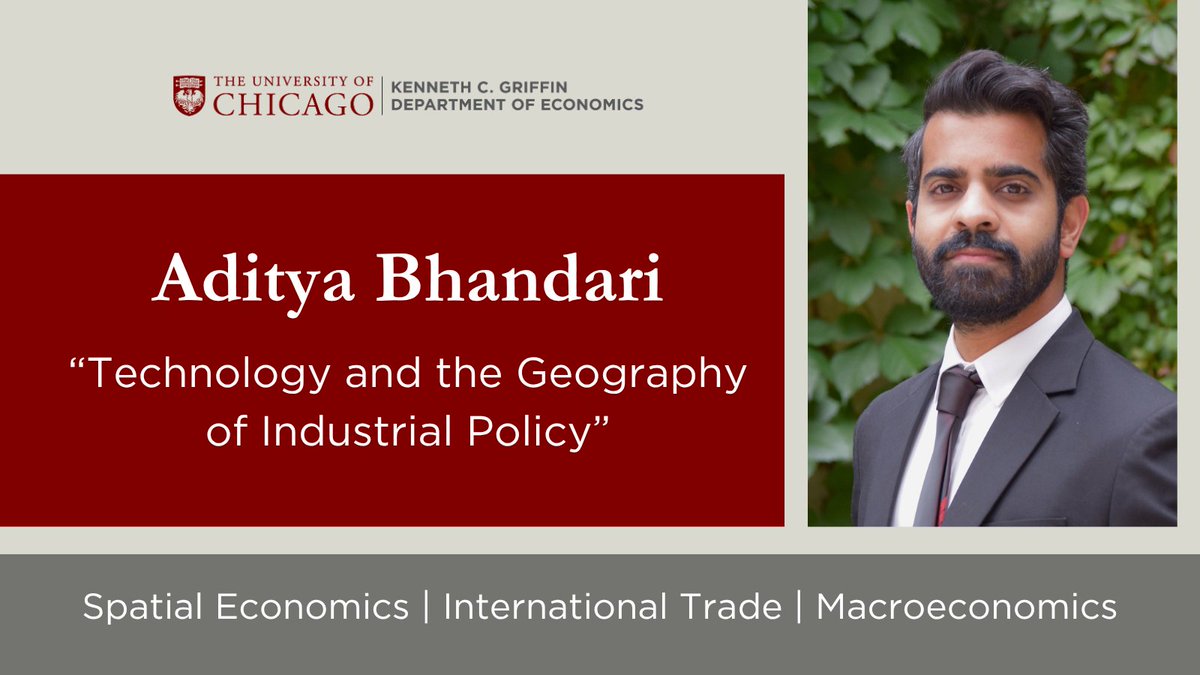
ALT Graphic announcing Kenneth C. Griffin Department of Economics' job market candidate, Aditya Bhandari. Bhandari's paper is titled, "Technology and the Geography of Industrial Policy". His research focuses are spatial economics, international trade, and macroeconomics. Photo of Bhandari on the left.
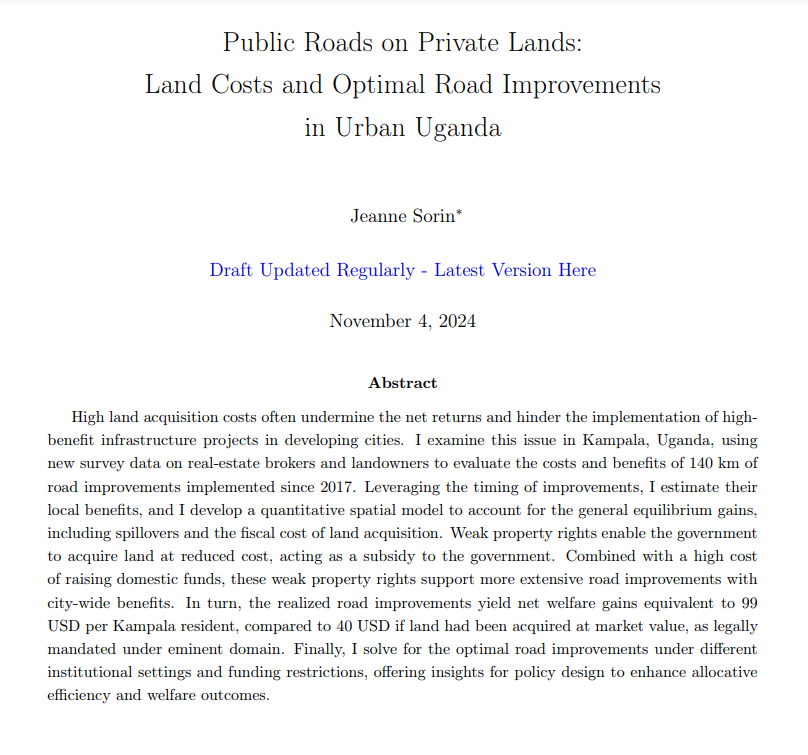
ALT Screenshot of Jeanne Sorin's Job Market Paper Abstract, "Public Roads on Private Lands: Land Costs and Optimal Road Improvements in Urban Uganda"
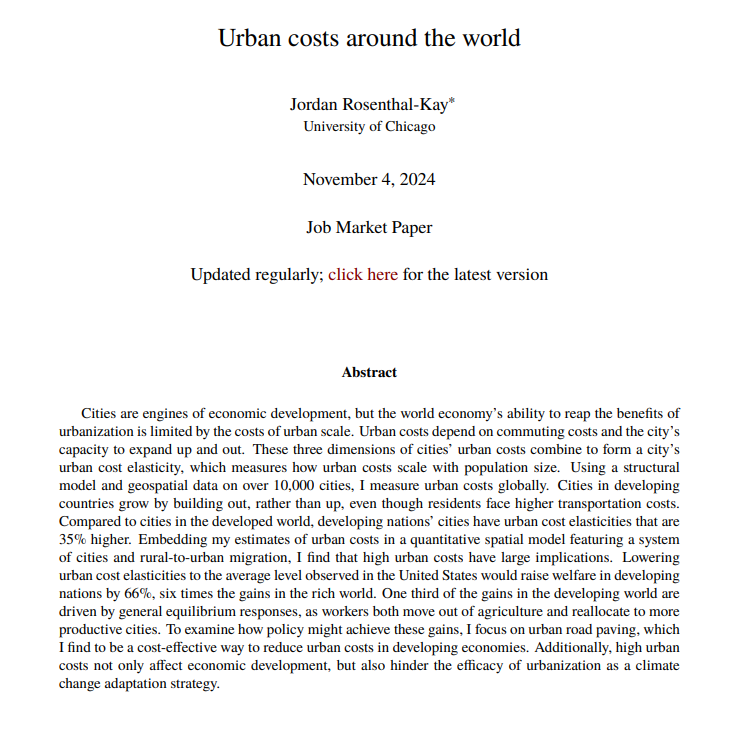
ALT Screenshot of Jordan Rosenthal-Kay's Job Market Paper Abstract, "Urban costs around the world"
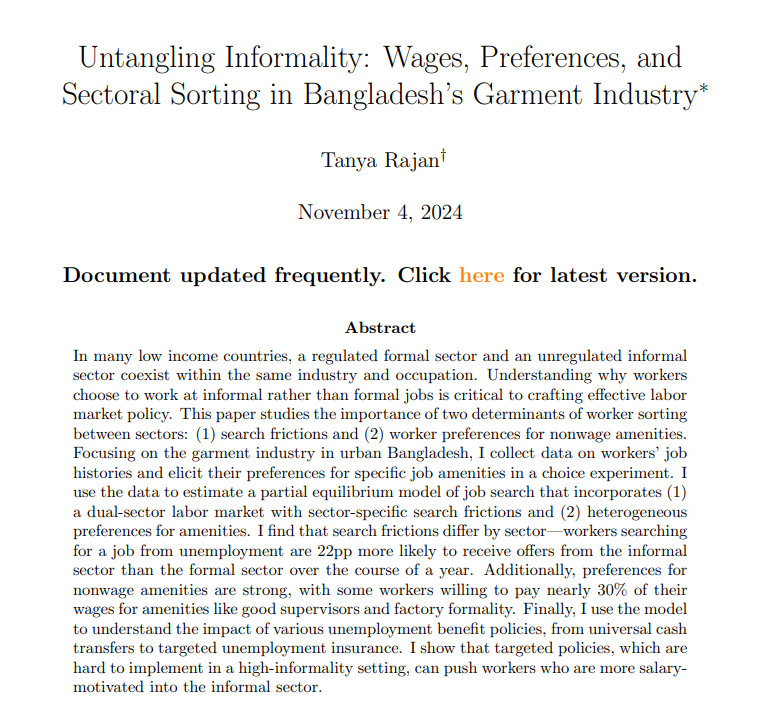
ALT Screenshot of Tanya Rajan's Job Market Paper Abstract, "Untangling Informality: Wages, Preferences, and Sectoral Sorting in Bangladesh's Garment Industry"
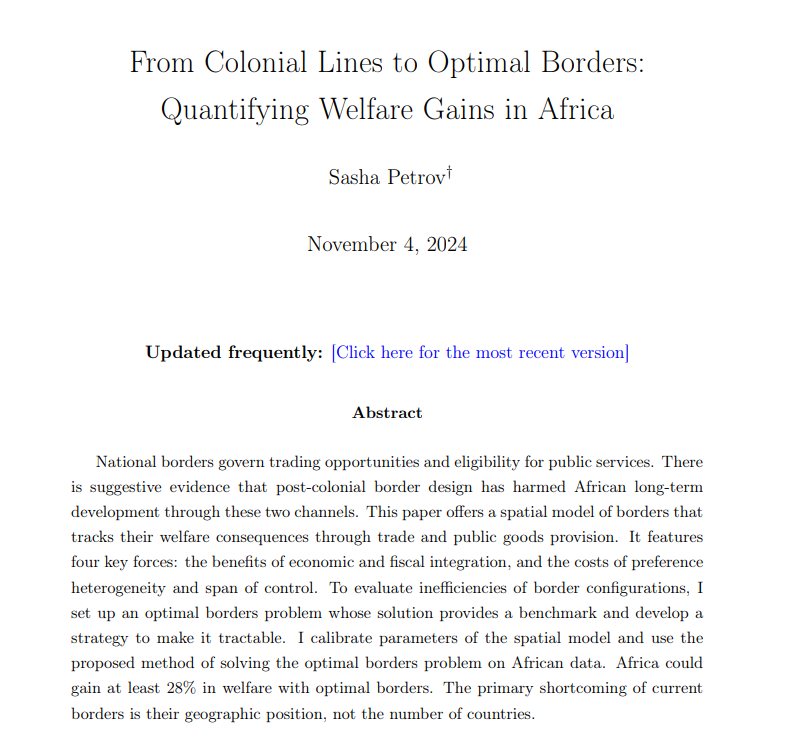
ALT Screenshot of Sasha Petrov's Job Market Candidate Abstract, "From Colonial Lines to Optimal Borders: Quantifying Welfare Gains in Africa"
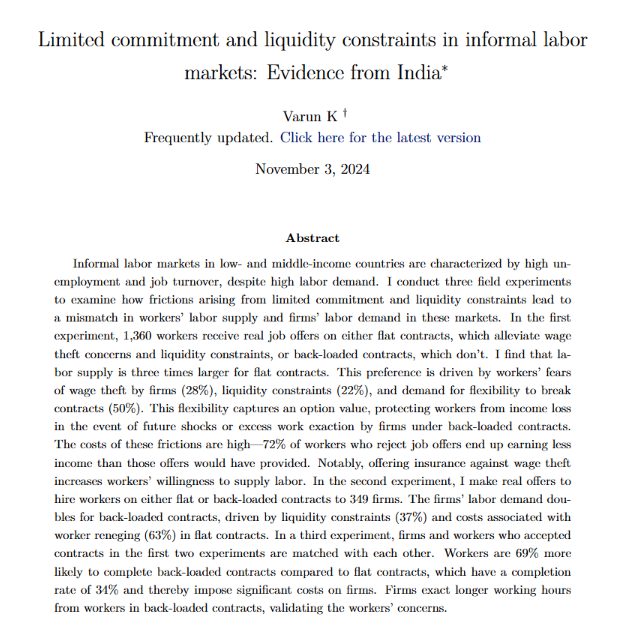
ALT Screenshot of Varun K's Job Market Paper Abstract, "Limited commitment and liquidity constraints in informal labor markets: Evidence from India"
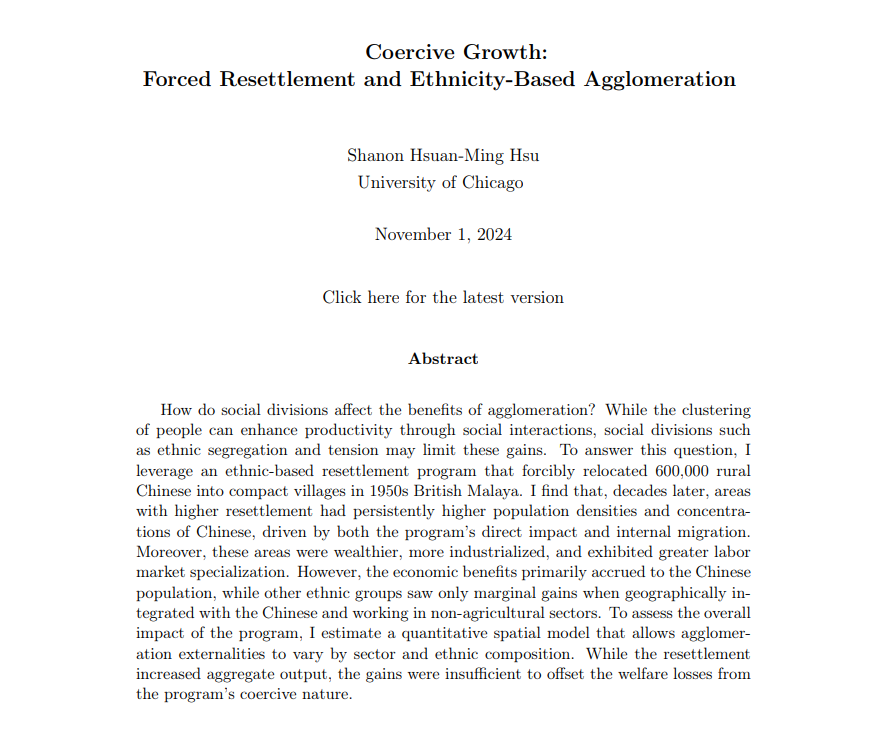
ALT Screenshot of Shanon Hsuan-Ming Hsu's Job Market Paper Abstract "Coercive Growth: Forced Resettlement and Ethnicity-Based Agglomeration"
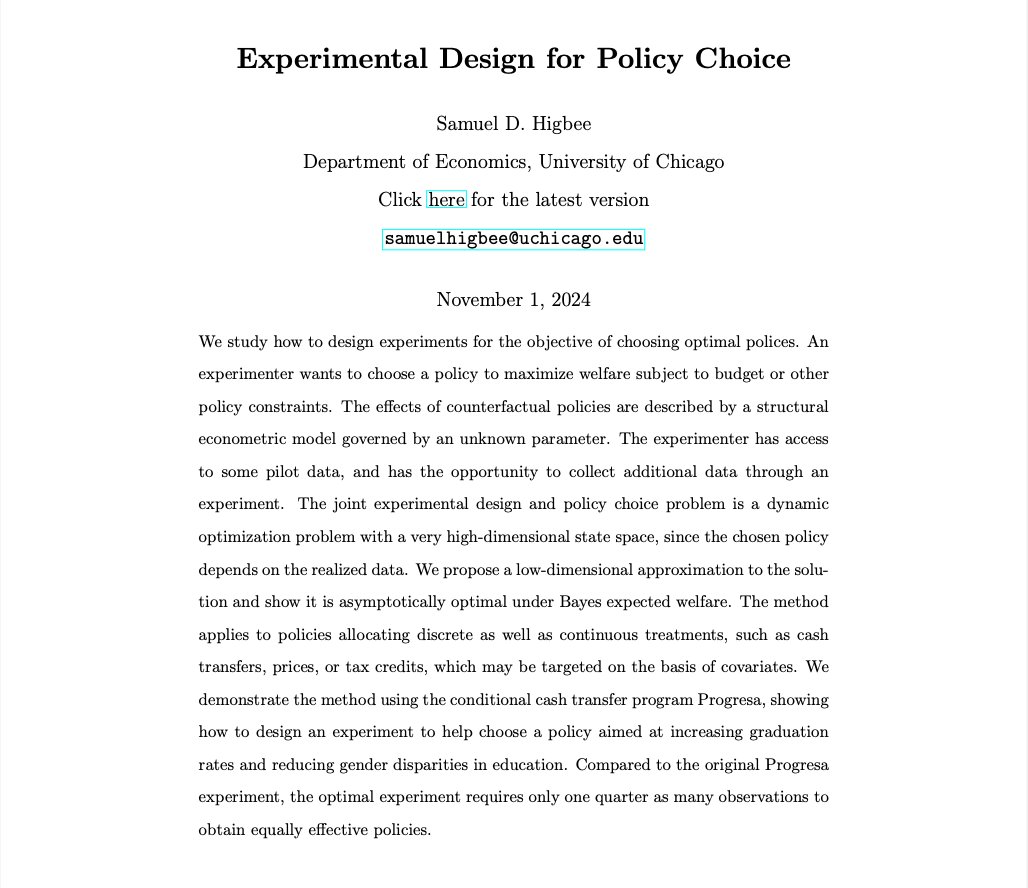
ALT Screenshot of the abstract for Samuel Higbee's Job Market Paper, "Experimental Design for Policy Choice"
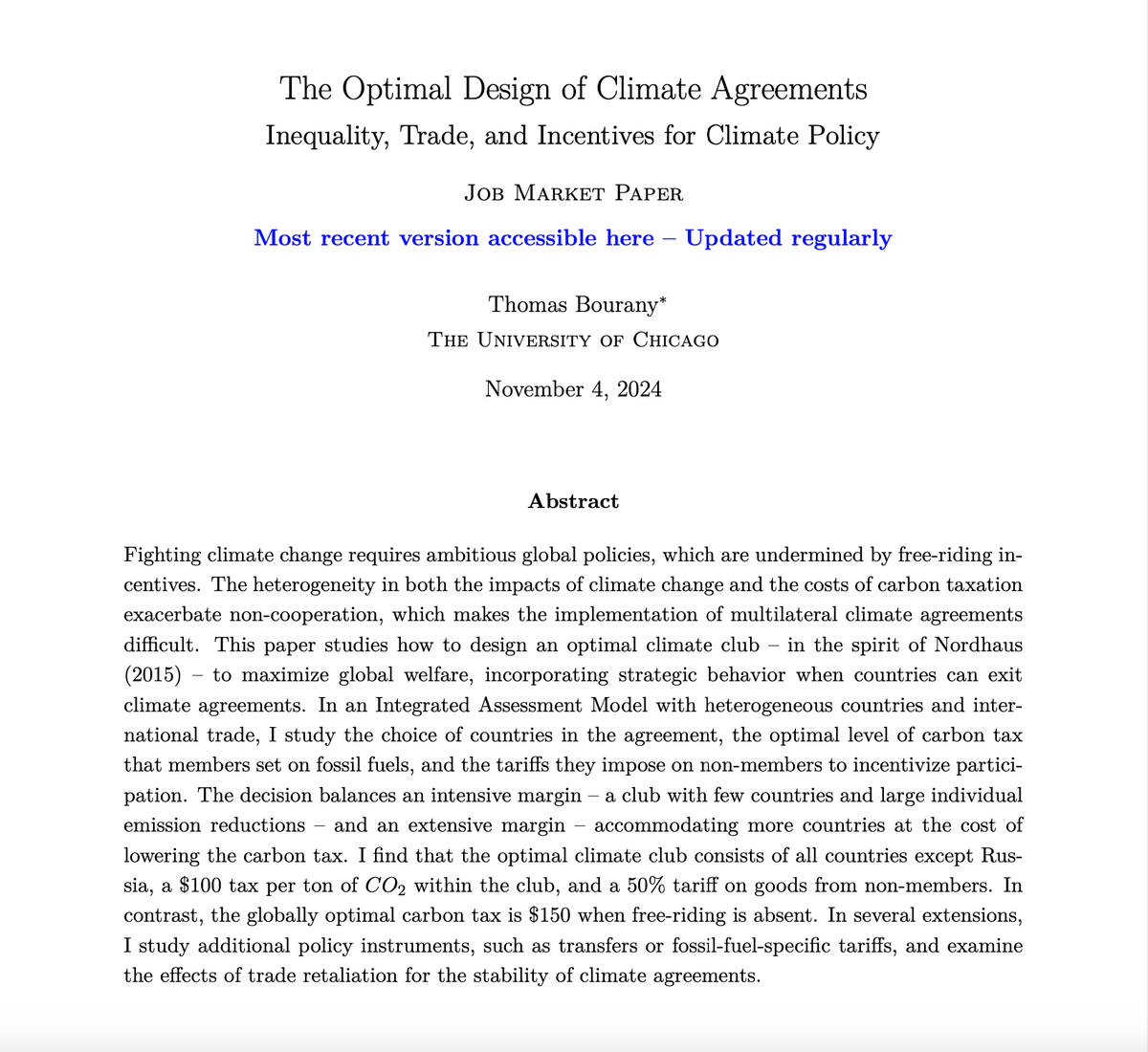
ALT A screenshot of Thomas Bourany's Job Market Paper abstract, "The Optimal Design of Climate Agreements"
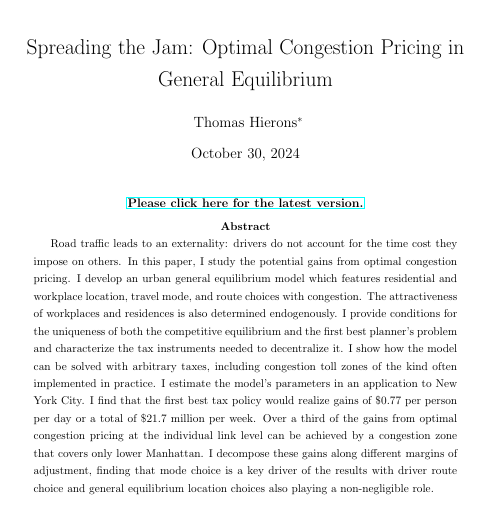
ALT Screenshot of Thomas Heirons' Job Market Paper Abstract, "Spreading the Jam: Optimal Congestion Pricing in General Equilibrium"