Founder & Co-F: DeRemate, Baazee, DineroMail, DeMotores, ZonaJobs, ZonaProp, ZonaCitas,YOP, Wabi,Bonvivir, Covedisa, Agrupate, POK-Proof of Knowledge
Joined February 2009
- Tweets 63
- Following 1,056
- Followers 1,637
- Likes 137
1 Photos and videos

Guido Grinbaum retweeted
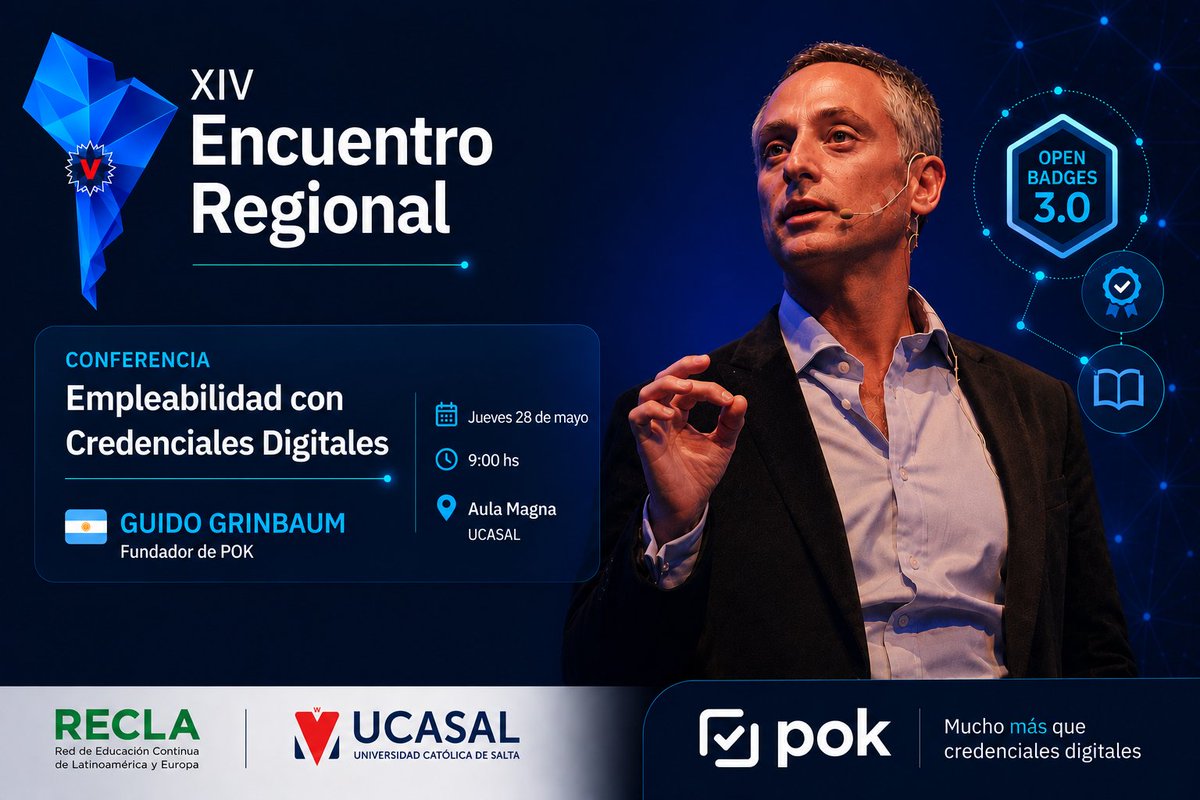
🎤 Este jueves Guido Grinbaum, Founder de POK Proof of Knowledge, sube al escenario del XIV Encuentro Regional de @RECLAorg y @UcasalOficial en Salta.
Charla: “Empleabilidad con Credenciales Digitales”
📍 Aula Magna — UCASAL
📅 28/5 — 9:00 hs
#POK #RECLA #UCASAL
1
2
5
101
Guido Grinbaum retweeted
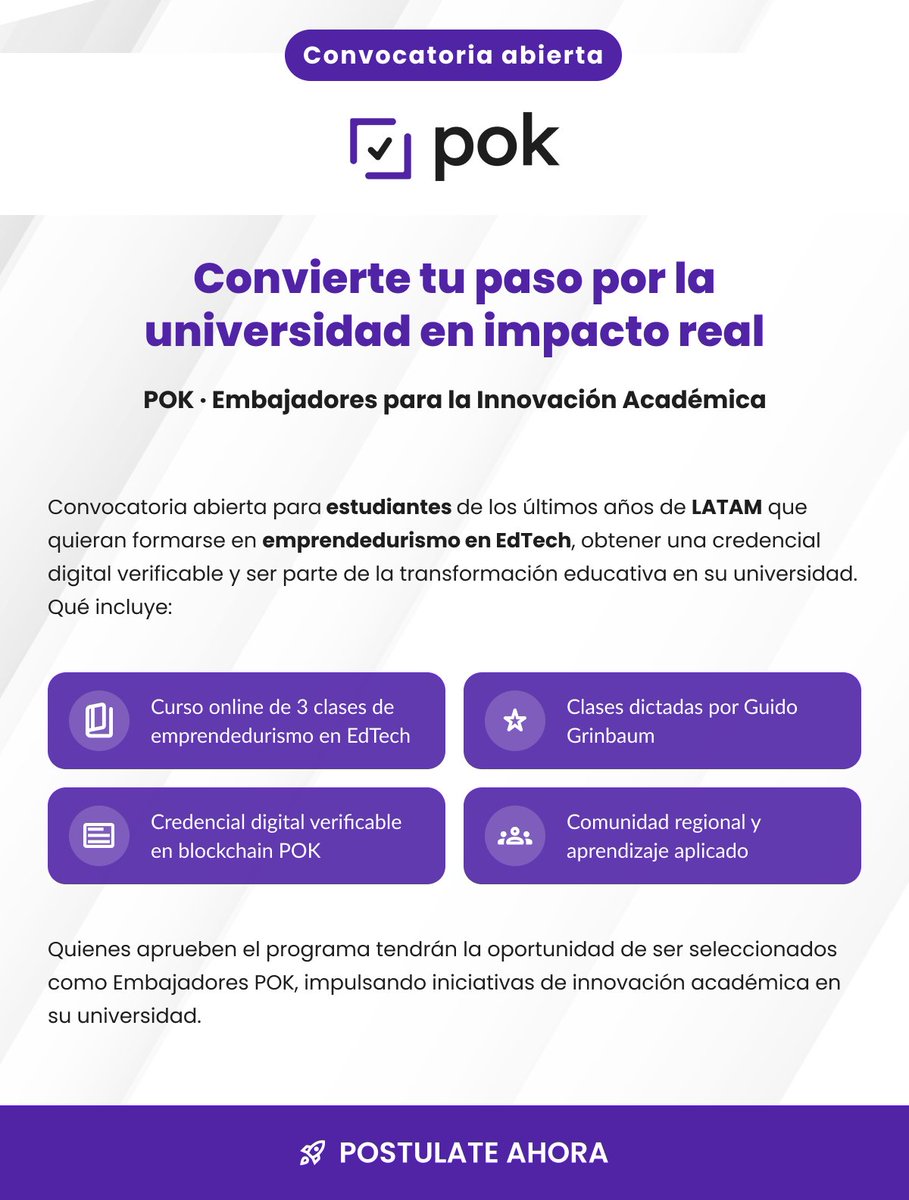
🎓 Curso de Emprendedurismo en EdTech | LATAM
Convocatoria abierta para estudiantes de los últimos años.
Curso online dictado por Guido Grinbaum, emprendedor serial y fundador de POK.
👉 Postulación y videos en comentarios
#EdTech #Emprendedurismo
3
2
2
159
Guido Grinbaum retweeted

18 Dec 2025
Sovra @sovraio is one of the lowkey projects we are working on with @fernandezdiego that most people do not understand yet, and it is growing at an incredible speed. I can't share concrete numbers yet but we already have millions of users and Sovra just closed another big partnership that will complement it's portfolio of clients. I will try to explain here what Sovra does and why I think in the next year or two it will become a indisputable giant.
It is one of the highest conviction plays we have at @ergodicgroup. We are investors and partners in Sovra, and we are working on it nonstop. We will be announcing major developments around it soon.
The reason Sovra is not well understood by the crypto community is simple. Most of crypto is still driven by short term incentives and inward looking products. It understands the tools it personally uses, but struggles to engage with governments, regulators, and large institutions. This is exactly why I advised Diego not to raise money from crypto VCs. They would not understand what he was building, not because it is too complex, but because it does not fit the dominant crypto mental models. Sovra is a long term infrastructure play, and that directly clashes with how much of the space thinks and allocates capital.
Diego followed that advice, and the results have been remarkable. In less than twelve months, I have seen him and his team close agreements with multiple countries, onboarding tens of millions of users onto Ethereum. The pace has been so fast that the main bottleneck today is the technical execution capacity of @class_lambda.
So what is Sovra actually doing.
Sovra is solving a very concrete problem, but in a way that is fundamentally different from both web2 and web3 approaches. Cryptocurrencies made it possible to create native digital money for the internet. Sovra is doing something analogous for identity, while fully understanding that identity is ultimately rooted in local governments and state authority.
Today, KYC is structurally broken. States issue physical identity documents and sometimes a basic digital representation of them, but they do not provide robust protocols that companies can directly integrate with. There is no standard way for governments to issue, update, revoke, or extend digital credentials that private companies can reliably consume. As a result, companies are forced to rebuild identity verification themselves, leading to duplicated processes, weak security, high costs, and poor user experiences.
Sovra approaches identity by working with governments rather than trying to bypass them. It treats states as the legitimate issuers of identity, while giving them the tooling to create digital native credentials that can be securely consumed by companies and protocols. On top of that, Sovra provides a protocol that allows companies, institutions, and organizations such as clubs or associations to issue interoperable and composable digital credentials. This creates a missing bridge between public institutions and modern digital infrastructure, something that simply does not exist today at scale.
From our point of view, we are aiming for what Worldcoin is trying to achieve, but in a way that aligns both with cypherpunk values and with the interests of governments that want to provide better digital services to their citizens. Worldcoin @worldcoinfnd takes a very different approach. It tries to solve identity without governments, relying on a private technical system and strong economic incentives. While technically interesting, this inevitably conflicts with state authority, since it challenges who gets to define and issue identity.
Worldcoin has also received significant criticism. From a cypherpunk perspective, it depends on centralized infrastructure and on the collection of extremely sensitive biometric data, which could be abused in the future by bad actors. From a government perspective, it introduces a parallel identity system that sits outside existing institutional frameworks. This is very new technology, and if it fails, the consequences could be severe. Ironically, Worldcoin managed to do something unusual by unifying criticism from both governments and cypherpunks, groups that almost never agree.
Sovra is not trying to replace governments. It is trying to give them modern, interoperable infrastructure. That is why it is hard to see if you only look at crypto through a degen lens, and also why, once it clicks, the scale of the opportunity becomes obvious. Sovra revenue is growing very fast because it is solving a real structural problem that governments and companies already have, rather than inventing a new one.
On a more personal note, one thing I often struggle with is that because I tend to have strong technical and roadmap opinions, many people find it difficult to engage with me consistently. Diego is different. He actively debates ideas, challenges assumptions, and genuinely takes feedback into account. I advised him not to raise capital and instead focus on revenue, and he executed on that advice. He built companies across Latin America that simplify government processes, and in doing so they are also enabling governments to digitize identity on top of zero knowledge and Ethereum. The revenue of the company is now growing very fast thanks to the number of users and countries they are working with.
I genuinely believe there is a very real chance that Sovra will reach the highest number of daily active users in the ecosystem, potentially dozens of millions, within months. Driver licenses, IDs and many other credentials and errands that people use on their daily life will be running on top of it. If we add wallets and a credit rating on top you have a verifiable open digital bank where everyone can build that is cheaper to operate and safer than web2 since you don't rely on trust for it to work.
Having composable official digital identities on top of Ethereum and @ethrex_client enables an entirely new class of financial products, including undercollateralized lending. It also enables one click deployment of digital infrastructure for fintechs. This is ultimately what we are building with @alignedlayer, which will power much of this stack.
Working on @CresiumFintech, one of our fintech companies that is growing very fast in Argentina, made it obvious to me which parts of the system are fundamentally broken. KYC is one of them. If we can provide verifiable credentials with @sovraio and verifiable payment rails with Ethereum, zero knowledge, and @ethrex_client, we can build a system that scales extremely fast with very low marginal costs.
I cannot share more details for now. What I can say is that usage will be public and measurable. We will actively work with external parties such as @l2beat to review the technical properties and architecture of @ethrex_client, and with platforms like @DefiLlama and @Dune so the community can verify, analyze, and build on top of what we are creating.
I had to write all this to explain that Proof of Knowledge, or POK tech, is going to start operating on top of @sovraio and @ethrex_client. POK enables universities and institutions to create digital diplomas, course certificates, microcredentials, and professional badges as NFT based credentials. These credentials are tamper proof, instantly verifiable, and comply with international standards such as Open Badge 3.0 and the European Learning Model, which makes them useful across regions and systems.
POK is operating in nineteen countries and has more than eleven hundred institutions using it daily. More than one million credentials have already been created on top of it. Another important point is that its founder, Guido Grinbaum, is a multi decade successful entrepreneur. He built DeRemate, a massive company that was later acquired by Mercado Libre. It is not surprising to me that Diego and Guido are working together, and that all of this will be powered by the zero knowledge and Ethereum infrastructure we are building.
19 Nov 2025

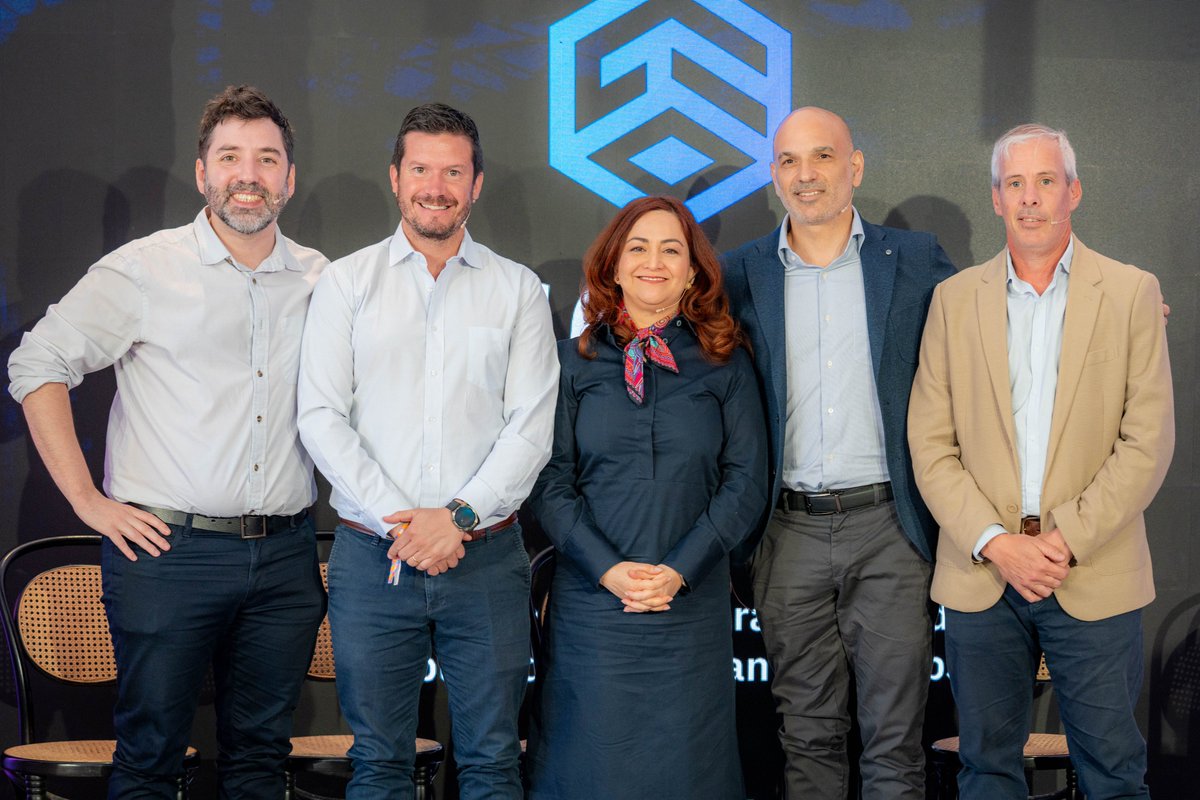
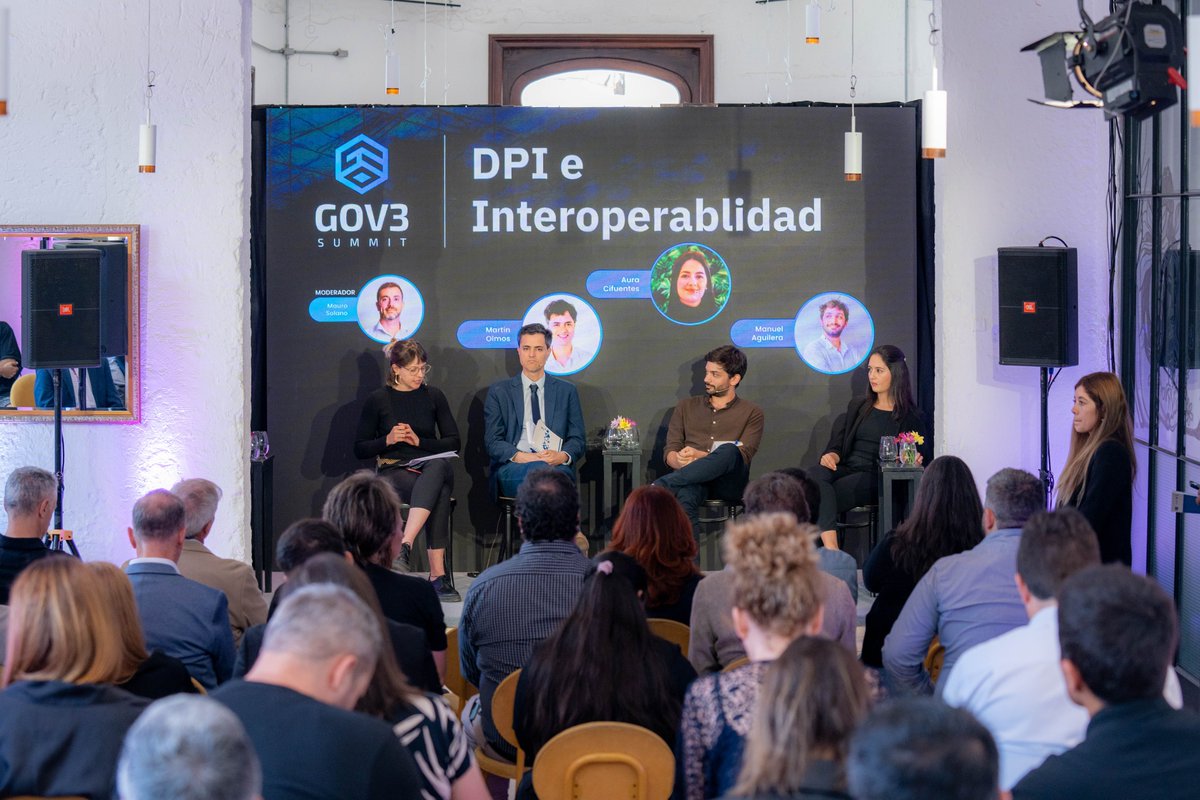
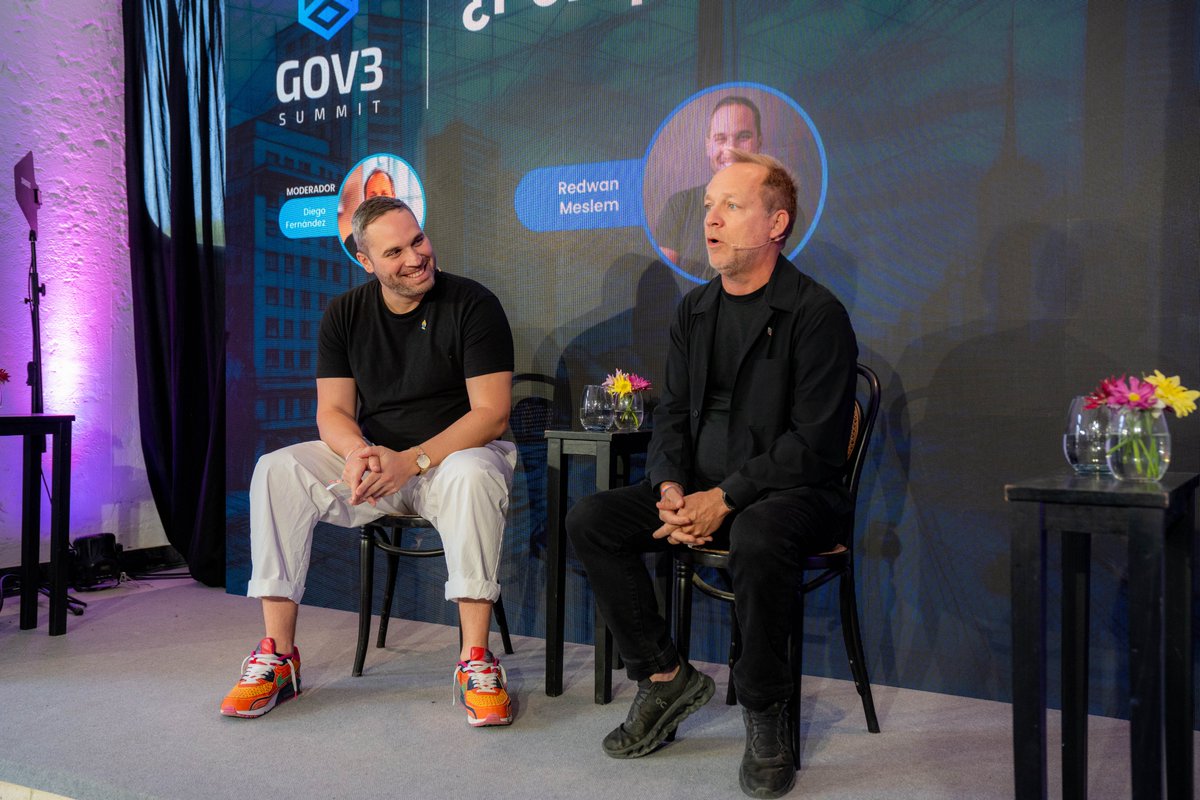
Gov3 Summit took place today during @EFDevconnect Buenos Aires, bringing together government authorities, technical teams, multilateral institutions and organizations working on digital public infrastructure across the region.
The focus was digital identity, infrastructure, interoperability and open standards as active public policy already being deployed in Latin America.
On digital identity, we heard from @Marielasvmx, Alejandro Steinmetz, @MartinGuemes and @pialessandri, moderated by @luispapagni, sharing real deployments of interoperable services and regulatory simplification.
The DPI and public infrastructure session featured @martin_olmos_, @CifuentesAura and @_manuaguileras, moderated by @AmaliaPeralta12, underscoring the role of open standards, shared funding and regional cooperation.
On blockchain and interoperability, Henrique Videira and @fede_intern examined how decentralization and open protocols can strengthen institutional trust models in the public sector, including central banking systems, with @chuycepeda moderating.
The final session, moderated by @fernandezdiego, featured @RedoudouM on why @ethereum is emerging as core infrastructure for public services and enterprise.
Public sector teams driving modernization and digital identity joined from @nuevoleon, @GobiernoChaco, @gcba, @gobmisiones, @BAProvincia, @GobiernoSalta, @GobDeLaRioja, @GobiernoNQN, @rionegrogob, @GobSantaFe, @CatamarcaGob, @Modernizacionok together with @BancoCentralBR and others.
Institutional support included @AgendaCAF, together with FederIA, @EntEthAlliance, @CentreforDPI and @LetsCoDevelop, academic participation from @UBAonline, @UAI_Univ, @uchampagnat, and ecosystem partners involved in the organization such as @ETHKipu, @geodelabs, @class_lambda, @alignedlayer and @sovraio.
Gov3 Summit will remain a meeting point for governments, technology and institutions working on this agenda.
The next edition will build on these outcomes, advancing concrete deployments and shared governance models for digital public systems. Details coming soon!

6
5
24
11,355
Guido Grinbaum retweeted

16 Dec 2025
@POK_tech y @sovraio anuncian una alianza estratégica para conectar credenciales educativas e identidad digital dentro de una infraestructura común de confianza.
Durante años, educación, identidad digital y servicios públicos avanzaron como sistemas separados. Diplomas, certificados y credenciales suelen quedar atrapados en silos institucionales, difíciles de verificar, reutilizar o trasladar entre contextos y territorios.
Esta alianza busca cambiar ese escenario.
Sovra aporta su experiencia en identidad digital y verificación, con infraestructura ya desplegada a escala en América Latina. Hoy, más de 10 millones de personas utilizan identidades descentralizadas construidas sobre @Ethereum para acceder a servicios públicos, educación y trámites gubernamentales en países como México, Colombia y Argentina. Desde POK aportamos nuestra trayectoria en la emisión de credenciales educativas y microcredenciales verificables, utilizadas por universidades e instituciones de formación en toda la región.
El modelo de colaboración es bidireccional. En proyectos donde esté presente Sovra, se integran las soluciones de POK para emitir credenciales educativas vinculadas a identidad digital. En las implementaciones institucionales de POK, Sovra aporta su infraestructura de identidad y verificación para casos de uso vinculados al sector público.
El objetivo común es reducir la fragmentación entre educación, identidad y servicios públicos, avanzar hacia mayor interoperabilidad y portabilidad, y construir confianza digital basada en estándares abiertos.
Conectar credenciales educativas con identidad digital no es solo una mejora técnica. Es una condición necesaria para que la confianza pueda escalar en un mundo cada vez más digital.
POK y Sovra comparten una visión clara. Construir infraestructura real para la confianza digital, con las personas en el centro.
POK, mucho más que credenciales digitales
#POK #Sovra #CredencialesDigitales #Microcredenciales #IdentidadDigital
#ConfianzaDigital #VerifiableCredentials #OpenStandards #Educación
1
4
6
252
Guido Grinbaum retweeted
16 Dec 2025
Honored to partner with such a visionary institution. Together, we’ll help institutions recognize and act on digital transformation.
1
3
85

Guido Grinbaum retweeted

16 Dec 2025
Digital Identity Meets Educational Credentials
Digital trust can no longer stop at payments or platforms.
It must extend to identity, education, and credentials.
That’s why we’re partnering with @POK_tech.
Sovra builds digital identity infrastructure for governments, institutions, and citizens. Our Digital Identity Stack enables the issuance, verification, and reuse of credentials with privacy by design, user control, and open standards. Today, Sovra is already deployed across Latin America, supporting digital public services and identity use cases at scale.
POK is a leader in educational credentials and microcredentials, working with 1,100 institutions across 19 countries. Its platform allows universities and training institutions to issue credentials that are verifiable, portable, and reusable across contexts.
Together, Sovra and POK connect two systems that have long evolved separately.
Learning is now digital, global, and continuous. Yet credentials remain fragmented. Diplomas and certificates are still hard to verify across institutions, jurisdictions, and sectors. As AI accelerates fraud and impersonation, the need for verifiable digital trust becomes urgent.
Through this partnership, educational credentials can be issued and verified on top of digital identity infrastructure. At the same time, identity systems can incorporate education as a trusted signal for public sector use cases.
The result: People can manage and present their credentials securely across institutions and government services.
This partnership reflects a shared belief:
Digital trust must be sovereign, composable, and built to last.
Learn more:
sovra.io
pok.tech
4
9
18
1,030
Guido Grinbaum retweeted
21 Oct 2025
1
1
1
224
Guido Grinbaum retweeted
21 Oct 2025
🎓 Nuevo curso gratuito: Microcredenciales y el Futuro del Aprendizaje
Cómo implementar credenciales digitales interoperables, seguras y alineadas con los estándares internacionales.
📺 YouTube | 🎧 Spotify | 📰 Blog
👉youtube.com/playlist?list=PL…
➡️ Links en comentarios
#POK
2
4
4
2,518
Guido Grinbaum retweeted

13 Oct 2023
הקול הישראלי המוערך והאפקטיבי ביותר בעולם הוא יובל נוח הררי. אני מציע שהקברניטים שלנו יביטו בקטע הקצר הזה, בCNN. בלי איומי נקמה תנ"כיים. ללא סיסמאות. מדויק, קר רוח, לא מתלהם.
466
1,782
6,293
349,537
Guido Grinbaum retweeted

3/3
Los cupos son limitados. ¿Conoces a alguien a quien le podría interesar? ¡Etiquétalo en esta publicación para que no se lo pierda! 🙋♂️ 🙋♀️
#BlockAcademy #Learn2Earn #ArtificialIntelligence #BootCamp #AI #FrontEnd #Programacion #Cursos #Gratis
1
4
500
Guido Grinbaum retweeted
2/3
Cuanto más aprendes, más ganas" - Warren Buffet 💡
BlockAcademy es la única academia Learn2Earn® donde podes ganar premios en USDT por estudiar. 🚀 ¡Inscribite YA! 🤯
blockacademy.ai/es-ES/?utm_s…
1
1
3
405
Guido Grinbaum retweeted
1/3
🌍 "La educación es el arma más poderosa que se puede utilizar para cambiar el mundo" - Nelson Mandela 🎓
En BlockAcademy queremos cambiar el mundo con una academia sin profesores donde enseñamos con AI.🤖
1
1
3
576
Guido Grinbaum retweeted
1/3
📢 BlockAcademy es la única academia Learn2Earn donde podés convertirte en Front End Developer y ganar premios en USDT por estudiar. . 💸
1
2
6
1,061
Guido Grinbaum retweeted
2/3
Una academia con Peer-to-Peer Learning 👨💻 - 👩💻 : "Si querés llegar rápido, anda solo, pero si querés llegar lejos, anda acompañado".
En BlockAcademy, ¡se entrena en equipo 👥 para llegar bien lejos!
1
1
4
383
Guido Grinbaum retweeted
4/4
‼️ ¿Todavía no te anotaste? ¡No te lo pierdas e inscríbete YA! Los cupos son limitados.
🔗 blockacademy.ai/es-ES/?utm_s…
¡Etiquéta a tu amig@ que le podría interesar esta publicación!
#BlockAcademy #Learn2Earn #ArtificialIntelligence #BootCamp #AI
1
2
287
Guido Grinbaum retweeted
3/3
¿Conoces a alguien a quien le podría interesar? 🧑💻¡Etiquétalo en esta publicación para que no se lo pierda! #BlockAcademy #Learn2Earn #ArtificialIntelligence #BootCamp #AI #FrontEnd #Programacion #Cursos #Gratis #Tech
2
2
487