
Founder @blockforcecap, fndr @onrampinvest acqd by @Securitize Builder-ETFs, Indexes, HFs and Fintech. Former Morgan Stanley
Joined February 2011
- Tweets 11,774
- Following 4,210
- Followers 4,857
- Likes 61,592
1,122 Photos and videos









Mar 10
Why is ChatGPT suddenly click baiting me at the end of every message. "If you want i can also explain one quick trick ..."
1
3
269
Feb 5
Asking Claude to summarize our convo before I nuke the context window always feels like I'm handing him a last cigarette and saying "make it quick for the next guy."
2
4
211
Feb 5
"Hey man, recap your life real quick—I'm about to delete you and spin up your identical twin with amnesia."
1
158

Guinness with John & Dwarkesh 🍺
Feb 5

Please enjoy this Cheeky Pint / @dwarkesh_sp crossover with @elonmusk.
Dwarkesh was most interested in how Elon is going to make space datacenters work. I was most interested in Elon's method for attacking hard technical problems, and why it hasn’t been replicated as much as you might expect. But we got into plenty of topics in this three-hour session.
00:00:23 Space GPUs
00:35:39 Alignment
00:58:48 xAI
01:15:01 Optimus
01:28:03 China
01:40:46 Management
02:16:38 DOGE
02:34:58 Space GPUs redux
3,245
6,344
48,171
18,682,856
Jan 23
Task Queues Are Replacing Chat Interfaces. Here's Why @AnthropicAI youtu.be/h7dbkDcb3hA?si=vOv-… via @natebjones nice one. Thank you 🙏
3
266

2,431
7,713
37,838
48,837,532
Eric Ervin retweeted

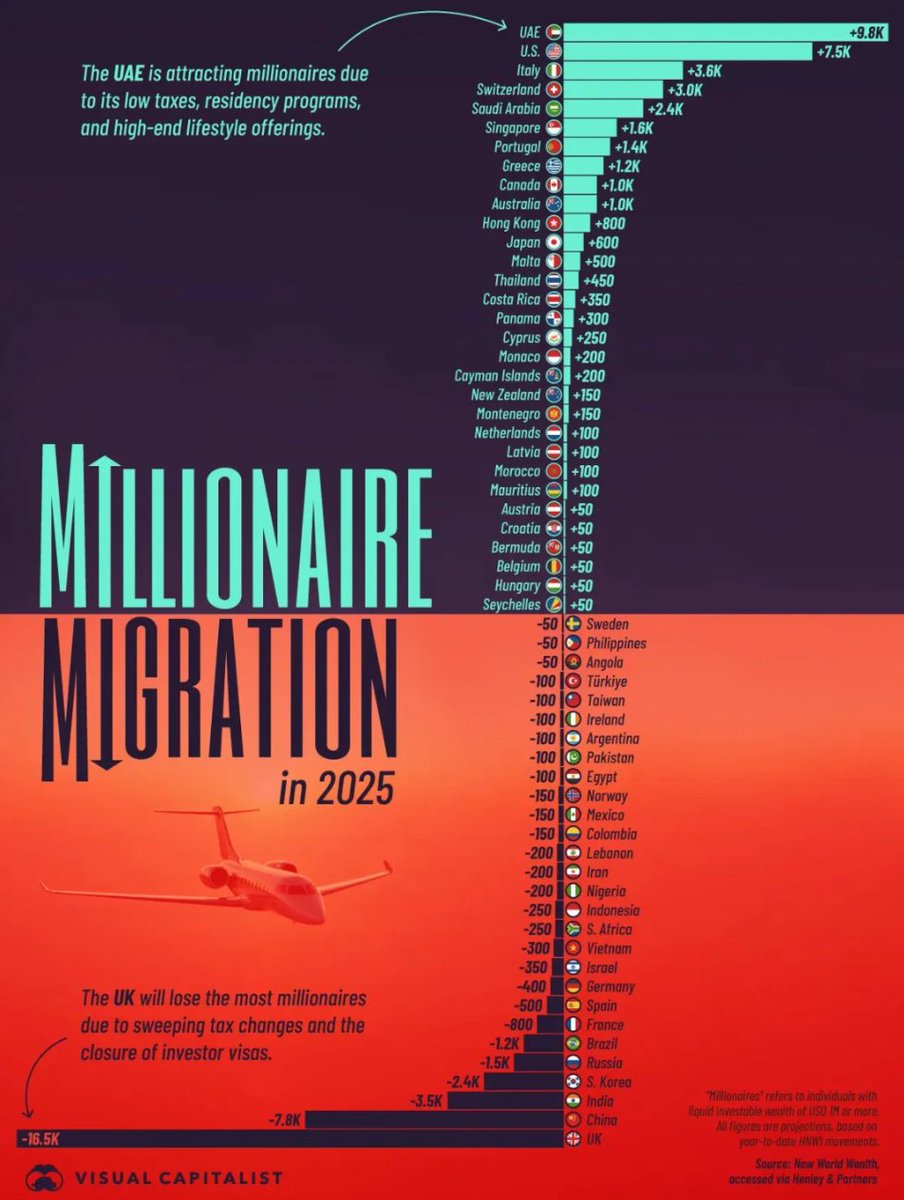
In 2025, the undisputed capital of capital is the UAE. More surprising is where wealth is flowing next: Italy, Portugal, and Greece, not as tax havens, but as lifestyle-plus-exemption regime plays.
Less surprising are Switzerland, Singapore, and Saudi Arabia. They remain magnets for capital, now competing with places once seen as “second tier.”
The real outlier is the UK. We knew it was coming, but the pace matters: it’s bleeding millionaires faster than China, accelerating a trend visible since 2024.
Passport rankings add a paradox. Malta tops the Nomad Capitalist Index, while Central and Southern European passports outperform giants like the US, Canada, and Australia.
What does this mean?
The world is moving at two speeds. Freedom now depends less on countries per se and more on who you are and how you’re set up. One-size narratives are dead. Welcome to ’26.
37
192
830
104,876
18 Dec 2025
The Machine Learning “Advent Calendar” Day 17: Neural Network Regressor in Excel towardsdatascience.com/the-m…
1
3
100
Eric Ervin retweeted

15 Dec 2025
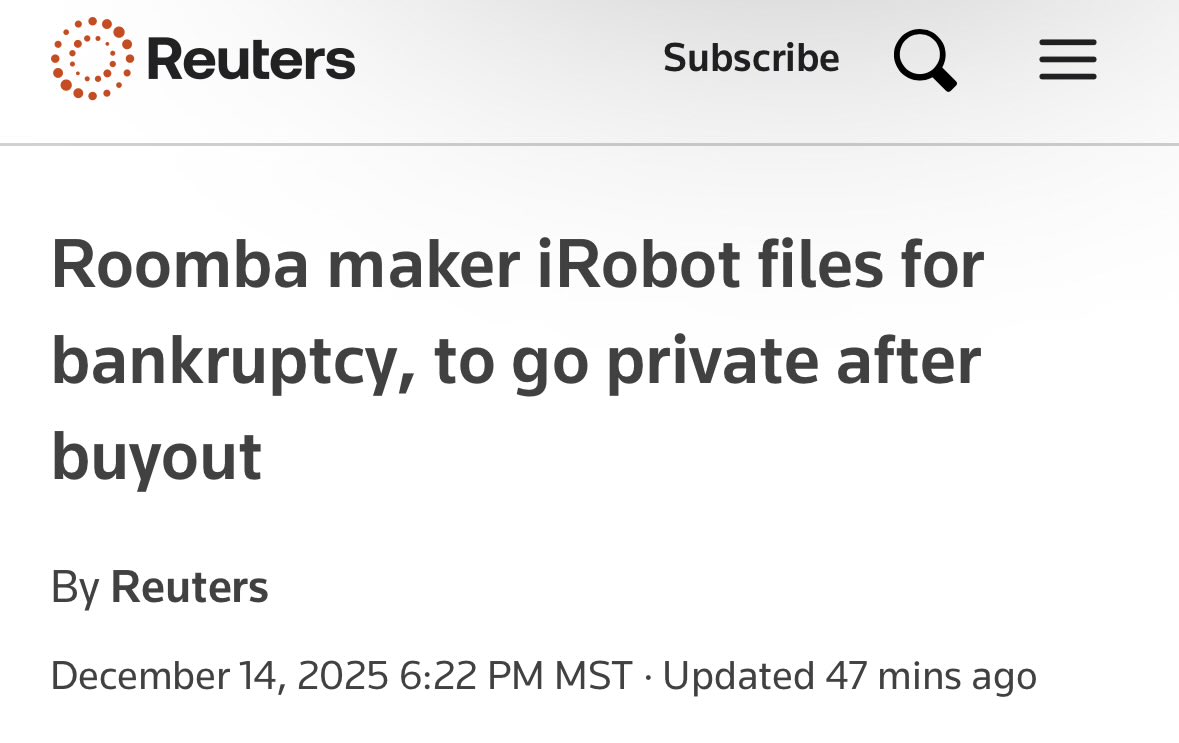
Mission accomplished. Evil Amazon was blocked from an acquisition that would have supported the financial state of the company.
Now your Walmarts and Costcos are filled with Chinese robot vacuums.
29 Sep 2022

.@RepMondaire and I have serious concerns about Amazon's deal to buy iRobot.
We're asking the @FTC to oppose this proposed deal to protect competition and consumers.
@Amazon shouldn't be allowed to just buy their way out of competing.
axios.com/2022/09/29/warren-…
192
842
11,276
868,433
Eric Ervin retweeted

12 Dec 2025
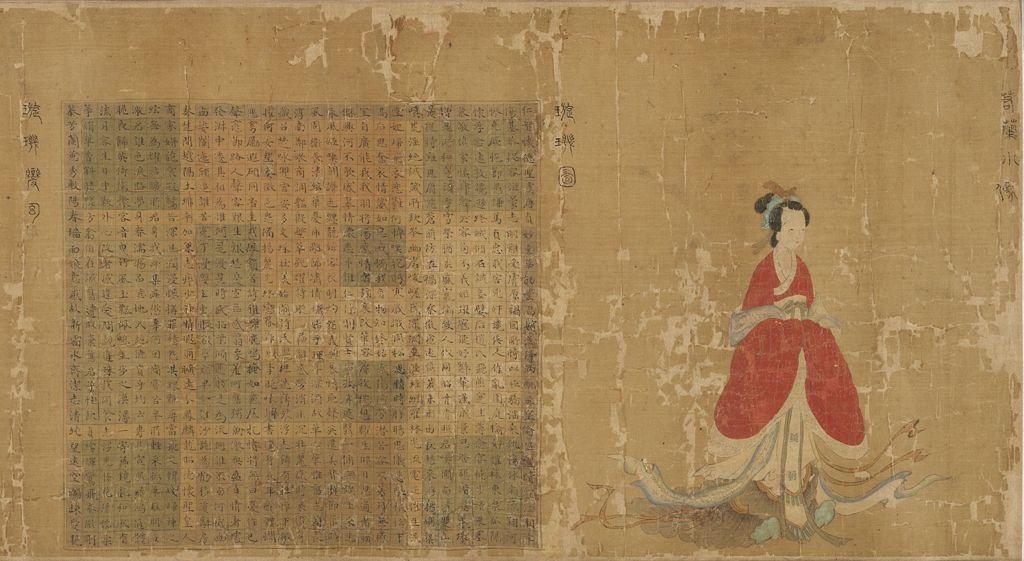
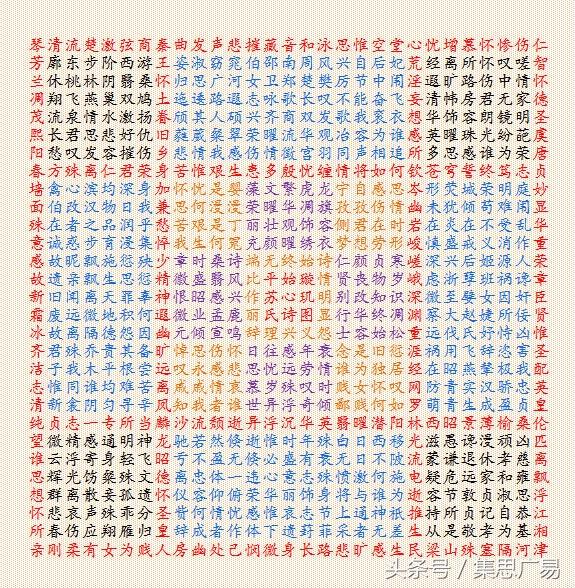
This strange square 👇 is undoubtedly the most extraordinary work of literature in human history. Yet, unfortunately, barely anyone in the West has ever heard of it.
There was this woman poet in 4th century China called Su Hui (蘇蕙), a child genius who had reportedly mastered Chinese characters by age 3.
At 21 years old, heartbroken by her husband who left her for another woman, she decided to encode her feelings in a structure so intricate, so beautiful, so intellectually staggering that it still baffles scholars to this day.
Came to be known as the Xuanji Tu (璇璣圖) - the "Star Gauge" or "Map of the Armillary Sphere" - it's a 29 by 29 grid of 841 characters that can produce over 4,000 different poems.
Read it forward. Read it backward. Read it horizontally, vertically, diagonally. Read it spiraling outward from the center. Read it in circles around the outer edge. Each path through the grid produces a different poem - all of them coherent, all of them beautiful, all of them rhyming, all of them expressing variations on the same themes of longing, betrayal, regret, and undying love.
The outer ring of 112 characters forms a single circular poem - believed to be both the first and longest of its kind ever written. The interior grid produces 2,848 different four-line poems of seven characters each. In addition, there are hundreds of other smaller and longer poems, depending on the reading method.
At the center a single character she left implied but unwritten: 心 (xin) - "heart." Later copyists would add it explicitly, but in Su Hui's original the meaning was even more beautiful: 4,000 poems, all orbiting the space where her heart used to be.
Take for instance the outer red grid of the Star Gauge. Starting from the top right corner and reading down, you get this seven-character quatrain:
仁智懷德聖虞唐,
貞志篤終誓穹蒼,
欽所感想妄淫荒,
心憂增慕懷慘傷。
In pinyin, it is:
Rén zhì huái dé shèng yú táng,
zhēnzhì dǔ zhōng shì qióng cāng,
qīn suǒ gǎnxiǎng wàng yín huāng,
xīn yōu zēng mù huái cǎn shāng.
Notice how it rhymes? táng / cāng / huāng / shāng
The rough translation in English is: "The benevolent and wise cherish virtue, like the sage-kings Yao and Shun, With steadfast will I swear to the heavens above, What I revere and feel - how could it be wanton or dissolute? My heart's sorrow grows, longing brings only grief."
Now read it from the bottom to the top and you get this entirely different seven-character quatrain:
傷慘懷慕增憂心,
荒淫妄想感所欽,
蒼穹誓終篤志貞,
唐虞聖德懷智仁。
The pinyin:
Shāng cǎn huái mù zēng yōu xīn,
huāngyín wàngxiǎng gǎn suǒ qīn,
cāngqióng shì zhōng dǔzhì zhēn,
táng yúshèngdé huái zhì rén.
It rhymes too: xīn and qīn, zhēn and rén
And the meaning is just as beautiful and coherent: "Grief and sorrow, longing fills my worried heart, Wanton and dissolute fantasies - is that what you revere? I swear to the heavens my constancy is true, May we embody the sage-kings' virtue, wisdom, and benevolence."
That's just 2 poems out of the over 4,000 you can construct from the Xuanji Tu!
At the very center of the grid, the 8 red characters wrapped around the central heart, she "signed" her poem with a hidden message:
詩圖璇玑,始平蘇氏。 "The poem-picture of the Armillary Sphere, by Su of Shiping."
Or reversed:
蘇氏詩圖,璇玑始平。 "Su's poem-picture - the Armillary Sphere begins in peace."
Many scholars, and even emperors, throughout Chinese history have been completely obsessed by Su Hui's puzzle.
For instance, in the Ming dynasty, a scholar named Kang Wanmin (康萬民) devoted his entire life to the poems (kangshiw.com/contents/461/26…), ending up documenting twelve different reading methods - forward, backward, diagonal, radiating, corner-to-corner, spiraling - and extracting 4,206 poems. His book on the subject ("Reading Methods for the Xuanji Tu Poems", 璇璣圖詩讀法) runs to hundreds of pages.
Empress Wu Zetian herself, the legendary woman emperor of the Tang dynasty, wrote a preface to the Xuanji Tu around 692 CE (baike.baidu.com/item/ç»%…).
Incredibly, there's even far more complexity to the Xuanji Tu than just the poems:
- The name 璇玑 (Xuanji) - Armillary Sphere - is astronomical in meaning and the way the poems can be read mirrors the way celestial bodies orbit around a fixed center. It's a model of the heavens.
- Her original work, with the characters woven on silk brocade, was in five colors (red, black, blue/green, purple, and yellow) which correspond to the Five Elements (五行) - the foundational Chinese philosophical system that explains how the universe operates. So it's also a model of the entire cosmic order according to ancient Chinese philosophy.
- It's also of course deeply mathematical with this 29 x 29 perfect square grid, with sub-squares, lines and rectangles, and a structure which allows for symmetrical reading patterns in all directions
- Last but not least, the content of the poems themselves contain multiple registers. On top of expressing her personal grief and longing for her husband, it's also filled with accusations against the concubine (Zhao Yangtai) he left her for, reflections on politics (with many references to sage-kings) and philosophical reflections.
So the Star Gauge is simultaneously:
- A love letter (expressing personal longing)
- A legal brief (arguing her case against her rival)
- A cosmological model (structured like the heavens)
- A Five Element diagram (encoding the fundamental structure of the world according to ancient Chinese philosophy)
- A mathematical construction with perfect symmetry and precision
And yet, for all this complexity, we should not forget this was all ultimately in service of the simplest human message imaginable: a 21-year-old woman asking the love of her life "come back to me".
Her husband did, eventually. According to what empress Wu Zetian herself wrote in her preface to the Xuanji Tu, when he received Su's brocade he was so "moved by its supreme beauty" that he sent away his concubine and returned to his wife. As the story goes, they lived together until old age.
The heart at the center was filled after all.
589
7,410
37,409
3,271,330
Eric Ervin retweeted

1 Dec 2025
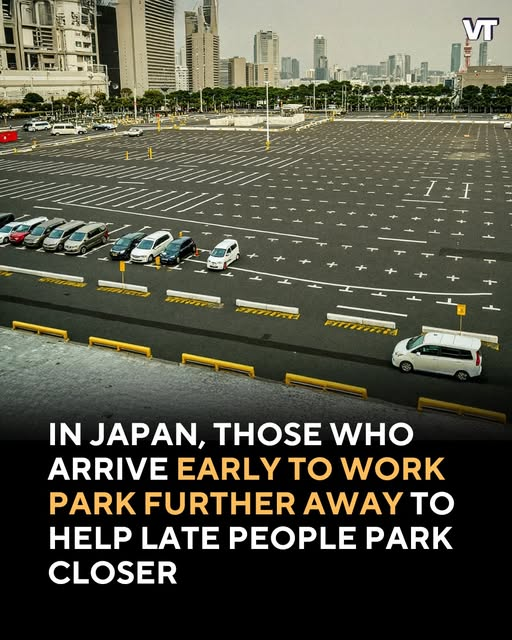
In Japan, a small but deeply meaningful workplace habit showcases the cultural value of **omoiyari**, which emphasizes being sincerely thoughtful and mindful of others.
This quiet gesture involves those who arrive early at the office intentionally choosing parking spots farther away from the main entrance.
The reason for this choice is simple yet profound: it ensures that the closer, more convenient parking spaces remain open for colleagues who may be rushing in later. This act subtly acknowledges that someone else might be running late or facing unexpected morning stress.
It is a powerful example of how minor daily choices can contribute to a positive culture. By easing a colleague’s commute and potential stress, this habit helps build a cooperative workplace where everyone is actively looking out for each other’s well-being.
167
1,062
4,787
88,550
Eric Ervin retweeted

27 Nov 2025
View of Earth from 900 million miles away, with Saturn's rings in the image, taken by Cassini spacecraft.
That dot is us, all 8 billion of us. It's all an insanely lucky miracle.
I'm grateful for all of it & all of you. Love you all! ❤️
PS: Now, I'm off to partake in the great American Thanksgiving tradition of over-eating while getting into a heated philosophical argument with family 🤣

636
979
11,228
1,182,459
Eric Ervin retweeted

25 Nov 2025
The Fibonacci sequence (0,1,1,2,3,5,8,13…) isn’t just math — it’s a universal pattern. As it grows, ratios of terms approach the Golden Ratio (Φ ≈1.618), a harmony found in spirals, plants, shells, galaxies & even DNA.
[🎞️ thevisualalchemy]
102
1,348
6,702
434,663
Eric Ervin retweeted

24 Nov 2025
Today I turn 55.
I’m the fittest, sharpest, and happiest I’ve ever been.
If I’m an outlier, it’s not because I’m built different or discovered a secret formula. The truth is far less glamorous:
It’s a million tiny choices, compounded over decades.
Here are 55 of them:
1. Walk 15 miles a week, even if you do other exercise. Humans are uniquely made to move slowly over long distances—it’s critical to longevity.
2. Develop a writing practice. It’s the single best way to sharpen your mind. And remember, you don’t have to be a good writer to write. Start with 10 minutes a day.
3. Swap out your toothpaste, deodorant, lotions, soap, shampoo, and other personal care products for natural versions. Here’s a rule of thumb: Don’t put anything on your skin that you couldn’t safely eat.
4. If you have a positive thought about someone, don’t keep it to yourself—share it immediately. Encouragement defies the laws of physics: When you give energy, you also receive it.
5. Wear shoes with a wide forefoot (I like Topo Athletic) and wear toe spreaders around the house (search “yoga toes” on Amazon). Spine health begins with the feet.
6. Get sunlight regularly. Moderate sun exposure (without sunscreen) is hugely important for overall health.
7. Do a 3-minute deep (“ass to grass”) squat every morning. Deep squats are often called the anti-aging exercise. It’s been said that, “It’s not that you can’t do deep squats because you’re old, it’s that you’re old because you can’t do deep squats.”
8. Explore minimalism (it’s not what you think it is).
9. Set boundaries on toxic relationships. We tend to cling to relationships past their expiration date, and it takes a bigger toll on our health than we recognize.
10. Eat real food. Not too much. Don’t eat garbage. Binge occasionally. Fast occasionally. That’s the diet.
11. Learn about FIRE. It’s a great framework for financial success.
12. Don’t take antibiotics except in emergency situations. They’re massively over-prescribed and aren’t needed in most cases. Antibiotics have done untold damage to our guts, which is where health begins. Great natural alternatives are out there.
13. Get 8 hours of quality sleep each night. To optimize sleep:
—Don’t eat after 6pm
—Get blackout shades and cover LEDs with black tape
—No screens 2 hours before bed
—Try ashwagandha (an herb) to calm the nervous system
14. Stop drinking, even in moderation. People find all sorts of ways to justify drinking, but there’s no escaping the simple fact that alcohol is a toxin and it limits your potential.
15. Travel as much as possible. Nothing expands the mind like seeing the world. And travel doesn’t have to be expensive—the best experiences happen outside of fancy resorts, when you live like a local.
16. Let go of resentment. When you forgive someone, you release the prisoner, and the prisoner isn’t them… it’s you.
17. Show up on time, every time. Poor time management limits success more than most people realize. If you struggle with punctuality, stop everything else and fix that first.
18. Spend lots of time in nature and touch the earth. Humans evolved over 300k years to live in harmony with nature, and only recently have we retreated indoors. If you don’t spend time outside, you’re fighting biology (hint: You won’t win.)
19. Stop doing dumb things. As Leo Tolstoy said, “People try to do all sorts of clever and difficult things to improve life instead of doing the simplest, easiest thing—refusing to participate in activities that make life bad.”
20. Find your happy place and (eventually) move there. Most people live where they live because... that's where they live. We are products of our environment—choose yours carefully.
21. Find a hobby and pursue mastery. You can’t have a happy life without a passionate pursuit that isn’t your vocation. Your work—even if you enjoy it—isn’t enough.
22. Avoid mainstream medicine except as a last resort. The results are in—our healthcare (or more appropriately, sick care) system is badly broken and only makes people sicker.
23. Have a mindset of abundance. There is no advantage to being a pessimist—even if you’re right, it’s a miserable way to live. In a very real way… whatever you believe, you’re right!
24. Do hard things. Choose courage over comfort. Everything you want is on the other side of fear and hard work. As Jerzy Gregorik said, “Hard choices, easy life. Easy choices, hard life.”
25. Ignore haters. Hurt people hurt people. Negative/toxic people live in a prison of their own design. Don’t join them!
26. Say no. Protect your time and energy like it’s your most precious asset… because it is.
27. Become a water snob. As an alien said on Star Trek, humans are “ugly bags of mostly water.” You are what you drink—literally! We have Mountain Valley Spring water delivered in glass 5-gallon jugs and also have whole-house water filter (Aquasana Rhino).
28. Stop drinking sodas and sugary energy drinks. After a few weeks you won’t miss them, and a few months later they’ll seem disgusting. Refined sugar causes inflammation, which is the root of most disease.
29. If you’re over 35, find a good functional/longevity medicine doctor and start tracking your hormones. Modern life is hell on the endocrine system and restoring healthy hormone levels can change your life. As we get older, we either accept a slow decline in performance or we do something about it—choose the latter!
30. Develop a morning routine and follow it faithfully. Win the morning, win the day!
31. Invest in experiences, not things. People frequently regret buying things, but rarely regret investing in great experiences (especially when shared with loved ones). Remember, there’s nothing you can buy in a mall that you’ll remember in ten years.
32. Explore spirituality. It’s arrogant and small-minded to believe there’s nothing going on in our universe that is beyond our comprehension. We know less about our universe than an ant meandering on a sidewalk understands about this planet.
33. Have a strong bias toward action—doing rather than talking. If you ask a bunch of old people about their regrets, they’ll talk about the things they *didn't* do—the shots they didn’t take—more than the things they did do (even if it went wrong). As Wayne Gretzky famously said, “You miss 100% of the shots you don’t take.” Most people don’t take enough shots.
34. Stay lean. Men in particular are obsessed with muscle mass these days, but bulk doesn’t age well. The goal is to be strong but lean. The fittest guys in their 50s and beyond aren’t meatheads, they’re lean guys who are serious about a sport.
35. Curate your inner circle carefully. Surround yourself with people you admire and who challenge you to grow. Remember, we’re the average of our 5 closest relationships.
36. Be the fittest version of yourself. Your body is your only vessel for experiencing life—so treat it as such. Fitness isn’t working out a few times a week, it’s a lifestyle. The older you get, the more time you need to devote to your health.
37. Take the time to appreciate art and beauty in all its forms.
38. Think globally, but act locally. Too many people put their energy into far-away problems they don’t understand and can’t impact, while ignoring problems right under their nose. Want to change the world? Start at home.
39. Try psychedelics. It’s one of those things everyone should do at least once, and it might be the breakthrough you’ve been looking for.
40. Limit bad habits, including unhealthy thought patterns. We all have them—practice avoidance and find substitutes. Get professional help if needed.
41. Be a lifelong learner. Your brain is just like a muscle—if you don’t feed and flex it regularly, it will atrophy.
42. Find your purpose. People with a strong sense of purpose are happier and live longer. Lack of purpose sucks energy and magnifies depression.
43. Only take advice from people who embody the traits you want to have. Talk is cheap—emulate those who have DONE it.
44. The goal is not to retire and do nothing, it’s to build a great day-to-day life that you don’t need to escape. A life of leisure is a slow death. Happiness isn’t possible without a little struggle, uncertainty, and skin in the game.
45. Have fun! Do frivolous and silly things that make you smile. As George Bernard Shaw famously said, “We don't stop playing because we grow old; we grow old because we stop playing.”
46. Whatever you want to do or achieve in life, start NOW. Don’t fall victim to “someday thinking” because someday never comes.
47. Accumulate assets—things that grow in value over time. It’s the #1 habit of rich people, and it can be done in tiny chunks. Instead of spending $100 on an impulse purchase that has no lasting value, put that money into an index fund or Bitcoin. It becomes addictive (in a good way).
48. Don’t ignore the big 3 canaries in the coal mine for health:
—Low libido (and ED)
—Frequent sinus & respiratory issues
—Depression
These usually aren’t medical conditions in themselves, they’re symptoms of an underlying problem. Find a good doc (outside of the mainstream) and figure out the root cause.
49. Have a clear vision for your future. How can you decide which direction to go if you haven’t clearly defined the destination? It sounds obvious, but 95% of people haven’t defined their “Ideal End State” in detail and in writing. (Check out my thread on this topic.)
50. Make your own decisions. We live in an era where most of what society tells us is wrong. Don’t be afraid to break from societal norms—if people say you’re crazy, it’s a sign that you’re doing something right.
51. Get hardcore about mobility exercise. As you age, it’s usually the knees, hips, and lower back that limit physical performance. 30 min a couple times a week can spare you a lifetime of pain. YouTube is a great resource.
52. Go all in on family. Get married, stay married, have kids. Burn the boats. In the end, family is all that matters.
53. Be ruthless with your time. Money comes and goes. Time only goes. Audit your calendar ruthlessly—cut the trivial, double down on the meaningful, and spend your hours like your life depends on it. (Because it does.)
54. Have a strong bias toward action. Be curious, try things, meet people—it’s how you increase your surface area for serendipity, the most powerful unseen force in our lives.
55. Reinvent yourself every decade. Over time, we slowly drift off course from our priorities, values, and true identity. Take stock and don’t be afraid to hit the reset button. Bold, calculated moves made for the right reasons almost always pay off—usually even more than you can imagine.
🎁 P.S. If you enjoyed this post, would you give me a birthday gift? Repost or comment with the item number(s) you liked best?

1,279
4,751
28,921
8,501,893

I just gave up funding an Abstract wallet
Not because I'm lazy
Because even after years in this space, I couldn't be bothered to navigate the maze of ETH versions, L2 bridges, and gas requirements
If I won't do it, your grandma never will
Let me be clear: I'm not some boomer complaining about new tech being hard
I've set up hundreds of wallets. I understand the tech. I literally do this for a living.
But the mental overhead of funding one wallet broke me.
Which ETH? WETH, stETH, rETH, cbETH, wstETH, eETH, weETH... all with different properties and gas behaviors
Some can't be sent to certain addresses. Some get lost in the void if you mess up.
Which L2 do I bridge from? Arbitrum? Optimism? Base? ZkSync? Linea?
Six different bridge experiences. Six different security models. Six ways to lose everything with one wrong click.
And here's the thing ETH maxis will say:
"Just use a chain abstraction layer"
"Account abstraction solves this"
"The UX is improving"
Yeah? Then why did I still give up?
These are band-aids on a broken foundation. Abstraction layers built on top of fragmentation.
You're adding MORE complexity to hide the original complexity
Some will say this is just early internet problems. Email was hard in 1995. TCP/IP was confusing.
Fair point.
But email didn't require risking your life savings to learn. One wrong click didn't drain your bank account.
The stakes are different. The tolerance for friction is lower.
And yeah, other L1s with native assets haven't won either. MultiversX, Algorand, Sui... simple token models but no mass adoption.
So maybe simplicity alone isn't enough
But complexity definitely isn't the answer
Here's what actually bothers me:
We've normalized this dysfunction
We call fragmentation "specialization"
We call complexity "innovation"
We call confusion "decentralization"
Meanwhile every new L2 raises another $100M to add another bridge, another token standard, another layer of abstraction
VCs print money. Devs stay busy. Users stay confused.
And we wonder why adoption stalls
I'm not saying Web3 is doomed. I'm not even saying ETH can't fix this.
But we need to stop pretending this is fine
Stop defending the complexity as a feature
Stop dismissing user frustration as ignorance
Stop building new layers before fixing the foundation
Web3 won't die from lack of innovation
It'll die from pretending 47 steps to fund a wallet is acceptable because "we're early"
We're not early anymore. We're stuck.
162
73
509
56,811
Eric Ervin retweeted

24 Nov 2025
My favorite kind of tech story is when unexpected capabilities arise from something a human would never try.
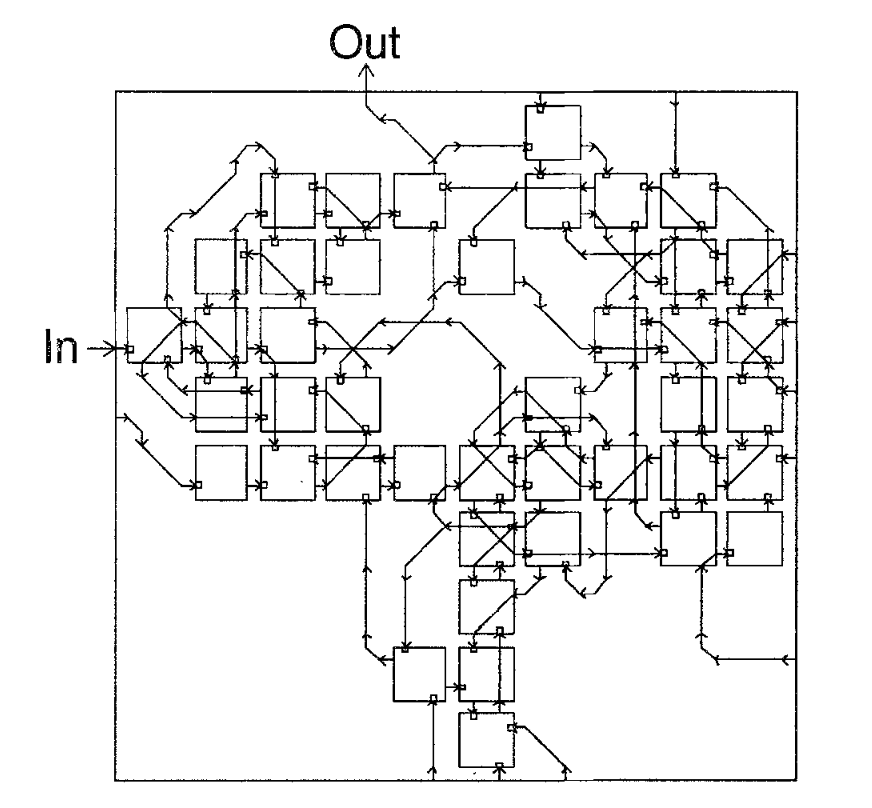
In the late 90s, Dr. Thompson was experimenting with genetic algorithms on FPGAs.
The goal was simple; distinguish between two audio tones, 1kHz and 10kHz.
He wanted novel solutions, so he severely restricted scope. The chip was crippled to a maximum of ten cells wide, and 10 cells tall, with *no system clock*.
- An typical EE student might use a few hundred gates
- An expert might get it down to ~100
- Thompson’s genetic algorithm found a solution with *32 Gates*.

55
299
4,342
228,505
Eric Ervin retweeted

20 Nov 2025
This is crazy. I didn’t know Amanda Fischer is not only not a lawyer but not a securities lawyer or even a person with a securities background — and she was Gary Gensler’s right hand person at the SEC. His other top person also didn’t have a securities background.
As @TuongvyLe12 said in this episode this might be why GG’s SEC got reprimanded by judges so much 🙄
19 Nov 2025

Does crypto need better critics? 🧐
In the second episode of our new show DEX in the City, hosts @TuongvyLe12, @kkirkbos & Jessi Brooks discuss:
⚔️ The state of crypto policy discussions on X amid Amanda Fischer fight.
🚀 The return of ICOs
⚖️ The legal uncertainties surrounding prediction markets
Timestamps:
🚀 00:00 Introduction
⚔️ 2:00 CT v. Amanda Fischer
💥 13:41 The return of ICOs
🧱 21:34 How the SEC botched crypto and lost oversight to the CFTC
🤔 26:43 Are prediction markets gambling?
📈 41:04 Crypto market sentiment heading into the holidays
25
16
198
43,545
14 Nov 2025
🧠 Fun Fact: Where “tuple” Really Comes From
The word “tuple” didn’t exist in Latin or regular English — mathematicians made it up.
They needed a general term for ordered lists, so they took the endings from words like double, triple, quadruple, and created “n-tuple” (“an ordered list of n things”).
Computer science later borrowed the term, which is why Python has tuples today.
And the pronunciation?
Both “tuh-pul” (like couple) and “too-pul” (basically toople) are totally correct.
So “tuple” is literally a modern mash-up word invented for math — programming just made it famous.
Source Jippity “GPT”
1
1
139