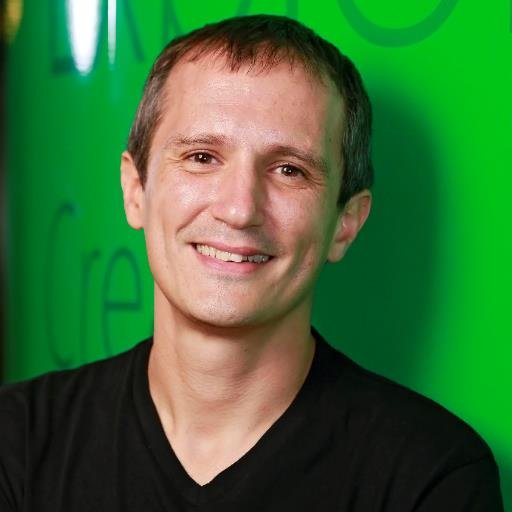
Geek 🚀 ☁️ CTO, Microsoft Latinoamérica | Mentor Endeavor Argentina | Universidad de Buenos Aires 🇦🇷 & Carleton University 🇨🇦
Joined January 2008
- Tweets 5,014
- Following 1,460
- Followers 4,271
- Likes 9,258
354 Photos and videos









Pinned Tweet

6 Aug 2018
Asimov: "I could not bring myself to believe that if knowledge presented danger, the solution was ignorance. To me, it always seemed that the solution had to be wisdom." science.sciencemag.org/conte… @ciencemagazine @erichorvitz
2
32
78
Ezequiel Glinsky retweeted

Apr 24
A mathematician who shared an office with Claude Shannon at Bell Labs gave one lecture in 1986 that explains why some people win Nobel Prizes and other equally smart people spend their whole lives doing forgettable work.
His name was Richard Hamming. He won the Turing Award. He invented error-correcting codes that made modern computing possible. And he spent 30 years at Bell Labs sitting in a cafeteria at lunch watching which scientists became legendary and which ones faded into nothing.
In March 1986, he walked into a Bellcore auditorium in front of 200 researchers and told them exactly what he had seen.
Here's the framework that has been quoted by every serious scientist for the last 40 years.
His opening line landed like a punch. He said most scientists he worked with at Bell Labs were just as smart as the Nobel Prize winners. Just as hardworking. Just as credentialed. And yet at the end of a 40-year career, one group had changed entire fields and the other group was forgotten by the time they retired.
He wanted to know what the difference actually was. And he said it wasn't luck. It wasn't IQ. It was a specific set of habits that almost nobody is willing to follow.
The first habit was the one that hurts the most to hear. He said most scientists deliberately avoid the most important problem in their field because the odds of failure are too high. They pick a safe adjacent problem, solve it cleanly, publish it, and move on. And because they never swing at the hard problem, they never hit it. He said if you do not work on an important problem, it is unlikely you will do important work. That is not a motivational line. That is a logical one.
The second habit was about doors. Literal doors. He noticed that the scientists at Bell Labs who kept their office doors closed got more done in the short term because they had no interruptions. But the scientists who kept their doors open got more done over a career. The open-door scientists were interrupted constantly. They also absorbed every new idea passing through the hallway. Ten years in, they were working on problems the closed-door scientists did not even know existed.
The third habit was inversion. When Bell Labs refused to give him the team of programmers he wanted, Hamming sat with the rejection for weeks. Then he flipped the question. Instead of asking for programmers to write the programs, he asked why machines could not write the programs themselves. That single inversion pushed him into the frontier of computer science. He said the pattern repeats everywhere. What looks like a defect, if you flip it correctly, becomes the exact thing that pushes you ahead of everyone else.
The fourth habit was the one that hit me the hardest. He said knowledge and productivity compound like interest. Someone who works 10 percent harder than you does not produce 10 percent more over a career. They produce twice as much. The gap doesn't add. It multiplies. And it compounds silently for years before anyone notices.
He finished the lecture with a line I have never been able to shake.
He said Pasteur's famous quote is right. Luck favors the prepared mind. But he meant it literally. You don't hope for luck. You engineer the conditions where luck can land on you. Open doors. Important problems. Inverted questions. Compounded hours. Those are not traits. Those are choices you make every single day.
The transcript has been sitting on the University of Virginia's computer science website for almost 30 years. The video is free on YouTube. Stripe Press reprinted the full lectures as a book in 2020 and Bret Victor wrote the foreword.
Hamming died in 1998. He gave his final lecture a few weeks before. He was 82.
The lecture that explains why some careers become legendary and others disappear is still free. Most people who could benefit from it will never open it.

144
1,875
8,183
1,171,677



Ezequiel Glinsky retweeted

22 Mar 2025
Just back from Buenos Aires and THIS. IS. A. BOOKSTORE. (Lots of heart emojis).
Editor's note: This could be what heaven looks like.

877
4,792
66,918
3,397,018
Ezequiel Glinsky retweeted

19 Mar 2025
¡Celebramos nuestro 50.º aniversario y te lo queremos compartir!
Descubre las historias de Juan y Ezequiel en su paso por Microsoft. Y tú, ¿tienes algún recuerdo especial? Cuéntanos en los comentarios. 🎉 #Microsoft50
1
2
5
819
Ezequiel Glinsky retweeted

18 Jan 2025
Hice un compilado de los lugares que más me gustan de Buenos Aires ✨
279
2,996
22,716
1,363,388
Ezequiel Glinsky retweeted

24 Oct 2024
Hoy nos juntamos en “la facu” con varios de la industria y volví emocionado por lo hermoso de 0 Infinito.
Aca junto al crack de @eglinsky
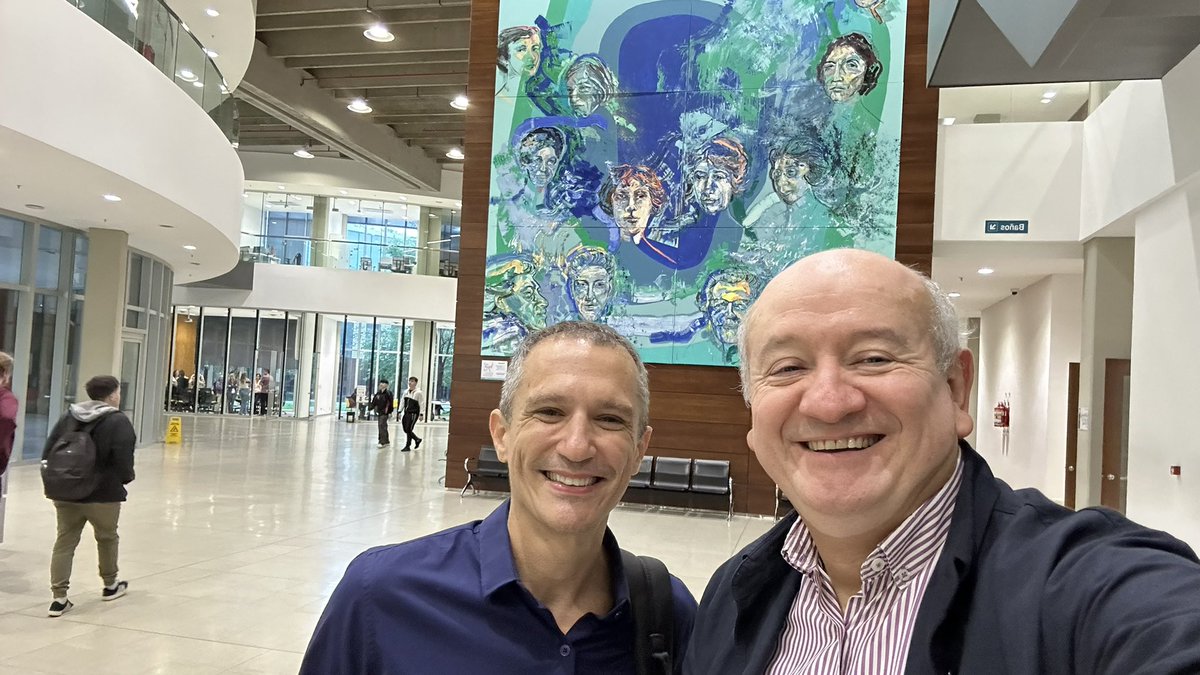
1
7
213
Ezequiel Glinsky retweeted

19 Oct 2024
Dr. @jordanbpeterson's advice to students–read great books:
14
273
1,392
82,707
Ezequiel Glinsky retweeted

18 Oct 2024
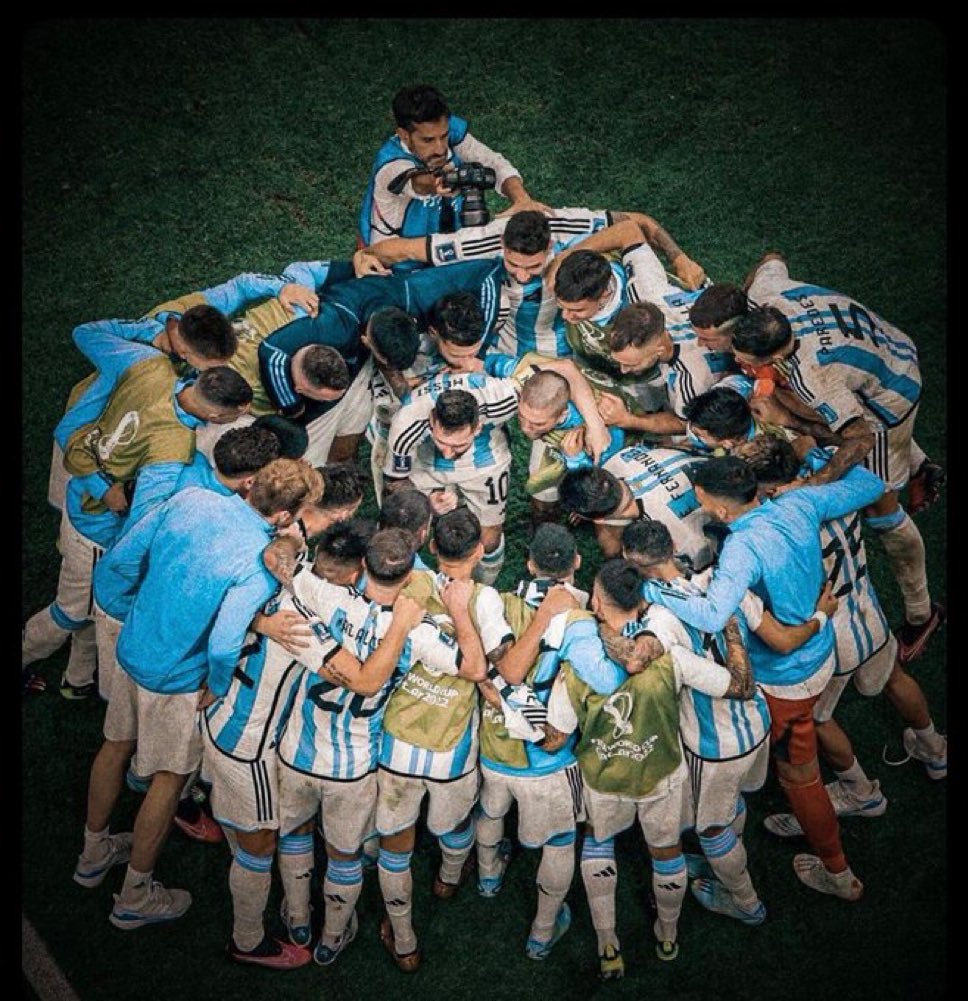
El salto para bajarla de pecho, la bandera atrás, la gente con una sonrisa de oreja a oreja.
Qué pedazo de foto.

60
3,712
40,599
705,543

Ezequiel Glinsky retweeted

5 Jul 2024
🧑💻Te invitamos a la charla presencial de la Carrera de Computación: Viernes 12/7 a las 18. ¿Te interesa saber qué cosas vas a aprender en la carrera, cómo es el plan de estudios y la salida laboral? Inscribite en: linktr.ee/ComputacionUBA ¡Te esperamos!

3
14
1,059
Ezequiel Glinsky retweeted

10 Jun 2024
Life lessons from @rogerfederer (must watch)
1 Effortless is a myth
2 Belief in yourself has to be earned
3 Grit > Gift
4 Discipline is talent
5 Trust and loving the process is talent
6 You can do your best and still lose
7 Life is bigger than the court
218
6,707
28,542
2,758,150
Ezequiel Glinsky retweeted
10 Jun 2024
Te invitamos a la charla virtual de la Carrera de Computación🧑💻: Jueves 13/6 a las 14h. ¿Te interesa saber qué cosas vas a aprender en la carrera, cómo es el plan de estudios y la salida laboral? Podés inscribirte en: linktr.ee/ComputacionUBA ¡Te esperamos!

3
6
657

Ezequiel Glinsky retweeted

19 Dec 2023
This man is now worth $110B
341
683
6,549
4,097,529
Ezequiel Glinsky retweeted
24 Nov 2023
¿Sos estudiante de secundaria? ¿Querés estar todo un día trabajando con problemas interesantes de las distintas áreas de @Exactas_UBA?
Anotate *ya mismo* para participar de Científic@s por un Día, el jueves 14/12.
Link para inscribirse en nuestro perfil.
#OrientaciónVocacional
23 Nov 2023

🫶 ¡Se viene!
👉 La actividad está destinada a estudiantes de los tres últimos años de escuela secundaria, se realizará el jueves 14 de diciembre en Ciudad Universitaria.
✏️Más información e inscripción: exactas.uba.ar/extension/ov/

3
9
1,229
27 Oct 2023
AI is coming after the tech bros and their easy money ottawacitizen.com/news/canad… via @ottawacitizen
7
331
Ezequiel Glinsky retweeted

21 Oct 2023
Por favor, clonemos a Keith antes de que explote todo...
107
1,302
5,725
345,643
Ezequiel Glinsky retweeted

6 Oct 2023
DALE DALE BO, DALE BO 🎶💙💛💙
424
12,290
49,002
1,539,764
Ezequiel Glinsky retweeted

28 Sep 2023
La cuenta @smoothieAI hizo la jugada de Messi contra Croacia, como si fuera una batalla en el Coliseo. Una locura:
81
1,638
10,516
871,885