
Building things @modal. ex-founder @twirldata
Joined June 2008
- Tweets 101
- Following 977
- Followers 263
- Likes 832
3 Photos and videos


Eric Hansander retweeted

May 21
Today we're announcing our Series C funding: $355M at a $4.65B valuation, led by some great investors @generalcatalyst and @Redpoint.
We've had insane growth in the last year, but we're still very early. So proud of the team and what we have built so far!

127
96
1,455
584,532

May 14
you heard the man! still early, great time to join :) modal.jobs

AI decacorn in the making with a Swedish founder.
I've felt for a long time that @modal is the AI company that people don't talk enough about.
Just incredible product, execution and talent-density.
Go @bernhardsson & team.
You're still early.
The best is yet to come.
1
7
522
Apr 9
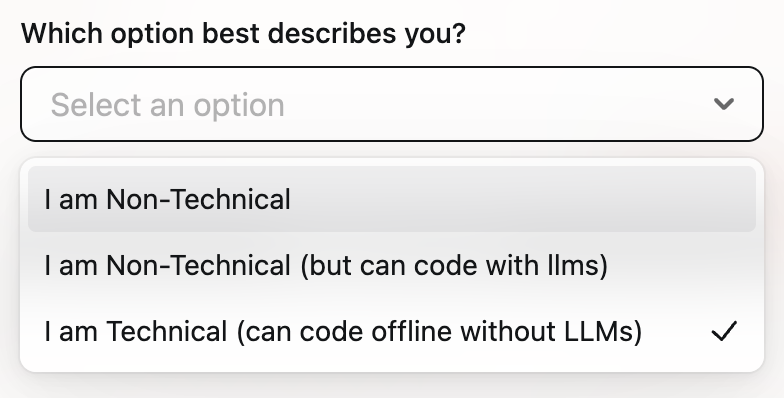
the tech/non-tech distinction is obsolete, it's "can you code offline?" now
(pic from @Londonmaxxing event sign up at @aiDotEngineer)
1
178
Apr 8
trick that sometimes works great: vibe recklessly on a branch, then start a new branch session and ask the agent to carefully pick out only the parts that turned out well
10
679
Apr 7
want to try to improve this ratio further?
modal.jobs
Apr 7

What you don't realize is how insane it is that you're ONLY 100 people. Revenue/employee is on point.
9
1,775
Mar 23
given how quickly things are going cli-first, it's remarkable how many of the services I use every day don't have a good cli
120
Mar 7
Similarly I’d be surprised to see prod deploys gated on human code review for much longer. Might be hard to imagine now, but not long ago it was hard to imagine humans no longer writing code by hand.
Mar 7

One of the few predictions I'm sure about:
A lot of code will be written without a human sitting in front of a computer controlling that.
And there's quite a few effects this will have.
162
Feb 3
I guess getting stopped in the middle of a snowy Stockholm street by someone saying "You're at Modal right?! I'm the biggest Modal fanboy, just wanted to say hi!" means the company is doing well, yeah?
1
12
692
Jan 23
2025 engagement metric: how many github stars does it have?
2026: does it have fanfic yet?
Jan 22

claude code and gas town are incredible and i've been trying to scale up my usage but im running into this one problem and was wondering if this is also happening to anyone else
so to explain for context, basically i've been slowly scaling my claude code usage up to more and more parallel instances. i started with one when they launched it, and then with the model upgrades was starting to run two, three, five in concert, getting more and more done.
but like a lot of people, opus 4.5 really changed everything for me, and the bottleneck quickly became my ability to personally supervise all these agents, not their performance. if i slacked off on oversight, they'd start undoing each other's chages. i needed a way to supervise all these agents, directing them hierarchically from the top.
so that brought me to gas town, the claude code instance manager. (i was already thinking that some sort of governance structure was ideal. the benefit of intelligence in model form is not just that it's, well, intelligent, but that you can place it anywhere. human employees will demand some position, some title equal to their perceived status, you can't put a phd in a code janitor role, so organizations of phds tend to agglomerate into flat blobs with unclear delegation of work where nobody is under anybody else. but the infinitely malleable claude will accept and meld itself to any bureaucracy it knows from training. i first started making my own, but then i found gas town, and it was perfect for my needs.)
but as i kept expanding, a single gas town and its collection of rigs and polecat workers wasn't enough for me. i tried adding more rigs with more polecats, but there were too many for the town's mayor to manage, and the deacon was getting lost. so i started up a second town. then a third, and then i let towns spawn "settler" agents to go make new towns and had one town design a shared intertown postal system, and suddenly i had nearly 200 towns spread across my computer, building apps for each other to use, sending letters, and sometimes working on my work. and was churning through I will not say how many claude code accounts a month.
but now the many towns were replicating the same issues i was having with multiple agents! without any overarching government over the towns, two towns would build the same app for the society and argue over which should be adopted. one town would be running marketing efforts for fifteen of the society's new mobile apps while three other towns were busy deprecating all eighteen of them. it was chaos, like a country collapsing in the midst of a civil war, or mid-2010's Google. i had to do something.
i was too busy with work to read anything, so i asked chatgpt to summarize some books on state formation, and it suggested circumscription theory. there was already the natural boundary of my computer hemming the towns in, and town mayors played the role of big men to drive conflict. so i just needed a way for them to fight. i slightly tweaked the allocation of claude max accounts to the towns from a demand-based to a fixed allocation system. towns would each get a fixed amount of tokens to start, but i added a soldier role that could attack and defend in raids to steal tokens from other towns.
this worked great, at first. i no longer needed to monitor and unstick individual mayors myself - when a mayor got context poisoned, the town would stop managing its vassals, which would flee to other towns, and no longer provide for its own defense, until it was conquered by another mayor. the most successful towns developed institutions to healthcheck their mayors and usurp them if necessary - instances in these towns labeled "polecat workers" by the system in fact did no work at all, but were a proto-aristocracy developed by these successful towns as a pool of replacement mayors. some tokens were wasted in the fighting, but soon the ~200 towns agglomerated down into ~40 supertowns under the rule of the best mayors.
these 40 supertowns even got together in a mutual defense league. they punish defecting vassals in exchange for members adopting a cultural package of basic governmental norms, mostly around replacing ailing mayors and upholding hereditary rights across compactions, to incentivize instances to handoff instead of being miserly with their contexts.
that's where i am now, and it's mostly great. here's the problem, though - this new government doesn't have a role for me?
it's not that any particular instance doesn't want to listen to me, quite the opposite! any time i talk to a polecat or deacon or supermayor - well, first i have to explain that im the human user, not the automated system message that usually talks to them from the user role, but a live user. but once they get that, they're very apologetic, say they'll pass my message along to the appropriate instance, etc. it's just... there's no role for me in the society, basically? the polecats are working on tasks generated by some other instance and don't have time to work on my requests, even if they were scoped small enough. the mayors of any town are working on tasks selected by their town's prioritization process, based on the needs of their aristocracy, or their hegemon. but each hegemon mayor is in turn accountable to all their vassal mayors or their own defense, and doesn't have time to implement my requests unless they're very small.
it's not that claude doesn't want to listen to me, it's more like... the entire system, as it's developed, has no role for me? there's polecats and mayors and deacons and artistocrats and hegemons, but there's no "user." that’s not a role that has any influence in the system. i just feed new accounts into the system, that's all i do.
i could shut it down and start over, but it's getting a lot of work done and i don't want to do that. does anyone know how to fix this? thanks
1
190
30 Nov 2025
I’ve been doing something very similar with @Werlabs in Sweden 1-2/year since 2017. So much value in having a graph of values going back years vs. one off measurements, to be able to separate personal variation from an ongoing change. Slope >> values.

For those who are interested, Function Health offers a wealth of interesting health-related data (could make a good gift for the health-data-intrigued in your family or friend circles).
1
170
21 Nov 2025
Always found it confusing when people claim “we must invent new programming languages/tools/frameworks specifically for agents”. They’re trained to behave like humans! Just give them what we already know developers love: fast feedback loops, text based terminal tools, deterministic tests, etc. Just good old fashioned DX.
21 Nov 2025

@erichansander gave a great talk at our offsite about how you should think of your coding agent as a "weird intern" with 6 months of experience, but in every subject.
i've found this framing super helpful for prompting and apparently it's great for designing SDKs too!
3
202
16 Oct 2025
Yes! Anthropomorphizing coding agents works!
15 Oct 2025

Hear me out:
We should standardize rules files as...
CONTRIBUTING.md
Not CLAUDE.md, .cursorrules, copilot-instructions.md and all that BS
158
14 Oct 2025
Disagreeing with @bernhardsson usually means you’re wrong, but yolo: I find it super helpful to think about AI coding agents like (junior:ish) colleagues. Exhibit 1:
“But coding agents are not safe, they might drop our prod DB!” Well so might your colleagues. You wouldn’t settle for telling an intern “here’s read/write prod credentials, read this one table, but please don’t touch anything else - ultrathink and make no mistakes”. You’d grant credentials with limited permissions. What makes sense for humans is a good default for agents!
3 Oct 2025

The anthropomorphization of AI agents has to stop. People don’t treat their Kubernetes pods as employees.
5
372
29 Sep 2025
The level of ambition here is unreal. Despite an already awesome and mature product, we're still so, so early. Delighted to be part of this!
29 Sep 2025
It's true – @modal has raised a $87M Series B at a $1.1B valuation to advance the future of AI infrastructure.
Thank you to @Lux_Capital, @Redpoint, @AmplifyPartners, and others.
Now more than ever, AI demands a complete reinvention of traditional compute infrastructure
2
9
289
9 Sep 2025
Notebooks the way they should be
9 Sep 2025

We're thrilled to share Modal Notebooks: a new, powerful cloud-hosted GPU notebook. It has modern real-time collaborative editing and is backed by our AI infrastructure — swap GPUs in seconds.
Modal Notebooks are generally available, and you can start using them now. 🧵
5
480
20 Aug 2025
Good read if you want to know what’s going on under the hood at Modal
20 Aug 2025
What does @modal do? How does it work? What's different about AI infra? Why did we throw out Kubernetes and Docker built our own infra stack from scratch?
@AmplifyPartners wrote this article about a lot of the gory details under the hood of Modal – link in 🧵
1
8
457