
With spending out of control, checks & balances faltering, and freedom at risk, we’re here to defend principled defenders of liberty & the Constitution.
Joined October 2023
- Tweets 82
- Following 119
- Followers 1,071
- Likes 18
1 Photos and videos
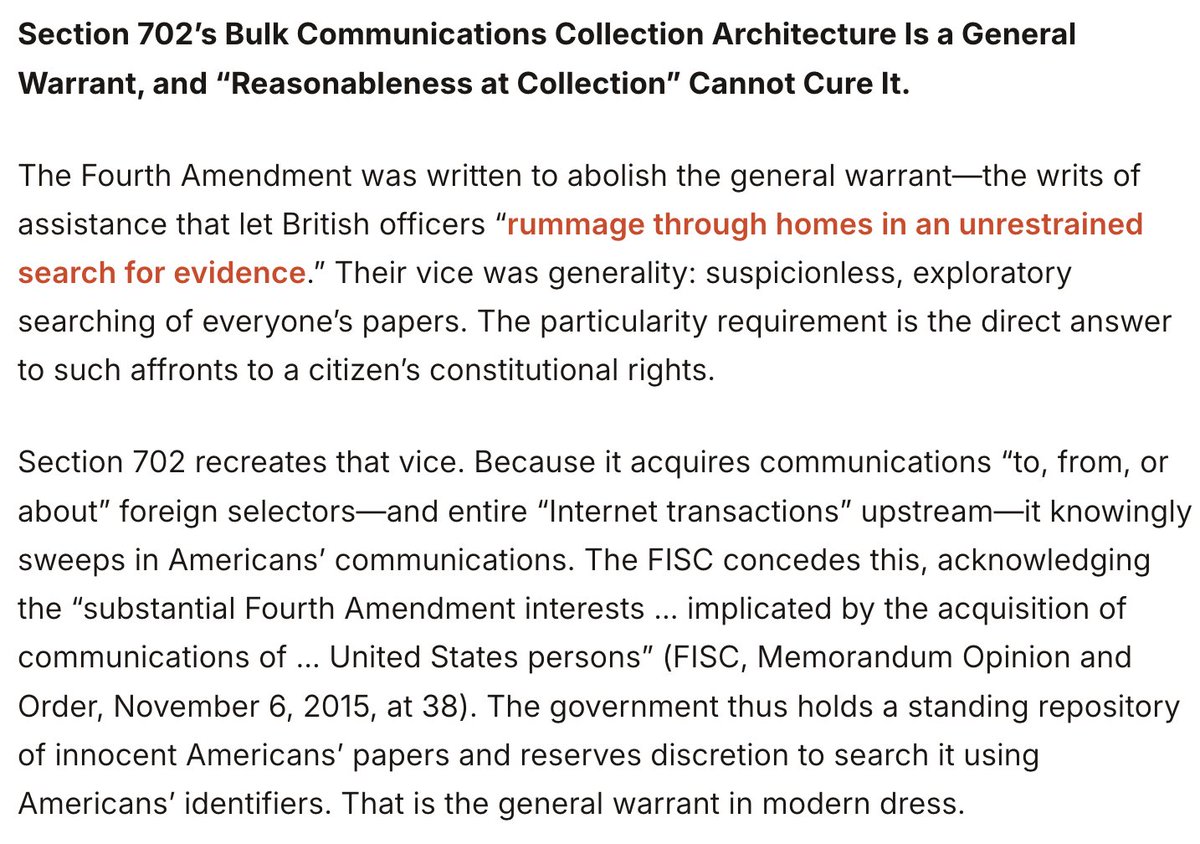

Section 702 of FISA expired. Congress shouldn't rush to renew it. reason.com/2026/06/15/congre…
6
25
2,463
Expand Liberty PAC retweeted

Jun 14
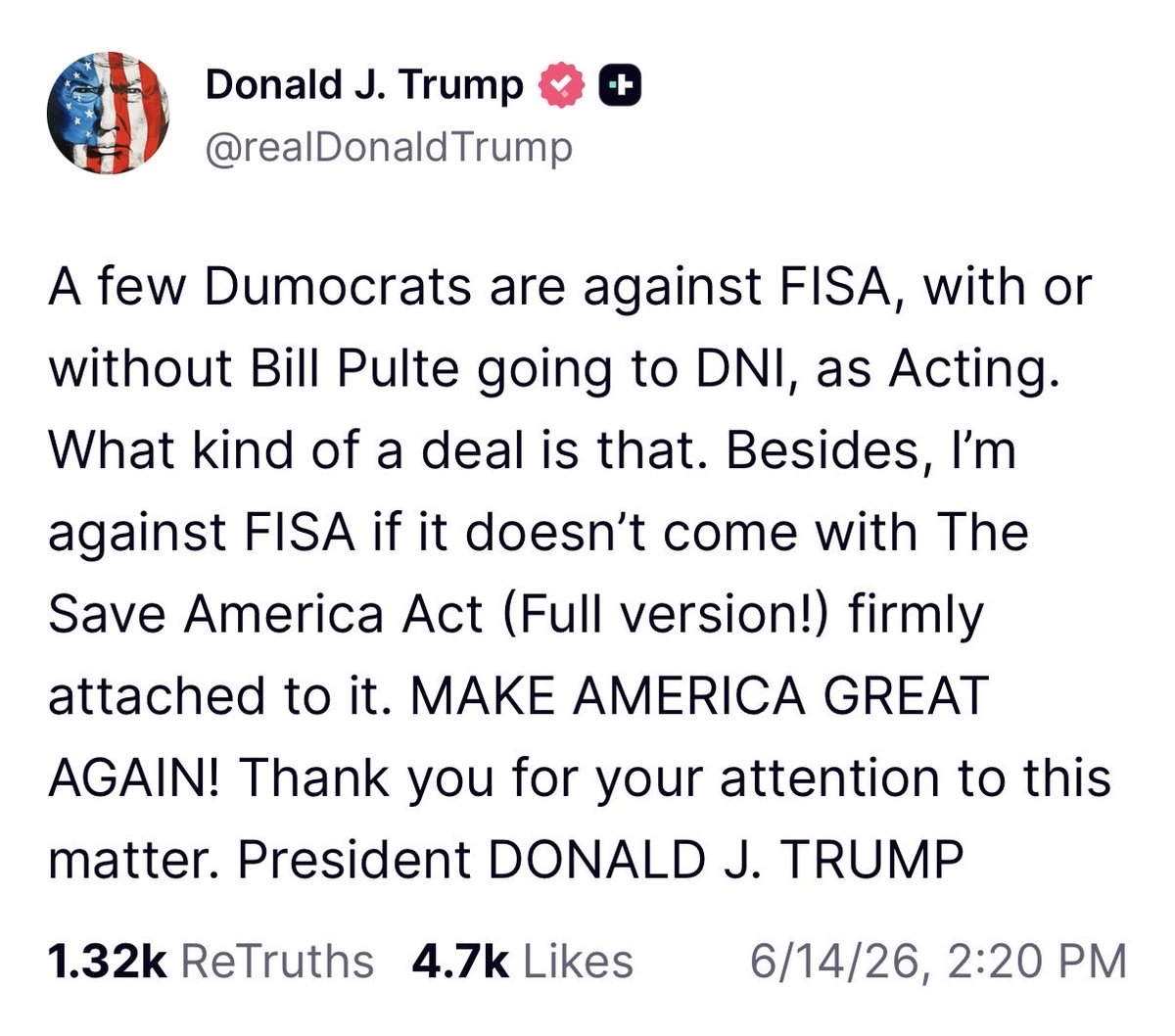
Everyone should be against FISA.
With or without Bill Pulte or the SAVE America Act.
FISA 702 is unconstitutional.
It lets the government search Americans’ communications without a warrant.
Add a warrant requirement as the Fourth Amendment demands—or leave it expired forever.
41
472
2,061
28,511
Expand Liberty PAC retweeted

CONGRESS: Vote NO on the short-term reauthorization of Section 702 and open it up for debate and add a warrant requirement!
1
7
156
Expand Liberty PAC retweeted

Jun 10
Here we go again; the House is going to debate a clean reauthorization of the unconstitutional FISA 702 program tonight.
This program is used to surveil Americans without a warrant.
I’ll be joining the @cspan debate on the floor in the next hour… in opposition to this madness.
599
4,946
25,214
349,567
Expand Liberty PAC retweeted

Jun 10
That's not correct. Section 702 was already on the ropes. It took the House three tries to pass a bill and the Senate rejected it. The only viable path to renewal is for Republican leaders to allow votes on real reforms, including a warrant requirement for backdoor searches.
Jun 10

If Trump waited one week to name pulte acting DNI, he would’ve had fisa extended.
1
11
27
2,700

Jun 10
No more short-term FISA 702 extensions. Congress has punted long enough. This isn’t hard: Require a warrant before the government can search Americans’ communications. The Fourth Amendment isn’t optional.
Jun 10

News: Senate Dem leaders just hotlined a short-term FISA 702 extension to July 2nd
1
5
16
575
Expand Liberty PAC retweeted

Jun 10
Congress must not renew FISA Section 702 without reforms to protect Americans from warrantless spying. Otherwise, “abuses of the law are not only possible, they are also inevitable,” @Lizagoitein writes in @thehill.
thehill.com/opinion/congress…
18
25
801
Requiring intelligence agencies and law enforcement to get a warrant before spying on Americans' electronic communications is "madness," says Stephen Miller. No, it's what the Fourth Amendment requires. reason.com/2026/06/08/stephe…
3
16
58
2,765
Congress has spent months trying to reauthorize FISA Section 702. This is the controversial surveillance authority the government uses to collect massive amounts of data, which officials then search for Americans’ emails, calls, text messages, and other communications – all without a warrant!
The program is currently set to expire on June 12, and last week, another effort to push a multi-year reauthorization failed in the Senate.
That’s good news. FISA 702 must not be reauthorized without meaningful reforms, and any bill that allows the government to keep searching Americans’ private communications without a warrant should be rejected.
But the debate around last week’s vote was telling.
While more senators than usual opposed the bill, it wasn’t because they suddenly recognized the constitutional problem with warrantless surveillance. Their unease stemmed largely from President Trump’s choice of Bill Pulte as acting director of national intelligence. Many who otherwise would have backed a long extension became wary once they saw who would be wielding this authority.
That reaction is understandable – especially when dealing with power that includes rummaging through Americans’ private messages.
But if your support for warrantless surveillance hinges on who holds a particular office, you’ve already proven why we need strict constitutional limits.
In our constitutional republic, individual rights are not supposed to rise and fall with election results. The Constitution, including the Fourth Amendment, was written precisely so that our liberty does not depend on trusting the men and women temporarily in power. It establishes rules meant to protect our liberty regardless of who occupies the White House, controls Congress, or leads a federal agency.
The question for Congress isn’t whether this official or that official can be trusted. It’s not about Bill Pulte. The question is whether the federal government should be allowed to search Americans’ private communications without probable cause and a warrant.
The Fourth Amendment answers clearly: No.
Congressional leaders have spent months playing games and trying to craft procedural compromises and political deals that continue to sidestep this core constitutional safeguard.
If the government wants to search our communications, then it must obtain a warrant – just as the Constitution demands.
Congress should not reauthorize FISA 702 without that fundamental protection. If it’s unwilling to provide it, then the authority should expire.
– @justinamash
P.S. With the June 12 expiration just days away, your voice matters. Please contact your representative and senators today at (202) 224-3121 and urge them:
No reauthorization of FISA Section 702 without a warrant requirement for searches of Americans’ communications.
4
27
88
6,382
Expand Liberty PAC retweeted
Jun 8
A lot of words to say he hates the Fourth Amendment.
Get a warrant!

America faces real threats from foreign adversaries, terrorists, cyber actors, and hostile intelligence services. Section 702 remains one of our nation’s most effective tools for identifying and disrupting those threats before they reach our shores.
The bipartisan Senate reauthorization strengthens both security and civil liberties by adding new safeguards, increasing transparency, expanding congressional oversight, imposing criminal penalties for misuse, and enhancing protections for Americans’ constitutional rights.
Democrats are choosing to halt action on reauthorization, undermining national security and putting politics ahead of the safety of the American people. At a time of growing threats around the world, Congress should be strengthening the tools that protect our nation—not weakening them. We call on Senator Schumer and Senator Warner to bring Senate Democrats back to the table with Senate Republicans and pass this critical piece of legislation.
Reauthorizing Section 702 is about protecting Americans’ privacy and protecting Americans’ security. We can—and must—do both.
38
691
4,479
84,443
Expand Liberty PAC retweeted
Jun 6
Under FISA 702, the government collects massive amounts of data on Americans while “targeting” foreigners overseas.
They then unconstitutionally search that data without a warrant for info on Americans.
The “libertarian demand” he’s whining about is called the Fourth Amendment.
Jun 6

FISA 702 is the authority for surveillance on foreign soil—the core of all US security. A libertarian demand to make SecWar get approval from liberal DC judges (the ones who targeted Trump) is madness. No conservative aim is ever served through subservience to leftist DC judges.
26
392
1,494
50,597

We need to stop the backdoor searches of Americans’ data and prevent the government from spying on U.S. citizens without a warrant based on probable cause.
Jun 5

Pre-dawn development: The Senate just blocked a procedural vote to renew FISA for 3 years, 52 noes to 47 yeas.
GOPers Tuberville, Rick Scott, Paul, Schmitt, Lee, Hawley and Kennedy voted nay.
The installation of Bill Pulte as Acting DNI torched a bipartisan deal on FISA. The GOP needed Dem help on this. But Pulte blew that up as Dems weren’t willing to help.
Current FISA authorization expires in a little more than a week
123
296
2,489
83,722
Expand Liberty PAC retweeted

It's purely irresponsible to let FISA 702 be reauthorized without a warrant requirement for American citizens.
That's insane.
Jun 5
Pre-dawn development: The Senate just blocked a procedural vote to renew FISA for 3 years, 52 noes to 47 yeas.
GOPers Tuberville, Rick Scott, Paul, Schmitt, Lee, Hawley and Kennedy voted nay.
The installation of Bill Pulte as Acting DNI torched a bipartisan deal on FISA. The GOP needed Dem help on this. But Pulte blew that up as Dems weren’t willing to help.
Current FISA authorization expires in a little more than a week
45
128
933
19,891
Good. The American people want real surveillance reform. Closing the backdoor search loophole is literally the least Congress could—and must—do.
Jun 5

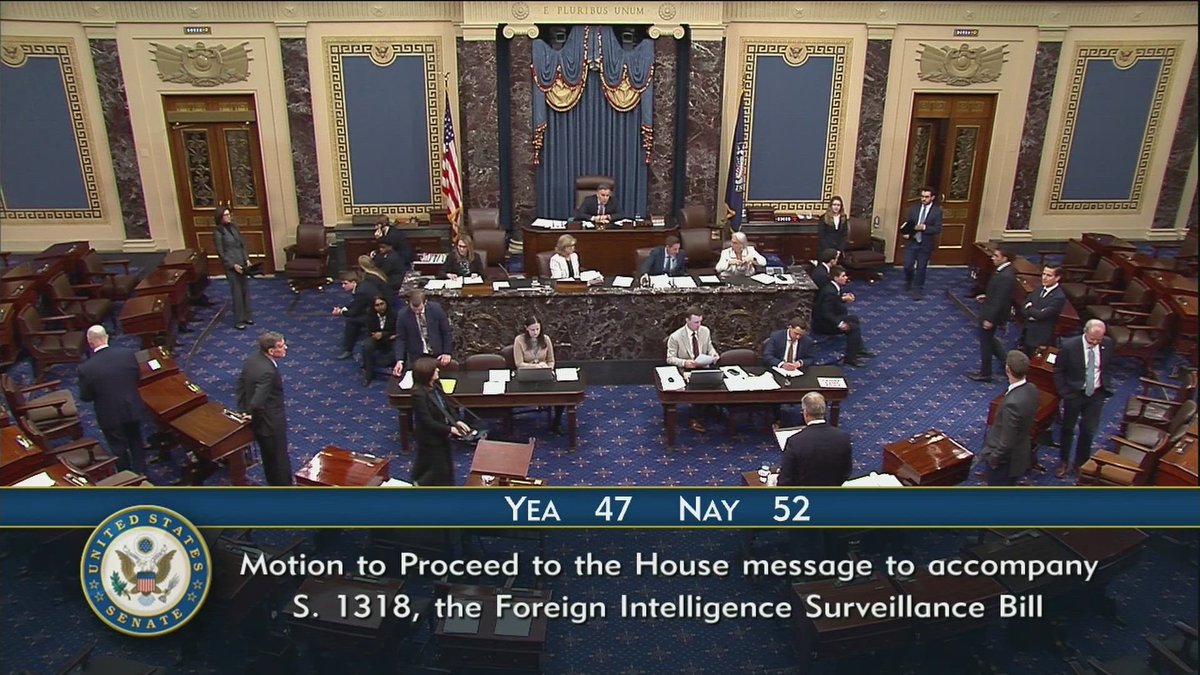
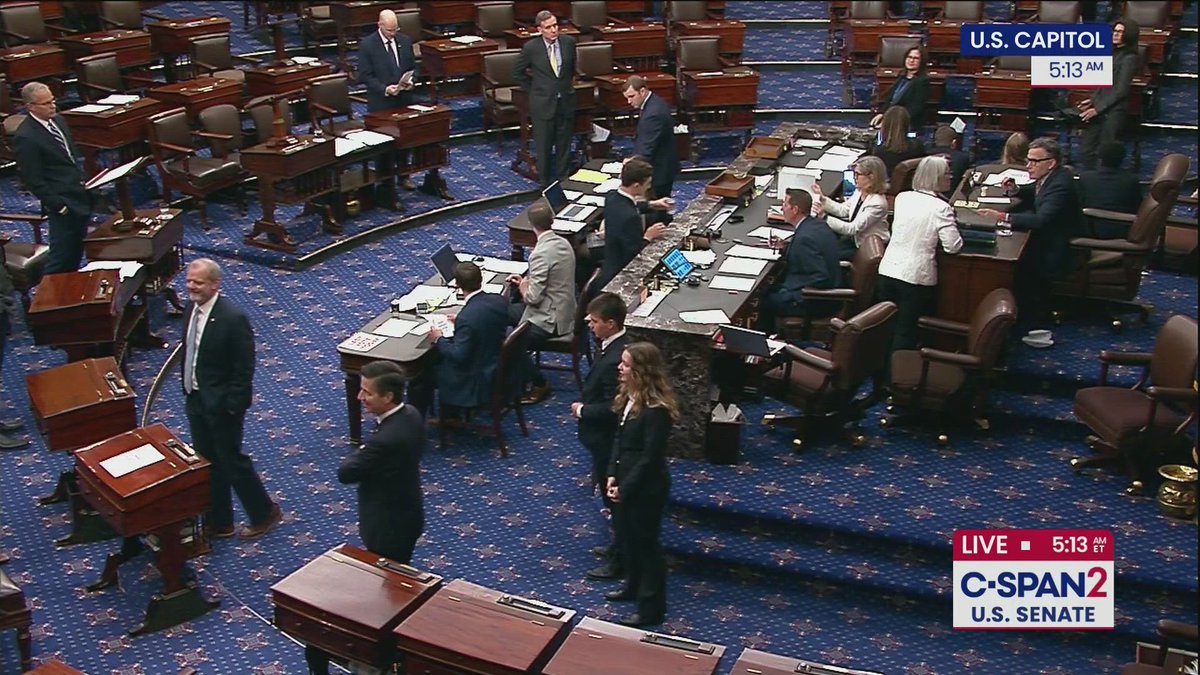
47-52: With FISA Section 702 surveillance authority set to expire June 12th, the Senate early this morning voted against beginning debate on a 3-year extension. Republicans Hawley, Kennedy, Lee, Paul, Schmitt, Scott (FL) & Tuberville voted No. Fetterman was the only Democrat to vote Yes and Bennet missed the vote. @cspan 2 senate.gov/legislative/LIS/r…
1
21
84
9,614

Here's my buddy @SeanVitka and me at @thehill: Speaker Johnson, stop playing politics with privacy rights thehill.com/opinion/congress… @iDueProcess @demandprogress
4
6
267
Don't make decisions about whether & how gov't spies on Americans based on who’s in power. There's no guarantee your guy will be on top tomorrow.
The Constitution sets rules that should help us rest easy no matter who's in charge. Just follow the Fourth Amdt. Demand a warrant.

Senate Republicans propose 3-year extension of FISA 702, the oft-abused surveillance law meant to spy on foreigners abroad but increasingly used to spy on Americans, as Trump's pick for @ODNIgov head complicates efforts to gather Democrat support.
politico.com/live-updates/20…
24
67
8,994
From @CatoInstitute's Patrick Eddington: The Fourth Amendment Forecloses a Foreign Intelligence Exception: A Brief Case Against the FISA Section 702 Program
More at the link below. ⬇️
1
9
23
4,964
Expand Liberty PAC retweeted
There is only one way senators can force leadership to permit amendment votes or otherwise negotiate: vote NO on the procedural motion that will take place in the coming days. Senators who support reform are the majority; they have real leverage. They must use it. 18/18
1
6
10
580
Expand Liberty PAC retweeted
Even more disturbing is the provision titled “Restriction on use of United States person information acquired under section 702 in criminal prosecutions.” Notwithstanding the Orwellian title, this provision actually *removes* existing restrictions on such use. 9/18
1
3
7
309