
152 Photos and videos











McDonald's announced they're replacing cashiers with kiosks in California just after the $20 minimum wage kicked in. Shocking to absolutely no one who understands basic economics. When you artificially price labor above its market value, employers find substitutes. Machines, automation, or they simply eliminate positions entirely.
The teenagers who desperately need that first job experience? Gone. The single mother trying to re-enter the workforce after years away? Priced out by someone with more skills. You've just created a legal barrier that prevents the least skilled workers from competing on the one thing they had going for them: willingness to work for less while they build experience.
Politicians pat themselves on the back for "helping workers" while unemployment among young minorities hits double digits. The workers who keep their jobs benefit (temporarily), but the invisible victims, those who never get hired in the first place, don't make headlines. Economics doesn't care about your good intentions.

2,140
2,411
10,309
983,263

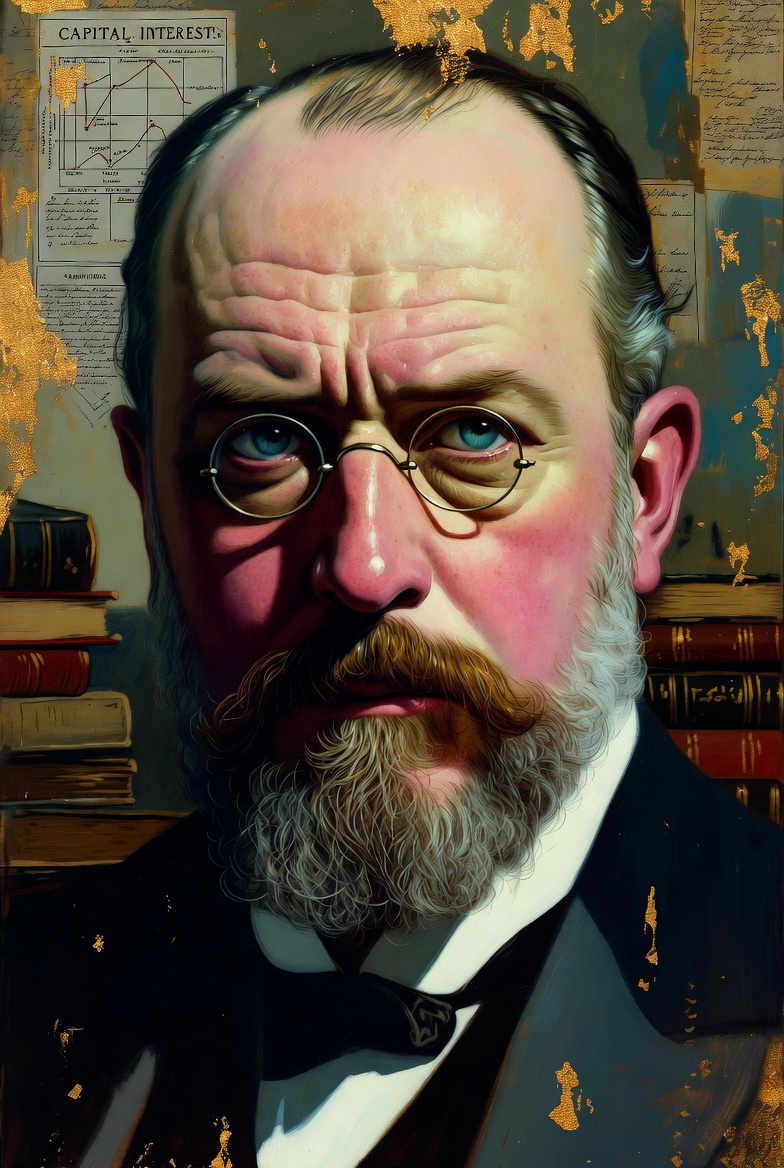
Eugen von Böhm-Bawerk: El guerrero que destrozó el marxismo desde la economía
Ministro de Finanzas del Imperio Austrohúngaro, economista y uno de los pilares de la Escuela Austríaca de Economía. Böhm-Bawerk (1851-1914) no vino a discutir con Marx. Vino a desmantelarlo.
Su obra maestra: "Capital e Interés" (1884-1889), una de las críticas más demoledoras jamás escritas al socialismo.
Teoría del capital y las rondas de producción: los bienes de capital no son solo “cosas”. Son producción en rondas (roundabout production): cuanto más tiempo se invierte en procesos productivos indirectos (herramientas, máquinas, infraestructura), más productivo es el resultado final.
Esto explica por qué las sociedades más ricas son las que ahorran e invierten a largo plazo. Marx no entendía esto: creía que el capital explotaba al trabajador.
Teoría del interés: Preferencia temporal. Böhm-Bawerk demostró que el interés no es una “explotación”, sino un fenómeno natural derivado de la preferencia temporal: los humanos valoramos más los bienes presentes que los futuros.
Queremos consumir hoy, no mañana. El interés es el precio que equilibra ahorro e inversión. Sin él, no hay capital acumulado.
“El interés no es robo. Es la recompensa por renunciar al consumo presente en favor de un mayor consumo futuro.”
En su crítica a la teoría del valor-trabajo de Marx, mostró que es imposible que el valor venga solo del trabajo. El valor es subjetivo y depende del tiempo, la escasez y las preferencias individuales.
Su análisis de la explotación marxista es tan brutal que todavía hoy los marxistas prefieren evitarlo.
Mentor de Mises, inspiración directa de Hayek y Rothbard. Demostró que el socialismo no solo falla por el cálculo económico (Mises), sino porque ignora la estructura temporal del capital y la preferencia temporal.
Böhm-Bawerk lo dejó claro: sin ahorro, sin inversión a largo plazo y sin libertad de mercado, no hay prosperidad.
Fue un economista, un estadista y un intelectual que peleó en primera línea contra el estatismo.
VLLC !
6
9
782
fonmises retweeted

Milton Friedman:
“Tell me, is there some society you know that doesn’t run on greed? You think Russia doesn’t run on greed? You think China doesn’t run on greed?”
“The world runs on individuals pursuing their separate interests. The great achievements of civilization have not come from government bureaus. Einstein didn’t construct his theory under order from a bureaucrat. Henry Ford didn’t revolutionize the automobile industry that way.”
“The only cases in which the masses have escaped from the kind of grinding poverty you’re talking about are where they have had capitalism and largely free trade.”
31
409
1,617
38,888
fonmises retweeted

Jun 10
ENTIENDE ZURDITO:
La riqueza ajena no te empobrece, lo que te roba el Estado sí.
La riqueza ajena no limita tus oportunidades, tu vagancia sí.
La riqueza ajena no te quita nada, tu falta de disciplina sí.
La riqueza ajena no impide que prosperes, tu victimismo sí.
La riqueza ajena no te condena al fracaso, tus malas decisiones sí.
La riqueza ajena no te hace pobre, rechazar las oportunidades sí.
La riqueza ajena no es el obstáculo, el obstáculo es creer que lo es.
10
54
142
2,590
fonmises retweeted

Jun 10
“No puedes ayudar a los pobres destruyendo a los ricos. No puedes fortalecer al débil debilitando al fuerte. No se puede lograr la prosperidad desalentando el ahorro. No se puede levantar al asalariado destruyendo a quien lo contrata”.
- Abraham Lincoln -

26
310
702
7,274







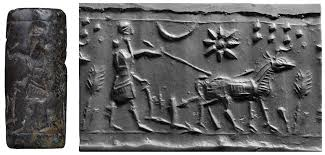
For three millennia, Mesopotamian civilizations conducted commerce using barley as their primary monetary standard, establishing the longest-running commodity money system in recorded history. From approximately 3000 BCE to the rise of silver coinage around 650 BCE, barley functioned as the unit of account, medium of exchange, and store of value across the fertile crescent. The Code of Hammurabi (1750 BCE) codified interest rates, wages, and fines in barley measures, while temple records from Kanesh document complex lending arrangements denominated in barley bushels.
This monetary system emerged through voluntary adoption. Barley possessed the essential properties of sound money: divisibility into standardized measures, durability for storage across seasons, widespread acceptability due to universal demand for food, and relative scarcity that prevented arbitrary inflation. Mesopotamian merchants developed sophisticated banking practices around barley reserves, with temples serving as depositories that issued clay tablets representing specific quantities of stored grain. These tablets circulated as money substitutes, creating an early fractional reserve banking system.
The barley standard imposed natural limits on monetary expansion that modern fiat currencies lack. Kings could not simply decree additional barley into existence; the money supply expanded only through increased agricultural productivity or territorial conquest. When Babylon's rulers attempted to manipulate weights and measures, markets responded by discounting debased barley certificates. Money evolved organically toward commodities with intrinsic value across three thousand years of sustained use.
Archaeological evidence from Nuzi and Nippur reveals that this decentralized monetary order facilitated extensive trade networks spanning from Anatolia to the Persian Gulf without requiring central banking institutions or exchange rate management. Markets determined barley's purchasing power through the interaction of supply and demand, creating price signals that allocated resources efficiently across the ancient world's first complex commercial economy.
11
33
124
3,013
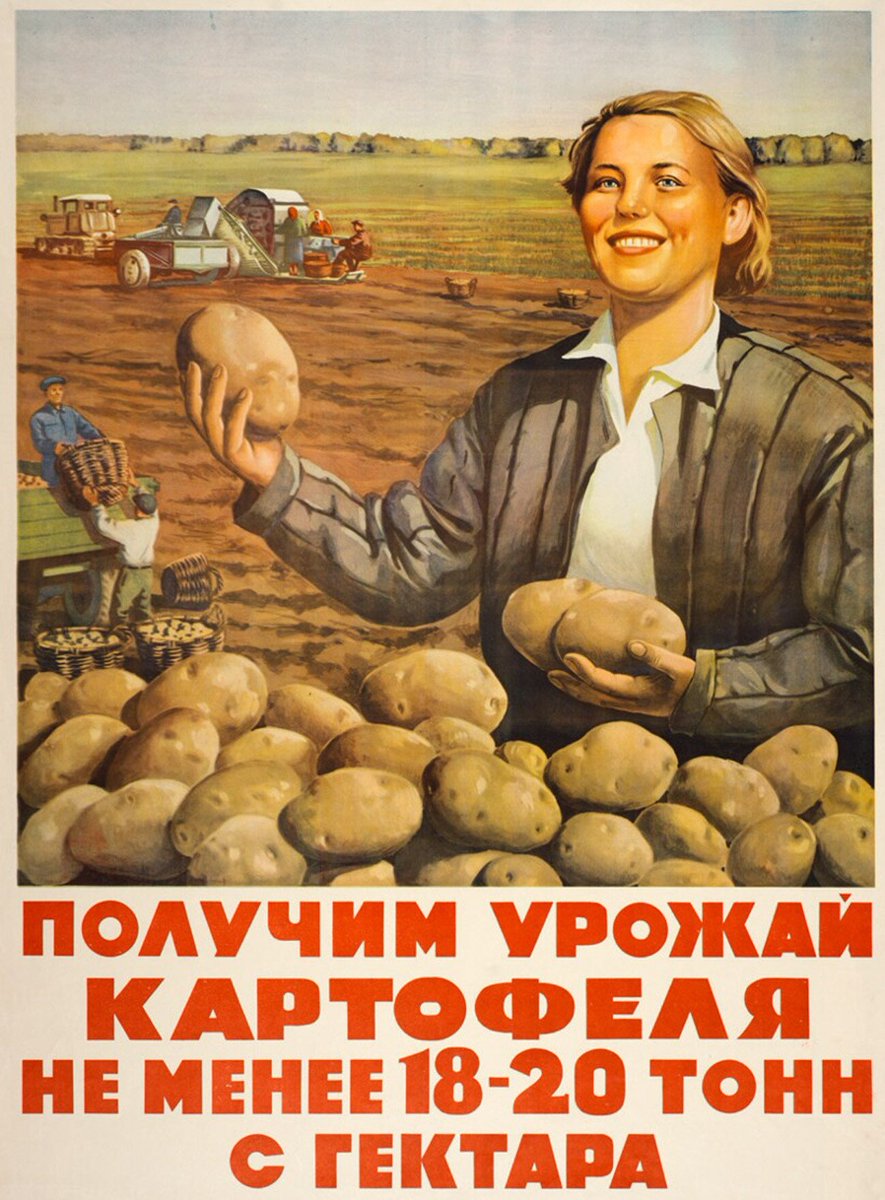
One of the most devastating indictments of socialism sits buried in Soviet agricultural statistics: private plots representing just 3% of farmland consistently produced 25-30% of the USSR's total food output. Private ownership generated output that collective ownership could not match, even at vastly smaller scale.
Picture this absurdity. A collective farm worker tends 1,000 acres of state wheat with the enthusiasm of someone filling out tax forms. The same worker then rushes home to lavish attention on his quarter-acre private vegetable patch, working until sunset to coax maximum yield from every square foot. The difference in productivity per acre often reached 10:1 ratios. Sometimes higher.
On collective farms, additional effort generated zero additional reward for the individual worker. Your extra sweat benefited the collective (meaning nobody in particular) while you bore the full cost of that effort. Workers rationally allocated their energy toward their private plots where they captured 100% of marginal returns.
Soviet planners grasped the embarrassing implications and repeatedly restricted private plot sizes and banned certain crops, fearing that obvious productivity comparisons would undermine ideological credibility. The restrictions backfired spectacularly. Every limitation on private plots worsened food shortages and strengthened black market prices.
You can dress up collective ownership in whatever intellectual framework you prefer. You can invoke solidarity, social justice, or the greater good. But you cannot escape the fundamental reality that human beings respond to incentives, and collective ownership systematically destroys the connection between individual effort and individual reward.
73
546
1,763
41,965



Incentives explain outcomes.
Milton Friedman observed that you cannot simultaneously have free immigration and a welfare state.
America’s earlier waves of immigration succeeded so well because, prior to 1914, the country maintained open borders without a welfare system.
Immigrants arrived to work, support themselves and their families, and build new lives.
Those who couldn’t succeed typically returned home.
This environment naturally selected for self-reliant individuals and fueled tremendous economic growth.
In contrast, today’s expansive welfare state, offering healthcare, education, housing assistance, and cash transfers, fundamentally alters the incentives.
When immigrants, whether legal or illegal, can immediately access these benefits, it becomes possible for some to arrive and function as net fiscal drains rather than contributors.
Friedman therefore opposed the unsustainable pairing of open borders with generous entitlements.
So it’s not paradoxical why one would support pre-1914 immigration but oppose its later version.
They are very different phenomena.
Either can work on its own, but together they generate higher taxes, social friction, and long-term strain.
34
501
1,442
28,335
fonmises retweeted

24 Oct 2025
Dos días kukitas. Dos días aguanten sin golpear, drogar, matar, violar o descuartizar a alguien por favor.
568
3,781
21,272
1,406,168


fonmises retweeted

May 26
El propio Estado es el mayor promotor de la informalidad que dice combatir.
Es lo que pasa cuando la gente común decide que el Estado no vale lo que cobra.
Cada vez que alguien factura en negro, acepta dólares, trabaja por afuera del sistema o ahorra en crypto, está haciendo contraeconomía sin saber que tiene nombre.
Samuel Konkin describió esto en los 80, la contraeconomía es el conjunto de todas las actividades económicas voluntarias que el Estado prohíbe o grava.
No es sabotaje, es simplemente gente que prefiere intercambiar sin pedir permiso.
Y el Estado, con cada impuesto nuevo, con cada regulación idiota, con cada licencia obligatoria, expande involuntariamente el tamaño de la economía informal.
Es decir, el propio Estado es el mayor promotor de la contraeconomía.
Lo irónico es que la narrativa oficial trata a la informalidad como un problema de cultura cívica.
Como si el almacenero que no entrega factura fuera un vago moral y no alguien que racionalmente calculó que las cargas impositivas hacen imposible operar en blanco con ganancia.
No es un problema ético.
Es una respuesta lógica a incentivos perversos.
Cuanto más alto el costo de cumplir con el Estado, más gente racional decide no cumplir.
La Argentina tiene casi el 50% de su fuerza laboral en el sector informal.
No porque los argentinos sean especialmente deshonestos.
Sino porque las condiciones formales hacen inviable gran parte de la actividad productiva real.
La contraeconomía no es el síntoma de un Estado débil.
Es la evidencia de un Estado que cobra demasiado por muy poco.
6
37
86
2,618