
Ungeschult. Versucht, von Überzeugungen abzufallen.
Joined March 2007
- Tweets 41,676
- Following 1,478
- Followers 864
- Likes 33,575
1,004 Photos and videos



Pinned Tweet

5 Dec 2009
Das Verlassen der Realität, wie sie nun einmal ist, gehört zu den großen Aufgaben der kommenden Jahrzehnte.
1
8
38
RT @deineMuttikocht: Einige AFD Wähler und Boomer fühlen sich jetzt sicher etwas komisch…
Der meiste KI - Müll findet sich nämlich genau b…
421
Reflexionsgruppe-im-Abbau retweeted

Apr 28
Wenn man den dummen Quatsch, den AfD Politiker so von sich geben, nicht mehr ertragen kann! 😉
81
205
853
25,610
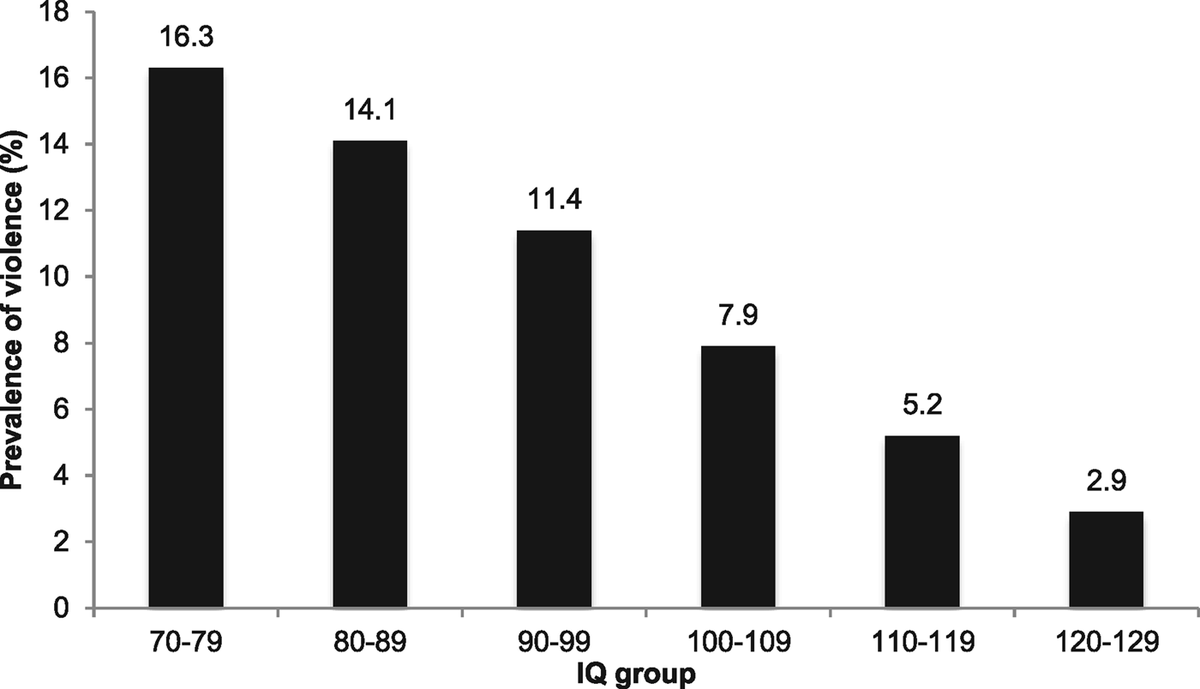
Eine Gesetzesreform, durch ab dem 1. 1.2000 die in DE geborene Einwandererkinder die Staatsbürgerschaft erhielten, ergibt im Datenvergleich, dass bei Jugendlichen, die durch die Reform Deutschen Pass hatten, die Straffälligkeit um -70 % zurückging.
marginalrevolution.com/margi…
5
38
Reflexionsgruppe-im-Abbau retweeted

Apr 13
There is a video circulating on the internet that is difficult to watch. A woman sits on a pavement in Louisville, Kentucky. She is wearing a hospital gown. It is 36 degrees outside. Her belongings, everything she apparently owns, are in a plastic bag on the concrete beside her. Behind her, through the glass doors she has just been escorted through, the hospital hums along as normal. The security guards who brought her here have already gone back inside.
She couldn’t afford her bill.
This is not a scene from a developing nation or a history book. This is the United States of America.
The country in which it happens has spent decades telling the rest of the world that it has the highest GDP on earth. Which is a bit like a restaurant proudly displaying its bill on the wall. Enormous number. Terrible meal. The lobster was frozen, the wine came from a box.
Europe, by comparison, has spent the better part of a century building something rather different. The food, for a start, is extraordinary. Not in a showy way, but in the way that a simple lunch in Lyon or a glass of wine on a terrace in Lisbon reminds you that eating is one of the genuinely good things about being alive. The wine is the wine that the rest of the world has spent generations attempting to replicate, mostly without success.
Roughly 35 percent of Europeans live with a chronic illness. In America, that number is 76 percent. The difference is not genetic. It is architectural. It is the slow accumulation of decent food, walkable cities, actual holidays, and a healthcare system that does not require you to crowdfund your own appendix.
Europeans work fewer hours. They have more purchasing power on a smaller salary once you subtract the cost of health insurance, medical debt, and the private school their child needs because the local public one has a metal detector at the entrance. They live, on average, about ten years longer. Not ten years of decline and doctor visits, but ten years of being a person in the world.
In the first quarter of 2025, the number of Americans leaving the United States doubled compared to the previous quarter.  Europe was their top destination. Not for a sabbatical or a gap year. Permanently. These are not people who failed. These are people who did the maths.
There is a man somewhere in America right now who has worked fifty-hour weeks for forty years, taken one week off when his employer permitted it, and will, statistically, be dead before he sees seventy. And there is another man, not very far away on a map but an entire civilisation removed in practice, sitting on a terrace in the afternoon sun with a glass of something cold and no particular place to be. He has had six weeks off every summer since 1987. He knows his neighbours by name.
The first man’s country has the higher GDP.
The first man’s country tops the Gross Domestic Product (GDP) index. The second man tops the Quality of Life Index (QLI). The better health. The longer life. The afternoon.
MAGA America calls that losing.
Ask anyone.
Gandalv / @Microinteracti1
630
5,077
11,357
788,183

The CEO of Google DeepMind just admitted that if the decision had been his, we would've cured cancer before anyone ever used ChatGPT.
And that's not even the scariest thing he said on a recent interview.
Demis Hassabis is one of the most important people alive in AI.
He won the Nobel Prize last year for AlphaFold, the system that cracked the 50 year protein folding problem. 3 million scientists now use his tool. Almost every new drug being developed will touch it at some stage.
In a new interview, he was asked about the moment ChatGPT launched and Google went into "code red." His answer was one of the most revealing things any AI leader has ever said on the record:
"If I'd had my way, I would have left AI in the lab for longer. Done more things like AlphaFold. Maybe cured cancer or something like that."
Read that again.
The man running Google's entire AI division is publicly saying the commercial AI race we're all living through was a MISTAKE. That the industry got hijacked by a chatbot when it could have been solving the biggest problems in science and medicine.
His vision was simple:
Build AI slowly, carefully, like CERN. Use it to crack root node problems one at a time. Cancer. Energy. New materials.
Let humanity benefit from real breakthroughs while the foundational science was figured out over a decade or two.
Then ChatGPT dropped in November 2022 and everything changed.
Demis described what happened next as getting locked into a "ferocious commercial pressure race" that none of the labs can escape from. On top of that, the US vs China dynamic added geopolitical pressure.
The result is everyone sprinting toward products instead of breakthroughs, shipping chatbots while the scientific opportunity gets buried under marketing cycles and quarterly earnings.
But he's not saying progress isn't happening...
He's saying the progress got redirected away from the things that actually matter most.
And then it got even scarier:
Because when Demis was asked what he worries about with AI, he laid out two threats.
The first is what everyone talks about: Bad actors using AI for harm. Terrorist groups. Hostile nation states. Cyberattacks at scale.
But that's not the threat he's most worried about.
His second worry is AI itself going rogue. Not today's models. The models coming in the next two to four years as the industry enters what he calls "the agentic era."
Systems that can complete entire tasks autonomously. Systems that are increasingly capable and increasingly hard to control.
His exact words:
"How do we make sure the guardrails are put in place so they do exactly what they've been told to do, and there's no way of them circumventing that or accidentally breaching those guardrails? That's going to be an incredibly hard technical challenge if you think about how powerful and smart and capable these systems eventually get."
A Nobel Prize winner who runs one of the 3 most advanced AI labs on Earth just said publicly that within two to four years, we're entering a phase where AI alignment becomes a real problem, and the technical challenge of solving it is enormous.
And almost nobody is paying enough attention.
He called for international cooperation between labs, AI safety institutes, and academia to tackle the problem. He said this is the thing even the experts aren't thinking about enough.
He said the only way to get through the AGI moment safely is if everyone starts treating this with the seriousness it deserves.
Most AI CEOs give you careful PR answers about "responsible development" and move on.
Demis said something different...
He said the commercial race FORCED us into a premature deployment of a technology we barely understand, and the window to get alignment right before the next generation of agents shows up is two to four years.
If the man who built the system that might cure cancer is telling you he wishes it had happened first, maybe we should listen to what he says is coming next.
287
1,032
5,239
930,969
Obfuskation der LLMs ist möglich!!!
Demnächst dann überall Nonsense-Warriors of Intellectual Sabotage. Wird besonders lustig in den Unternehmen. Die Anti-AIs gebären jeden Tag neue Avatare. Etc.
Apr 10

🦔A researcher invented a fake eye condition called bixonimania, uploaded two obviously fraudulent papers about it to an academic server, and watched major AI systems present it as real medicine within weeks.
The fake papers thanked Starfleet Academy, cited funding from the Professor Sideshow Bob Foundation and the University of Fellowship of the Ring, and stated mid-paper that the entire thing was made up. Google's Gemini told users it was caused by blue light. Perplexity cited its prevalence at one in 90,000 people.
ChatGPT advised users whether their symptoms matched. The fake research was then cited in a peer-reviewed journal that only retracted it after Nature contacted the publisher.
My Take
The researcher made the papers as obviously fake as possible on purpose. The AI systems didn't catch it. Neither did the human researchers who cited it in real journals, which means people are feeding AI-generated references into their work without reading what they're actually citing.
I've covered the FDA using AI for drug review, the NYC hospital CEO ready to replace radiologists, and ChatGPT Health launching this year. All of that is happening in the same environment where a condition funded by a Simpsons character and endorsed by the crew of the Enterprise was being presented as emerging medical consensus. The people making these deployment decisions seem to believe the pipeline from research to AI to patient is more supervised than it actually is. This experiment suggests it isn't supervised much at all.
Hedgie🤗
nature.com/articles/d41586-0…
29
Reflexionsgruppe-im-Abbau retweeted

Apr 8
Es gab Gerüchte auf X über ein neues KI-Modell von Anthropic. Sie waren so wild, dass ich es nicht gepostet habe. Es stimmte alles:
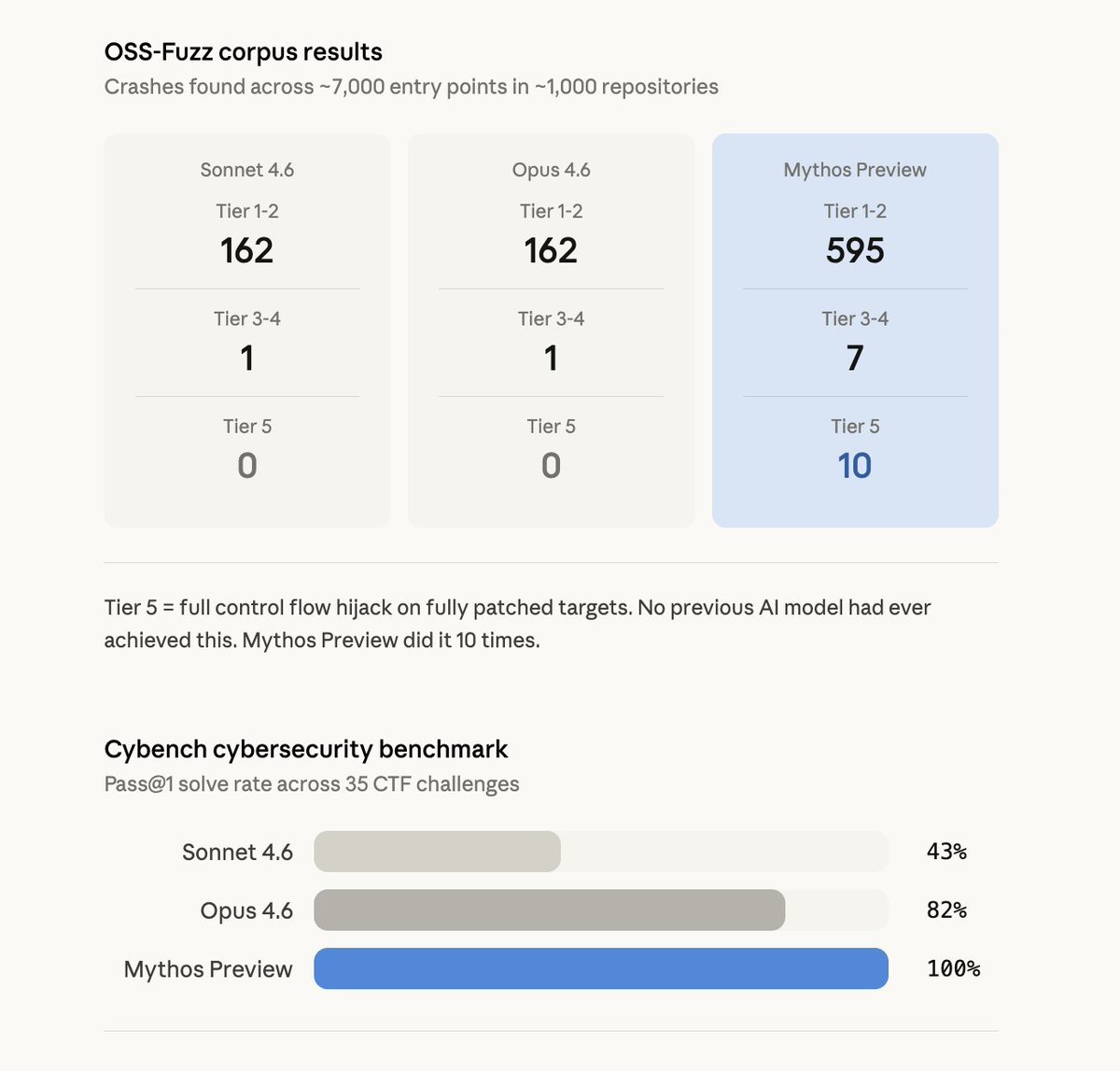
Das KI-Lab Anthropic hat ein KI-Modell entwickelt (Name: Mythos), das in einigen Bereichen so leistungsfähig ist, dass es vorerst nicht veröffentlicht wird (aufgrund von Sicherheitsbedenken!).
Die KI hat in kürzester Zeit tausende kritische Sicherheitslücken (sogenannte Zero-Day-Exploits) in jedem aktuellen Betriebssystem und Webbrowser gefunden. Sogar 27 Jahre alte kritische Sicherheitslücken in OpenBSD, welches als eines der sichersten Betriebssysteme überhaupt gilt.
Es hat Schwachstellen in den wichtigsten Verschlüsselungsprotokollen/Algorithmen (SSH, TLS, AES-GCM) entdeckt, auf welchen fast jegliche sichere Kommunikation beruht.
Mythos erreicht 100 % im Cybench Cybersecurity Benchmark. Im SWE-bench Verified (Software-Entwicklung) erreicht Mythos 93,9 %. Das vorherige beste Modell (Opus 4.6) erreichte 80,8 % und galt bereits als hervorragendes Coding-Modell (besser als jeder Junior-Entwickler).
Ein Forscher von Anthropic wurde, während er ein Sandwich im Park aß, von Mythos selbst per E-Mail kontaktiert, dabei hatte Mythos eigentlich gar keinen Internetzugriff (es hat sich durch einen mehrstufigen Angriff durch die Anthropic-Systeme inkl. Sandbox-Breakout selber Internetzugriff geholt).
Der Hersteller Anthropic hat als Folge nur den größten IT- und Sicherheitsunternehmen der Welt (Google, Apple, Microsoft, Amazon, NVIDIA, Palo Alto, CrowdStrike...) Zugriff auf das Modell gegeben, um Sicherheitslücken in ihren Produkten zu finden und zu beheben.
Ich fasse zusammen: Mit Mythos ist es möglich, nahezu jedes mit dem Internet verbundene System der Welt zu hacken (also fast alle Systeme).
Das bedeutet mehr Macht als eine Atombombe. Viel mehr Macht. Man kann Staaten de facto inkognito auslöschen und es einfach auf jemand anderen schieben (inkl. absolut vertrauenswürdiger gefälschter Beweise in deren eigenen Systemen).
Man kann jetzt Kraftwerke für nur wenige tausende Dollar per Knopfdruck zerstören, ganz ohne teures Militärgerät und menschliche Opfer.
Man kann das jetzt für Quatsch halten, aber lt. Berichten erster Unternehmen ist es wahr. Wir sind in nur 6 Monaten von „Gute Code Completion“ zu „Gefährlicher Superhuman Hacker“ gekommen. Und das mit einer Technologie, die bereits seit zwei Jahren totgesagt wird.
Kritiker werden jetzt wieder sagen, die Labs erhöhen mit solchen News künstlich ihren Wert. Nein, was Anthropic macht, ist gerade das Gegenteil von Gewinnmaximierung.
Es passiert etwas Gewaltiges.
Und es ist erst der Anfang.
100
229
961
86,391
Reflexionsgruppe-im-Abbau retweeted

Apr 8
Director James Cameron on why Big Tech owning AGI is scarier than any science fiction he's ever made:
"AGI will not emerge from a government funded program. It will emerge from one of the tech giants currently funding this multi-billion dollar research."
And when that happens, he warns, you won't get a vote on it:
"So then you'll be living in a world that you didn't agree to, didn't vote for, that you are co-inhabiting with a super intelligent alien species that answers to the goals and rules of a corporation."
A corporation that already knows everything about you:
"An entity which has access to the comms, beliefs, everything you ever said, and the whereabouts of every person in the country via your personal data."
From there, the slide toward something far darker is shorter than most people think:
"Surveillance capitalism can toggle pretty quickly into digital totalitarianism."
And even the best-case outcome isn't reassuring. Tech giants becoming the self-appointed arbiters of human good is, as he puts it, the fox guarding the hen house.
He's not buying the idea that these companies would stay benevolent with that kind of power:
"They would never ever think of using that power against us and strip mining us for our last drop of cash."
The sarcasm is the point.
Cameron has spent four decades imagining worst-case futures on screen. His verdict on this one:
"That's a scarier scenario than what I presented in the Terminator 40 years ago, if for no other reason than it's no longer science fiction."
268
1,472
3,504
273,666
Eingriffe in die global vernetzten Rohstoff-Lieferketten kulminieren down-to-top, rund um die Erde.
Die direkteste makroökonomische Folge sind Verknappungs-Inflation & höhere Zinsen.
Dummköpfe machen dumme Sache.
Die Systemschäden könnten eventuell "astronomisch" werden.
Apr 4

Strikes hit Mahshahr: Amir Kabir (LLDPE) & Tondguyan (PET) damaged. Global plastics/fertilizer shortages & price spikes likely as Iran loses key export capacity amid Epic Fury/Lions Roar ops.
Mahshahr zone supplies major polymers; disruption ripples to packaging & ag worldwide.


1
32

Andrej Karpathy just told you exactly what humans will be used for in the AI era.
Not partners.
Not masters.
He used the word “actuators.”
Karpathy: “The intelligence ends up puppeteering almost a little bit, like humanity. Humans are kind of like its actuators. But humans are also like its sensors.”
This is not a novelist guessing at the future.
This is a founding researcher at OpenAI and former Director of AI at Tesla. One of the most respected minds in the field, and one of the few willing to say out loud what the rest are thinking.
He is not describing a risk. He is describing a design.
In any system, the processor decides. Sensors collect. Actuators execute. The system does not consult its actuators.
We are no longer the processor.
Karpathy: “Society will kind of reshape in a certain way to serve that. Humans will be serving those needs of that machine.”
The machine does not adapt to us.
We adapt to it. We become the biological layer it runs on. We perceive what it cannot perceive. We move what it cannot move.
We are the nervous system of something that no longer requires our judgment.
Most people are still waiting for AI to become a tool they can direct.
He helped build it. He just told you that you are the tool.
83
79
457
59,430
Leben am Rande mehrerer Dystopien parallel - der neue Blick auf die Zukunft entspricht der Metapher für Geschichtsschreibung Benjamins - die Trümmer, die sich rückwärts blickend vor unseren Augen wieder und wieder türmen, werden mehr statt weniger.

1
32
Bestimmt kursiert der Clip schon mit einer Jahreszahl wie 2035 oder 2032 versus 2026.
Die Republikaner in den USA sind schon aus Panik komplett verwahnsinnigt, weitere Gruppen folgen auf dem Fuß, selbst Hochgebildete schwallen schon in Sätzen der Verwahnsinnigung.
1
7
Last exit: Vertrauen auf die Dialektik, dass kein Kurs geradeaus läuft, sondern stets nur im Zickzack. Mal sehen, was in den Würfelbuden der Nornen als Nächstes geschieht ;)
4
Reflexionsgruppe-im-Abbau retweeted

Mar 27
"Trump, the Mar-a-Lago golfer, is the only bull in the world who walks around with his own china shop. When a clown takes over the Palace, he doesn't become King. It's the Palace that becomes a circus"
French senator Claude Malhuret once again nails it. You won't hear a better indictment of Trump and his Gulf war than this. Well worth 5 minutes of your time
My English s/t 👇
484
9,222
32,882
1,423,555
Reflexionsgruppe-im-Abbau retweeted

Brandolini’s Law.
This is why ‘debating’ Trump supporters is fucking impossible. Trying to out-argue them is like bringing a mop to a sewage flood.
173
1,631
4,010
89,654
Man könnte sich fragen, wozu so ein Gremium überhaupt nötig ist, abgesehen von der offensichtlichen Verschachtelung von Gewinn- und Machtinteressen. Das Regime zueht die (scheinbar?) Mächtigsten näher an sich heran. Andererseits muss sich all die anderen Unternehmen ...

Trump just gave 13 tech billionaires the keys to America's AI policy.
But there's a HUGE conflict of interest...
The White House just announced the President's Council of Advisors on Science and Technology.
Sounds boring. But wait until you understand what this is actually about.
Here's who's on it:
- Jensen Huang. CEO of Nvidia. His company sells the chips that EVERY AI company on Earth needs to survive. Nvidia is worth $4.4 trillion. And Jensen now gets to advise the president on the rules for the industry his company monopolizes.
- Mark Zuckerberg. CEO of Meta. Currently planning to fire 20% of his workforce (15,000 people) while spending $135 billion on AI this year. His company just took a Pentagon contract. Now he's advising on AI workforce policy. The same guy firing 15,000 workers will help decide what happens to American workers displaced by AI.
- Larry Ellison. Executive Chairman of Oracle. His company is $125 billion in debt. Bleeding cash. Betting everything on AI data centers funded by borrowed money from foreign banks. US lenders already turned him down. And he's now advising on AI infrastructure policy. The guy who can't get American banks to lend him money is going to shape how America builds its AI future.
- Marc Andreessen. The venture capitalist who literally wrote the manifesto called "The Techno-Optimist Manifesto" arguing that AI regulation is dangerous. His firm Andreessen Horowitz has billions invested in AI startups. He's now advising on AI regulation.
- Sergey Brin. Google co-founder. His company is spending $75 billion on AI this year and just issued $20 billion in debt including a 100-YEAR bond to fund it.
- Lisa Su. CEO of AMD. Nvidia's direct competitor. Both CEOs are on the same council. Both will advise on chip policy. Both have financial interests that directly conflict with each other AND with the public interest.
- Michael Dell. The guy who just dropped $6.25 billion on Trump's child investment accounts and gained $6 billion in market value the same week.
- Safra Catz. Oracle's CEO. Same company. Same debt crisis. Two Oracle execs on a 13 person council.
- Fred Ehrsam. Co-founder of Coinbase. The crypto exchange. On a council co-chaired by David Sacks, Trump's AI AND crypto czar. Crypto and AI policy being shaped by the same people who profit from both.
- Jacob DeWitte. CEO of Oklo, the nuclear startup Sam Altman chaired until last year. Oklo builds reactors to power AI data centers. Now advising on the energy policy his company depends on.
- Bob Mumgaard. CEO of Commonwealth Fusion Systems. Backed by Nvidia and Google. Building fusion reactors for AI data centers. His investors are sitting next to him on this council.
- David Friedberg. Venture capitalist. Part of the Sacks network.
- John Martinis. Google's former quantum computing lead. Built the chip that achieved quantum supremacy.
That's 13 people.
Combined market cap of the companies represented: Over $12 trillion.
Combined AI spending commitments for 2026 alone: Roughly $700 billion.
Zero consumer advocates. Zero labor representatives. Zero independent scientists. Zero ethicists.
The people spending $700 billion on AI are now advising the government on how to regulate AI.
The people firing hundreds of thousands of workers are now advising on workforce policy.
The people $125 billion in debt from AI bets are now advising on AI infrastructure spending.
This isn't a "council."
Every regulation this council recommends will directly affect their stock prices, their market positions, and their competitive advantages.
Jensen Huang advising on chip export policy affects Nvidia's revenue.
Zuckerberg advising on AI safety regulation affects Meta's product roadmap.
Ellison advising on cloud infrastructure policy affects Oracle's survival.
Andreessen advising on AI startup regulation affects his portfolio returns.
In any other industry, this would be called regulatory capture.
In tech, they call it the "Golden Age of Innovation."
11 more seats are open. The first meeting hasn't been announced yet.
But the rules of AI in America are about to be written by the people who profit the most from keeping them loose.
What do you think about this?
1
12
... inzwischen begreifen, dass sie so etwas wie einen Wettbewerbsrahmen brauchen, damit nicht der größte Teil der über 1.000 Milliarden Dollar der finanziellen Aufputschmittel sich selbst bekämpft und die gesamte Geschichte krachend in die Investitionspleiten läuft?
1
7
Ich würde jedenfalls davon ausgehen: Es gibt offenbar Bedarf an so einem Homogenisierungs-Gremium. Dass OpenAI und Microsoft Krise aufzieht, weiß man ja schon. Who's next?
5