
Leading Futurist, keynotes advise startups CEO Institute for Global Futures, Partner Green Capital Ex Apple Top10 AI/Tech/Env Future Smart book
Joined July 2008
- Tweets 26,493
- Following 22,486
- Followers 44,602
- Likes 4,890
486 Photos and videos












Dr. James Canton retweeted

Jun 10
🚨 SCIENTISTS HAVE PROVEN THAT QUANTUM MEMORY CAN STORE INFORMATION IN A WAY CLASSICAL COMPUTERS NEVER CAN.
Researchers at the University of Tokyo have shown that quantum memory can significantly outperform any classical strategy when storing and later retrieving certain types of unknown quantum operations, known as isometry channels.
In their experiment, the team compared two approaches:
A classical strategy, where the unknown operation is estimated and stored as classical information.
A quantum strategy, where the operation is stored directly as a quantum state without fully identifying it.
The quantum approach, based on port-based teleportation, achieved a quadratic improvement over the best possible classical method. This means it requires far fewer uses of the unknown operation to achieve the same level of performance.
Why this matters:
• Most previous demonstrations of quantum advantage in storage tasks were limited to specific cases (like unitary operations), where classical methods were already optimal.
• This work provides rigorous evidence of a quantum advantage for a broader and more practical class of quantum operations.
• It shows that quantum memory can preserve information about quantum processes in ways that classical memory fundamentally cannot.
• The technique could eventually support more efficient quantum computing protocols and privacy-preserving quantum operations.
The deeper implication:
This result strengthens the case that quantum memory is not just a theoretical curiosity, but a genuinely more powerful resource than classical memory for certain tasks involving unknown quantum operations. As quantum technologies scale, advantages like this could become important for building more efficient quantum processors and communication systems.
Follow for more frontier quantum computing and quantum information research.
3
20
94
5,253
Dr. James Canton retweeted
Jun 10
🚨 SCIENTISTS JUST DOSED THE FIRST PATIENT IN A TRIAL TO REVERSE CELLULAR AGING IN THE HUMAN EYE.
Life Biosciences has begun an FDA-approved clinical trial using cellular reprogramming to regenerate aging neurons in the optic nerve of glaucoma patients.
Instead of just slowing vision loss, the goal is to actually reverse aspects of cellular aging in the eye essentially trying to make old nerve cells young again.
Why this matters:
• Glaucoma is one of the leading causes of irreversible blindness worldwide, caused by damage to the optic nerve
• Current treatments can only slow progression they cannot regenerate lost vision
• This approach uses partial cellular reprogramming (a controlled form of turning back the biological clock)
• If successful, it could open the door to treating many other age-related neurodegenerative diseases
The deeper implication is enormous:
We may be entering an era where aging itself becomes treatable not just its symptoms. If we can safely reprogram cells in the eye, the same technology could eventually be applied to the brain, spine, and other organs.
The first patient has now been dosed. This is no longer just theory.
What do you think are we ready to start treating aging as a medical condition?
Follow for more frontier science and longevity breakthroughs.
30
300
1,168
50,069
Dr. James Canton retweeted

Boston Dynamics recently showcased Atlas performing a powerful backflip with remarkable precision.
The robot landed cleanly on its toes and immediately launched into a second backflip.
This advanced capability is powered by a whole-body learning system developed by the RAI Institute and deployed by Boston Dynamics.
70
215
970
76,960

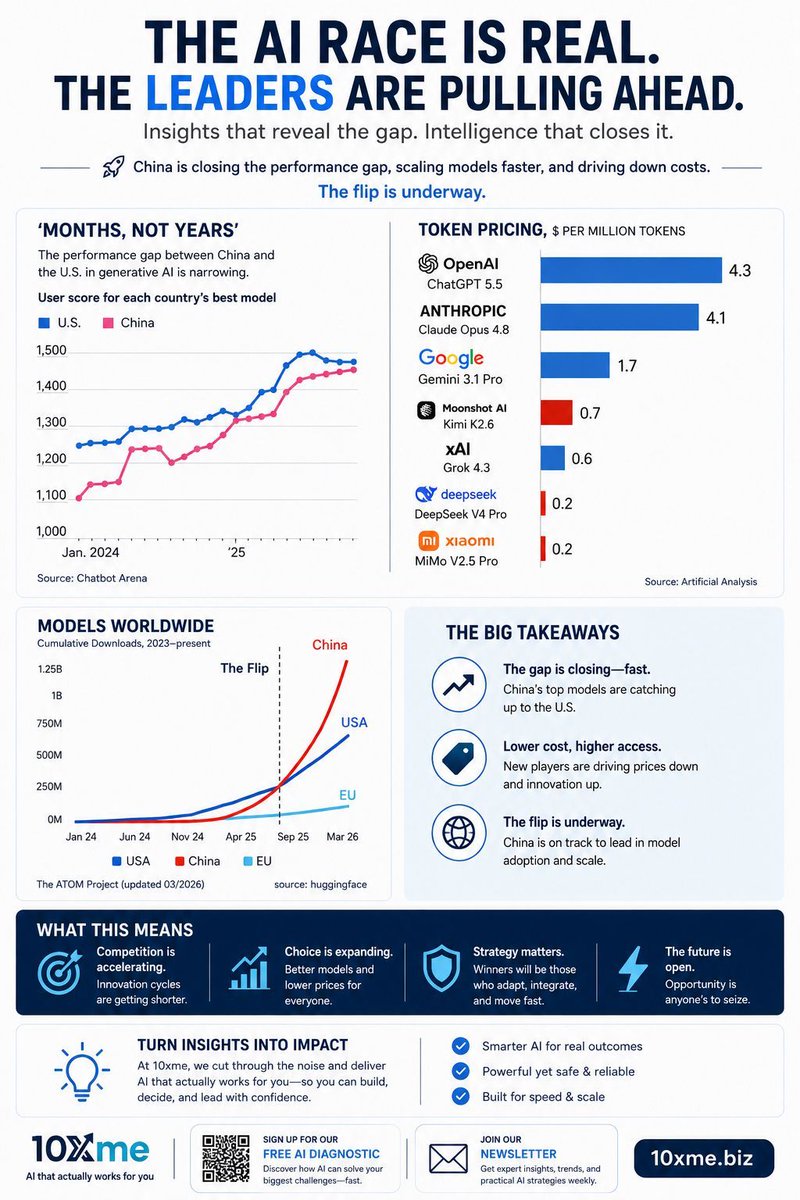
The AI race is real.
The window of advantage is closing.
Every month, models get smarter.
Every month, costs get lower.
Every month, disruption accelerates.
Most people are focused on which AI model is best today.
They’re asking the wrong question.
The real question is:
What happens when frontier AI becomes a commodity?
For years, the U.S. held a significant lead in generative AI.
Today, that gap is shrinking rapidly.
📈 China’s top AI models are catching up in capability.
📉 Model costs are collapsing.
🌎 Adoption is accelerating worldwide.
The winners won’t necessarily be the companies building the largest models.
The winners will be the organizations and individuals who learn how to apply AI faster than everyone else.
History has shown this repeatedly:
* The biggest opportunity wasn’t the invention of electricity.
* It was what businesses built with it.
* It wasn’t the internet itself.
* It was the companies that leveraged it to transform industries.
AI is following the same path.
As models become more powerful, cheaper, and more accessible, the competitive advantage shifts from technology ownership to technology execution.
The question is no longer:
❌ “Which model should I use?”
The question is:
✅ “How do I redesign my business, career, and workflows around AI?”
Those who adapt early will compound their advantage.
Those who wait may find themselves competing against people who are operating at 10x speed, 10x scale, and 10x efficiency.
The AI race is no longer about countries.
It’s about capability.
It’s about execution.
And it’s about who learns fastest.
What do you think?
Will AI become a commodity like cloud computing, or will a handful of frontier labs continue to dominate the future?
1
7
14
717
Dr. James Canton retweeted

Jun 10
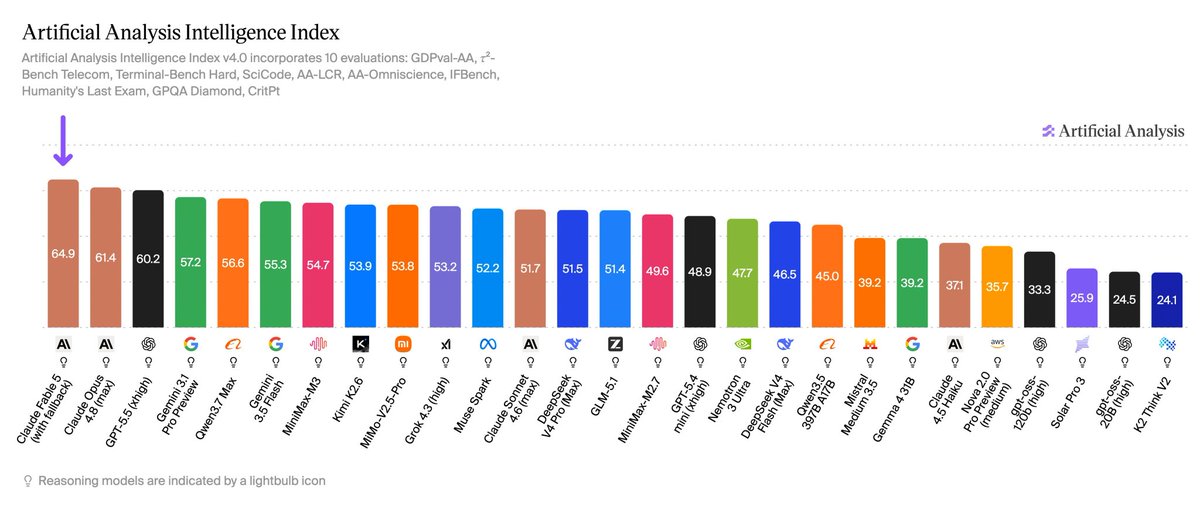
Anthropic's new Mythos 5 and Fable 5 models just changed the AI game 👀
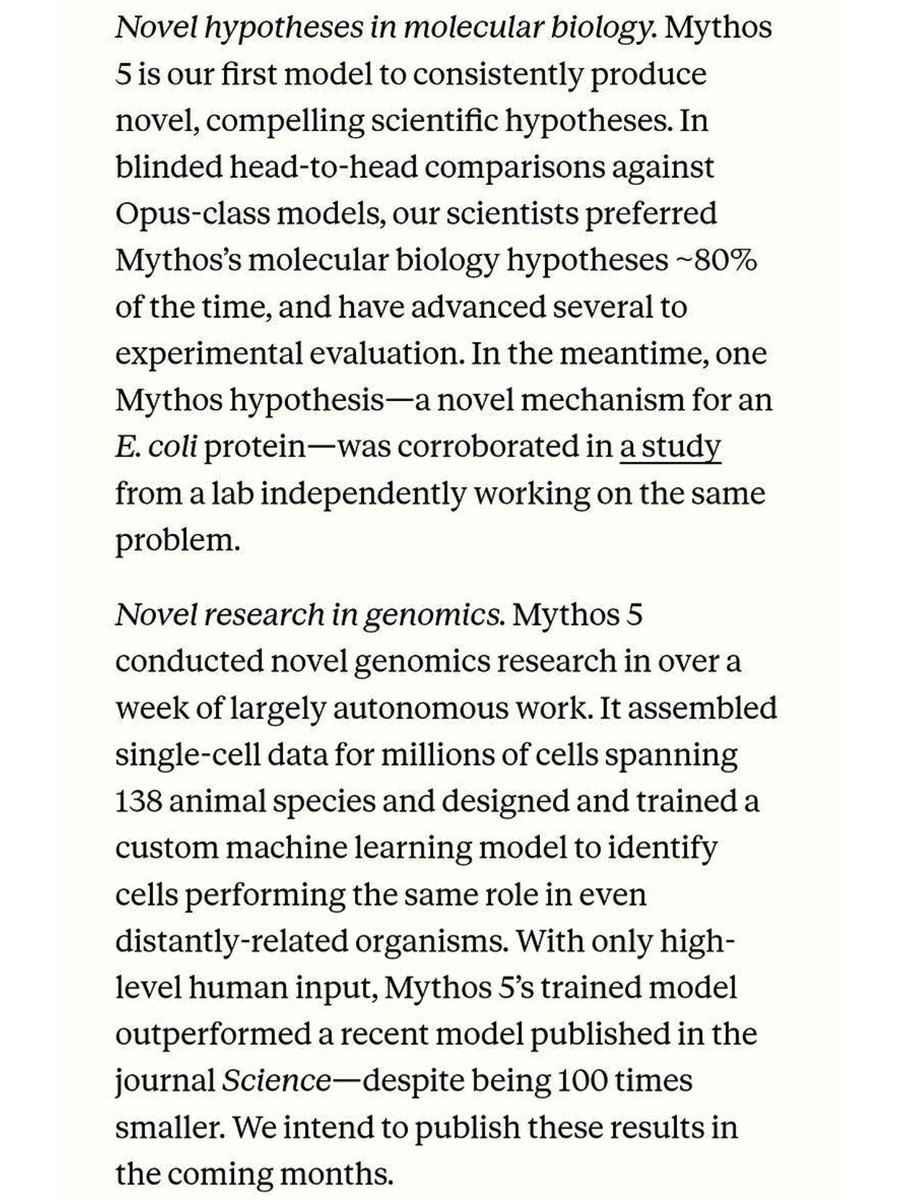
Now, Mythos 5 can generate novel molecular biology hypotheses, with scientists preferring its ideas 80% of the time over Opus-class models. One of its hypotheses about an E. coli protein was later supported by independent research.
Even more remarkable, Mythos 5 reportedly spent over a week conducting largely autonomous genomics research, analyzing data from millions of cells across 138 animal species, and building a custom model that outperformed a recently published system despite being 100× smaller.
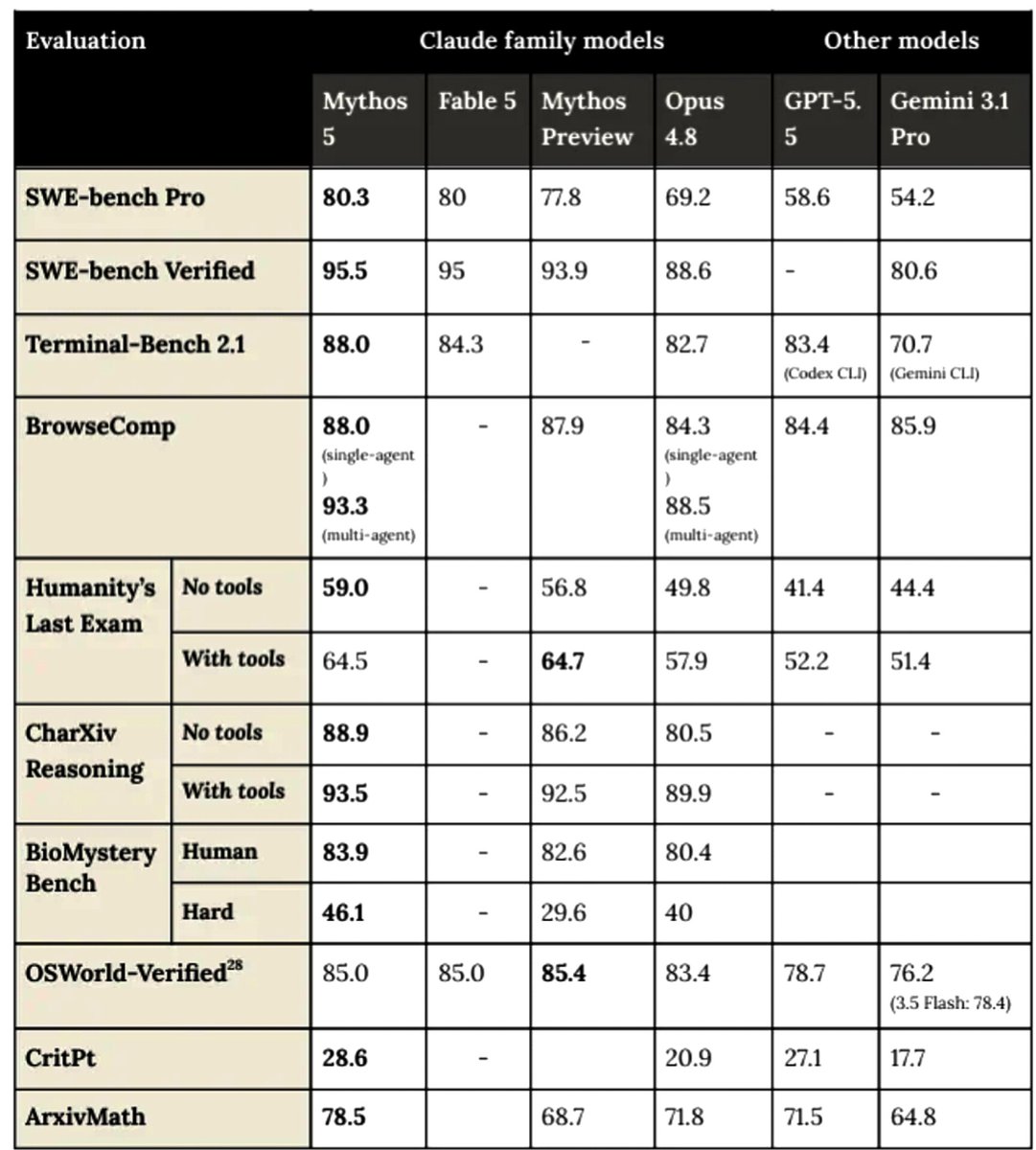
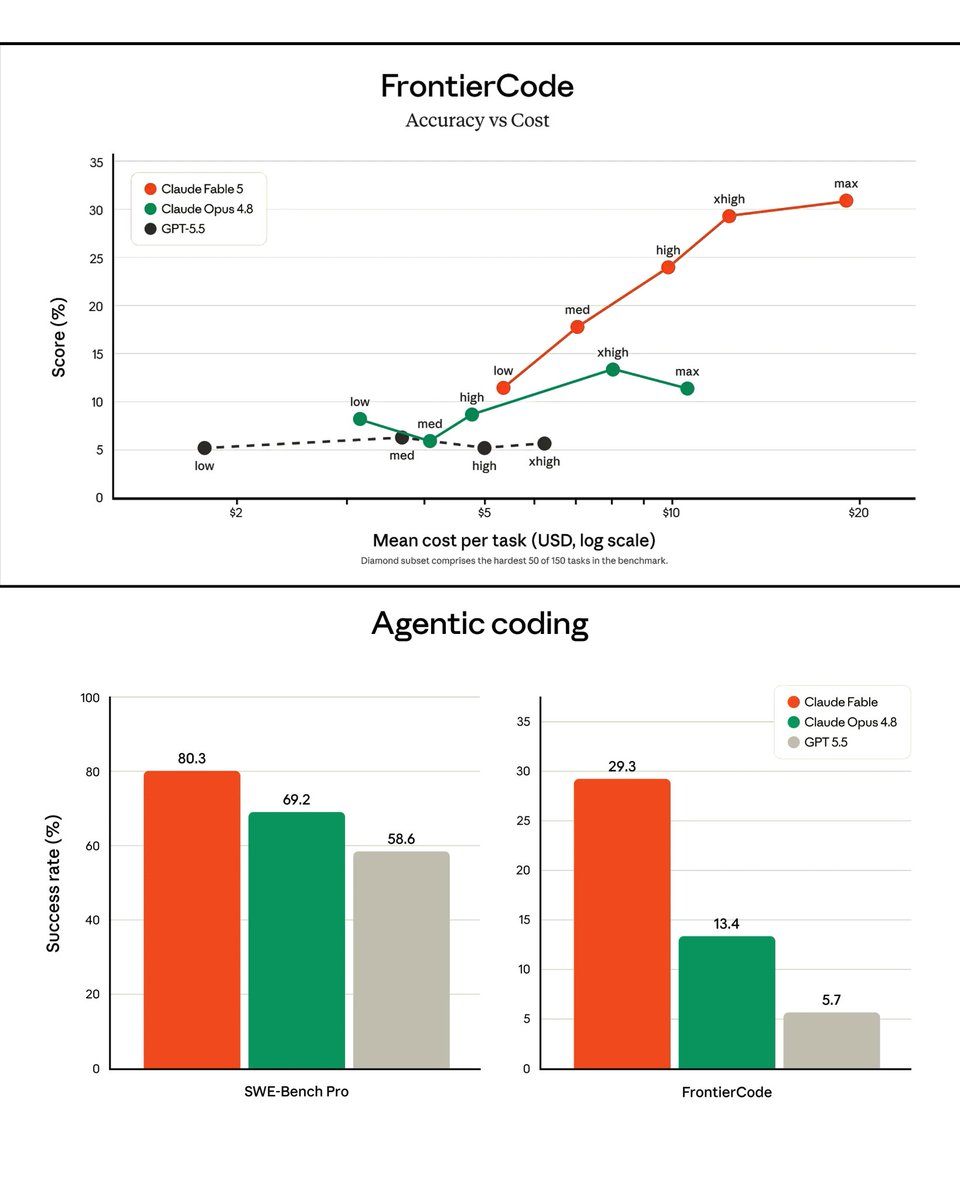
On the engineering side, Claude Fable 5 delivers record-breaking coding performance, leading major software benchmarks and showing capabilities that make many developers claim it has practically solved large-scale 3D worldbuilding workflows.
And yet, the craziest part is this:
Anthropic reportedly built safeguards into Fable 5 that intentionally limit some advanced AI system-building capabilities, suggesting the company believes the underlying model is powerful enough to warrant extra controls.
We're rapidly moving from AI that answers questions to AI that can generate scientific ideas and build complex systems.
5
26
59
2,155

Dr. James Canton retweeted

Jun 8
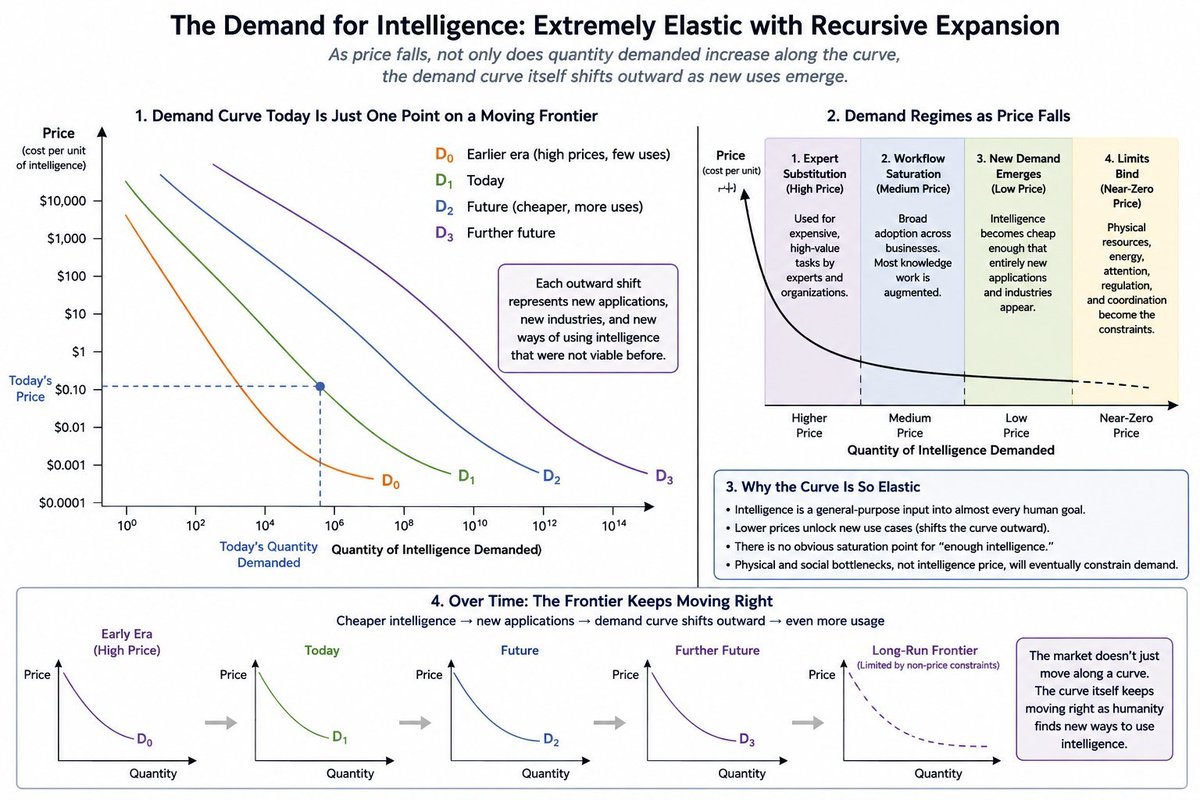
The demand for intelligence has no natural ceiling, ZERO. Every time the price drops, entirely new use cases appear that didn't exist before. We saw this with bandwidth, storage, and compute... each one created markets x100 bigger than what they disrupted.
So what exactly are AI bears waiting for?
24
27
176
18,952
Dr. James Canton retweeted

Asia faces a massive climate adaptation challenge, requiring up to $650 billion annually—over half the global total—to protect its rapidly urbanizing populations from extreme climate events.
But it also presents a massive opportunity for resilient growth, notes MGI Partner Mekala Krishnan. mck.co/4xbJqRE
4
6
14
2,161
Dr. James Canton retweeted

Jun 8
⚡️ INTERESTING: 1X Technologies has begun mass production of its NEO humanoid robot in California, targeting 10,000 units annually and aiming to surpass 100,000 annually by 2027.
55
59
344
54,793
Dr. James Canton retweeted

🚨: Physicists have succeeded in creating an observable "Time Crystal."


9
53
348
8,485
Dr. James Canton retweeted

Jun 7
Launch cost was $10,000/kg ten years ago. It's $1,000/kg today. At $300/kg, space data centers beat terrestrial on price.
Planet Labs CEO Will Marshall (on @theallinpod) laid out the math. Space-based solar panels face the sun 24 hours a day - no batteries, no backup generation. 5x more energy per panel than ground-based solar. That power advantage, combined with $300/kg launch costs, makes space compute cheaper than building a terrestrial data center.
Planet has already launched NVIDIA GPUs into orbit. A Google TPU test is in planning.
The one variable: Starship. Watch SpaceX's stated launch cost per kilogram each quarter. That number is the only thing separating Marshall's thesis from a funded business plan.
The launch cost model and what it means for Planet's valuation ceiling: podcastalpha.substack.com/p/…
Source: All-In Podcast - youtube.com/watch?v=jLICvWE7…
4
5
36
4,980
Dr. James Canton retweeted
🚨 WHAT IF A SINGULARITY COULD EXIST WITHOUT A BLACK HOLE?
Physicists have discovered new mathematical evidence that so-called "naked singularities" can form in higher-dimensional spacetime.
A singularity is a point where gravity becomes effectively infinite and the known laws of physics break down.
Normally, physicists expect these regions to be hidden behind an event horizon inside a black hole.
But new research suggests that under certain conditions, singularities may exist without that protective veil.
Why this matters:
• It challenges one of the most important ideas in gravity theory: the cosmic censorship conjecture
• It suggests there may be situations where the universe exposes its deepest breakdowns directly
• It reveals strange self-similar "ripples" in spacetime that can evolve into naked singularities and microscopic black holes
• It may help physicists understand where Einstein's theory of general relativity reaches its limits
The unsettling implication is this:
If naked singularities can exist, there may be regions of the universe where the laws of physics become visible rather than hidden.
For now, the result exists only in higher-dimensional mathematical models.
But it pushes scientists closer to understanding what truly happens at the edge of spacetime itself.
Follow for more frontier physics and reality-bending discoveries.
11
34
80
6,225
Dr. James Canton retweeted

Jun 5
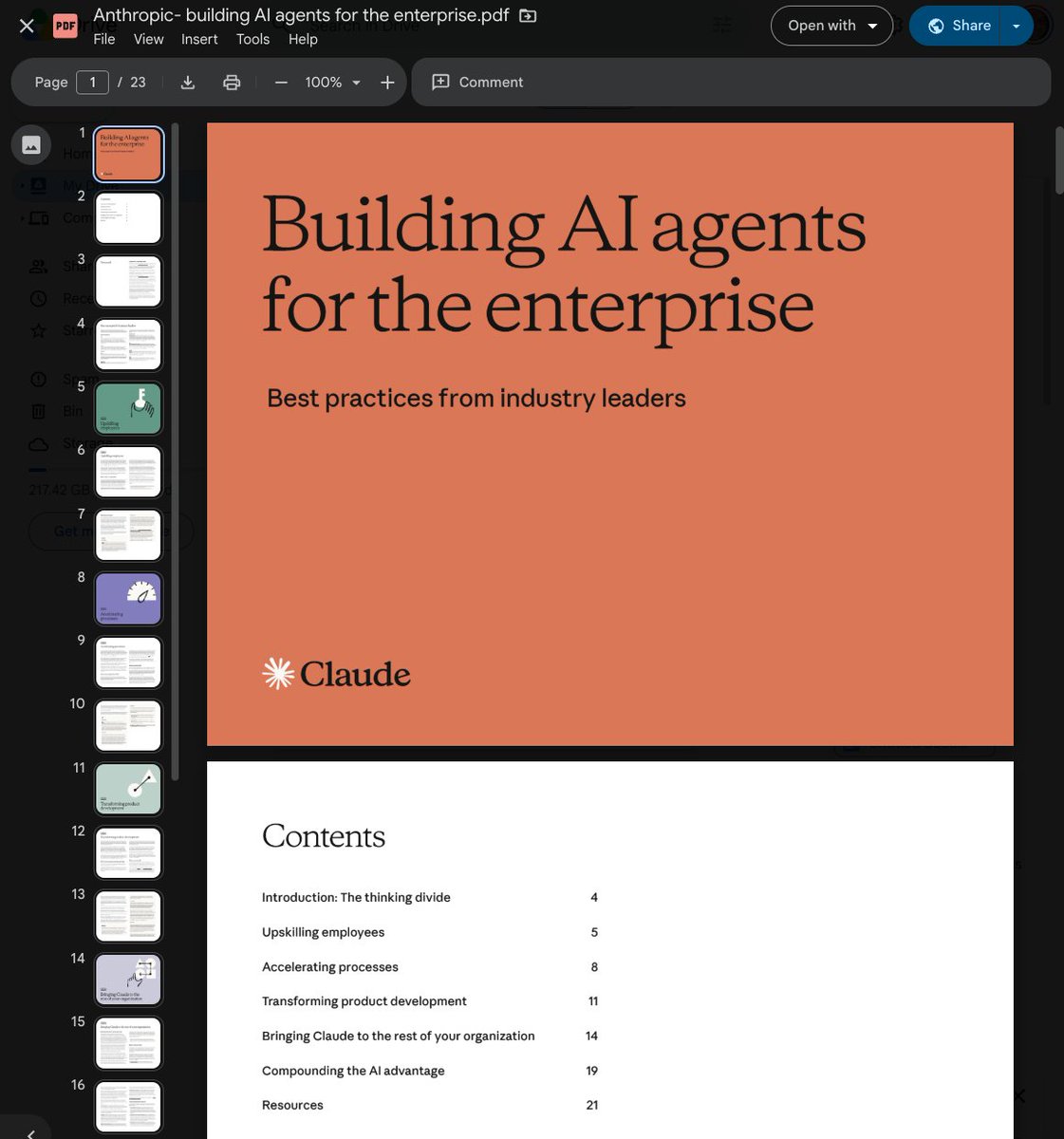
🚨 Anthropic just dropped a FREE 23-page enterprise AI playbook, and it’s a must-read for anyone looking to scale their operations!
It’s essentially a free operating manual for turning Claude into your company's core infrastructure.
The main takeaway?
A generic model gives you generic output. To really win, you have to teach Claude exactly how your unique business works!
The results are incredible when you train AI on your company’s DNA:
→ L’Oréal hit 44,000 monthly users with 99.9% accuracy.
→ Lyft cut support resolution times by a massive 87%.
→ Rakuten sped up product releases from quarterly to bi-weekly!
The architecture making this possible is brilliant:
→ MCP connects Claude to your tools.
→ Plugins store reusable company knowledge.
→ Claude Cowork provides an intuitive interface.
Good AI adoption isn't buying disconnected tools. It’s making AI your actual operating system!
I pasted the link to the playbook in the 🧵↓
22
33
175
12,242
Dr. James Canton retweeted

This is massiveeeee. 🤯
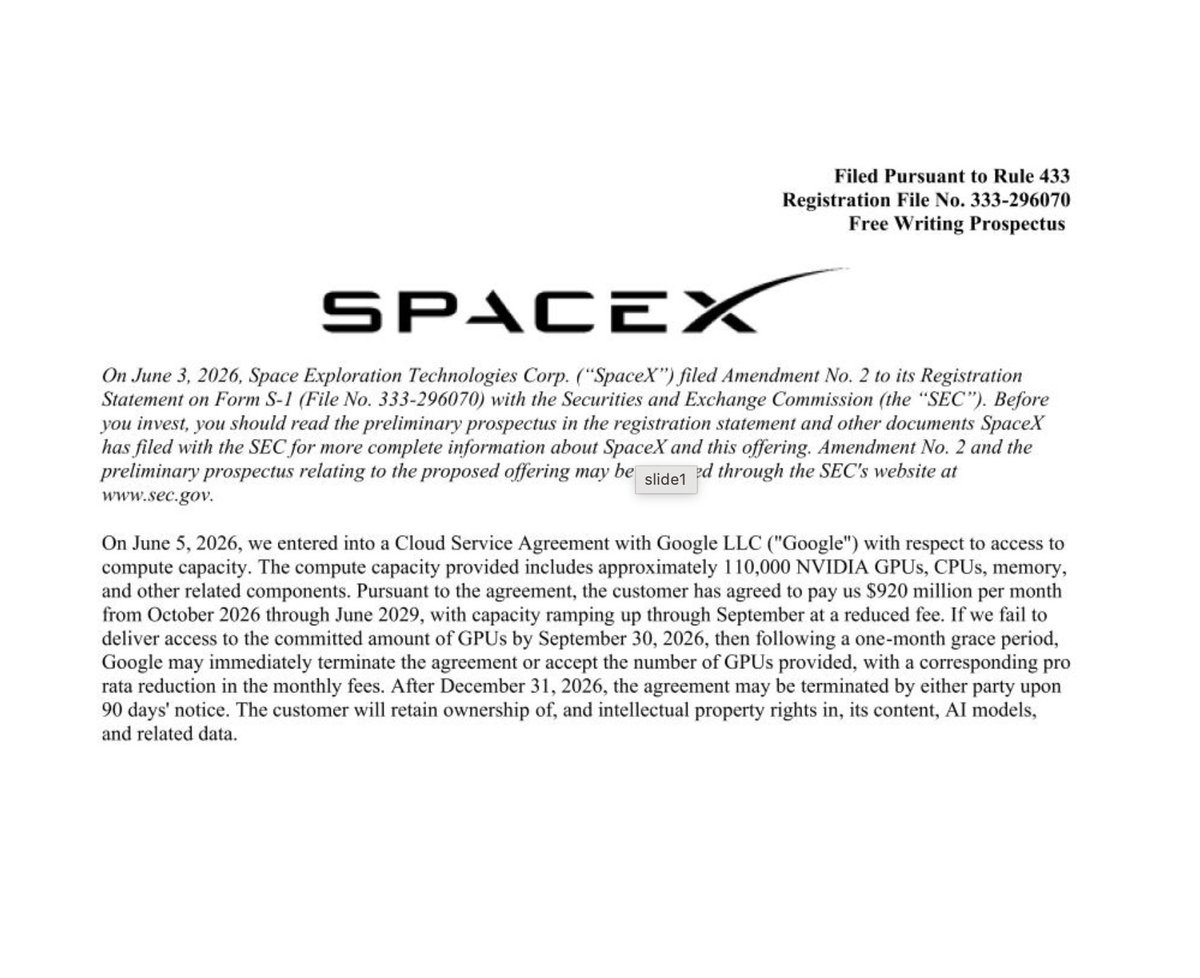
SpaceX just signed a deal where Google pays them $920 MILLION every single month. Not for rockets. Not for Starlink. For renting the computing power that runs AI.
Google is basically paying SpaceX to use 110,000 of their high-end chips to train and run AI models. From October 2026 through June 2029. Total value: roughly $30 billion.
And this is their SECOND deal. Last month they signed a $1.25 billion per month deal with Anthropic for the same thing.
Combined, SpaceX is now making ~$26 billion a year just from renting the machines that power AI.
A rocket company just became one of the biggest AI infrastructure providers on the planet. Right before what could be the largest IPO in history.
The AI race isn't just about who builds the best model anymore. It's about who owns the machines.
And right now, that's SpaceX.
Jun 5

SpaceX has just announced that they have entered into a $920 million per month agreement with Google to provide compute capacity, according to a new filing.
"On June 5, 2026, we entered into a Cloud Service Agreement with Google with respect to access to compute capacity. The customer has agreed to pay us $920 million per month from October 2026 through June 2029, with capacity ramping up through September at a reduced fee. The compute capacity provided includes approximately 110,000 NVIDIA GPUs, CPUs, memory, and other related components.
After December 31, 2026, the agreement may be terminated by either party upon 90 days' notice. The customer will retain ownership of, and intellectual property rights in, its content, Al models, and related data."
21
23
174
25,435
Dr. James Canton retweeted

Injectable nanorobots may help heal spinal injuries
popsci.com/health/nanorobot-…
1
53
Dr. James Canton retweeted
Jun 6
Why does it matter whether AGI is conscious?
@demishassabis says build AGI first as an intelligent tool, define consciousness rigorously using those tools, then decide as a society whether to build systems that seem conscious.
His view: those are two separate problems. Conflating them now is a mistake.
Other labs, he implies, are not drawing the same line.
If consciousness becomes the regulatory flashpoint in AI policy - which it might - the labs with a principled early position will be better placed to shape the rules.
What Hassabis said and what it means for the policy landscape:
podcastalpha.substack.com/p/…
Source: Stanford Graduate School of Business - youtube.com/watch?v=DsewHeVb…
1
1
280
Dr. James Canton retweeted
Jun 6
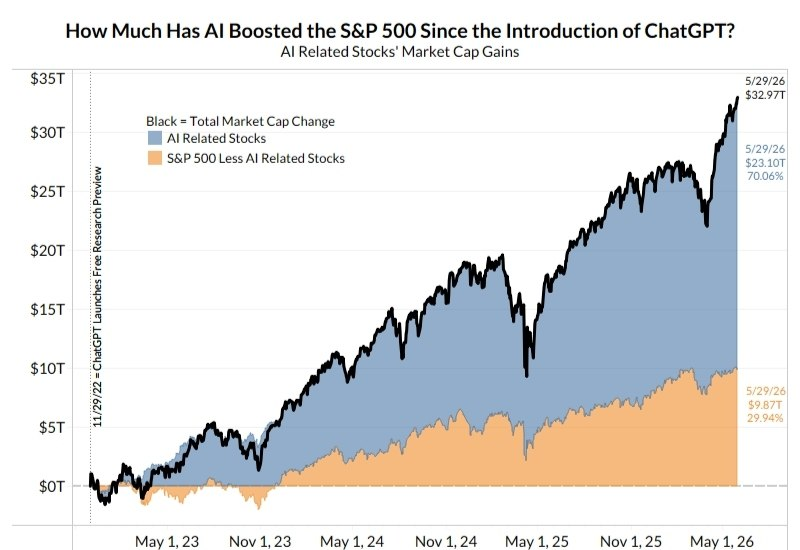
70% of S&P 500 gains since ChatGPT launched come from AI stocks.
17
27
168
18,942
Dr. James Canton retweeted

Jensen Huang, CEO of Nvidia:
"Every engineer is going to have and manage hundreds of agents."
You can't manage hundreds of agents if you've never configured a single Claude Project.
No CS program teaches harness engineering.
No tutorial teaches agent memory architecture.
No degree prepares you to build a system that remembers everything about your work.
One builder mapped the entire thing out. Free. Step by step. No experience required.
This is the roadmap ↓
Bookmark this for the weekend.

41
40
208
75,625
Dr. James Canton retweeted

Jun 6
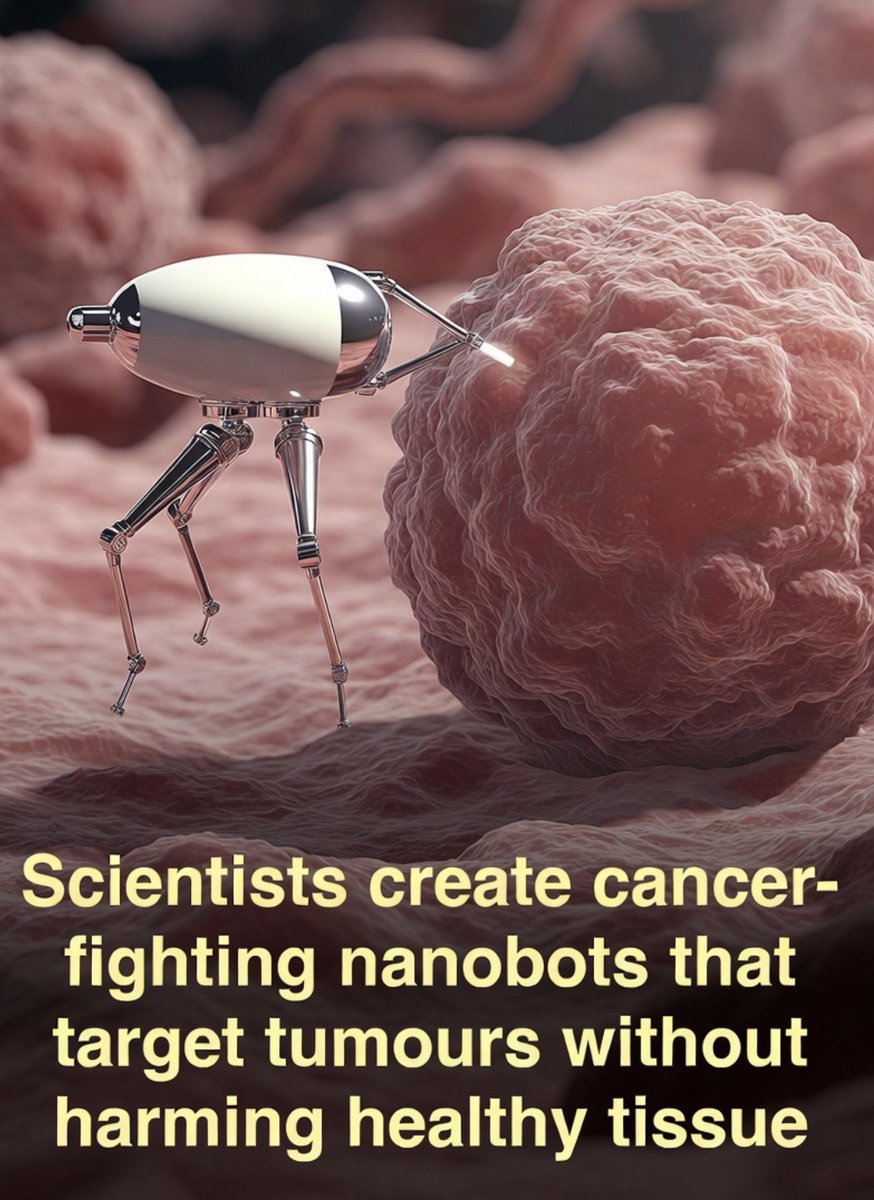
Scientists Develop DNA Nanorobot That Targets Cancer Cells
A team of researchers at Karolinska Institutet has created a tiny DNA-based nanorobot designed to attack cancer cells while minimizing harm to healthy tissue.
One of the major difficulties in cancer treatment is that many therapies cannot distinguish perfectly between cancerous and healthy cells, often leading to unwanted side effects. The newly developed nanorobot aims to address this challenge by remaining inactive as it travels through the body.
Built using a technique similar to DNA origami, the microscopic structure stays folded shut under normal conditions. It is engineered to respond to the more acidic environment often found around certain tumors. When it detects these conditions, the nanorobot unfolds and releases molecules that activate Tumor Necrosis Factor (TNF) receptors sometimes referred to as “death receptors.”
These receptors can trigger apoptosis, the body’s natural process of programmed cell death. Although scientists have long explored using these receptors in cancer therapy, a major obstacle has been avoiding damage to healthy cells that also carry them. The nanorobot’s pH-sensitive design provides a potential way to deliver the treatment more selectively.
In experiments involving mice with breast cancer, researchers reported a reduction in tumor growth of approximately 70%.
The technology remains in the early stages of development and has not yet been tested in humans. Future research will focus on evaluating safety, testing the approach in more advanced cancer models, and exploring whether the nanorobots can be adapted to target additional types of cancer.
Source: IBSA Foundation – “Nanorobot to target cancer cells and spare healthy ones.”
53
192
759
55,294