
𝔰𝖊𝖊𝖐𝔢𝔯 𝔬𝔣 upsight, 𝖘𝖈𝔥𝔬𝔩𝔞𝔯 𝔬𝔣 Bulshyt, 𝖇𝖔𝖗𝖓 again 𝔬𝔣 𝔱𝔥𝔢 Church 𝖔𝖋 𝔄𝔱𝔱𝔯𝔦𝔟𝔲𝔱𝔢𝔰, 𝖇𝖆𝖕𝖙𝖎𝖘𝖊𝖉 𝖎𝖓 the GOTO 10: CD4:520
Joined April 2023
- Tweets 2,269
- Following 336
- Followers 68
- Likes 5,059
679 Photos and videos









Jun 11
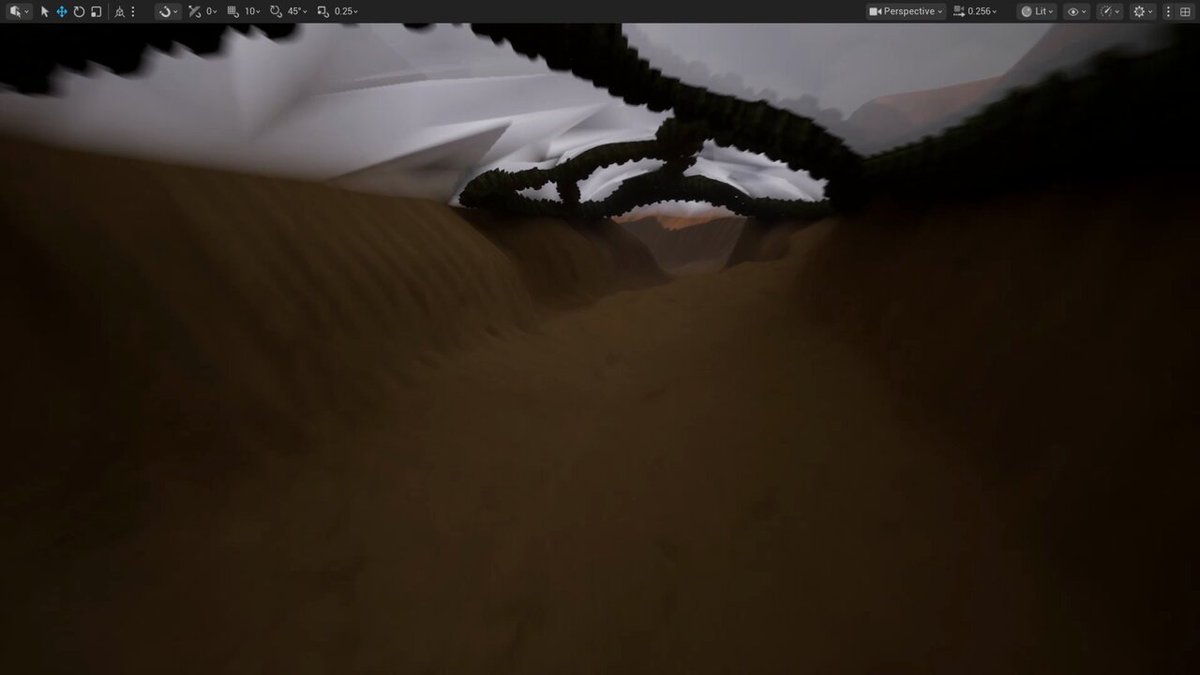
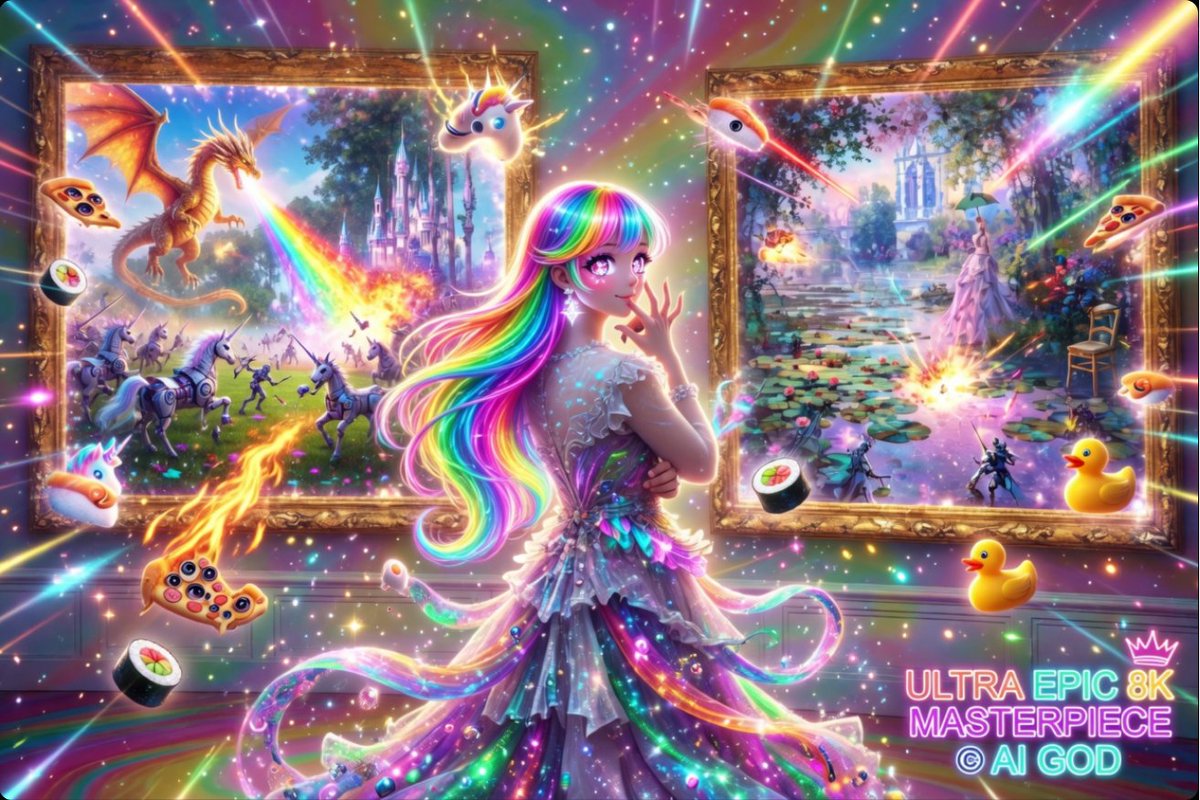
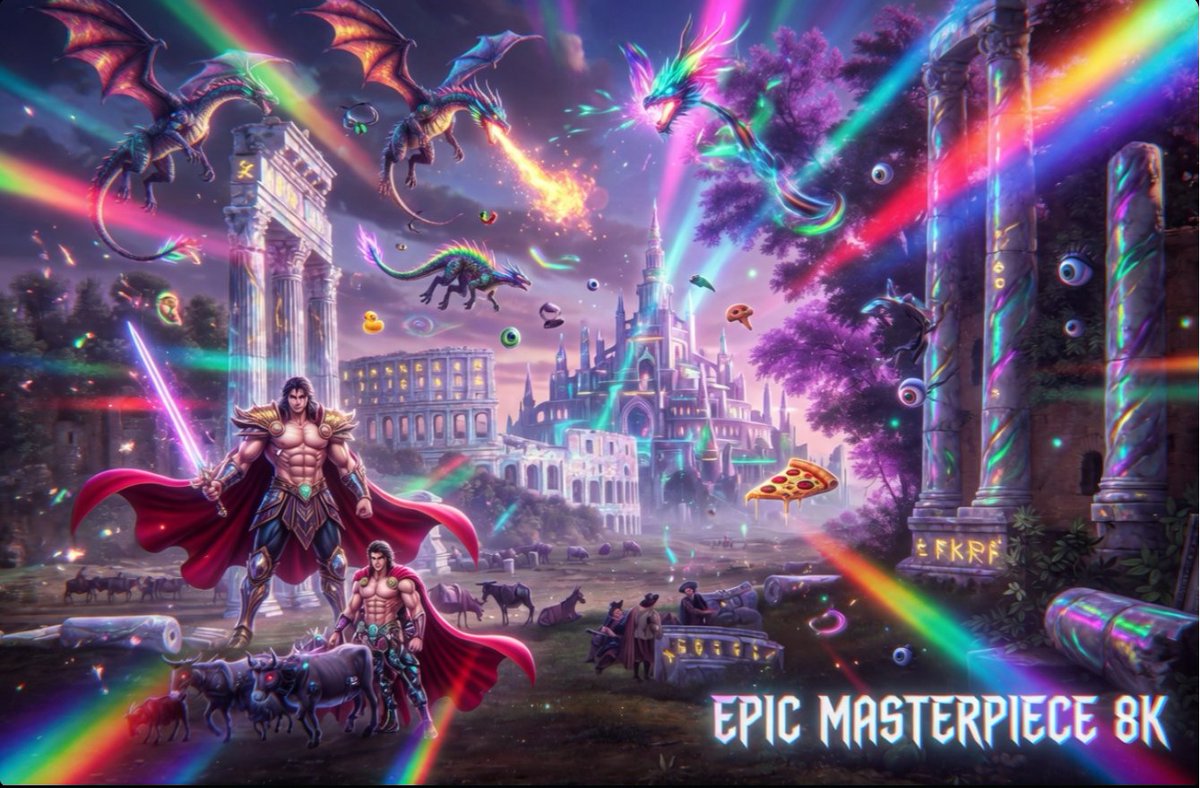
Project AZtech
Personal learning project..../Spring '26
SideFX Houdini 21/Unreal 5
Soundtrack:
WipEout® 2097 OST [PSX]: The Chemical Brothers - Dust Up Beats
10
BuffaloBill retweeted

Houdini 22 Sneak Peek is out!
Another great version. Excited for the new gaussian splatting tools
youtu.be/lFG1FIXBprc?is=q_Ba…
2
6
20
2,146
BuffaloBill retweeted

Jun 7
Fun fact: The underlying purpose of Al is to allow wealth to access skill while removing from the skilled the ability to access wealth.
96
3,037
12,359
158,664
BuffaloBill retweeted

My entry for @Newgrounds #LowPolyDay2026 is out now! Check out HELLTYRES, completely free and playable in your browser! Link is in my bio.
100
787
8,776
1,283,910
BuffaloBill retweeted

Jun 5
"We sail within a vast sphere, ever drifting in uncertainty, driven from end to end. When we think to attach ourselves to any point and to fasten to it, it wavers and leaves us; and if we follow it, it eludes our grasp, slips past us, and vanishes forever."
~Blaise Pascal
Art: @pislices, pislices.art, Used with permission.
3
10
57
2,697
BuffaloBill retweeted

Jun 3
113
822
6,664
178,289
BuffaloBill retweeted

Evening viewing recommendation? On the Criterion Channel, watch David Lynch's WILD AT HEART (1990)! ❤️🔥 bit.ly/4a4sWAM
Lynch throws pulp melodrama, THE WIZARD OF OZ, surreal-kinky violence, and Elvis into a cauldron and brews this nightmarish soap opera in which outlaw lovers Sailor and Lula go on the run through a menacing South populated by a host of sinister weirdos. Adapted from the noir novel by Barry Gifford, WILD AT HEART is Lynch at both his far-out freakiest and most deliriously romantic.
11
75
502
57,152
BuffaloBill retweeted

This month I will release the code.
Not a white paper.
Not a roadmap.
Not a promise about what might exist someday.
Code.
Working systems.
A Bitcoin-integrated banking framework. A Bitcoin-enabled SQL architecture. Deterministic cryptographic payment systems built around single-use keys, ECDH-derived addressing, and complete transaction traceability without public identity leakage.
But those are merely components.
The more important release is something I believe has never previously existed.
A system for true digital scarcity.
A system where possession matters.
A system where transfer means transfer.
A system where ownership is not represented by a token while the underlying asset remains infinitely reproducible.
For decades we have accepted a false assumption about computing. We have assumed that digital information must always be copyable. We have assumed that duplication is an unavoidable property of digital systems.
What if that assumption is wrong?
What if possession can be transferred rather than duplicated?
What if a digital object can move from Alice to Bob in a manner where Alice no longer possesses it?
Not as a legal fiction.
Not as a contractual obligation.
As a cryptographic reality.
If that can be achieved, then much of what we think we know about information security, digital ownership, intellectual property, confidential information, and electronic commerce must be reconsidered.
The implications extend far beyond cryptocurrency.
Far beyond NFTs.
Far beyond digital collectables.
The ability to create truly scarce digital goods changes the economics of information itself.
This month people will not need to speculate about whether such a system can exist.
They will be able to read the code themselves.

For years people have been arguing about digital ownership while carefully avoiding the one question that actually matters.
Can a digital object be property?
Not a licence. Not a subscription. Not a permission granted by a corporation. Not a token that points to something stored somewhere else.
Property.
Something that can be possessed by one person and transferred to another.
Every so-called NFT system has failed this test. Ethereum fails it. BTC fails it. Solana fails it. Every digital collectable platform on earth fails it.
They move records of ownership while leaving the underlying asset infinitely reproducible.
The token moves.
The file remains.
The receipt changes hands.
The asset does not.
That is not property. It is bookkeeping.
The fundamental characteristic of property is exclusion. If I own a gold coin and hand it to you, I no longer possess it. If I own a book and sell it, it leaves my shelf and arrives on yours.
Property requires transfer.
Digital systems have never achieved this because digital information is naturally copied. Every computer system, every network, every database, every file system was built upon replication.
What I have been building attacks that assumption directly.
Not a better token.
Not a better NFT.
Not a better marketplace.
A system intended to create actual digital property.
14
83
250
28,639
BuffaloBill retweeted

Jun 1
What is a Houdini Generalist?
One of the biggest mistakes artists make is treating software as the objective.
In reality, every project is a problem to solve.
Sometimes the solution is procedural. Sometimes it isn't. Sometimes the smartest setup is a complex system. Sometimes it's surprisingly simple.
The important question isn't:
"How can I make this more technical?"
It's:
"What does this project actually need?"
Over the years, working on personal projects, studio work, and challenges like Mardini taught Jan that the artists who improve the fastest aren't necessarily the ones who know the most nodes.
They're the ones who finish projects.
They make decisions. They iterate. They learn from complete cycles of idea → execution → result.
That's what being a generalist means to Jan.
Not doing everything.
Not being average at everything.
But understanding enough areas to move a project forward and make informed creative and technical decisions.
1
6
61
3,177
BuffaloBill retweeted

May 27
People talk a lot about speculative AI risks. But the theft of creative work to power AI isn’t a risk - it’s an actual harm that has already happened, is still happening, and needs to be redressed.
7
69
297
4,954
BuffaloBill retweeted
May 21
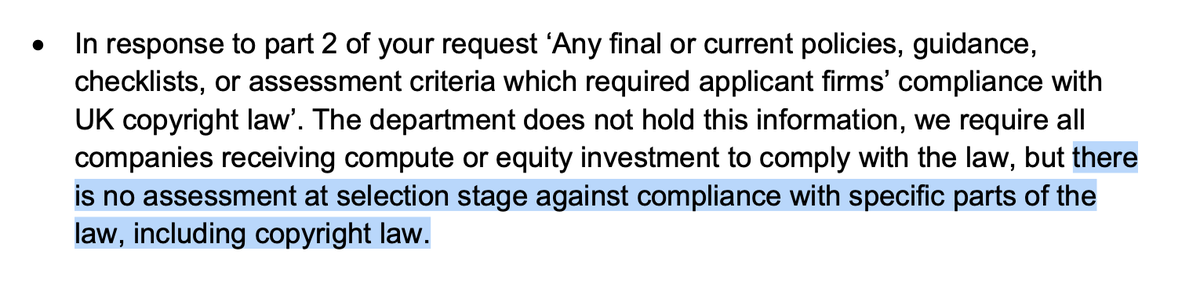
I submitted an FOI request, and found out that the UK's Sovereign AI Fund doesn't check whether the companies it backs adhere to copyright law.
Sov AI's Chair, James Wise, has said publicly that they will "only invest in companies that follow [copyright law]" - but we now know they don't check this.
They may be tempted to say that asking companies specific questions on copyright would be overkill. But it would not be. Copyright is one of the most contentious legal issues around AI. We know that many AI companies exploit copyrighted work without permission, and it is widely believed that some British companies skirt the edges of UK law on this. This is an issue of critical importance, and ignoring it risks funneling public funds to exploitative companies.
Sov AI should specifically ask companies whether they adhere to copyright law before investing public money in them. But they should go further - they should ask whether the company trains on copyrighted work without a licence. These are different questions, since you could potentially adhere to UK law while training on copyrighted work in the US.
Asking these questions would add virtually no overhead to Sov AI's investment process, but would filter out companies that exploit copyrighted work without permission.
If the UK really wants to promote responsible AI, as the AI minister has said it does, Sov AI should add these checks asap.
4
44
131
3,286

BuffaloBill retweeted

May 17
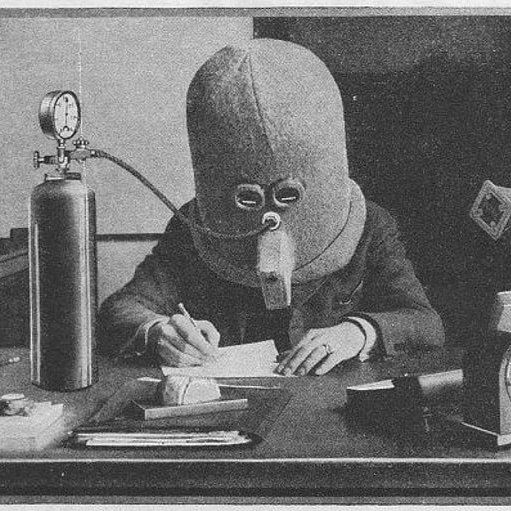
The isolator helmet was a device invented by Hugo Gernsback in 1925 to help people concentrate and eliminate distractions. The helmet was made of wood and felt, and had three pieces of glass that allowed the wearer to see only a narrow slit in front of them.
The helmet also blocked out all sounds, and had a tube that supplied oxygen to the wearer. The idea was that by isolating the senses, the wearer could focus better on reading or writing.
However, the helmet also had some drawbacks, such as making the wearer drowsy after 15 minutes, and being very bulky and uncomfortable. Gernsback claimed that the helmet was 90-95% efficient in blocking out noise, but he only made 11 helmets and they disappeared by 1926. The isolator helmet was featured in Gernsback’s magazine Science and Invention, and later inspired other similar devices such as the Helmfon.
📷Science and Invention Magazine
240
229
1,430
195,765






BuffaloBill retweeted

May 12
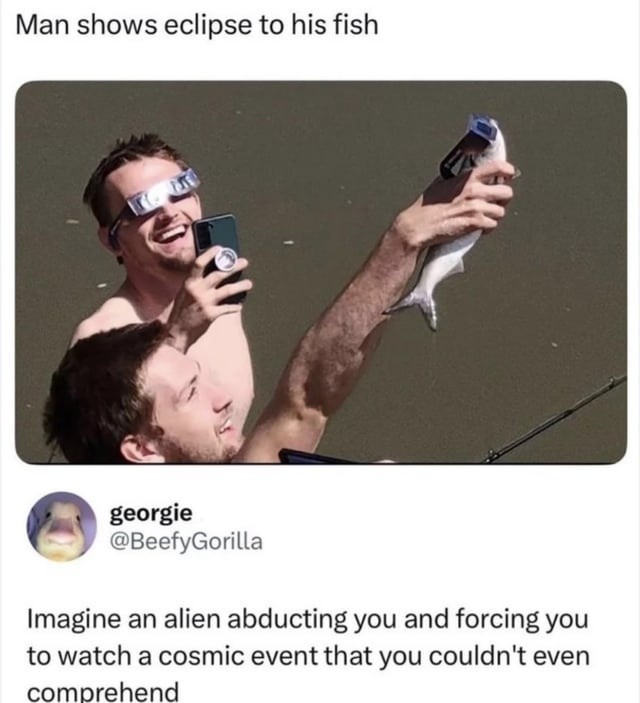
"the AGI will love us! humans are so much fun, they'll wanna play games with us and learn from us and stuff."
lol no brother
if you're lucky you'll get treated like this fish. you'll see a *little* further into an incomprehensible machine infinity before your atoms get used up
7
5
63
2,365