Joined September 2009
- Tweets 16,251
- Following 420
- Followers 11,645
- Likes 25,479
1,845 Photos and videos


Pinned Tweet

19 Nov 2024
I guess I'm on the other site now.
Give me a heads-up (here or there) if you want me to follow you there.
7
2,895
3 Jun 2025
There is lots of great ongoing work in physics on exactly this question: when does the ergodic hypothesis (e.g., entropy maximization) hold and when does it not? In other words, when does thermodynamics work and when does it not?
3 Jun 2025

I don't...buy the ergodic hypothesis in stat mech. Any recs for how to get comfortable (even empirical?)
Seems just obviously not something that follows from first principles - unless it's like every system is noisy and that's why? But aren't there attractor trajectories that would kinda violate it?
Stat mech would be so much easier if I believed in statistics, lol
1
19
2,809
3 Jun 2025
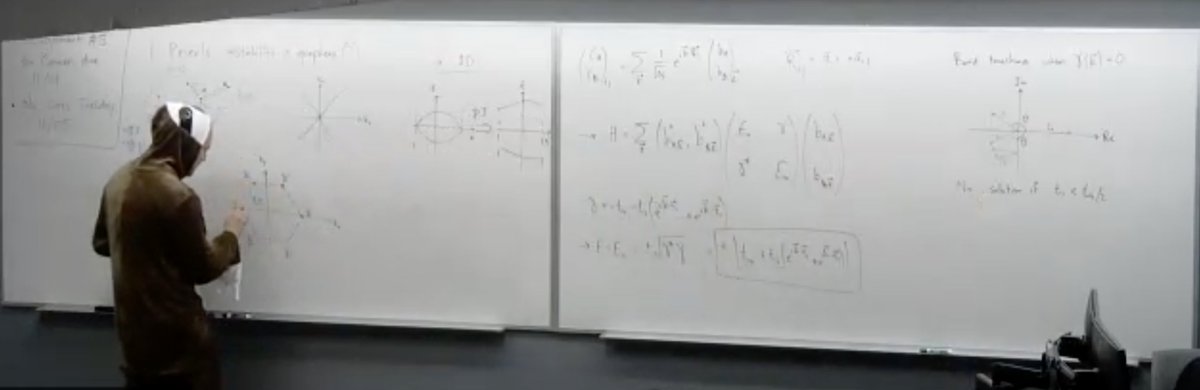
Here is a talk by me on one variant of this question.
It turns out that if you subject a collection of particles to random dynamics, but you force them to conserve their center of mass, then they will only obey ergodicity if their density is high enough
youtube.com/watch?v=aF28QfSl…
7
1,584
1 Jun 2025
RT @michael_nielsen: Harvard. PEPFAR. LIGO. Basic science. And dozens of other crown jewels of not just the US, but of humanity. And one…
22
Brian Skinner retweeted

18 May 2025
Watching electronic ice melt | Science
science.org/doi/10.1126/scie…
I’m delighted to share a perspective I co-authored with Brian Skinner (@gravity_levity), highlighting an exciting new experiment that captures quantum melting in a disordered 2D Wigner solid.
1
2
8
948
Brian Skinner retweeted

26 Apr 2025
"Gut Biomes win championships" - Nico Harrison
26 Apr 2025

JJ Redick said that Luka Doncic hasn’t been feeling well for 24 hours. He doesn’t think Doncic slept much last night. He was throwing up all afternoon going into the game. And Redick isn’t sure what caused the halftime delay to cause him not to start the second half.
4
11
138
30,484
Brian Skinner retweeted

25 Mar 2025
We’re celebrating #IYQ2025 with monthly #quantum science collections. March’s edition explores measurement-induced quantum phase transitions — where measurement competes with internal evolution, triggering a phase transition in entanglement structure.
🔗 go.aps.org/4iCyRPU
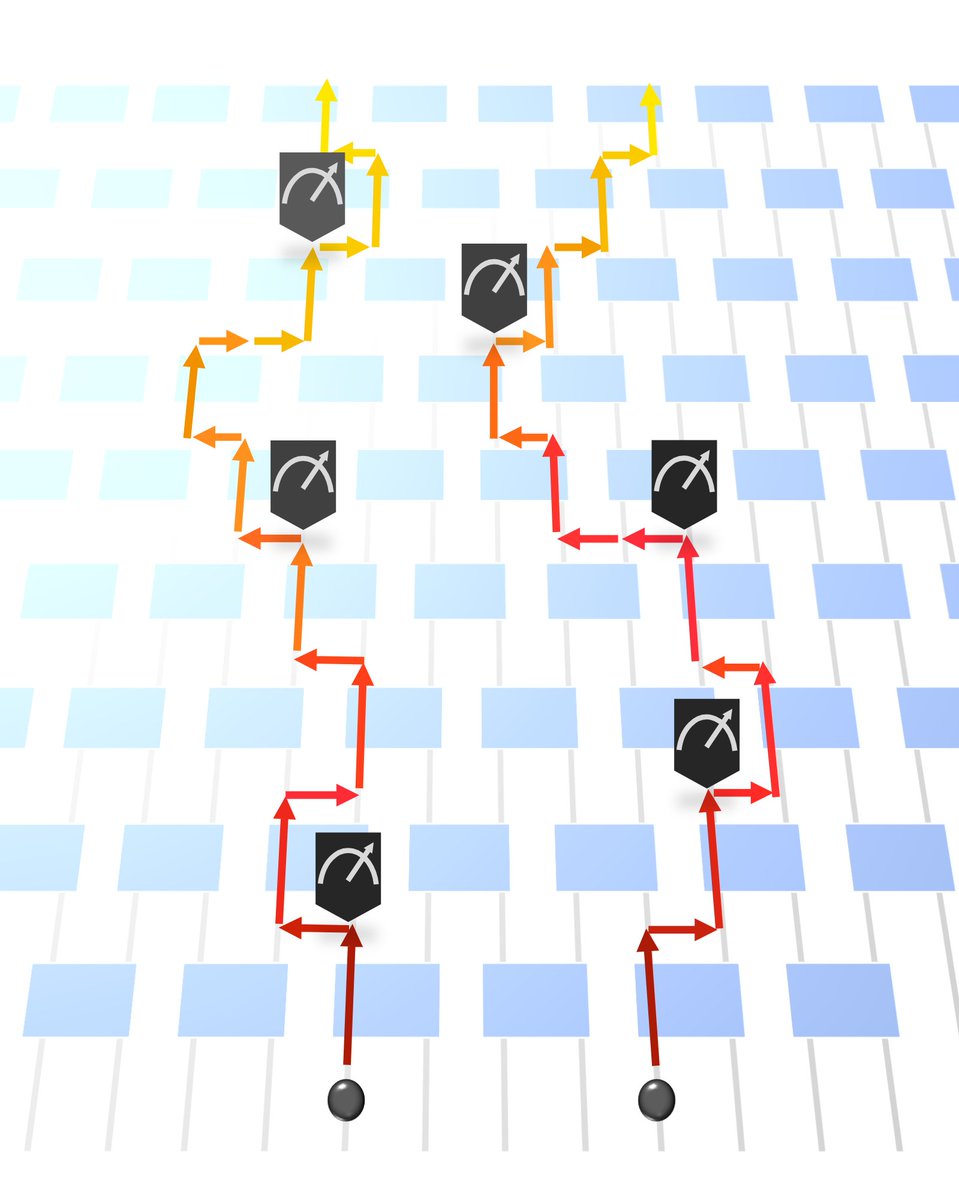
ALT A graphic representing measurement-induced quantum phase transitions. A grid-like structure of blue rectangles symbolizes a quantum circuit or lattice. Black measurement symbols with white gauge-like needles appear at various points, indicating quantum measurements. Curved arrows in red, orange, and yellow trace different paths through the grid, suggesting the influence of measurements on quantum information flow. The color gradient of those paths represents a transition or probability flow, illustrating changes in entanglement due to measurements.
2
15
48
5,162
Brian Skinner retweeted
7 Mar 2025
The utility of photovoltaics seems possible precisely because the science is so boring: it's the same p-n junction that we've had since the 1940s.
The more interesting the science, the more skeptical one must be of claims of utility.
1
2
14
1,447
Brian Skinner retweeted

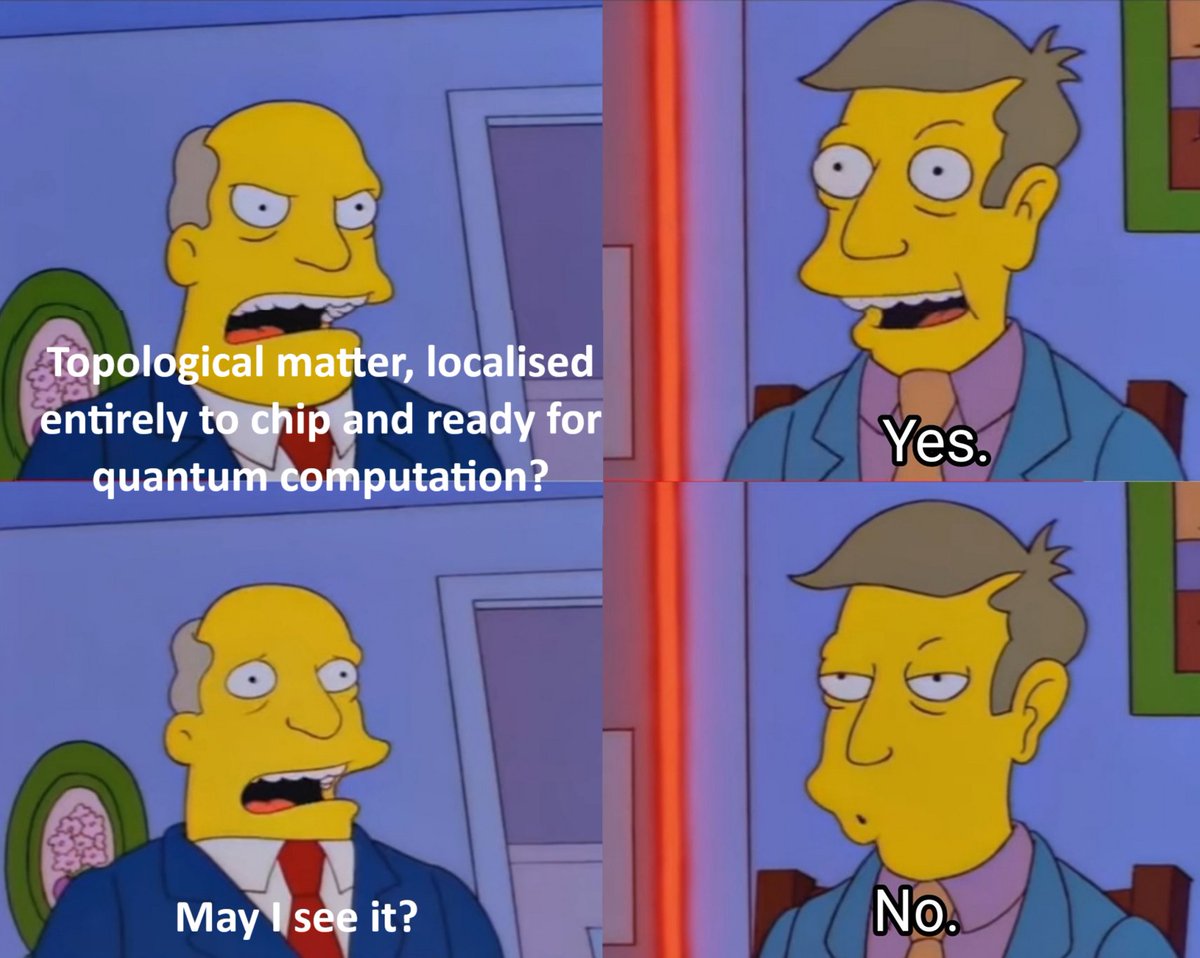
the story of the Microsoft claim of topological qubits so far
9
40
401
19,213
19 Feb 2025
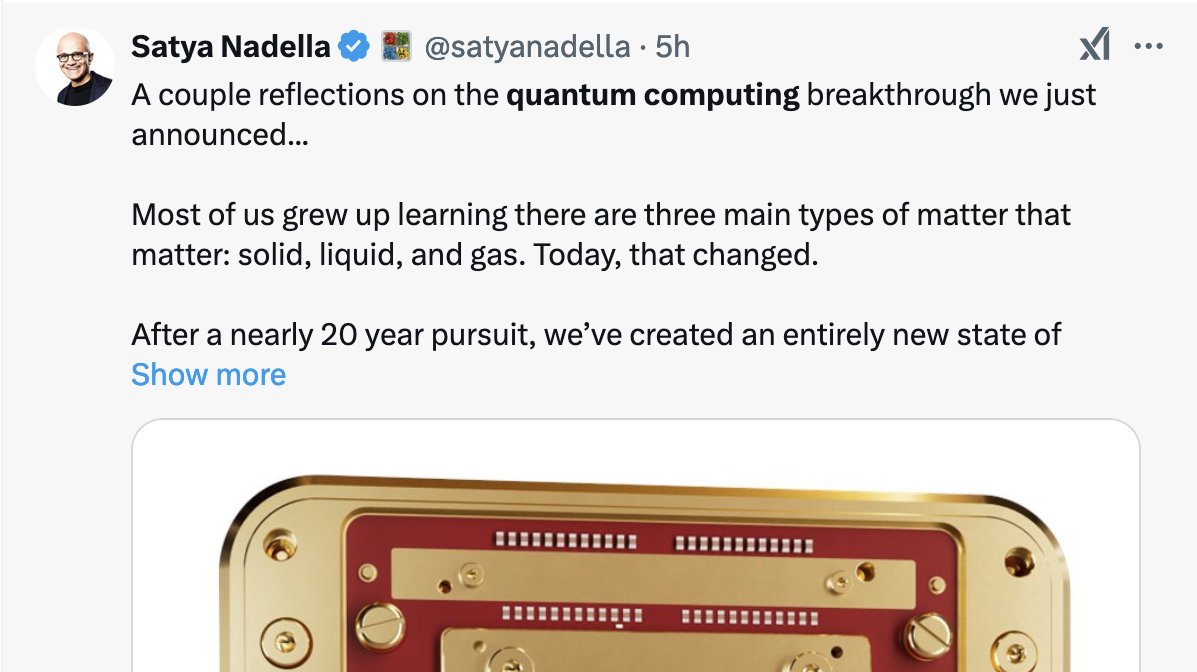
Briefly poking my head into this site to make sure you know that Microsoft has absolutely not realized a new phase of matter, nor have they created a new type of qubit.
3
2
27
1,833
19 Feb 2025
19 Feb 2025

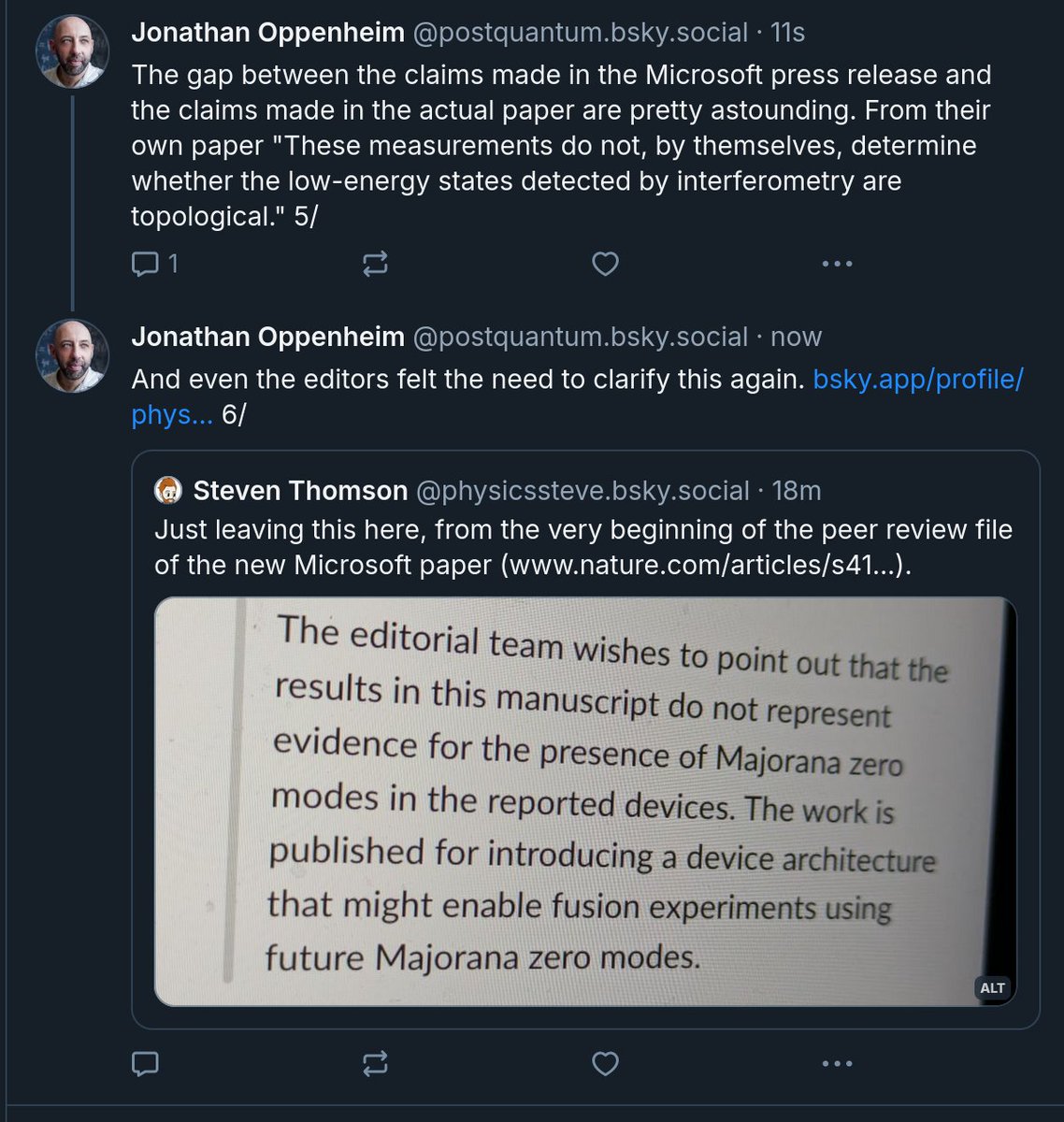
ALT https://bsky.app/profile/postquantum.bsky.social/post/3likcekuurs2h
3
4
2,389
23 Jan 2025
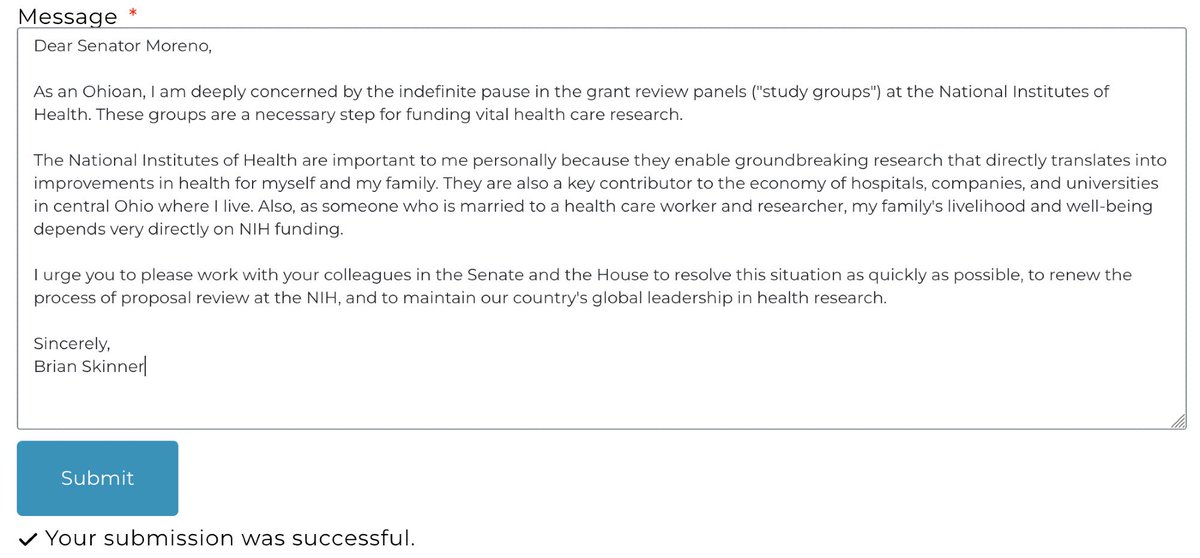
If you want to contact your senators/congressmen about the NIH freeze, the advice I've been given is to keep it brief and emphasize why it matters to you personally. Here's what I sent just now.
science.org/content/article/…
1
5
1,272
20 Nov 2024
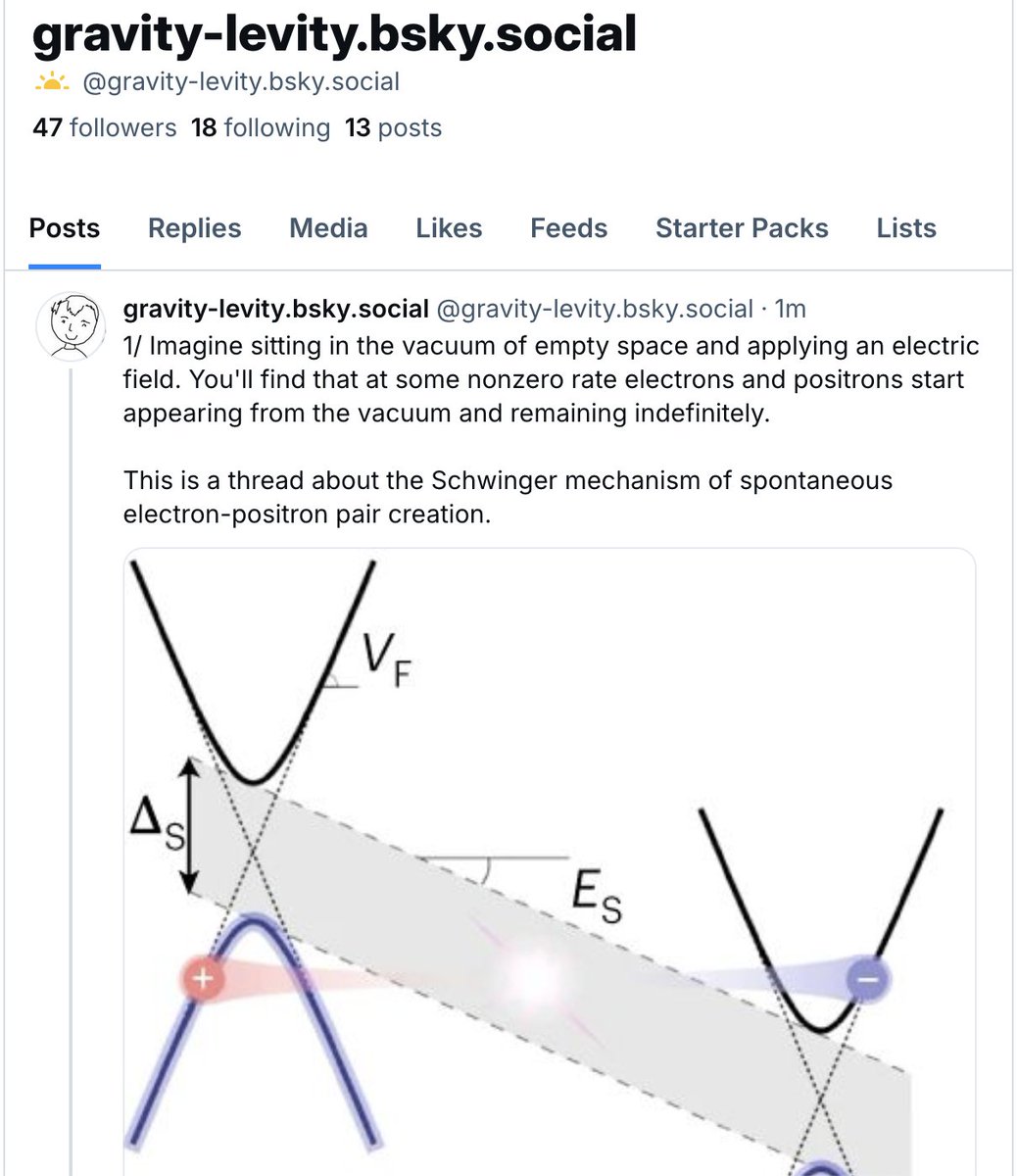
Posted my first scientific explainer thread in forever over at the other site
1
3
911
11 Nov 2024
This is one of the great (and dangerous) things about getting a PhD: it the last remaining realm of education where there is enormous variance in what and how you learn. It still produces a wide range of thinking styles and competencies among people getting the same degree.
11 Nov 2024

That one time @DavidDeutschOxf spoke to Richard Feynman:
“We had a wide-ranging conversation, mostly about quantum theory and computation, but we deviated a bit to talk about physics generally.
And I said that physics seems to have slowed down, and he said, “There will be no more great physicists.” And I was like, “Oh, what makes you say that?” Because I wasn’t thinking like that at all, because I was lucky enough to be among several of them and learning from them.
And he said, there will be no more of them. So I said, why? And he said, “Well, because of physics education.” He didn’t put it in exactly the way that I would today, but it was that it was very narrow, and everybody was taught to do the same thing.
I don’t think he had any objection to this concept of being taught a thing or to have a curriculum, but he thought it was becoming narrower and narrower. And the reason it’s becoming narrower is because that’s the only way you can base it on exams. And if you want to have a world in which most people go to university, let’s say, then you need to have standards for going to university. And these standards have to be determined by exams, otherwise it’s unfair. And if they’re determined by exams, they have to be determined by a uniform curriculum.
When I was in school, there was no national curriculum. Every school had its own curriculum. There were dozens of different examination boards that set exams, and each school could choose: we’ll have this board for physics, and we’ll have this board for history, according to what the teachers in the school thought was a good idea to force their pupils to learn.
So that part of it wasn’t the way I would have it. But the state didn’t take a view, and most importantly, it didn’t take a uniform view that everybody in the country had to learn this thing. And that was the thing that Feynman was objecting to—that everybody in the country learning the same thing. And by the time they get to university and by the time they’ve done an undergraduate degree, they’ve learned to become proficient. I mean, those that pass through the sieve and eventually get to become physicists or something, they have all learned how to do the same thing in the same way. And that’s going to put a damper on doing things a different way, a new way.
Of course, Feynman, in his life and in his research career, was constantly doing things in a new way, in ways that people didn’t approve of. And I think, well, I’m not a pessimist, so I don’t think there aren’t going to be any more great physicists. I’m expecting that there are, because I’m expecting that the Enlightenment will spread to educational theory as it has spread to many other aspects of life.”
2
11
114
8,714
5 Nov 2024
... huh.
5 Nov 2024

QC's WK9 NFL Thoughts - QUANTCOACH.COM
#Patriots Mayo should’ve gone for 2 vs #Titans with hat tip to @gravity_levity; also #Saints dump after loss to #Panthers; #Cowboys collapsing quantcoach.com/qcs-wk9-nfl-t…
9
1,788
Brian Skinner retweeted

3 Nov 2024
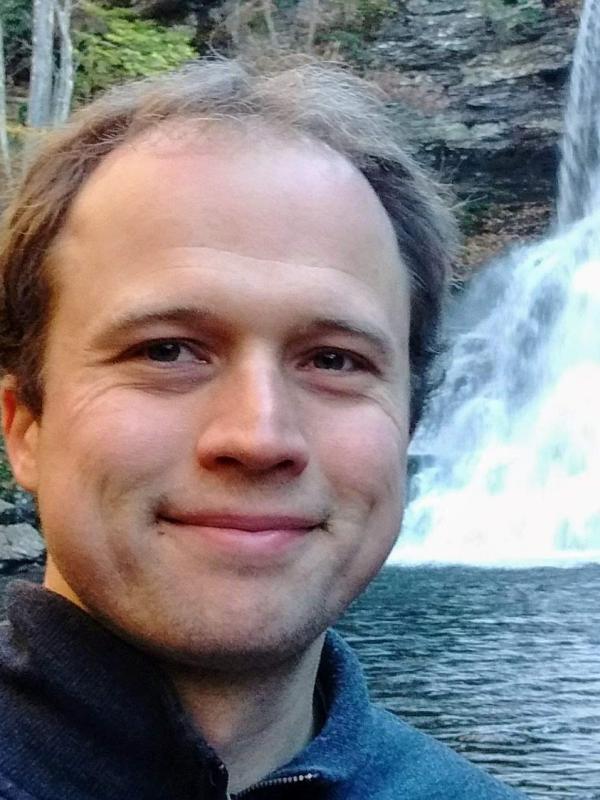
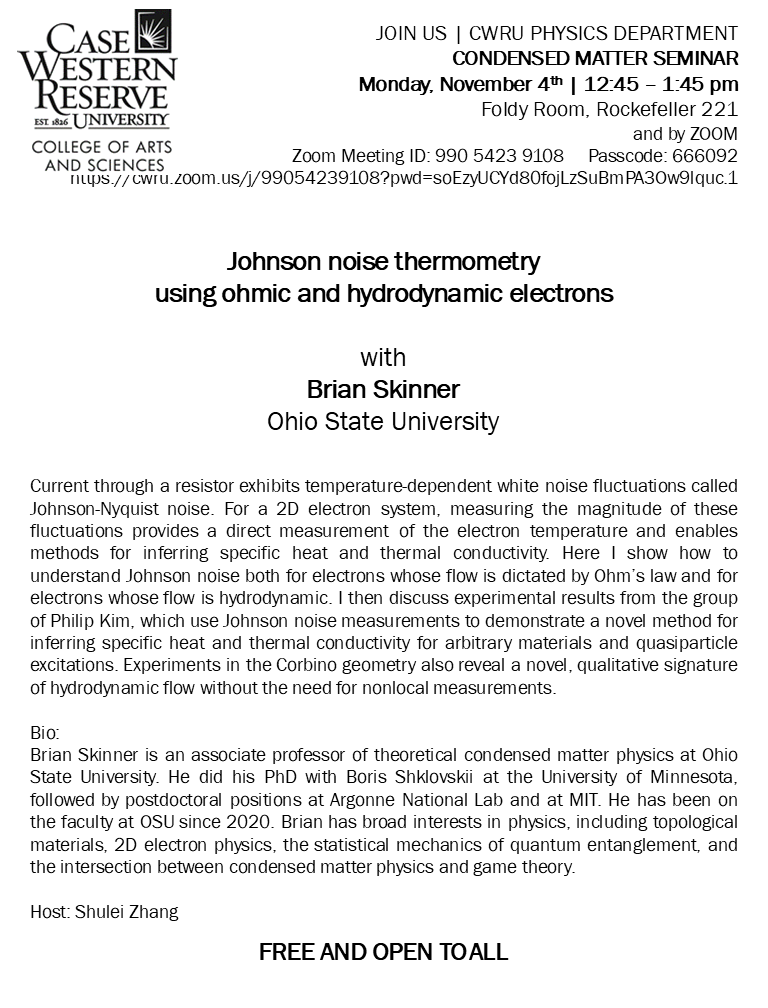
Join us TOMORROW, 11/4, at 12:45 pm in Foldy Room and Zoom for a condensed matter seminar! Brian Skinner (@gravity_levity) of @OSUPhysics will be speaking on "Johnson noise thermometry using ohmic and hydrodynamic electrons."
#physics #condensedmatter @cwru @CWRUartsci
1
2
1,086
31 Oct 2024
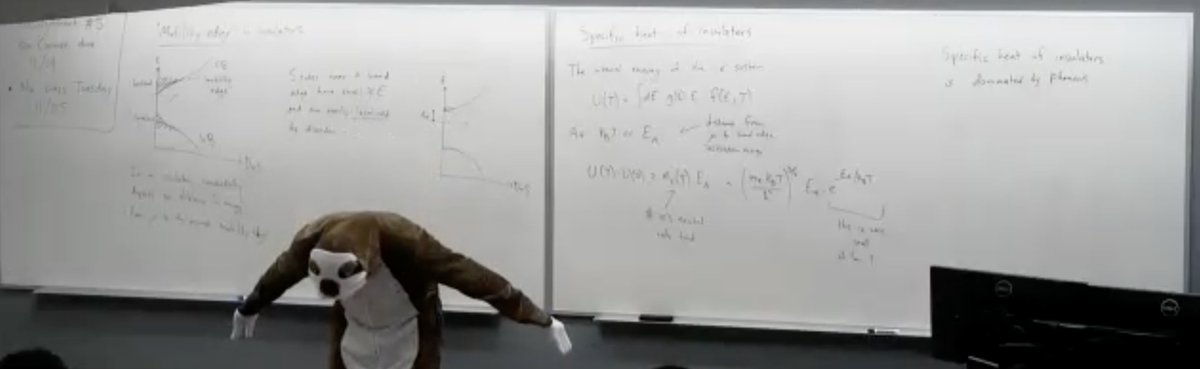
Sometimes being a dad means that you have to make a promise to your toddler and you end up lecturing to your graduate class wearing a giant sloth costume
3
2
120
5,679
14 Oct 2024
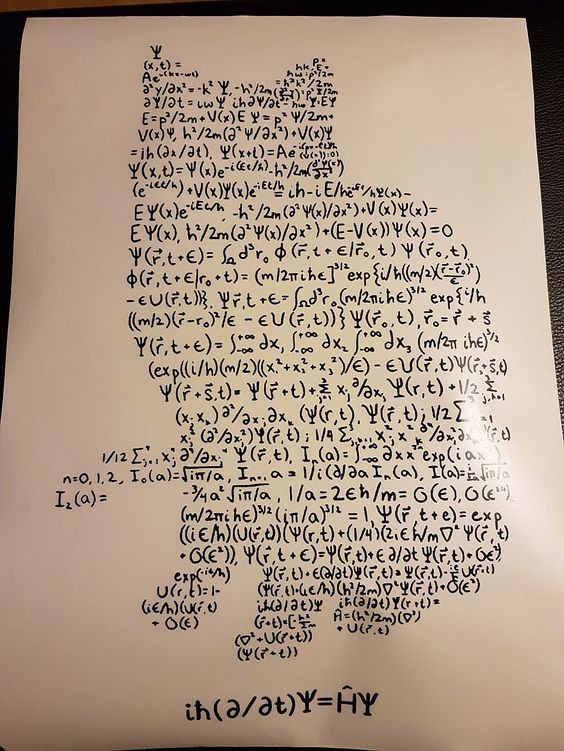
This is one of the most aesthetically unpleasant things I have ever seen.
Imagine thinking that quantum mechanics is just a jumble partial differential equations and ugly special functions.
14 Oct 2024

Schrödinger's cat made with Schrödinger's equation. ✍️
3
1
21
2,494
Brian Skinner retweeted

10 Oct 2024
Update: I plan to release a second edition of Plastic Fantastic by Kindle and Paperback through Amazon, correcting typos but otherwise not making changes. If you are or know a skilled typesetter available to help me reformat the cover art and manuscript please reach out.
19 Aug 2024

Today the rights to publish Plastic Fantastic: How The Biggest Fraud in Physics Shook The Scientific World, originally published 2009 by Palgrave Macmillan concerning the fraud of Jan Hendrik Schon at Bell Labs, reverted to me the author. 🧵
2
4
14
2,958