
So I started a 30-day Web3 challenge today and the first class already scattered my brain….. All jokes😂
We’ve been on Web2 this whole time thinking we own our content.
X owns your tweets.
YouTube owns your videos.
Facebook owns your story.
Web3 says; what if YOU owned all of that?
That’s the shift. And I’m just getting started.
Day 1 done ✅
@visual_jeht @MWealth03
#30DaysOfWeb3 #CTNG #Walkwithme

I’ll be embarking on a 30days challenge in learning Web 3 with - @visual_jeht , @MWealth03
#Walkwithme

2
8
70

In the world where things change quickly even in the world of technology.
We have web1,web2 and web3
First we have:
Web1:
1. Yahoo
2. AltaVista
3. Wikipedia
Web2:
1. TikTok
2. Facebook
3. YouTube
Web3:
1. MetaMask
2. OpenSea
3. Uniswap
#30DaysChallenge #30DaysOfWeb3

11
3
27
323

May 16
So, yesterday I found out I don't actually own my IG account, my tweets, or even my bank balance. Like¿
Frens, I started a 30 days learning basics about web3 @MWealth03 academy and I'm challenging myself for the next 30 days to take you along.
Day 1/30 loading.. #30DaysOfWeb3"

1
3
34

25/30
Today I went deep on DeFi.
Liquidity pools. Yield farming. DEXs. Lending protocols.
The whole ecosystem is basically traditional finance — just without the gatekeepers.
That part hit different.
#Web3 #DeFi #CryptoJobs #BuildingInPublic #30DaysOfWeb3
2
14

Feb 2
GM CT ☕
Day 18 of 30.
BTC at a 9-month low ($77k), but builders don't trade on fear. 🧪
The "Metals Meltdown" is noise. The $ELON TGE today is the signal.
Who’s still here? Dr.
#30DaysofWeb3 #Aptos #BuildInPublic

15
22
277
🧵 Day 19 of #30DaysOfWeb3
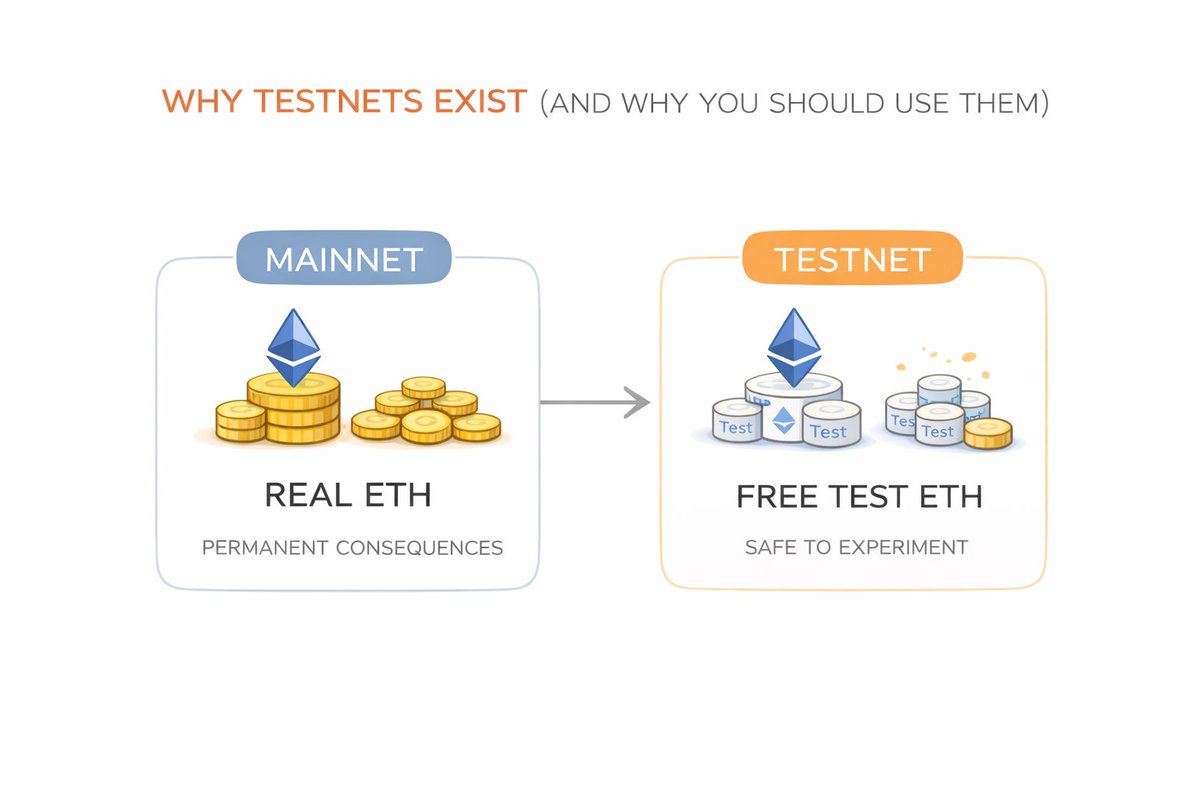
Before real money ever touches Ethereum, there’s a whole world people ignore.
Testnets.
Testnets are copies of Ethereum that behave like the real thing: same rules, same mechanics but except the money isn’t real. You get free test ETH, you can mess up as much as you want, and nothing breaks in real life.
In Web2, you learn by clicking around because mistakes are reversible. In Web3, mistakes are permanent.. so learning directly on mainnet is expensive and stressful. Testnets exist to remove that pressure.
They let you understand how wallets work, how transactions feel, what “pending” looks like, how approvals behave without the fear of losing anything. You’re learning the motion before adding consequences.
Most people skip this and jump straight into mainnet. Then they wonder why everything feels intimidating. Using testnets means that you are practicing in the same environment, just without risk.
If something feels confusing on mainnet, it’ll feel confusing on a testnet too and that’s exactly why you should start there.
If you didn’t know testnets existed, you’re not alone.
Now you do.
#30DaysOfWeb3
3
3
12
1,205
🧵 Day 18 of #30DaysOfWeb3
Yesterday we talked about token approvals… the permissions that quietly sit in the background.
Most people don’t realise this, but approvals don’t disappear when you stop using an app. They Sometimes stay for years. Even after you forget the app exists.
That doesn’t mean you’re constantly at risk but it does mean old permissions can be abused if something goes wrong later.
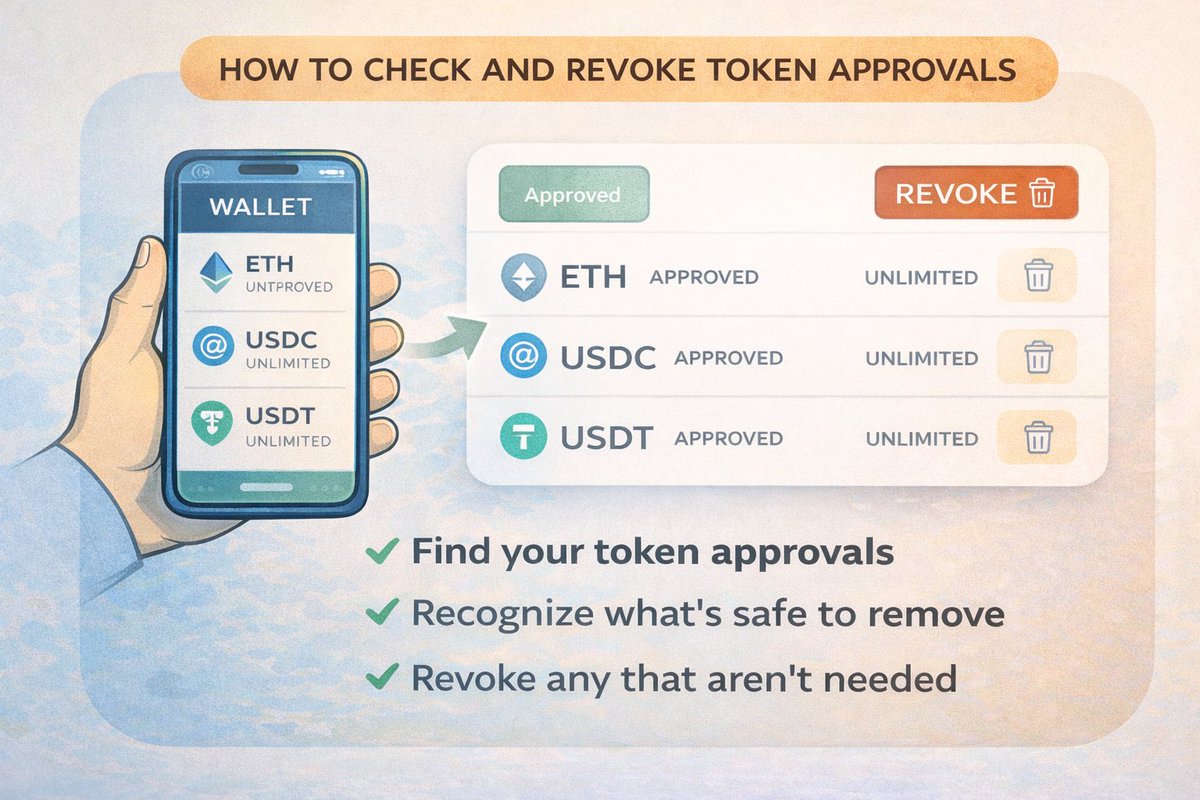
The good news is: you can check and revoke them.
There are tools that show every contract you’ve ever approved and exactly what it’s allowed to do. You don’t need to understand the code. You just need to recognise what you no longer use.
Revoking an approval doesn’t move your funds. It doesn’t “break” your wallet. It simply removes permission that no longer needs to exist.
Think of it like changing passwords you don’t use anymore… boring, but important.
A simple habit that helps:
If you haven’t used an app in months, it probably doesn’t need permission anymore.
If this made you want to check your wallet later, that’s a good instinct.
#30DaysOfWeb3
1
2
8
407

31 Dec 2025
🧵 Day 17 of #30DaysOfWeb3
There’s one action in Web3 that causes more damage than almost anything else and most people don’t even realise they’ve done it.
Approving a token.
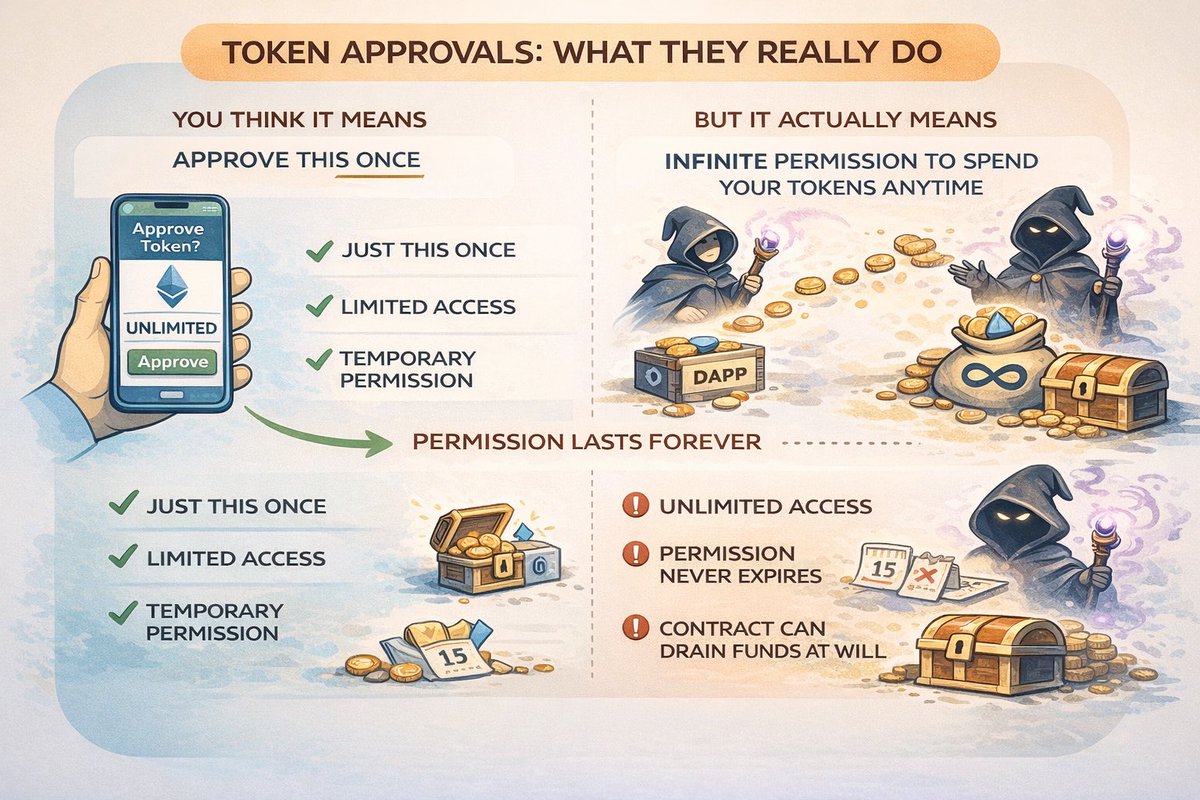
When you approve a token, you’re not moving money. You’re giving permission. You’re telling a smart contract, “You’re allowed to move my tokens later, without asking me again.
That permission doesn’t expire not does It reset after one use. And it doesn’t care if you forget about it.
Most people assume “approve” means “approve this one thing”. In reality, it often means “you can touch my funds whenever you want”..
This is why approvals are more dangerous than sends. A bad send happens once. A bad approval can be abused again and again.
And this is also why hacks and drains feel so sudden. Basically… The contract is simply using permission that was already granted.
The scary part isn’t that approvals exist. They’re necessary for apps to work. The scary part is approving without understanding what you’re approving.
A simple habit that saves people:
If you’re approving tokens, ask yourself “Am I approving a one-time amount, or unlimited access?”
If you don’t know the answer, don’t approve.
Tomorrow (Day 18): IMPORTANT
How to check and revoke old approvals and why everyone should do this once in a while.
If this made you pause for a second, that’s the point.
Drop a ❤️ if this is something you wish you’d known earlier.
#30DaysOfWeb3
3
2
8
342
30 Dec 2025
🧵 day 16 of #30DaysOfWeb3
At some point, everyone using Ethereum runs into the same thing.
You send a transaction…
and it just sits there………
Pending……………
Just stuuuccckkkkkk
It feels broken, but most of the time nothing is wrong.
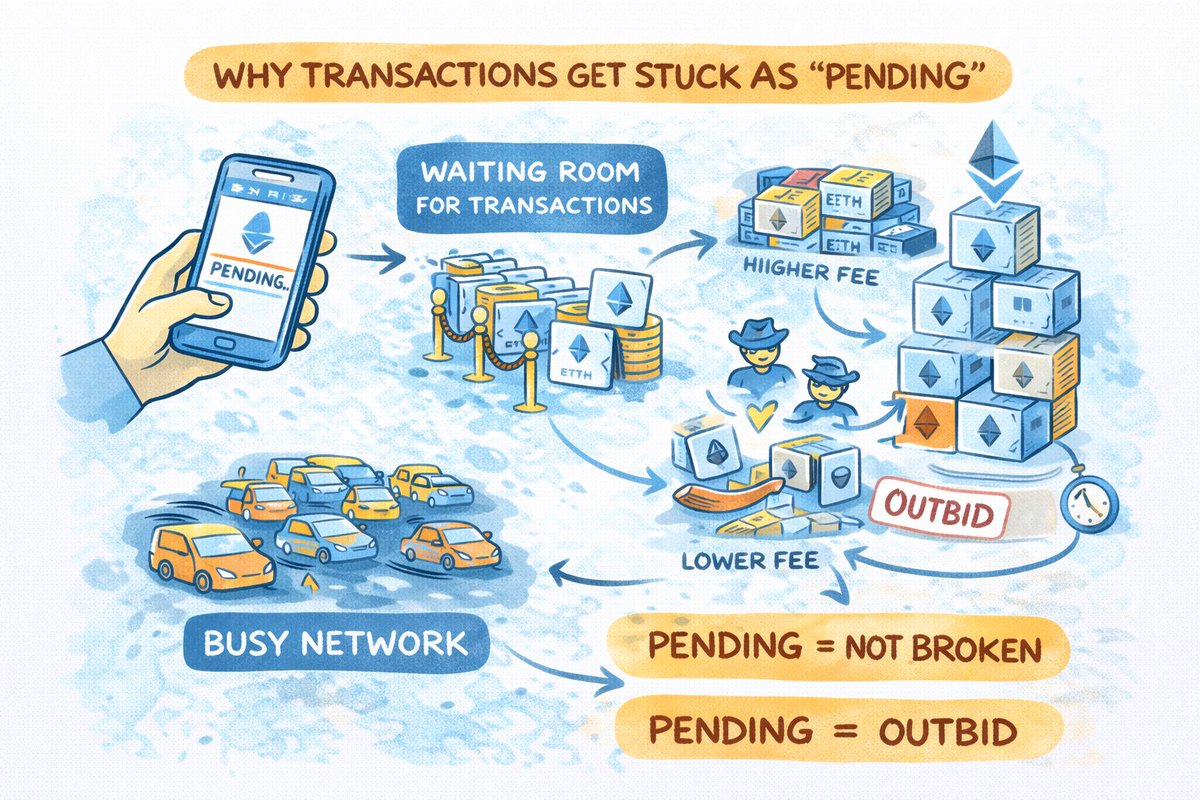
When you send a transaction, it doesn’t go straight into the blockchain. It goes into a public waiting room where thousands of other transactions are already sitting. Validators pick from that pool and include transactions that make sense to process right now.
What decides that order is It’s incentives.
If the network is busy and your transaction is offering a lower fee than others, it doesn’t get rejected but it gets skipped. Validators keep choosing transactions that pay more and yours stays in the queue waiting for a quieter moment.
That’s what “pending” really means.
This is also why increasing the fee often fixes it… you’re just telling the network you’re willing to pay more to be processed sooner.
And if the network never quiets down enough, the transaction can sit there indefinitely. Ethereum won’t cancel it for you, because from the system’s point of view, it’s still valid.
Once you see pending transactions as a pricing and demand issue.. the behavior makes sense.
#30DaysOfWeb3
3
2
6
332
29 Dec 2025
🧵 Day 15 of #30DaysOfWeb3
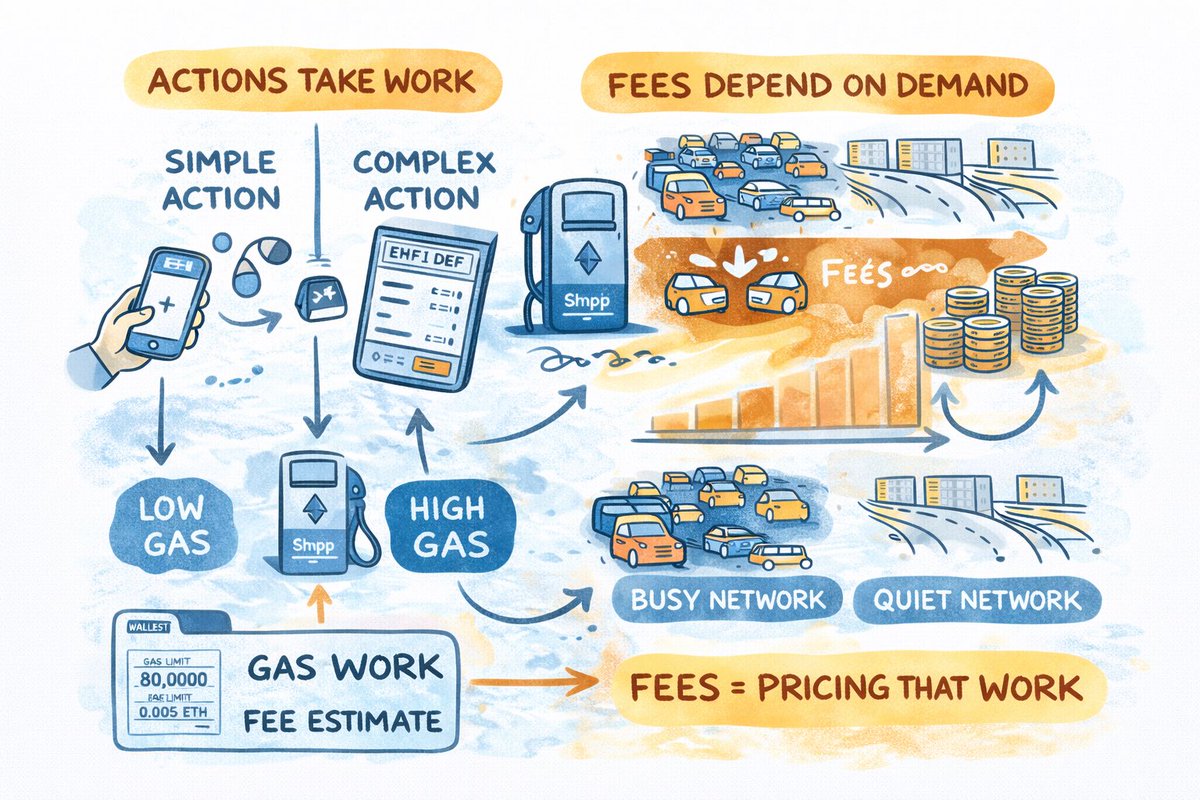
Gas sounds complicated until you realise it’s just a way of measuring work.
Every time you do something on Ethereum, the network has to do actual computation. Some actions are simple and quick. Others are heavier and touch more parts of the system. Gas is how Ethereum measures that difference.
That amount of work doesn’t change. Sending ETH always costs about the same amount of gas. Using a complex app always costs more. What changes is how expensive that work becomes at that moment.
When few people are using the network, the same work is cheap. When everyone wants to use it at once, the price of that work goes up. Not because anyone raised prices, but because the space is limited and demand increased.
This is also why wallets ask you to set a gas limit. You’re not setting the fee or anything you’re just setting the maximum amount of work you’re willing to pay for. If the action needs less, it uses less. If it needs more, it fails.
Once you see gas as work and fees as pricing that work, Ethereum starts to feel less random and more mechanical.
Tomorrow (Day 16):
Why transactions sometimes sit pending and what the …… actually makes them move.
#30DaysOfWeb3
2
3
9
295
28 Dec 2025
Day 14 of #30DaysOfWeb3
At some point, everyone using Ethereum asks the same question.
“Why am I paying a fee just to do anything?”
It feels annoying at first. Sometimes even suspicious. But once you understand why fees exist, a lot of things about Web3 suddenly make sense.
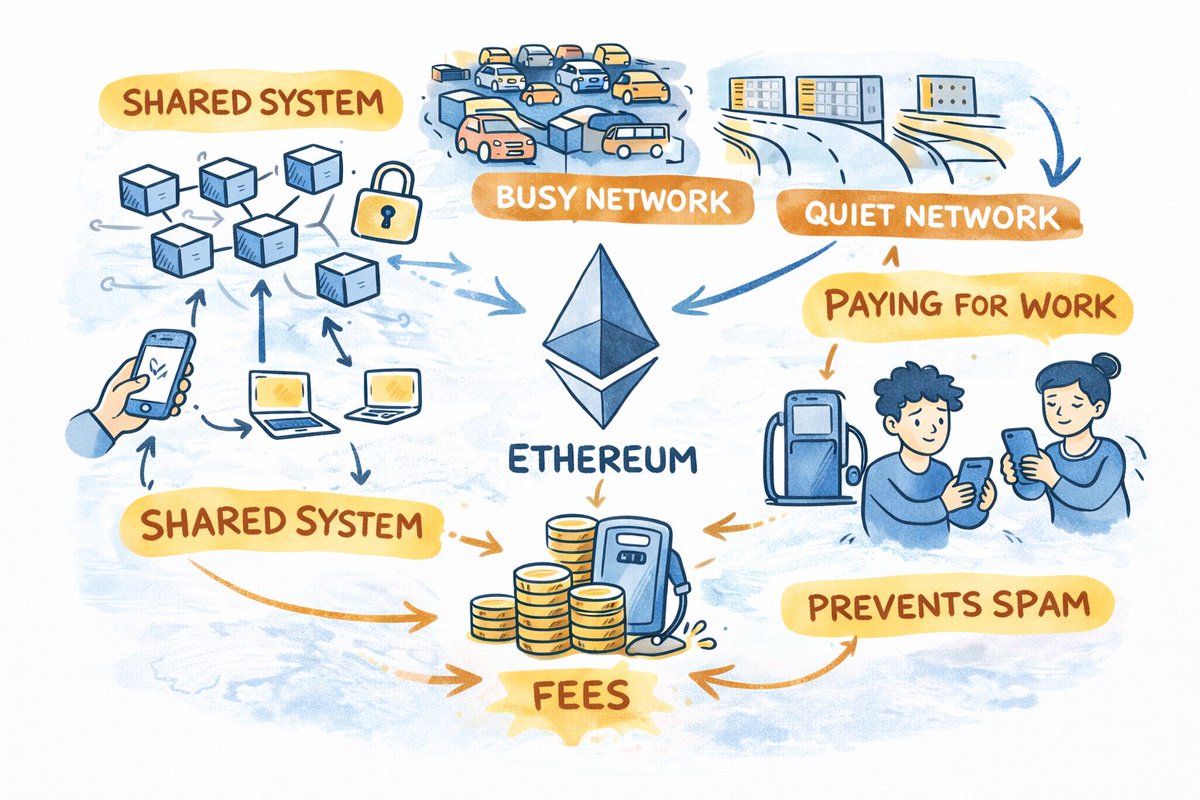
Ethereum is a shared system. Thousands of computers around the world are keeping the same record in sync. Every action you take, be it sending money, using an app, approving something, it alwaysssss asks all of them to agree on what happened.
That coordination costs something.
Fees are simply how Ethereum decides whose actions get processed, in what order, and how much effort the network is willing to spend on them. You’re not paying a company. You’re paying the system to include your action.
When the network is quiet, fees are low.
When lots of people want to use it at the same time, fees go up.
This is important: fees are there to prevent spam and abuse. Without fees, anyone could flood the network and break it. Fees force people to value their actions.
Think of it kinda like a shared highway. When traffic is light, you move freely. When everyone shows up at once, space becomes less. The fee is how Ethereum manages that scarcity without a central controller.
And this is why Ethereum feels different from Web2. There’s no “free” action backed by ads or data collection. Every interaction has a real cost, because it consumes real shared resources.
Tomorrow (Day 15):
Why some actions cost more than others and what “gas” actually measures.
If this finally made fees feel logical instead of frustrating, drop a ❤️.
Understanding this changes how you use Ethereum.
#30DaysOfWeb3
5
3
13
312
26 Dec 2025
Day 13 of #30DaysOfWeb3
Before we go any further, we need one clear base.
Most of what we’ve talked about so far happens on blockchains and most of the time, that blockchain is Ethereum.
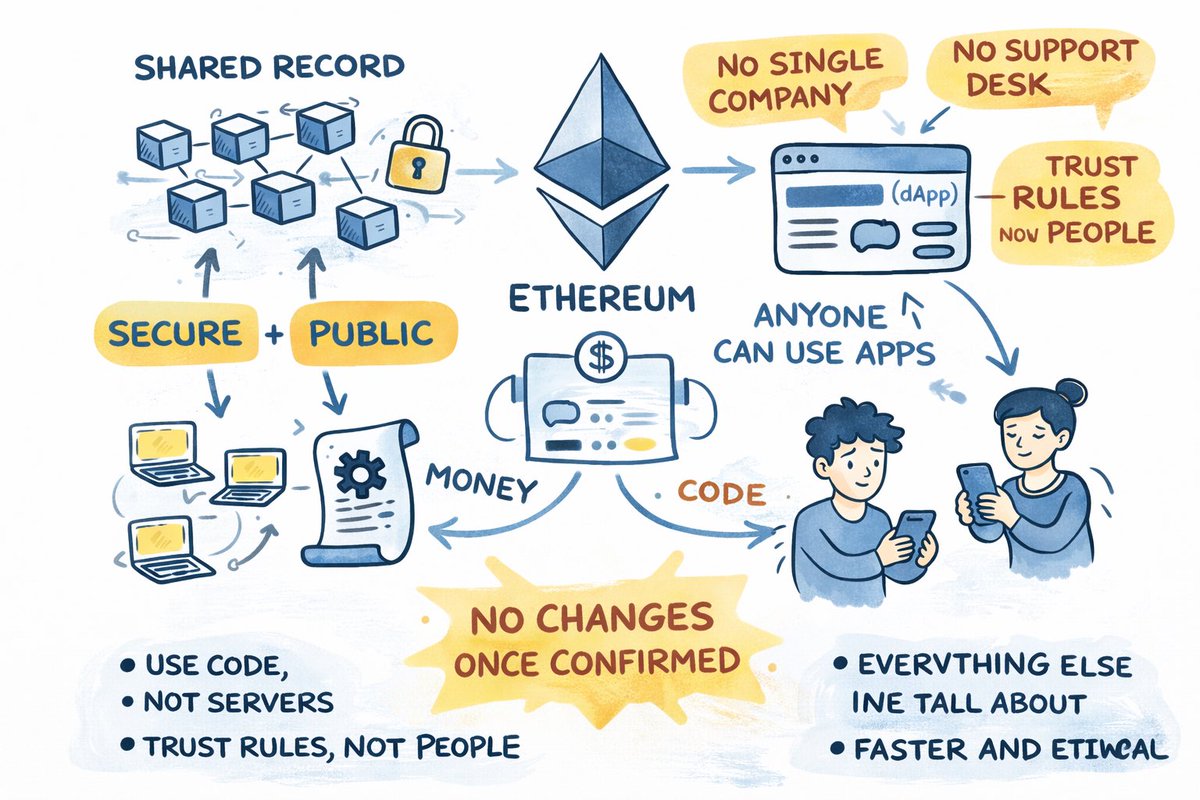
A blockchain is simply a shared record. Many computers keep the same data in sync and no single company controls it. Once something is written there, it can’t be quietly changed or undone.
Ethereum builds on this by letting code live on that shared record. When you use an app on Ethereum, you’re not trusting a company’s server but you’re interacting with code that runs the same way for everyone.
That’s why Web3 feels different.
There’s no account recovery, no support desk and no one making exceptions behind the scenes. The system only checks one thing: whether the rules are followed.
Ethereum is built for consistency and neutrality.
Everything else we’ll talk about, wallets, approvals, fees, smart contracts only makes sense because of this.
Tomorrow (Day 14):
What actually happens when Ethereum processes an action and why gas exists.
4
1
14
469
25 Dec 2025
🧵 Day 12 of #30DaysOfWeb3
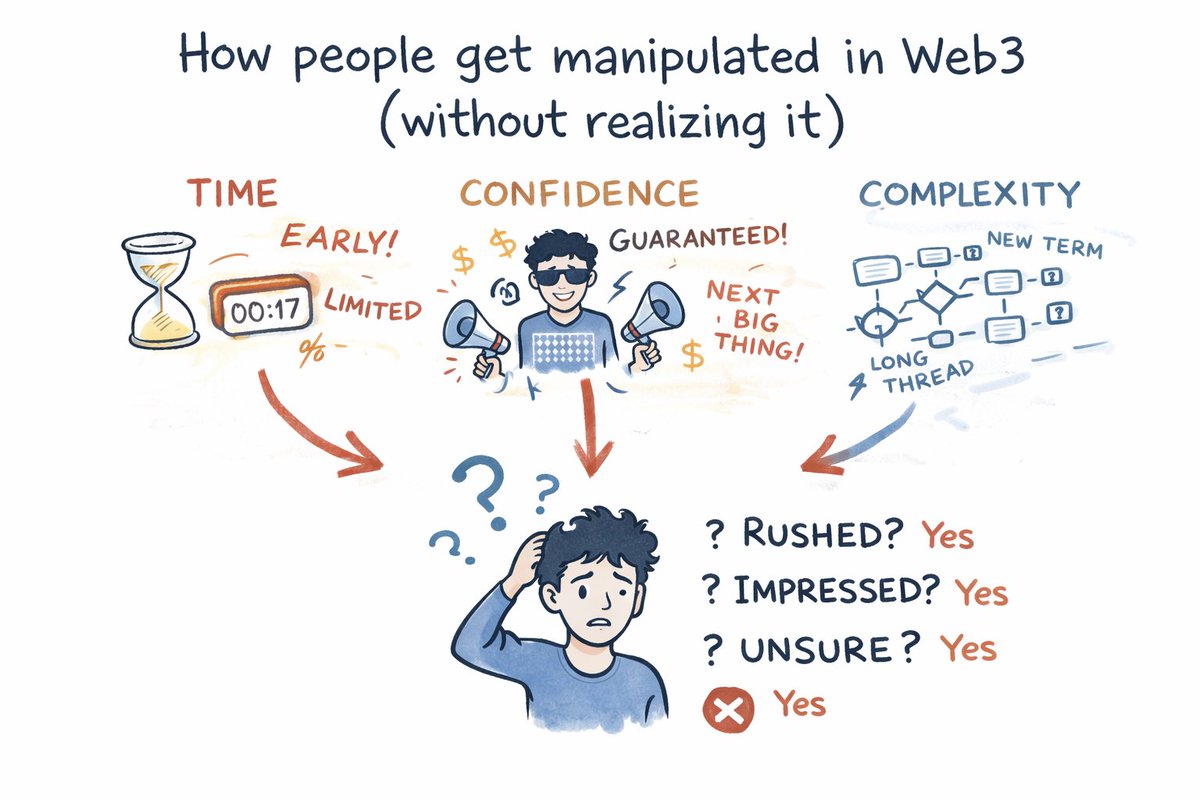
How people get manipulated in Web3 (without realizing it)
Don’t know who has to hear this but…..
Most people who get burned in Web3 don’t think they’re being careless. In fact, they usually think they’re being rational. They did some reading. They followed smart people. They didn’t jump in blindly.
Manipulation here rarely looks like a scam. It feels more like a nudge. A sense that something is happening and you should probably pay attention. just enough pressure that doing nothing starts to feel uncomfortable.
It often begins with time. Words like early, limited, before everyone else catches on. Nothing forces you to act, but waiting starts to feel like a mistake. Then comes confidence. People speaking very clearly, very decisively, as if the outcome is obvious. When enough certainty surrounds you, doubt starts feeling like ignorance.
And then there’s complexity. Long threads. Fancy diagrams. New terms stacked on top of each other. At some point, people stop asking questions because they don’t want to admit they don’t understand.
That’s the moment manipulation works best. When you’re slightly rushed, slightly impressed, and slightly unsure but still moving forward.
Good systems don’t need this. They survive scrutiny. They’re fine with you slowing down. Bad ones depend on momentum, confusion, and silence.
So here’s a simple internal check that helps more than any tool:
If something makes you feel hurried, confused or embarrassed to ask basic questions… step back.
Real opportunities don’t disappear when you slow down. Only bad ones do.
Tomorrow (Day 13):
The difference between learning Web3 and using Web3 — and why mixing them up causes most mistakes.
If this felt familiar in an uncomfortable way, you’re not alone.
Drop a ❤️ if this made you more alert.
#30DaysOfWeb3
2
3
13
340
24 Dec 2025
Day 11 of #30daysofweb3
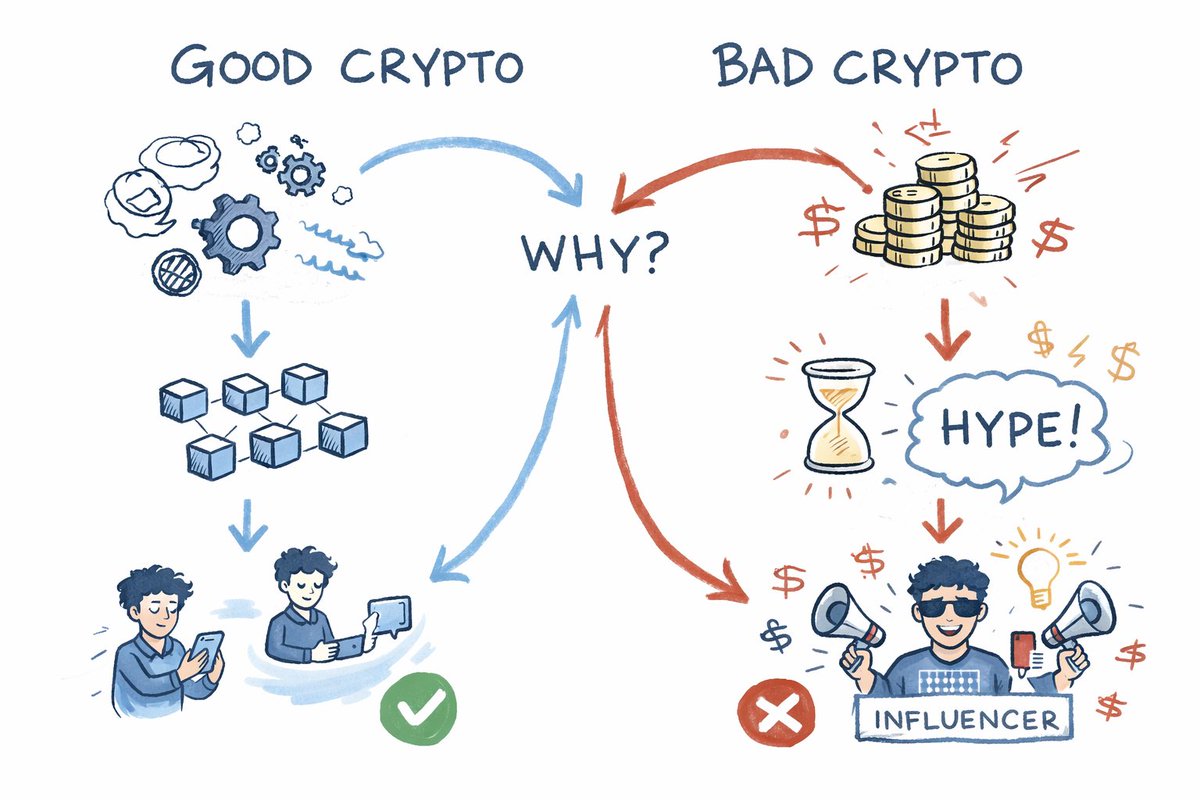
“How do I know what’s real here… What is good crypto and why is bad??”
Because once you look past the technology, you realise crypto isn’t one thing. Some of it is genuinely trying to fix broken systems. A lot of it is just trying to grab your attention fast.
Bad crypto usually doesn’t give you time to think. It pushes urgency, excitement, and the feeling that you’re early and special. It wants you focused on what you might gain, not on what the thing actually does. If you step back and ask why does this need to exist, the answer is usually vague or wrapped in promises.
Good crypto feels different. It’s slower. It talks more about problems than profits. It doesn’t panic if you don’t act today, and it doesn’t need constant hype to survive. You can usually explain what it’s trying to do without mentioning price at all and that’s a good sign.
None of this means “good” crypto always wins, or that “bad” crypto always disappears. But one is built around usefulness, and the other is built around attention. Over time, that difference matters more than charts ever will.
If something only makes sense when number go up, it probably doesn’t matter when they don’t.
Tomorrow (Day 12):
The warning signs people notice too late even when they think they’re being careful.
If this helped you slow down and look at things differently, drop a ❤️.
#30DaysOfWeb3
6
4
13
533
22 Dec 2025
Where are you right now in Web3?
🧵Day 10 of 30 #30DaysOfWeb3
Let’s pause the explaining for a second.
Are you:
– just curious, reading quietly
– understanding the ideas but scared to touch anything
– already using a wallet but not fully confident
– excited but overwhelmed
– or here mainly because you don’t want to be left behind
There’s no “correct” stage.
Most people in Web3 pretend they know more than they do. That’s how bad decisions happen.
So before we add more concepts, it helps to know your own starting point. Clarity about where you are is more valuable than any new information I could give you today.
Tomorrow, we’ll continue but with this in mind. What actually matters at your stage, and what you can safely ignore for now.
If this pause felt useful, drop a ❤️
Sometimes the smartest move is not moving at all.
READ IT AGAIN!
#30DaysOfWeb3

2
1
14
279
19 Dec 2025
Day 9 / 30 or #30DaysOfWeb3
you probably sat there thinking, o"kay… I get wallets now, but what happens next"?
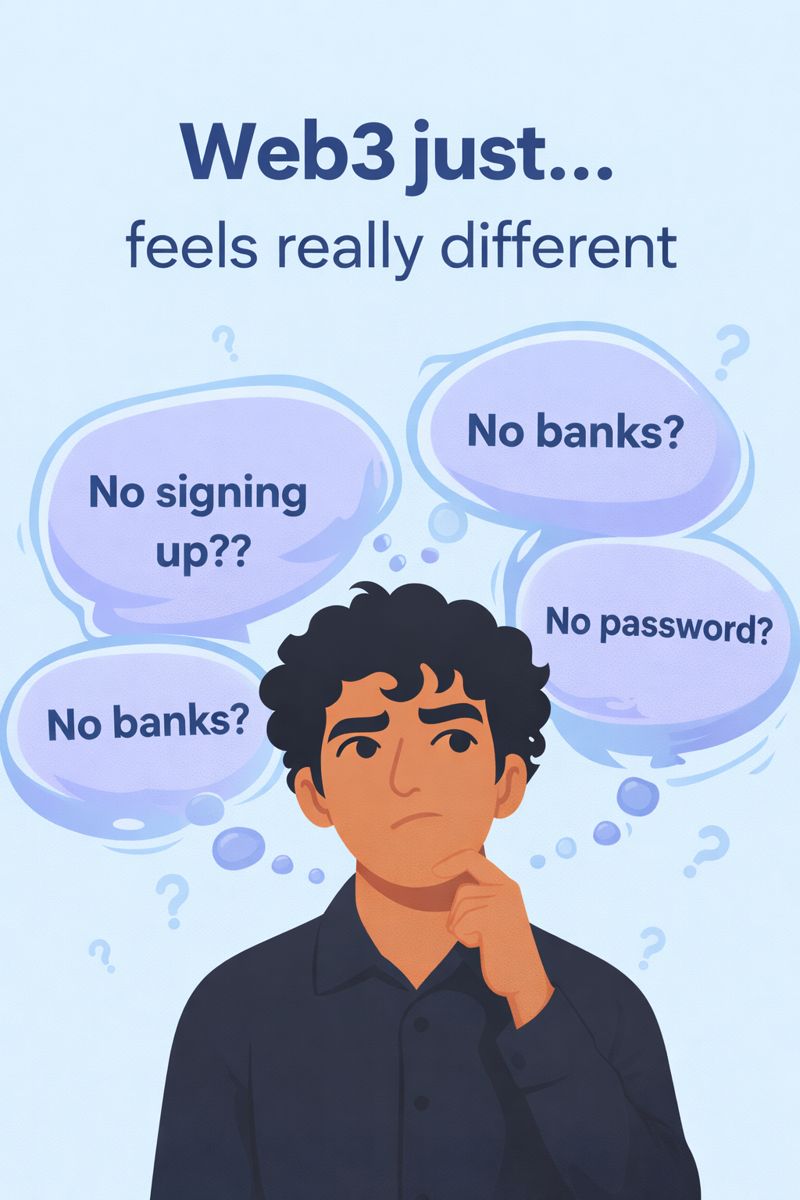
There’s no moment where you “create an account”. No email, no password and no more "OTPs". You open an app, connect your wallet, and that’s it. Without really announcing it, your wallet becomes your login, your signature, and your proof that you’re you!
When you do something in Web3. you’re not submitting a request and waiting for approval. You’re just saying yes. You’re signing something that says, I approve this, and the network checks whether you actually can. If you have the funds and the permission, it happens. If you don’t, it doesn’t. No one steps in between.
That’s the part that feels powerful. And also a bit unsettling.
Because there’s no help desk behind the curtain. No one to email if you mess up. No undo button if you click too fast. You’re not trusting a company to look after you anymore, you're trusting yourself. It’s the first time the internet treats you like an adult. Full control, full responsibility, no safety net.
Drop a ❤️ if it clicked.
#30DaysOfWeb3
4
5
17
372
16 Dec 2025
Day 8 of #30DaysOfWeb3
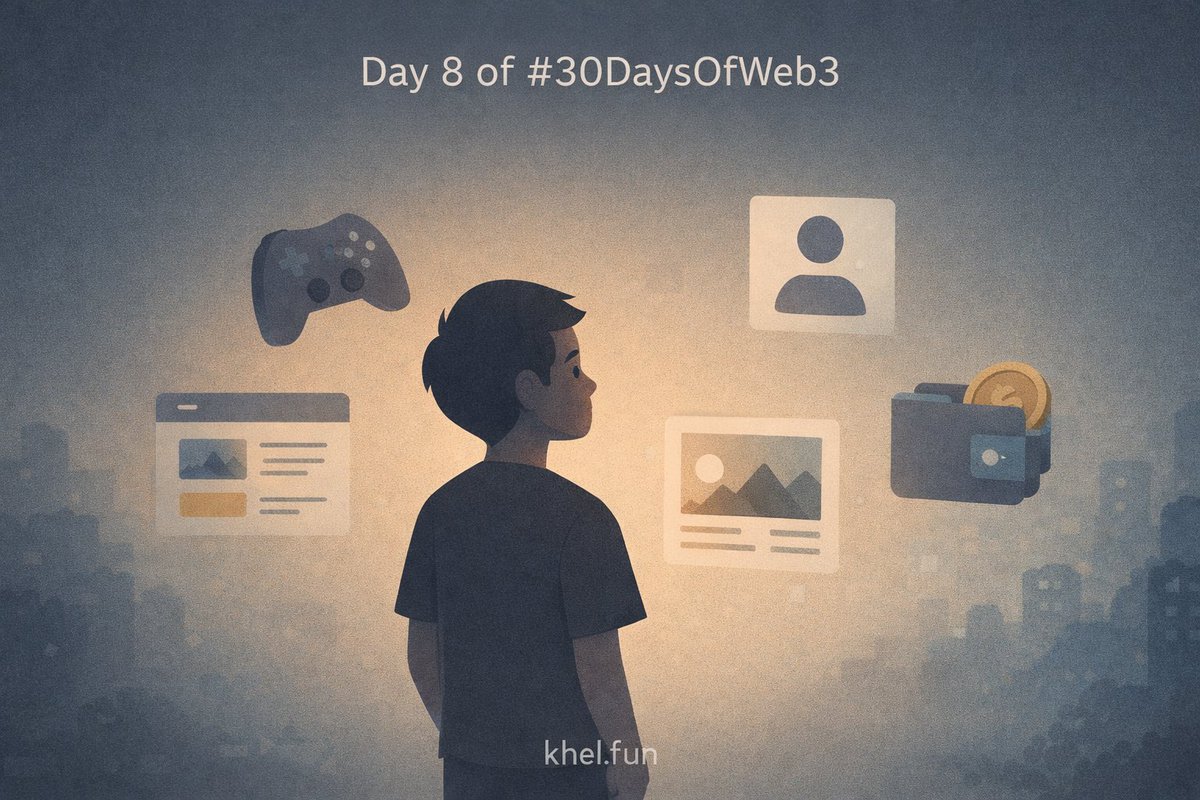
I want to pause for a second because this series isn’t really about proving that Web3 is good or bad. It’s more about figuring out why these ideas showed up in the first place. Most of them didn’t come from nowhere, they came from very normal frustrations people already had with the internet losing access, losing work, losing progress, losing control over things they put time into.
Gaming is just one place where this is really obvious. So is content. So is money. So is identity. You spend time building something and at the end of the day it mostly exists at someone else’s permission.
That’s why I keep coming back to ownership in this series. Not ownership as an investment thing, but ownership as durability. Does the thing you earn stick around? Does it survive platform changes, shutdowns, or shifts in incentives? Or does it disappear the moment it stops being useful to the system it lives inside?
If Web3 doesn’t make things simpler, fairer, or more durable, it’s probably not worth using, and I’m not interested in pretending otherwise.
Tomorrow I’ll talk about what “play-and-own” actually means, without marketing language or promises, just the idea itself and where it fits into everything we’ve talked about so far.
If you’re still reading along, you’re doing this the slow way, which is usually the right way.
#30DaysOfWeb3
3
3
24
682
14 Dec 2025
7/30
Day 7 of #30DaysOfWeb3
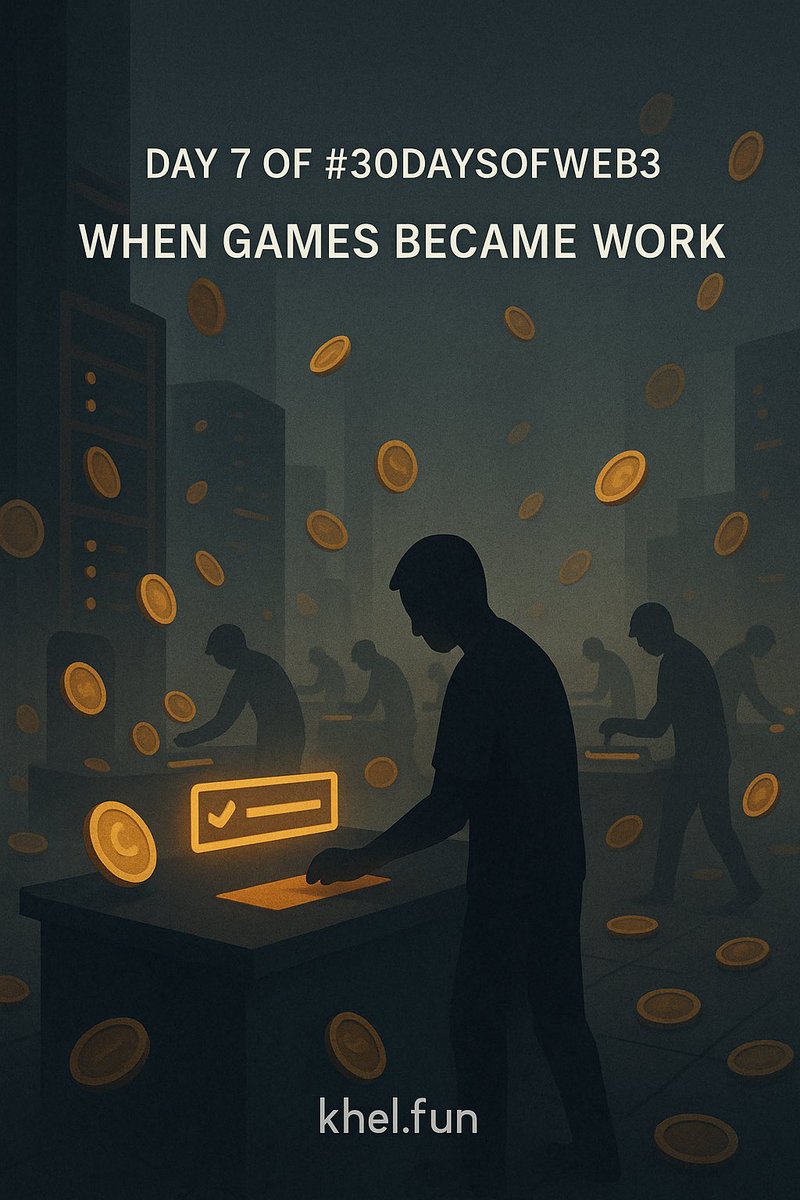
Play-to-earn sounded amazing on paper. Play games, earn money, win-win. And then it… didn’t really work.
Games stopped being games. People weren’t playing because it was fun, they were playing because they had to. Bots showed up. Then Farms showed up.and Everything turned into spreadsheets and token prices.
Once the rewards dropped, players left.
Because there was nothing else holding them there. That’s when it clicked for a lot of people: the problem was never “earning” but it was ownership.
Gamers don’t want jobs. They want worlds that respect their time.
If I put hours into a game, I don’t need to cash out every day. I just don’t want my progress to vanish when the hype dies or the studio pivots.
That’s where Web3 gaming is slowly moving now — away from “earn” and toward “keep”. Own your items. Own your identity. And Let value build naturally instead of forcing it.
Khel.fun is one such platform where we are leaning into that shift, focusing on gameplay first, ownership, and incentives that don’t break the game.
Fun first. Ownership second. Everything else follows.
Follow @Kheldotfun for more such content!
3
1
19
520
13 Dec 2025
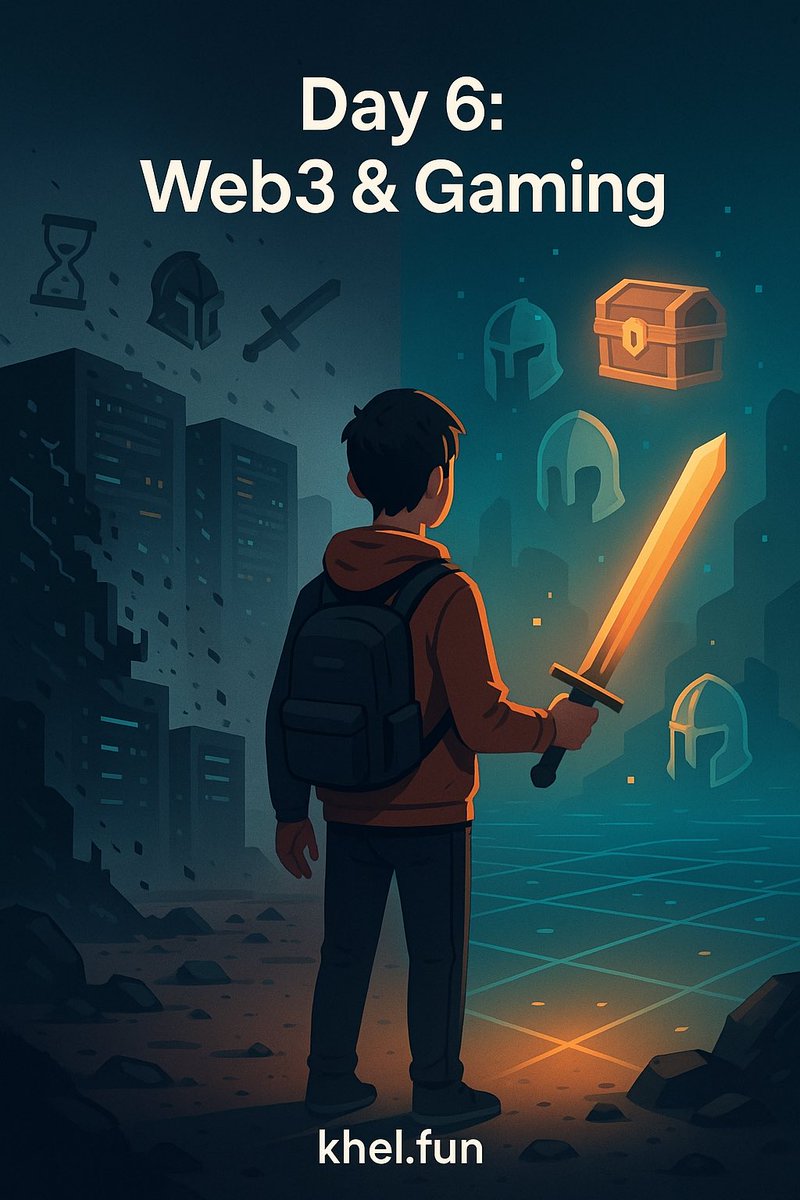
6/30 #30DaysOfWeb3 : Web3Gaming
I think the real reason Web3 gaming exists isn’t even that exciting. It’s not tokens or some “future of gaming” thing. It’s just that at some point you realise how much time you’ve put into games and how little of it actually belongs to you.
You grind for months, sometimes years, you unlock stuff, build an account, get attached to it… and then one day the game shuts down, or your account gets banned, or the company just moves on. No discussion, no appeal, no “but I earned this”
And we’ve all just accepted that as normal, which is kind of weird when you think about it.
Web3 gaming is basically someone looking at that and saying: why does everything I put time into vanish just because a game does? If I earned an item, why don’t I own it? If I built progress, why does it only exist as long as a company allows it?
That’s where wallets and on-chain items start to matte as a way to make progress feel less disposable. You play a game, you earn something, and it actually stays with you instead of living and dying inside one server.
That’s the direction platforms like Khel.fun are trying to move toward. Less about pushing one specific game, more about making sure players don’t lose everything the moment a game stops being useful to a company.
You play. You build. You keep what you earn.
Tomorrow I’ll get into why play-to-earn sounded great and then kind of broke things.
5
3
19
416
12 Dec 2025
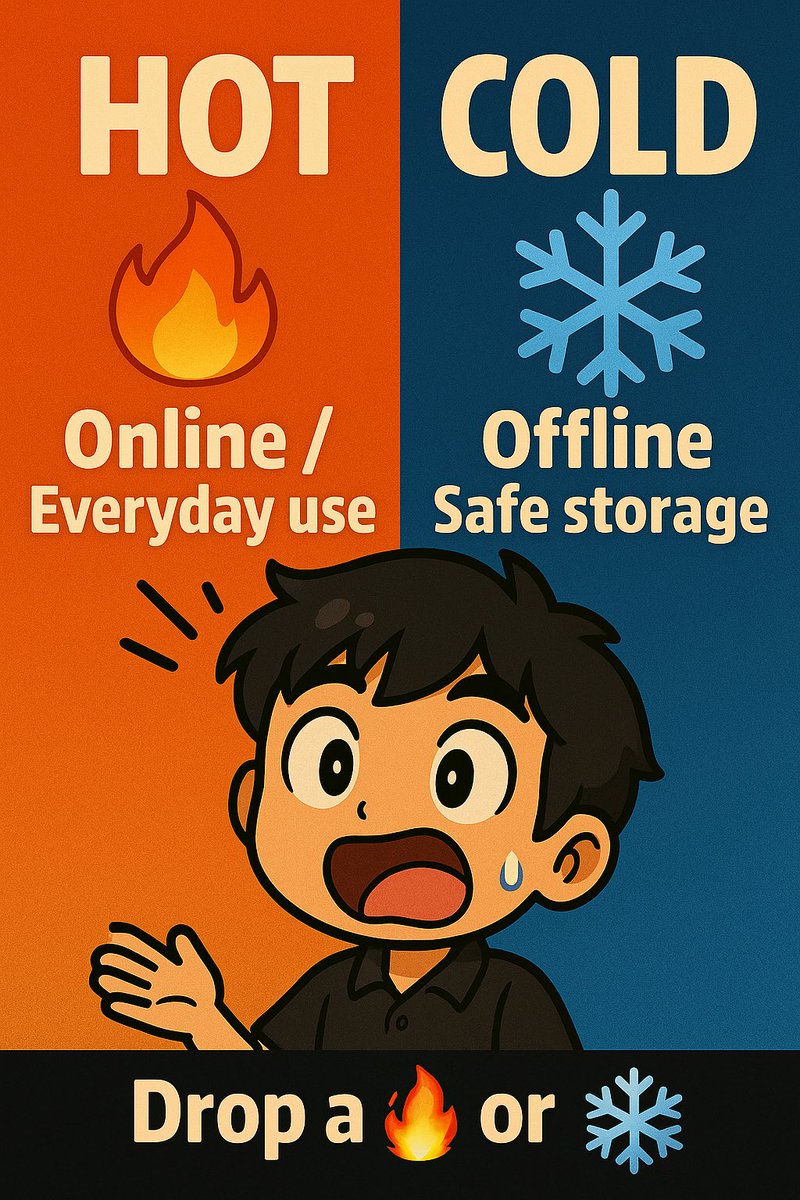
Day 5/30 #30DaysOfWeb3 : Hot vs Cold Wallets
When I first heard “hot wallet” and “cold wallet”, I genuinely thought there’d be fire and ice involved 😂
The real difference is stupidly simple:
A hot wallet is just a wallet that’s online.
You use it for normal stuff Like signing in, claiming rewards, trading, playing games, whatever. It’s fast and convenient.
A cold wallet stays offline.
You only use it when you need to protect something you REALLY don’t want to lose. Think of it like putting your rarest loot in a locker instead of keeping it in your backpack.
Most people only need a hot wallet to start. Especially gamers. You’re not storing millions but you’re just trying to jump into a game without getting hacked or confused by tech.
Cold wallets are great… later. For beginners, they’re like buying a massive safe when you only own one USB drive.
Tomorrow: how to choose a wallet without feeling like you’re signing a mortgage.
#30DaysOfWeb3
4
2
18
528