
Jun 3
Can we use AI to piece history back together? 🏛️✨
I’m excited to be speaking today at the 2nd International Workshop on Spatial Intelligence for Cultural Heritage (SINT4CH) here at #CVPR2026!
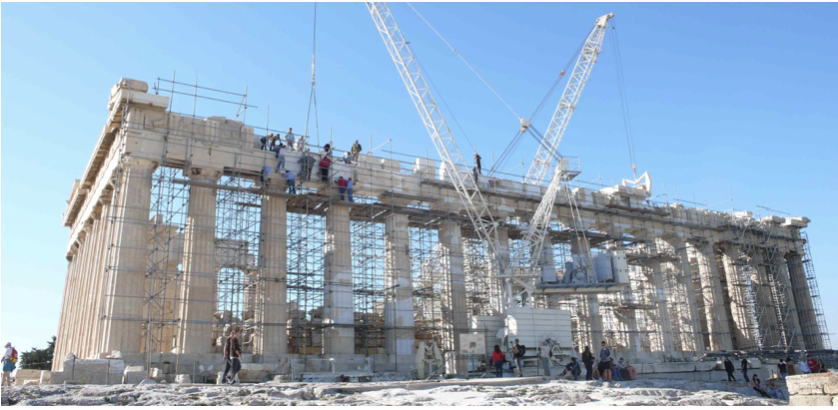
Join me at 1:35 PM in Room 708, where I’ll be diving into generative 3D assembly and how it's opening up incredible new frontiers—and unique challenges—for monument restoration.
sint4ch.fbk.eu/program
▶️But then come back to the "Computer Vision for the Built World" at Room 109 to check our workshop and our amazing speakers!
cv4aec.github.io/
#ComputerVision #SpatialIntelligence #CulturalHeritage #3DDeepLearning
1
3
22
1,837

25 Jun 2025
ProxelGen: Generating Proteins as 3D Densities
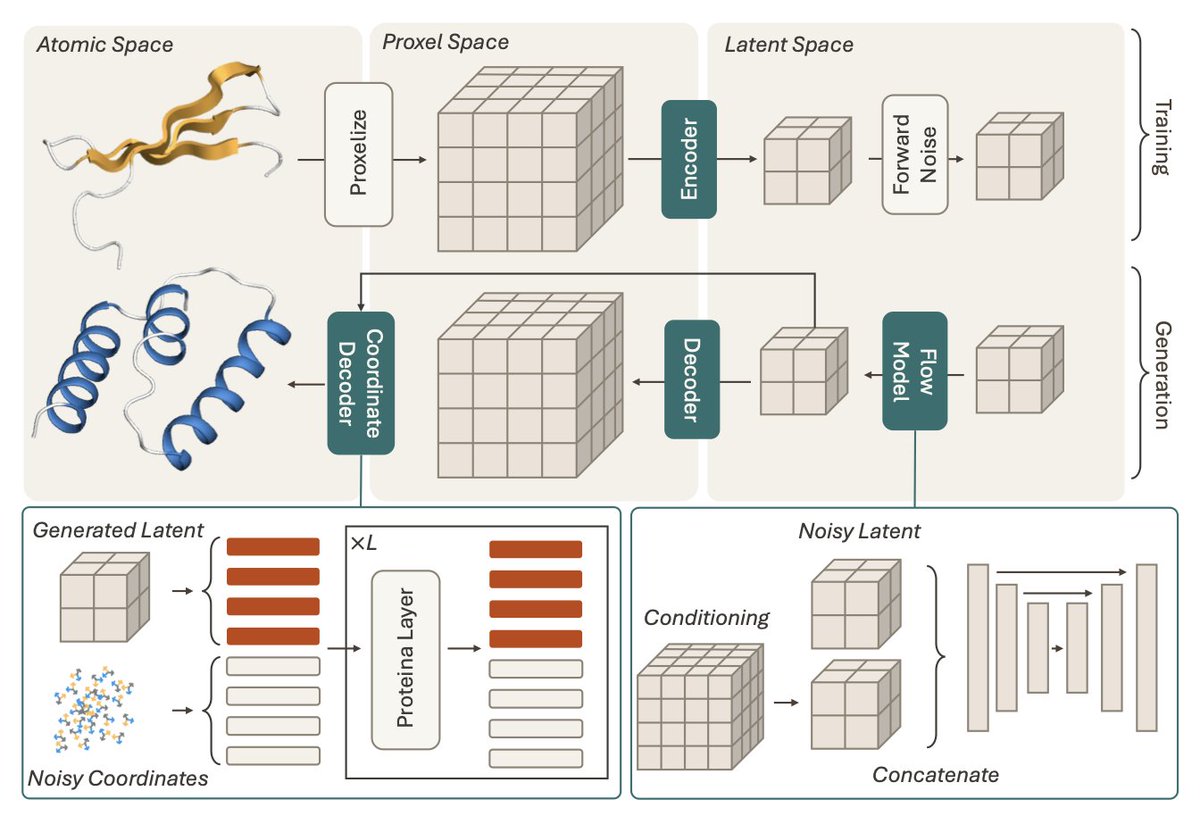
1.ProxelGen introduces a new representation for protein structure generation: voxel-based 3D densities called "proxels", in contrast to traditional point-cloud or atomic representations. This shift allows novel conditioning capabilities and efficient generative modeling.
2.Instead of modeling proteins as lists of atoms or frames, ProxelGen treats them as 3D grids with multiple channels capturing atomic densities and chain flow. This design enables convolutional networks and efficient latent diffusion modeling.
3.ProxelGen combines a 3D CNN-based variational autoencoder (VAE) with a latent flow model to generate proxel-based protein structures. The VAE compresses spatial information, enabling a 512× reduction in dimensionality.
4.This voxel-based representation supports flexible spatial conditioning. Tasks like motif scaffolding or inpainting become simpler, as the model operates on fixed-size 3D grids and doesn’t require specifying residue numbers or positions.
5.Unlike traditional models that scale with protein length, ProxelGen scales with grid resolution. This avoids quadratic or cubic complexity from long proteins, making it efficient for large or complex designs.
6.For decoding voxel-based representations into atomistic coordinates, ProxelGen fine-tunes a small Proteina model and refines structures using a larger one, ensuring compatibility with tools like ProteinMPNN and ESMFold.
7.On unconditional protein generation, ProxelGen outperforms state-of-the-art models (e.g., Proteina) in FID, structural diversity, and contact complexity, while maintaining similar levels of designability.
8.In motif scaffolding benchmarks, especially with complex or multi-segment motifs, ProxelGen achieves higher unique success counts than all prior methods, benefiting from spatial rather than sequence-based conditioning.
9.ProxelGen also supports shape-conditioned generation. It can generate proteins that fit arbitrary 3D shapes specified as voxel masks, demonstrating high F1 scores for shape adherence without memorizing original structures.
10.To evaluate proxel quality, the authors introduce ProxCLR, a self-supervised contrastive model trained on proxel representations, and adapt Frechet Inception Distance (FID) for proxels to assess sample quality and diversity.
11.ProxelGen’s density-based framework enables new axes of control and expressivity in generative protein modeling and opens avenues for training on experimental density data (e.g., electron densities) rather than atomic models.
12.Limitations remain: generated proxels can represent fragmented chains, and enforcing global connectivity remains challenging. Improving the atomic decoder to respect motif constraints could further boost downstream performance.
📜Paper: arxiv.org/abs/2506.19820
#ProteinDesign #GenerativeModels #3DDeepLearning #LatentDiffusion #ComputationalBiology #ProxelGen
1
5
60
3,695

21 Nov 2024
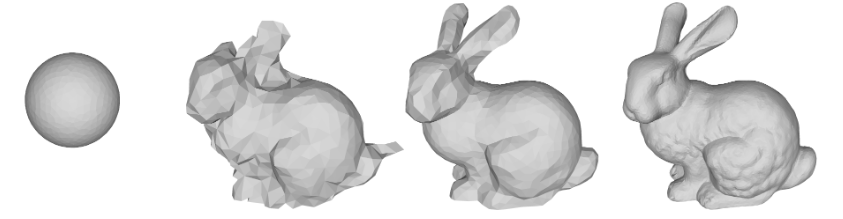
Creating 3D models was never easier. Checkout the demo video youtu.be/qkPsr_t95EE?si=6pJp…
#computerVision #ARVR #digitaltwins #AIin3D #3DDeepLearning #CVPR #WiML #AIResearch #neurips2024 #YCombinator #3DForEveryone #startups #Web3D #3DInnovation #3DVisualization

1
3
287

16 May 2022
Tell me one field you would like to learn to expend your expertise?
For me : Differentiable rendering, 3D deeplearning, neural render...
#b3d #AI #3Ddeeplearning #differentiablerendering #neuralrendering #technicalArtist
1
1
3

Our Lab is a #3dDeepLearning candy shop. If this is your kind of sweets consider applying for an internship🍭
22 Dec 2021

In the NVIDIA Toronto AI Lab, we are looking for motivated interns to join our group either next summer or all year long!📢 We are working on 3D/4D vision, simulation for robotics/AV, generative modeling, content creation, and more. Please apply here #CV nam11.safelinks.protection.o…
5
56

6 Dec 2021
🔉 Learn how we help #automate & #robotise even the most complex crop work tasks in the #agricultureindustry with #3ddeeplearning 🌱?
We’ve scaled 600 #agriculturemachines across the world together with our partners.
#ISOGroup
📽️ Full case study: robovision.ai/case-study/agr…
1
3

27 Aug 2020
Very honored to have hosted Dr. @ilkedemir today to learn on her research on "Shape Representations from Generative Models to 3D Deep Learning". You can watch her talk here. 🌻
💯
#computergraphics #computervision #deeplearning #3Ddeeplearning
youtube.com/watch?v=wJxuR5nV…
2
13

Interested in 3D deep learning? Researchers with NVIDIA recently introduced Kaolin, a new PyTorch library with an aim to accelerate 3D deep learning research.
#PyTorch #3DdeepLearning #ai #educateai #deeplearning #openSourceSoftware
Read more: medium.com/ai³-theory-p…
1
Watching a fascinating talk by @drsrinathsridha from our lab at Stanford, on Deep Learning for Digitizing Human Physical Skills. it's broadcasted live here: youtube.com/watch?v=hxGNAREb…
#guibasLab #3DdeepLearning
1
1
6

26 Sep 2018
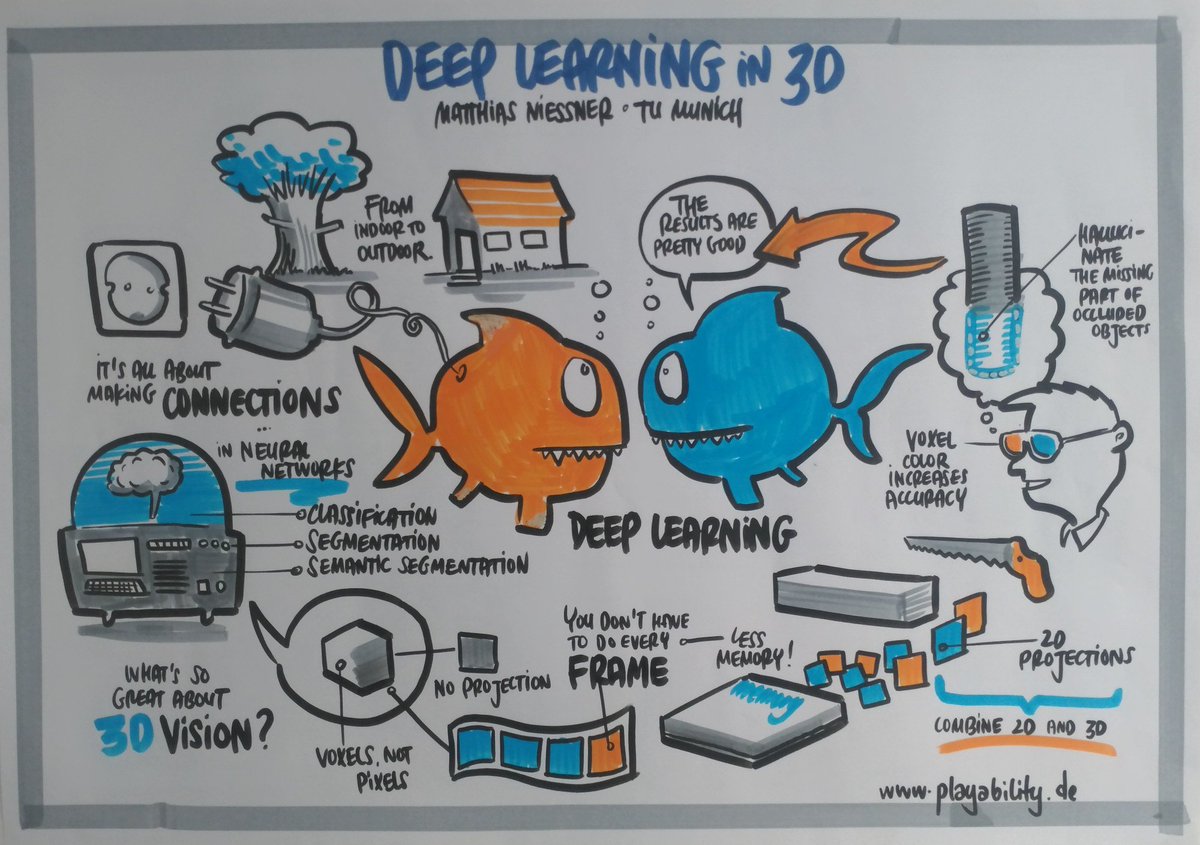
Artist drawing of my talk at #AutoAI in Berlin. Pretty, hilarious, but it really made my day - go #3ddeeplearning :)
4
12

9 Dec 2016
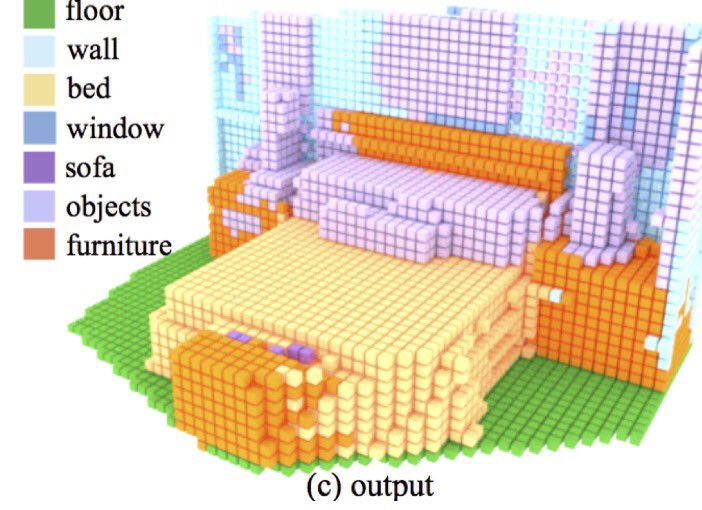
Semantic Scene Completion from a Single Depth Image arxiv.org/abs/1611.08974 #computervision #3ddeeplearning
1
22
45
9 Dec 2016
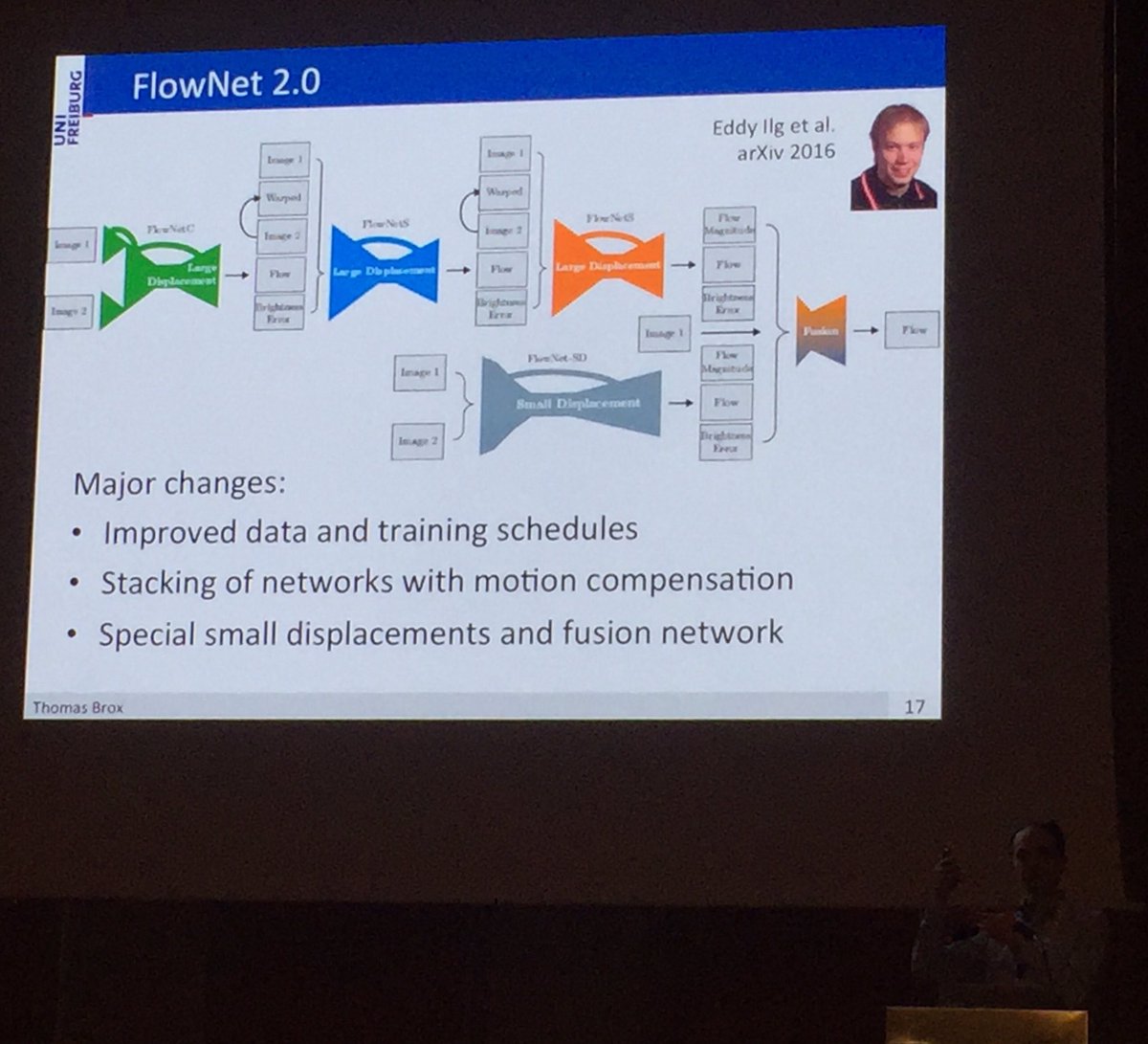
Brox talking about the future of 3D extraction from 2D images using Deep Learning. #3ddeeplearning #nips2016
1
23
47