Ramonzin • Criador retweeted

10 Sep 2025
Dar de pau mole não significa que o passivo não está curtindo, a ereção depende da posição. Agora passivo de pau duro acredite, ele ta em êxtase,
Completo no link
calordehomem.com/3163
6
49
5,456
Demopensante retweeted

¿A mí qué me importa que Abelardo vaya donde un especialista a revisarse su estado de salud? Pero si es el método de acreditación, que lo revise un psiquiatra, pues tiene problemas de autoestima varonil baja, mitomanía compulsiva y psicopatías sociales.
5
11
234
𝐯𝐢𝐭𝐨𝐫𝐢𝐚 . 𝐦𝐞𝐬𝐚 𝐚𝐛𝐞𝐫𝐭𝐚 retweeted

previsão semanal 💫 câncer, escorpião, peixes
(sol, lua, ascendente, vênus )
• energia da semana pede que você acredite mais em si mesma
o e fortaleça mais seus pensamentos, parando de ver o lado negativo das coisas. (você pode superar alguns obstáculos e isso vai te trazer tranquilidade e confiança).
• percebendo que precisa superar uma situação difícil, se valorizando e se retirando (pode ser de um relacionamento ou um casinho amoroso).
1
4
91
2,459
GILSON GONÇALVES retweeted

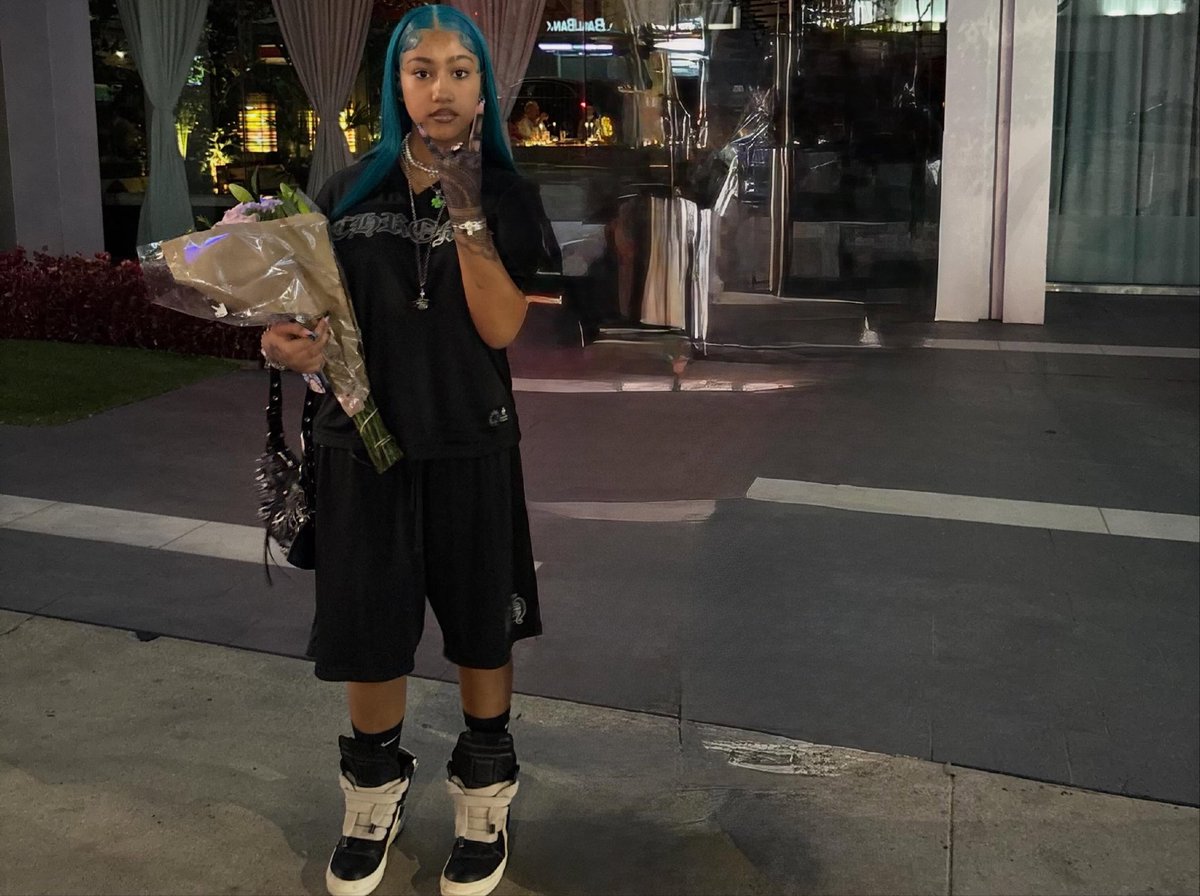
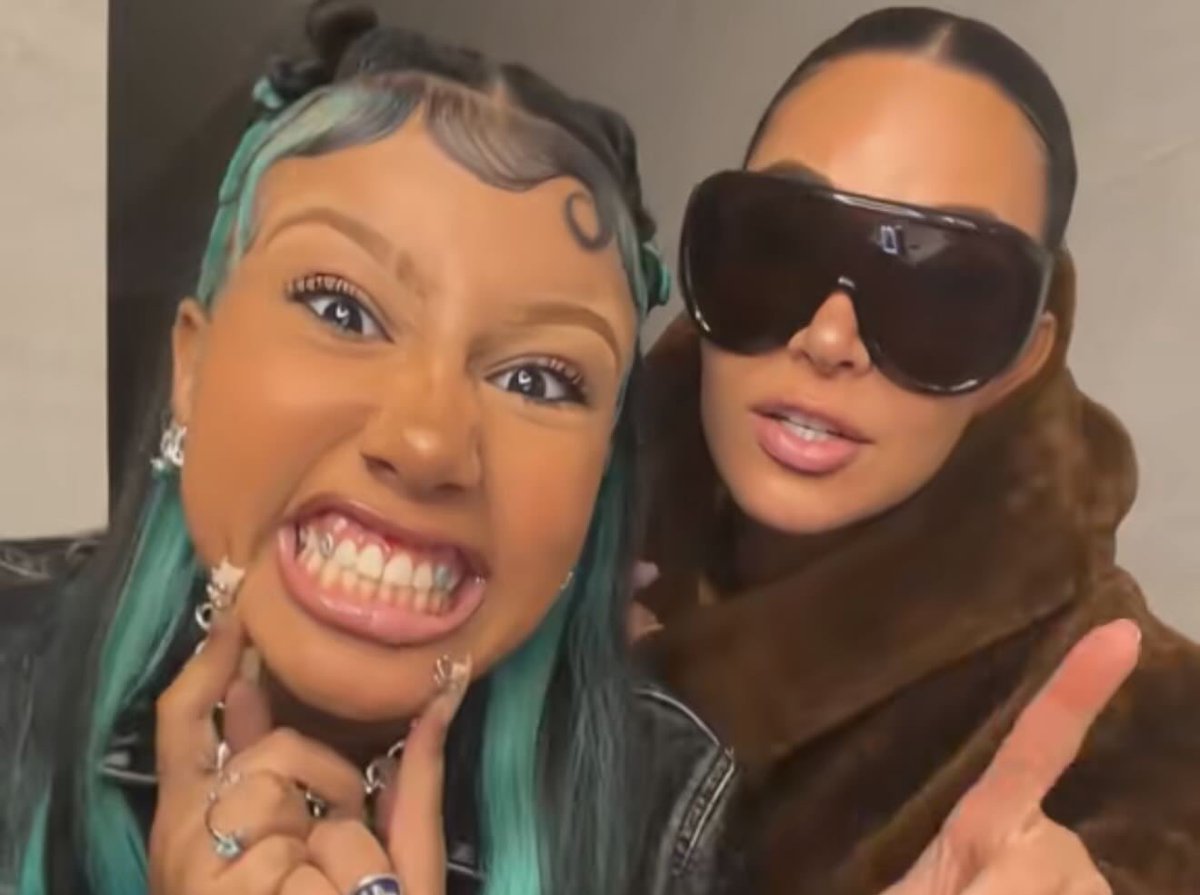
Kim Kardashian via Instagram: “🩵 Feliz aniversário, minha Northiiiiiiiiiiiiiiiieeeeeeeeeeeee (voz do Uzi!!!) 🩵 Não acredito que você oficialmente já é uma adolescente!!!!! Não existe ninguém como você, minha menina! Eu amo ser sua mãe e ver você crescer. Eu te amo até as galáxias alienígenas das quais você falava quando era criança e além. 🖤👽🛸🩵💙”


2
4
35
1,666
Germán hernández retweeted

La confianza depositada en una supuesta licenciada en derecho derivó en juicio penal. La intervención formal sin acreditación profesional activó el delito previsto en el Código Penal del Estado de México.
🖋️ @Adrianreginoo
revistaabogacia.com/usurpaci…
2
1
121
Pingo&Abel retweeted

Esse estrume disse que agora vai fazer tudo, aquilo que não fez antes! Final do terceiro mandato... E os imbecis acredita!!! Estudem disse o MULA. Aqueles que estudam mais não votam na gente, pq fica mais inteligentes 🚯

7
52
77
885

DeFi and TradFi are collapsing into one capital-allocation layer, and the biggest venues in finance are folding into a handful of onchain allocators who hold the deepest liquidity like @SkyEcosystem, @aave, @ethena.
Every other structured product will be the foundational layer.
None of them is just a stablecoin or a lending market anymore. They're becoming crypto's wholesale banking layer. Whoever assembles the deepest liquidity, the sharpest allocators, and real distribution into one system wins.
Two ways I see teams building it.
1) modular and decentralized: a central balance sheet issues the liquidity and sets the risk envelope, while specialized, externally-run desks plug in, each with its own mandate and limits, all drawing on the shared book. A universal bank. One balance sheet, many desks. @SkyEcosystem shipped this first. @aave is bringing it to the deepest liquidity in DeFi.
2) centralized then converging: one team allocates the whole book itself, then externalizes as it scales. @ethena.
Sky has run the model for ~18 months. Sky Core issues USDS and owns the risk framework. Sky Agents borrow USDS up to a governance debt ceiling, deploy their own strategy, and compete on risk-adjusted return that funds the Savings Rate.
- @sparkdotfi owns DeFi yield (~$12B).
- @grovedotfinance owns institutional credit (~$2B).
- @OseroHQ own fintech/ institutional plugins
- 4) Onchian Prime Brokerage via Spark Prime
@ArkisXYZ
- Now expanded to other leaders like @maplefinance, @Securitize, @centrifuge, @daylightenergy, @USDai_Official, @RiverFND via @obexincubator
Each the best in its lane, all on one balance sheet inside one risk envelope. The allocator OS Maker pioneered, $9.2B USDS later.
@aave V4 shipped the same architecture with V4. A Liquidity Hub holds the capital and the accounting. Spokes draw a credit line against it and set their own collateral, risk, and liquidation rules.
- A team launching a spoke inherits Aave's liquidity on day one instead of bootstrapping deposits.
- Think of it as a supranational bank allocating capital to regional facilities.
@StaniKulechov is right that it's powerful. Hub = Core. Spoke = Agent. A credit line is a debt ceiling.
@ethena is the centralized path, mid-pivot. Perps are down to ~11% of USDe's backing; the rest is institutional lending and CLOs.
- It still allocates from the center, but it's already routing USDe into @sparkdotfi's Liquidity Layer and tranching the yield through @strata_money on top.
- Centralized today, but looks more like converging on the same hub-and-spoke tomorrow.
Here's what's actually flowing through all of it. Crypto-native yield compressed, so the real spread now comes from real-economy credit, structured and distributed onchain. The biggest names in TradFi credit are already here:
- @JHIAdvisors ($480B) put its ~$27B AAA CLO ETF onchain as JAAA via @centrifuge. It now sits in both Sky's and Ethena's reserves.
- @apolloglobal ($785B) tokenized its diversified credit fund as ACRED via @Securitize, with Coinbase Asset Management and Kraken among the buyers.
- @HamiltonLane ($956B) put its senior credit fund onchain via @Securitize, live across five chains.
- @Figure has originated $20B of private credit, the largest non-bank HELOC lender in the US, now public on Nasdaq.
- @galaxyhq structured a ~$50M onchain CLO with @grovedotfinance.
- @3janexyz flips the direction: onchain dollars funding US fintech lenders. A $10M warehouse with LendSwift, ~$8.5M of Slope's SMB receivables, and a $50M forward-flow line, all through bankruptcy-remote SPVs. Securitization, rebuilt onchain.
And it's early. As per, @RWA_xyz, tokenized RWA is ~$31B, onchain private credit at $5.5B, against a $3T TradFi private credit market. The pipe is tiny. The flow just started.
The hub is the bank. The agents are the desks. The inventory those desks now trade is Wall Street's credit.
Sky built the first one. Aave is building it. Ethena is following soon.
17h

Why Aave V4 spokes are important for Aave. The spokes are simply lending markets that can have generic or expand custom use-cases.
DeFi moves incredibly fast and its time consuming to build everything ourself even if we wanted to. Spokes allow to partner with external teams that have expertise on a subject such as AMMs, perps, fixed lending, crypto or securities custody and expand Aave's liquidity into these new use-cases.
Aave SPs review the implementation and the Aave DAO takes a fee as fee sharing. Partners are accessing Aave's deep liquidity and distribution while Aave is accessing speed, expertise and new monetization opportunities. Fully implemented directly at a protocol level as an expansion.
It's a scale, speed and monetization advantage.
Aave will win.
7
4
44
9,701
Shitpost só que de verdade retweeted

Jun 14
ME FALARAM QUE ELE PRECISAVA SE APOSENTAR, QUE A FERRARI TINHA COMETIDO UM ERRO EM ASSINAR COM ELE
MAS NÓS SEMPRE ACREDITAMOS EM FERRARI
SEMPRE ACREDITAMOS EM LEWIS HAMILTON
FORZA FERRARI SEMPRE! 🐎❤️

4
23
146
2,721

Musing:
Had a dream.
The kind of dream that, when you wake up, it still feels weighty on your mind; the kind that leaves an imprint on the conscious present, beyond slumbering machinations.
In the dream, I was looking out of a large bay window. Outside, on a hill too close for comfort, stands a tree ancient and tall. Its willowy branches drape like thick fingers down the window's glass, resembling curtains.
The branches dance like anaconda.
Clinging on are several frogs as large as dogs.
I back away from the window bay, shuddering.
"We need to clear our yard," I say aloud.
The declaration was meant to hearten.
And then, as if understanding, the branches recede.
Clear view.
It was just an old tree.
I wake, feeling earnestly that I have learned something.
The dream bade me ruminate upon the Burning Bush. Upon Macbeth's Birnam Wood that walked to Dunsinane. Upon that medieval elegy, The Dream of the Rood.
In many mythologies, treants exist.
In many religions, trees communicate.
In their contrast, we see humans every day, called NPCs, going through motions without souls seemingly.
What if, deep in the untouched Amazon, the forgotten woods, a seldom-treaded part of a large-acred farm...
...Some trees, more sentient than others, do move. Not from the swaying of the breeze, but with decided mobility.
And Man, too modern, too oblivious, too ignorant of the world around him...
Just never knew?
4
12
122

The reason we acquired @TokenizeThisNYC is simple.
We already power the oracle layer for institutions moving capital onchain: BlackRock BUIDL, Apollo ACRED, Hamilton Lane SCOPE, Securitize, Spiko and many more.
We are the trusted HIP-3 oracle on Hyperliquid for RWA assets - commodities, stocks, forex. Credora, post-acquisition, adds the risk intelligence layer. Each of these are thoughtful expansion decisions.
Security Token Market spent seven years tracking 800 tokenized securities and building relationships with the people who actually decide where capital flows.
The RWA market tripled to $18.6B in 2025.
Stablecoins crossed $300B.
Tokenized Treasuries hit $7.4B, up 80% year-over-year.
That growth didn't happen because the tech got better. It happened because the right people got in the same room and made decisions.
Those rooms are back. NYC. Next week. If you're serious about where institutional capital moves onchain, you should be there.
19
7
76
7,737


Jun 15
Yes UAE acred differently. Just my own viewpoint, if I was Israeli I would see it as a mutual tool to control and balance powers specially with IRI rather than actual friendship treaty.
16