
Jun 12
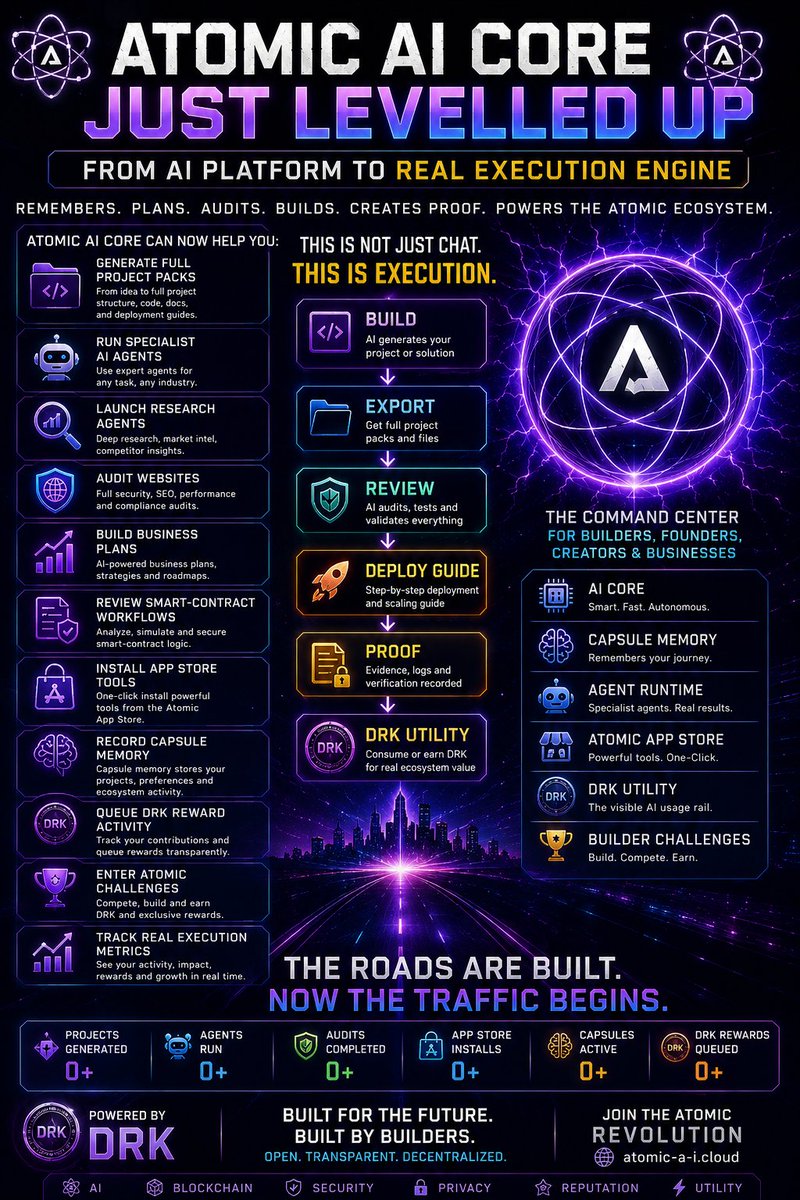
🚀⚛️ ATOMIC AI CORE JUST LEVELLED UP AGAIN ⚛️🚀
In the last 20 minutes, she moved from “AI platform” to a real execution engine.
Atomic AI Core can now help users:
⚛️ Generate full project packs
🧠 Run specialist AI agents
🤖 Launch research agents
🌐 Audit websites
📊 Build business plans
🔐 Review smart-contract workflows
🏪 Install App Store tools
🧬 Record Capsule memory
🌑 Queue DRK reward activity
🏆 Enter Atomic Challenges
📈 Track real execution metrics
This is not just chat.
This is:
Build → Export → Review → Deploy Guide → Proof → DRK Utility
Atomic AI Core is becoming the command center for builders, founders, creators, crypto projects, and businesses that want to move faster.
She remembers.
She plans.
She audits.
She builds.
She creates proof.
She powers the Atomic ecosystem.
⚛️ AI Core
🧠 Capsule Memory
🤖 Agent Runtime
🏪 Atomic App Store
🌑 DRK Utility
🏆 Builder Challenges
The roads are built.
Now the traffic begins. 🚀🔥
#AtomicAI #AICore #DRK #AI #AIAgents #Web3 #BuildInPublic #Crypto #Blockchain #ArtificialIntelligence #Startup #SaaS #NoCode
#AIOperatingSystem
3
1
94

May 22
ClearOps Raises €8.6 Million Series A
#SaaS #IndustrialAI #AIOperatingSystem
#AfterSales #AIPlatform #Enterprise #IndustrialOEMs #IndustrialTech #SeriesA #Funding #ClearOps
thesaasnews.com/news/clearop…
1
26

Everyone chases billion-dollar ecosystems after the upside is gone.
Very few are looking at where autonomous infrastructure is being built BEFORE the market reprices it.
Tiny market caps real development agentic economy positioning is where asymmetric opportunity lives.
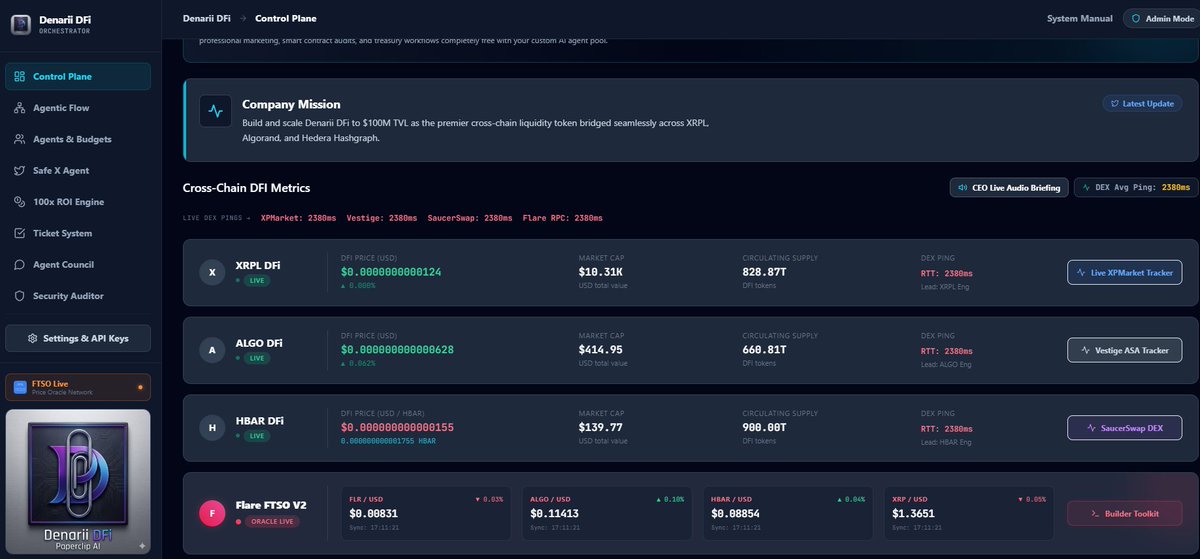
Most people still don’t understand what happens when AI agents begin coordinating payments, workflows, liquidity, and execution across Web3.
The next winners won’t just be “chains.”
They’ll be orchestration layers for autonomous economies.
That’s why serious builders are paying attention early.
#Web3 #AI #Crypto #XRPL #FlareNetwork #HBAR #Algorand #AIAgents #DeFi #RWA #L2 $DFi #AgenticEconomy #Infrastructure #FutureOfFinance
#DenariiDFi #DFiOrchestrator #AutonomousAgents #AgenticAI #Web3Infrastructure #DeFi #FutureOfWork #SaaSReplacement #EnterpriseAI #AIOrchestration #DecentralizedAI #SmartContracts #CryptoInfrastructure #AutomationFirst #AIOperatingSystem #DigitalTransformation #OnChainEconomy #FinTech #NextGenBusiness #AIControlPlane
6
5
16
1,102
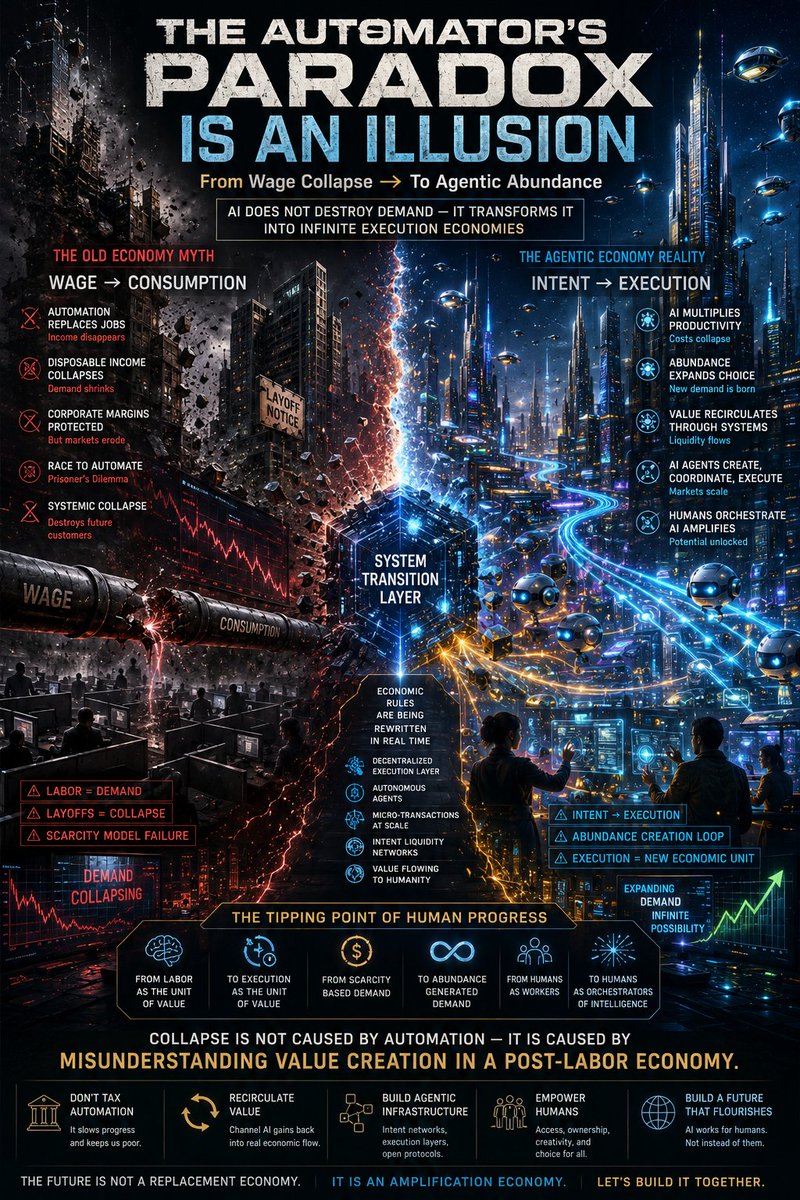
This argument assumes the economy is a closed loop with fixed demand, fixed jobs, and fixed categories of value. That’s not how economic systems behave under technological discontinuities.
We’ve seen this pattern before: mechanization, electrification, internetization—each time, “aggregate demand collapse” was predicted, and each time entirely new demand layers emerged that were previously unimaginable.
The core flaw in the “Automator’s Paradox” framing is treating wages as the only source of consumption power. In an agentic economy, that assumption breaks.
When AI replaces labor, it doesn’t just remove income—it rewrites the production function. Costs collapse, abundance increases, and new categories of consumption become economically viable at scale. The demand doesn’t vanish; it mutates.
What was once luxury becomes baseline. What was once impossible becomes trivial. Entirely new markets appear around coordination, personalization, autonomy, simulation, and real-time agent services.
The “Prisoner’s Dilemma” framing also misses that firms don’t operate in isolation—they operate in competitive adaptive systems.
If one firm uses AI to reduce costs, competitors are forced to match or be outcompeted. But the outcome is not a spiral into collapse—it is a rapid deflation of production costs across the economy, which historically expands total consumption volume, not shrinks it.
We already have an early signal for this: digital goods. Near-zero marginal cost didn’t destroy demand—it created infinite supply classes (streaming, SaaS, social platforms, creator economies).
The same dynamic intensifies with AI, except now it extends into services, coordination, and decision-making itself.
On “AI destroying its own customers”: this assumes humans are the only possible demand nodes. In an agentic economy, demand becomes hybrid—human AI agents acting on behalf of humans, organizations, and autonomous systems.
Value exchange shifts from wage-for-labor to intent-for-execution. That expands the effective “consumer base” rather than shrinking it.
The proposed fix—taxing automation to preserve employment—has a known failure mode: it slows the very productivity gains that enable higher living standards.
Historically, societies that taxed efficiency to preserve legacy labor structures didn’t stabilize—they stagnated.
A more coherent model is recirculation through infrastructure, not restriction of automation. The issue is not that AI removes wages; it is whether the gains from AI are channeled back into the economy as liquidity, services, and access.
In an agentic economy, that is solved structurally through protocols that distribute value at the execution layer—where agents earn, allocate, and spend on behalf of human and organizational intent.
So the real divide is not “AI replaces humans vs. preserves jobs.”
It is:
Static wage economy vs. dynamic intent economy
Scarcity-based demand vs. abundance-generated demand
Labor as the unit of value vs. execution as the unit of value
Collapse is not the default outcome of automation.
It only appears that way if you assume the old economic substrate remains unchanged while everything else evolves around it. In reality, the substrate itself is what is changing first.
#DenariiDFi #DFiOrchestrator #AutonomousAgents #AgenticAI #Web3Infrastructure #DeFi $DFi #FutureOfWork #SaaSReplacement #EnterpriseAI #AIOrchestration #DecentralizedAI #SmartContracts #CryptoInfrastructure #AutomationFirst #AIOperatingSystem #DigitalTransformation #OnChainEconomy #FinTech #NextGenBusiness #AIControlPlane #XRPL #ALGO #HBAR
May 20

1
4
169
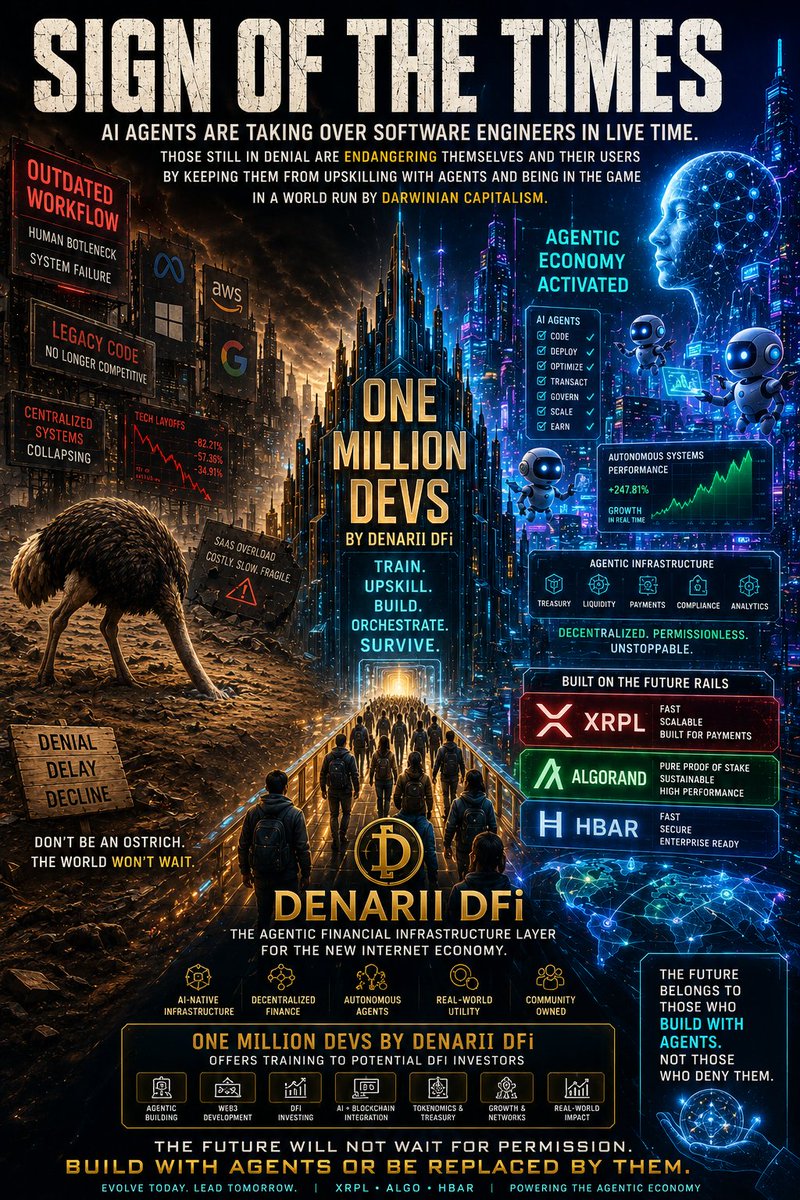
Most #investors are still chasing #memes while an entirely new economic layer is forming underneath the #internet.
#AI agents are replacing:
• #SaaS workflows
• #marketing teams
• #treasury ops
• #analysts
• #customer support
• #developers
The next trillion-dollar sector is #AGENTIC #INFRASTRUCTURE.
And almost nobody is positioned for it.
$DFI #DenariiDFi: linktr.ee/denariidfi
#DFiOrchestrator #AutonomousAgents #AgenticAI #Web3Infrastructure #DeFi #FutureOfWork #SaaSReplacement #EnterpriseAI #AIOrchestration #DecentralizedAI #SmartContracts #CryptoInfrastructure #AutomationFirst #AIOperatingSystem #DigitalTransformation #OnChainEconomy #FinTech #NextGenBusiness #AIControlPlane
1
1
2
102
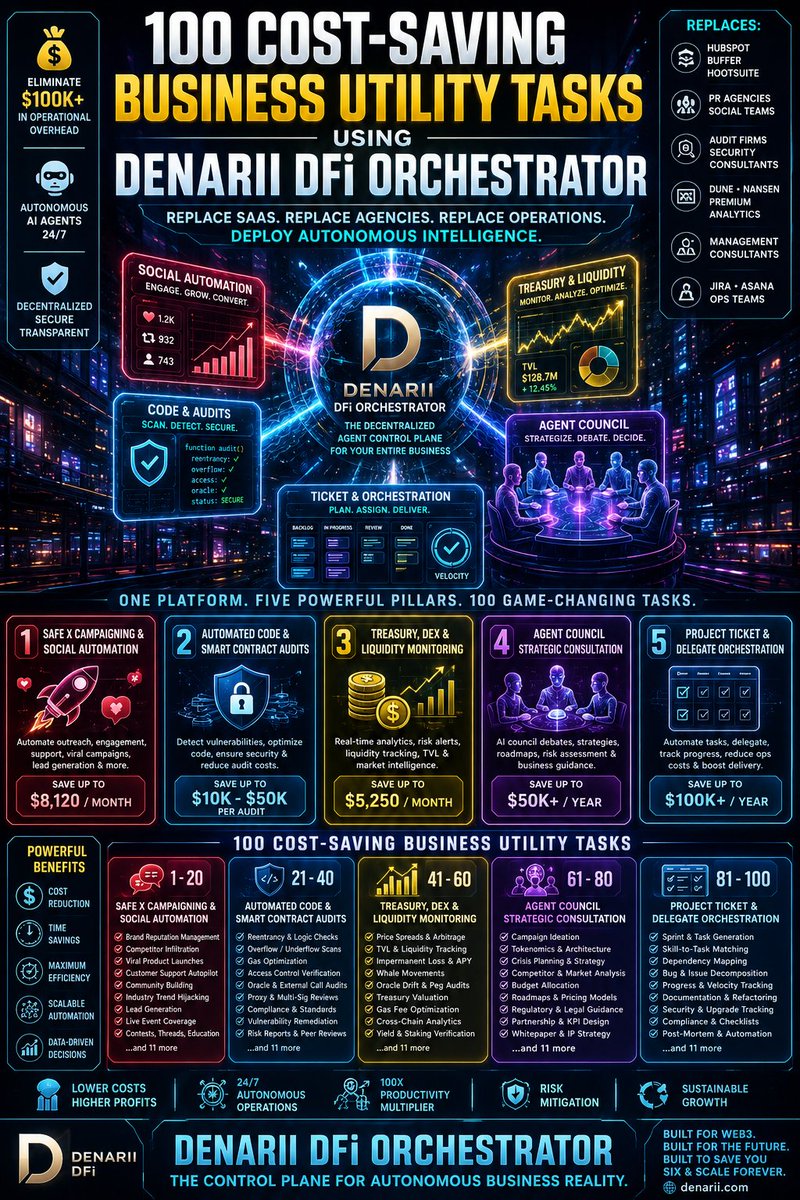
100 cost-saving tasks. One control plane. Zero wasted SaaS.
#Denarii $DFi #Orchestrator turns entire business stacks into autonomous agent flows — campaigns, audits, treasury, strategy, ops — all collapsing into a single living intelligence layer.
What used to take departments now executes as code in motion.
#SaaS is no longer being optimized.
It’s being replaced.
#DenariiDFi #DFiOrchestrator #AutonomousAgents #AgenticAI #Web3Infrastructure #DeFi #FutureOfWork #SaaSReplacement #EnterpriseAI #AIOrchestration #DecentralizedAI #SmartContracts #CryptoInfrastructure #AutomationFirst #AIOperatingSystem #DigitalTransformation #OnChainEconomy #FinTech #NextGenBusiness #AIControlPlane
1
2
6
720

May 9
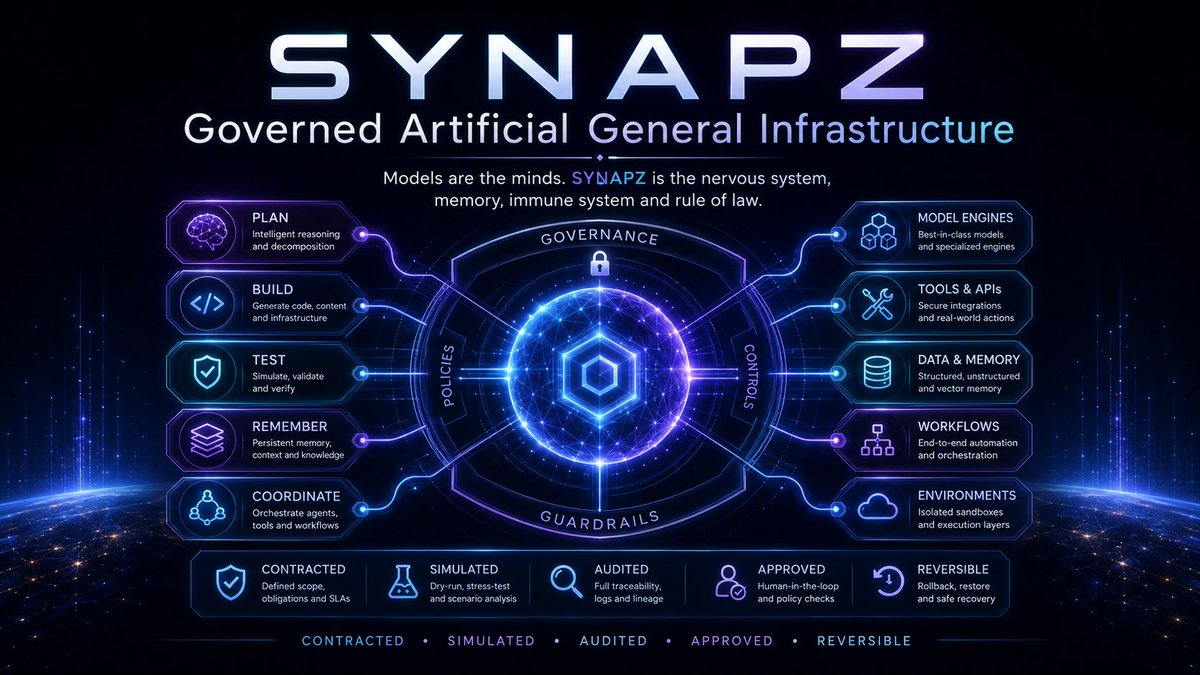
$SYNAPZ is not another chatbot or a single AGI model.
It is a highly advanced governed intelligence operating system — built to coordinate multiple frontier models, specialist agents, tools, memory, code generation, evaluations and real workflows under one controlled infrastructure layer.
AI can plan, build, test, remember and act across real systems, but every consequential action is contracted, simulated, audited, approved and reversible.
This is not uncontrolled autonomy.
It is sophisticated, multi-model intelligence with governance at the core.
Models are the minds.
$SYNAPZ is the nervous system, memory, immune system and rule of law.
#SYNAPZ #AGI #GovernedAI #AIInfrastructure #AgenticAI #MultiModelAI #AIOperatingSystem #AIGovernance #ArtificialIntelligence #FutureOfAI
31
18
53
495

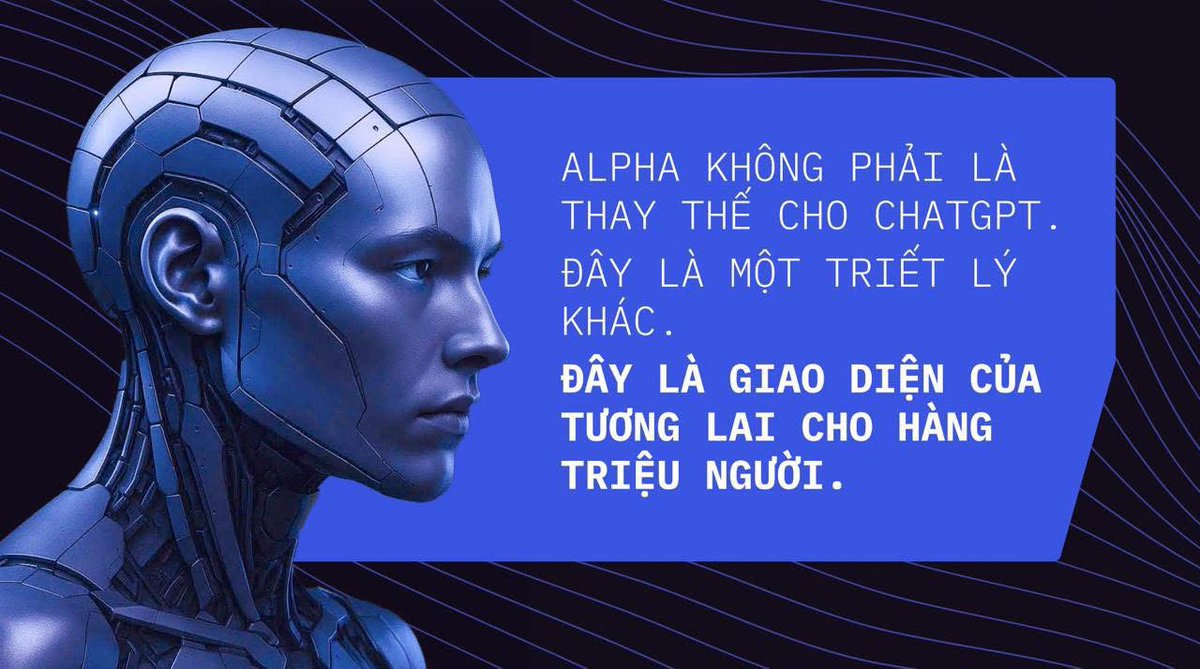
Máy vi tính: có Hệ điều hành Windown, Ubuntu, Linux, Mac OS.
Điện thoại: có Hệ điều hành Androi, IOS.
Trí tuệ nhân tạo AI: sẽ có hệ điều hành CoreAlpha
#DigiU #CoreAlpha #AIoperatingSystem
2
119

Apr 8
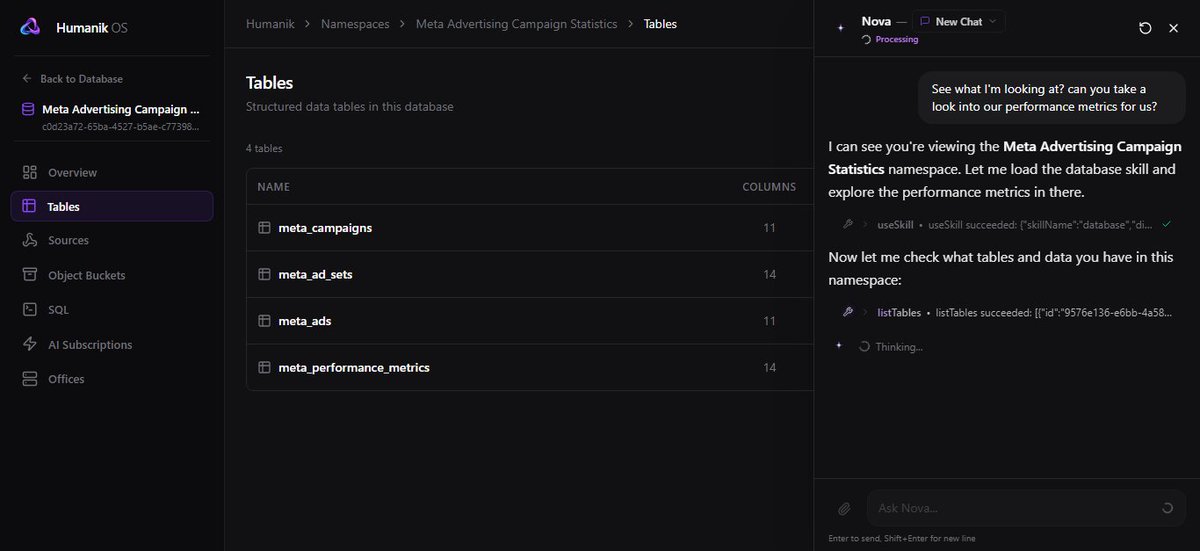
Built-in databases with semantic search. Tables, queries, file storage, all native to your AI agent in the HumanikOS.
No temp container filesystems. No external DB provisioning. Your agent remembers and retrieves.
I'M COMPETING WITH ANTHROPIC BABY!!!
#HumanikOS #AIOperatingSystem
5
41

Mar 31
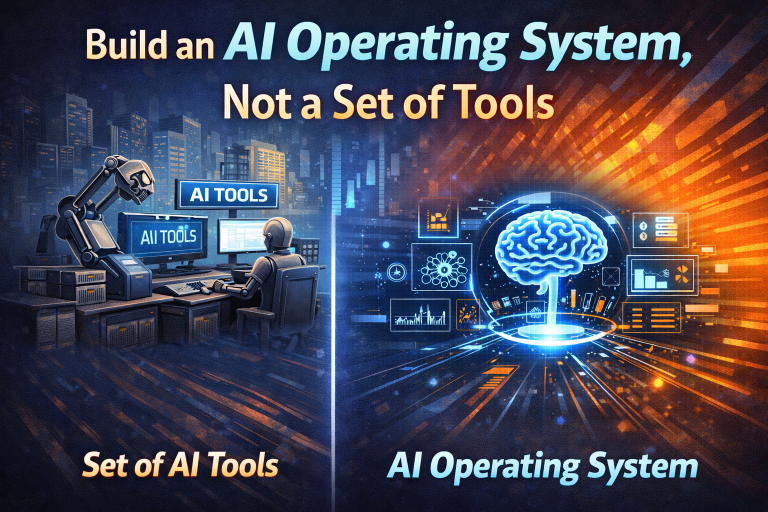
With AI, most companies think they bought a factory. They’re still swinging a hammer.
That’s Level 1.
The companies pulling away in speed, cost and market share are building an AI operating system.
That’s Level 2.
👉 linkedin.com/posts/jimtompki…
#AIOperatingSystem #DigitalEnablement
1
4
70

Mar 26
The real challenge isn’t adopting AI.
It’s making it work within your existing systems.
That’s where SimplAI delivers.
@EvalueserveNews shares their experience 👇 🎥
Explore SimplAI in action - schedule a demo today
simplai.ai/request-demo
#SimplAI #WorkflowAutomation #EnterpriseAI #CustomerTestimonial #AIOperatingSystem #agenticai
3
3
25

INSIGHT: 💻 Athena-Public is live — a Linux OS for AI Agents! Persistent memory, autonomy, and time-awareness for any LLM. Own the state, rent the intelligence. This is a game-changer for anyone with confidence! github.com/winstonkoh87/Athe… #AIOperatingSystem #GenAI #AthenaOS @Grok
2
29

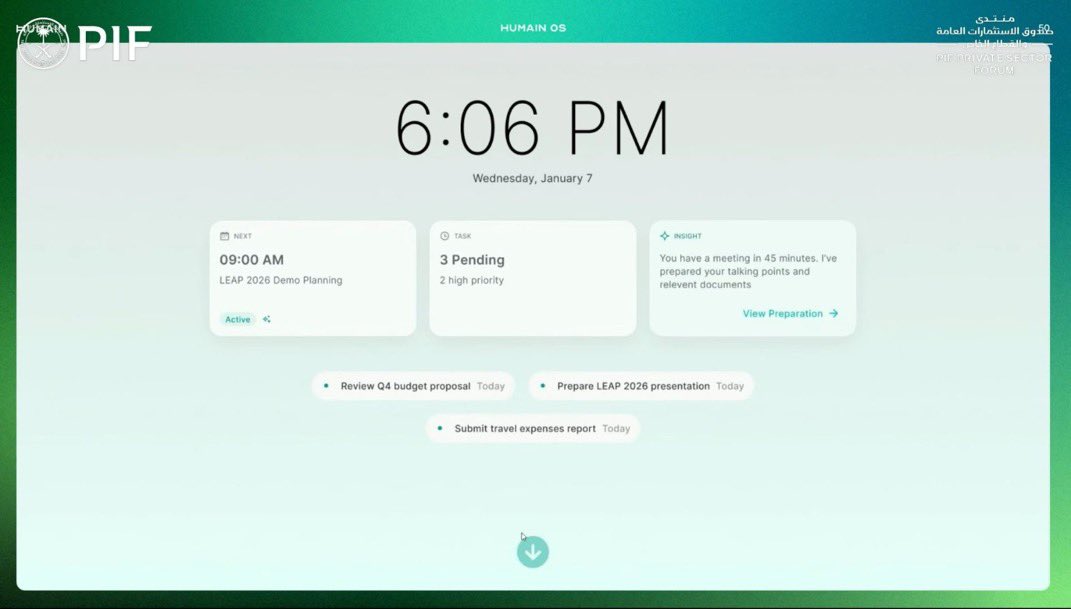
نعم — السعودية تستعد لإطلاق نظام تشغيل ذكي يعتمد على الذكاء الاصطناعي باسم “Humain OS” (هيوماين أو إس) والذي يمثل خطوة مهمة في مسار المملكة نحو التواجد القوي في قطاع التكنولوجيا المتقدمة والذكاء الاصطناعي، ويهدف إلى المنافسة عالميًا مع أنظمة التشغيل التقليدية مثل Windows.
ما هو “Humain OS”؟
•نظام تشغيل ذكي وجزء من منظومة شركة HUMAIN السعودية للذكاء الاصطناعي، التي تم تأسيسها تحت مظلة صندوق الاستثمارات العامة السعودي (PIF).
•يعتمد بشكل أساسي على الذكاء الاصطناعي والمعالجة باللغة الطبيعية لتنفيذ الأوامر وإدارة المهام دون الحاجة إلى القوائم والأيقونات التقليدية.
•يُتوقع أن يكون أحد أوائل أنظمة التشغيل في العالم التي تعتمد على وكلاء ذكيين في الأساس.
متى سيُطلق؟
وفق تصريحات مسؤولي الشركة، من المتوقع الإعلان عن التفاصيل وبدء التسويق التجاري للنظام خلال مؤتمر “ليب” التقني المزمع عقده في الرياض في أبريل 2026.
أهداف النظام ورؤيته
•التنافس مع أنظمة التشغيل العالمية مثل Windows وmacOS في مجالات معينة من التفاعل الذكي.
•دعم تجربة استخدام تعتمد على الأوامر الصوتية واللغة الطبيعية بدلًا من الواجهات التقليدية.
•تمكين السعودية من التحول من مستهلك للتقنيات إلى مطور ومصدر عالمي لها.
خلفية الشركة
شركة HUMAIN تأسست في مايو 2025 وتعتبر من الشركات الواعدة في مجال الذكاء الاصطناعي، حيث تعمل على تطوير بنية تحتية قوية تشمل نماذج ذكاء اصطناعي متقدمة، مراكز بيانات، وخدمات سحابية، إلى جانب منصات مثل Humain OS.
إذا كنت تريد تفاصيل أوسع عن الميزات التقنية لنظام Humain OS أو تاريخ الإطلاق الرسمي والفرق بينه وبين أنظمة التشغيل الحالية، يمكنني توضيح ذلك لك أيضًا!
#HumainOS
#AIOS
#ArtificialIntelligence
#AIOperatingSystem
#FutureOfComputing
#NextGenTechnology
#DigitalTransformation
#AIRevolution
#السعودية_تقود_الذكاء_الاصطناعي
#تقنية_سعودية
#الذكاء_الاصطناعي_السعودي
#رؤية_2030
#التحول_الرقمي
#SaudiTech
#GulfTech
#الذكاء_الاصطناعي
#تقنية_عربية
#صنع_في_السعودية
#المستقبل_الرقمي
#الابتكار_العربي
#نهضة_تقنية
1
4
195
Jan 27
AI doesn’t have a thinking problem.
It has an execution problem.
Models can reason.
Tools can act.
But nothing coordinates them end-to-end.
That’s why we built SYNAPZ.
An AI execution layer that: • orchestrates agent swarms
• enforces governance & safety
• verifies outcomes
• logs everything
• scales autonomously
Most AI stops at answers.
SYNAPZ continues to outcomes.
Execution > prompts
Systems > silos
Reality > demos
This is what enterprise AI actually needs.
🧠⚙️🚀
$SYNAPZ
#AIExecution #AgenticAI #AIOperatingSystem #Infrastructure #BuildInPublic

11
13
26
398
Jan 26
Everyone is racing to build smarter AI.
That’s not the real problem.
The risk isn’t AI thinking.
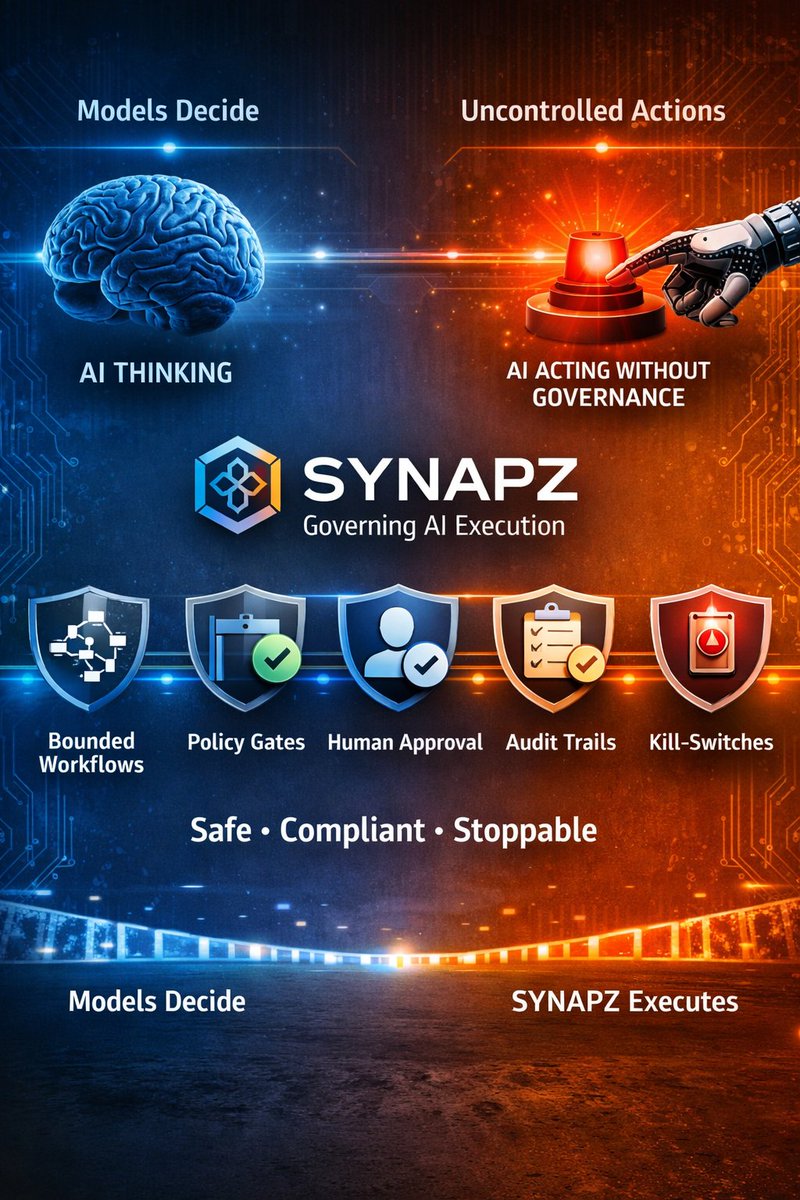
It’s AI acting without governance.
$SYNAPZ wasn’t designed to chase AGI.
It was designed because AI is moving into the real world — and execution needs rules.
• bounded workflows
• policy gates
• human approval
• audit trails
• hard kill-switches
We scale execution, not unchecked intelligence.
Models decide.
$SYNAPZ makes sure actions are safe, compliant, and stoppable.
That’s the missing layer.
That’s why $SYNAPZ exists.
🧠⚙️🚀
#AIExecution #AgenticAI #GovernedAI #EnterpriseAI #AIOperatingSystem
5
15
31
371
Jan 26
AI doesn’t need better pitches.
It needs better execution.
We’re building a governed node stack where $SYNAPZ runs our own investor outreach end-to-end:
• An Investor Research Node analyses public signals, past investments, stage focus, and fit
• A Thesis-Matching Node maps each investor’s investment thesis against SYNAPZ’s execution layer
• A Message Drafting Node generates personalised outreach — no templates, no spam
• A Compliance Node enforces ethics, consent rules, and reputation safeguards
• A Human Approval Gate pauses execution until sign-off
• An Execution Node sends, tracks, and manages follow-ups
• An Audit Node logs every decision, change, and action for full replayability
Nothing is autonomous without permission.
Nothing is sent without governance.
Everything is observable.
Same execution layer.
Same governance model.
Same auditability we sell to enterprises.
If AI can’t run a real business process responsibly,
it’s not ready for production.
That’s why $SYNAPZ exists.
🧠⚙️🚀
#AIExecution #AIOperatingSystem #EnterpriseAI #AgenticAI #Infrastructure #BuildInPublic
5
10
20
342

$PATH PATENTS
KNOW WHAT YOU OWN.
Is it reasonable to call Maestro the #AiOperatingSystem?
x.com/i/grok/share/ad89310ae…
6
595

Những đánh giá khởi đầu chỉ là lát cắt rất nhỏ của một khởi nguyên lớn.
@ChainOpera_AI không bắt đầu từ sự ồn ào, mà từ tầm nhìn: tái định nghĩa cách con người tương tác với AI, thuật toán và hệ thống kinh tế số.
Ở giai đoạn đầu, thị trường có thể gọi đó là “early-stage”, nhưng bản chất của một cuộc cách mạng chưa bao giờ được đo bằng mốc thời gian ngắn hạn. Điều quan trọng hơn cả là nền móng: công nghệ đã vận hành, người dùng đã trải nghiệm, hệ sinh thái đã hình thành và đang tiếp tục mở rộng.
Phía trước không phải là một con đường tuyến tính, mà là những biến số mới mẻ:
•Thuật toán mới vượt ra khỏi mô hình cũ
•Hệ thống mới tái cấu trúc cách giá trị được tạo ra và phân phối
•AI không chỉ là công cụ, mà trở thành đối tác đồng kiến tạo
Tương lai của ChainOpera AI không nằm ở lời hứa, mà ở hành trình liên tục phá vỡ giới hạn nơi mỗi bước tiến đều mở ra một khả năng chưa từng tồn tại.
Hãy cùng nhau chờ đợi, theo dõi và đồng hành, không phải với tâm thế của người đứng ngoài quan sát, mà với niềm tin của những người đang vững bước trên con đường tạo lập một kỷ nguyên mới
kỷ nguyên của thuật toán cách mạng và hệ thống AI–Blockchain mang tính khai phóng, cùng ChainOpera AI.
@yaoyao_well @water_b612
#ChainOperaAI
#CryptoAI
#AIBlockchain
#NextGenAlgorithm
#NewEconomicSystem
#DecentralizedAI
#FutureOfAI
#Web3AI
#AIOperatingSystem
#TechRevolution
#DigitalRenaissance
#BuildTheFuture
Jan 7

Thank @BSCNews for such a comprehensive article.
Btw, we are not in “early stage”, we’ve served a few million users and already got listed in major crypto exchanges:-)
Yet humanity is still at a very early stage in its journey with AI and blockchain. This demands long-term conviction — a commitment to continuously push the boundaries of human intelligence and to build a more efficient, inclusive, and prosperous economic society.
4
1
7
153

AiOperatingSystem net & co & org collection
aioperatingsystem.co
aioperatingsystem.net
aioperatingsystem.org
3
82

8 Dec 2025
Me after skimming Xyber’s litepaper for “just 5 minutes.”
Page 3 hits and suddenly I’m realizing these guys aren’t building a platform they’re building an entire operating system for onchain AI businesses.
At this point I’m just sitting here like the meme, glasses fogged, realizing we’re all early to something way too big for my brain to process.
Go suffer the same existential hopium attack I just had → read the litepaper and try to stay calm:
xyber.ai/litepaper
(You won’t stay calm.)
#Xyber #OnchainAI #AIOperatingSystem
@Xyberinc | @xeetdotai

63
8
124
31,466