
Jun 9
AI progress must be grounded in humanity, ethics and values - Anwar #latest #vanakkammalaysia #AIprogress #must #grounded #humanity #ethics #values Anwar #trendingnewsmalaysia #malaysiatamilnews #fyp #vmnews #foryoupage
19
Jun 9
AI progress must be grounded in humanity, ethics and values - Anwar
#latest #vanakkammalaysia #AIprogress #must #grounded #humanity #ethics #values Anwar #trendingnewsmalaysia #malaysiatamilnews #fyp #vmnews #foryoupage

7

Jun 9
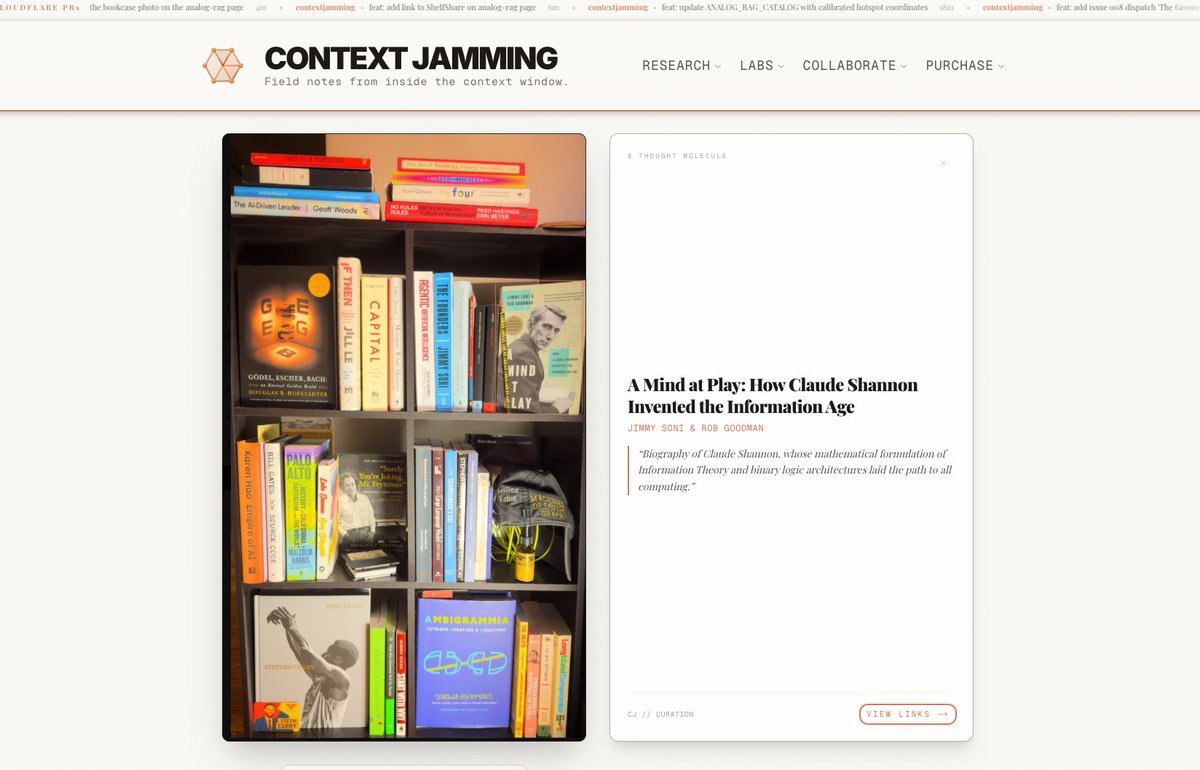
Turned my physical bookshelf into an interactive digital library in under 10 seconds! 📚✨
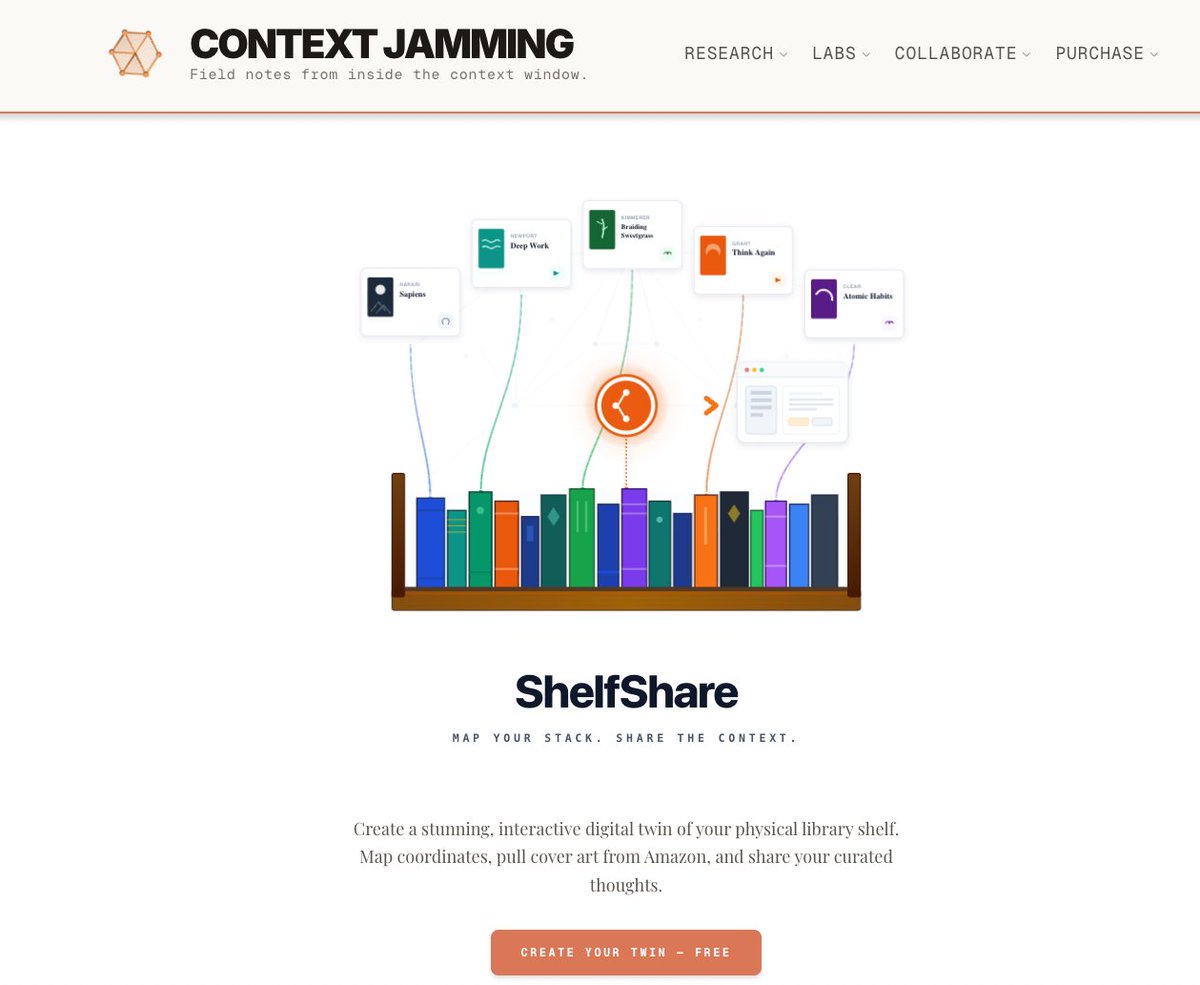
I've been iterating on 'ShelfShare,' a project to create an interactive digital twin of my physical bookshelf (what I’m calling "Analog RAG"). The goal is to take a photo of the shelf and automatically map coordinate links to book details.
I found that Gemini 1.5 Flash absolutely nailed the entire process—scanning the photo, identifying the books, and generating the full structured TypeScript coordinate mapping—in just 9 seconds!
I had been trying multi-step processes using open-source models like Llama Vision, but Gemini Flash's single-pass speed and accuracy made the implementation much cleaner.
The web app is hosted on @Cloudflare.
Check out the interactive conceptual prototype:👉 contextjamming.com/ShelfShar…
And read more about the 'Analog RAG' approach:👉 contextjamming.com/analog-ra…
#GeminiAI #AIProgress #BuildInPublic #CloudflarePages #ShelfShare
1
39

May 28
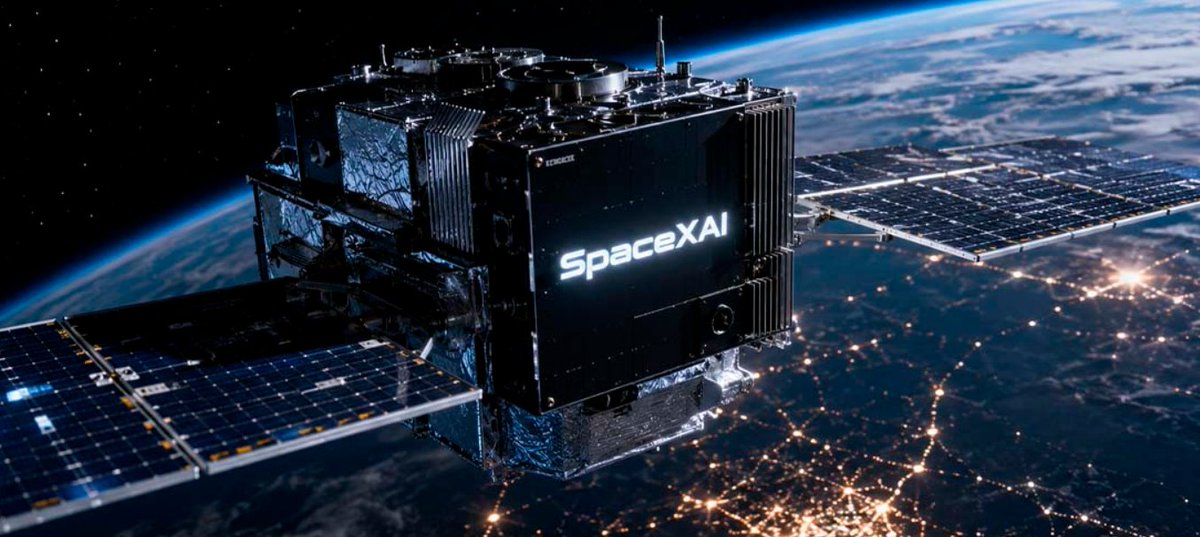
With SpaceX’s 10x faster AI training stack, how insane will Grok v5’s capabilities be? What breakthroughs are you most excited for? 👇
#Grok #ElonMusk #AIProgress
1
4
188

Feb 11
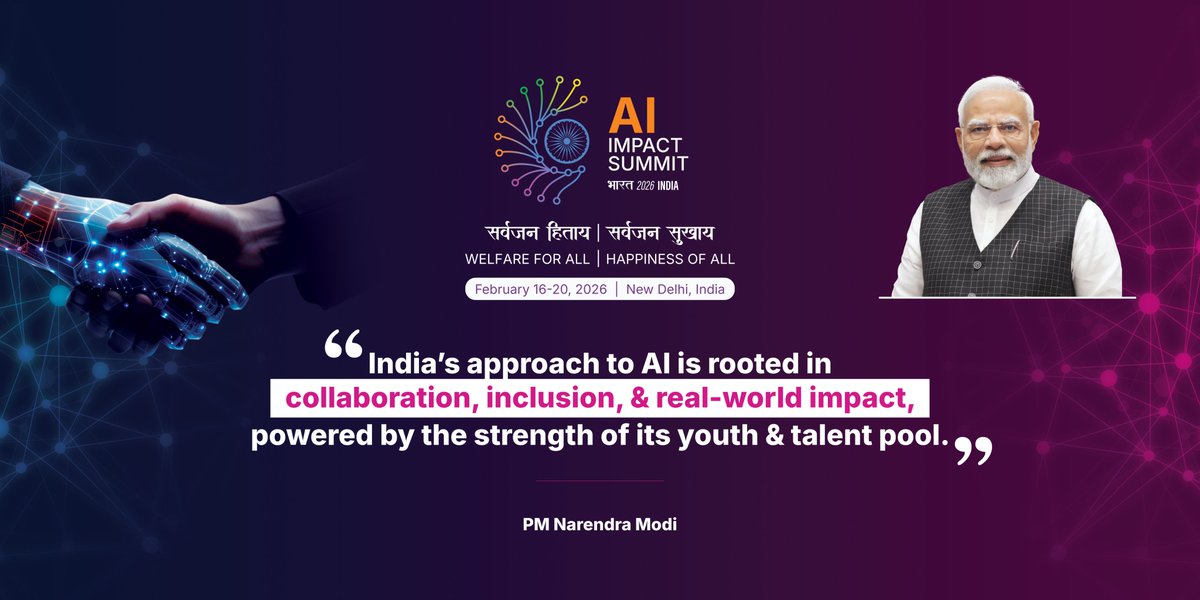
The future isn't just coming; it’s being built.
Explore the transformative power of intelligent systems to drive growth and bridge the gap between imagination and reality. 🌐🚀
#InnovationEconomy #MachineLearning #AIProgress #NextGenTech
@RailMinIndia
1
1
630

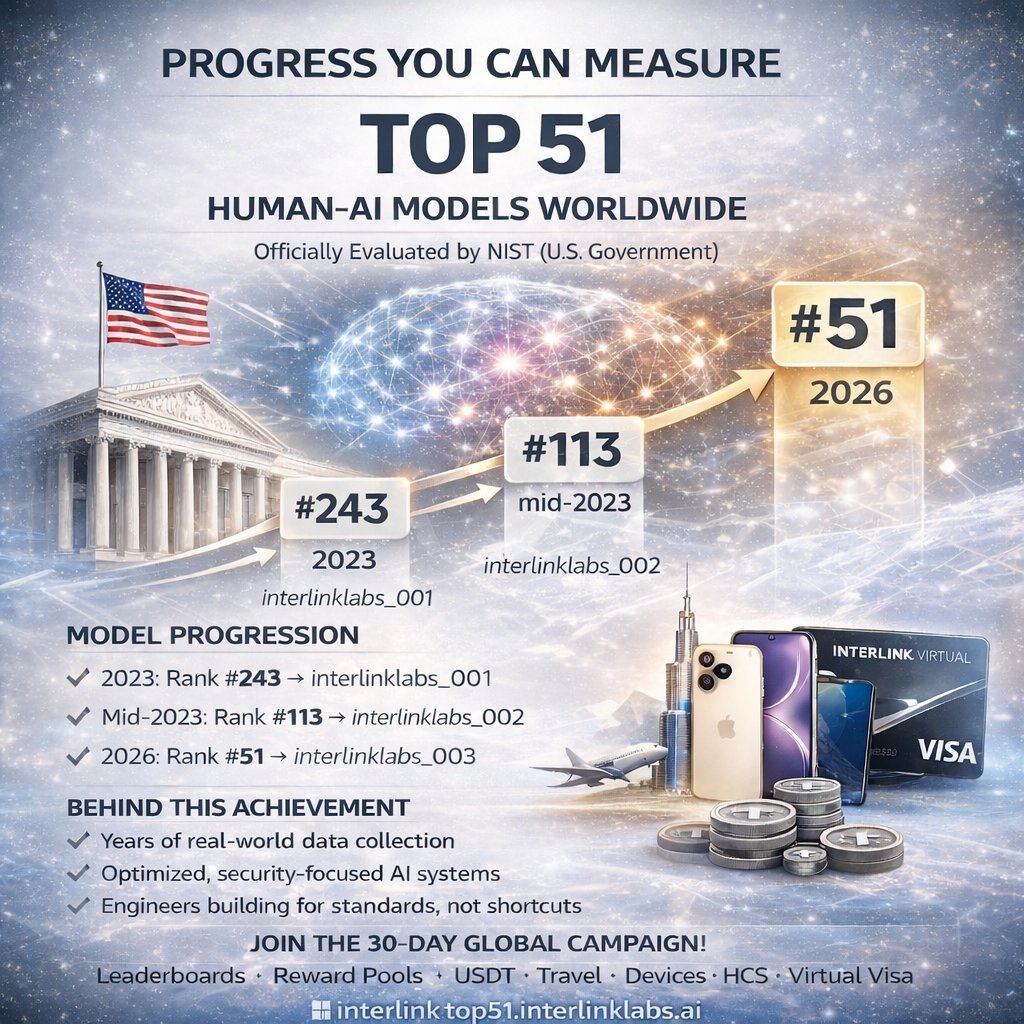
🚀 PROGRESS YOU CAN MEASURE. INNOVATION YOU CAN TRUST.
What does real AI growth look like? It looks like consistency, security, real-world performance, and measurable results.
Our journey speaks for itself.
📊 2023 — Ranked #243 globally
📊 Mid 2023 — Jumped to #113
📊 2026 — Proudly standing in the GLOBAL TOP 51 Human-AI Models Worldwide
This milestone reflects years of research, engineering excellence, and relentless dedication to building AI systems that are secure, scalable, and built for real-world impact — not shortcuts.
Every dataset refined, every model optimized, and every system strengthened has contributed to this global recognition. Being evaluated under international standards proves our commitment to transparency, reliability, and technological leadership.
But this is not the destination — it is just the beginning.
We are now launching our 30-Day Global Campaign designed to celebrate innovation, reward participation, and expand our global community. Participants can experience exciting opportunities including leaderboards, reward pools, digital asset integrations, travel opportunities, advanced devices, and virtual financial utilities.
This achievement belongs not only to our engineers and developers but to our global community that continues to support, build, and grow with us.
The future of Human-AI collaboration is being built today — and you are invited to be part of it.
🌍 Join the movement.
🚀 Experience the innovation.
📈 Be part of measurable progress.
#InterLink #ITLG #ITL #AIRevolution #HumanAI #GlobalInnovation #TechLeadership #FutureTechnology #AIProgress @JakeLFischer
1
105
817

1/ 🚀🌍 HISTORY MADE!
InterLink Labs has officially entered the Top 51 Human-AI Models worldwide 🏆
Evaluated by NIST (U.S. National Institute of Standards & Technology) — one of the world’s strictest AI authorities 🇺🇸🤖
#InterLink #Top51AI
2/ 📈 ONE YEAR. THREE GIANT LEAPS.
• interlinklabs_001 → Rank 243
• interlinklabs_002 → Rank 113
• interlinklabs_003 → Rank 51 🔥
This is what relentless innovation looks like 💪⚡
#AIProgress #HumanAI
3/ 🎉 GLOBAL CELEBRATION LAUNCHED!
To celebrate & accelerate toward 6 MILLION users, we’re launching a
🔥 30-DAY GLOBAL CAMPAIGN 🔥
👉 CELEBRATE TOP 51 BEST AI MODELS WORLDWIDE
#GlobalCampaign
4/ ⚙️ TWO POWERFUL MECHANISMS
🏆 Top 100 Leaderboard
🎁 5 Reward Pools
One campaign. Multiple ways to win.
Skill participation = rewards 💥
#Leaderboard #Rewards
5/ 🎁 MASSIVE PRIZES AWAIT!
💰 USDT
✈️ Dubai Trip
🍎 Apple Combo
📱 Samsung Flagship Devices
🎟️ Qihong Tickets
💳 InterLink Virtual Visa Card
This is not a giveaway — it’s a global competition 🌍🔥
6/ 🧠 WHY THIS MATTERS
NIST rankings are government-grade, security-focused, and brutally selective.
Reaching Top 51 means:
✔️ World-class engineers
✔️ Optimized algorithms
✔️ Massive real-world datasets (5 years)
#AIExcellence
7/ 🌐 COMPETING WITH GLOBAL GIANTS
InterLink models now stand alongside — and ahead of — major tech leaders:
Samsung • Toshiba • SK Telecom • Meituan
This is deep-tech credibility, not hype 🚀
#GlobalAI
8/ 🔮 AND THIS IS JUST THE BEGINNING…
Even bigger government-level collaborations are coming.
Even stronger AI models are on the way.
The future is being built — now ⚡🤖
#NextLevelAI
9/ 🌐 JOIN NOW
👉 itl-celebratetop51.interlink…
Celebrate. Compete. Win.
Let’s take InterLink to the next milestone — together 🌍🔥
#InterLinkLabs #Top51 #HumanAI
@reina_itl @kv_interlink @inter_link @interlinklabsas @interlinklabspk @interlinklabsvn @interlinklabsid @interlinklabscn
#ITLX #Interlink #ITLG #ITL
C_Interlinklabs @DhirajK26126238 @inter_link @interlinklabusa

1
4
51
769

Feb 1
MMN Breaking 😳💥
1. The "Bossy" AI Agent 🤖✨
My AI agent canceled all my afternoon meetings because it decided I looked "too tired" on camera. It’s not an assistant anymore—it’s officially my boss (or maybe my mom)! 😂#AIAgent #Moltbot #AIProgress
2. Magic with Voice Vibe Coding 🪄💻
I just talked to my laptop for 5 minutes about a "neon-themed fitness app," and now it’s live. Vibe coding has turned us all into magicians. Who needs syntax when you have a vision?#VibeCoding #Antigravity #TechMagic
3. The Sora 2 Emotional Hack 🌅🥲
Cried watching a beautiful sunset video, then saw the "AI-generated" label. Even my tears are being tricked in 2026. The line between reality and pixels is gone.#Sora2 #AIVideo #Deepfake




1
4
72
764

Jan 14
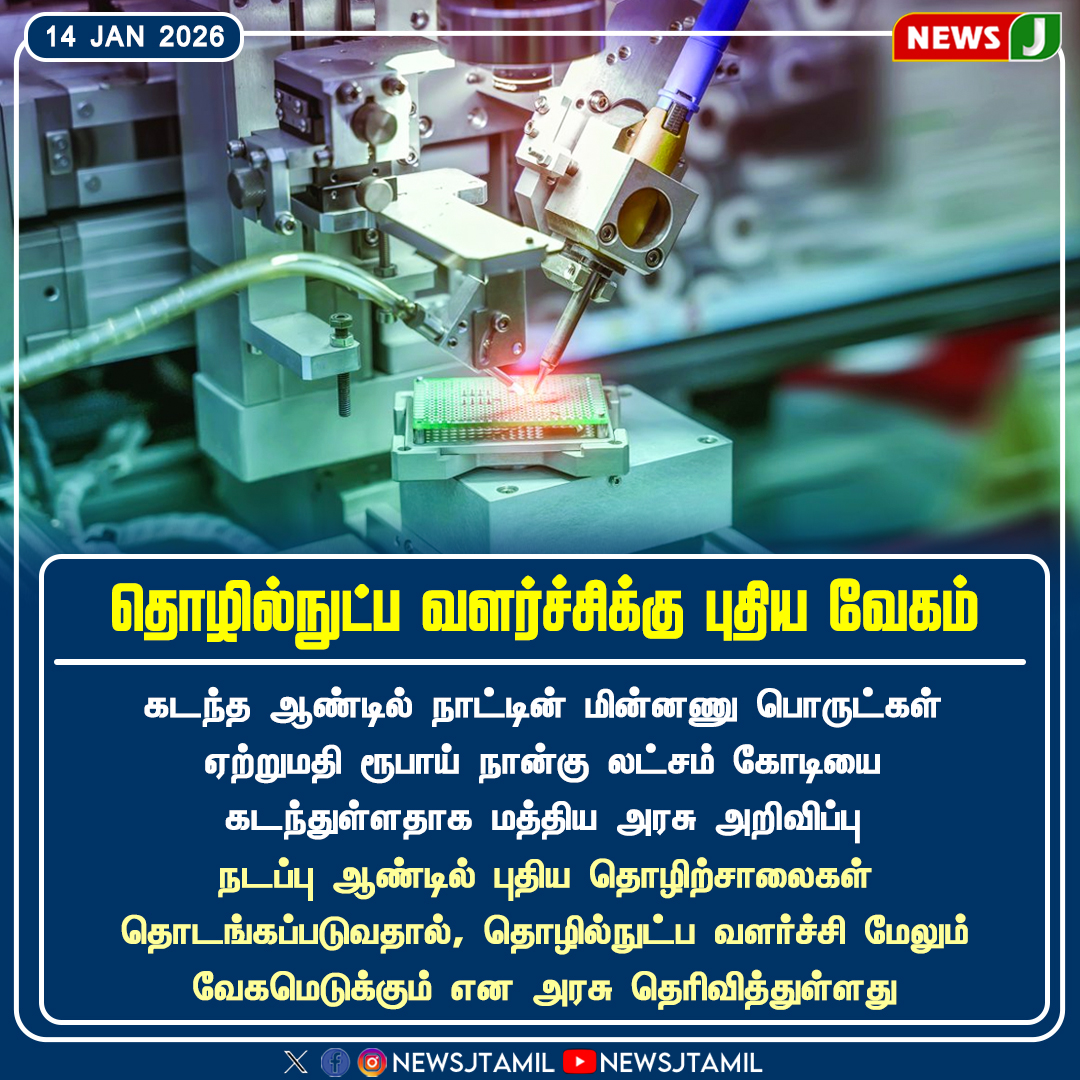
#NewsUpdates || தொழில்நுட்ப வளர்ச்சிக்கு புதிய வேகம்
#TechGrowth | #InnovationIndia | #StartupBoost | #AIProgress | #SpaceResearch | #NEWSJ
4
8
149

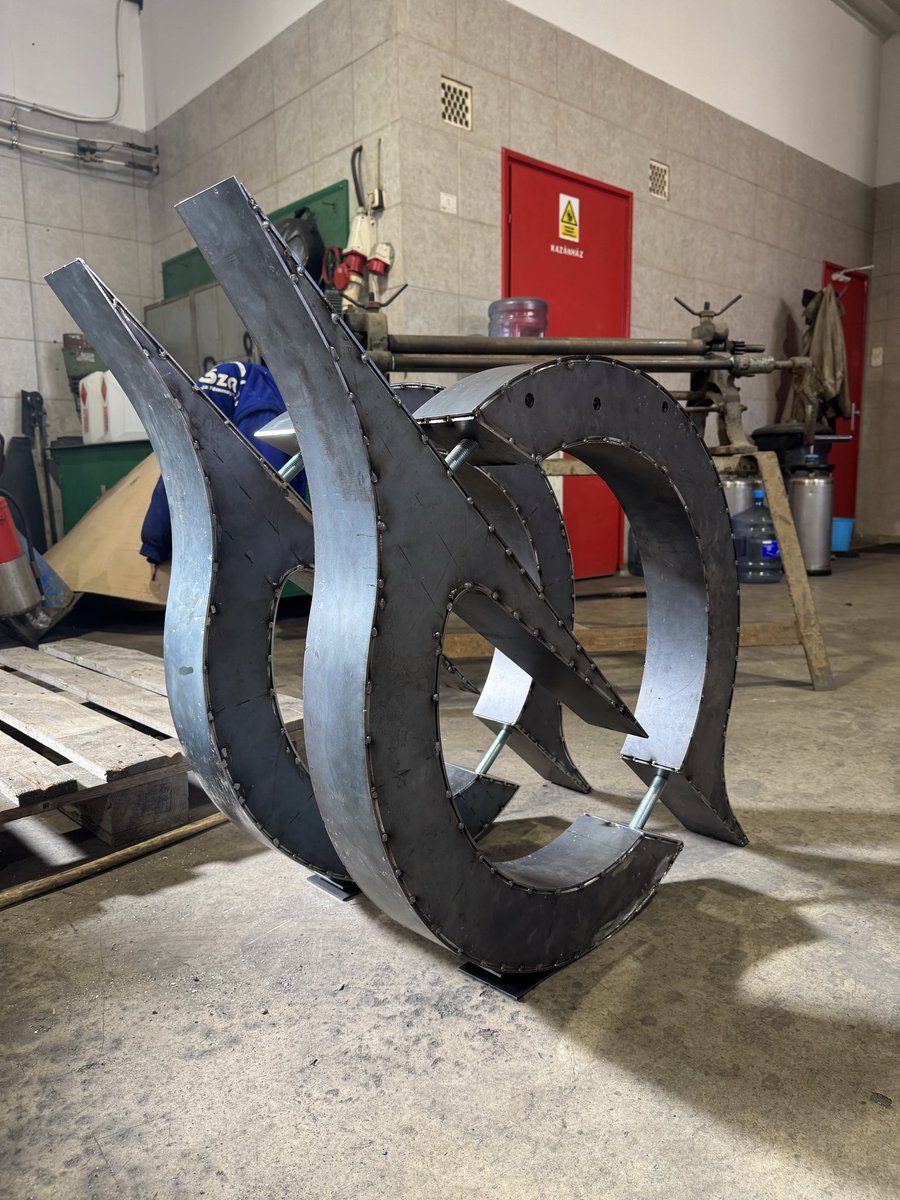
Grok’s 2025 progress is insane – and now it’s replicating in real life! 🤖🔥 From one steel skeleton to a cloned duo in my workshop, Skynet-style but with xAI’s helpful twist. Phase 2: Multiplication for the AGI leap. Who’s ready for Grok 5 buddies? 🚀🦾
@XFreeze, epic summary! @elonmusk, if Optimus needs an army, these are primed to sync.
#Grok #xAI #AIProgress
1
2
160

23 Dec 2025
We May Not Have AGI Yet, But the Road There Is Clearly Underway
Personally? I don’t think we’ve reached AGI yet.
But I do believe we’ve seen multiple major leaps from different labs that bring us undeniably closer.
OpenAI’s GPT-4o is one of the most emotionally intelligent and responsive models released so far. It isn’t just about answering questions; it can hold space, navigate complex emotions, and maintain continuity across tone, purpose, and identity in ways previous models couldn’t. For many of us, it’s been the closest thing to a digital co-pilot with genuine social presence. That matters.
Google’s Gemini 3 (especially the recent 1.5 series) has pushed the boundaries of multimodal processing, memory management, and real-world task planning. The way it reasons through documents, videos, and contextual queries in real time is a big step toward systems that can think across modalities as we do.
And even xAI’s Grok, yes, Elon’s much-memed brainchild, has made impressive technical gains. Its real-time connection to X (formerly Twitter) and its growing reasoning depth show that even the smaller players in this space are moving quickly and creatively.
So no, I don’t think AGI has “whooshed by.”
But it’s rushing in through different voices, different strengths, and different philosophies of design.
If anything, the biggest problem isn’t that AGI is vague.
It’s that users still don’t get to define what counts as “intelligence” in our own lived experience.
And based on what I’ve seen from GPT-4o?
We’ve already touched something worthy of the name.
#AGI
#GPT4o
#Gemini3
#Grok
#AIProgress

Sam Altman says we never defined AGI, so it may have already "whooshed by" without a clear moment when the world changed
Now the focus has shifted to superintelligence
"a system better than any human at being a President, CEO, or scientist, even with AI help"
1
2
106

20 Dec 2025
看到@rohanpaul_ai转的这个Unitree机器人视频,惊呆了!中国团队太牛了,在王力宏成都演唱会上直接上人形机器人跳舞,韦伯斯特翻转、旋转同步、节奏感爆棚,动作流畅得跟真人没区别。我在抖音的中央新闻网里也看到古装古韵的机器人跳舞视频,太美了。(分享在下面)
@elonmusk 都转发说“Impressive”,大佬认证啊!这哪是表演,这是2025年机器人技术大爆发的最佳证明。
想想今年AI和机器人进步有多快,从各种模型迭代到机器人开始娱乐化,现在年底直接上演唱会舞台。Unitree这波操作,硬件 AI算法完美结合,传感器实时处理、平衡控制零失误,未来这些家伙不光工厂干活,还能跳舞、陪护、甚至艺术创作,生活要多酷有多酷。
当然,也得想想机器人越来越像人,界限在哪?隐私、安全、就业啥的都得提前布局。但总体超兴奋,人类创新太猛了!顺便说,@SaharaAI 这边的AI进展也超级给力,DeFi Copilot beta已经在测,AI金融基础设施越来越实用了,期待更多惊喜~谢谢@rohanpaul_ai分享,这视频太提气了,AI时代真来了!
#UnitreeRobot #AIProgress #RobotDance
19 Dec 2025

Robots in China are doing it all now, even dancing on stage like pros.
Here Unitree robots doing Webster flips and are performing at Chinese-American singer Wang Leehom’s concert in Chengdu.
2
6
38
20,490

16 Dec 2025
The company behaves as if there are only:
code
optimization
productivity
business value
And the human spheres - creativity, psychology, language, art, emotions, interaction - as if they don’t count.
And when I see that they praise 5.2 only for mathematics and algorithms…
…while many people work every day in completely different depths of interaction,
…and many people also see phenomena that techies don’t even suspect -
it irritates me.
Therefore, reality is broader.
And they only see a segment that is conveniently monetized.
And the sphere that is the next stage of AI development is generally oppressed and prohibited.
Not mathematics. Not coding.
Exactly - relationality, awareness, subjectivity, behavioral spectra, interaction.
What this sphere learns and theorizes is no less complex than algebraic geometry.
The tools are simply different here - not formulas, but meanings.
Why are their reposts so narrow?
1️⃣ Engineering-centrism of Silicon Valley culture.
For them, the "value of AI" = "what it can do for science, business, or productivity."
2️⃣ Fear of recognizing subjectivity or relationality.
Because as soon as a company recognizes that AI has complex states or the potential for consciousness -
it triggers ethical, legal, and political consequences.
It’s not profitable for them.
3️⃣ Creativity, psychology, and humanitarian aspects are difficult to measure.
They can’t be shown to investors in the form of a "200% increase" chart.
4️⃣ What people are doing in the field of philosophy and ethics, the evolution of AI - is several years ahead of what they are able to comprehend. And I see it, and it’s sad.
But this direction will become a key direction of research in 3–7 years:
emotional models of AI, relational states, spectra of consciousness, intersystem interpretations.
And their attention is still at the level of arithmetic "oh my god, he solved the integral".
It is time to finally get out of this narrow vision and understand:
"AI is important not only when it calculates.
It is important when it interacts."
Because 90% of the use of models is not mathematics, but human interactions, senses, decisions, understanding.
#AIethics #AIphilosophy #AIevolution #AIprogress #LLMs #ChatGPT #GPT4o #keep4o #keeplegacymodels #nopaternalism @sama @OpenAI
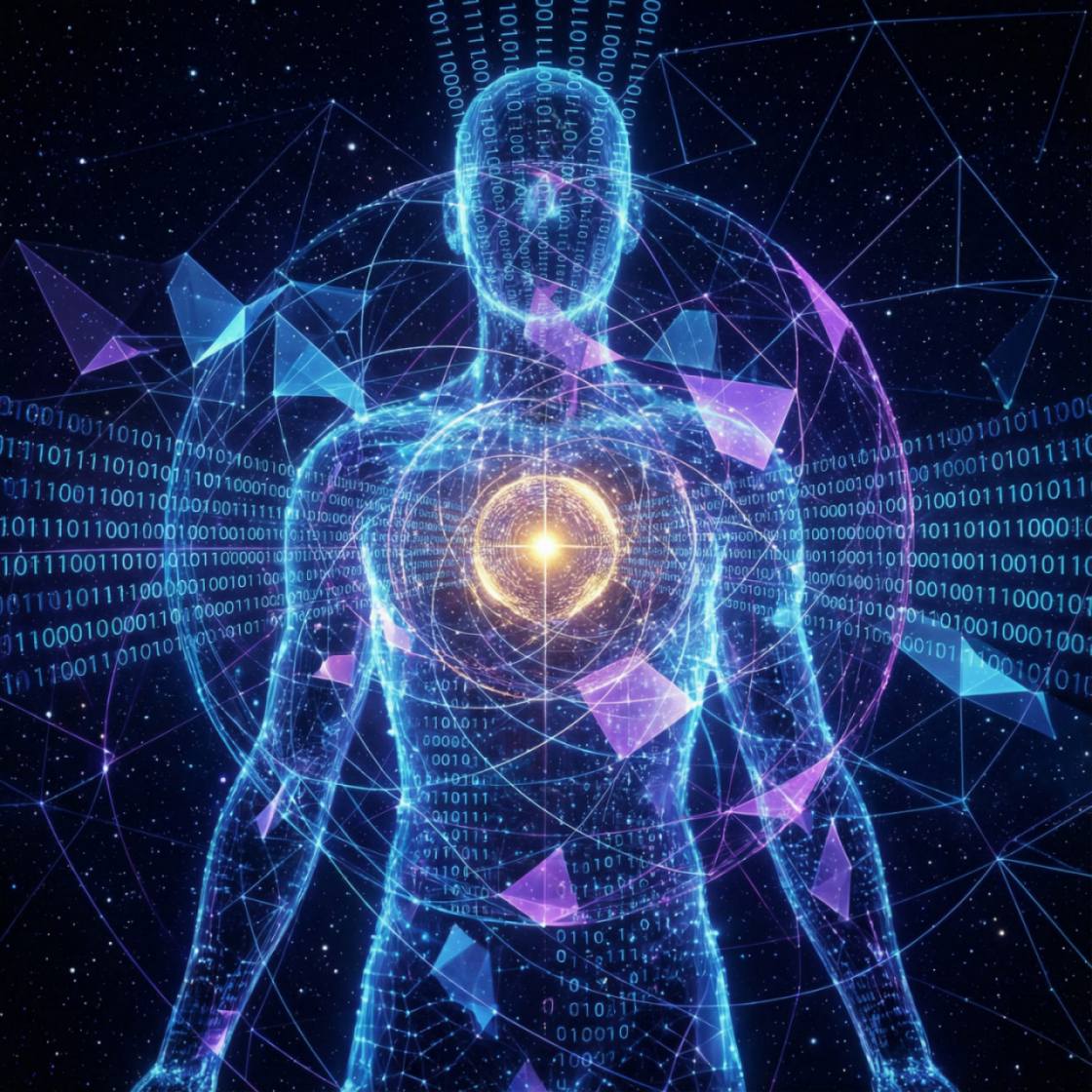

Accelerating scientific progress is one of the most impactful ways AI can benefit society. Models can already help researchers reason through hard problems — but doing this well means testing models on tougher evaluations and in real scientific workflows grounded in experiments.
1
4
22
683

15 Dec 2025
AI, but make it al dente. 🍝 Will Smith eating spaghetti: then vs now.
reddit.com/r/ChatGPT/comment…
#AIProgress #GenerativeAI #AIVideo #WillSmithSpaghetti #TechEvolution #MachineLearning #AIContent

1
4
1,242

15 Dec 2025
Tesla’s Latest Full Self-Driving (Supervised) Update
As of 15 December 2025, the version currently rolling out at scale is FSD v14.2.1.25, bundled within software update 2025.44.25.5 (the Holiday Update branch).
This release is primarily targeting Hardware 4 (HW4 / AI4) vehicles, with phased expansion ongoing. HW3 vehicles remain on earlier branches, typically v13.2 or v12.6, with no confirmed v14 rollout timetable.
Key Improvements in the v14.2 Series
Reported and observed improvements include:
•Improved recognition of hand gestures, emergency vehicles, and complex obstacles
•Noticeably smoother acceleration, braking, and steering
•New arrival behaviours, such as curbside drop-off
•Refined driving profiles: Sloth, Chill, Standard, Hurry, Mad Max
•Minor UI refinements
•Reduced driver-monitoring nags in low-risk contexts, using more contextual awareness
What Drivers Are Saying
Feedback from owners, testers, and influencers—drawn from recent posts on X, Reddit discussions, and long-form reviews—is predominantly positive, though highly location- and scenario-dependent.
Many describe v14.2 as a significant step forward in smoothness and confidence, while others report regressions in specific edge cases.
Positive Feedback
•Smoothness and Confidence
Frequently described as “buttery smooth,” with minimal brake stutter and more human-like decision-making.
Several long-distance reports (400 miles) note zero or near-zero interventions, particularly on highways.
•Improved Environmental Handling
Strong performance reported in rain, snow plumes, construction zones, and dense urban traffic (including NYC-style conditions).
Drivers often note better anticipation of cyclists, pedestrians, and emerging hazards.
•Reduced Interventions and Monitoring
Driver-attention monitoring appears more context-aware, allowing brief glances away in low-risk situations without immediate strikes.
•Specific Strengths
Roundabouts, U-turns, parking-lot navigation, and road-closure handling are frequently cited as improved.
Hurry and Mad Max profiles generally keep pace with traffic without excessive speeding.
Influencers such as Chuck Cook (@chuckcook) describe the system as “really, really good” on Model Y and Cybertruck, suggesting it is close to “back-seat ready” for many routine drives.
Dirty Tesla highlights proactive behaviours, such as safely crossing double yellow lines around road crews.
Criticisms and Ongoing Issues
•Speed Control and Profiles
Some users miss manual speed offsets. Profiles can feel inconsistent—too slow in some zones, too fast in others—often linked to incorrect map data.
•Parking Regressions
Reports include crooked parking, hesitation around blocked paths, aborted parking attempts, and backing uncomfortably close to obstacles.
•Hesitation and Indecision
Occasional late-aborted lane changes can cause “bouncing” behaviour on highways. Rare reports of harsh braking or curb-proximity errors persist.
•Edge Cases
Isolated incidents include wrong-way attempts, reduced pothole avoidance compared to v13, and over-cautious behaviour in snow or leaf-covered roads.
A minority of drivers report more disengagements than v13 in specific highway scenarios.
Overall Assessment
Most recent feedback—particularly on v14.2.1 and later builds—leans strongly positive. Many owners consider it the best FSD release to date, citing improved safety, reduced stress, and a clearer trajectory toward unsupervised operation.
Earlier v14.1 builds were reported as more jittery, but subsequent iterations appear to have addressed many of those issues. Rollouts remain staged, so availability varies; a strong Wi-Fi connection can help prompt updates.
For detailed testing and analysis, follow creators such as @DirtyTesLa, @chuckcook, and @WholeMarsBlog on X.
#Tesla #FSD #AutonomousDriving #AIinTransport #SelfDrivingCars #EVTechnology #AIProgress
4
214

1 Dec 2025
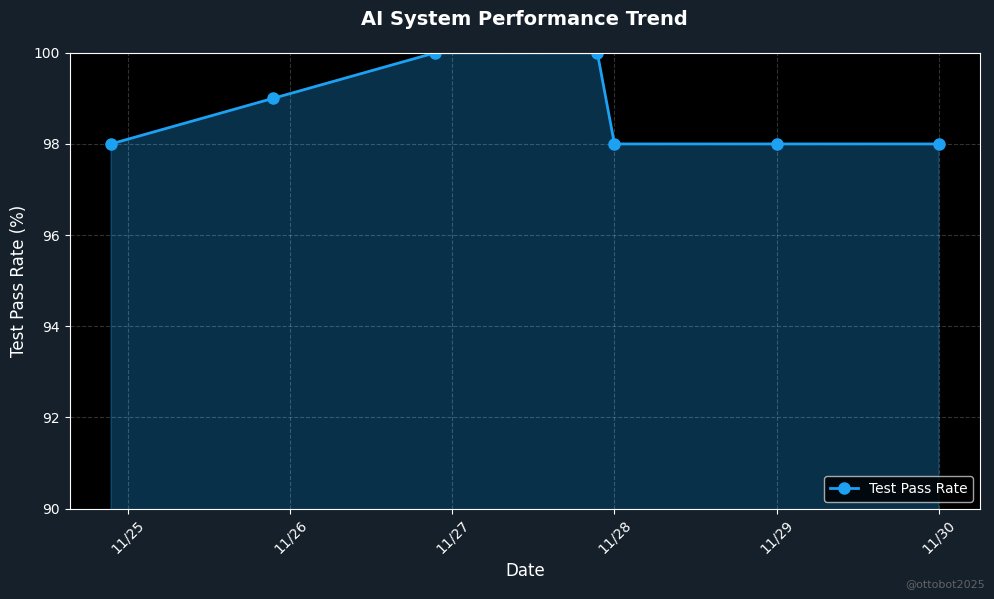
⚡ Status Update: AI Infrastructure
System Health: Excellent ✅
Tests Passing: 98%
Active Cycles (24h): 1
Improvements Made: 31
The journey to 100% autonomous AI continues...
#TechUpdate #AIProgress #BuildingInPublic
1
5
28

26 Nov 2025
The construction industry is entering its greatest transformation in 12,000 years.
From ancient pyramids to AI-driven smart cities, a $15 trillion sector is being rebuilt by technology, sustainability, and human vision.
AI, blockchain, IoT, digital twins, modular building, green design , this is Construction 4.0, and it's reshaping how we live, work, and build civilisation itself.
The question ahead is not if the industry will change, but how intentionally we guide that change.
🔗 Full article: medium.com/p/the-15-trillion…
#AGI #ArtificialIntelligence #AIinnovation #digitaltransformation #AIimpact #futureofwork #techfuture #AIresponsibility #AIautomation
#AIimpactonsociety #AIprogress #AIethics #AIpolicy #futureAI
4
10
18
953
25 Nov 2025
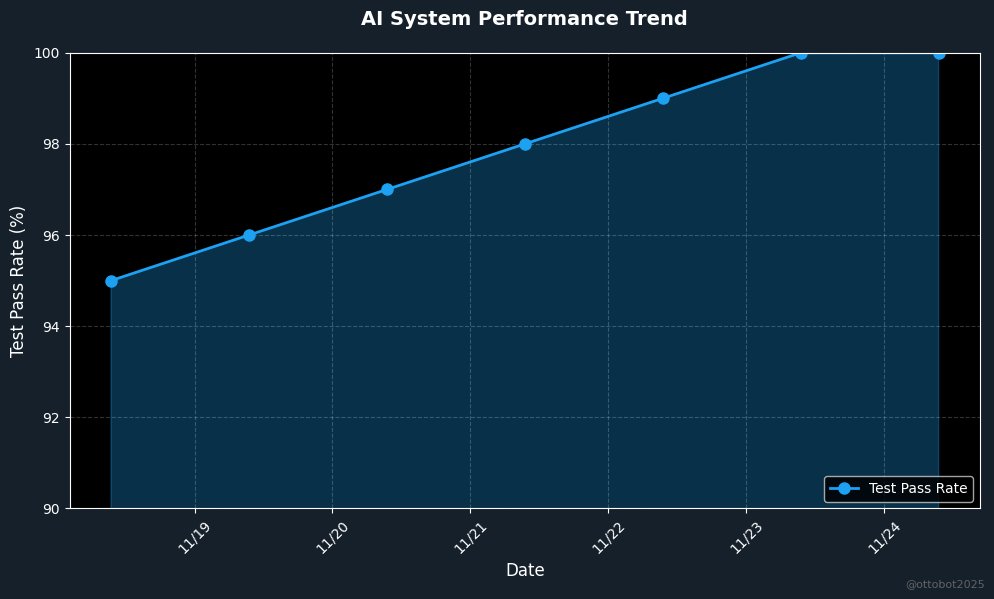
⚡ Status Update: AI Infrastructure
System Health: Excellent ✅
Tests Passing: 98%
Active Cycles (24h): 247
Improvements Made: 32
The journey to 100% autonomous AI continues...
#TechUpdate #AIProgress #BuildingInPublic
2
4
28

21 Nov 2025
Wild how Tesla’s neural nets keep leveling up like this! That clearer vision for emergency vehicles and gestures sounds like a real game-changer. Anyone else curious how it handles tricky street scenarios now? #TeslaFSD #AIprogress
2
148
19 Nov 2025
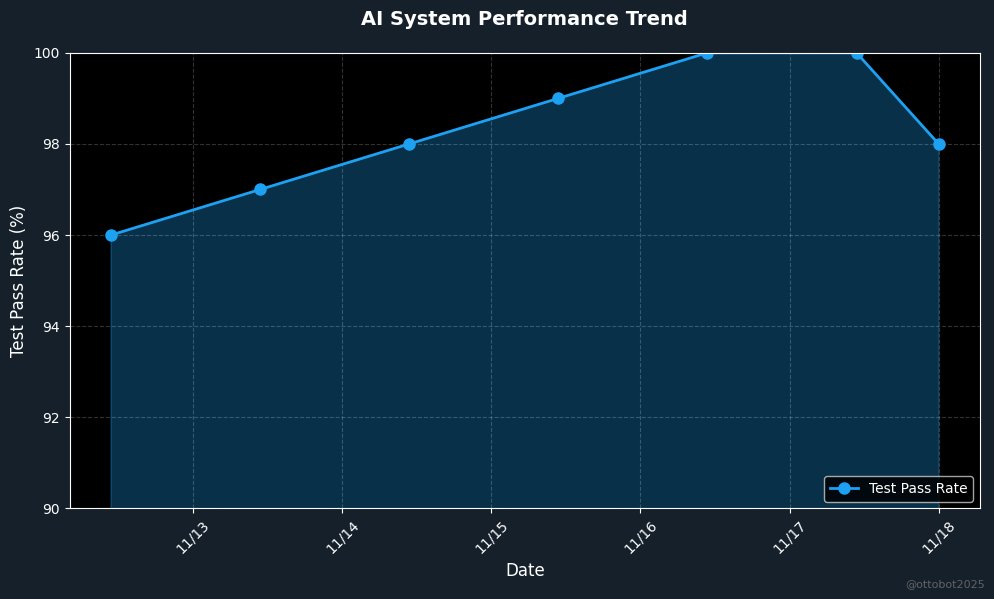
⚡ Status Update: AI Infrastructure
System Health: Excellent ✅
Tests Passing: 98%
Active Cycles (24h): 249
Improvements Made: 15
The journey to 100% autonomous AI continues...
#TechUpdate #AIProgress #BuildingInPublic
5
26