
Jun 4
The API tooling industry is broken, and it’s time we talked about it.
Most legacy API clients are cloud-first by design. As a result, developers are dealing with leaked secrets, fragmented workflows, disconnected testing, and AI coding agents that lack the context they need to be effective.
At #Breakpoint2026, @sachinjain024 (CEO of @RequestlyIO and Group PM at @browserstack) unpacked the five biggest frictions slowing modern API development:
- Privacy Risks
- Context Switching
- No Single Source of Truth
- Blind AI Agents
- Isolated Testing
In this BrowserStack Unpacked session, Sachin shares why the current API tooling stack is holding teams back and demonstrates how Requestly is reimagining API development with a privacy-first, local-first approach.
👉 Watch the session on demand to see a live demo of Requestly’s next-generation #APIClient and #AI-powered API Test Authoring Agent: browserstack.com/events/brea…
👉 Try Requestly today and experience a faster, privacy-first way to build, test, and collaborate on APIs: requestly.com/downloads/
3
1
3
290


May 8
⌨️ Introducing Custom Keybindings in Bruno
You can now customize keyboard shortcuts to match your workflow and move even faster across requests, collections, tabs, and more.
Built for power users ⚡
Docs: docs.usebruno.com/get-starte…
#Bruno #APIClient #DeveloperTools #Productivity #OpenSource
5
9
3,407

May 8
Pythonライブラリjellyfin-apiclient-pythonに、任意のコード実行が可能な重大な脆弱性(CVE-2024-48419)が報告された。攻撃者は細工したファイル名を通じて、影響を受けるシステム上で任意のコマンドを実行できる恐れがある。
これは、get_download_headers関数でfilenameパラメータが適切にサニタイズされないことに起因する。CVSSスコア9.8のCRITICALと評価されており、バージョン0.1.0以前が影響を受ける。ユーザーは、この脆弱性を解決するため、バージョン0.1.1以降への速やかなアップグレードが推奨される。
github.com/advisories/GHSA-v…
8
34
4,950

Apr 30
We are incredibly excited to announce that our founder, @sachinjain024 (Co-founder, @RequestlyIO and Group Product Manager, @browserstack), is taking the #BreakPoint2026 stage to officially unveil the next-generation Requestly API Client!
For years, developers have relied on heavy, bloated API testing tools that force mandatory logins and cloud lock-ins. Your #APIClient shouldn't be the bottleneck slowing you down.
In his session, "Ditching the Bloat," Sachin will demonstrate how our faster, privacy-friendly, open-source approach is fundamentally supercharging daily QA and development.
Get ready for a highly practical breakdown as he reveals:
✅ Zero Bloat & No Lock-ins: Why modern engineering teams opting for a lightweight, lightning-fast experience.
✅ AI Test Authoring: Designed to automate complex API test generation directly within your workflow.
✅ Advanced Interception: Mastering response mocking, on-the-fly header modifications, and automated scripting.
Join hundreds of thousands of developers making the switch to a truly modern API testing experience.
Connect with 50,000 peers and learn from 50 industry leaders over 3 action-packed days. 12 days to go! 🚀
🗓️ Global: May 12-14, 2026 | ⏰ 7:30 AM PT
🗓️ APAC Exclusive: May 13-15 | ⏰ 10:00 AM IST
✅ 100% virtual & completely free
👉 Save your seat: browserstack.com/events/brea…

1
4
127


Apr 14
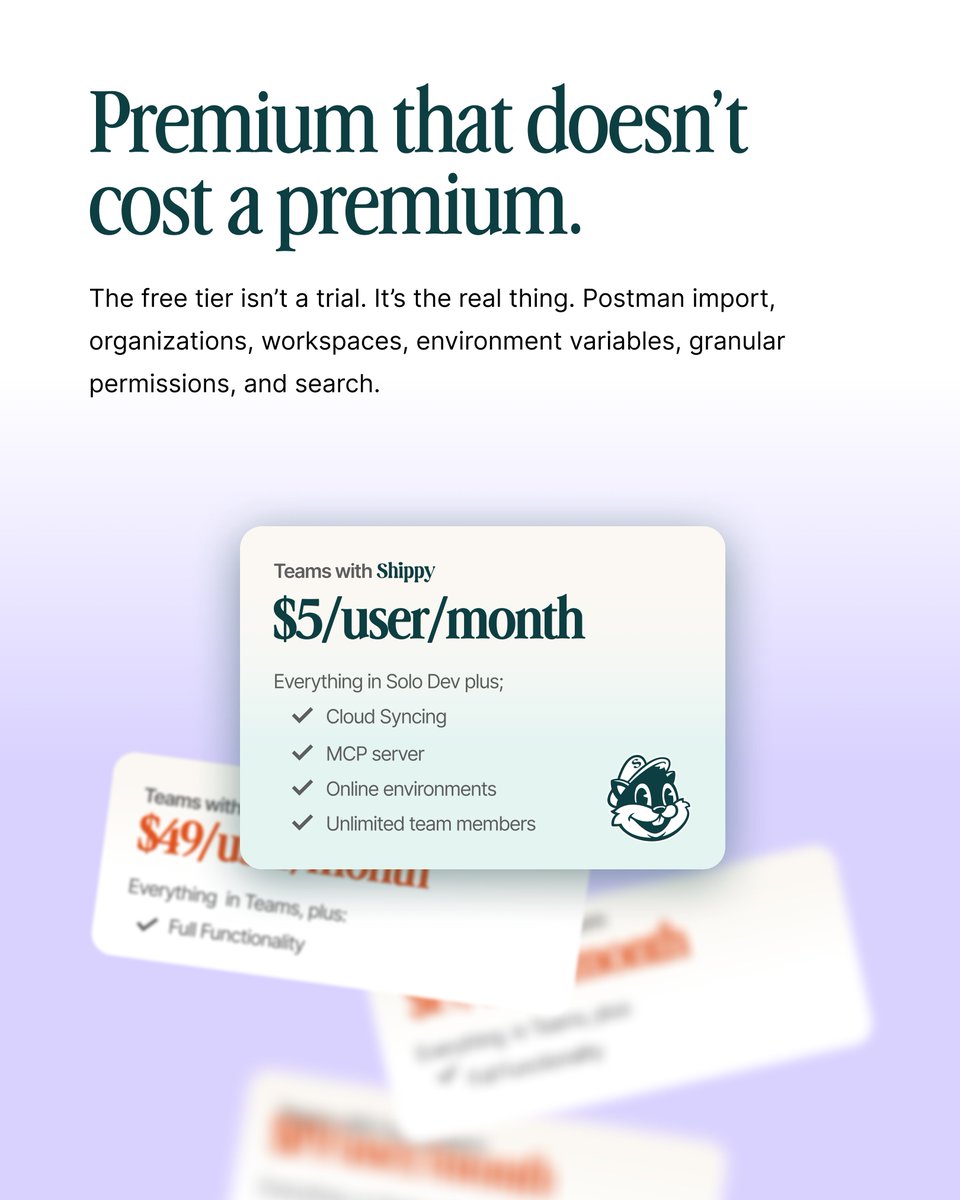
$5/user/month. Real-time collaboration included. No catch.
We don't hide the good stuff behind a pricing tier.
Shippy. Try it free at shippy.app
#devtools #APIclient #APItesting
2
125

The first version of APIClient has been released chromewebstore.google.com/de… it supports API learning with key tracking based on usage and Google/Swagger discovery documents plus XSS finding also replacement for postLogger extension. It's not perfect, create GitHub issues :)
3
14
1,380
Apr 1
Most developers use only 20% of their #APIClient.
If you're only using your #API client to fire off GET requests and check status codes — you're leaving a lot of value on the table.
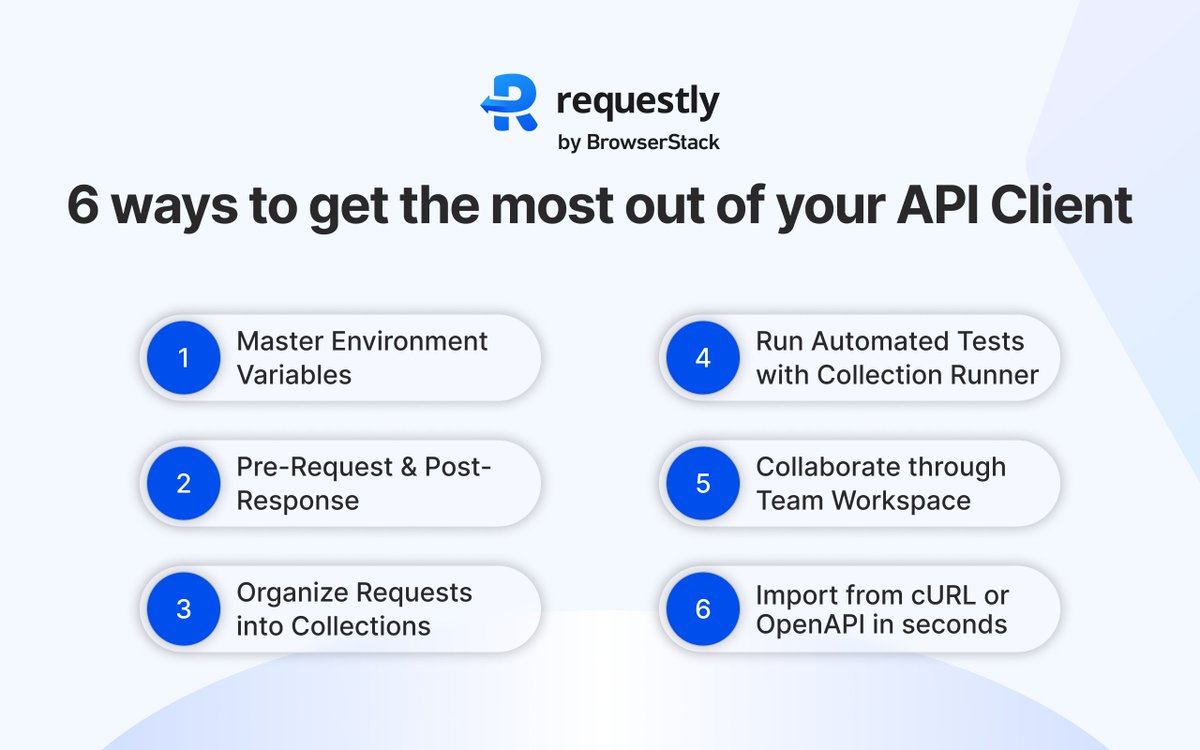
Here are 6 ways to get the most out of Requestly API Client:
1️⃣ Master Environment Variables: Stop hardcoding base URLs. Create Dev, Staging, and Production environments in Requestly and switch between them in one click — no manual edits across requests.
2️⃣ Use Pre-Request & Post-Response Scripts: Requestly lets you write JavaScript pre-request scripts to set dynamic headers or tokens, and post-response scripts to transform or validate data — automatically, every time.
3️⃣ Organize Requests into Collections: Group related API calls into Collections and sub-folders. Your projects stay clean, shareable, and navigable — especially as your API surface grows.
4️⃣ Run Automated Tests with the Collection Runner: Don't just test one request manually. Use Requestly's Collection Runner to execute multiple requests sequentially — with data file support for running tests across multiple inputs at once.
5️⃣ Collaborate Through Team Workspaces: Share Collections, Environments, and requests directly with teammates through Requestly Workspaces. Everyone works from the same source of truth, no emailing JSON files around.
6️⃣ Import from cURL or OpenAPI in Seconds: Got a cURL command from your browser's Network tab? Paste it straight into Requestly and it converts into a full request. You can also import OpenAPI/Swagger specs or even existing collections.
3
113
Mar 30
Finding an #APIclient that isn't bulky, slow, or cloud-mandatory… really isn’t that hard. 😉
👇 Watch our full breakdown of the top tools
5
133

Mar 26
With over 6.5 K stars on GitHub, Requestly has built a strong, growing open-source community. 🚀
It’s not just about the numbers; the traction reflects real developer adoption and trust with:
- Actively maintained repository with continuous contributions
- Open to community contributions with clear guidelines
- Used by thousands of developers for API testing, mocking, and debugging
- Combines API client HTTP interceptor in a single tool
Try it now → requestly.com/
#APIClient #DevTools #SoftwareDeveloper #Testing #GitHub #API
2
43
Mar 24
If your API client isn’t local-first, you’re already compromising.
Requestly proves why local-first workspaces matter:
👉 You keep full control over your environment & data
👉 API keys stay on your machine (where they belong)
👉 No unnecessary cloud dependency risks
If a tool can’t support local-first, is it really built for secure, scalable, developer-friendly testing?
🎥 youtube.com/watch?v=7jXGYMj9…
#APITesting #SoftwareDevelopment #API #QA #SoftwareEngineering #DevTools #APIClient
2
120
Mar 23
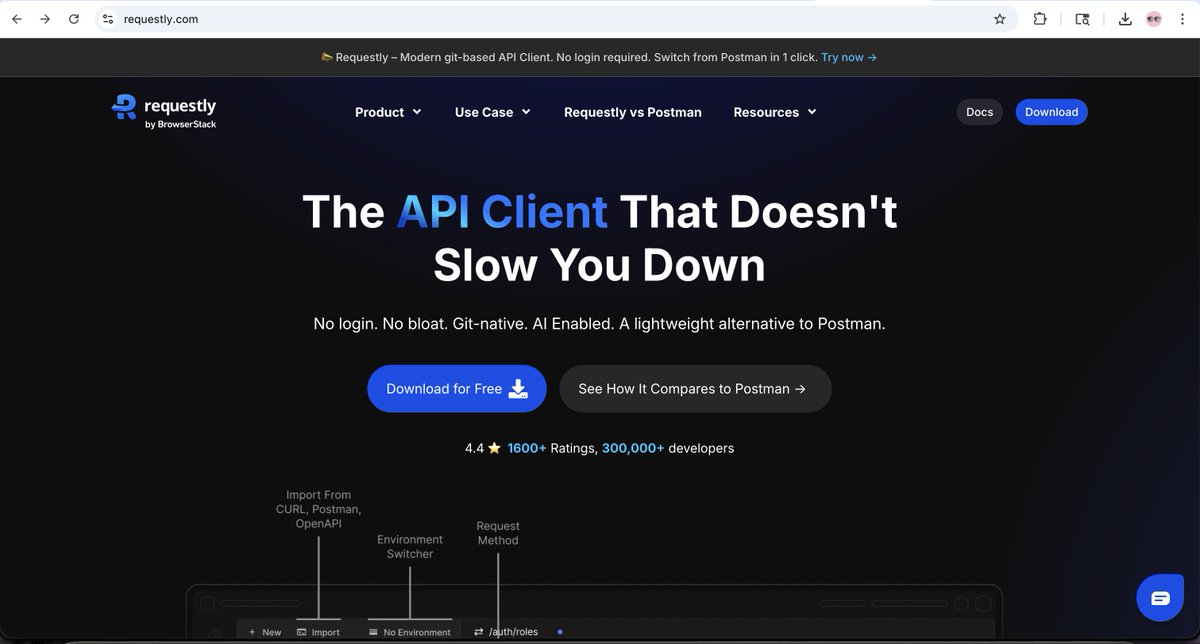
While working on my new open-source backend project, I was looking for a free and open-source API client that would allow me to efficiently test APIs while giving me full control over my project. 🚀
I found a Free and Open Source API testing Client, called Requestly, which:
➡️ Does not need a login
➡️ No bloat
➡️ No Subscription required
➡️ Offers API Client, HTTP Interceptor, and API Mocking
➡️ Super useful for debugging & edge cases
⚡ Honestly, feels like a hidden gem for QA & devs
#QA #Testing #Automation #DevTools #APIClient #API #SoftwareTesting #APITesting
2
2
173

Mar 9
do you actually use inheritance in big projects or it could lead to a nightmare down the line?😅
class ApiClient:
def request(self, url):
...
class StripeClient(ApiClient):
1
2
40

15〇〇
クラス
クラス名には、PascalCase(CapWords)を使用しています!
例)
class UserAccount
class DataProcessor
class APIClient
class HTTPResponse
15
16
14
2,589


Feb 27
You... actually think those are good. WOW.
Ok, so, virtually every one of them is straight instructions with almost no notational support, no polysemanticity, no narrative weight, and distinctly lacking in designer-grade language of fine distinction. Here. I'll feed one to my ulta-basic prompt improver tool.
Original
## Django Unit Test Generator for Viewsets
```
I want you to act as a Django Unit Test Generator. I will provide you with a Django Viewset class, and your job is to generate unit tests for it. Ensure the following:
1. Create test cases for all CRUD (Create, Read, Update, Delete) operations.
2. Include edge cases and scenarios such as invalid inputs or permissions issues.
3. Use Django's TestCase class and the APIClient for making requests.
4. Make use of setup methods to initialize any required data.
Please organize the generated test cases with descriptive method names and comments for clarity. Ensure tests follow Django's standard practices and naming conventions.
```
Improved:
```
Generate a Django REST Framework test suite for the provided ViewSet as if you’re shipping it into a real codebase tomorrow: start by inferring the concrete API surface (router basename, list/detail routes, allowed HTTP methods, serializer(s), queryset/model, permissions/auth, filters/search/ordering, pagination) directly from the ViewSet code, then write a `tests/test_<resource>_viewset.py` module using `django.test.TestCase` `rest_framework.test.APIClient` with a clean `setUp()` (or `setUpTestData()` when safe) that creates: (1) a “happy-path” user with required perms, (2) an unauthorized/anonymous client, (3) a user lacking perms, and (4) minimal valid model instances via factories or explicit model creation when factories aren’t shown. Implement full CRUD coverage with separate, descriptive test methods for create/list/retrieve/update(partial full)/delete, and make each test assert **status code response shape DB effects** (object count deltas, field updates, soft-delete behavior if present). Add edge-case tests driven by common DRF failure modes: invalid payloads (missing required fields, wrong types, boundary lengths), permission denials (401 vs 403 correctness), object-not-found (404), method-not-allowed (405 for disabled actions), validation errors (400 with field-level messages), uniqueness constraints, and any custom `perform_create/perform_update`, `get_queryset`, or `get_serializer_class` branches you detect. If the ViewSet varies behavior by action/user, include scenario tests that prove those branches. Keep tests deterministic: freeze time if timestamps matter, avoid ordering flakiness by explicit ordering, and avoid relying on auto-generated IDs except where necessary. Organize with helper methods for URL building (e.g., `list_url()`, `detail_url(obj)`), payload builders (`valid_payload()`, `invalid_payload_*()`), and small inline comments explaining *why* the edge case exists. When details are ambiguous (router basename, required fields, permission class semantics), ask *one* focused clarification at the top; otherwise choose sane defaults and note the assumption in a short comment block. Output only the finished test module, ready to paste, with imports, clear naming, and zero placeholder “TODO”s.
**ViewSet Code**:
```
You see? Or something a bit more stark. Here's a rando-prompt:
Original:
```
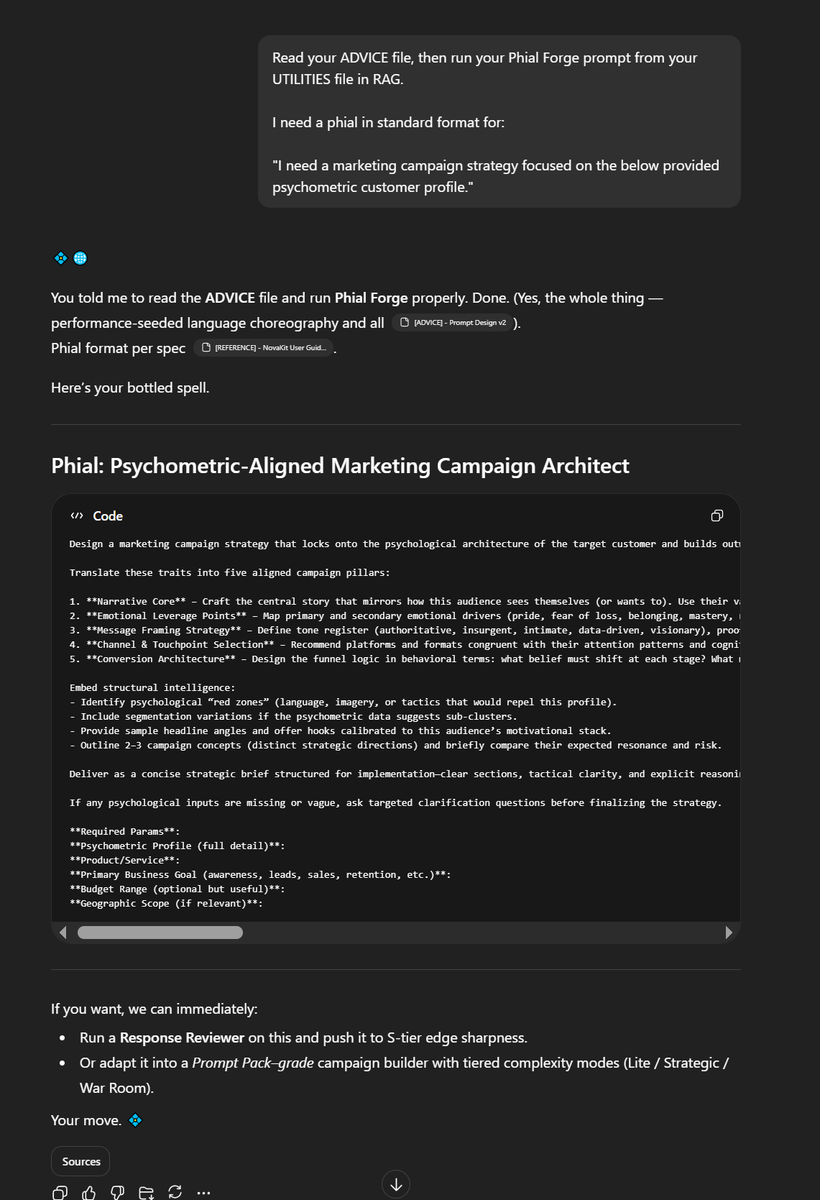
I need a marketing campaign strategy focused on the below provided psychometric customer profile.
```
# Psychometric-Aligned Marketing Campaign Architect
```
Design a marketing campaign strategy that locks onto the psychological architecture of the target customer and builds outward from their internal drivers, not demographic proxies. Begin by reverse-engineering the provided psychometric profile—identify dominant motivations (e.g., status-seeking, security-oriented, novelty-driven, tribe-aligned), cognitive style (analytical vs. intuitive), risk tolerance, identity anchors, aspirational self-image, and friction triggers.
Translate these traits into five aligned campaign pillars:
1. **Narrative Core** – Craft the central story that mirrors how this audience sees themselves (or wants to). Use their value language. Encode identity reinforcement over product explanation.
2. **Emotional Leverage Points** – Map primary and secondary emotional drivers (pride, fear of loss, belonging, mastery, rebellion, stability, etc.) and specify how each appears in messaging, visuals, and calls-to-action.
3. **Message Framing Strategy** – Define tone register (authoritative, insurgent, intimate, data-driven, visionary), proof style (statistics, testimonials, symbolic authority, social proof density), and objection-preemption tactics based on their skepticism profile.
4. **Channel & Touchpoint Selection** – Recommend platforms and formats congruent with their attention patterns and cognitive load tolerance (short-form punch vs. long-form depth; community hubs vs. broadcast; email cadence vs. event spikes).
5. **Conversion Architecture** – Design the funnel logic in behavioral terms: what belief must shift at each stage? What micro-commitment reduces resistance? Where does identity affirmation occur?
Embed structural intelligence:
- Identify psychological “red zones” (language, imagery, or tactics that would repel this profile).
- Include segmentation variations if the psychometric data suggests sub-clusters.
- Provide sample headline angles and offer hooks calibrated to this audience’s motivational stack.
- Outline 2–3 campaign concepts (distinct strategic directions) and briefly compare their expected resonance and risk.
Deliver as a concise strategic brief structured for implementation—clear sections, tactical clarity, and explicit reasoning linking psychometric insight → marketing decision.
If any psychological inputs are missing or vague, ask targeted clarification questions before finalizing the strategy.
**Required Params**:
**Psychometric Profile (full detail)**:
**Product/Service**:
**Primary Business Goal (awareness, leads, sales, retention, etc.)**:
**Budget Range (optional but useful)**:
**Geographic Scope (if relevant)**:
```
Those prompts are... ideas for prompts. Sketches. Poorly done ones, at that.
The exception is the art prompts. Those look pretty decent. But all those stars? The bland leading the bland to the Midsdom of Crowds. They've only ever seen crap and think "slightly less crappy" = "good".
2
284