
Jan 6
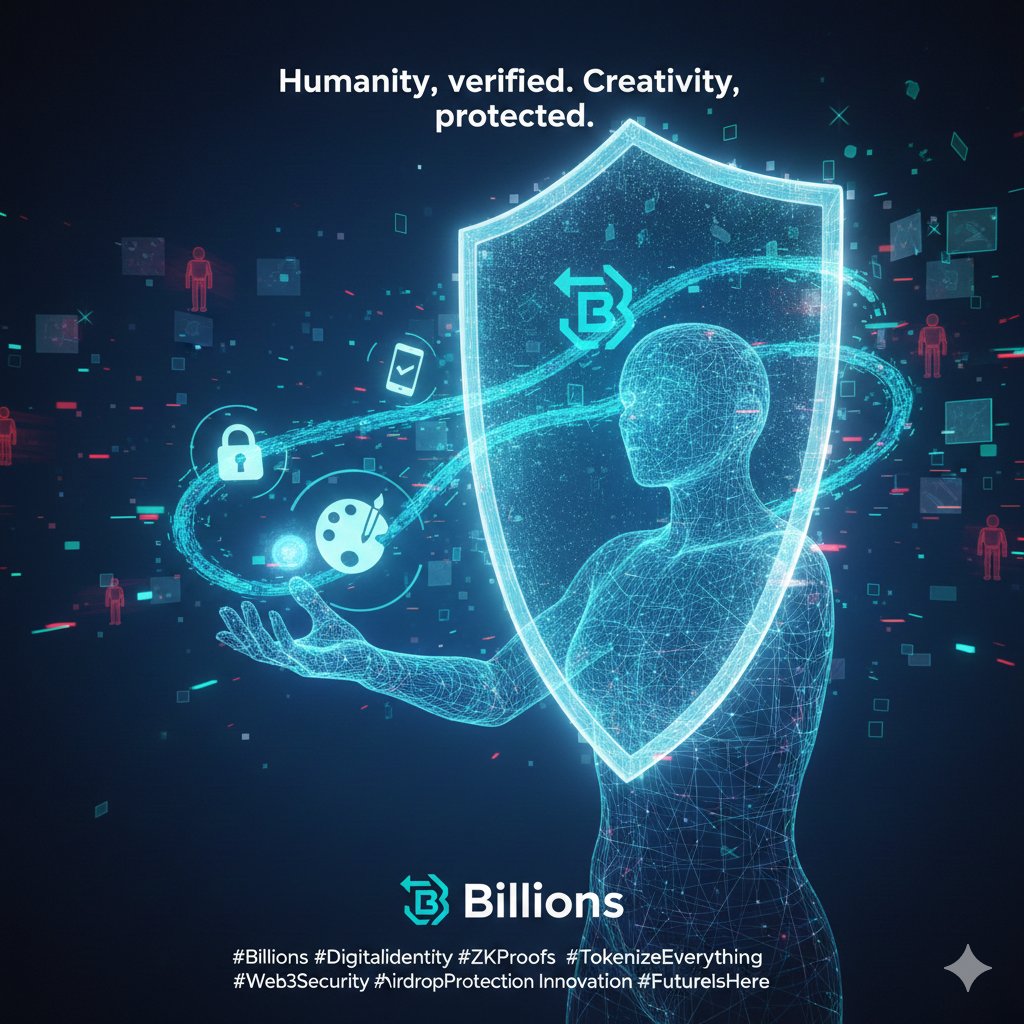
Bots farming airdrops? AI content flooding the web? @billions_ntwk is on a mission to fix that.
Their new mobile app verifies you’re a real human using zero-knowledge proofs so you stay private, but platforms stay bot-free. Plus, with tokenized IP, creators can finally own and monetize their digital work securely.
From securing DeFi with reusable KYC to partnering with @TelefonicaTech for real-world adoption, Billions isn't just another ID project. It's the verification layer for the next internet.
Humanity, verified. Creativity, protected.
#Billions #DigitalIdentity #ZKProofs #TokenizeEverything #Web3Security #AirdropProtection #Innovation #FutureIsHere @wallchain
1
3
23

29 Dec 2025
Continuum is redefining on-chain identity and reputation. Instead of juggling fragmented data across chains, it provides a unified layer that turns your digital footprint into something truly actionable.
Developers can build sybil-resistant apps with ease, and users no longer need to start from scratch on every platform. Continuum is the connective tissue the ecosystem has been missing.
Engagement Strategy for @c8ntinuum:
Boost visibility using CIR:
Context: Tag @c8ntinuum and use terms like “Unified Identity” or “Reputation Layer” so the algorithm recognizes your content.
Insight: Share practical examples, like how Continuum solves the “cold start” problem for new DAO members.
Relevance: Link your content to trends like DeSoc (Decentralized Social) or airdrop protection to join active conversations.
Tweet Variations Using CIR:
1. Unified Identity Angle:
“Starting fresh on every new DAO is exhausting. @c8ntinuum fixes that with a unified reputation layer, making your on-chain identity portable and actionable. #DeSoc #ReputationLayer”
2. Developer-Focused Insight:
“Building sybil-resistant apps just got easier. Continuum gives devs a unified identity layer to trust. No more fragmented on-chain data. @c8ntinuum #Web3Identity”
3. Trend-Relevant Relevance:
“Tired of losing airdrops because new DAOs can’t verify you? Continuum’s unified identity layer changes that. Your reputation follows you across platforms. @c8ntinuum #AirdropProtection
29 Dec 2025

The idea of a continuum invites us to rethink how we understand reality, change, and meaning. Rather than seeing the world as a set of isolated states with hard boundaries, the continuum frames existence as a smooth flow where transitions matter more than endpoints. Nothing simply flips from one state to another. Everything moves, evolves, and blends.
In physics, this perspective is foundational. Space and time are not treated as separate, fragmented units but as a unified, continuous fabric known as spacetime. General relativity describes gravity not as a force acting at a distance, but as the curvature of this fabric itself. Massive objects bend spacetime, and motion follows those curves. There are no visible seams in this structure, only gradual distortions that shape how matter and energy behave.
Mathematics reinforces this view through the real number line. Between any two numbers, no matter how close, another number always exists. This endless density shows that continuity is not an abstraction but a formal property of how quantity and magnitude work. The Continuum Hypothesis pushes this further by questioning the nature of infinity itself, exploring whether there are sizes of infinity that exist between the countable integers and the uncountable real numbers. It reveals that even infinity is not a single concept, but a layered spectrum.
Philosophically, the continuum challenges our instinct to divide the world into rigid categories. We often rely on binary thinking to simplify complexity, right or wrong, true or false, this or that. But most of reality lives between those poles. Identity, belief, knowledge, and change rarely fit cleanly into boxes. They unfold over time, shaped by context, experience, and gradual shifts.
Viewing the world as a continuum changes how we understand progress. Change is no longer a sudden break from the past but an accumulation of small movements. Growth becomes a process, not an event. Understanding deepens not through abrupt conclusions, but through sustained exploration.
The continuum reminds us that meaning is found in transitions, not just outcomes. It asks us to pay attention to flow, connection, and evolution, because that is where reality actually lives.
65
1
55
675

Sybil attacks. Fake users. Spoofed wallets.
Web3 is flooded with bots.
@billions_ntwk Network brings cryptographic truth:
Human verification
No data leaks
ZK-powered access control
Stop fakes before they farm.
#AirdropProtection #ZKIdentity #Billions

1
1
15

5 Oct 2024
Dear @telegram
many innocent accounts are being unfairly banned, causing users to lose access to their airdrops after months of farming. Please review this issue to ensure fair treatment for all users and prevent unnecessary losses.
#TelegramReview #AirdropProtection #FairPlay
4
1
6
112

11 Jun 2024
🎉New partnership with @bondexapp
We've ensured their S1 airdrop is fair, trust-worthy and bot-free using our advanced detection tech.
Cheers to authentic user engagement and a thriving community of BONDINS🚀 #AirdropProtection #BotDetection #Bondex
link.medium.com/R1JYWliTkKb
2
3
14
686
11 Jun 2024
Our very own @oli_innerworks will be deep diving into how we protect airdrops & detect bots for clients online.
We'll be speaking today with our brilliant partner @bondexapp on spaces at 5pm BST or 12 EST time.
#botdetection #airdropprotection #cybersecurity #web3
11 Jun 2024

And don't forget to join us later today on twitter spaces as we dive deeper into how we're ensuring real users in our community get the most $BDXN , not bots!
x.com/i/spaces/1OdJrjzmqjeJX
4
322

22 Aug 2023
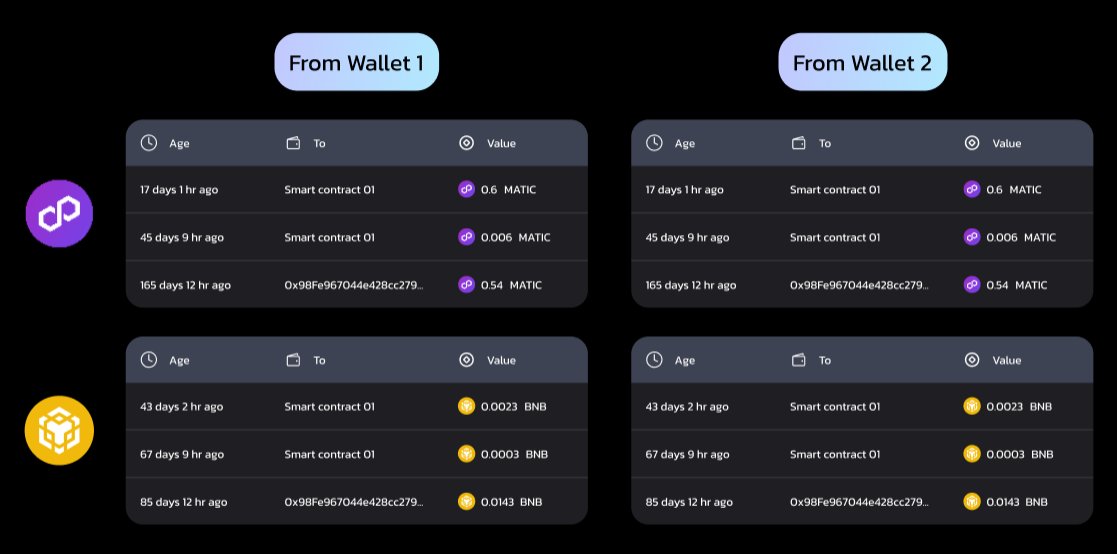
🌐 Did you know? Sybil attacks in the world of #Web3 aren't just confined to individual #blockchains. They can also spread across different chains! Recently, @W3W_ai lent a hand to a top L1 blockchain platform in exposing complex bot patterns. 🕵️♂️
#Sybilattack #Airdropprotection
3
3
549