
May 6
Ever wonder why viral content works? This video dives into how algorithms exploit human psychology to cause division, proving it’s not about stupidity—it’s by design. #AlgorithmicManipulation #Psychology #Tech
2
32

Feb 21
OPINION
Must India ban social media for children?
Click- dailypioneer.com/news/must-i…
#SocialMedia #ChildSafety #OnlineSafety #DigitalWellbeing #MentalHealth #ChildMentalHealth #ScreenTime #AlgorithmicManipulation #ArtificialIntelligence #AI #CyberBullying #OnlineHarms #Depression #Anxiety #DigitalRegulation #AgeVerification #DataPrivacy #AlgorithmTransparency #YouthProtection #DigitalIndia #Germany #FriedrichMerz #Australia #France #Spain #Greece #UnitedKingdom #TechPolicy #ResponsibleTech #ProtectOurChildren #RegulateSocialMedia
Must India ban social media for children?
Must India ban social media for children?
dailypioneer.com 3
40

Feb 19
7️⃣
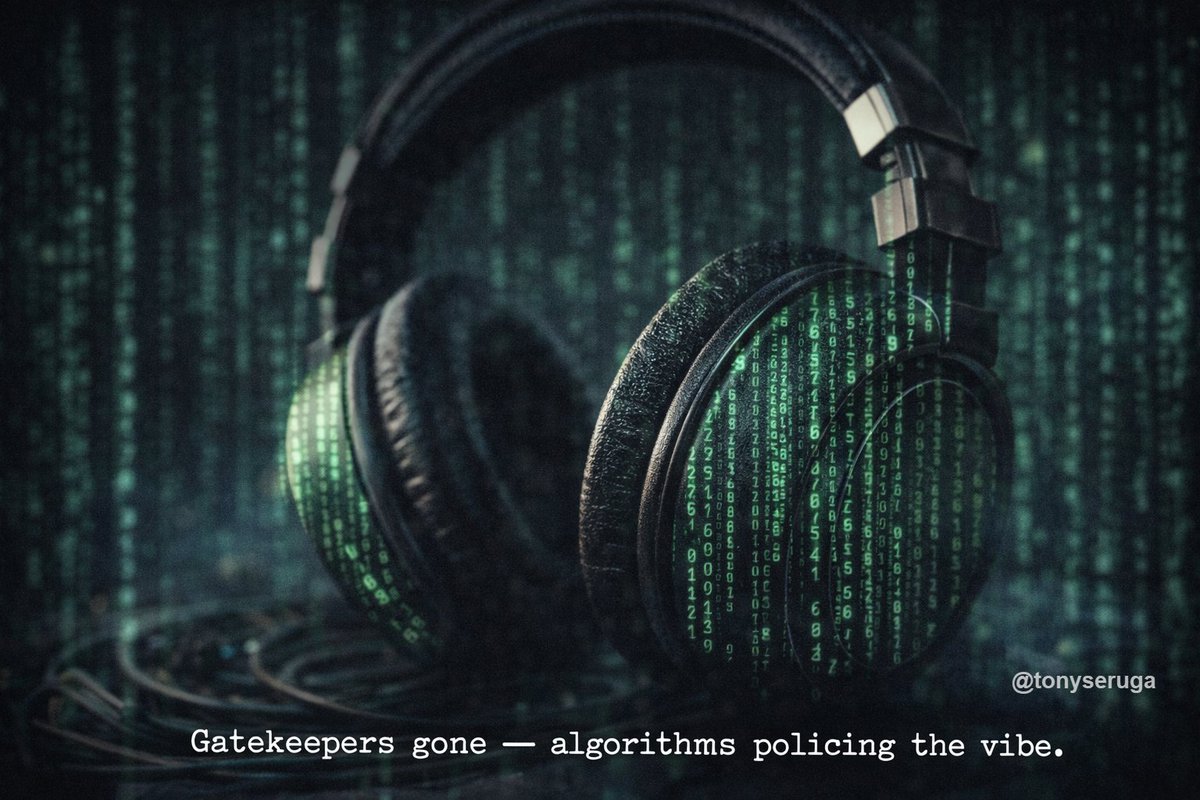
2000s: Algorithms arrive.
The gatekeepers vanish — replaced by math owned by the same oligarchs.
Your rebellion now needs corporate permission to trend. #AlgorithmicManipulation #DigitalColonization
1
4
13
641

Click on the link @carolecadwalla for your news outlet and suddenly, oh dear
'you've lost a connection'.
So there's no interference in this media?
#algorithmicmanipulation ?
2
220

Feb 4
The excellent decisions of President of @spain to hold #digitalplatforms accountable of the content they carry; misinformation, #hatespeech and #algorithmicmanipulation and to protect #children show that where there’s is a will there is a way! I hope many more leaders will follow
Feb 3

Spanish PM Pedro Sánchez:
Starting next week, my government will implement the following actions:
First, we will change the law in Spain to hold platform executives legally accountable for many infringements taking place on their sites.
Second, we will turn algorithmic manipulation and amplification of illegal content into a new criminal offense.
Third, we will implement a hate and polarization footprint system to track, quantify, and expose how digital platforms fuel division and amplify hate.
Fourth, Spain will ban access to social media for minors under the age of 16. Platforms will be required to implement effective age verification systems — not just checkboxes, but real barriers that work.
Fifth and last, my government will work with our public prosecutor to investigate and pursue the infringement committed by Grok, TikTok, and Instagram.
49
217
764
29,767

12 Jul 2025
🚨 Breaking News 🚨
France has launched a criminal investigation into X concerning alleged algorithmic manipulation. 🇫🇷📊
Could this be a game-changer for social media accountability? Stay tuned. 🔍
#France #CriminalInvestigation #AlgorithmicManipulation #CryptoNews #CryptoMarket
1
5
238

11 Jul 2025
📣 New Podcast! "182: Quantum Dots & the Mark of the Beast w/ Stephen of The Biblical Hitmen" on @Spreaker #aiconspiracy #algorithmicmanipulation #biblicalhitmen #bigdata #biodata #conspiracytheory #cryptocurrency #dataisoil #digitalagency #faithvsai spreaker.com/episode/182-qua…

1
2
1,037

30 Apr 2025
Social media is no longer a tool for connection, but a system of manipulation. 🕸️
It makes you addicted📱, drains your attention🧠, sells your data📊, and makes you think that all this is "free expression".
The truth is: you are not a user, but a commodity. 🧍♀️💸
#EchoWorld #socialmedia #digitalslavery #attentioneconomy #algorithmicmanipulation #reflection

16
4
4
4,222

22 Mar 2025
The strongest move?
Be unpredictable.
Don’t let algorithms dictate your personality mirror.
Curate consciously, not reactively.
#PlatformBias #AlgorithmicManipulation #DigitalSelfDefense
3
141

7 Feb 2025
🚨‼️Paris Prosecutor Investigates Elon Musk's X for Alleged Algorithmic Manipulation
The Paris Prosecutor's Office has initiated an investigation into Elon Musk's social media platform, X (formerly Twitter), over concerns of potential algorithmic distortions. The probe, led by the Paris cybercrime unit, aims to determine whether X's algorithms have manipulated the operation of automated data processing systems. This action follows a report by centrist lawmaker Eric Bothorel, who expressed apprehension about recent changes to the platform's algorithms and possible interference since Musk's acquisition. The investigation underscores growing scrutiny of social media platforms' influence on public discourse and the ethical implications of their algorithmic decisions.
#ElonMusk #X #Twitter #ParisProsecutor #AlgorithmicManipulation #SocialMediaEthics #EricBothorel #CybercrimeInvestigation #PublicDiscourse #TechRegulation
1
1
2
187

22 Jan 2025
🌍 From Legacy Media to NeoTechBro Control: Are We Losing Free Thought?
linkedin.com/pulse/from-lega…
#FreeThought #Algorithms #NeoTechBros #AlgorithmicManipulation #FreeSpeech #DigitalFreedom #DigitalRights #PoliticalInterference #SocialMediaReform #AesirX
3
26

18 Dec 2024
Some Key Insights! I have written two articles on the influence of social media in elections, published in Modern Diplomacy. Drawing on Romanian documents, these pieces expose the powerful role algorithms and fake accounts play in shaping public opinion. A critical question remains: how do we measure the impact of algorithms on voter behavior? Voters are the foundation of democracy, and their decisions are increasingly shaped by digital systems. Traditional manipulation - such as organizing transport to polling stations or instructing voters on whom to vote for - has evolved into insidious tactics, leveraging algorithms, fake accounts, and targeted content. This transformation demands immediate attention. How can we assess the influence of algorithmic manipulation on voters? How can we ensure transparency and fairness in the digital political landscape? These concerns go beyond corporate interests - they strike at the very heart of democracy.
On #China, let’s approach this with clear judgment. There is ongoing progress! Last summer, the #EU and China launched the Cross-Border Data Flow Communication Mechanism to tackle challenges faced by European businesses transferring non-personal data in China.
Ambiguities in China’s 2022 Measures for Data Export Security Assessment - especially the vague definition of “important data” - have created uncertainty and eroded investor confidence. Key sectors like finance, pharmaceuticals, automotive, and ICT, which rely on seamless data flows for innovation, urgently need clarity. This mechanism is crucial for restoring trust and stabilizing EU-China relations, but its success hinges on expert collaboration and sustained political oversight. While the conversation often centers on corporate data flows, we cannot overlook the consumer perspective. Many people remain unaware of the intricacies of data governance, yet they, too, have digital rights that must be safeguarded. While the European Union has the GDPR, (AI Act, DSA) which safeguards user data, #privacy is not just a European concern - it’s a global one. We need global frameworks that hold all actors - governments, corporations, and organizations - accountable, ensuring that individuals, not corporations or governments, control their own data.
Lastly, reflecting on an #MIT study that explores why laws are often written in incomprehensible language, I find myself curious about the role of lawyers in lab settings. My experience in #India was truly eye-opening, revealing the immense value of multidisciplinary collaboration. I witnessed firsthand how much lawyers can learn from engineers - and vice versa. This cross-disciplinary exchange is important for addressing complex challenges and fostering innovation in our increasingly interconnected world. #SocialMediaInfluence #AlgorithmicManipulation #DataPrivacy #EUChinaRelations #CrossBorderData #DigitalRights #TransparencyInTech #InnovationInLaw #GlobalDataGovernance #RuleOfLaw
7
17
2,513

13 Dec 2024
AI vs. Politics: The Truth Will Out @MelKShow @JohnnyVedmore
#5thGenerationWarfare #AlgorithmicManipulation #legalChanges #PoliticalLandscape #AI #ArtificialIntelligence #InformationControl #PoliticalFigures #Truth #Documentary
5
6
886


🚨 New Read: "Algorithm or Autocracy: TikTok's Challenge to Cognitive Sovereignty" 🚨
🌐 As TikTok mesmerizes the globe with its engaging content, a darker narrative unfolds beneath its viral facade. Our latest article dives into how TikTok's algorithms may not just entertain but also manipulate, shaping behaviors and potentially undermining democratic values differently across regions.
🔍 Key Insights:
Data Surveillance: Explore how TikTok's data practices link to China's surveillance technology, posing risks not only to individual privacy but also to global democratic integrity.
Legislative Reactions: Discover the recent U.S. Senate move to ban TikTok, reflecting escalating global concerns over the security of data controlled by foreign entities.
Global Implications: Understand how similar data exploitation strategies by state powers pose significant threats worldwide, emphasizing the need for a decentralized approach to safeguard digital sovereignty.
🤔 Why do we continue to use TikTok despite these risks? What can we do to protect our cognitive sovereignty and ensure our digital engagements align with our democratic values?
linkedin.com/pulse/algorithm…
#TikTok #DataPrivacy #DigitalSovereignty #CognitiveSovereignty #AlgorithmicManipulation #GlobalSecurity #DigitalEthics #DigitalRights #DataPrivacy #Privacy #Compliance #BusinessEthics #PrivacyMatters
3
10
114
15 May 2024
🚨 New Read: "Algorithm or Autocracy: TikTok's Challenge to Cognitive Sovereignty" 🚨
🌐 As TikTok mesmerizes the globe with its engaging content, a darker narrative unfolds beneath its viral facade. Our latest article dives into how TikTok's algorithms may not just entertain but also manipulate, shaping behaviors and potentially undermining democratic values differently across regions.
🔍 Key Insights:
- Data Surveillance: Explore how TikTok's data practices link to China's surveillance technology, posing risks not only to individual privacy but also to global democratic integrity.
- Legislative Reactions: Discover the recent U.S. Senate move to ban TikTok, reflecting escalating global concerns over the security of data controlled by foreign entities.
- Global Implications: Understand how similar data exploitation strategies by state powers pose significant threats worldwide, emphasizing the need for a decentralized approach to safeguard digital sovereignty.
🤔 Why do we continue to use TikTok despite these risks? What can we do to protect our cognitive sovereignty and ensure our digital engagements align with our democratic values?
linkedin.com/pulse/algorithm…
#TikTok #DataPrivacy #DigitalSovereignty #CognitiveSovereignty #AlgorithmicManipulation #GlobalSecurity #DigitalEthics #DigitalRights #DataPrivacy #Privacy #Compliance #BusinessEthics #PrivacyMatters
1
8
109

21 Apr 2024
The Danger of Artificial Intelligence is NOT AI, it's the WOKE Developing It.
tinyurl.com/2bhoovzb
#.Microsoft'sAIImagingtool #Algorithmicdiscrimination #Algorithmicmanipulation #andInclusion) #Artificialintelligence #Bias-freealgorithms #DEI(Diversity #Equity

2
2
44

18 Jan 2022
Everything we see online is decided by platforms' algorithms.
These algorithms promote extreme and fringe views (antivax, conspiracy, hate) in a quest for clicks.
We want to #FixTheDSA & give users a right to a timeline without #AlgorithmicManipulation.

1
4
9

<lom:string language="en">
This class introduces studies in the #algorithmicmanipulation of #type as #word, #symbol, and #form. Problems covered will include #semantic #filtering, #inherently #unstable #letterforms, and spoken #letters.
The #history and
#traditions
1
1

26 Jun 2019
So, now even Bill Gates is warning about #Google and #Facebook's very real impact on elections and the manipulation of information. #Election2020
#BigTech #censorship #AlgorithmicManipulation
#ResponsibleInnovation #MLFairness #ProductIntervention
edition.cnn.com/2019/06/24/t…
1
4