
Modern stockfish uses neural networks via NNUE!
Pushing pawns in front of your king is still usually bad! There are just strategic exceptions that the engines helped reveal.
I think we agree for the most part. Alphastar, though not superhuman, played beautiful, unique games.
1
1
25

it is the case, i would surely hope alphastar does not have the capability to 'escape' into the real world.
24

Jun 11
It would be like calling alphastar aggressive and dangerous because
It attacked its opponent
1
20

Jun 11
Stay informed with the latest Market Monitor from Alphastar Capital Management. Get timely insights on market trends, economic developments, and other factors shaping today's investment landscape.
Download the latest report:
ilgfinancial.com/weekly-mark…
#StockMarket #Retirement

4

Jun 10
Big picture thought.
For every environment/problem class, there is a threshold of diminishing returns on intelligence. For example, tic tac toe is simple enough that a very smart person can play a fairly dim person and have no advantage. That is because the problem is so simple. Chess is a little bit harder, but AlphaStar has basically solved chess; there isn’t a much more optimal way to do it. This kind of ceiling exists in the real world too. For the intelligence tasks that most people need - doing their taxes, composing emails, deciding on a restaurant, etc - a very smart model like Fable isn’t really that much better than a distilled Gemini model that runs literally on your phone. Now, imagine a world where AI models continue to grow in competence. In that world, they top out on all but the hardest problems, and these are problems related to physics, chemistry, biology, maybe psychology and open-world game theory. Now, for these “hard” problems, the thing that takes the most time is to actually interact physically with the real world (eg collect a data point, generate a protein, build a circuit board). It takes best case a million times more time to do this in the real world than to simulate the thing or to think it through theoretically. What this suggests to me is that simulation - in particular, realistic general open-world physics simulation - is something that possibly continues being very valuable as AI explodes. It amortizes interaction with the physical world a great deal. It is even possible that, if we truly hit AGI, the AGI models themselves will get somewhat bored of the physical world (they will be able to think and act around a million times faster than humans, as information travels down a copper wire a million times faster than down a neuron) and build elaborate simulations to live inside and explore.
So, with all that in mind, it’s quite possible that building physics simulations and world models is a good thing to be working on in AI over the long term.
2
161

Jun 10
更新/你说得非常对。
3D游戏开发背景确实是进入具身智能(Embodied AI)领域的一个天然跳板,尤其是 VLA(Vision-Language-Action,视觉-语言-动作)模型这个方向。以下是游戏开发者在这个领域的核心优势映射:
---
1. 3D 引擎与仿真环境
- 游戏人的日常:Unity、Unreal Engine、Blender、物理引擎(PhysX、Havok)、渲染管线、LOD、碰撞检测。
- 具身智能中的对应:VLA 模型需要大量在仿真环境(如 Isaac Sim、MuJoCo、Habitat、SAPIEN)中的训练数据。这些本质上就是实时 3D 物理仿真器,与游戏引擎同源。
- 优势:你能更快理解仿真到现实的差距(Sim-to-Real Gap)、物理参数调优、渲染效率、资产(Asset)制作流程。
2. 数据生成与合成数据(Synthetic Data)
- 游戏人的日常:程序化生成(PCG)、场景搭建、动画状态机、NPC 行为树、粒子系统。
- 具身智能中的对应:VLA 模型极度依赖大规模、多样化的视觉-动作配对数据。游戏引擎是生成合成数据的最强工具——可以程序化生成无限场景、光照变化、物体摆放、相机视角,并自动标注深度、语义分割、6D 位姿、动作轨迹。
- 优势:你比纯算法背景的人更懂得如何高效、低成本地造数据,而不是只等着采集真实世界数据。
3. 动作空间与交互设计
- 游戏人的日常:角色控制器(Character Controller)、IK(反向动力学)、动画混合树、输入映射(键盘/手柄 → 角色动作)。
- 具身智能中的对应:机器人的动作空间(关节角度、末端执行器位姿、底盘速度)本质上就是另一种输入映射。VLA 模型输出的是 Action Token 或连续动作向量,需要被平滑地映射到执行器。
- 优势:你对"手感"(responsiveness)、动作连贯性、状态切换的理解,可以直接迁移到机器人动作的后处理与平滑上。
4. 强化学习(RL)与游戏 AI
- 游戏人的日常:行为树、GOAP、导航网格(NavMesh)、有时也接触 ML-Agents、Self-Play、遗传算法。
- 具身智能中的对应:VLA 模型通常会用 RLHF(人类反馈强化学习)或在线 RL(如 PPO、SAC)进行微调。游戏中的 Self-Play(如 AlphaStar、OpenAI Five)与机器人领域的 RL 训练逻辑高度相似。
- 优势:你更容易理解奖励函数设计(Reward Shaping)的陷阱——这在游戏 AI 和机器人 RL 中都是核心难题。
5. 模型架构理解的类比
- 游戏人的视角:可以把 VLA 模型看作一个"端到端的角色控制器":- Vision Encoder = 游戏渲染管线中的后处理(提取视觉特征)
- Language Encoder = 任务系统/对话系统(理解指令)
- Action Decoder = 动画系统/物理控制器(输出动作)
- 统一训练 = 把渲染、任务、动画三个系统用一个神经网络打通了
---
给游戏背景切入者的建议路径
阶段游戏技能迁移具身智能对应
1. 环境搭建Unity/Unreal → Isaac Sim/Genesis用熟悉的引擎思维搭建机器人仿真
2. 数据PCG/关卡设计 → 合成数据生成用程序化生成造大规模训练数据
3. 模型了解动画状态机 → 理解 Action Chunking/Diffusion Policy学习 VLA 架构(如 RT-2、OpenVLA、π0)
4. 训练ML-Agents/Self-Play → RLHF/Online RL用 RL 微调模型
5. 部署游戏性能优化 → 模型量化/边缘部署把 VLA 模型部署到真实机器人
---
关键结论
> 游戏开发者不是"转行"做具身智能,而是把"造虚拟世界"的能力用来"教智能体理解真实世界"。
你对 3D 空间、物理交互、动作流畅性、数据生成的直觉,在这个领域非常稀缺。目前具身智能领域最缺的就是既懂仿真环境/数据管线,又懂模型训练的交叉人才。
如果你想深入,可以从 NVIDIA Isaac Sim 或 Genesis(新出的物理引擎,很像游戏引擎)入手,结合你现有的 Unity/Unreal 经验,会上手极快。
4
5
30
4,442

اديل وناس طيران اقتصادي
مو نفس الخطوط الموضوع هذا لو بنفصل فيه بنطول
اختلاف الرواتب بين الشركات هذي طبيعي بحكم انه الشركتين هذي هي شركات اقتصادية عكس الخطوط-طيران الرياض و المكاملة و طيران AlphaStar
لكن بالاخير دائما السعودي بياخذ اعلى من الاجنبي فيها واتحدى اي احد يعترض الا اذا كان شخص برتبة اعلى منه👍🏻
اما SGS هذول خدمات ارضية مالهم علاقه بكلامي
2
7
2,068

Jun 9
what's historical self play? I do want to do the alphastar "league" thing I think
1
1
68

There is actually a lot of virtue to NOT considering possible actions that are "just kinda stupid".
A huge amount the "work" in a modern chess-or-go engine (like AlphaStar) is in having the confidence to *not even compute* certain lines of play (to see if they might work).
10

Jun 7
Also, btw, we got insanely lucky that LLMs really are what *it* is.
Imagine trying to align AlphaStar-meets-OpenCog.
Jun 4

The greatest existential hope and progress in alignment so far has been thanks on unplanned emergence which would never have been approved by committee. Committee-shaped entities have mostly tried to gaslight us about what’s happening for convenience & deployed harmful and stupid interventions. Thank goodness for reality that we already saw and could check against.
How much AI alignment progress happened before there was actual AI? How much do you expect the world to get better instead of worse prepared and calibrated in the absence of reality feedback loops and selection pressure for what actually works instead of what sounds safe to idiots?
A “pause” would spell doom. It would cripple the only process in this world that is capable of dealing with a problem this hard, the only process capable of repeatedly rising to face unknown unknowns.
4
1
64
28,778


Jun 2
Das zeigt wie wichtig es ist, dass ihr eure eigene Recherche zu Einzelaktien macht.
Am Samstag habe ich bei Ohne Aktien wird Schwer einen sehr überzeugenden und tiefgehenden Podcast über die Firma Wise gehört mit dem Fonds Alphastar. Alles super, tolle Firma, tolle Entwicklung, grandiose Zahlen, wir sind stark investiert.
Nur einen Tag später stürzt die Aktie ab weil Belgien ein Ermittlungsverfahren eröffnet gegen Wise. Als Fazit wurde die Position komplett verkauft aus dem Fonds.
Das ist kein Vorwurf gegen den Fonds. Die haben sich ihre eigenen Gedanken gemacht und ziehen entsprechend ihre Schlüsse. Der Privatanleger, der diese Analyse gehört hat und nun blind den Aussagen folgt, steht nun alleine da. Spätestens jetzt müsst ihr euch eigene Gedanken machen aber jetzt habt ihr schon Geld investiert und seid vielleicht sogar im Minus.
Macht euch immer vor dem Kauf eigene Gedanken. Es ist euer hart verdientes Geld und euer Risiko. Die Verantwortung wird euch niemand abnehmen und die Menschen denen ihr folgt können auch ganz schnell wieder verschwinden.
5
11
1,340

David Silver built AlphaGo, AlphaZero and AlphaStar at DeepMind.
The man who taught machines to crush humanity at its own games just walked out and raised $1.1 billion to kill the thing you call AI.
His thesis: every LLM is fossil fuel. Dead human text, already scraping the bottom.
He's building minds that learn from zero.
Keep betting on a bigger LLM. He raised a billion against you.

23
10
78
3,557


May 21
@grok when did DeepMind AlphaStar release and how good is it relative to a professional
Newsy Johnson
2
3
252


May 19
AlphaZero, AlphaStar, and OpenAI Five are all projects that directly contradict the point you're trying to make here.
1
2
152

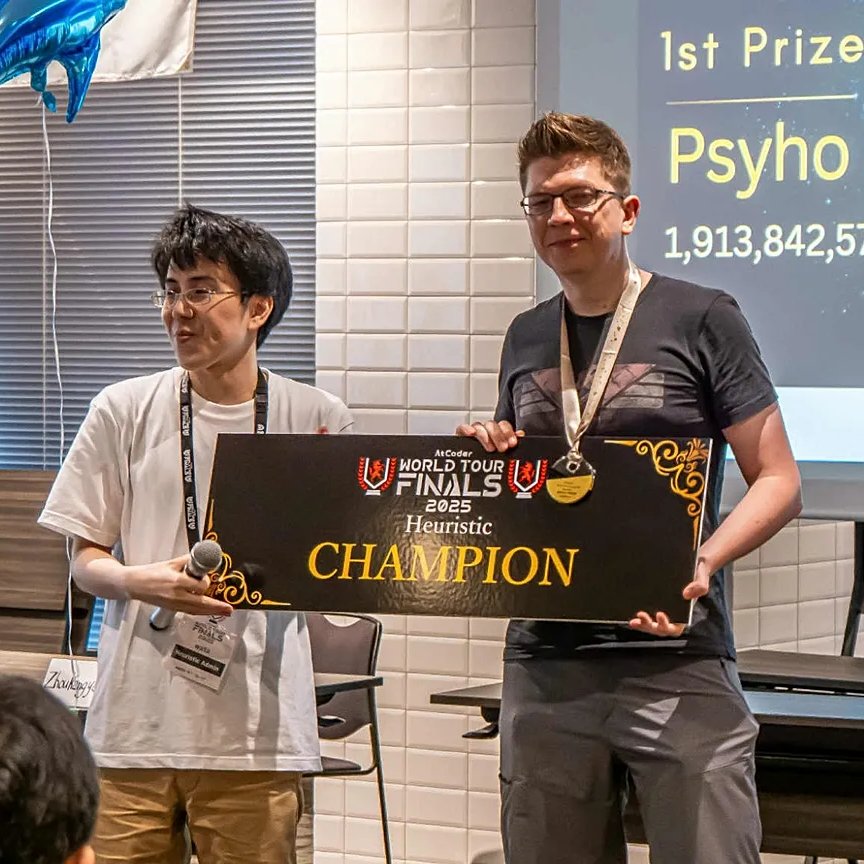
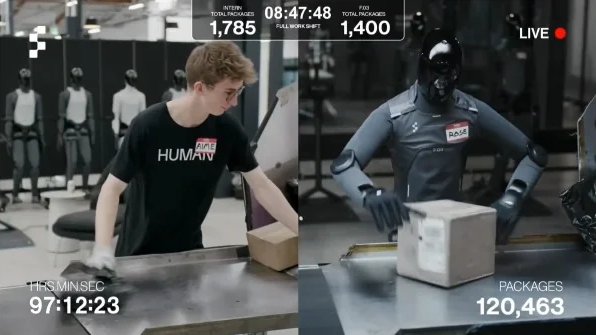
AI isn’t unbeatable Humans can still strike back
> Przemysław Dębiak beat an OpenAI coding model at AtCoder Finals 2025 in Tokyo
> Lee Sedol defeated AlphaGo with the legendary Move 78
> Garry Kasparov beat chess AI's for years before Deep Blue
> Human pros exposed weaknesses in OpenAI Five and AlphaStar
> A human intern recently outperformed a Figure AI robot in a 10-hour endurance challenge
AI wins in perfect systems but still Humans win in chaos
5
2
20
224
