
Discover Eclipse of the Night by Gabriel Angelfire youtube.com/watch?v=yOzCVCVB… #GrooverEffect
8


im so fucking upset about this angelfire shit you guys cant even imagine. that was a cornerstone of old internet websites. and most of it is just... gone now. vaporized. you cant hate capitalism enough
1
19

Asked Claude
Yes, there are several well-documented translation issues in the KJV that have broad scholarly consensus. These fall into a few distinct categories:
1. Textual Basis Issues (Manuscripts)
The KJV relied on the Textus Receptus (a relatively late compilation of Greek manuscripts), whereas modern scholarship now has access to much older and more reliable manuscripts. This created some notable problems:
1 John 5:7 — The KJV includes "For there are three that bear record in heaven, the Father, the Word, and the Holy Ghost: and these three are one." This italicized text was added to the original manuscripts and was not present in the earliest Greek manuscripts. Most modern translations agree it was an uninspired addition to the Latin Vulgate, likely inserted to support Trinitarian doctrine. (Angelfire)
Matthew 17:21, Mark 16:9–20, John 7:53–8:11 — These passages appear in the KJV but are omitted or relegated to footnotes in virtually all modern translations because the earliest and best Greek manuscripts do not include them. (BibleTruths)
2. Hebrew & Greek Word Mistranslations
"Unicorn" — Unicorns appear nine times in the KJV due to a roughly 2,200-year-old mistranslation originating in the Greek Septuagint, and this has been corrected in most modern translations. (Tales of Times Forgotten) The Hebrew word re'em is believed by most Hebrew scholars to refer to the wild ox or aurochs — the cognate Akkadian word rimu definitively carries this meaning. (Zeolla)
"Lucifer" (Isaiah 14:12) — The name "Lucifer" doesn't appear in the Hebrew text. It's a Latin word meaning "morning star" (Venus), and the Revised Standard Version recognized it as a well-established translation error. (HubPages) Modern translations render the Hebrew helel as "morning star" or "son of the dawn."
"Jehovah" — The pronunciation "Jehovah" is an error resulting from combining the consonants YHWH with the vowels of Adonay, according to the Encyclopedia Britannica. (Pairsite) The divine name's actual pronunciation was likely "Yahweh."
"Witch" (Exodus 22:18) — The Hebrew word kashaph translated as "witch" in the KJV does not actually refer to someone who practices magic or witchcraft in the modern sense. (Original)
Greek gods (Acts 14:12) — The mistranslation of "Zeus" and "Hermes" as "Jupiter" and "Mercury" (Mercurius) in the KJV substituted Roman names for the Greek originals — a practice traceable back to Jerome's Latin Vulgate. (Pairsite)
3. Italicized Words Added by Translators
Beginning with the Geneva Bible in 1560, translators added italicized clarifying words to make the original language more plain. The KJV translators did this as well — and while some additions helped clarity, others introduced doctrinal bias or obscured the original meaning. (Considerthis)
4. Inconsistent Vocabulary
The KJV inconsistently translated the Greek word pneuma as either "spirit" or "ghost" across different passages, with 91 instances of "Ghost" or "ghost" — a distinction the original Greek does not make. (Pairsite)
Important context: Most scholars distinguish between translation errors (rendering the source text incorrectly) and textual variants (working from manuscripts that differ from older, better-attested sources). The KJV translators were highly skilled for their era; many issues stem from the manuscript tradition they inherited rather than translator incompetence. That's why the KJV remains a literary and theological landmark even among those who prefer modern critical translations for study.
50
Kaio C. | #XdaQuestãoRPG ❌🔍 retweeted

Jun 14
ANGELFIRE EH A NEHOR DUO DE TODAS
1
1
40

Cold front blew in and a great day trout fishing the Cimmaron w/my babe...so beautiful & peaceful. #AngelFire #CMSkiCondo




7


Jun 14
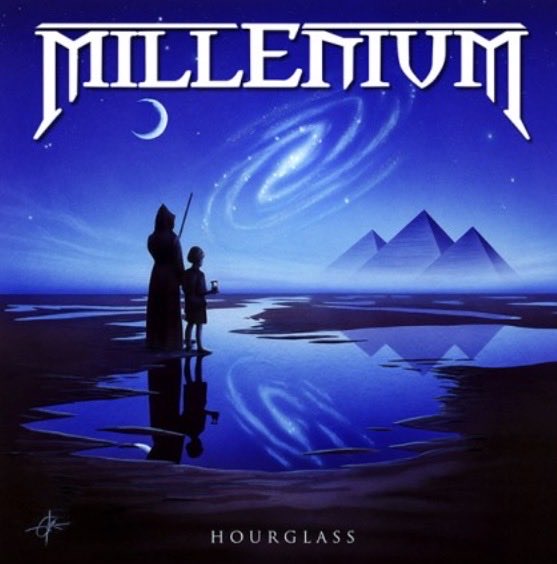
故Ralph Santolla率いるMilleniumの2000年リリースの3作目
ホントこの人の弾くギターは何時もテクニカル&エモーショナルでながら聴きしても耳を惹くんだよな〜☺️
VoにJørn Landeが参加した今作はかなりの傑作っすよね😆個人的には2ndのAngelfireもかなり好きだけど🤣
1
3
116
1,419

AI Flyers feels like old school webdesign on angelfire promoting a club or biz, It's really starting to be cringe now. They don't need to do websites like back in the day because social media and free spam.
21


Jun 12
Building with LLMs, tools, and autonomous agents feels exactly like the early internet days of hacking GeoCities and Angelfire, before discovering CSS and JavaScript.
God I’m old, but building is actually fun again! 🚀💻
18

Jun 12
First Geocities died in 2009, then Angelfire, and Tripod is on its way out, everything is starting to die out on the Internet
1
1
8

Jun 12
The future is another Angelfire/Geocities type web crash and loss of countless petabytes of information tbh.
35

Jun 12
old heads didn't have a website they all died when angelfire and geocities went down
you know rpg maker 95 and 2k fan sites are all long gone
this is really just me bitching about losing my fan site as a kid yes
1
259

Jun 12
dude i was using astalavista, hacking people with back orifice and subseven, writing java applets, wrangling gif spacers, connecting my dial up to dodgy free isps, cracking free long distance calls, starting companies on geocities/angelfire/tripod, running mIRC bots and using ICQ, installing OS's from floppy disks, building games in flash on newgrounds, hoarding mp3s from napster, building computers and fixing all my friends and neighbours tech before you even hit puberty. your masters degree means fucking nothing in this world. peace.
1
20

Jun 12
Memories of Netscape Navigator, messing around with Sub7 at my friend's house, getting the XDCC commands wrong on IRC despite it being right in front of my face. Scour Exchange... angelfire rom websites...
3
617