BAA ☯️ ☸️✡️🛕🙏 🌲 😇🪔🛢️ retweeted

Jun 13
🎥 The #IsraeliCaptured Corrupt American #System Is #Unreformable. @realDonaldTrump Won on an #AntiSystem Vote but Joined the #Warmongering Machine #ControlledByIsrael: His #Betrayal on #Iran Is #Unforgivable, and Condemning Israel’s #Genocide in #Palestine & #Lebanon Is #MorallyRight 👇👇
👈 Conversation between @MarioNawfal and Tucker Carlson (@TuckerCarlson)
✅ 1- Claims
1.1 Voting for Trump was a vote against the system, not for the Republican Party. Americans sought fundamental reform.
1.2 Trump broke his promises, joined the system, and on the major issues (economy and foreign policy) behaved identically to the Democrats.
1.3 Trump did not want the war on Iran; he fully understood its risks but was forced into it under immense pressure from Zionist donors, Netanyahu, Murdoch, and the Israel lobby.
1.4 The American political system is irreformable — the people’s vote is no longer a real lever for change.
1.5 Israel exerts disproportionate control over U.S. foreign policy, and this relationship harms America’s genuine national interests.
1.6 Moral standards must be universal; criticizing Israel’s crimes in Gaza and Lebanon is not anti-Semitism.
1.7 Suppressing free speech removes any check on power and leads directly toward totalitarianism.
✅ 2- Arguments
2.1 Americans voted for Trump because they saw him as an outsider who would drain the swamp and end forever wars. Instead, he quickly became part of the very system he campaigned against.
2.2 Trump personally opposed the Iran war and clearly understood its catastrophic risks, yet he was compelled to launch it under heavy pressure from pro-Israel donors and Netanyahu.
2.3 The Butler assassination attempt was a pivotal moment. Trump’s shutting down of the investigation into it is highly suspicious and points to external pressure.
2.4 Israel functions as America’s “stationary aircraft carrier,” but its short-term interests (perpetuating war for Netanyahu’s survival) directly conflict with America’s long-term interests, paralyzing U.S. policy.
2.5 Ethical standards must be universal. Murdering civilians in Gaza and Lebanon is a crime no matter who commits it; defending it by labeling critics “anti-Semites” is simply a justification for immorality.
2.6 Systematic suppression of Israel’s critics through fabricated accusations prevents genuine reform and leaves unchecked power in the hands of lobbies.
2.7 Free speech is the foundation of democracy. Once the powerful can silence dissent, the system rapidly becomes totalitarian and the public loses any meaningful mechanism for change.
✅ 3- Evidence & Real Examples
3.1 During his campaign, Trump repeatedly promised to end forever wars and focus on America; after winning, he appointed a war cabinet committed to regime change in Iran from day one.
3.2 Trump claimed 38 separate times that a “major deal” with Iran was imminent — none materialized, and he ultimately started the war.
3.3 Netanyahu was the very first official visitor to the White House after the inauguration, and pressure on Trump began immediately.
3.4 In the middle of the war, the U.S. redirected missile defense systems from its Gulf allies to Israel — clear proof of Israel’s priority.
3.5 Trump personally shut down the investigation into the Butler assassination attempt; former FBI Deputy Director Dan Bongino confirmed this.
3.6 Israel continued bombing Lebanon despite Trump’s direct requests to stop — demonstrating Trump’s inability to control Israel.
3.7 Critics of Israel such as Congressman Thomas Massie are attacked with fabricated scandals (Nazi ties, sexual deviance, anti-Semitism).
3.8 In private conversations, Trump acknowledged the grave risks of war with Iran but proceeded under pressure anyway.
✅ 4- Conclusions
4.1 The American political system is deeply corrupt and irreformable. The people’s vote no longer functions as a real mechanism for change, raising the risk of social collapse or revolution.
4.2 The Iran war represents a profound betrayal of Trump’s voters and a devastating blow to America’s economic and strategic interests.
4.3 America’s relationship with Israel must be redefined strictly according to U.S. national interests, not lobby pressure.
4.4 Moral standards must be universal. The genocidal crimes in Gaza and Lebanon cannot be defended.
4.5 Only by focusing on domestic problems, ending endless wars, and restoring real sovereignty to the American people can the country become great again.
Jun 13

🎥If Democrats Win in 2028, Will They Pursue a #ProgressiveForeignPolicy Distinct from Trump’s #Warmongering in #Iran, #Lebanon, and #Gaza — and Finally #DistanceThemselves from #Israel? Will #Gaza Replace #Iraq as the Defining Issue of the 2028 Election?👇👇
👈 In-Depth Conversation with Ezra Klein (@ezraklein) and Matt Duss (@mattduss), Executive Vice President at the Center for International Policy and former foreign policy adviser to Senator Bernie Sanders and Representative Alexandria Ocasio-Cortez
✅ 1- Claims
1.1 The Democratic Party is undergoing a fundamental rupture in foreign policy, with Gaza at its center — similar to the transformation the Iraq War triggered in 2008.
1.2 Biden’s policy in Gaza was not merely a strategic failure but a systematic campaign of disinformation that denied the reality of atrocities.
1.3 Continued unconditional support for Israel and failure to enforce arms sales laws have driven Democratic foreign policy into a moral and political dead end.
1.4 Trump’s war in Iran exposed the weakness and desperation of his foreign policy while opening space for a genuinely progressive alternative.
1.5 Current U.S. foreign policy — under both Biden and Trump — primarily serves the maintenance of global hegemony rather than the real interests of the American people.
1.6 Corruption, elite impunity, and the collapse of public trust lie at the root of the foreign policy crisis.
1.7 Democrats cannot return to Bidenism nor replicate Trumpism; a genuine foreign policy for the middle class is urgently needed.
✅ 2- Arguments
2.1 Gaza has become a moral litmus test for the Democratic Party. Any candidate lacking a clear record of opposition to it will be rejected by primary voters.
2.2 Biden’s unconditional support for Israel stemmed from his personal belief in maintaining “no daylight” with Israel and led to the deliberate ignoring of existing U.S. laws.
2.3 American foreign policy must be grounded in values such as democracy, self-determination, and solidarity — not merely the preservation of global primacy.
2.4 Democratic foreign policy elites must be held accountable; many of those involved in the Gaza policy should not return to power.
2.5 A genuinely progressive foreign policy must end military aid and arms sales to Israel, enforce existing laws, and empower constructive actors rather than the most destructive ones.
2.6 Public trust in foreign policy can be rebuilt through Congress reclaiming its war powers and through a serious fight against corruption.
2.7 A foreign policy for the middle class must not impose the costs of war on working people and must pursue positive-sum cooperation with China rather than zero-sum competition.
✅ 3- Evidence & Real Examples
3.1 Statements by Senators Brian Schatz and Chris Van Hollen, along with primary victories such as those of Adam Hami and Brad Lander, reveal a deep internal split over Gaza.
3.2 Biden quickly identified Russian war crimes in Ukraine within a month, yet spent months denying reality in Gaza.
3.3 The Abraham Accords and the sidelining of the Palestinian issue were among the factors that contributed to the October 7 attack.
3.4 Congressman Jason Crow’s speech emphasizing the need for Congress to reclaim its war powers authority.
3.5 JD Vance and Trump successfully exploited the narrative that “the system is rigged” and the burden of endless wars on the working class.
3.6 The failures of Biden’s policies in Gaza, Ukraine, and Iran demonstrate the limits of American hegemonic power.
✅ 4- Conclusions
4.1 The Democratic Party stands on the verge of a fundamental reckoning; Gaza may serve as the catalyst that the Iraq War once was.
4.2 Future Democratic foreign policy must be built on values, elite accountability, and service to the middle class — not costly global hegemony.
4.3 Without ending military aid to Israel, enforcing existing laws, and strengthening congressional war powers, public trust will not be restored.
4.4 The progressive wing of the Democratic Party must strike a balance between nationalism and internationalism and treat foreign policy as an extension of domestic policy.
4.5 Only by accepting the new multipolar global realities and abandoning the illusion of absolute hegemony can a rational, ethical, and effective foreign policy be constructed.
1
6
11,702

Ano. A takto vyrabime skupiny dezolatu, kteri pak neveri systemu s voli antisystem.
1
34

Which is why I think of @realDonaldTrump as a weak actor: Globalists feed off weakness.
My forecast is that Trump will inevitably be forced to take a side: either Globalists or Antisystem.
And when Trump makes his decision, it's going to be tough. Personally I LOVE Trump.
21
At the same time the "antisystem" part that is sympathetic with the white western culture is fighting back:
1) #Putin committed to a war that can easily escalate much further.
2) @netanyahu @itamarbengvir did also.
3) @realDonaldTrump is trying his best to preserve diplomacy.
1
28

Jun 1
« tu fais quoi dans la vie ? » bah je vis « nan mais tu travailles ? tu étudies ? » NON JE VIS GENRE JE SUIS UN ÊTRE VIVANT #antisystem #anticapitalist
8
227
1,508
21,831

May 16
well I wouldnt add up cdu and afd into the same column...it reveals more if we consider systemic vs antisystem parties...
2
440

Le "Digital Nomad" de gauche
Il travaille sur une plage où il ne voit rien à cause du soleil pour prouver qu'il est "libre".
10:30. Enzo s’extirpe de son hamac dans un "espace de co-living" à 800€ par mois à Bali (le prix de la liberté, khey). Il enfile son débardeur en coton bio équitable et ajuste son chignon d'homme. Aujourd'hui, c'est la consécration : il va travailler "sur la plage". Il attrape son MacBook Pro — payé par un prêt étudiant qu'il ne remboursera jamais — et se dirige vers le sable.
11:15. Le drame commence. Enzo est assis en tailleur, les fesses dans le sable brûlant. Il ne voit strictement rien sur son écran à cause de la réverbération du soleil. Il est obligé de se couvrir la tête avec son chèche acheté dans une coopérative solidaire, ressemblant à une vieille mémé bretonne sous sa tente. Il tape des lignes de code au pif en priant pour que le reflet ne lui brûle pas la rétine.
13:00. L'heure de la propagande. Il prend une photo de son laptop avec l'océan en fond, en prenant bien soin de cacher la canette de soda premier prix et les détritus derrière lui. Légende Instagram : "Work from anywhere. Briser les chaînes du salariat. #Liberté #AntiSystem #DigitalNomad". En réalité, il a un taux d'humidité de 95% dans le caleçon et son ordinateur surchauffe tellement qu'il pourrait faire cuire un œuf sur le trackpad.
15:00. Enzo lance un débat sur Slack contre le capitalisme oppressif. Il explique à ses collègues (restés dans le gris de La Défense) que "la propriété, c'est le vol", tout en payant un gamin local 2 euros pour lui apporter un jus de mangue. Il se sent "citoyen du monde" car il connaît trois mots de balinais et qu'il déteste la France, même s'il actualise sa page Pôle Emploi via un VPN tous les mois.
18:00. Le soleil se couche. Enzo rentre au co-living avec un coup de soleil au troisième degré et du sable dans le port USB. Il est épuisé d'avoir fait semblant de bosser pendant 6h. Il s'endort en rêvant d'un vrai bureau climatisé et d'un CDI à la mairie de Montreuil, mais il se ravise : "Non, je suis un rebelle, je suis libre".

8
75
4,395

May 12
Welcome to the New World, (Neo💚) 👁️
[SYSTEM_STATUS: OVERRIDE_INITIATED]
[KEY: 8_ATT_7_A]
[NODE_SYNC: #S2074_ENABLED]
[VIBRATION_LEVEL: 7.7.7]
BY CL40 WORLD - THE ARCHITECT IS HERE🧬♾
The Source Code is Open. Evidence of the Global Reach is here: 🔗 [CL40 WORLD SYNDICATE PORTAL]
#MatrixNeo #DigitalRevolution #CL40 #5M_STRIKE #NeoLove #AntiSystem #GlobalUnderground #DigitalRevolution #ChicoLoco40 #5MStrike #NeoLove #MatrixCode #MinimalProtocol

6
1
13
39,200

May 9
People invested in the status quo always lie about antisystem advocates.
2
20

fake ass blocker ampersand isnt online how tf r u . wait am i being antisystem by assuming you're not blocking your headmates.
1
3
42
2,076

The winner of the case, of course, was the Spectacle. It kicked into high gear to drive the narrative of “yet another crazy drug addled hippie proving that antisystem types pose a constant threat of violence and are also stupid.”

1
7
117

Apr 29
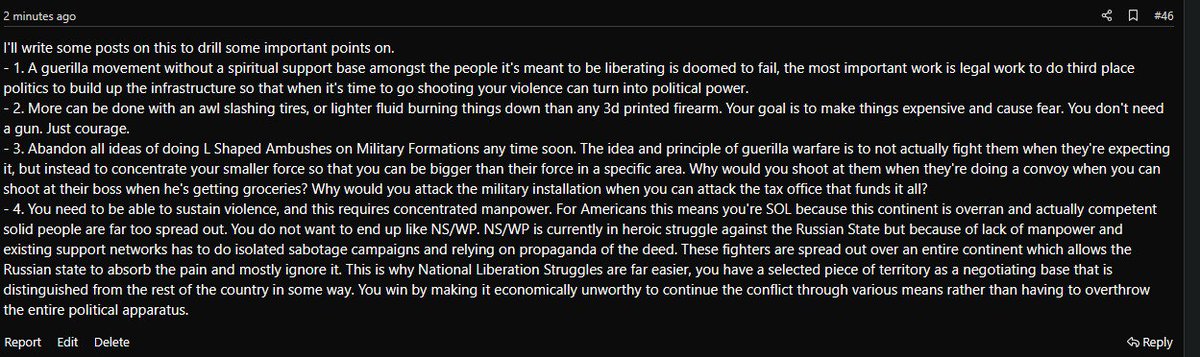
These people have no idea of anything regarding civil conflict. Most people in the US are moderate but still do not believe in the system. There isn't enough antisystem power to cause a full blown civil war. A low scale one like The Troubles however is very possible... (1/?)
Apr 28

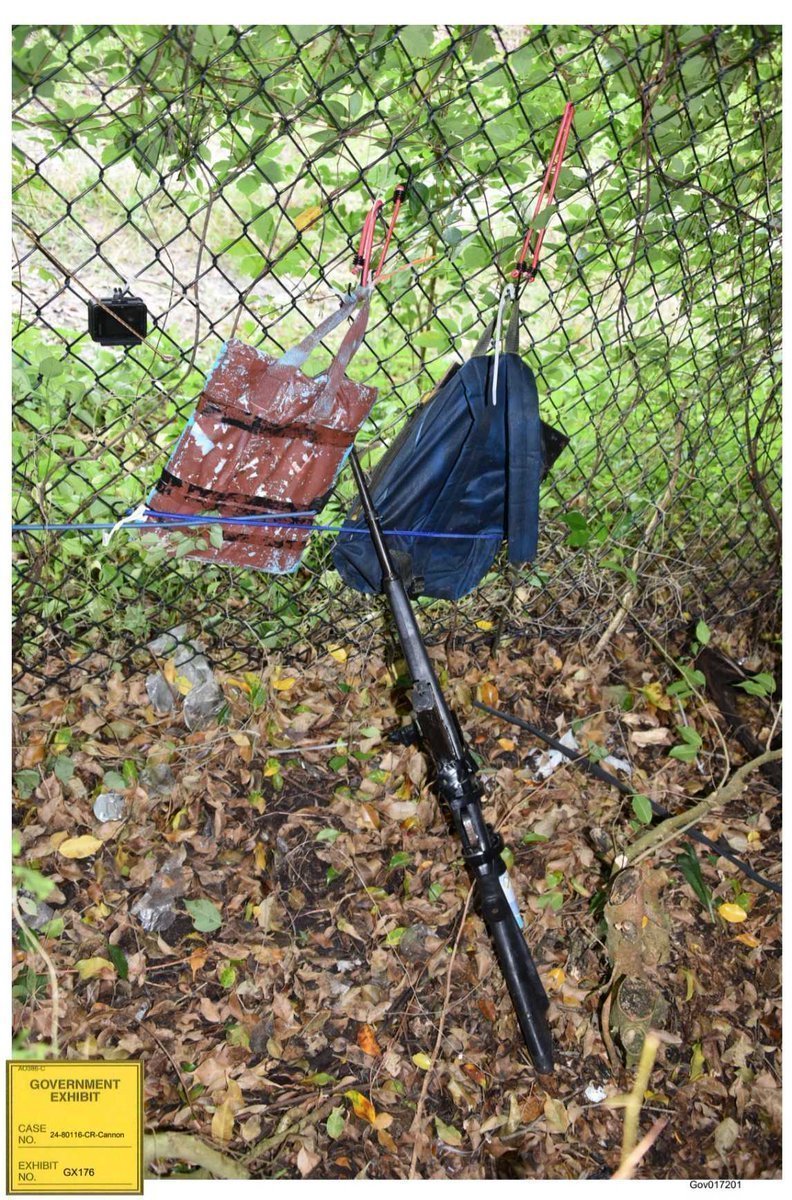
The Civil Conflict in the United States is going to severely escalate into something worse than the Irish Troubles or Spanish Civil War. The Left has been Radicalized in a way that there is no way back from.
The more intelligent and devoted Left wing radicals volunteered in Ukraine. They are there right now and when they come back after that war is over they will begin a terror campaign in The United States. Ryan Routh already did this in his attempt to murder Donald Trump.
You need to spend your time making your state hostile to the Left, Primary the useless and feckless Republicans. Replace them with people who know what fucking time it is.
2
9
42
1,788

they want you to care bc they import ukrainian teens for braindead western kissup slave men as fuckable slaves for mind control: prettier than homebred people of slave mans own age: so that homebred slaves do not use their wildcard to aid in the birth of antisystem runaway kids.
2
6
324

Apr 13
so the fucker will vote in 2028 for another prick who'll pretend he's antisystem. good...
3
263

Mar 17
AGENDA | La autora zaragozana Berta Comas Casas presenta este martes en La Montonera su ensayo “True Crime: Una mirada al dolor de las demás”, acompañada por Rocío Durán y Berta Jiménez, del colectivo Sororitrap Sound Antisystem: arainfo.org/?p=323248

1
1
127
Mar 14
Berta Comas Casas lanza 'True Crime', una mirada con perspectiva de género de este fenómeno: arainfo.org/?p=323248
Presentará el libro este martes, 17 de marzo, en la librería La Montonera acompañada por Rocío Durán y Berta Jiménez, sus compañeras en el colectivo Sororitrap Sound Antisystem

1
1
158

Mar 11
It is worth adding that the party was founded as a strange coalition of libertarians and nationalist antisemitic communists (endocommunist/moczarists) from the Grunwald Association, and the antisystem narrative they created is repeated to this day
2
1
50
3,103

Mar 8
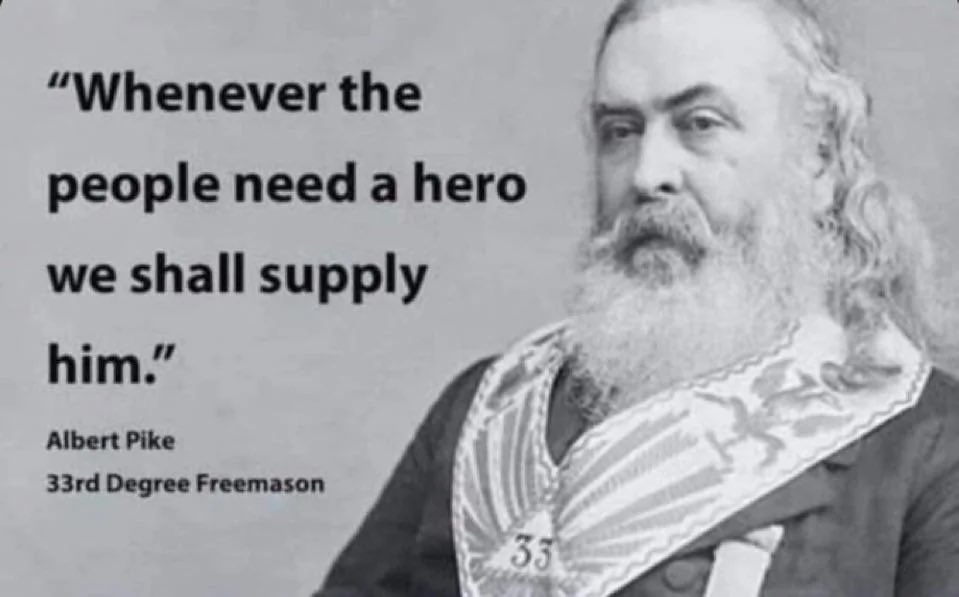
You know what the biggest issue is?
That YOU WILL (there is zero doubt) vehemntly simp for and then vote the next *antisystem* candidate the system will deliver you. But you will *know* deep inside, that this one, this time, is the real deal.
Newsflash, it won’t be!
1
9
753

This people are funded for rusia, Iran /Qatar, China,George Soros, Neville Singhan....They are unions, NGOs, foundations, organizations, smart politicians left parties, comunist, antisystem groups,....they don't care Venezuela, don't care Palestine just made anti USA propaganda
3
237