

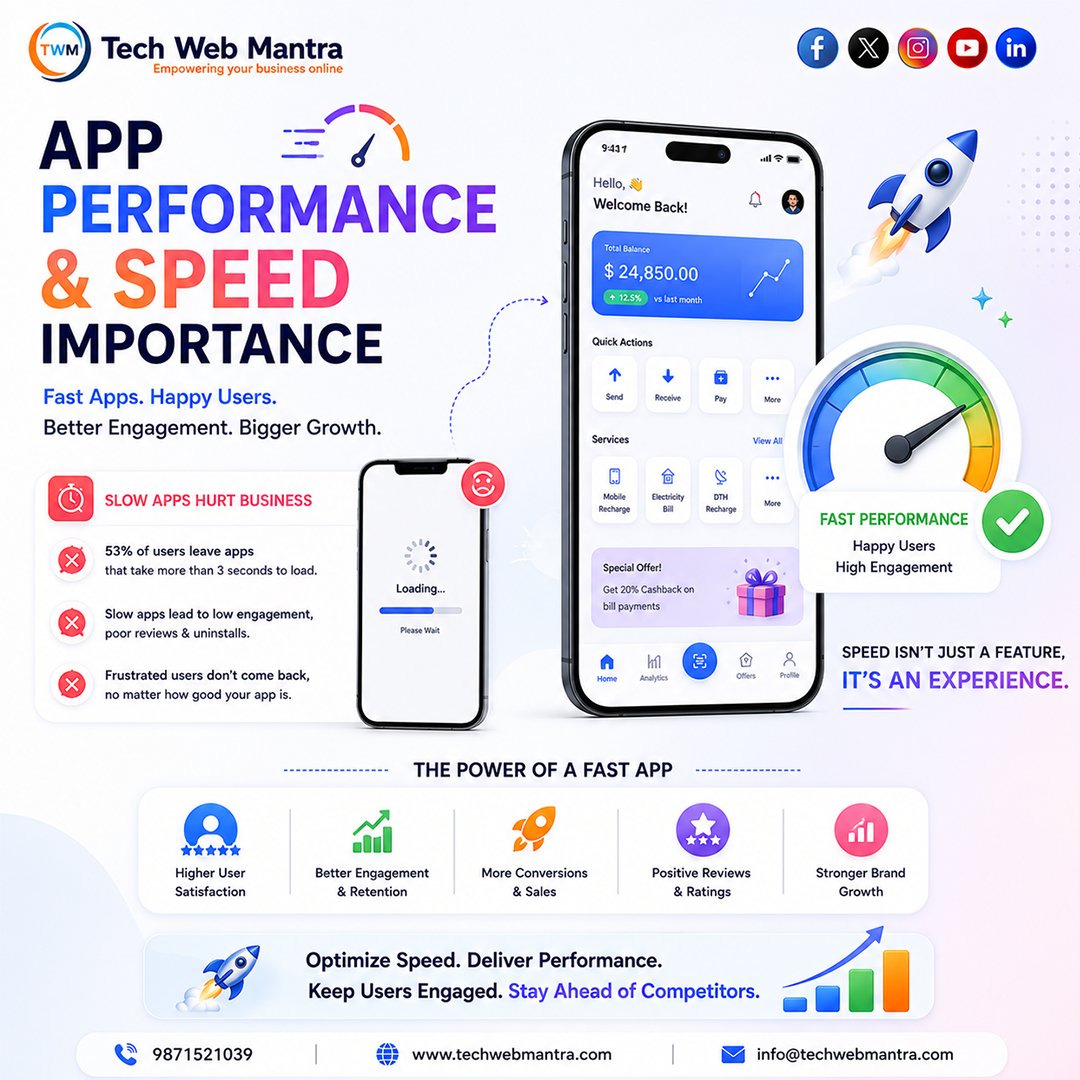
ALT Tech Web Mantra promotional graphic highlighting the importance of mobile app performance and speed. The design showcases fast-loading mobile applications, improved user experience, higher engagement, better retention, increased conversions, positive app ratings, and business growth through optimized Android and iOS app development services. mobile app development company India, app performance optimization, mobile app speed optimization, Android app development company, iOS app development services, custom mobile app development, fast mobile app development, high performance mobile apps, app optimization services, mobile app solutions, app development company India, mobile software development, scalable app development, startup app development, business app development, mobile app performance testing, user experience optimization, app speed improvement, cross platform app development, enterprise mobile app development, mobile app maintenance services, app development services India